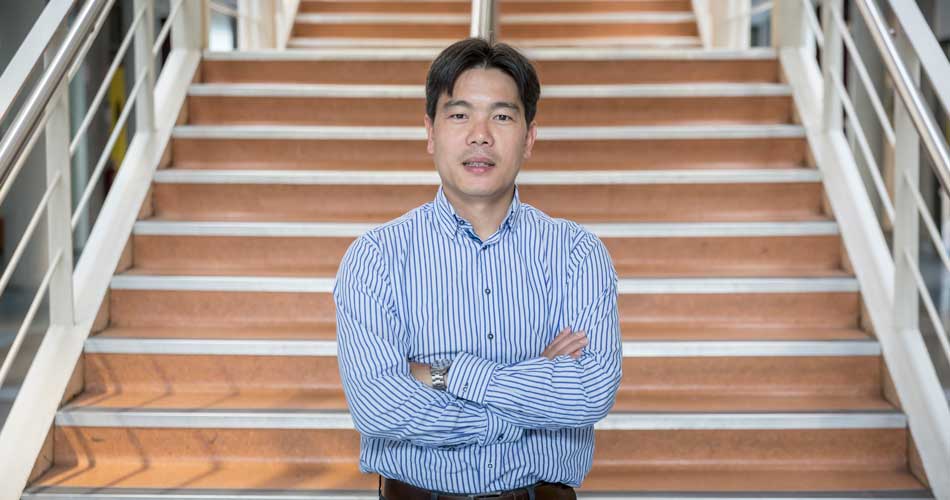
Dr. Le-Nam Tran is a researcher at the UCD School of Electrical & Electronic Engineering , University College Dublin. His work focuses on optimizing the last hop of 5G/6G wireless networks through mathematical programming, with emphasis on energy efficiency, interference management, and security against eavesdropping. Develops low-cost, low-complexity transmission techniques Projects supported by Science Foundation Ireland Career Development Award Author of over 80 peer-reviewed publications Research Keywords: Wireless Communications Network Security Signal Processing Energy-Efficient Systems Beamforming Optimization Interference Mitigation
Dr. Chenhao Ma is an Assistant Professor at the School of Data Science , The Chinese University of Hong Kong, Shenzhen , where he works on large-scale data management and data mining. Previously, he was a Postdoctoral Fellow at the University of Hong Kong (2021–2022) and earned his PhD in Computer Science from the University of Hong Kong (2021) and B.Eng. from Shandong University (2017). Current research focuses on graph computing (dense subgraph discovery, motif analysis, graph learning), AI+DB (Text-to-SQL, vector search), and traffic data mining (trajectory analysis, outlier detection). He has published over 40 papers in top venues including SIGMOD, PVLDB, KDD and received the ACM SIGMOD Research Highlight Award 2021 and Best of SIGMOD 2020 (4/458). Scientific Awards : ACM SIGMOD Research Highlight Award 2021 Best of SIGMOD 2020 (4/458) Presidential Young Fellow at CUHK-Shenzhen (2023) Hong Kong and China Gas Scholarship (2019-2020) Reaching Out Award (2019) HKU Postgraduate Scholarship (2017-2021) ACM-ICPC Gold Medal (2015) National Scholarship (2014, 2015) Advising and Research Team : He leads a team including Postdoc Dr. Yuanyuan Zeng, PhD students Lujie Ban, Yuwei Xu, and MPhil students Yi Yang, Yuyang Liang. Former mentees like Yichen Xu (PhD at Berkeley) and Jiayang Pang (Master at UC San Diego) have achieved academic placements. Professional Service : He has served as PC member/reviewer for VLDB, KDD, ICDE, WWW, NeurIPS, TKDE , and guest editor for Applied Sciences and Frontiers in Big Data . He chairs sessions at ICDE and VLDB.
Ron Steinfeld is an Associate Professor at the Cybersecurity Lab of the Faculty of Information Technology , Monash University . His research focuses on lattice-based cryptography , post-quantum cryptographic protocols , and privacy-preserving technologies . He has contributed to advancements in secure multiparty computation , digital signatures , and blockchain confidentiality . Key areas: Lattice-Based Cryptography, Zero-Knowledge Proofs, Blockchain Security Recent work trends: Quantum-safe protocols, Efficient sampling algorithms, Scalable blockchain solutions Scientific Awards : BEST PAPER AWARD (ASIACRYPT 2015) He has served on program committees for major conferences including CRYPTO , EUROCRYPT , and ASIACRYPT . Ron is a member of the Discrete Mathematics Research Group and has collaborated with institutions like Macquarie University in the past.
Thijs Defraeye is a Senior Scientist at Empa (Swiss Federal Laboratories for Materials Science and Technology) and Adjunct Professor at Dalhousie University. He holds a PhD in Building Physics from KU Leuven (2011) and a Master's in Civil Engineering (2006). His work focuses on optimizing food supply chains through multiphysics simulations and digital twins, addressing challenges in refrigerated transport, postharvest quality preservation, and energy-efficient food processing. He leads the SimBioSys group, developing solutions for perishable goods logistics and electrohydrodynamic technologies. Research interests include: Biophysics of food systems Digital twin applications in agriculture Electrohydrodynamic drying Thermal management in cold chains Sustainable food technologies Recent work emphasizes reducing food loss through physics-based modeling of refrigerated containers, ventilated packaging optimization, and scalable evaporative cooling systems. His studies bridge engineering principles with biological processes, aiming to enhance global food security and environmental sustainability.
Dr. Prineha Narang is a Professor of Physical Sciences and Electrical and Computer Engineering at the University of California, Los Angeles (UCLA). Previously, she held positions as an Assistant Professor at Harvard University and a Research Scholar at MIT. Her research focuses on quantum materials, quantum information science, and non-equilibrium dynamics, with interdisciplinary contributions to photonics, topological materials, and cavity quantum electrodynamics (QED). She leads the Narang Lab, which develops theoretical and computational methods to design quantum systems and explores applications in quantum networks and energy conversion. Dr. Narang has held leadership roles in major initiatives such as the DOE Quantum Science Center and the NSF Center for Quantum Networks. She is also the founder and CTO of Aliro Quantum, a company advancing quantum networking technologies. Education: M.S. and Ph.D. in Applied Physics from the California Institute of Technology (Caltech). Her work has been recognized with prestigious awards, including the Mildred Dresselhaus Prize, NSF CAREER Award, and being named a Moore Inventor Fellow. She serves on editorial boards for journals like ACS Nano and Applied Physics Letters , and chairs international conferences. Outside academia, she advises organizations like arXiv and actively engages in promoting quantum technologies through industry collaborations. Research Interests: Quantum materials engineering, quantum networks, non-equilibrium phenomena, topological quantum states, and quantum defect physics. Current projects include designing scalable quantum repeaters, developing error-corrected quantum systems, and studying light-matter interactions in novel materials. Her lab’s SpaRTaNS code enables spatially-resolved transport simulations, advancing understanding of electron and phonon dynamics. Awards and Grants: Over 20 major awards, including the Guggenheim Fellowship (2023), ONR Young Investigator Award (2022), and leadership roles in DOE and NSF-funded centers. Her work bridges academia and industry, with partnerships at companies like Applied Materials and Northrop Grumman.
Haibo Yang is an Assistant Professor in the Department of Computing and Information Sciences at Rochester Institute of Technology's Golisano College of Computing and Information Sciences. He earned his Ph.D. in Electrical and Computer Engineering from The Ohio State University under the supervision of Prof. Jia (Kevin) Liu. Rochester Institute of Technology , Golisano College of Computing and Information Sciences Ohio State University , Ph.D. in Electrical and Computer Engineering His research focuses on distributed and federated learning systems, examining how statistical and system variability affect algorithm performance under constraints like privacy and communication limitations. Key areas include optimization algorithms, communication-efficient frameworks, Byzantine robustness, and multi-modal adversarial attacks. He is actively involved in developing theoretically grounded solutions for scalable and intelligent distributed learning. Recent publications highlight advancements in multi-objective reinforcement learning, zeroth-order federated optimization, and robustness against heterogeneous client participation. His work has appeared in top venues like UAI, IJCAI, ICLR, AAAI, NDSS, ACM CCS-LAMPS, and ACM MobiHoc, with notable acceptance rates (e.g., 19.3% for IJCAI 2025). Current projects investigate exact convergence mechanisms and adaptive weighting strategies. Dr. Yang received the RIT AI Seed Funding and GWBC Award in February 2024. He supervises funded Ph.D. students and teaches advanced machine learning topics, including CSCI-635: Introduction to Machine Learning.
David Rossell is an Associate Professor at the Department of Economics, Universitat Pompeu Fabra (UPF) in Barcelona, Spain. He is affiliated with the Statistics@UPF research group and directs the Master in Data Science at the Barcelona School of Economics (BSE). Previously, he held positions at IRB Barcelona as head of the Biostatistics Unit and at the University of Warwick's Statistics Department. He obtained his PhD in Statistics from Rice University, Houston (USA), and conducted postdoctoral research at M.D. Anderson Cancer Center under Professors Valen Johnson and Veera Baladandayuthapani. Research Interests: Rossell specializes in high-dimensional statistical inference, Bayesian methods, computational statistics, and applications in biomedicine and social sciences. His work emphasizes methodology for complex data integration, variable selection, graphical models, and experimental design. Key areas include non-local priors, scalable Bayesian computation, and the development of R packages for statistical analysis (e.g., casper , chroGPS , gaga ). Publications: His recent work focuses on advancing Bayesian variable selection, graphical models with external data, and causal inference. Themes include leveraging external datasets for improved model accuracy, robustness to model misspecification, and applications in healthcare and complex mixture analysis. His contributions span methodological innovation and computational tools for high-dimensional problems. Funding & Grants: Rossell has secured funding through Spanish and European grants, including Juan de la Cierva Fellowships, AGAUR fellowships, and Marie Slodowska-Curie Actions. He supports PhD and postdoctoral researchers through programs like La Caixa InPhD and Beca Beautriu de Pinós. Labs & Teams: He leads the BSE Data Science Center and contributes to interdisciplinary collaborations at UPF and IRB Barcelona, bridging statistical theory and practical applications in genomics, epigenomics, and health data analysis.
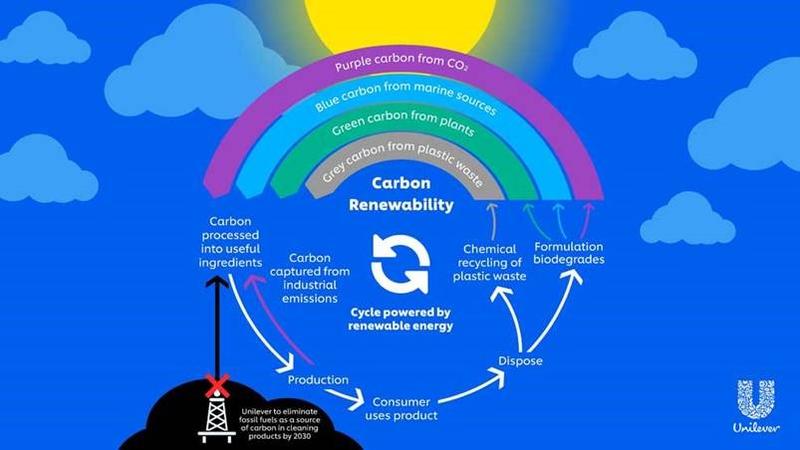
Professor Charlotte Williams is a leading academic in sustainable materials science at the University of Oxford. Her research focuses on developing catalysts to transform renewable resources and CO₂ into polymers, aiming to replace petrochemicals in scalable materials production. She collaborates with Unilever on the Clean Future initiative, pioneering recyclable and biodegradable polymers for consumer products. Her work was recognized with the 2021 Unilever Clean Future Supplier Brilliance Award, jointly awarded with Professors Rosseinsky and Cooper. Williams’ research spans heterodinuclear catalyst design, ring-opening copolymerization, and chemical recycling of polymers. She leads a multidisciplinary team including scientists, engineers, and policy experts to decarbonize chemical supply chains, contributing to the UK’s net-zero goals. Key collaborations include the EPSRC Prosperity Partnership with the Universities of Liverpool and Oxford, focusing on low-carbon laundry detergent materials. Education: Not explicitly detailed in text. Grants: EPSRC Prosperity Partnership (2021–2026), Unilever-funded projects. Labs/Teams: Collaborations with Liverpool University and industry partners like Unilever. Future Work: Expanding applications of CO₂-derived polymers in consumer goods and advancing recyclable materials. Her publications emphasize catalyst innovation, sustainable polymer synthesis, and materials lifecycle analysis, reflecting her commitment to bridging academic research with industrial sustainability challenges.
Dr. Wibowo Hardjawana is a Senior Lecturer in Telecommunications Engineering at the School of Electrical & Computer Engineering , University of Sydney. He holds a PhD from the University of Sydney and serves as an ARC DECRA Research Fellow. His research focuses on wireless network softwarisation, enabling programmable radio interfaces to address traffic elasticity in 5G/6G systems. Education : PhD (University of Sydney) Grants : ARC DP210100744 (2021), ARC DECRA DE140101114 (2014) His work spans 5G/6G network architectures , machine learning for wireless systems , and open radio interfaces . Key contributions include graph representation learning for interference management, Bayesian neural network detectors for OTFS modulation, and NOMA decoding techniques . Recent publications analyze ultra-reliable low-latency communications , UAV-enabled networks , and stochastic geometry in wireless systems . He has collaborated with institutions in China, Indonesia, and UAE, and engaged with industry partners like Telstra and Ausgrid.
Eoin Delaney is a Lecturer in the School of Computer Science and Statistics at Trinity College Dublin (as of Spring 2025). Previously, he was a Postdoctoral Researcher at the Oxford Internet Institute (OII), University of Oxford (October 2023 – March 2025), focusing on Trustworthiness Auditing in AI. His research spans Explainable AI, algorithmic fairness, computer vision, and sustainable AI applications. He holds a PhD from University College Dublin (UCD), advised by Dr. Derek Greene and Prof. Mark T. Keane, where he developed counterfactual explanations for time series and image data. His work bridges technical AI research with societal impact, including collaborations with Accenture Labs and the VistaMilk SFI Research Centre. Key achievements include developing the OxonFair toolkit (accepted to NeurIPS 2024), winning the 2022 AI Ireland Award for Best Application of AI in a Student Project, and authoring papers in top venues like NeurIPS, AIJ, and IJCAI. He is actively involved in academic service, serving on program committees for FAccT 2025 and AAAI workshops. Eoin has supervised students at the University of Oxford and organizes workshops on AI accountability, such as the Auditing Accountability in Trustworthy Artificial Intelligence in personalized medicine. His teaching and outreach efforts include promoting STEM education through initiatives like an educational website for children, emphasizing cryptography and probability. He continues to explore fairness in AI systems, user-centric explanations, and scalable machine learning frameworks (PyTorch, TensorFlow).
Agostino Capponi is a Professor of Industrial Engineering and Operations Research at Columbia University, affiliated with Columbia Engineering and the Data Science Institute (DSI). He holds academic fellowships at the Luohan Academy (Alibaba Group) and the Fintech@Cornell Center. His research focuses on systemic risk, financial technology, blockchain economics, and machine learning applications in finance. He has authored a best-selling book on machine learning in financial markets and received prestigious awards including the NSF CAREER Award and the JP Morgan AI Faculty Research Award. Education: Master's and PhD in Computer Science and Applied & Computational Mathematics from Caltech (2006-2009). Professional roles include Editor of Management Science , co-editor of Mathematics and Financial Economics , and leadership positions in the Bachelier Finance Society and INFORMS Finance Section. His research has been funded by NSF, DARPA, J.P. Morgan, Ethereum Foundation, and others. Research interests span blockchain governance, decentralized finance protocols, and systemic risk mitigation in financial networks. Notable contributions include work on liquidity risk, crypto-economic systems, and causal inference in financial modeling. Media coverage includes American Banker, Vox, and Chicago Booth Review. He holds a patent in military network tracking and served as a visiting scholar at the Federal Reserve Bank of New York.
June-Yub Lee is a Professor of Mathematics and Vice President at Ewha Womans University, leading the Office of University Planning and Coordination. He is also a member of the Institute of Mathematical Sciences. His academic background includes a Physics major and Mathematics minor from KAIST, followed by a Ph.D. in Mathematics from New York University's Courant Institute. Prof. Lee specializes in numerical analysis, inverse problems, computational fluid dynamics, and phase-field modeling. His research focuses on developing robust numerical methods for partial differential equations, with applications in materials science and fluid dynamics. Notable contributions include work on operator splitting methods, energy-stable schemes for phase-field models, and inverse problem solutions in electrical impedance tomography. He has organized major international conferences like ICM2014 and ICIP series, and serves on editorial boards of journals such as the Journal of the Korean Society for Industrial and Applied Mathematics (KSIAM). His work bridges theoretical mathematics with computational science, emphasizing interdisciplinary applications. Prof. Lee has actively contributed to academic administration, including serving as Director of the Division of Natural Sciences at the National Research Foundation (NRF). His research lab focuses on scientific computation, with recent projects exploring long-time simulations of phase-field crystal models and high-order numerical methods for multiphase systems.
Dr. Oliver Kennedy is an Associate Professor in the Department of Computer Science and Engineering at the University at Buffalo's School of Engineering and Applied Sciences. He serves as Co-Director of Graduate Studies and leads the Online Data Interactions (ODIn) Lab. His research focuses on databases, programming languages, and user interfaces for data science, with particular emphasis on scalable compilers and managing uncertainty in data. Kennedy holds a PhD in Computer Science from Cornell University (2011), MS from Cornell (2008), and dual BS degrees in Computer Science and Computer Engineering from NYU and Stevens Institute of Technology (2005). His work bridges theoretical computer science with practical data management challenges. His recent publications demonstrate a strong focus on improving database query processing, uncertainty management in data systems, and developing practical tools for data integration and exploration. Awarded the NSF CAREER Award in 2018, Kennedy's research has significant implications for efficient data processing in scientific and commercial applications.
Associate Professor at the University of Klagenfurt , affiliated with the Department of Management Control and Strategic Management under the Faculty of Economics and Law . Research focuses on agent-based modeling applied to organizational dynamics , complex systems , and managerial economics . Holds a doctoral degree in Social Sciences and Economics (2012) and venia docendi in Business Economics (2018) . Core faculty member in the Self-Organizing Systems research cluster Academic editor for PLoS ONE and editorial board member for multiple journals Recipient of the 2021 Advancement Award (Humanities/Social Sciences) from Carinthian government Research integrates computational simulation with organizational theory , examining phenomena like decentralized task allocation , incentive mechanisms , and reproducibility in social sciences . Teaching portfolio includes business analytics , management control , and scientific modeling at undergraduate and graduate levels. Recent publications explore organizational resilience , team coordination dynamics , and financial modeling using agent-based simulation techniques. Active participant in international conferences like Social Simulation Conference and European Conference on Operational Research .
Dr. Vagelis Papalexakis is an Associate Professor and Ross Family Chair in the Computer Science & Engineering Department at the University of California, Riverside. His research focuses on data science, machine learning, and tensor methods, with applications in multi-aspect/multi-modal data analysis. He holds a Ph.D. from Carnegie Mellon University and a Diploma/M.Sc. from the Technical University of Crete. Affiliations: Ross Family Chair, Bourns College of Engineering, UCR Education: Ph.D. in Computer Science, Carnegie Mellon University M.Sc./Diploma in Electronic & Computer Engineering, Technical University of Crete His work emphasizes interpretable insights from complex datasets, including tensor-based defenses against adversarial attacks, graph representation learning, and scalable algorithms for high-dimensional data. Notable awards include the NSF CAREER Award (2021), IEEE DSAA Next Generation Award (2021), and ICDM Tao Li Award (2022). Grants include NSF funding for railway safety (CISE MSI: RPEP CPS), USDOT transportation research, and NVIDIA GPU grants. He leads projects in AI ethics, misinformation detection, and gravitational wave analysis. His lab collaborates with industry (e.g., Cisco, Instacart) and national labs (e.g., Lawrence Livermore).