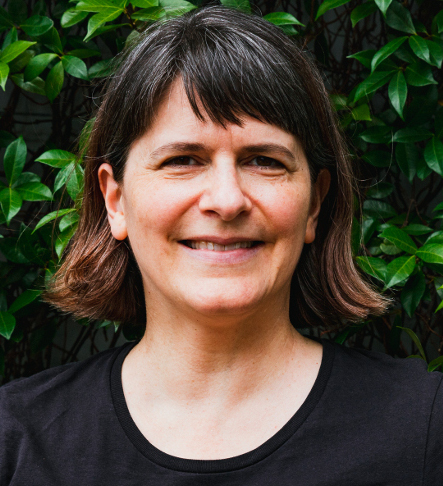
Professor Catherine Greenhill is a faculty member at the School of Mathematics and Statistics, UNSW Sydney , where she serves as Professor and head of the Combinatorics group. Her academic career spans institutions including the University of Queensland, University of Oxford, University of Leeds, University of Melbourne, and Australian National University. D.Phil., University of Oxford (1996) M.Sc. (Research) in Combinatorics (1992) B.Sc. (Hons) in Pure Mathematics (1991) Her research focuses on the intersection of discrete mathematics , theoretical computer science , and probability , particularly in asymptotic combinatorics , probabilistic methods , and analysis of algorithms . Her work includes asymptotic enumeration of combinatorial structures and design of randomized algorithms for graph sampling and counting. Her recent publications (2025–2021) center on random graphs and hypergraphs , with key contributions to switch Markov chains , degree sequence analysis , and chromatic number bounds . These works reflect her expertise in probabilistic combinatorics and algorithmic complexity . Scientific Awards: Fellow of the Australian Academy of Science (2022) Christopher Heyde Medal in Pure Mathematics (2015) June Griffith Fellowship (2013) Hall Medal (2010) Advising and Grants: She has supervised numerous PhD/Masters students and secured multiple ARC Discovery Grants (2019–2021, 2014–2016, 2012–2014). Her grants address topics like hypergraph modeling, random discrete structures, and network analysis in illicit drug trafficking.
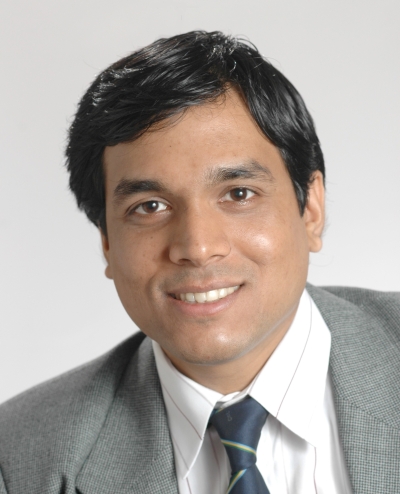
Sanjit A. Seshia is the Cadence Founders Chair Professor in the Department of Electrical Engineering and Computer Sciences at the University of California, Berkeley . He is affiliated with the Group in Logic and the Methodology of Science and participates in centers like the Industrial Cyber-Physical Systems Center , Berkeley AI Research , and the Simons Institute for the Theory of Computing . Research interests include formal methods for automated verification and synthesis of dependable systems, with applications to cyber-physical systems , AI-based autonomy , and computer security . His work spans SMT solving, model counting, syntax-guided synthesis, and algorithmic improvisation, with tools like UCLID5 , VerifAI , and Scenic for verifying autonomous systems and educational platforms like CPSGrader . Students and collaborators include notable researchers such as Dorsa Sadigh (Stanford), Daniel Fremont (UC Santa Cruz), and Hazem Torfah (Chalmers). He has co-founded startups like Decyphir and 20ⁿ Labs based on his research.
Leslie Ann Goldberg is a Senior Research Fellow at St Edmund Hall and Professor of Computer Science at the University of Oxford. She currently serves as Head of the Department of Computer Science (on sabbatical 2025-26) and focuses on foundational problems in Algorithms and Complexity Theory , particularly randomised algorithms for network communication, machine learning, and statistical physics models. Her research includes solving Aldous' 1987 conjecture on backoff protocol instability (with John Lapinskas), developing rigorous mathematical analysis frameworks for algorithmic efficiency, and advancing approximate counting techniques via Markov Chain Monte Carlo methods (with Andreas Galanis and collaborators). Key projects involve graph homomorphisms , Moran process dynamics , and #BIS complexity class analysis. Recent publications (2023-2024) span topics like Sybil defense mechanisms, low-temperature sampling on random graphs, and parameterised subgraph counting modulo 2. Her work demonstrates cross-disciplinary impact in computational biology, statistical physics, and database theory. Scientific Awards include Best Paper Prizes at ICALP 2016, ICALP 2010, and IPEC 2017. She supervises PhD student Paulina Smolarova and collaborates extensively with researchers in Oxford and beyond.
David Eppstein is a Distinguished Professor of Computer Science at the University of California, Irvine (UCI), affiliated with the Donald Bren School of Information & Computer Sciences. He holds academic leadership roles as director of the Center for Algorithms and Theory of Computation and associate director of the Center for Algorithms, Combinatorics, and Optimization. His research focuses on graph algorithms, computational geometry, discrete mathematics, and geometric graph theory. Eppstein earned a B.S. in Mathematics from Stanford University (1984) and a Ph.D. in Computer Science from Columbia University (1989). Research Interests: Graph drawing, information visualization, dynamic graph algorithms, mesh generation, optimal triangulation, K-shortest paths, subgraph isomorphism, data depth, exponential-time algorithms for NP-hard problems. Awards: ACM Fellow (2012), AAAS Fellow (2017), Distinguished Professor (2020), Best Paper Awards (2023, 2022), and SIAM recognition. Grants: Co-PI on a $1.2M NSF grant (2022) for geometric graph research, and previous NSF grants for algorithm studies (2016). His work bridges theoretical computer science and practical applications, including contributions to graph visualization, geometric algorithms, and combinatorial optimization. Notable recent achievements include resolving open questions in graph biplanarity and authoring the book Forbidden Configurations in Discrete Geometry (2018).
Sanjay Jain is a Provost's Chair Professor in the Department of Computer Science at the School of Computing, National University of Singapore (NUS). His research focuses on theoretical computer science with particular emphasis on inductive inference, recursion theory, complexity theory, and computational learning theory. Education: B.Tech. in Computer Science from Indian Institute of Technology Kharagpur, India (1986) M.S. in Computer Science from University of Rochester, USA (1988) Ph.D. in Computer Science from University of Rochester, USA (1990) Professor Jain's research spans multiple areas of theoretical computer science. His primary contributions are in computational learning theory, where he has made significant advances in understanding the intrinsic complexity of language identification and the limits of inductive inference. His work on recursion theory explores fundamental questions about computability and complexity, while his research in complexity theory addresses structural aspects of computational problems. A notable achievement was his work on "Deciding Parity Games in Quasipolynomial Time," which won the prestigious STOC 2017 best paper award and later the EATCS-IPEC Nerode Prize. Professor Jain's publication record shows a consistent focus on theoretical foundations of computer science, particularly in learning theory and computational complexity. His recent work has expanded into automatic structures, semiautomatic models, and connections between computational learning and algebraic structures. There is a clear progression from foundational work on language identification to more complex models involving automatic functions, transducers, and connections to mathematical logic. Scientific Awards: STOC 2017 Best Paper Award for "Deciding Parity Games in Quasipolynomial Time" EATCS-IPEC Nerode Prize (2021) Professor Jain has served on the editorial board of Information and Computation and has been actively involved in the academic community through program committee memberships for major conferences including COLT, ALT, LATA, TAMC, and PRICAI. He has held leadership roles as program co-chair for ALT 2000 and ALT 2013, and conference chair for ALT 2005. His work has been supported by various research grants, though specific details are not provided in the available materials. Professor Jain leads research in theoretical computer science at NUS, where he has built a strong research group focused on computational learning theory and related areas. His work often involves collaborations with researchers from around the world, particularly with Frank Stephan, with whom he has co-authored numerous papers. His research group has made significant contributions to understanding the fundamental limits and possibilities of computational learning models.
Ashley M R Montanaro is a Professor of Quantum Computation at the School of Mathematics, University of Bristol . Active in quantum computing research since at least 2014, they lead projects at the intersection of quantum algorithms , computational complexity , and quantum information theory , affiliated with the Bristol Quantum Information Institute. Research interests focus on quantum algorithm design , computational complexity analysis , and quantum simulation . Key work includes developing variational quantum algorithms for phase transition detection, Hamiltonian simulation techniques, and quantum-classical hybrid methods for solving complex problems in physics and optimization. Recent publications demonstrate expertise in: Quantum phase diagram simulation with low-depth circuits Quantum speedups for constraint satisfaction problems Quantum communication complexity of machine learning tasks Quantum-enhanced optimization heuristics Hamiltonian simulation with time-dependent product formulas Quantum algorithm complexity analysis Scientific awards include: EPSRC Fellowship (2014-2019) - "New insights in quantum algorithms and complexity" Active in quantum software development through projects like: "Quantum Algorithms from Foundations to Applications" (ERC-2018-COG) "Quantum Computing and Simulation Hub" (2019-2024) "Prosperity Partnership in Quantum Software" (2019-2023)
Venkatesan Guruswami is a Chancellor's Professor in the Department of EECS and a Senior Scientist at the Simons Institute for the Theory of Computing at UC Berkeley . He also holds a Professor position in the Department of Mathematics . His academic journey began with a B.Tech in Computer Science from the Indian Institute of Technology, Madras (1997) , followed by a Ph.D. in Computer Science from the Massachusetts Institute of Technology (2001) . After a Miller Research Fellowship at UC Berkeley (2001–02), he held faculty roles at the University of Washington and Carnegie Mellon University before returning to UC Berkeley in January 2022. Education : B.Tech, IIT Madras (1997) Ph.D., MIT (2001) Professional Affiliations : Chancellor's Professor, UC Berkeley (EECS) Senior Scientist & Interim Director, Simons Institute Professor, UC Berkeley (Mathematics) Guruswami's research spans multiple domains within Theoretical Computer Science , focusing on Error-Correcting Codes , Approximation Algorithms , Randomness in Computing , Probabilistically Checkable Proofs , and Computational Complexity . His groundbreaking work in List Decoding has enabled codes with minimal redundancy for correcting worst-case errors, while recent advancements include Polar Codes , Deletion-Correcting Codes , and Constraint Satisfaction Problems . He has also contributed to Quantum Coding Theory , Locally Recoverable Codes , and Approximation Hardness in various computational contexts. His publications reflect a deep engagement with interdisciplinary topics. Key trends include: Quantum Information Theory : Quantum LDPC codes, transversal gates, and quantum storage. Algebraic Coding : Reed-Solomon codes, AG codes, and polynomial-based constructions. Computational Complexity : Hardness of approximation, CSPs, and parameterized intractability. Data Transmission : Polar codes, deletion channels, and feedback mechanisms. Algorithmic Techniques : Spectral methods, semirandom models, and Lasserre hierarchy applications. Guruswami has received numerous accolades, including the Simons Investigator Award , Presburger Award , Packard Fellowship , Sloan Research Fellowship , ACM Doctoral Dissertation Award , and the IEEE Information Theory Society Paper Award . He is an ACM Fellow (2017) and IEEE Fellow (2019) , with recent honors like the Guggenheim Fellowship (2023) and AMS Fellow (2023) . As an advisor, he has mentored over 25 PhD and postdoctoral researchers , including Atri Rudra , Prasad Raghavendra , and Peter Manohar , whose work has won awards like the Edmund M. Clarke Doctoral Dissertation Award and CRA Outstanding Undergraduate Researcher Award . His research is supported by grants from the National Science Foundation , Packard Foundation , and Sloan Foundation . He also serves as Editor-in-Chief of the Journal of the ACM and holds leadership roles in IEEE and arXiv moderation. Guruswami is actively involved in Simons Institute programs and co-organized workshops on Coded Computation and Information Theory . His work bridges theoretical advancements with practical applications in Cloud Storage , Quantum Computing , and Group Testing , including pandemic-era contributions like AC-DC: Amplification Curve Diagnostics for SARS-CoV-2 .
Arnab Sen is an Associate Professor at the School of Mathematics, University of Minnesota. His research focuses on probability theory and discrete harmonic analysis, with emphasis on models from statistical physics such as spin glasses, random graphs, random matrices, and random polynomials. PhD in Statistics, UC Berkeley (2010), advised by Steven N. Evans and Elchanan Mossel Postdoctoral Fellow, Statistical Laboratory, University of Cambridge His research spans discrete probability , statistical physics , and random matrix theory , addressing topics like disorder chaos in spin glasses, eigenvalue distributions, and quantum percolation. He has taught graduate and undergraduate courses including Random Matrix Theory , Introduction to Stochastic Processes , and Multivariable Calculus . His recent publications analyze spin glass models, random matrices, and combinatorial systems.
Uzi Vishkin is a Professor at the University of Maryland's Institute for Advanced Computer Studies (UMIACS) and Department of Electrical and Computer Engineering, with additional affiliation in the Department of Computer Science. His work focuses on parallel computing, including the PRAM-On-Chip vision to bridge parallel algorithms and hardware. He holds a D.Sc. from Technion (1981), M.Sc. and B.Sc. in Mathematics from Hebrew University (1975/1974). Research interests span parallel algorithms, PRAM (Parallel Random Access Machine) architecture, machine learning applications, and pattern matching. His PRAM-On-Chip project aims to create a coherent computing stack for many-core processors. Vishkin has contributed to theoretical foundations and practical implementations, including the XMT architecture and compiler. He has been recognized with ACM Fellow (1996), Highly Cited Researcher (2003), and National Academy of Inventors Fellow (2024). Awards highlight his pioneering work in parallel algorithms and computing systems. Teaching spans courses like Parallel Algorithms and Mathematical Foundations for Computer Engineering. He emphasizes parallel algorithmic thinking in education and has developed teaching materials for high school and university levels. Key projects include the XMT architecture, simulations, and tools for parallel programming. His work integrates algorithmic theory with hardware design to address programming challenges in many-core systems.
Albert Atserias is a Professor in the Department of Computer Science at the Universitat Politècnica de Catalunya (UPC), affiliated with the Faculty of Informatics of Barcelona (FIB) and the ALBCOM research group (Algorithms, Bioinformatics, Complexity, and Formal Methods). He is also associated with the Institut de Matemàtiques de la UPC-BarcelonaTech. His research is central to theoretical computer science, with a strong emphasis on logic and complexity. Atserias's research interests span Computational Complexity, Logic in Computer Science, Finite Model Theory, Proof Complexity, and Constraint Satisfaction Problems . His work explores the fundamental limits of computation, the expressive power of logical languages over finite structures, and the complexity of proving mathematical statements. He investigates the algebraic and combinatorial properties of proof systems, the limits of efficient algorithms for constraint solving, and the theoretical foundations of databases. His research often bridges logic, algebra, and combinatorics to provide deep insights into computational phenomena. The trends in his recent publications show a sustained focus on the logical and algebraic underpinnings of computational problems. Key themes include the consistency and complexity of database queries , the power and limitations of proof systems (like resolution and sum-of-squares), and the expressive power of homomorphism counts in graph theory. His work on the hardness of automating resolution and the development of circular proof systems are particularly significant contributions to proof complexity. The 2024 PODS Best Paper Award for work on relational consistency underscores the impact and timeliness of his research. Among his notable scientific awards are the prestigious ICREA Acadèmia , the PODS 2024 Best Paper Award , the Premi Extraordinari de Doctorat (Extraordinary Doctoral Prize), and the Kleene Award for Best Student Paper . These accolades reflect both the excellence of his early work and his continued leadership in the field. Atserias has been a principal investigator on numerous competitive research projects, including funding from the European Research Council (ERC) and the Spanish Ministry of Science. He has advised doctoral students, such as Toni Hakoniemi, whose thesis on proof complexity he supervised. His extensive collaborative network includes leading researchers like Phokion Kolaitis, Anuj Dawar, and Victor Dalmau. He has also served on the scientific committees of major conferences, contributing to the academic community. He is a core member of the ALBCOM research group , a leading team at UPC focused on theoretical aspects of computer science, which provides a vibrant environment for research in algorithms, complexity, and formal methods. His work is also connected to the broader Institut de Matemàtiques de la UPC, fostering interdisciplinary collaboration between computer science and mathematics.
Sebastijan Dumancic is an Assistant Professor at Delft University of Technology, focusing on neuro-symbolic AI through program synthesis and probabilistic programming. He leads the RAIL lab and collaborates with institutions like Harvard, MIT, and CNRS. His research bridges symbolic AI and machine learning, applying program synthesis to scientific discovery, transportation, and robotics. He holds an FWO-funded PhD from KU Leuven and has participated in initiatives like ELLIS and the Symbolic Computation and Machine Learning Initiative. Program synthesis Probabilistic programming Neuro-symbolic AI Constraint-based learning His recent articles highlight advancements in program synthesis, neuro-symbolic integration, and constraint satisfaction. Projects like Find2Fix and Intelligent Greenhouse Horticulture (funded by NWO) demonstrate practical applications. ELLIS Membership University Teaching Qualification He supervises numerous MSc and PhD students in projects involving logic programming, program synthesis, and probabilistic modeling. Active in workshops and symposia, he contributes to neuro-symbolic AI and scientific discovery.
Zachary Kincaid is an Associate Professor in the Department of Computer Science at Princeton University's School of Engineering and Applied Science. His research focuses on program analysis, logic, and programming languages, with an emphasis on making program analysis compositional and robust. He received his PhD from the University of Toronto under the supervision of Azadeh Farzan. His work has been implemented in the Duet program analyzer, and he has an Erdős number of 3. Dr. Kincaid's research interests include: Compositional program analysis techniques Algebraic approaches to program analysis Termination analysis and ranking function synthesis Verification of concurrent and parallel programs Automated reasoning and decision procedures Analysis of numerical programs and loops His recent publications show a strong focus on developing novel techniques for program analysis that bridge theoretical computer science with practical verification tools, particularly in nonlinear analysis, quantified reasoning, and compositional verification. Dr. Kincaid has received research support from ONR grant N00014-19-1-2318 for his work on robust program analysis. He has advised graduate students including: Current: Jake Silverman, Nicolas Koh, Nikhil Pimpalkhare Graduated: Shaowei Zhu (PhD 2024, Researcher at Amazon), Charlie Murphy (PhD 2023, Postdoc at University of Wisconsin–Madison) Dr. Kincaid teaches courses including: COS 320 – Compiling Techniques (Spring 2024, 2022, 2020, 2019) COS 516 / ELE 516 – Automated Reasoning about Software (Fall 2025, 2022, 2018) COS 217 – Introduction to Programming Systems (Fall 2024) COS IW – Practical Solutions to Intractable Problems (Fall 2023, Spring 2023, 2018, 2017) COS IW – Little Languages (Spring 2018) COS 597D – Reasoning about concurrent systems (Fall 2016)
Prof. Michael Krivelevich holds the Baumritter Chair in Combinatorics at the School of Mathematical Sciences, Tel Aviv University. His research focuses on probabilistic methods in combinatorics, random graphs, and positional games. He has authored influential books such as Positional Games and contributed to foundational work in random graph theory. Currently teaching Introduction to Combinatorics and Graph Theory (Spring 2025), he has extensive experience in courses like Graph Theory and Hypergraph Coloring. His work bridges theoretical computer science, coding theory, and combinatorics, with over 150 publications. Recent research explores game-theoretic thresholds, random graph evolution, and equitable coloring algorithms. Education: Ph.D. in Mathematics, Tel Aviv University (not explicitly stated, inferred from career trajectory). Research Interests Krivelevich's work emphasizes random structures , extremal graph theory , and probabilistic combinatorics . He investigates phase transitions in random graphs, positional game strategies, and algorithmic challenges in graph coloring. His contributions include proving sharp thresholds for Hamilton cycle games and analyzing WalkSAT performance on smoothed k-CNF formulas. Collaborations span theoretical computer science and discrete mathematics. Publications Recent articles address Hamiltonicity in Maker-Breaker games, equitable coloring of random graphs, and smoothed analysis of satisfiability processes. His work often combines rigorous proofs with algorithmic insights. Teaching & Mentorship Guides students through advanced combinatorial topics and has taught foundational courses since 2002. No explicit student listings available in provided texts.
Omar Rifki is an Associate Professor (Maître de Conférences) specializing in combinatorial optimization and artificial intelligence applications. His research bridges theoretical computer science with practical logistics challenges, focusing on routing problems, process mining, and machine learning integration for complex decision systems. His core research interests include phase transitions in NP-hard problems, vehicle routing optimization under time constraints, and healthcare process modeling. Rifki's work demonstrates a consistent pattern of integrating reinforcement learning with traditional optimization techniques to solve large-scale real-world problems in transportation and logistics, with particular emphasis on spatio-temporal data effects and collaborative systems. Analysis of his 15 publications (2019-2025) reveals three dominant research thrusts: (1) Fundamental studies of combinatorial problem hardness using phase transition frameworks, (2) Practical applications of deep reinforcement learning in vehicle routing and taxi assignment, and (3) Healthcare process optimization through advanced process mining techniques. His work consistently addresses scalability challenges in real-world implementations while maintaining theoretical rigor. No scientific awards were documented in the provided materials. His collaborative work with researchers like Christine Solnon and Thierry Garaix indicates active participation in European operations research communities, though specific grant details remain unreported. Rifki's research shows increasing integration of graph theory and machine learning in transportation applications, particularly evident in his Lyon City case studies on autonomous ride-sharing systems.
Venkatesan Guruswami is a Chancellor's Professor in the Department of Electrical Engineering and Computer Sciences and Professor in the Department of Mathematics at the University of California, Berkeley. He previously served as faculty at Carnegie Mellon University for 13 years and held a Miller Research Fellowship at UC Berkeley. His research focuses on Theoretical Computer Science , particularly in Error-Correcting Codes , Approximation Algorithms , Quantum Computing , and Hardness of Approximation . Guruswami has made groundbreaking contributions to list decoding and quantum code constructions, with works featured in Science Magazine and the Journal of the ACM (where he serves as Editor-in-Chief). Education : B.Tech (1997, IIT Madras), Ph.D. (2001, MIT), Miller Research Fellowship (2001-02, UC Berkeley) Research Areas : Theory of error-correcting codes, approximation algorithms, pseudorandomness, probabilistically checkable proofs, and quantum coding theory Guruswami's recent work explores quantum LDPC codes , parameterized inapproximability , and stream decodable codes . He has received prestigious awards including the NSF CAREER award , David and Lucile Packard Fellowship , and Sloan Research Fellowship . His advising spans a wide range of students and postdocs, with notable contributions to coding theory and computational complexity .