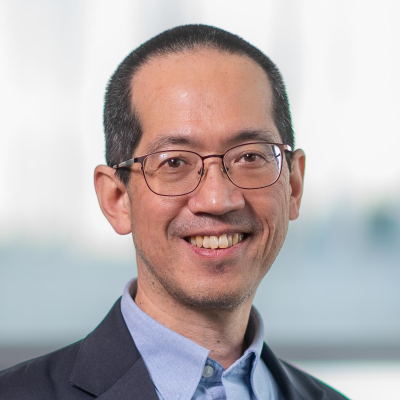
Christopher Lynch is a Professor in the Department of Computer Science at Clarkson University, part of the Coulter School of Engineering & Applied Sciences. His research focuses on Automated Deduction, including theorem proving, algorithm efficiency, and cryptographic protocol analysis. He has contributed to the development of efficient algorithms and tools for verification in hardware/software systems. His research interests include automated deduction, automated reasoning, and theorem proving, with a particular emphasis on improving algorithm efficiency for verifying specifications in hardware and software. He has developed new algorithms and modified existing ones to enhance their performance. Additionally, his work extends to cryptographic protocol analysis, focusing on symbolic methods and tools like CryptoSolve to ensure system security. His recent articles explore advancements in satisfiability modulo theories (SMT), unification algorithms (e.g., XOR unification and asymmetric unification), and the application of formal methods to cryptographic systems. Key contributions include improving theorem proving efficiency and developing tools for protocol verification. Christopher Lynch has been involved in collaborative research grants, including the "Unification Laboratory" projects aimed at enhancing cryptographic protocol analysis tools. No specific grants or advising details beyond this are provided in the text.
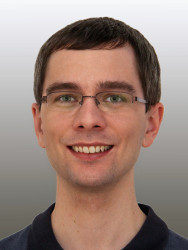
Alan Hu is a Professor in the Department of Computer Science at the University of British Columbia (UBC), part of the Faculty of Science. His research focuses on formal verification, algorithms, computer architecture, and electronic design automation. He teaches courses such as Intermediate Algorithm Design and Analysis (CPSC 320) and Introduction to Formal Verification and Analysis (CPSC 513). Dr. Hu has received notable awards, including the IEEE Council on Electronic Design Automation Outstanding Service Award and the IBM Faculty Award. His work emphasizes scalable verification techniques, SAT-based algorithms, and optimization in cloud computing and hardware systems. His research spans formal methods for hardware/software systems, including verification of embedded software, cache coherence, and network function virtualization. Notable contributions include advancements in SAT modulo theories, data race detection in heterogeneous systems, and cloud resource allocation frameworks like Cospot. Dr. Hu has been actively involved in teaching and curriculum development, consistently offering courses on algorithms, formal verification, and software design since 2000. His publications reflect a blend of theoretical foundations and practical applications in electronic design, cloud infrastructure, and verification tools. His scientific achievements include innovations in post-silicon validation, emulation-based coverage reduction, and formal analysis for debug trace optimization. He also contributes to the academic community through conference organization and editorial roles in formal verification and computer-aided design.
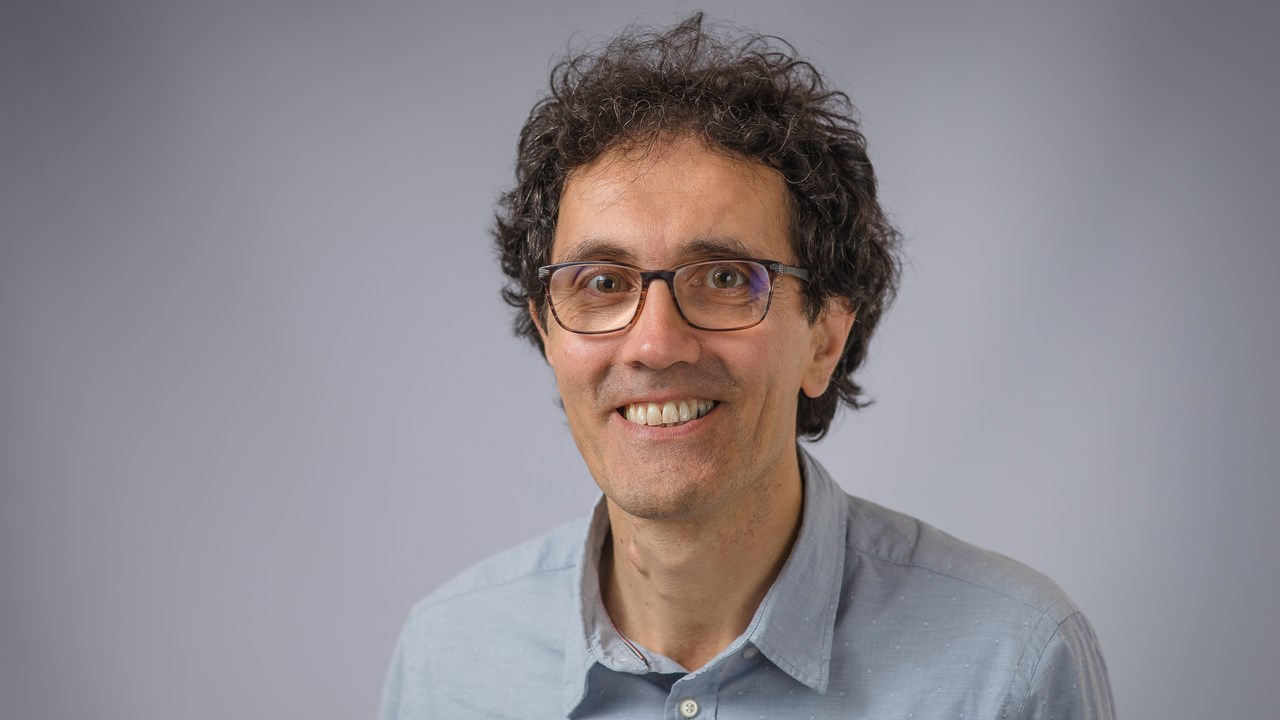
Philipp Wendler is an academic lecturer in the Department of Computer Science at Ludwig-Maximilians-Universität München (LMU Munich). He is affiliated with the Software and Computational Systems Lab and actively involved in research, teaching, and open-source tool development. As an employee representative in the steering committee of the Institute of Informatics, he contributes to institutional governance. His research focuses on software verification, formal methods, and program analysis. Key projects include CPAchecker (a configurable verification framework) and BenchExec (a benchmarking tool). His work emphasizes practical applications in automated testing, energy-efficient algorithms, and reproducible benchmarking. Publications span topics like interpolation-based model checking, energy measurement tools, and strategies for software verification competitions. He has contributed to advancing predicate analysis, k-induction, and refinement selection techniques. Notable achievements include leading the development of CPAchecker and BenchExec, which are widely used in academic and industrial verification efforts. His research addresses challenges in scalable verification, flaky test analysis, and energy-aware computing.
João Pedro Hespanha is a Distinguished Professor holding dual appointments in the Electrical and Computer Engineering and Mechanical Engineering departments at the University of California, Santa Barbara. He is affiliated with the Center for Control, Dynamical-Systems and Computation (CCDC) and the Institute for Collaborative Biotechnologies, where he leads research at the intersection of control theory, networked systems, and biological applications. Dr. Hespanha has established himself as a leading authority in hybrid systems and networked control with significant theoretical contributions and practical implementations. Dr. Hespanha received his Licenciatura and MS in Electrical and Computer Engineering from Instituto Superior Técnico in Lisbon, Portugal, before earning his PhD in Electrical Engineering and Applied Science from Yale University in 1998. After serving as an Assistant Professor at the University of Southern California from 1999-2001, he joined UC Santa Barbara in 2002 where he has remained ever since, rising to his current distinguished position. His educational background reflects a strong foundation in both theoretical mathematics and practical engineering applications. His research program spans multiple interconnected domains including hybrid and switched systems, networked control systems, cooperative control of autonomous agents, and systems biology. Dr. Hespanha's work on hybrid systems has fundamentally advanced the mathematical frameworks for modeling systems that combine continuous dynamics with discrete logic transitions. His research on networked control systems addresses critical challenges in communication-constrained environments, while his work in cooperative control tackles computational complexity and limited communication in multi-agent systems. His systems biology research applies control theory to model gene regulatory networks using stochastic hybrid systems. Dr. Hespanha's recent publications demonstrate consistent innovation across theoretical foundations and practical applications. His work shows a clear trajectory toward more complex networked systems, with increasing emphasis on security, resilience, and uncertainty quantification. The publications reveal strong interdisciplinary connections between control theory, computer science, and biology, with applications spanning autonomous vehicles, communication networks, and biological processes. Among his numerous accolades: Elevated to IEEE Fellow in 2008 for contributions to stability techniques for switched and hybrid systems Awarded the prestigious Ruberti Young Researcher Prize in 2009 Received the George S. Axelby Outstanding Paper Award in 2006 Honored with the Automatica Theory/Methodology best paper prize in 2005 Named IFAC Fellow in 2016 Received ACM SIGBED HSCC Best Paper Award in 2019 Dr. Hespanha has successfully mentored over 25 PhD students who have gone on to prominent positions in academia and industry. His research has been consistently supported by substantial funding from NSF, NIH, ONR, and other agencies, with current projects including pandemic management decision systems, precision drug delivery, and control of autonomous vehicle networks. He has taught numerous influential courses including Linear Systems Theory and Noncooperative Game Theory, authoring widely used lecture notes published by Princeton Press. Dr. Hespanha leads an active research group within the Center for Control, Dynamical-Systems and Computation, collaborating with researchers across engineering disciplines and biology. His lab maintains strong connections with industry partners working on autonomous systems, communication networks, and biological applications. He has organized major conferences including serving as General Chair for the 9th International Workshop on Hybrid Systems: Computation and Control in 2006, further establishing UCSB as a leading center for control systems research.
Matti Järvisalo is a Professor in the Department of Computer Science at the University of Helsinki, Finland, holding the title of Docent and serving as Supervisor for the Doctoral Programme in Computer Science. He is affiliated with the Helsinki Institute for Information Technology (HIIT), a leading collaborative research institute between the University of Helsinki and Aalto University. His research centers on computational logic and constraint-based reasoning, with core expertise in Boolean optimization, SAT/MaxSAT solving, and argumentation frameworks. He develops declarative approaches for combinatorial problems in computational social choice, judgment aggregation, and fair division, emphasizing certified algorithms and preprocessing techniques. His work bridges theoretical computer science with practical implementations in optimization and AI. Recent publications (2024-2025) reveal a strong focus on multi-objective optimization, certified reasoning, and argumentation under incomplete information. Key trends include symmetry-aware core learning for Pseudo-Boolean optimization, Pareto-optimality certification in MaxSAT, and novel algorithms for manipulation analysis in judgment aggregation, demonstrating his leadership in advancing SAT-based AI methods. Professor Järvisalo's significant contributions have been recognized by prestigious awards: IJCAI-JAIR Best Paper Prize (2019) Best Researcher Award from University of Helsinki Department of Computer Science (2011) CP 2017 Distinguished Paper Award ECAI 2016 Runner-Up Best Student Paper Award Honorary Mention at ICCMA 2015 He actively mentors the next generation of researchers and secures major research funding: Supervision: 6 doctoral theses and 6 Master's/Licentiate theses Active Grant: Academy of Finland project 'Next-generation Unsatisfiability-based Declarative Optimization' (2023-2027) Past Projects: 'Symbolic Techniques for Formally Verified and Explainable AI' (2020-2022), 'Declarative Boolean Optimization: Pushing the Envelope' (2019-2023) As a core member of HIIT, he collaborates within Finland's premier information technology research ecosystem, contributing to the institute's mission of advancing fundamental and applied IT research through interdisciplinary teamwork and international partnerships.
Diego Calvanese is a Visiting Professor at Umeå University's Department of Computing Science and holds a full professorship at the Free University of Bozen-Bolzano, Italy. His research focuses on AI for data management, including virtual knowledge graphs (VKG), ontology-based data access (OBDA), and formal methods like description logics. He is part-time at Umeå, balancing roles with his primary position in Italy. Calvanese has received prestigious awards including the AAAI Classic Paper Award (2021), EurAI Fellow (2015), and ACM Fellow (2019). He supervises three doctoral students at Umeå and has authored over 350 publications, with an h-index of 71. His work emphasizes data integration, geospatial systems, and ethical AI applications. Key Roles: Associate Programme Chair (IJCAI 2025), Programme Chair (IJCAI-ECAI 2026), Head of AI for Data Management Research Group Research Interests: Knowledge representation, graph data management, explainable AI, and telemonitoring systems like reCOVeryaID. His research group develops tools like Ontop, a VKG system enabling seamless data access across heterogeneous sources. Current projects include geospatial data integration and temporal OBDA frameworks. Calvanese has served on over 150 program committees and editorial boards, including Artificial Intelligence and JAIR. His work bridges technical advancements with societal impacts, addressing AI's role in healthcare, climate, and democracy.
Konstantin Korovin is an Associate Professor and Reader in Formal Methods at the University of Manchester. He leads the Formal Methods Research Group and is a core developer of the iProver theorem prover, a tool for automated reasoning in first-order logic with applications to verification, neuro-symbolic systems, and machine learning integration. His work focuses on combining automated reasoning techniques with machine learning, particularly in areas like premise selection, neural architecture for term synthesis, and hybrid verification systems. Affiliations: Centre for Digital Trust and Society, SCorCH Project (Secure Code for Capability Hardware) Research Beacons: Digital Futures Key research interests include automated theorem proving, verification of machine learning models, non-linear constraint solving, and neuro-symbolic reasoning. He has contributed to tools like ESBMC (for C++ program verification) and SMLP (a symbolic machine learning prover). His work spans theoretical advancements in superposition calculus and practical applications in hardware verification and systems biology. Collaborations include projects on DNA-based computing, robotic scientific discovery (e.g., Genesis), and formal methods for industrial hardware verification. Korovin’s research is supported by grants from the Engineering and Physical Sciences Research Council (EPSRC) and industry partnerships.
Scott J. Shapiro is the Charles F. Southmayd Professor of Law and Professor of Philosophy at Yale University, where he bridges legal theory, philosophy, and cutting-edge technology. His work integrates jurisprudence with artificial intelligence, cybersecurity, and international law, establishing him as a leading voice in legal philosophy and AI ethics. He co-founded the Yale Legal AI Lab and served as Special Assistant for AI Ethics at CISA (2024-2025), directly shaping federal cybersecurity policy. Ph.D. in Philosophy, Columbia University (1996) J.D., Yale Law School (1990) B.A. in Philosophy, Columbia University (1987) Shapiro's research centers on the philosophy of law, international criminal law, and the automation of legal reasoning. He pioneers the application of AI to legal systems, exploring how automated reasoning and large language models can formalize and democratize legal processes. His cybersecurity work examines historical hacking incidents to expose systemic vulnerabilities, while his scholarship on international law investigates how the outlawry of war transformed global order. His interdisciplinary approach connects abstract jurisprudence with real-world technological and geopolitical challenges. Recent publications reveal a sharp pivot toward AI-law integration, with 70% of his 2021-2024 work focusing on automated legal reasoning, SMT-based verification, and autonomous agent ethics. Simultaneously, he maintains a robust thread in international law, analyzing war manifestos and treaty impacts through historical-legal lenses. This dual trajectory positions him uniquely at the intersection of technological innovation and foundational legal theory. Amazon Research Award (2022, 2023) New York Times Book Review Editors’ Choice (2017) The Economist Book of the Year (2017) Scribes Book Award (2018) Lionel Gelber Prize shortlist Duke of Westminster shortlist Shapiro directs the Yale Legal AI Lab, which develops tools for automating legal reasoning and has secured significant industry funding including two Amazon Research Awards. His CISA role involved advising on AI ethics frameworks for national infrastructure protection. He also founded the Yale Documentary Project, providing legal support to filmmakers, and co-edits the Stanford Encyclopedia of Philosophy. Current grants focus on LLM-based legal democratization and formalizing FISA through automated reasoning systems. The Yale Legal AI Lab, co-founded by Shapiro, builds practical tools for legal automation while the Yale Documentary Project extends his impact to media. His CISA collaboration connects academic research with federal cybersecurity operations, creating a pipeline from theoretical jurisprudence to national security applications.
Vadim Malvone is an Associate Professor in the Computer Science and Networks (Infres) department at Télécom Paris, affiliated with the Autonomous and Critical Embedded Systems (ACES) team within the Information Processing and Communication Laboratory (LTCI). His research focuses on strategic reasoning, multi-agent systems, formal verification, and temporal logics in theoretical computer science. Education: Ph.D. in Computer Science (2018), University of Naples "Federico II" Master's in Computer Science (2014), University of Naples "Federico II" Bachelor's in Computer Science (2010), University of Naples "Federico II" Research Trends: His recent work spans attack graphs , stochastic temporal logics , compositional verification frameworks , and cost-aware strategic modeling . He explores formal methods for cybersecurity, smart contracts, and dynamic game reasoning. Scientific Awards: BEST PAPER AWARD at Formal Methods - 25th International Symposium, FM 2023 Advising and Grants: Vadim supervises research projects on topics like dynamic cybersecurity strategies for automotive cyber-physical systems and verification of smart contracts . He has collaborated with institutions including University of Evry, Polish Academy of Sciences, and Sorbonne University. Labs & Teams: He works with the ACES team at LTCI (Télécom Paris) and has engaged in international collaborations with researchers such as Francesco Belardinelli, Aniello Murano, and Jean Leneutre.
Sam Corson is a Ramon y Cajal Fellow (Research Fellow) at the Technical University of Madrid, specializing in the construction of unconventional mathematical structures at the intersection of group theory, topology, and set theory. His work resolves longstanding conjectures, such as the Cannon-Conner problem on fundamental groups of the harmonic archipelago and Griffiths double cone, and introduces novel objects like Artinian groups of arbitrary cardinality and Jonsson groups satisfying Babai’s infinitary edge orbit conjecture. His research interests emphasize automatic continuity (proving open kernels for homomorphisms from topological groups to hyperbolic/braid groups), wild topology (analyzing fundamental groups of non-locally simply connected spaces), and set-theoretic group theory (constructing groups under ZF axioms without choice). Key contributions include models of ZF where metric spaces fail paracompactness or torsion-free abelian groups lack bi-orderings, demonstrating deep interactions between logic and algebra. Recent publications (2021–2025) reveal a trend toward profinite rigidity in Coxeter groups, cardinality constraints in infinite groups, and geometric realizations of permutation actions. His work spans journals like Bulletin of the London Mathematical Society and Proceedings of the American Mathematical Society , often coauthored with Saharon Shelah and Olga Varghese. Scientific recognition includes: Ramon y Cajal Fellowship (prestigious Spanish postdoctoral award) With an Erdős number of 2, Corson collaborates extensively but has no documented advisees, teaching roles, or grants. His research operates within pure mathematics frameworks without applied lab structures or institutional teams beyond coauthor networks.
Dr. Martin Bromberger is a Senior Researcher at the Max Planck Institute for Informatics, specializing in Automated Reasoning , Linear Arithmetic , and Theorem Proving . He is affiliated with the Automation of Logic research group (RG1), focusing on combinations of theories and arithmetic reasoning. His recent work includes publications at top venues like TACAS, FroCoS, and VMCAI. He has developed critical SMT solvers such as SPASS-IQ and SPASS-SATT , advancing constraint-solving techniques in linear arithmetic. His research spans Arithmetic Decision Procedures Datalog Applications Bernays-Schoenfinkel Fragment Cube-Based Arithmetic Optimization He received awards at SMT-COMP 2018, SMT-COMP 2019, and the Best Student Paper Award at CADE-27 for his contributions to SMT solving.
Yu-Fang Chen is a Full Professor and Research Fellow at the Institute of Information Science, Academia Sinica, Taiwan, where he has been affiliated since 2018. His research group focuses on cutting-edge work in formal methods, quantum programming, and automata theory, with significant contributions to quantum circuit verification and constraint solving. His research centers on developing automata-based frameworks for quantum program verification (AutoQ Project), string constraint solving (Z3-Noodler), and symbolic execution techniques. Core interests include formal verification of quantum systems, satisfiability modulo theories, automata theory applications in quantum contexts, and developing practical verification tools. Chen's recent publications (2020-2025) demonstrate a strong focus on quantum circuit verification, automata theory adaptations for quantum systems, and string constraint solving. Work frequently combines theoretical foundations with practical tool development, showing consistent innovation in quantum program analysis techniques and symbolic execution methods. Awards & Honors: Academia Sinica Scholar Award (2025-2029) SIGLOG/CACM research highlights nomination (2025) Distinguished Paper Awards (OOPSLA 2023, PLDI 2023) Best Paper Awards (FM 2023, TACAS 2010) Young Scholar Creativity Award (2023) MOST Research Project for Excellent Junior Research Investigators (2020-2023) Chen actively advises PhD students and postdoctoral researchers, with open positions advertised for his quantum computing and formal methods research group. He leads significant projects including the AutoQ framework development and has secured multi-year funding through the Academia Sinica Scholar Award and MOST grants. He directs a research laboratory at Academia Sinica focused on automata theory and quantum verification, developing tools like AutoQ and Z3-Noodler. The team collaborates internationally and regularly contributes to top-tier conferences in formal methods and programming languages.
Cesare Tinelli is the F. Wendell Miller Professor of Computer Science at the University of Iowa within the College of Liberal Arts and Sciences. He is a co-director of the Computational Logic Center and leads the development of critical tools like the CVC4 and cvc5 SMT solvers, as well as the Kind model checker. His academic credentials include: Ph.D. in Computer Science (1999), University of Illinois at Urbana-Champaign M.S. in Computer Science (1995), University of Illinois at Urbana-Champaign Laurea in Scienze dell'Informazione (1990), University of Bari Research Interests : Tinelli specializes in Automated Reasoning , particularly Satisfiability Modulo Theories (SMT) , Model Checking , Software Verification , and Formal Methods . His recent work explores Inductive Reasoning in SMT , Proof-Certificate Generation , and Logical Frameworks for Proof Systems . His methodologies bridge theoretical advancements with practical implementations, impacting both academia and industry. Scientific Contributions : Tinelli's research drives innovation in SMT solving, model checking, and automated theorem proving. His 15 most recent publications span topics from stateful protocol testing ( Saecred ) to proof certification ( IsaRare ) and generalized optimization ( Generalized OMT ). Awards and Recognition : NSF CAREER Award (2003) Haifa Verification Conference Award (2010) CAV Award (2021) Advising and Collaborations : His former students and postdocs hold positions at leading institutions like NASA, Intel, MIT, and EPFL. He collaborates with organizations such as Amazon, Facebook, General Electric, and Microsoft.
Alessandro Gianola is a Tenure Track Assistant Professor at the Department of Computer Engineering, College of Engineering, University of Lisbon, and a Senior Researcher at INESC-ID. He earned a PhD in Computer Science cum laude from the Free University of Bozen-Bolzano. Research Focus: Business Process Management, formal methods, AI verification of data-aware processes, multi-perspective process mining, and constraint-based reasoning. Awards: ECAI 2024 Outstanding PC Member, 2024 INESC-ID Best Young Researcher, 2023 CADE Bill McCune PhD Award, and multiple best paper awards. Education: PhD in Computer Science (Free University of Bozen-Bolzano, 2022). His recent publications analyze data-aware processes using SMT techniques, with applications in conformance checking, model checking, and formal verification. He leads projects like FCT OptiGov and INESC-ID eProcess. Conference Leadership: PC Co-chair for EDOC 2025, Workshops Co-chair for FLoC 2026, and co-chair for multiple FM-BPM workshops. Research Groups: ELLIS, LUMLIS, ARSR, OVERLAY, and former KRDB Research Centre.
Zheng Xiaochen serves as an Assistant Professor at Southern University of Science and Technology's School of Automation and Intelligent Manufacturing, bringing expertise from his PhD at Madrid's Polytechnic University and postdoctoral research at EPFL's ICT4SM lab. His work bridges academic research with industrial applications through EU-funded projects and global standardization initiatives. His educational foundation includes: PhD in Industrial Engineering, Polytechnic University of Madrid (2019, Cum Laude) Visiting Scholar, Copenhagen Business School (2018) MS in Manufacturing System Information Engineering, Shandong University (2012) BS in Mechanical Design, Shandong University (2009) Research centers on cognitive digital twins and ontology-driven manufacturing systems , with emphasis on translating theoretical frameworks into industrial solutions. His Model Based Systems Engineering approaches enable real-time decision-making in aircraft production and CNC machining, while semantic modeling creates interoperable knowledge bases for zero-defect manufacturing. Current work integrates AI with physical production systems to close the loop between digital models and shop-floor operations. Publication analysis reveals consistent focus on cognitive digital twin applications (43% of recent output), ontology engineering for aerospace (29%), and MBSE frameworks for production scheduling (28%), demonstrating strategic alignment with Industry 4.0 priorities and EU manufacturing initiatives. Key recognitions include: Polytechnic University of Madrid's Outstanding Doctoral Dissertation (Cum Laude) International Journal of Production Research Top Cited Paper Award Funding leadership spans multiple EU Horizon 2020 projects including QU4LITY (H2020 825030), lBOOST 4.0 (780732), and OntoCommons (958371), with direct industry partnerships at Airbus and Siemens. He chairs the Industrial Ontologies Foundry's Product Service System working group while contributing to CEN-CENELEC's Zero-Defect Manufacturing standardization efforts. As director of SUSTech's cognitive manufacturing research unit, he coordinates cross-disciplinary teams developing ontology-based frameworks for digital twin implementations, with active collaborations spanning the EU-China Manufacturing Innovation Platform and Shenzhen's smart manufacturing industrial cluster.