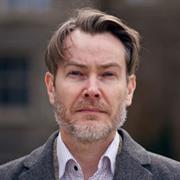
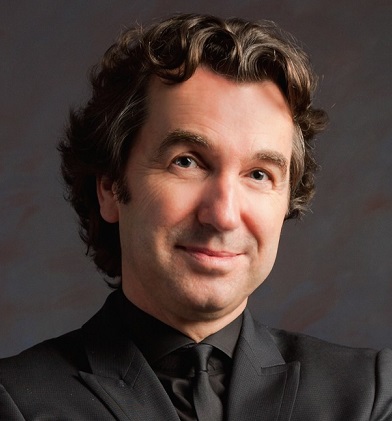
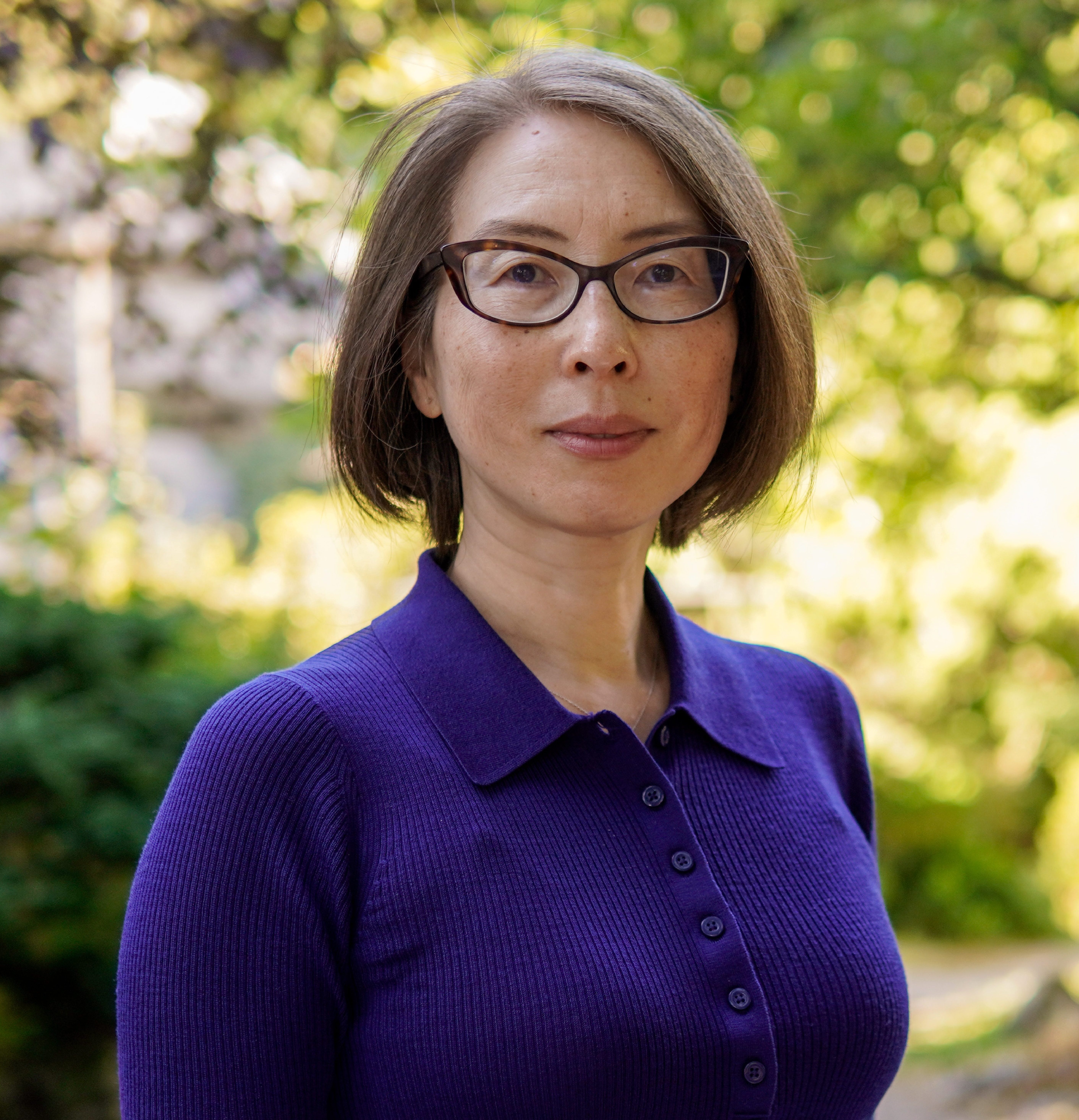
Ajay K. Rao is an Associate Professor at the University of Toronto, affiliated with the Department of Historical Studies and the Department for the Study of Religion. His research focuses on Sanskrit intellectual history, Sanskrit literature, and religious traditions in South India. PhD from University of Chicago Specialization in South Asian Religion and Sanskrit Literature Rao’s scholarly work explores the intersection of Hinduism and South Asian cultural history. His first book, Re-figuring the Ramayana as Theology , examines traditional hermeneutics and the pre-colonial evolution of the Ramayana as a religious text. Current collaborative projects include studies on the 'Age of Vedanta' and 'Sultanate Sanskrit'. Rao’s publications demonstrate a focus on Sanskrit theological traditions, royal religious practices, and literary commentary. His work bridges historical, literary, and philosophical approaches to South Asian studies.
Neil Dalal is an Associate Professor at the University of Alberta, holding a joint appointment in the Department of Philosophy and the Religious Studies Program. He specializes in South Asian Philosophy and Religious Thought, with expertise in Advaita Vedānta, Yoga philosophies, and Buddhist thought. His research bridges Philosophy and Religious Studies, focusing on contemplative practices, meditation, and self-inquiry in classical Indian traditions. Education: PhD in Asian Cultures and Languages (University of Texas at Austin), MA in East-West Psychology (California Institute of Integral Studies). He has also engaged in extensive fieldwork with Indian monastic renouncers and traditional scholars. Research interests include sudden vs gradual enlightenment in Advaita, meditational roles of memory, philosophy of dreaming, and Yogic approaches to well-being. Current projects explore these themes through close readings of Advaita philosophers like Śaṅkarācārya and their interpretations of Upaniṣads and Bhagavadgītā. Teaching spans undergraduate and graduate courses such as 'Happiness in Indian Philosophy,' 'Meditation and Mind in Indian Philosophy,' 'Advaita Vedānta: India’s Philosophy of Nonduality,' and courses on Hinduism, Buddhism, and Eastern Religions. He also teaches Environmental Ethics and Comparative Philosophy. No scientific awards or grants are explicitly listed in the provided texts. His academic service includes course coordination in Philosophy and Religious Studies programs.
Mathieu Boisvert is a Professor at the Department of Religious Studies at Université du Québec à Montréal (UQAM) since 1992. He holds a BA in Religious Studies from McGill University (1981-1984), a Pali diploma from Siddhartha College, University of Bombay (1984-1985), a Master's in South Asian Studies from the University of Toronto (1985-1987), and a PhD in Pali and Sanskrit from McGill University (1987-1991). His research focuses on South Asian religious traditions, contemporary practices like pilgrimage and asceticism, and the role of religion in immigrant identity reconstruction in Quebec. Education: BA in Religious Studies, McGill University (1981-1984) Pali Diploma, Siddhartha College, University of Bombay (1984-1985) MA in South Asian Studies, University of Toronto (1985-1987) PhD in Pali and Sanskrit, McGill University (1987-1991) His fieldwork spans India, Sri Lanka, Myanmar, Nepal, and Bhutan, with a focus on pilgrimage routes and ritual practices. He co-founded GRÌMER (Groupe de recherche interdisciplinaire sur le Montréal ethno-religieux), emphasizing the role of religion in immigrant identity formation. He collaborates with Sri Lankan Tamil and Indian Hindu communities, and has studied Bhutanese refugees in Quebec since 2009. He pioneered the 'Field Studies in India' graduate program, requiring students to spend a month in India after preparatory seminars. His academic projects include organizing study trips and interdisciplinary research on ethno-religious dynamics in Montreal. Boisvert’s work bridges South Asian religious traditions with contemporary social and political contexts, emphasizing ritual practices, cultural identity, and community-based heritage.
Shayne Clarke is an Associate Professor at the Faculty of Religious Studies, McMaster University. His work focuses on Indian Buddhist monastic law codes (Vinaya) preserved in Sanskrit, Pali, Tibetan, and Chinese, with additional interests in humor in religious texts, manuscript studies, and East Asian religions. Primary research: Indian Buddhist monasticism, Vinaya textual analysis Key languages: Sanskrit, Tibetan, Chinese, Pali Recent projects: Survey of Tibetan Dunhuang manuscripts, edition of Vinayakārikā texts Research interests include family dynamics in monastic Buddhism, gender and ordination practices, and legal narratives in Vinaya texts. His publications examine topics like: Pregnant nuns and monastic motherhood Humor in Indian Buddhist legal codes Comparative analysis of Pārājika penance Monastic expulsion vs. local community exclusion Teaching includes graduate courses on Indian Buddhist texts (RELIGST 715, 714) and undergraduate courses like What is Buddhism? (SCAR 2K03) and Sex and the City in Buddhism (RELIGST 2BN3).
Christoph Emmrich is an Associate Professor in the Department for the Study of Religion (DSR) at the University of Toronto. His research focuses on Buddhist and Hindu traditions in Nepal, Burma, and Tamil Nadu, with expertise in ritual studies, textual analysis, and the intersection of religion with gender, language, and material culture. He holds a PhD from the University of Heidelberg (2004) and has conducted extensive fieldwork in the Kathmandu Valley, Yangon, Mandalay, and Mawlamyine. Key areas of study include Nepalese and Burmese Buddhism, Jainism in Tamil Nadu, and the analysis of ritual manuals, literary texts, and historiography. His work addresses questions of memory, translation, and resistance in religious practices. Recent publications explore the inclusion of Burma in South Asian Studies, the role of repetition in Theravāda Buddhism, and the cultural significance of jewelry in Newar rituals. Emmrich’s research also engages with the historiography of Tamil Jain literature and the impact of colonial frameworks on religious scholarship. He contributes to interdisciplinary projects such as the study of Buddhist textual transmission and the reclamation of marginalized religious narratives.
Prashant Keshavmurthy is an Associate Professor of Persian-Iranian Studies at the Institute of Islamic Studies, McGill University, where he has served since 2009 and currently holds the position of Graduate Program Director. His academic work centers on Persian literary traditions across historical periods, with specialized expertise in pre-colonial South Asian Persian poetry and its cross-cultural intersections. His research integrates historically grounded analysis with theoretical frameworks in comparative literature, examining poetics, mysticism, and selfhood discourses across Persian, Arabic, Sanskrit, and Braj Bhasha traditions. Key focuses include the intellectual eclecticism of early modern South Asian Sufism, Persian literary theory, and the trans-Caucasian context of classical Persian works like Nizami Ganjavi's quintet. Analysis of his publication trajectory reveals consistent exploration of prosody-mysticism interplay in Persian ghazals, Indo-Persian identity construction in Mughal commentaries, and cross-religious literary adaptations such as Hindu epics translated into Persian. His scholarship bridges philological precision with philosophical inquiry, emphasizing multilingual and multi-religious contexts of Islamicate literary production. As Graduate Program Director, Keshavmurthy mentors students through specialized graduate seminars including Pre-Modern Persian Literary Criticism and Autobiography in the Islamic World, while teaching undergraduate courses on Persian literature in translation and South Asian Islamic literary histories.
Janet Um is a Lecturer in Sanskrit Language and Literature at the Department of Asian Studies, Faculty of Arts, University of British Columbia. She holds a Ph.D. from the University of California at Berkeley (2022) and specializes in Sanskrit literature and the literary histories of premodern South Asia. Education: Ph.D., University of California at Berkeley, 2022 Her research explores the interplay between narrative structures, literary genres, and authorship in Sanskrit prose literature. She is broadly interested in narrative traditions across South Asia, the aesthetics of sociability, gender history, and Sanskrit language pedagogy. She teaches courses such as Religion in South Asia (ASIA 258) , examining Hinduism, Islam, Sikhism, and Buddhism in their historical and contemporary contexts. Her teaching emphasizes in-person and synchronous online engagement, reflecting her commitment to interactive language and cultural education.
Christine Chojnacki is a Professor and holder of the Gyan and Kanchan Jain Chair in Jain Studies at the University of Toronto Mississauga (UTM), with a graduate appointment in the Department for the Study of Religion. She specializes in the literature and history of Jainism, focusing on medieval Jain texts in Sanskrit and Prakrit, manuscript transmission, and the role of Jainism in Indian cultural and intellectual history. She previously served as Professor of Indian Languages and Culture at the University of Lyon, France. Education: Studied Classics (Latin/Greek), Sanskrit under Gerard Fussman (Strasbourg), Prakrit and Jainism with Colette Caillat (Paris), and further specialization in Munich, Münster, and London. Her research explores forgotten medieval Jain literature to reconstruct Indian knowledge systems, manuscript reception, and understudied genres like kathākośa and prabandha. She emphasizes the importance of Jain contributions to pre-modern Indian intellectual traditions. Awards: 2013 Prakrit Jnanabharati International Award for her work on the Kuvalayamālā. Her publications include analyses of Jain pilgrimage rituals, the Kṛṣṇa tradition, and biographies of monks. She actively mentors students in Jain studies and related fields.
Francis X. Clooney, S.J., is the Parkman Professor of Divinity and Professor of Comparative Theology at Harvard Divinity School. He has served as Director of Harvard’s Center for the Study of World Religions (2010–2017) and currently works on Hindu ritual theology and interfaith studies. Educated with a BA from Fordham University, MDiv from Weston School of Theology, and PhD in South Asian Languages and Civilizations (University of Chicago, 1984), Clooney bridges Hindu and Christian traditions as a Roman Catholic priest, Jesuit for 55+ years, and active parish celebrant. Education: BA, Fordham University MDiv, Weston School of Theology PhD, University of Chicago (1984) His scholarship focuses on comparative theology , Sanskrit and Tamil Hindu theological commentaries, and Jesuit missionary discourse in Asia. He has published 15+ books and articles including studies on Vedanta Desika, Ramanuja, and Hindu-Christian dialogue. His 2023 festschrift and 2024 honorary doctorates mark his global influence. Recent projects include translating Tamil ālvār hymns and exploring interfaith studies futures. Research Trends: 2010–2024: Hindu-Christian theological parallels 2013: Divine absence in religious traditions 2020–2022: Jesuit mission in South India 1990–2013: Mimamsa and Vedanta theological frameworks Scientific Honors: Fellow of the British Academy (2010) Wiley Blackwell festschrift (2023) Honorary doctorates (Scranton 2023, Le Moyne 2024) American Academy of Arts and Sciences (2025) As 2022–2023 President of the Catholic Theological Society of America, he advanced interfaith dialogue. His pandemic-era homilies and 50-year vegetarian advocacy reflect personal commitments to lived theology.
Noel Salmond is an Associate Professor in the Department of Religion at Carleton University, part of the College of the Humanities. He holds a doctorate in Asian religions from McGill University (1999) and has held research fellowships with the Shastri Indo-Canadian Institute and the Royal Asiatic Society. His research focuses on religion and visual culture, modernist movements in Hinduism and Buddhism, religion's engagement with environmental discourses, and theoretical frameworks in religious studies. Education: PhD in Asian Religions (McGill University, 1999), M.A. in History/Philosophy of Religion (Concordia University), studies in Sanskrit (McGill) and South Asian art (SOAS, University of London). Professional Experience: Internship at the British Museum's Department of Oriental Antiquities. Salmond's work bridges historical analysis with contemporary religious practices, particularly examining iconoclasm, modern religious reform, and intersections between religion and environmental ethics. His book *Hindu Iconoclasts* (2004) remains a seminal text on 19th-century Hindu debates over idolatry. Awards include fellowships from the Shastri Indo-Canadian Institute and Royal Asiatic Society, reflecting his scholarly contributions to Asian religions. He teaches courses on religion's role in visual culture and modern religious movements.
Brendan S. Gillon is a Professor in the Department of Linguistics at McGill University, Montreal. His research focuses on semantics, pragmatics, and formal methods in linguistics, with notable contributions to the study of classical Indian logic and Sanskrit grammar. He holds a PhD in Philosophy from MIT (1984) and has taught at MIT, University of Alberta, University of Toronto, and McGill since 1991. His work bridges linguistics and philosophy, addressing topics like the semantics of noun phrases, context sensitivity, and cross-cultural language studies. Education: PhD in Philosophy (MIT, 1984), MA in East Asian Studies (University of Michigan, 1975), MA in Sanskrit/Indian Studies (University of Toronto, 1979) Fellowships: Senior Research Fellow at American Institute of Indian Studies (1986-1987), Numata Fellow at Ryokoku University (2006) Research interests include the semantics-pragmatics distinction, mass-count noun distinctions, and formal methods applied to syntax and semantics. Collaborations include projects on lexical semantics and brain-language interactions. He has advised numerous PhD students on topics ranging from comparative linguistics to historical theories of language. Publications span over 50 articles and edited volumes, including Semantics: A Reader (Oxford UP, 2004) and works on Dharmakīrti’s logic and classical Sanskrit grammar. His lectures have been delivered globally, emphasizing interdisciplinary connections between linguistics, philosophy, and cognitive science.
Shafique N. Virani is an Associate Professor of Islamic Studies at the University of Toronto's Faculty of Arts and Science. He has previously served on the faculties of Harvard University, Zayed University, and the University of Toronto in senior leadership roles, including founding director of the Centre for South Asian Civilizations. His research spans Islamic history, Shi'ism, Quranic studies, and Muslim literatures across Arabic, Persian, and South Asian languages, with particular emphasis on Ismaili and Ithna-'ashari Shi'ism, Bhakti traditions, and esoteric doctrines. He has received over $6 million in grants and awards from global institutions. PhD, Harvard University MA, McGill University BA (Joint Honors with Excellence), McGill University Virani's research explores the survival of Ismaili communities through persecution, the role of taqiyyah (dissimulation), the interplay between Islamic philosophy and Sufism, and the development of devotional literature in South Asia. His work bridges historical analysis with contemporary applications, examining how religious minorities maintain identity while navigating hostile environments. The recovery of lost manuscripts and the evolution of poetic forms like the mathnawi are recurring themes in his scholarship. His recent publications (2020-2023) focus on Nizari Ismaili self-perception post-Mongol invasions, Persian manuscript cultures, and comparative studies between Ismaili and mainstream Islamic thought. Earlier works (2003-2015) laid foundational groundwork on Isma'ili cosmology and pedagogical traditions. Award highlights include: OCUFA Teaching Award American Academy of Religion's highest pedagogical honor United Nations recognition for knowledge advancement Farabi International Award Foundation for Iranian Studies accolades Virani leads the "Virani Dream Team," Canada's largest humanities research group focused on integrating teaching and research to address global challenges. He has consulted for UNESCO, Cirque du Soleil, and Google, and appeared in Hollywood's Downsizing as an academic authority.
Mikaël Bauer is an Associate Professor of Japanese Religions (Buddhism) and Director at the School of Religious Studies, McGill University , with an associate appointment in the Department of East Asian Studies . His work bridges Buddhist studies, Japanese history, and ritual theory. Ph.D. in East Asian Studies from Harvard University B.A. and M.A. in Japanese Studies from Catholic University of Louvain (KULeuven) Specialized in Sanskrit at Banaras Hindu University Studied at Kanazawa Daigaku, Osaka University of Foreign Studies, and Otani Daigaku His research focuses on premodern Japanese rituals , lineages , and sovereignty , particularly the interplay between Buddhism and state. He explores themes such as the materiality of Buddhist/Shinto rites, doctrinal-ruler legitimacy, and performative aspects of medieval religious practices. Key trends in his publications include analyses of Kofukuji Temple , the Fujiwara Clan , and the Yuima-e/Vimalakirti Assembly as mechanisms of political and religious authority. His work spans monographs, edited volumes, and peer-reviewed articles in journals like Monumenta Nipponica and Pacific World . Scientific awards include: Japan Foundation Conference Support Grant (2018) Sasakawa Foundation Research Grant (2013) BDK Research Fellowship (2009) Reischauer Institute Supplementary Dissertation Grant (2010-2011) Bauer supervises graduate students specializing in Classical or Medieval Japanese Buddhism and has organized international conferences at McGill, Harvard, and Cambridge University. His current project examines the ritual history of Kōfukuji Temple.
Adheesh Sathaye serves as an Associate Professor specializing in Sanskrit Literature and Folklore within the Department of Asian Studies at the University of British Columbia's Faculty of Arts. His academic home is the Department of Asian Studies, where he contributes significantly to South Asian studies through teaching and research focused on Sanskrit literary traditions and cultural practices. Dr. Sathaye earned both his M.A. and Ph.D. in South and Southeast Asian Studies from the University of California, Berkeley, establishing a strong foundation for his scholarly work in Sanskrit literature, folklore, and performance traditions. His educational background reflects deep engagement with South Asian textual and cultural traditions. His research interests span early medieval Sanskrit drama, aesthetics, and narrative literature, with particular focus on Sanskrit epics, Marathi devotional performance traditions, and theories of textual production. Dr. Sathaye's scholarly work explores the intersections between textual traditions, performance practices, and folkloristic elements within South Asian cultural contexts. His approach bridges literary analysis with performance studies and cultural theory, offering nuanced perspectives on how ancient traditions continue to shape contemporary understandings. Analysis of his recent publications reveals consistent engagement with Sanskrit literary traditions, particularly drama and narrative forms. His work demonstrates particular interest in how Sanskrit texts function within performance contexts, how knowledge traditions are transmitted across time, and how ancient narratives continue to resonate in contemporary cultural practices. The publications show a trajectory from textual analysis toward increasingly sophisticated examinations of performance traditions and knowledge transmission. Dr. Sathaye teaches several key courses including Traditions of Yoga (ASIA 210) and Myth, Ritual and Epic in Ancient India (ASIA 308), both of which he has offered consistently across multiple academic years. His teaching reflects his research interests, connecting ancient textual traditions with contemporary cultural practices and theoretical frameworks. His work contributes significantly to understanding the complex relationships between Sanskrit literary traditions, performance practices, and folk cultural expressions in South Asia. Through both teaching and research, Dr. Sathaye bridges academic scholarship with practical engagement with cultural traditions, particularly in the areas of Sanskrit drama, narrative literature, and yoga traditions.
Angela Sumegi is Associate Professor of Humanities and Religion at Carleton University's College of the Humanities. Her research examines Indo-Tibetan Buddhism, the interface between Buddhism and shamanism, and religious responses to death across traditions. With five years of research in South India including Sanskrit language study, her work bridges academic scholarship and contemplative practice. Education includes: PhD from University of Ottawa (2003) MA in Religion from Carleton University (1984) BA in Art History from Carleton University (1976) Her scholarship explores tensions between shamanic traditions emphasizing pragmatic concerns and Buddhism's soteriological focus, examining mediation strategies in syncretic contexts. Current work investigates death rituals and conceptualizations of afterlife across religious systems through the unifying lens of soul/identity constructs. Publications include monographs on Buddhist-shamanic intersections and a comprehensive textbook on death/afterlife concepts. Research demonstrates consistent focus on ritual performance analysis and comparative theological frameworks. Beyond academia, she teaches Buddhist meditation and directs a Canadian charity supporting Tibetan refugee children. No awards or students are documented in available materials.