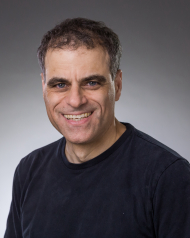
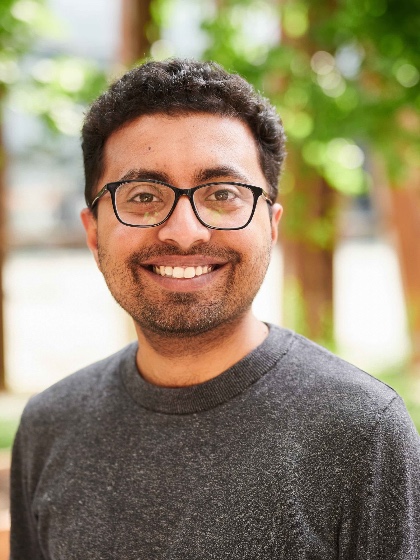
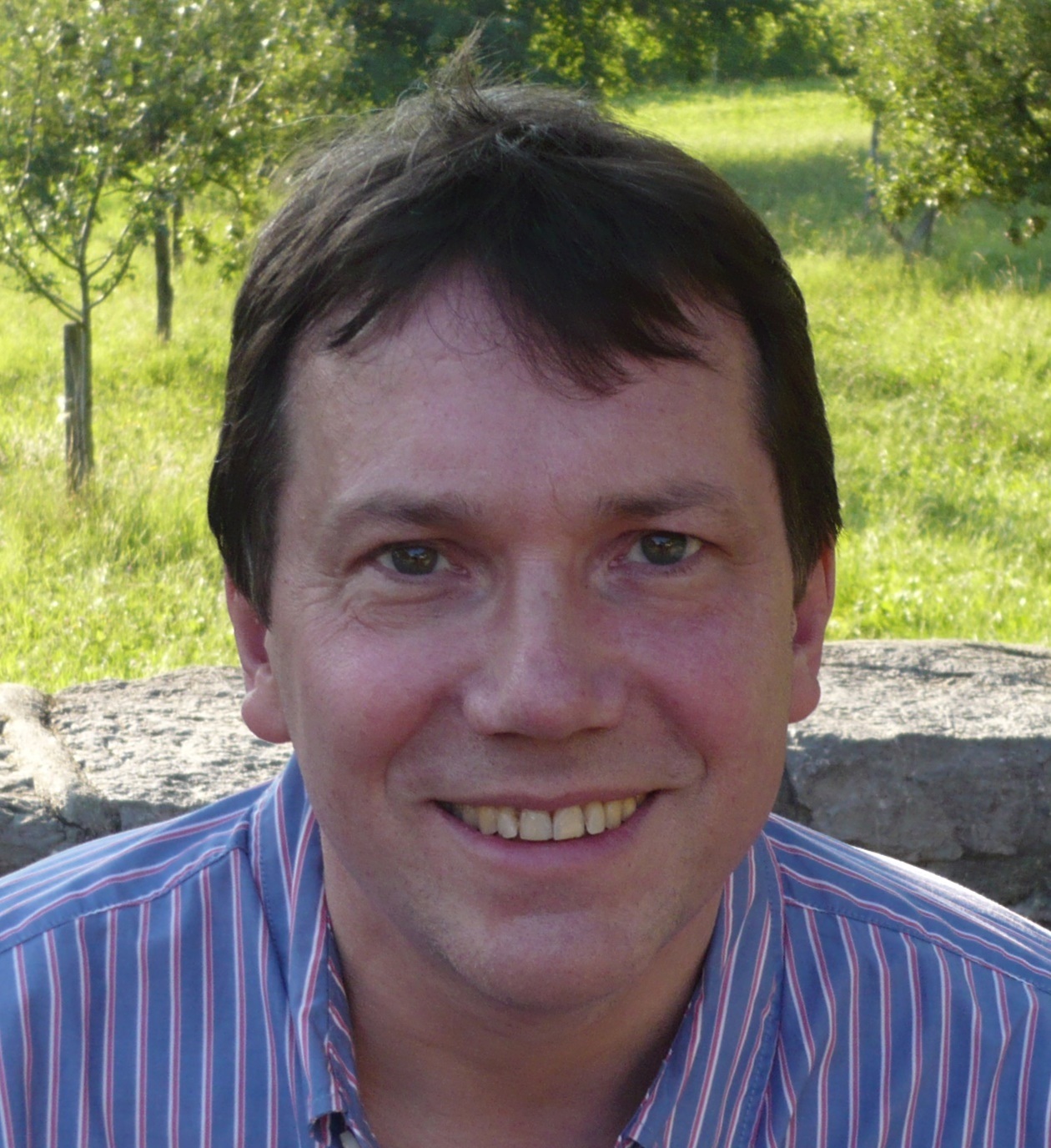
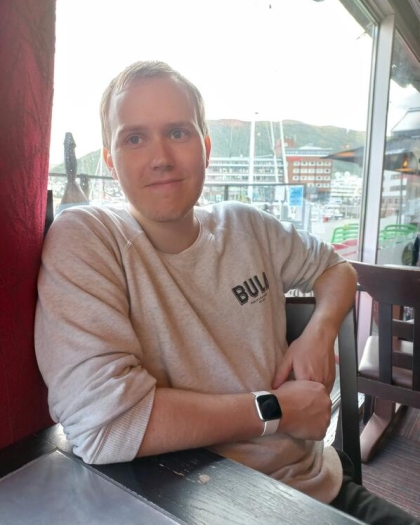
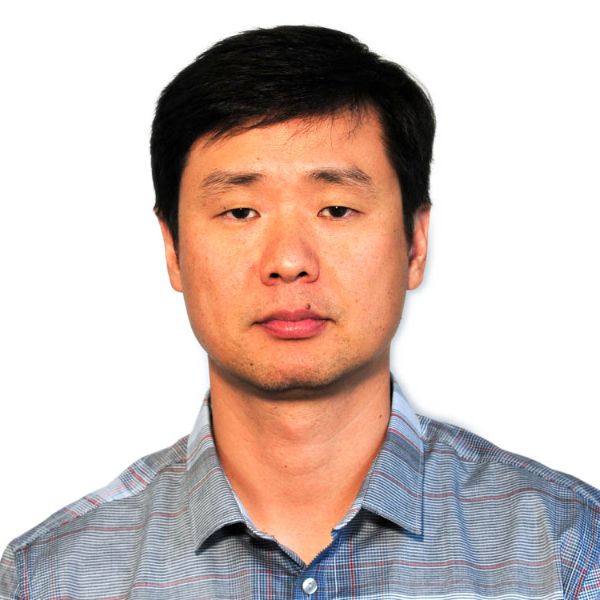
Professor Ran Raz specializes in complexity theory at Princeton University's Department of Computer Science. His research targets lower bounds in computational models, quantum communication, and derandomization. Current investigations include quantum logspace verifiability and memory-sample tradeoffs in learning algorithms. Research pillars: Boolean/arithmetic circuit complexity Quantum computation and communication Probabilistically checkable proofs Publications reflect a focus on quantum-classical hybrid systems and foundational limits of computation. Lab affiliations: Quantum research group at Princeton CS.
Hakan Türeci is Professor of Electrical and Computer Engineering at Princeton University, with joint affiliation at the Princeton Materials Institute. A theoretical physicist by training, his research explores quantum optics, quantum information science, and superconducting circuits for quantum computing applications. Education: Ph.D. from Yale University (2003) M.S. in Physics from Bilkent University, Turkey (1996) B.S. in Physics from Bilkent University, Turkey (1994) Research Interests: Focuses on non-equilibrium quantum phenomena in optical and microwave platforms, quantum simulation, quantum error correction, and the development of near-term quantum devices for computation and machine learning. Publication Trends: Recent work emphasizes quantum system modeling, quantum measurement techniques, Josephson junction physics, and applications of reservoir computing in quantum information processing. Academic Leadership: Advises a large group of graduate students and researchers in quantum engineering projects, collaborating across physics and engineering disciplines to advance quantum technologies.
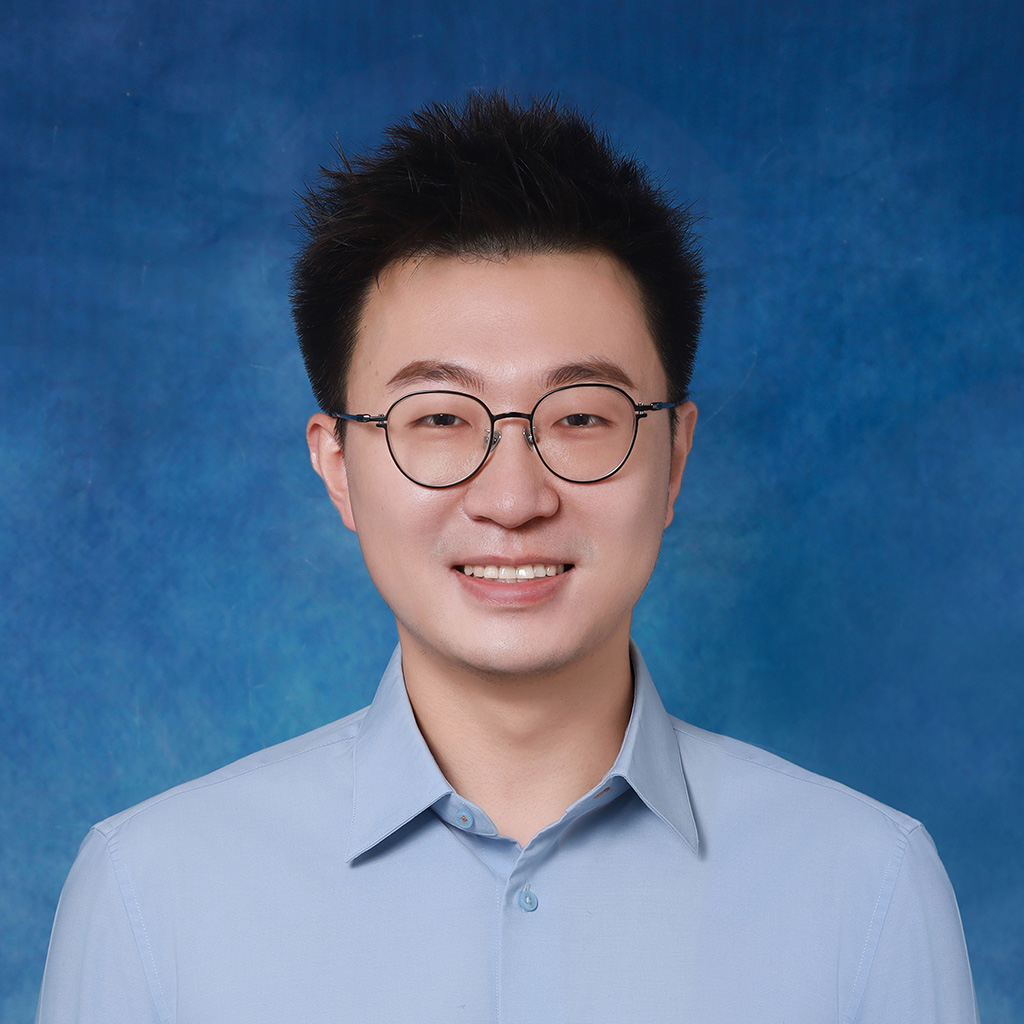
Dr. Yangchen Pan is a Departmental Lecturer in Machine Learning at the University of Oxford's Department of Engineering Science. His research focuses on achieving sample-efficient generalization in machine learning, particularly in settings involving distribution shifts (e.g., adversarial learning, domain adaptation) and adaptive capabilities like offline/online reinforcement learning and continual learning. He has contributed to foundational work in reinforcement learning, robustness, and risk-averse optimization. Education and Academic Background: While specific degree details are not explicitly listed, his academic trajectory includes roles at leading institutions such as the University of Alberta (PhD, 2017-2020), where he collaborated with prominent researchers like Martha White and Amir-massoud Farahmand. Additional affiliations include teaching roles at the University of Waterloo, University of Toronto, and Indiana University. Research Interests: Pan's work spans machine learning theory and applications, with emphasis on scalable algorithms for complex decision-making systems. Key areas include adversarial robustness, offline reinforcement learning, and mitigating distribution shifts in real-world deployments. His recent contributions explore risk-aware policy optimization and novel approaches to sample efficiency. Professional Service: Pan serves on the program committees of top conferences like NeurIPS, ICML, and ICLR. He has reviewed for journals including the Journal of Machine Learning Research and Transactions on Machine Learning Research. Teaching: Pan teaches advanced courses in optimization, machine learning, and AI at the University of Oxford, including C25 Optimization and AI/ML with Python. He has also taught at the University of Alberta and Indiana University. Labs/Teams: While no specific lab name is mentioned, his research is closely tied to Oxford's Engineering Science department and collaborative projects with institutions like the ZERO Institute (as seen in event leadership at IMAD2025).
Tianhao Wang is an Assistant Professor in the Department of Computer Science at the University of Virginia School of Engineering and Applied Science. His work focuses on advancing differential privacy and machine learning privacy, with particular expertise in privacy-preserving technologies for data synthesis, adversarial machine learning, and secure AI systems. His research interests span differential privacy mechanisms, secure data sharing, and mitigating privacy risks in modern AI systems. He explores how to protect sensitive information in machine learning models, synthetic data generation, and network analysis while maintaining utility. Recent work highlights include developing benchmarks for private image synthesis (DPImageBench), safeguarding text data from misuse (ExpShield), and analyzing privacy threats in pre-trained language models. His publications reflect a strong emphasis on both theoretical foundations and practical applications of privacy-preserving techniques. Dr. Wang's contributions address cutting-edge challenges in AI ethics, secure machine learning, and privacy engineering, with implications for healthcare, cybersecurity, and data-driven decision-making systems.
Wenzhuo Zhou is an Assistant Professor in the Department of Statistics at the University of California, Irvine (UCI), affiliated with the Donald Bren School of Information & Computer Sciences. His research bridges machine learning theory and practice, focusing on reinforcement learning, deep representation learning, and large language models. He emphasizes developing efficient, reliable AI algorithms to address challenges in healthcare, finance, and robotics. Research Interests: Statistical foundations of learning algorithms Sample efficiency and model generalization Alignment of AI models with human preferences Applications in healthcare (e.g., cancer, diabetes, Alzheimer’s), finance, and robotics Collaborations involve domain experts in medical research, semantic search, and financial systems. His team adapts existing methods and develops new pipelines for real-world problem-solving. No scientific awards or grants are explicitly listed in the provided text. Advising details are mentioned but without specific student names. The Center for Statistical Consulting is part of his professional environment.
Gabriele Oettingen is a Professor of Psychology at New York University (since 2002) and the University of Hamburg (since 2000). Her work focuses on self-regulation processes, particularly mental contrasting with implementation intentions (MCII), which bridges positive fantasies and actionable goals. She holds a M.A. in Biology from Ludwig-Maximilians-Universität (1982), a Ph.D. in Biology (Ethology) from the same institution and the Max Planck Institute for Behavioral Physiology (1986), and a Habilitation in Psychology from Free University Berlin (1996). Her research explores how individuals engage with and disengage from goals, emphasizing the interplay between positive fantasies and realistic evaluations. Key areas include health behavior change, interpersonal relationships, and decision-making. Notable contributions include the development of the WOOP intervention (Wish, Outcome, Obstacle, Plan) for goal achievement. She has held positions at the Max Planck Institute for Human Development and the University of Pennsylvania. Research Interests: Self-regulation strategies, goal-setting mechanisms, mental contrasting, disengagement from unattainable goals, and applications in health, education, and clinical settings. Her work integrates cognitive, motivational, and cultural perspectives to understand human behavior. Lab: Motivation Lab at NYU Publications: Over 200 peer-reviewed articles and books, including *Rethinking Positive Thinking* (2014).
Diogo Almeida is an Associate Professor of Psychology and Global Network Associate Professor of Psychology at New York University Abu Dhabi. His research focuses on neurolinguistics and language processing, employing methodologies such as MEG/EEG, fMRI, and cross-linguistic studies. He holds an MSc in Cognitive Science from the Ecole des Hautes Etudes en Sciences Sociales and an PhD in Linguistics from the University of Maryland, College Park. Prior to NYU Abu Dhabi, he held positions at the University of California, Irvine, and Michigan State University. Almeida’s research explores perceptual processes underlying language understanding, including syntactic structure processing, agreement phenomena, and the neural bases of lexical access. His work integrates behavioral experiments with neuroimaging techniques to investigate how linguistic structures are represented in the brain. Key areas include sentence processing selectivity in Broca’s area, cross-linguistic differences in agreement encoding, and the role of phonological and morphological features in real-time language comprehension. His publications span topics like masked priming effects, sociolinguistic influences on speech perception, and the reliability of experimental syntax methods. He leads the Language, Mind and Brain research group at NYU Abu Dhabi, focusing on interdisciplinary approaches to language cognition. Almeida has contributed to debates on empirical rigor in syntax, advocating for robust experimental designs and large-scale data collection to validate theoretical claims.
Ashish Cherukuri is an Associate Professor at the University of Groningen's Faculty of Science and Engineering, affiliated with the Optimization and Decision Systems group. His research focuses on optimization-based control, game theory, and multi-agent systems applied to energy, transportation, and robotics. He holds a Ph.D. from UC San Diego and postdoctoral experience at ETH Zurich. Education: Ph.D., University of California, San Diego (2012–2017) M.Sc., ETH Zurich (2008–2010) B.Tech, Indian Institute of Technology Delhi (2004–2008) Research Interests: Data-driven optimization, distributed algorithms, networked cyber-physical systems, and uncertainty handling in energy and transportation systems. Recent work emphasizes stochastic optimization, game-theoretic routing, and risk-aware control. Awards: Robert E. Skelton Dissertation Award (2017) Outstanding Graduate Student Award (2016) Focht-Powell Fellowship (2012–2015) Grants & Service: Editor for the IEEE Control Systems Society, organizer of Energy-Open 2019, and member of professional societies (IEEE, INFORMS, SIAM). Active in conference organization and academic leadership roles. Labs/Teams: Part of the Jan C. Willems Center for Systems and Control and the Engineering and Technology Institute Groningen (ENTEG). Research integrates theoretical advancements with practical applications in energy networks and smart systems.
Professor David Duff is a Professor of Romanticism at Queen Mary University of London's School of English and Drama, joining in 2016 after teaching at the University of Aberdeen. He holds a BA and DPhil from the University of York. His research focuses on Romanticism, genre theory, and literary history, with notable work on Shelley, the French Revolution's literary impact, and the history of the book. He co-founded the London-Paris Romanticism Seminar and the International Summer School of Romanticism, fostering international collaboration. Duff chairs the English Association and serves as a Trustee, advocating for English studies. His teaching spans Romanticism, literary theory, and genre history. He has published extensively, including the award-winning Romanticism and the Uses of Genre , and contributes to public engagement through lectures and media commentary. Education: BA (University of York) DPhil (University of York) Research Interests: Romanticism, genre theory, literary forms, Shelley studies, French Revolution impact, and the history of the book. Awards and Roles: ESSE Book Award (2009) Fellow of the English Association (FEA) Chair of the English Association Public Engagement: Keynotes for the Charles Lamb Society, Burns Club of London, and Royal College of Psychiatrists. Media contributions include op-eds in the Guardian and Daily Mail. Labs/Teams: Co-director of the London-Paris Romanticism Seminar and International Summer School of Romanticism.
Philbert Tsai is an Associate Teaching Professor in the Department of Physics at the University of California, San Diego (UCSD). He has held roles as QBio Lab Coordinator/Project Scientist (2015–Present) and Associate Project Scientist (2011–2015), overseeing advanced laboratory setups and bio-imaging research projects. His work focuses on neurovascular systems, microscopy techniques, and cortical blood flow dynamics. Education: Ph.D., Physics, UC San Diego, 2004 Research Interests: Quantitative analysis of cortical microvascular networks Development of ultra-high-resolution imaging systems (e.g., STED, two-photon microscopy) Neurovascular coupling mechanisms and their impact on brain oxygen supply Biomedical engineering applications in neuroscience research Lab & Projects: QBio Lab: Advanced instrumentation including confocal microscopes, 3D printers, and wet-lab equipment Developed vectorized models of mouse brain vasculature and ultra-wide-field multiphoton imaging systems Grants & Awards: No specific awards listed in provided text Collaborations: Worked extensively with colleagues like Dr. David Kleinfeld and Dr. Berislav Zlokovic on neurovascular projects.
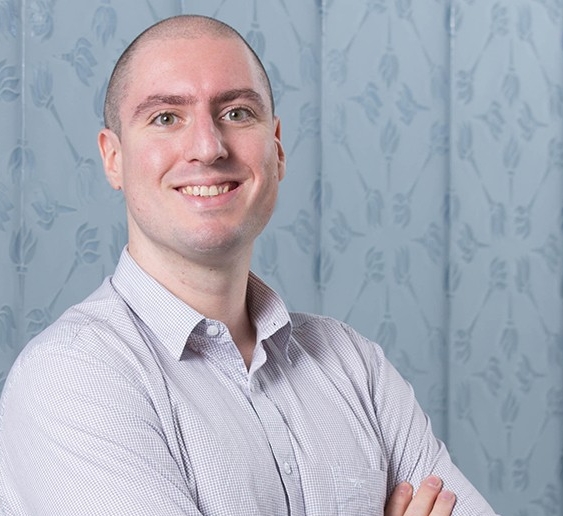
Lars Moberg Salbu is a Postdoctoral Fellow at the Department of Informatics, University of Bergen. His research focuses on computational geometry, algebraic topology, and parameterized complexity, with contributions to graph theory, metric analysis, and algorithm design. He has collaborated with institutions such as the Department of Mathematics and Department of Computer Technology at Western Norway University of Applied Sciences. His work bridges theoretical mathematics and computer science, addressing challenges in topological data analysis and combinatorial optimization. Key publications include studies on transition graph dynamics, minimum bounded chains, and homology determination from data samples. Salbu’s research emphasizes interdisciplinary approaches, leveraging discrete mathematics and geometric principles to solve complex computational problems. No scientific awards are listed, but his active participation in international journals like IEEE Access and Mediterranean Journal of Mathematics highlights his academic contributions. Collaborations with co-authors such as Morten Brun and Belen Garcia Pascual underscore his collaborative approach to advancing theoretical frameworks in his field.
Do Young Eun is a Professor in the Department of Electrical and Computer Engineering at North Carolina State University (NC State), with affiliations in Computer Science and Operations Research. He holds a Ph.D. from Purdue University and M.S./B.S. degrees from KAIST, Korea. His research focuses on distributed optimization for machine learning, network modeling, and algorithms for social/wireless networks, with applications in epidemic analysis and graph analytics. Education: Ph.D. in Electrical and Computer Engineering, Purdue University (2003) M.S. in Electrical Engineering, KAIST (1997) B.S. in Electrical Engineering, KAIST (1995) Research Interests: Distributed optimization and machine learning Network modeling and performance analysis Epidemic modeling and control Graph analytics and social network analysis Stochastic processes and algorithms Highlighted Awards: NSF CAREER Award (2006) Outstanding Paper Award, ICML 2023 Best Paper Awards at IEEE ICCCN (2005), IPCCC (2006), NetSciCom (2015) Best Student Paper Award, ACM MobiCom 2007 Advising & Grants: Current advisees include Jie Hu, Yi-Ting Ma, and Feiya Xiang NSF Grant (2024–2027): 'Toward Maximally Efficient Sampling and Optimization for Decentralized Learning' Supervised over 10 Ph.D. students, many in academic or industry leadership roles Labs/Teams: His research group focuses on interdisciplinary projects at the intersection of networking, machine learning, and stochastic systems, with collaborations in academia and industry.
Aritra Mitra is an Assistant Professor in the Department of Electrical and Computer Engineering at North Carolina State University. He holds a Ph.D. from Purdue University (2020), an M.Tech. from IIT Kanpur (2015), and a B.E. from Jadavpur University (2013). Before joining NC State, he was a postdoctoral researcher at the University of Pennsylvania. His research focuses on enabling reliable, efficient learning and decision-making in large-scale distributed systems, addressing challenges like computation, communication constraints, and adversarial robustness. Key areas include control theory, machine learning, signal processing, and network science. Education: Ph.D., Electrical and Computer Engineering, Purdue University (2020) M.Tech., Electrical Engineering, Indian Institute of Technology Kanpur (2015) B.E., Electrical Engineering, Jadavpur University (2013) Research Interests: Dr. Mitra’s work bridges theoretical foundations with practical applications in distributed systems. He designs algorithms for federated learning, reinforcement learning, and adversarial robustness, with applications in control systems and networked environments. Recent efforts emphasize finite-time analysis of TD learning, heterogeneous federated systems, and resilient control under communication constraints. His contributions often integrate tools from stochastic approximation, optimization, and signal processing. Publications: His articles explore cutting-edge topics like federated TD learning, robust system identification under heavy-tailed noise, and distributed multi-agent optimization. Recent trends highlight advancements in asynchronous algorithms, delay-adaptive systems, and model-free control under communication bottlenecks. Grants & Labs: While specific grants are not detailed, his research aligns with themes in distributed computing and control, suggesting potential involvement in NSF or industry-funded projects. No lab-specific details are provided in the text.
Chanan Singh is a distinguished academic serving as a Professor in the Department of Electrical and Computer Engineering at Texas A&M University. He holds the Irma Runyon Chair and is a Regents Professor. His affiliations include the College of Engineering and a Guest Professorship at Tsinghua University's Department of Electrical Engineering (2010–2015). Dr. Singh earned his Ph.D. in Electrical Engineering from the University of Saskatchewan, alongside M.S. and B.S. degrees from the same institution and Punjab Engineering College, respectively. His research focuses on reliability and security of electric power systems , including renewable energy integration and cyber-physical systems resilience. He pioneered methodologies for hurricane impact analysis, cyber-malfunction modeling, and wind farm optimization. Key achievements include the IEEE-PES Roy Billinton Award (2010), PMAPS Merit Award (2008), and Fellow of IEEE (1991). His work has been recognized globally, including through over 20 major awards and fellowships. Dr. Singh advises students like Hangtian Lei and leads funded projects on power system resilience. He is affiliated with the Electric Power System Group , advancing interdisciplinary research in energy systems and reliability engineering.
Professor Peter Chin is a Professor of Engineering at Dartmouth College and Director of the Learning, Intelligence + Signal Processing (LISP) Lab. He holds affiliations with the Thayer School of Engineering and serves as Associate Editor of IEEE Transactions on Computational Social Systems. His research bridges signal processing, machine learning, game theory, and differential geometry, with applications in cybersecurity, healthcare, and network analysis. Education: Bachelor of Science in Electrical Engineering, Computer Science, and Mathematics from Duke University (1993) Doctor of Philosophy in Mathematics from MIT (1998) Research Interests: Chin’s work focuses on fundamental questions at the intersection of machine learning, game theory, and signal processing. His lab explores topics like adversarial defense mechanisms, topological machine learning, and computational neuroscience. Recent projects include cybersecurity resilience modeling, medical imaging enhancements via GANs, and multi-agent reinforcement learning frameworks. Publications Trends: His most recent articles address cutting-edge challenges in cybersecurity (e.g., autonomous defense systems), medical AI (e.g., Alzheimer’s classification), and adversarial robustness. A notable 2025 focus is on quantitative resilience modeling for cyber defense, reflecting growing demand for AI-driven security solutions. Awards: Faculty Scholar Award, Duke University George Sherred III Award, Duke University Julia Dale Memorial Award, Duke University Grants & Leadership: Recipient of DARPA cybersecurity research grants Co-chair for SPIE/DSS Cyber Sensing Conference (2013–2020) Developed novel compressive sensing microscope for biological imaging LISP Lab: This interdisciplinary lab pioneers projects like nFlip (multiplayer security game models) and topological machine learning frameworks, emphasizing practical applications of theoretical advancements.