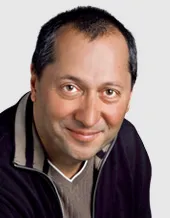
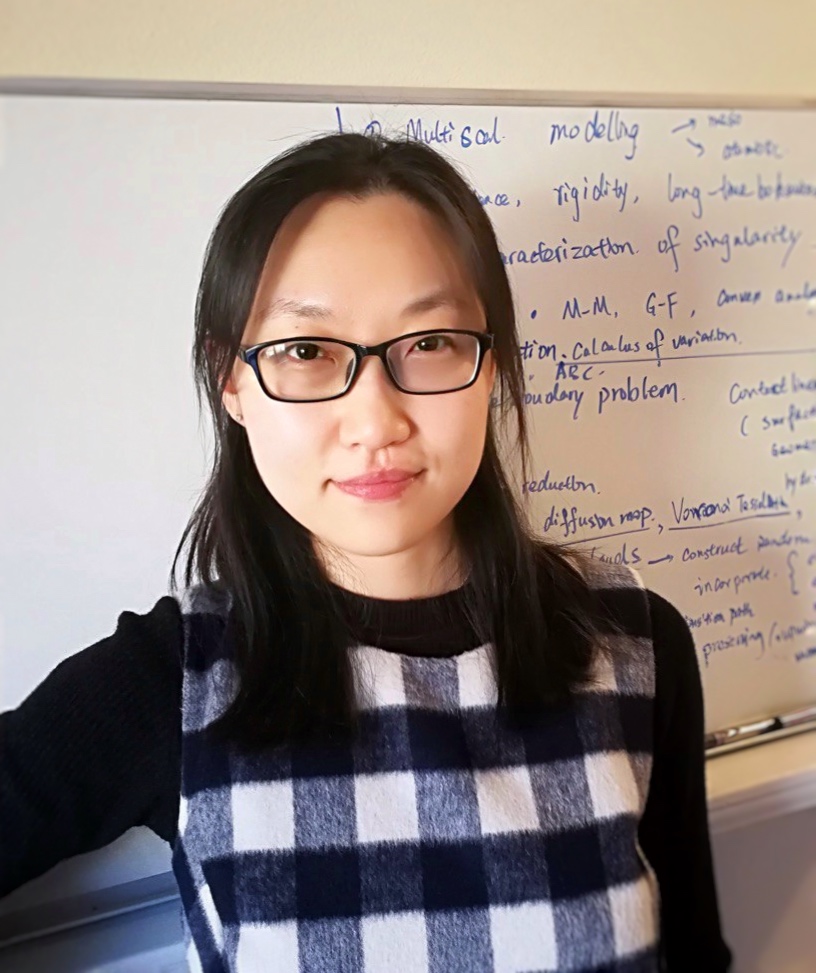
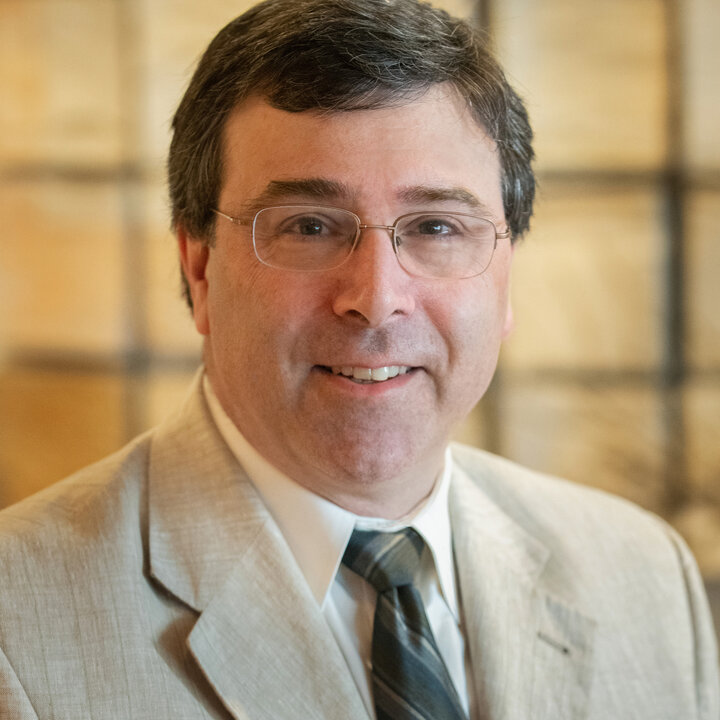
Howard Bondell is a Professor of Statistical Data Science at the School of Mathematics and Statistics, University of Melbourne, since 2018. He serves as Head of School since 2021, Co-Director of the Melbourne Centre for Data Science, and holds an ARC Future Fellowship (2020-2024). Ph.D. in Statistics, Rutgers University (2005) Academic Career: North Carolina State University (2005-2018) His research focuses on model selection , robust estimation , regularisation , Bayesian methods , and uncertainty quantification in statistical and machine learning. His publications emphasize applications in regression analysis, quantile modeling, variable selection for high-dimensional data, and genetic data analysis. Scientific awards include: Fellow of the American Statistical Association (2017) ARC Future Fellow (2020-2024)
Professor Spiridon Ivanov Penev is a leading academic in the School of Mathematics and Statistics at the University of New South Wales. He holds a PhD in Mathematical Statistics from Humboldt University (Berlin, Germany) and has been affiliated with UNSW since 1992, progressing from Lecturer to Professor in 2019. His research spans wavelet methods, saddlepoint approximations, structural equation models, and stochastic risk analysis. Education: PhD in Mathematical Statistics, Humboldt University Current Affiliation: Department of Statistics, School of Mathematics and Statistics, UNSW His work focuses on advanced nonparametric techniques, including wavelet-based signal recovery with adaptive sampling rates, and robust inference in structural equation models. He has developed bias-corrected reliability measures for psychometric applications and contributed to stochastic optimization problems in finance and engineering. Recent publications highlight his expertise in semiparametric regression, robust portfolio optimization, and marine engineering applications using machine learning. Key trends include the use of Bregman divergence for shape-preserving estimation and Markov chain methods for climate model weighting. Scientific Awards: DAAD award Elected member of the International Statistical Institute (ISI) He has supervised numerous grants as Chief Investigator, including Australian Research Council projects and industry collaborations. Administrative roles include membership in the School of Mathematics and Statistics Executive Committee. Teaching duties span advanced statistical inference, multivariate analysis, and data science applications.
Lionel Truquet is a Lecturer-Researcher in Statistics at ENSAI (École Nationale de la Statistique et de l'Administration Économique), where he focuses on Statistics for dependent data and Time series analysis . He serves as a Director of Research and has contributed significantly to fields like Markov chains and nonlinear dynamics . Research Interests: Time series models for ecological and economic data Statistical inference for categorical and discrete-valued processes Ergodic properties of Markov chains in random environments Mixing conditions for nonstationary processes Perturbation techniques in stochastic modeling Recent Publications: His work spans nearest neighbor sampling , multivariate autoregressive models , and mixing properties of count processes , with applications in ecology and econometrics. Key trends include nonparametric methods for high-dimensional data and stationarity analysis in time-varying systems. Scientific Awards: TJALLING C. KOOPMANS ECONOMETRIC THEORY PRIZE (2021–2023) for groundbreaking work on multivariate count autoregressions.
Gideon Hartman is an Associate Professor in the Anthropology Department at the University of Connecticut, where he conducts interdisciplinary research at the intersection of paleoenvironmental reconstruction, plant and animal eco-physiology, anthropology, and archaeology. His work primarily employs stable isotope methods to reconstruct past environments, human mobility patterns, paleodiets, and ancient economic systems. Dr. Hartman received his Ph.D. from Harvard University in 2008. His educational foundation in anthropology and archaeological science has enabled his innovative approach to stable isotope analysis. Rather than treating isotopic values as static markers, he investigates the mechanisms causing variability in stable isotope ratios as they move along foodwebs from soil and atmosphere to plants and then to animals and humans. Hartman's research program uniquely begins in the contemporary world to establish principles that can be reliably applied to archaeological settings. His work spans diverse geographical regions including the Eastern Mediterranean, Levant, Jordan Valley, and Armenian Highlands, with temporal coverage from the Middle Pleistocene to the Early Bronze Age. He has made significant contributions to understanding how environmental factors like water availability, temperature, and soil conditions affect isotopic signatures in modern ecosystems, creating robust models for archaeological interpretation. His publication record demonstrates consistent productivity in high-impact journals, with research trends showing increasing sophistication in multi-isotope approaches applied to complex archaeological questions about pastoralism, trade networks, human migration, and human-environment interactions. His work increasingly integrates zooarchaeological, archaeobotanical, and geochemical evidence to build comprehensive pictures of past societies. As director of the Stable Isotope Preparation Lab at UConn, Hartman leads a research team that processes and analyzes samples from archaeological sites worldwide. His laboratory serves as a hub for interdisciplinary collaboration between archaeologists, anthropologists, geoscientists, and biologists seeking to apply isotopic methods to their research questions. His work has been instrumental in refining methodologies for interpreting strontium, carbon, nitrogen, and oxygen isotope data in archaeological contexts, particularly regarding animal and human mobility patterns in the Eastern Mediterranean region.
Professor Greger Larson is a leading scholar in evolutionary genomics and bioarchaeology at the University of Oxford, serving as Director of the Palaeogenomics & Bio-Archaeology Research Network. Based at Brasenose College, he specializes in ancient DNA studies, domestication processes, and human-animal dispersal patterns. His work bridges archaeology, genetics, and computational biology to address long-standing evolutionary questions. University of Oxford: Current affiliation Palaeo-BARN: Director Research focus: Domestication, ancient DNA, phylogenetics Larson's research integrates ancient DNA with morphological data to reconstruct evolutionary trajectories. His projects span mammals like dogs, cats, and pigs, exploring how domestication shaped modern biodiversity. Recent work examines viral virulence through archaeological samples and interdisciplinary analyses of historical human-animal interactions. His publications highlight trends in domestication genetics, including dual dispersal patterns in dogs and genetic shifts in post-introduction populations. Collaborative efforts like the FarmGtex project emphasize functional genomics across livestock tissues. Supervision includes DPhil students studying epidemiological transitions, Basque uniqueness, and bioarchaeological methods. Current grants from AHRC and ERC support his work on human-chicken interactions and ancient DNA synthesis.
Christopher Bronk Ramsey is Professor in Archaeological Science and Head of the School of Archaeology at the University of Oxford, affiliated with Merton College. As chair of the INTCAL committee, he oversees global radiocarbon calibration. His expertise spans archaeological science, Quaternary environmental research, and nuclear instrumentation development. Research focuses on radiocarbon dating, Bayesian chronological modeling, and AMS techniques. Key areas include Quaternary chronology, human evolution, climate change impacts, and archaeological applications in the eastern Mediterranean, Amazonia, and Anglo-Saxon England. He develops the OxCal software for statistical chronology analysis. Recent publications emphasize radiocarbon calibration advancements, pre-Columbian land-use in Amazonia, European Neolithic chronologies, and high-precision dating methods. His work integrates archaeology, environmental science, and data science to address chronological challenges across diverse temporal and spatial scales. No specific scientific awards were detailed in the source material. He supervises numerous doctoral students on topics ranging from dendrochronology to digital archaeology and Middle Stone Age chronology. Major projects include FeedSax (Anglo-Saxon agriculture) and HERCA (Amazonian human-environment interactions), securing research grants for interdisciplinary teams. Professor Ramsey directs the OxCal project and co-leads IntCal, IntChron, FeedSax, and HERCA initiatives. These teams develop calibration standards, integrate chronological data, and investigate past human adaptations to environmental change, particularly in Amazonia and Europe.
Sani Nassif is a Research Fellow at the Technical University of Munich (TUM) under the Rudolf Diesel Industry Fellowship, hosted by Professor Ulf Schlichtmann. With 28 years of experience at Bell Labs and IBM Research, he has led teams in integrated circuit modeling, simulation, statistical analysis, and optimization. Research Interests: His work bridges integrated circuit technology with cross-disciplinary applications in medicine. Key areas include variability analysis in semiconductor manufacturing, low-power circuit design, and reliability engineering for nano-scale systems. He focuses on applying machine learning and statistical methods to solve challenges in energy-efficient computing and biomedical systems. Selected Publications: His research spans circuit variability trends, leakage current modeling, and reliability frameworks for nano-era systems. Work includes foundational studies on SRAM failure analysis and CMOS scaling limitations. Scientific Awards: He is recognized as an IEEE Fellow IBM Master Inventor (75 patents) Rudolf Diesel Industry Fellow
Professor Shanlin Fu is a distinguished academic at the University of Technology Sydney (UTS), holding the position of Professor in the School of Mathematical and Physical Sciences and affiliated with the Centre for Forensic Science. He serves as the Program Director for the Bachelor of Forensic Science program and is a Research Integrity Adviser for the Faculty of Science. With over $10 million in competitive research funding from ARC, NHMRC, and other national and international schemes since 2008, Professor Fu leads the Drugs and Toxicology Group, focusing on developing sensitive methods for clinical diagnosis, therapeutic drug monitoring, and drugs of abuse testing. Professor, UTS School of Mathematical and Physical Sciences (2019-present) Associate Professor, UTS School of Chemistry and Forensic Science (2015-2019) Senior Lecturer, UTS School of Chemistry and Forensic Science (2008-2014) Professor Fu earned his PhD in Medicinal and Pharmaceutical Chemistry from the University of Sydney (1989-1992), an MSc in Phytochemistry from Peking Union Medical College (1982-1985), and a BSc in Biology from Nanjing Normal University (1978-1982). Prior to his academic career at UTS, he served as a Senior Hospital Scientist at the Northern Sydney Area Health Service (2000-2008) and as a Senior Research Scientist at The Heart Research Institute (1993-2000). Professor Fu's research spans analytical chemistry, forensic chemistry, medical biochemistry, pharmacology, pharmaceutical sciences, forensic toxicology, and clinical toxicology. His work focuses on three main areas: Forensic Chemistry concerning identification of drugs of abuse including new psychoactive substances; Forensic Toxicology focusing on detection of drugs in biological matrices for clinical and medico-legal purposes; and Clinical Toxicology aiming to understand mechanisms of substance abuse harms. His research has strong real-world applications, with his patented 'Cathinone Test' already commercialized for law enforcement and potential healthcare settings. Analysis of Professor Fu's recent publications reveals a strong emphasis on developing innovative analytical methods for drug detection, particularly for new psychoactive substances. His work increasingly incorporates multi-omics approaches (metabolomics, lipidomics, proteomics) and machine learning techniques to enhance detection capabilities. There's a clear trend toward translating laboratory research into practical field applications, with numerous color spot tests and portable detection methods being developed for law enforcement use. His research also shows expanding applications in equine doping control and postmortem analysis. Vice-Chancellor's Medal for Research Excellence through Collaboration or Partnership (2023) UTS Teaching and Learning Award for Team Teaching (2022) MAPS Research Translation Award (2022) As a member of the HDR Panel since 2022, Professor Fu actively supervises Masters Research and PhD students in forensic science. His extensive grant portfolio includes leadership of the ARC Research Hub for Integrated Device for End-user Analysis at Low-levels and the Australian Centre for cannabinoid clinical and research excellence (ACRE). He has established key collaborations with Australian Federal Police, NSW Forensic and Analytical Science Service, Racing NSW, and international institutions including University of Copenhagen and University of Dundee. His research impact extends beyond academia through commercialization of detection technologies that improve efficiency and accuracy of illicit drug detection. Professor Fu heads the Drugs and Toxicology Group at the Centre for Forensic Science, which maintains strong industry partnerships with forensic laboratories and law enforcement agencies. His group is currently developing a multiplexer device that can simultaneously detect multiple new psychoactive substances including cathinones, NBOMEs, piperazines, and fentanyl analogues. The group's work bridges fundamental research with practical applications, with several technologies moving from the laboratory to real-world implementation in forensic and healthcare settings.
Andrea Santangeli serves as a Supervisor in the Doctoral Programme in Wildlife Biology and holds a Docentship in the Organismal and Evolutionary Biology Research Program at the University of Helsinki's Faculty of Biological and Environmental Sciences. He maintains an additional affiliation as an Honorary Fellow at the University of Cape Town's FitzPatrick Institute of African Ornithology under the National Research Foundation Centre of Excellence since August 2019. His research spans international collaborations across multiple continents, with particular focus on African and European conservation challenges. Dr. Santangeli completed his doctoral thesis titled 'Assessing the effectiveness of different approaches to species conservation' at the University of Helsinki in 2013. His educational background established the foundation for his current research program focused on evidence-based conservation strategies and effectiveness assessment. His research interests center on wildlife conservation biology, particularly avian ecology and species protection. Santangeli's work examines human-wildlife interactions, conservation prioritization, and the effectiveness of different conservation approaches. He investigates how climate change affects species distributions and community composition, with special attention to vulture conservation, bird-feeding practices, and the impacts of agricultural systems on biodiversity. His approach integrates ecological, social, and policy dimensions to develop comprehensive conservation solutions. Species conservation effectiveness Human-wildlife interactions Climate change impacts on biodiversity Vulture conservation Bird community dynamics Ecosystem services assessment Analysis of Santangeli's recent publications (2023-2025) reveals a strong focus on interdisciplinary conservation science addressing urgent global challenges. His work increasingly integrates One Health approaches, examining connections between wildlife health, ecosystem functioning, and human activities. Key themes include climate change adaptation strategies, human dimensions of conservation, and technological innovations for monitoring and protection. His research shows growing emphasis on policy-relevant science that directly informs conservation decision-making at multiple scales. His scientific recognition includes an Honorary Fellowship at the University of Cape Town's prestigious FitzPatrick Institute of African Ornithology, part of the DST NRF Centre of Excellence. This position acknowledges his significant contributions to African ornithology and conservation science, particularly his work on vulture conservation across the continent. As a doctoral supervisor, Santangeli guides the next generation of conservation scientists through the Wildlife Biology doctoral program. His research is supported by multiple projects, including the ongoing 'Understanding the drivers and species ecological traits underpinning the global trade in wild birds' (2019-2024), which examines wildlife trade dynamics and conservation implications. His work demonstrates strong international collaboration networks across Europe, Africa, and beyond. Santangeli's research activities involve extensive fieldwork, data analysis, and policy engagement. He participates in academic visits to institutions like the Center d'Études Biologiques de Chizé in France and contributes to scientific conferences and peer review for leading conservation journals. His work often involves citizen science approaches, as evidenced by the 'iratebirds' project on aesthetic attraction to birds.
Kevin Kohl is an Associate Professor in the Department of Biological Sciences at the University of Pittsburgh, where he joined in 2017 after completing his Ph.D. at the University of Utah and postdoctoral research at Universidad Nacional de San Luis (Argentina) and Vanderbilt University. His work bridges microbial ecology, physiological adaptation, and evolutionary biology with a focus on vertebrate digestive systems. Education: Ph.D., University of Utah, 2015 (Advisor: Dr. Denise Dearing) Postdoctoral Research, Universidad Nacional de San Luis, Argentina (with Dr. Enrique Caviedes-Vidal) Postdoctoral Research, Vanderbilt University (with Dr. Seth Bordenstein) Dr. Kohl's research centers on how host ecology and evolutionary history shape digestive physiology and gut microbial communities, particularly in herbivorous mammals and lizards coping with low-protein, high-fiber, and toxin-rich diets. The Kohl Lab employs comparative, experimental, and computational approaches across fish, amphibians, reptiles, birds, and mammals to uncover functional implications and mechanistic bases of host-microbe relationships. Key research themes include phylosymbiosis, thermal physiology, nutritional ecology, and microbial dynamics in conservation contexts. His recent publications (2023-2025) reveal consistent exploration of diet-microbiome-physiology interactions, with emerging emphasis on methodological innovation (e.g., cryopreservation techniques, museum specimen analysis), climate change impacts on ectotherms, and accessibility in field research. Work spans fundamental mechanisms like gastric lysozyme evolution to applied conservation hologenomics initiatives. Dr. Kohl advises graduate students in biological sciences and leads the Kohl Lab, which maintains active international collaborations. The lab emphasizes rigorous experimental design while addressing real-world challenges like wildlife conservation microbiome applications and inclusive fieldwork practices. The Kohl Lab operates as a multidisciplinary hub investigating host-microbe interactions through projects including Integrative Nutritional Physiology, Landscape Variation in Pond Microbiomes, and Microbial Ecology of Animals Under Human Care. Current work increasingly integrates hologenomic perspectives to address conservation biology challenges and methodological limitations in microbiome research.
Tim Rocktaschel is a Professor of Artificial Intelligence in the Department of Computer Science at University College London (UCL), where he has been working since 2018. He was promoted to Professor in October 2023, having previously served as an Associate Professor (2021-2023) and Lecturer (2018-2021) at the same institution. His educational background includes a Doctorat from University College London (2017) and a Diplom Informatiker from Humboldt-Universitat Berlin (2012). Rocktaschel's research focuses on the cutting edge of artificial intelligence, with particular emphasis on reinforcement learning, evolutionary computation, and open-ended learning systems. His work explores how AI systems can learn more efficiently through better exploration strategies, environment design, and the integration of language models with reinforcement learning frameworks. His recent publications reveal a strong trend toward developing more efficient and generalizable AI systems. The research spans unsupervised environment design, prompt engineering for self-improving systems, exploration strategies in reinforcement learning, and the application of language models to enhance policy learning. His work often bridges theoretical AI concepts with practical implementations, as evidenced by tools like GriddlyJS for reinforcement learning development. Rocktaschel maintains an active presence in the AI research community with numerous publications in top venues including NeurIPS, ICML, and the Journal of Artificial Intelligence Research. His work on zero-shot generalization, pragmatic understanding in language models, and open-ended learning environments has garnered significant attention in the field. He is actively involved in developing tools and datasets for the AI community, such as the large-scale NetHack dataset, which provides a complex environment for testing reinforcement learning algorithms. His research continues to push the boundaries of what's possible in artificial intelligence, particularly in creating systems that can learn and adapt in complex, open-ended environments.
Prof. Dr. Jens Eisert is a Professor at the Free University of Berlin, where he leads the Quantum Many-Body Theory, Quantum Information Theory, and Quantum Optics research group (Eisert AG) within the Institute of Theoretical Physics at the Dahlem Center for Complex Quantum Systems. His office is located at Arnimallee 14, Room 1.3.06 in Berlin-Dahlem. His research focuses on the intersection of quantum information theory and condensed matter physics, specifically exploring what information processing tasks are possible using individual quantum systems as information carriers. His group develops mathematical-theoretical foundations of quantum information, particularly in entanglement theory and tomography, while also investigating quantum optical implementations using light modes or cold atoms in optical lattices. A major emphasis of their work is on quantum many-body systems, including static properties, efficient numerical simulation methods like tensor networks, and non-equilibrium quantum dynamics. Recent publications highlight significant contributions in thermalization of quantum systems (Communications Physics 2025), quantum thermodynamics (Nature Physics 2025), and quantum error correction (PRX Quantum 2025). The group's work is characterized by combining the rigor of mathematical physics with physically motivated applicability, frequently leading to direct collaborations with experimental groups. Quantum Information Theory Quantum Many-Body Theory Quantum Optics Entanglement Theory Tensor Networks Quantum Error Correction Prof. Eisert maintains active supervision of numerous PhD students and postdoctoral researchers, with research positions regularly available in areas including quantum error correction, quantum information theory, tensor networks, and quantum simulation. His group has published extensively in top journals including Nature Physics, PRX Quantum, and Physical Review series.
Yuan Gao is an Assistant Professor of Mathematics at Purdue University's Department of Mathematics (College of Science). His research focuses on analysis and computations of PDEs in materials science, biology, and microfluidics, with recent emphasis on optimal control, Hamilton-Jacobi equations, and non-equilibrium chemical reactions. His work is supported by NSF awards DMS-2204288 and DMS-2440651. Previously, he held the William W. Elliott Assistant Research Professor position at Duke University (2019-2021). Research interests include PDE analysis in materials science (crystal growth, dislocation dynamics), numerical methods for interface dynamics, applied stochastic analysis (Langevin dynamics, transition path theory), and mean-field games for fluid systems. He organizes the PSU-Purdue-UMD Joint Seminar on Mathematical Data Science. Key publications span topics like dislocation evolution, Wasserstein gradient flows, and stochastic algorithms for rare events. Awards include NSF CAREER funding recognizing his contributions to mathematical analysis of non-equilibrium systems.
Andrea Passerini is a Full Professor in the Department of Information Engineering and Computer Science at the University of Trento, Italy, where he also serves as Coordinator of the PhD programme in Information Engineering and Computer Science (Ministerial Decree 45/2013). His academic footprint spans multiple departments including Mathematics, Sociology, Cellular Biology, and Industrial Engineering, reflecting deep interdisciplinary engagement across computational sciences and life sciences. His research centers on Machine Learning and Data Mining with specialized expertise in Neuro-Symbolic AI , Probabilistic Reasoning , and Statistical Relational Learning . He pioneers methods for graph-based learning, medical AI applications, and explainable systems, with significant contributions to bioinformatics (particularly RNA-protein interactions) and healthcare diagnostics. His work bridges theoretical rigor with practical implementations in critical domains. Analysis of his 2025 publications reveals dominant trends in neuro-symbolic integration for graph data, human-AI collaboration in medical decision-making, and robust recommender systems. His research increasingly focuses on interpretable AI for high-stakes applications like surgical planning and physician support, while advancing foundational techniques in graph neural networks and concept-based modeling. As PhD programme Coordinator, Professor Passerini mentors doctoral candidates across AI and computer science disciplines. His collaborative network extends to medical researchers at CIBIO (Cellular, Computational and Integrative Biology department) and industrial partners, though specific lab structures aren't documented in available materials. Current projects emphasize medical AI validation, temporal network modeling, and LLM integration with structured reasoning frameworks.
Bertrand Clarke is a Professor in the Department of Statistics at the University of Nebraska-Lincoln, within the College of Agriculture & Natural Resources. He holds a PhD in Statistics from the University of Illinois (1989) and has held academic positions at Purdue University, the University of British Columbia, the University of Miami (Medical School), and served as Chair of the Department of Statistics at UNL. His research focuses on prediction, model uncertainty, and statistical methods for complex/high-dimensional data, including genomic data and machine learning applications. Education: PhD in Statistics from University of Illinois (1989), with early work recognized by the Browder J. Thompson Award. His career includes sabbaticals at University College London, Duke University (SAMSI), and the Newton Institute at Cambridge. He pioneered biostatistics programs at the University of Miami and authored a Springer textbook on data mining/machine learning. Research Interests: Prediction theory, model bias/uncertainty, ensemble methods, Bayesian approaches, and applications in genomics. He emphasizes statistical principles like variance-bias tradeoff and robustness in complex data analysis. Awards: ASA Fellow (2014), Browder J. Thompson Award (1989). Editorial roles in four journals and service on the Savage Award Committee.