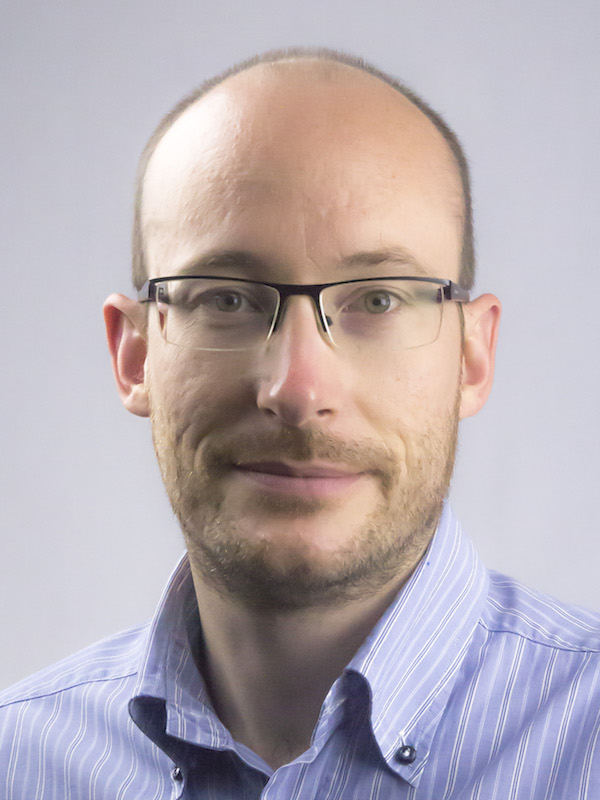
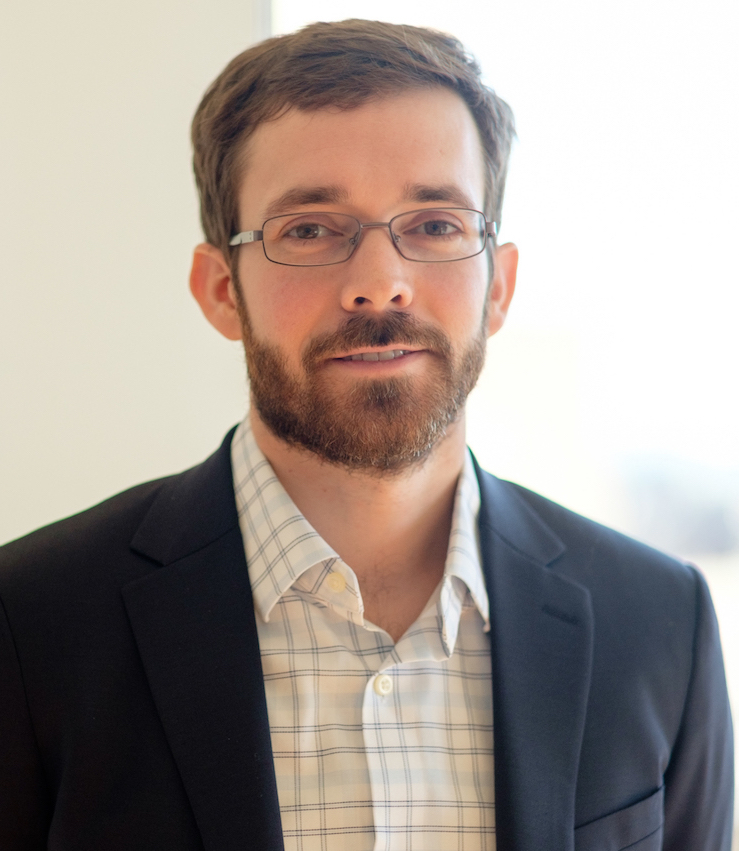
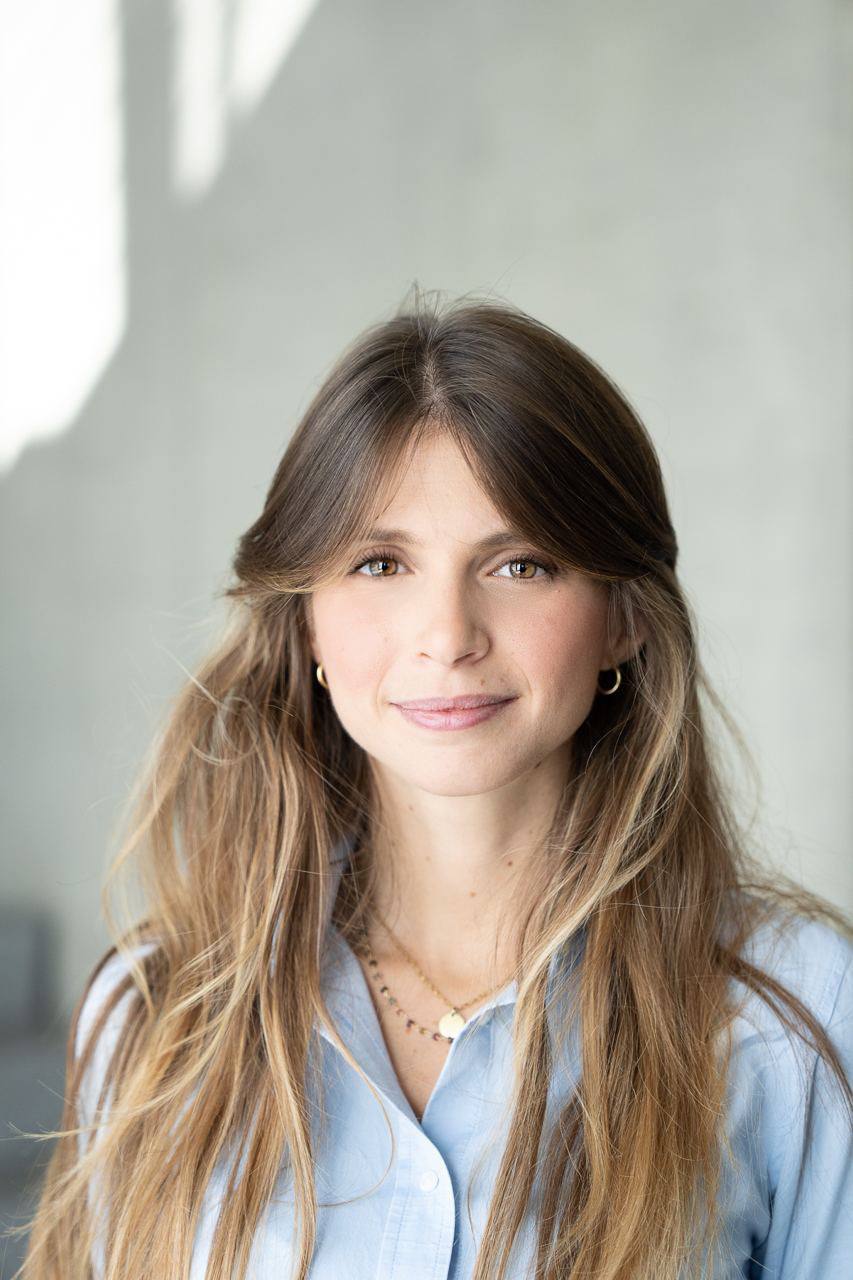
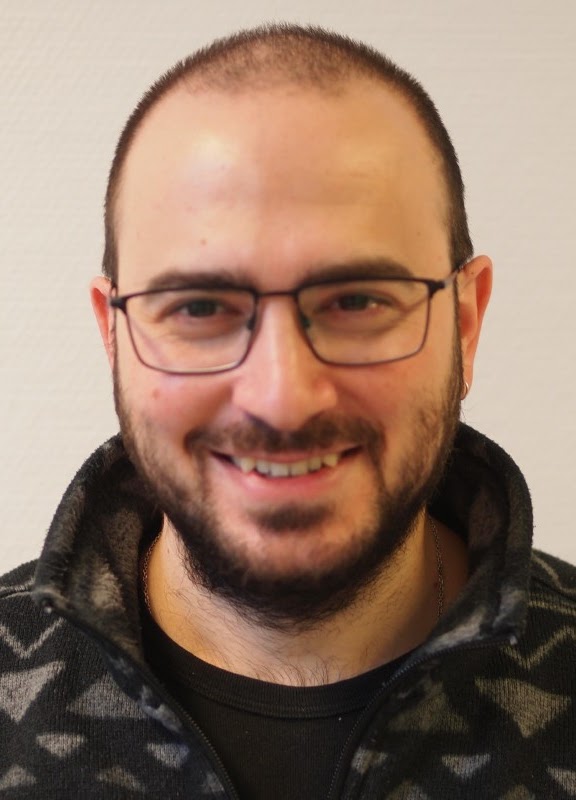
Dr. Jianqiang Cheng is an Associate Professor in the Department of Systems and Industrial Engineering at the University of Arizona, College of Engineering. He is also a member of the Graduate Faculty and affiliated with the Applied Mathematics and Statistics Graduate Interdisciplinary Programs. His research is centered on optimization under uncertainty with applications in energy systems and logistics. Research Interests: His primary research areas include stochastic programming, robust optimization, distributionally robust optimization, semidefinite programming, and chance-constrained optimization. He applies these methodologies to challenges in power systems, renewable energy integration, microgrid design, and resilient supply chains. The recent publications (2020–2022) reflect a strong trend toward data-driven and computationally efficient methods in optimization. Key themes include distributionally robust optimization under moment and Wasserstein ambiguity, chance-constrained AC optimal power flow, and resilient supply chain modeling under disruptions such as the COVID-19 pandemic. His work frequently appears in top journals like INFORMS Journal on Computing , IEEE Transactions on Power Systems , and European Journal of Operational Research . Scientific Awards: Best Short Paper Award, INFORMS Workshop on Data Science (Fall 2022) NSF CAREER Award, National Science Foundation (Spring 2022) Science Foundation Arizona's 2017 Bisgrove Scholar (Spring 2017) Dr. Cheng has secured significant research funding, including the NSF CAREER Award, supporting his work in data-driven optimization. He collaborates extensively with researchers in energy systems and operations research, including K. Pan, M. Cheramin, A. M. Fathabad, and A. Lisser. While specific advisees are not listed, his role as a member of the Graduate Faculty indicates active supervision of graduate students in systems engineering, applied mathematics, and statistics. His research contributes to the development of advanced optimization models for real-world systems affected by uncertainty, particularly in energy and logistics. Though no specific lab is mentioned, his work implies involvement in computational optimization and energy systems modeling research groups within the College of Engineering.
Lars Andreas Akslen is a Professor at the Department of Clinical Medicine, University of Bergen, and serves as the Centre Director of CCBIO (Centre for Cancer Biomarkers). He is based at Haukeland University Hospital and leads a major translational cancer research group focused on biomarker discovery and validation. Position: Professor, Centre Director of CCBIO Institution: University of Bergen Department: Department of Clinical Medicine Location: Haukeland University Hospital, Bergen, Norway Email: lars.akslen@uib.no His research is centered on translational oncology, with a strong emphasis on identifying and validating novel biomarkers for improved biological classification and grading of malignant tumors. His work spans breast cancer , malignant melanoma , prostate cancer , and gynecologic cancers . By integrating human tumor sample analysis with experimental cell and animal models, his team aims to enhance the clinical utility of biomarkers in predicting aggressive tumor behavior and guiding personalized treatment strategies. The recent publications highlight a consistent focus on tumor microenvironment, immune biomarkers, imaging mass cytometry, AI in diagnosis, and age-related phenotypes in cancer. There is a strong trend towards high-dimensional spatial profiling and integration of molecular and clinical data to refine prognostic and predictive models. Lars Andreas Akslen has no listed scientific awards in the provided text. He leads the Tumor Biology Research Group (established in 1995) and the CCBIO center, indicating significant mentorship and leadership in cancer research. While specific students are not listed, his extensive collaboration network suggests active supervision of PhD and postdoctoral researchers. No specific grants are mentioned, but leadership of a national research center implies substantial funding acquisition. He is affiliated with CCBIO and the Tumor Biology Research Group, both based at the Department of Clinical Medicine, University of Bergen, and operating from Haukeland University Hospital. These teams focus on translational cancer biomarker research using advanced molecular and imaging technologies.
Guido Zuccon is a Professorial Research Fellow at the School of Electrical Engineering and Computer Science , The University of Queensland (UQ), where he leads the Information Engineering Lab (ielab) . He serves as the AI Director for the Queensland Digital Health Centre (QDHeC) and is an Affiliate Professor at the UQ Centre for Health Services Research . He was previously a Lecturer and Senior Lecturer at Queensland University of Technology and a Postdoctoral Fellow at CSIRO. His research spans Information Retrieval , Health Search , Formal Models of Search , and Health Data Science , with a strong focus on consumer health search, cohort identification, clinical decision support, and systematic review automation. He has pioneered work on search interaction, semantic models, and the evaluation of retrieval systems in health contexts. His recent publications highlight a strong trend toward leveraging large language models (LLMs) for zero-shot retrieval, federated search, dense retrieval, and query formulation. His work integrates advanced neural methods with practical applications in healthcare, including systematic review automation and clinical AI. He frequently publishes at top venues such as SIGIR, ECIR, and WSDM, often in collaboration with key researchers like Bevan Koopman, Shengyao Zhuang, and Harry Scells. ARC DECRA Fellow (2018–2020) Best Paper Awards at AIRS 2017, CLEF 2016, ALTA 2015, ECIR 2012 Best Reviewer Award at ECIR 2014 Principal Investigator on ARC Discovery Projects and MRFF grants Guido Zuccon actively supervises a large cohort of PhD students, primarily in areas related to neural information retrieval, health search, and systematic review automation. He has led significant research projects funded by the ARC, Google, Microsoft, GRDC, and CSIRO. He is a key organizer of international evaluation labs such as the CLEF eHealth Consumer Health Search task and the TREC 2019 Decision Track. He leads the ielab , a vibrant research group focused on information retrieval and data science, and contributes to major open-source initiatives like Big Brother , a tool for logging user interactions in web studies.
Professor Markku Kulmala (University of Helsinki) is a leading expert in atmospheric and environmental physics. As Academician of Finland and double ERC Advanced Grant holder, he leads the Institute for Atmospheric and Earth System Research (INAR) and ACCC Flagship. With ~1200 publications and a WoS H-index of 124, his work focuses on atmospheric aerosols, climate interactions, and air quality. Academy of Finland grants (2004-2009, 2011-2015) ERC Advanced Grant (2×) ISI Highly Cited Researcher His research team has published 4 groundbreaking studies in Nature and Science , including: Aerosol formation mechanisms Aerosol-cloud-climate interactions Atmosphere-land surface relationships Climate-air quality feedbacks With over 20 PhD/Master's students supervised, recent work includes Arctic aerosol studies ( Elementa 2025), Beijing air quality analysis ( Nature Communications 2025), and climate modeling applications. He has received multiple international awards including the Fuchs Memorial Award and honors from Stockholm and Tartu universities.
Ulrich Meyer is a Professor at the Institute for Computer Science at Goethe University Frankfurt. He serves as a prominent researcher in algorithms for big data, with extensive contributions to parallel and external-memory graph algorithms. His work spans theoretical foundations and practical implementations for processing large-scale data sets. Spokesperson of the DFG priority program (SPP 1736) on Algorithms for Big Data in Germany SEA23 Symposium on Experimental Algorithms, Steering Committee Chair ALENEX23 Algorithm Engineering and Experiments, Program Committee Member Professor Meyer's research interests focus on the theoretical and experimental aspects of processing large data sets on advanced computational models. His work particularly emphasizes parallel and external-memory graph algorithms, with recent focus on efficient large-scale network generation according to various stochastic models. His research has produced significant contributions including the parallel Delta-Stepping algorithm (which received the ESA Test of Time Award in 2019) and the first BFS approach with sublinear I/O. He has also explored more specialized topics like energy-efficient sorting (with records in the JouleSort competition 2009/10 and the Germany Land of Ideas Award) and fragile computing (which earned him a best-paper award at ESA 2019). His recent publications demonstrate a strong focus on graph algorithms, network generation, and parallel computing techniques. The research trends show consistent advancement in scalable algorithms for massive graphs, with particular emphasis on efficient sampling methods, shortcutting techniques, and communication-free distributed approaches. His work bridges theoretical computer science with practical engineering considerations for real-world big data applications. ESA Test of Time Award 2019 for Parallel Delta-Stepping algorithm Records in the JouleSort competition 2009/10 Germany Land of Ideas Award Best-paper award at ESA 2019 for fragile computing research Professor Meyer has made substantial contributions to the academic community through his leadership in the DFG priority program on Algorithms for Big Data, which has fostered significant research collaborations across Germany. His extensive publication record in top venues demonstrates sustained research productivity and impact in the algorithms community. While specific grant details aren't provided in the text, his role as spokesperson for a major DFG priority program indicates substantial research funding and leadership responsibilities. His work appears to be conducted within collaborative research environments focused on algorithm engineering and experimental evaluation. His research appears to be conducted within the Institute for Computer Science at Goethe University Frankfurt, likely involving collaborations with other researchers in the Algorithms for Big Data priority program. The extensive list of co-authored publications suggests active participation in research teams focused on parallel algorithms, graph processing, and network generation.
William Hobbs is the Lois and Mel Tukman Assistant Professor in the Department of Psychology at Cornell University , affiliated with the College of Human Ecology. His research intersects politics and health , focusing on social spillover effects of government actions and adaptation to life changes through computational social science methods. Teaches Data Science for Social Scientists I & II (HD/Psych 2930/2940) Co-teaches graduate course Text and Networks in Social Science Research (HD/Soc/Info 6610, Govt 6619) Research strengths include causal inference , representative sampling , and machine learning applications for small training sets. His work has been featured in The Atlantic , Science Magazine , and other major outlets. Current Data Science Lab projects analyze: Political polarization in social media Health behavior networks Government policy feedback Content moderation systems Lab hires Cornell undergraduates with R/Python experience for data management tasks through HD 4010 research credit.
Giorgia Ramponi is an Assistant Professor with Tenure Track at the Faculty of Business, Economics and Informatics at the University of Zurich. She is also an affiliated professor at the ETH AI Center and the Data Science and AI, Computer Science and Engineering department at Chalmers University of Technology. Her educational background includes a Ph.D. in Information Technology from Politecnico di Milano (completed June 2021 with honors), advised by Marcello Restelli, and a Master of Science in Computer Science with Honours Programme (110/110 cum laude) from la Sapienza (July 2017), advised by Flavio Chierichetti and Alessandro Panconesi. Dr. Ramponi's research focuses on machine learning and mathematical modeling, with particular emphasis on reinforcement learning and multiagent learning. Her work bridges theoretical foundations with practical applications, exploring how learning algorithms can make optimal decisions in complex environments. She has made significant contributions to areas including inverse reinforcement learning, multi-agent systems, constrained Markov decision processes, and human-AI interaction through preference learning. Her recent publications demonstrate a strong trend toward addressing fundamental challenges in reinforcement learning, particularly in multi-agent settings, constrained optimization, and learning from human feedback. Her work combines theoretical rigor with practical applications across robotics, economics, and decision-making systems. Hassler Research Grant for "Unified Feedback Integration Framework for Reinforcement Learning" Dr. Ramponi actively contributes to the academic community through conference participation, invited lectures (including at the Mediterranean Machine Learning Summer School), and teaching. She designed and taught the "Data Science and Machine Learning" course for the ETH-Ashesi Master program. She is also a member of the ELLIS community, which connects excellence in AI research across Europe. Her research group focuses on developing frameworks for reinforcement learning with various feedback types, including preferences, rewards, and demonstrations. The group aims to advance the theoretical understanding of learning algorithms while addressing practical challenges in real-world applications.
Summer Rupper is a Professor at the School of Environment, Society & Sustainability at the University of Utah, where she has held her position since July 2019. Her research focuses on understanding the interactions between climate, glaciers, and water resources, with particular emphasis on high mountain regions including High Mountain Asia, the Himalayas, and polar regions. She leads multiple research projects examining glacier dynamics, hydrological processes, and climate change impacts on water security for downstream populations. BS in Geology from Brigham Young University (2001) MS in Geology from University of Washington (2004) PhD in Earth and Space Sciences from University of Washington (2007) Professor Rupper's research spans physical geography, environmental geoscience, and climate change science, with specific expertise in glaciology, hydrology, and atmospheric sciences. Her work integrates field measurements, remote sensing, and numerical modeling to understand glacier dynamics, snow processes, and water resource availability in mountainous regions. She has particular expertise in High Mountain Asia, where glaciers provide critical water resources for over a billion people. Her research addresses fundamental questions about glacier response to climate change, hydrological partitioning, and the implications for water security in vulnerable regions. Her recent publications demonstrate a consistent focus on understanding glacier dynamics, hydrological processes, and climate interactions in mountainous regions. The work spans multiple methodologies including remote sensing analysis, numerical modeling, statistical approaches, and field-based measurements. Key themes include glacier melt contributions to river systems, precipitation patterns in complex terrain, snow density modeling, and the impacts of climate change on water resources in High Mountain Asia and polar regions. Her research often integrates multiple data sources and approaches to address complex questions about cryospheric processes and their societal implications. Superior Research Award (2024, CSBS, University of Utah) G.K. Gilbert Award for Excellence in Geomorphic Research (2022) Outstanding Utah Higher Education Science Teacher (2021) Top Researcher Award, Celebrate U showcase (2017) Antarctic Service Medal (2010, USAF) Professor Rupper actively mentors graduate students through thesis research courses at both the PhD and Master's levels, as well as individual projects. She has secured significant research funding from multiple federal agencies including NSF, NASA, and USAID, with current projects examining climatic controls on Antarctic ice sheets, glacier dynamics in High Mountain Asia, and historical glacier changes. Her collaborative work extends across international boundaries, working with scientists in Pakistan, Bhutan, and other regions to address shared water security challenges. She also engages in community outreach through workshops with school districts and science teacher associations to communicate climate science to broader audiences. Professor Rupper participates in multiple collaborative research teams including the NASA High Mountain Asia Team (HiMAT), where she contributes expertise in glacier dynamics and hydrology. She serves on several scientific committees including the NSF Ice Core Facility Sample Allocation Committee and the American Geophysical Union Cryosphere Section Fellows Committee. Her research often involves interdisciplinary teams combining expertise in glaciology, hydrology, remote sensing, and climate modeling to address complex questions about mountain water systems under changing climate conditions.
Romain Bordes is a Researcher in Applied Chemistry at Chalmers University of Technology, specializing in colloid and interface science with applications spanning sustainable materials development, art conservation science, and environmental remediation technologies. His work bridges fundamental chemical research with practical applications addressing contemporary challenges in cultural heritage preservation and green chemistry. Dr. Bordes' research interests focus on several interconnected domains: Development and application of amino acid-based surfactants and green chemistry solutions for sustainable applications Nanocellulose and biomaterials for art conservation, packaging, and textile applications Surface chemistry and interfacial phenomena in complex colloidal systems Novel separation techniques for environmental remediation, particularly heavy metal removal Sustainable materials development for cultural heritage preservation Analysis of Dr. Bordes' extensive publication record reveals a consistent trajectory toward increasingly sophisticated applications of colloid science. His recent work demonstrates a growing integration of advanced characterization techniques like acoustic levitation with traditional colloid chemistry approaches, enabling non-contact analysis of delicate materials. A significant portion of his research addresses practical challenges in art conservation, with particular emphasis on developing sustainable alternatives to traditional conservation methods. His work on beeswax nanoemulsions and nanocellulose-based consolidants represents innovative approaches to longstanding challenges in cultural heritage preservation. Dr. Bordes has secured substantial research funding from multiple prestigious sources including VINNOVA, the European Commission (EC), the Swedish Research Council (VR), and the Swedish Foundation for Strategic Research (SSF). His collaborative projects demonstrate strong interdisciplinary connections across chemistry, materials science, conservation science, and environmental engineering. The GREENART project (2022-2025) and NANORESTART project (2015-2018) particularly highlight his leadership in applying advanced materials science to cultural heritage challenges. His research group appears to focus on developing sustainable chemical solutions that address real-world problems at the intersection of environmental science, cultural preservation, and materials innovation, with particular emphasis on replacing hazardous chemicals with bio-based alternatives in conservation practices and industrial applications.
Georgios Arvanitidis is an Associate Professor at the Technical University of Denmark (DTU) in the Department of Applied Mathematics and Computer Science, specifically within the Section for Cognitive Systems (CogSys). He has established himself as a leading researcher in geometric machine learning, focusing on the application of differential geometry principles to enhance machine learning models. His work bridges theoretical mathematics with practical applications in artificial intelligence, with particular emphasis on understanding the geometric structure of data manifolds and latent spaces. Dr. Arvanitidis completed his educational journey with a Bachelor's degree from the Department of Informatics at the Aristotle University of Thessaloniki, followed by a Master's degree in Computer Science from Saarland University supported by the Max Planck Institute for Informatics. He earned his PhD at DTU's Cognitive Systems section under the supervision of Søren Hauberg, with additional research experience at Philipp Hennig's Probabilistic Numerics group. Prior to his current position as associate professor, he was a PostDoc at the Max Planck Institute for Intelligent Systems working with Bernhard Schölkopf. Dr. Arvanitidis's research primarily focuses on differential geometry in machine learning , where he explores how geometric structures can enhance representation learning and statistical modeling. His work in generative models investigates how learning the geometry of data manifolds can improve deep learning architectures. In the domain of deep learning theory , he examines why deep learning models generalize effectively on unseen data, with particular attention to the curvature properties of loss landscapes. His research in approximate Bayesian inference applies geometric principles to improve uncertainty quantification in neural networks. Through his innovative approaches, Dr. Arvanitidis has established himself as a leading researcher in geometric machine learning, contributing to both theoretical foundations and practical applications across various domains including robotics and life sciences. The publication trends of Dr. Arvanitidis reveal a consistent and evolving focus on geometric approaches to machine learning problems. His recent work (2023-2025) demonstrates increasing sophistication in applying Riemannian geometry to deep learning architectures, with particular emphasis on latent space geometry, optimization on manifolds, and geometric interpretations of neural network behavior. A notable pattern is the progression from foundational work on geometric representations to more applied research in areas like robotics and causal inference. His publications span top-tier conferences including NeurIPS, ICML, ICLR, and AISTATS, reflecting the high impact of his research. The interdisciplinary nature of his work is evident in collaborations across mathematics, computer science, and robotics domains, with recent papers addressing challenges in multimodal sampling, safety guarantees for dynamical systems, and counterfactual explanations. Dr. Arvanitidis has received several notable scientific awards and recognitions: Sapere Aude starting grant from the Independent Research Fund Denmark (DFF) GADL funding i-Rase, Pathfinder, and EIC (European Innovation Council) funding Best reviewer award for NeurIPS 2019 Best reviewer award for NeurIPS 2018 Best student paper award at Robotics: Science and Systems (R:SS) 2021 Dr. Arvanitidis actively mentors PhD students and researchers, currently supervising Alejandro Valverde, Johanna Gegenfurtner, and Albert Kjøller Jacobsen. He has previously co-supervised Alison Pouplin's PhD and worked with research assistant Georgios Pantis. His group receives substantial funding through multiple prestigious grants including the Sapere Aude starting grant from the Independent Research Fund Denmark, as well as European Innovation Council funding. He has been instrumental in creating opportunities for students interested in geometric machine learning, offering BSc and MSc thesis projects focused on generative models, deep learning theory, and optimization techniques. Dr. Arvanitidis also contributes significantly to the academic community as a reviewer for top conferences including ICLR and TMLR, and as an area chair for NeurIPS, ICML, AISTATS, and UAI. He co-organized the Machine Learning Summer School 2020 in Tübingen, further demonstrating his commitment to education and community building. Dr. Arvanitidis leads a vibrant research group focused on geometric machine learning within the Cognitive Systems section at DTU. His team includes multiple PhD students working on cutting-edge research at the intersection of differential geometry and artificial intelligence. The group has developed notable software tools, including the "geometric_ml" GitHub repository with over 70 stars, which contains implementations for applying Riemannian geometry in machine learning. His research has practical applications in robotics, where geometric approaches enable more robust motion planning, as evidenced by his work on "Reactive Motion Generation on Learned Riemannian Manifolds" which received a best student paper award. Additionally, his methodologies have found applications in life sciences, as mentioned in his 2022 AISTATS paper. The collaborative nature of his work is evident through extensive partnerships with researchers at institutions including the Max Planck Institute for Intelligent Systems, University of Cambridge, and various European universities. His recent news items indicate active engagement with the academic community through talks, conference presentations, and ongoing supervision of new PhD students joining his group.
Kaius Sinnemäki is a Professor of Quantitative and Comparative Linguistics at the University of Helsinki, affiliated with the Department of Languages under the Faculty of Arts. Since 2025, he has directed the strategic profiling action Diversity in Society and Life (DIVSOL) , funded by the Research Council of Finland, and previously led the ERC Starting Grant project Linguistic Adaptation (2019-2024). His research focuses on large-scale comparative linguistics, integrating language typology with sociolinguistics. Key areas include core argument marking, statistical methods in typology, linguistic complexity, language contact, and the interplay between language and religion. He teaches courses spanning language typology, evolution, sociolinguistics, and quantitative methods. Recent publications address replication in linguistic research, adaptation in contact ecologies, and complexity measures across phonological, morphosyntactic, and syntactic domains. His work often bridges theoretical linguistics with empirical data analysis, utilizing open datasets and computational tools. Scientific Awards: Prize for the Humanities (2021) He actively supervises academic theses, serves on editorial boards (e.g., Linguistic Typology ), and participates in international collaborations, peer reviews, and media engagements on linguistic diversity and secularism.
Dr.-Ing. Ullrich Mönich is a Senior Researcher and Lecturer at the Technical University of Munich (TUM) , affiliated with the Chair of Theoretical Information Technology and leading research activities at the Advanced Communication Systems and Embedded Security Lab (ACES Lab) . Since 2019, he has been instrumental in shaping experimental and theoretical research in 6G communications, physical layer security, and signal processing. Education: Dr.-Ing. in Electrical Engineering, Technische Universität München (2011) – supervised by Prof. Holger Boche Previous affiliations include MIT (2012–2015) and TU Berlin Research Focus: His research spans signal processing, wireless communications, machine learning, and sampling theory , with a strong emphasis on physical layer security , computability in signal processing , and 6G communications . He explores theoretical foundations and practical implementations, including neuromorphic computing, digital twinning, and secure modular coding schemes. Publications & Trends: His recent publications (2023–2025) are heavily concentrated in 6G communications , integrated sensing and communications (ISAC) , semantic physical layer security , and digital twinning . These works often combine theoretical analysis with experimental validation using 5G/6G testbeds and neuromorphic hardware. Teaching & Supervision: Regularly teaches "Foundations of Analog, Digital, and Quantum Computers" (tutorials since 2018) Previously taught "Applied Functional Analysis" and "Advanced Signal Theory" Involved in practical courses like "Software Defined Radio Laboratory" Labs & Teams: He leads the ACES Lab at TUM, which focuses on experimental validation of advanced communication systems, including physical layer security, neuromorphic computing, and 6G testbeds. The lab collaborates with national and international partners, including MIT, and is supported by major funding bodies such as the German Federal Ministry of Education and Research (BMBF) and the German Research Foundation (DFG).
Aaron A. King, Ph.D. , is the Nelson G. Hairston Collegiate Professor of Ecology and Evolutionary Biology, Complex Systems, and Mathematics at the University of Michigan and an External Professor at the Santa Fe Institute . He is a Fellow of the American Association for the Advancement of Science and a Biological Sciences Scholar at the University of Michigan. His research integrates mathematical modeling, statistical inference, and empirical data to study ecological and epidemiological systems. Education: Ph.D. in Applied Mathematics, University of Arizona, 1999 M.A. in Mathematics, University of Hawai'i, 1992 B.A. summa cum laude in Mathematics, Rice University, 1989 Research Interests: Dr. King's lab focuses on the dynamics of ecological, epidemiological, and evolutionary systems . His work includes: Modeling host-pathogen systems (COVID-19, influenza, dengue, pertussis, cholera, malaria) Antibiotic resistance in hospital settings Statistical inference for ecological and epidemiological data Integration of genomic and epidemiological data Mathematical frameworks for understanding parasite infections and immune responses Scientific Awards: Fellow of the American Association for the Advancement of Science Biological Sciences Scholar, University of Michigan Teaching and Mentorship: Dr. King teaches courses in Mathematical Ecology , Adaptive Systems , and Statistical Inference . He mentors graduate students and postdoctoral fellows, including Avinash Subramanian and Madeline Peters , and is affiliated with multiple interdisciplinary centers at the University of Michigan. Lab and Collaborations: He leads the King Laboratory of Theoretical Ecology & Evolution , which emphasizes reproducible research and rigorous theoretical approaches. The lab collaborates with institutions like the Santa Fe Institute and accepts students from programs such as Ecology & Evolutionary Biology , Applied & Interdisciplinary Mathematics , and Data Science .
Sadegh Talebi is a Tenure Track Assistant Professor in the Machine Learning Section at the Department of Computer Science, University of Copenhagen . His research focuses on theoretical aspects of reinforcement learning, Markov decision processes, online learning, stochastic multi-armed bandit problems, and resource allocation in networks. Education BSc in Electrical Engineering (minor: Electronics) from Iran University of Science and Technology (IUST) (2004) MSc in Electrical Engineering (minor: Communication Systems) from Sharif University of Technology (2006) PhD in Electrical Engineering from the Department of Automatic Control at KTH Royal Institute of Technology (supervised by Alexandre Proutiere and Mikael Johansson) Research Specializes in theoretical foundations of reinforcement learning and online learning Key contributions in stochastic optimization, MDPs, and bandit algorithms Collaborates on applications in resource allocation and quantum computing Publications include high-impact work on offline RL, differentially private exploration, and scalable MDP solutions in journals like Neural Processing Letters and conferences such as NeurIPS and UAI.
Jon Andoni Duñabeitia is a Full Professor at the School of Languages and Education of Universidad Nebrija in Madrid. He serves as Director of the Centro de Investigación Nebrija en Cognición (CINC) and the International Chair in Cognitive Health . With an h-index of 43 (Scopus), he has published 170+ articles across psycholinguistics, multilingualism, cognitive training, and virtual reality applications in education. His research examines how language processing interacts with cognitive load, emotional modulation, and technological innovation. Principal Investigator for 8+ projects funded by Spanish Government, Basque Government, BBVA Foundation Associate Editor and Editorial Board Member of high-impact journals Recognized among Spain's top 3% scientists across all disciplines Recent publications span topics including: Second-language reading dynamics in VR environments Multilingual cognitive interactions in neurological conditions Emoji/typographic effects on word processing Computerized cognitive assessment and training systems He actively contributes to scientific meetings as invited speaker across Europe, Asia, and Americas. His work bridges basic research in psycholinguistics with applied technologies for cognitive health.