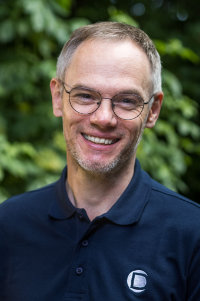
Aaqib Saeed is an Assistant Professor in the Department of Industrial Design at Eindhoven University of Technology. His research focuses on Human-Centric AI, Federated Learning, Self-Supervised Learning, and Audio Understanding, with applications in Personal Health. He holds a PhD (cum laude) from TU/e and an MSc (cum laude) from the University of Twente. Education: PhD in Computer Science (cum laude), TU/e (2021) MSc in Computer Science (cum laude), University of Twente (2018) Research Interests: Development of robust federated learning frameworks for decentralized data Self-supervised learning for audio and physiological signal analysis AI-driven solutions for healthcare monitoring Key Contributions: DeltaMask: Reducing communication overhead in federated fine-tuning FedNS: Mitigating noisy decentralized data in federated learning Labeling Chaos to Learning Harmony: Handling label noise in FL Professional Experience: Visiting Industrial Fellow, University of Cambridge (2023) Research Scientist, Philips Research (2019–2023) Research Internships: Google Research, TNO/EIT Digital Awards: UT Scholarship (MSc) Cum Laude awards for both PhD and MSc Labs/Teams: EAISI Health, EAISI Foundational, Computational Design Systems.
Pentti Juhana Henttonen is an active Researcher at the University of Helsinki, affiliated with the Swedish School of Social Sciences and the Institute of Humanities and Social Sciences. He serves as a Doctoral Researcher in the Doctoral Program in Human Behavior and works as a project planner, contributing to multiple research initiatives focused on human interaction and psychological phenomena. His research interests span cognitive science with particular emphasis on narcissism, sisu (the Finnish concept of inner strength and perseverance), second language acquisition, and physiological responses during social interactions. Henttonen employs diverse methodologies including physiological measurements, conversation analysis, and experience sampling methods to investigate how individuals process emotions, interact with others, and demonstrate mental fortitude in challenging situations. His publication record shows significant activity with 49 publications spanning from 2009 to 2025, with particular concentration in recent years (2023-2025). His work appears across interdisciplinary journals in psychology, linguistics, and social sciences, demonstrating a trend toward increasingly sophisticated methodologies combining physiological measurements with conversational analysis. Recent publications focus on narcissistic traits and their physiological correlates, the cultural phenomenon of sisu, and second language learner behavior. Henttonen actively contributes to the academic community through peer review services for journals including Scientific Reports, BMC Psychology, and Heliyon. He has organized academic events such as the HSSH workshop on motion energy and pose analysis and the HSSH seminar on VR methodology, demonstrating leadership in advancing methodological approaches in social science research. His research is supported through multiple projects funded by institutions including the Academy of Finland (Suomen Akatemia), with his most recent work focusing on patterns in second language learners' behavior (2023-2024) and previous projects examining narcissism (2019-2023) and neighbor dialogues (2018-2020). His work bridges theoretical psychological concepts with practical applications, as evidenced by his media appearances discussing narcissism and sisu for broader public understanding.
Jian Tang is an Assistant Professor at HEC Montreal and the Montreal Institute for Learning Algorithms (MILA), as well as an Associate Professor at the Department of Computer Science and Operations Research (DIRO) at Université de Montréal. He is also affiliated with IVADO (Institut de valorisation des données) as a member. His research spans multiple institutions including collaborations with leading biology labs worldwide and access to extensive computational resources through industry partners. Ph.D. in Computer Science, Peking University (2009-2014) Visiting Ph.D. student, University of Michigan (2011.10-2013.8) B.S. in Mathematics, Beijing Normal University (2005-2009) Professor Tang's research focuses on the intersection of deep learning and graph theory, with particular emphasis on geometric deep learning, knowledge graph reasoning, and applications in drug discovery. His work bridges symbolic and neural approaches to create robust reasoning systems that can handle complex structured data. He has pioneered techniques in graph representation learning that have significantly advanced the field of molecular property prediction and protein design. His publication record shows a clear trajectory toward applying geometric deep learning to biological problems, with a growing emphasis on protein design, molecular conformation generation, and multi-omics analysis. Recent work demonstrates sophisticated integration of 3D geometry with deep learning architectures to model complex biomolecular interactions. Canada CIFAR Artificial Intelligence Chairs (CCAI Chair) Tencent AI Lab Rhino-Bird Gift Fund Amazon Faculty Research Award Microsoft-Mila collaboration grant National Research Council Canada (NRC) Collaborative Research and Development Grant Professor Tang actively mentors doctoral and master's students, with six recent graduates working on cutting-edge topics including graph neural networks for reasoning, protein design, and molecular representation learning. His research is supported by substantial funding from industry partners including Microsoft, Amazon, and Tencent, as well as government agencies like NRC. He collaborates extensively with biology labs worldwide, applying AI to solve real-world biomedical challenges. He leads a research group focused on geometric deep learning for drug discovery, with active projects in protein design using geometric-aware models and large language models for multi-omics analysis. The group has access to thousands of GPUs through industry collaborations, enabling large-scale experiments in molecular simulation and generative modeling.
Dr. George Fitzmaurice is a Research Fellow at Autodesk, leading the Human Computer Interaction and Visualization Research group. With over 120 publications and 95 patents, his work spans 25 years of innovation in interactive systems, focusing on technology-assisted learning , 3D visualization , and novel input techniques . His notable contributions include the Maya 1.0 UI and SketchBook Pro design, as well as pioneering Graspable UIs and Spatially-Aware Displays . Education : MIT (B.Sc. Math/CS), Brown (M.Sc. CS), Toronto (Ph.D. CS) His research explores immersive visualization and generative AI applications in design workflows, with recent work focusing on VR/AR tools like TimeTunnel for motion editing and WhatIF for AI-assisted narrative design. Current projects examine the intersection of large language models , 3D design systems , and collaborative environments . Key article themes include: Generative AI integration (3DALL-E, WorldSmith) Immersive motion analysis (AvatAR, VideoPoseVR) Creative workflow optimization (MoodCubes, Immersive Sampling) Privacy-aware VR systems (Vice VRsa) Scientific Recognition: 2019 - Inducted into ACM CHI Academy 2024 - Awarded ACM Fellow for computing contributions He has developed foundational interaction techniques like ViewCube™ and SteeringWheels™ , and his work continues to shape modern 3D UI paradigms and spatial computing approaches through projects like DreamSketch and Tesseract.
Prof. Kwang W. Oh is a Professor and Director of Graduate Studies in the Department of Electrical Engineering at the University at Buffalo (SUNY), with an adjunct appointment in the Department of Biomedical Engineering. He directs the Sensors and MicroActuators Learning Lab (SMALL), focusing on biomedical microfluidic devices, sensors, and actuators for applications in medical diagnostics and biological research. His educational background includes: PhD in Electrical and Computer Engineering from the University of Cincinnati (2001) MS in Electrical and Computer Engineering from the University of Cincinnati (1997) BS in Physics with summa cum laude from Chonbuk National University, Korea (1994) Prof. Oh's research centers on microfluidics and BioMEMS (Bio Micro Electro Mechanical Systems), with specializations in LOC (lab-on-a-chip), MicroTAS (Micro Total Analysis Systems), and SANS (Sample-to-Answer Nano/microfluidic Systems). His work develops practical microfluidic devices for medical diagnostics, including point-of-care blood testing, single cell manipulation, and nanobiosensors. His lab has pioneered innovative approaches like the "pysanky" wax-based technique for rapid prototyping of microfluidic devices and vacuum-driven micropumps for plasma separation from finger-prick blood samples. His recent publications reveal a strong trend toward practical medical applications of microfluidics, particularly in photoacoustic imaging test phantoms, point-of-care diagnostics, and nanoparticle synthesis for viral treatment. His research bridges engineering with clinical needs, focusing on making laboratory functions portable and accessible through microfluidic integration. Among his notable awards: The SUNY Chancellor's Award for Excellence in Teaching (2020) President Emeritus and Mrs. Meyerson Award for Distinguished Undergraduate Teaching and Mentoring (2019) Qualcomm Faculty Award (2019) Senior Teacher of the Year Award, SEAS, UB (2017) Emerging Investigators 2012, Lab Chip, Royal Society of Chemistry (2013) Honor of CEO, Samsung Electronics for development of a micro PCR system (2003) Prof. Oh has advised numerous graduate students including Dr. Anyang Wang, Dr. Nikhila Nyayapathi, and Dr. Domin Koh, who have gone on to successful careers in academia and industry. His research has been supported by significant grants, including a Qualcomm Faculty Award in 2019, which recognizes research that "inspires students and sparks new approaches in key technology areas." He actively participates in professional service as an editorial board member for several journals including Sensors and Micromachines. He directs the Sensors and MicroActuators Learning Lab (SMALL), which houses state-of-the-art facilities for microfluidic device fabrication and testing. The lab focuses on developing practical microfluidic solutions for medical diagnostics, with recent projects including test phantoms for photoacoustic imaging, vacuum-driven micropumps for point-of-care blood separation, and microfluidic devices for nanoparticle synthesis targeting viral treatments. The lab fosters interdisciplinary collaboration between engineering, medicine, and life sciences to translate microfluidic innovations into real-world medical applications.
Sam Scott is an Associate Professor in the Department of Computing and Software at McMaster University's Faculty of Engineering. He teaches undergraduate computer science and software engineering courses but does not supervise graduate students. His contact information includes phone number 905-525-9140 x22500 and email samscott@mcmaster.ca. Dr. Scott's research spans multiple interdisciplinary domains with primary interests in Natural Language Processing, Machine Learning, Cognitive Science, Philosophy of Language, and Computer Science Education. His scholarly work demonstrates a consistent trajectory from theoretical foundations in cognitive science and philosophy toward practical educational applications. He has made notable contributions to culturally responsive teaching approaches, particularly in incorporating Indigenous Ways of Knowing into computer science curriculum development. Analysis of Dr. Scott's publication history reveals an evolution from foundational work in natural language processing and philosophical inquiry toward innovative educational approaches. His recent publications show increasing focus on inclusive pedagogy, flexible assessment methods, and culturally relevant computing education. The interdisciplinary nature of his work bridges theoretical computer science with practical classroom applications. According to available information, Dr. Scott does not supervise graduate students. The VIVO database indicates no grants are currently listed for him, though the system note suggests this may represent only a small sample of his total professional activities. His teaching portfolio is extensive, covering core computer science and software engineering courses through 2025.
Matthias Hagen is Professor of Databases and Information Systems at Friedrich-Schiller-Universität Jena. His research focuses on information retrieval (query understanding, conversational search, comparative questions, known-item search, user simulation), natural language processing (clickbait, argumentation), and web data mining. He earned his Ph.D. from Friedrich-Schiller-Universität Jena with a thesis on algorithmic complexity, and previously led research groups at Bauhaus-Universität Weimar and Martin-Luther-Universität Halle-Wittenberg. His current work develops novel methods for retrieval-augmented generation evaluation, neural information retrieval efficiency, and user-centered search systems. Recent publications examine crowdsourcing for RAG evaluation, LLM-based relevance assessment, corpus subsampling techniques, and child-friendly web search evaluation frameworks. He contributes to open web search initiatives and develops tools like the TIREx Tracker for experimental reproducibility in IR research. Dr. Hagen serves on program committees for major conferences including SIGIR, ECIR, and ACL. His research group participates in competitive evaluations such as TREC, CLEF, and Touché. Recent projects explore axiomatic approaches to retrieval, argumentation systems, and the impact of search result quality on decision-making.
Prof. Dr.-Ing. Joachim Denzler is a Professor leading the Chair for Digital Image Processing (Lehrstuhl für Digitale Bildverarbeitung) at Friedrich-Schiller-Universität Jena. His research spans computer vision, machine learning, medical imaging, and remote sensing applications across diverse domains including biomedical analysis, environmental monitoring, and facial recognition systems. His research interests focus on explainable AI, causal discovery, physics-informed neural networks, and bias mitigation in deep learning models. He has made significant contributions to fine-grained classification, concept activation vectors, and privacy-preserving techniques in facial recognition. His work often bridges theoretical computer vision with practical applications in medical diagnostics, environmental science, and infrastructure monitoring. His recent publications demonstrate a strong trend toward causal discovery methods, physics-informed neural networks, and addressing bias in machine learning systems. His work spans both theoretical advancements in model interpretability and practical applications in medical imaging, environmental monitoring, and infrastructure safety. The interdisciplinary nature of his research is evident from collaborations with ecologists, neuroscientists, and civil engineers. Best Paper Award at International Conference on Pattern Recognition (ICPR) 2024 Prof. Denzler actively mentors numerous PhD students and postdoctoral researchers, with frequent co-authors including Maha Shadaydeh, Niklas Penzel, Gideon Stein, and Tim Büchner appearing as first authors on significant publications. His laboratory has secured research funding across multiple domains including medical imaging, environmental monitoring, and AI safety. His work on CausalRivers represents a major contribution to benchmarking causal discovery methods with real-world time series data. The Chair for Digital Image Processing maintains strong industry and clinical partnerships, particularly in medical imaging applications for facial palsy analysis and neonatal care. Prof. Denzler's team has developed novel techniques for dam deformation monitoring using remote sensing data and created advanced methods for analyzing plant diversity effects on ecosystem functioning.
Yang Lin is an Assistant Professor at the University of Rhode Island , affiliated with the Department of Mechanical, Industrial & Systems Engineering . His research focuses on Microfluidics , Acoustofluidics , and Organ-on-a-Chip technologies, with applications in Environmental Monitoring , Food Safety , and Human Health . Education : Ph.D. in Mechanical Engineering (2019) and M.S. in Mechatronic Engineering (2015) from the University of Illinois at Chicago, and B.S. in Mechanical Design Manufacturing and Automation (2012) from Beijing Information Science and Technology University. Research Interests include: Acoustofluidics : Developing non-invasive, biocompatible fluid manipulation techniques using acoustic bubbles and membranes. AI-Enhanced Diagnostics : Leveraging convolutional neural networks for sample-to-answer diagnostic systems in public health. 3D Printed Microfluidics : Expanding additive manufacturing for low-cost, complex physiological structures in healthcare. Environmental Microfluidics : Detecting microplastics and contaminants in water and food systems. Publications highlight advancements in 3D printed microneedles , machine learning for nanoplastic detection , and magnetofluidic biosensors . Lab Members include current Ph.D. students and alumni who have completed M.S. and B.S. degrees under his mentorship.
Jerry Li is an associate professor at the University of Washington's Paul G. Allen School of Computer Science & Engineering. Previously, he was a principal research scientist at Microsoft Research Redmond and was the VMware Research Fellow at the Simons Institute in Fall 2018. Li completed his Ph.D. at MIT under the supervision of Ankur Moitra and his master's degree at MIT under Nir Shavit. As an undergraduate, he also attended the University of Washington, where he worked on complexity of branching programs and hardness of learning problems in database theory and AI. His primary research interests focus on learning theory broadly defined, with specific expertise in quantum information theory, large foundation models, and high-dimensional statistics. He has a particular interest in applying analysis and analytic techniques to theoretical computer science problems. His recent work spans quantum computing, robust machine learning, and theoretical foundations of deep learning, showing a clear trend toward bridging quantum information theory with statistical learning theory. Li has made significant contributions to the fields of robust statistics, quantum computing, and theoretical machine learning, with numerous publications in top-tier conferences and journals including FOCS, STOC, NeurIPS, ICML, and Science. His work often bridges theoretical guarantees with practical applications in machine learning systems, particularly in the areas of robustness and quantum advantage. George M. Sprowls Award for outstanding Ph.D. theses in EECS at MIT Best Artifact Award at PPoPP 2015 for "The SprayList: A Scalable Relaxed Priority Queue" Communications of the ACM Research Highlights for "Robust Estimators in High Dimensions without the Computational Intractability" Invited to special issues of SIAM Journal on Computing for FOCS 2023 and STOC 2022 Spotlight Presentations at NeurIPS 2019 Notable top 5% paper at ICLR 2023 Li advises several Ph.D. students including Ziyun Chen (co-advised with Shayan Oveis Gharan) and numerous research interns. He has served on program committees for major conferences including STOC, SODA, and ITCS, and is co-organizing the FOCS 2024 Workshop on Recent Advances in Quantum Learning. His teaching includes courses such as CSE 422: Toolkit for Modern Algorithms and CSE 599-M: Robustness in Machine Learning, for which he has created publicly available video lectures.
Jesse Davis is a Professor at the Department of Computer Science , KU Leuven , actively contributing to the Machine Learning group and the Sports Analytics Lab . He is part of the Faculty of Engineering Science and the Leuven.AI Institute . Ph.D. in Computer Sciences from University of Wisconsin-Madison (2007) M.S. in Computer Sciences from University of Wisconsin-Madison (2005) B.A. in Computer Science from Williams College (2002) His research focuses on machine learning, data mining, big data analytics, and sports analytics, with significant work in: Transfer learning and Markov logic networks Anomaly detection and semi-supervised learning Medical NLP and biomechanical data analysis Soccer performance metrics and tactical analysis His recent work explores spatio-temporal data analysis in sports and explainable AI for medical applications, with collaborations spanning finance, healthcare, and semiconductor manufacturing. Notable scientific awards include: Best Paper Award (Applied Data Science Track) at KDD 2019 Best Technical Paper Award at Intelligence Analysis Workshop He advises numerous PhD and Master's students in areas like: Football analytics Tree ensemble compression Medical question-answering systems Biomechanical load prediction His lab develops tools such as: GSSL for Markov network structure learning TODTLER for transfer learning Alchemy system for Markov logic networks
Joachim Baumeister is a Professor at the Chair of Computer Science VI - Artificial Intelligence and Knowledge Systems within the Institute of Computer Science at the University of Würzburg's Faculty of Mathematics and Computer Science. While his primary employment since September 2010 has been at denkbares GmbH, a company specializing in knowledge-based systems, he continues to regularly give lectures at the university. His research focuses on Semantic Information Systems, Knowledge Graphs, Deep Learning applications, Natural Language Processing, and Knowledge-based Configuration for Industry 4.0. Professor Baumeister's work bridges theoretical AI research with practical industry applications, particularly in knowledge-based configuration systems and semantic technologies. His recent publications (2020-2024) reveal a strong emphasis on product configuration systems, semantic knowledge representation, regulatory document processing, and knowledge-based systems. His research has evolved from foundational work on semantic wikis and knowledge engineering to more recent applications involving deep learning and large language models, demonstrating adaptability to emerging technologies while maintaining focus on practical knowledge representation problems. Professor Baumeister's work demonstrates significant contributions to case-based reasoning, knowledge configuration, and semantic technologies, with applications spanning regulatory compliance, industrial configuration systems, and document processing. His current research areas include: Semantic Information Systems and Knowledge Graphs Deep Learning for Image Recognition and Language Understanding Knowledge-based Configuration for Industry 4.0 Natural Language Processing Intelligent Personal Assistants and Chat Bots Though specific students aren't listed in the provided information, Professor Baumeister actively invites students to contact him regarding projects, bachelor theses, and master theses in his areas of expertise. His work at denkbares GmbH focuses on the design, implementation, and evolution of knowledge-based systems and semantic information systems.
Vasanth Sarathy is a Research Assistant Professor of Computer Science at Tufts University, specializing in the intersection of Artificial Intelligence and Natural Language Processing. His work combines neuro-symbolic machine learning techniques with social and cognitive sciences to develop socially-competent and safe AI systems. Education: Ph.D. in Computer Science and Cognitive Science, Tufts University (2020) Juris Doctor (J.D.), Boston University School of Law (2010) M.S. in Electrical Engineering and Computer Science, MIT (2005) B.S. in Electrical Engineering, University of Arkansas (2003) His research spans three interconnected themes: Social NLP, Reasoning with Social Norms, and Sense-making and Problem-Solving. Through Social NLP, he develops computational methods to uncover patterns in human social behavior using qualitative texts. His work on Reasoning with Social Norms focuses on building AI architectures that can understand and apply social norms in reasoning and language interpretation. His Sense-making research explores how humans and AI systems simplify complex worlds for efficient problem-solving. His recent publications demonstrate a growing trend toward integrating Large Language Models with symbolic reasoning for more trustworthy AI. His work spans applications including automated writing assistance, intelligent tutoring, fact-checking, social media content moderation, and embodied social robots. His research shows particular strength in developing methods that combine neural and symbolic approaches to address complex social reasoning tasks that neither approach could solve alone. Previously, Dr. Sarathy worked as a Senior Researcher of AI at Smart Information Flow Technologies, collaborating with the U.S. Department of Defense and Intelligence Community. Before his AI career, he practiced intellectual property law at Ropes and Gray for nearly a decade. His unique interdisciplinary background bridges technology, law, and cognitive science. He advises students in AI, NLP, and cognitive systems, with research supported by grants from DARPA and other government agencies. His work has applications in human-robot interaction, social media analysis, and educational technologies. Outside academia, he creates single-panel cartoons, practices martial arts, plays chess, and designs puzzle video games. His interdisciplinary journey from law to AI has been featured in a BU Law article.
Professor Aline Villavicencio is a Chair in Natural Language Processing at the University of Sheffield's School of Computer Science. She holds a PhD and MPhil from the University of Cambridge and an MSc from the Federal University of Rio Grande do Sul (Brazil). Her research focuses on lexical semantics, multilinguality, and cognitively motivated NLP, with applications including Multiword Expression (MWE) treatment and text simplification for English and Portuguese. She has held a CNPq Research Fellowship (2007–2017) and currently leads projects like Modeling Idiomaticity in Human and Artificial Language Processing (EPSRC grant). Her roles include PC co-chair for CoNLL-2019, Area Chair for ACL-2019 and NAACL-2018, and co-chair of PROPOR 2018. She advises WiNLP, contributes to TACL, JNLE, and other journals, and collaborates with the Neurocomputational and Language Processing Lab in Brazil. Notable work includes corpus development (e.g., BRWAC for Brazilian Portuguese), idiomaticity detection, and cross-lingual transfer learning. Recent grants include £446k from EPSRC and £370k from Horizon Europe (Atrium). Key Projects: Modeling Idiomaticity, Cross-lingual Adaptation, Speech Segmentation Grants: EPSRC (£446k), Horizon Europe (£370k), Royal Society (£74k) Publications: Over 100 papers in ACL, EMNLP, and journals like Natural Language Engineering . Her lab work involves developing NLP tools for under-resourced languages and exploring neural models' limitations in idiomatic understanding. She co-edited books on cognitive aspects of language acquisition and MWE processing, and her teaching includes advanced NLP modules.
Ian White is an Associate Professor in the Fischell Department of Bioengineering at the University of Maryland, College Park. He leads the Amplified Molecular Sensors Lab, focused on developing next-generation biosensing systems. His research emphasizes novel amplification strategies and assay automation to improve diagnostic simplicity and sensitivity. Key projects include thermally responsive alkane partitions (TRAPs) for sample-to-answer tests and phenotypically amplified β-lactamase (PhABL) assays for detecting multidrug-resistant pathogens. Joined University of Maryland in 2008 Postdoctoral training at the University of Missouri (2005–2008) Ph.D. in Electrical Engineering from Stanford University (2002) Research interests span biosensing technologies, molecular diagnostics, and nanotechnology applications in healthcare. His lab has pioneered innovations in paper-based SERS sensors and disposable diagnostic systems funded by NIAID, NHLBI, and NSF grants. Current projects include detecting viruses in wastewater, trauma-induced organ failure biomarkers, and antimicrobial resistance screening. Lab members have developed commercialized technologies via spin-off companies like Diagnostic anSERS. Awards include NIAID R01 grants and Maryland Industrial Partnerships funding. Over 40 peer-reviewed publications and numerous patents highlight his contributions to analytical chemistry and biomedical engineering.