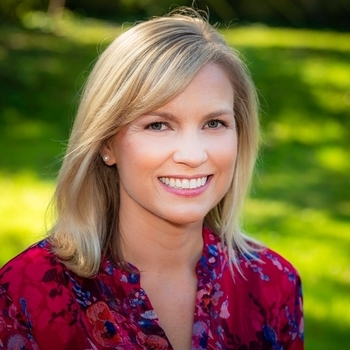
Kelly Arnold is an Associate Professor in the Department of Biomedical Engineering at the University of Michigan. Her research integrates systems engineering principles with immunology to investigate variability in immune responses across infection, vaccination, and injury, with a focus on computational modeling and clinical translation. Research Focus Systems-level immune response modeling Vaccination and antibody functionality Vaginal microbiome-host interactions Chronic lung disease progression Computational serology and proteomics Recent Work Her 2025 studies examine SARS-CoV-2 vaccination responses in cancer patients and computational frameworks for vaginal probiotics. Earlier works (2024-2007) span COPD progression, lupus fibrosis, HIV susceptibility, and tissue engineering for fertility preservation. Methodologies include proteomic profiling, network modeling, and microfluidic systems.
Mohamed Bouri is a Senior Lecturer and Researcher at École Polytechnique Fédérale de Lausanne (EPFL), where he is affiliated with the School of Engineering (STI) and specifically the Microengineering Department (SCI-STI-MB). He is part of the ReHAssist research group (http://rehassist.epfl.ch), which focuses on rehabilitation robotics and human-robot interaction. His office is located in the MED Building (MED 3 1016) at Station 9, 1015 Lausanne. Dr. Bouri's research spans several key areas in robotics and rehabilitation engineering. His primary focus is on the development and control of exoskeleton systems for mobility assistance and rehabilitation. He has made significant contributions to hip exoskeleton technology, adaptive control strategies, and human-robot interaction paradigms. His work bridges engineering principles with clinical applications, particularly for individuals with mobility impairments and neurological conditions. Additional research interests include sensory substitution techniques, balance control systems, and astronomical instrumentation involving robotic fiber positioners for multi-object spectrographs. Analysis of Dr. Bouri's recent publications reveals a strong emphasis on practical applications of robotics in rehabilitation settings. His work increasingly focuses on user-centered design, adaptive control systems that respond to individual user needs, and ecological validity in testing environments. There's a clear trend toward developing systems that can function effectively in real-world scenarios rather than controlled laboratory settings. His research also shows growing integration of physiological feedback mechanisms and multimodal sensing to enhance human-robot cooperation, with applications spanning from Parkinson's disease rehabilitation to astronomical instrumentation. Dr. Bouri has supervised numerous doctoral students whose theses reflect the breadth of his research interests, including work on lower-limb exoskeletons, robotic control systems, and rehabilitation technologies. His collaborative approach is evident in the extensive list of co-authored publications across multiple institutions and disciplines, demonstrating his ability to bridge engineering with clinical and astronomical applications. Based at EPFL's Microengineering Department, Dr. Bouri leads research activities within the ReHAssist laboratory, which specializes in rehabilitation assistance technologies. The lab focuses on developing innovative robotic solutions for mobility assistance, with particular expertise in exoskeleton design, control algorithms, and human-robot interaction paradigms. His work on projects like TWIICE One has demonstrated real-world impact in assistive technology development.
Li Tang is an Associate Professor with tenure at École polytechnique fédérale de Lausanne (EPFL), affiliated with the Institute of Bioengineering (IBI) and the Institute of Materials Science and Engineering (IMX) within the School of Engineering (STI). She leads the Laboratory of Biomaterials for Immunoengineering, focusing on developing innovative strategies at the intersection of immunology, materials science, and cancer therapy. Her work bridges fundamental research and clinical translation, with multiple ongoing clinical trials based on CAR-T cell therapies developed in her lab. B.S. in Chemistry, Peking University (2003–2007) Ph.D. in Materials Science and Engineering, University of Illinois at Urbana-Champaign (2007–2012) Postdoctoral Fellow, MIT (2013–2016) Her research lies at the forefront of immunoengineering, integrating chemical, metabolic, and mechanical approaches to modulate immune responses. Key areas include cancer immunotherapy, immune metabolism, mechano-immunology, and biomaterials. She investigates how physical and biochemical cues can reprogram T cells, overcome exhaustion, and enhance tumor targeting. Her work emphasizes multidimensional immunity-disease interactions, aiming to develop safer and more effective therapies for cancer and autoimmune diseases. The recent publications highlight a strong trend in engineering immune cells (especially CAR-T) for enhanced durability and function, using advanced biomaterials and metabolic reprogramming. There is a clear focus on overcoming challenges in solid tumors, modulating the tumor microenvironment, and translating findings into clinical applications. The use of nanoparticle delivery, single-cell analysis, and biomechanical cues are recurring themes across her work. Notable scientific awards include: Friedrich Miescher Award (2025) ERC Starting Grant (2018) MIT TR35 Innovators Under 35 (China Region, 2020) Nano Research Young Innovator Award (2018) Biomaterials Science Emerging Investigator (2019) Materials Horizons Emerging Investigator (2020) Li Tang actively mentors PhD students across multiple doctoral programs (EDBB, EDMS, EDMX) and has advised numerous graduates who have gone on to prestigious postdoctoral and faculty positions. She is involved in significant research grants, including an Innosuisse project with Novochizol SA, and her lab is supported by competitive funding. She teaches core courses such as Immunoengineering and Next-Generation Biomaterials, shaping the next generation of scientists. Her lab fosters interdisciplinary collaboration and innovation, with active projects in chemical, metabolic, and mechanical immunoengineering, as well as CAR-T cell development. She is the Principal Investigator of the Tang Lab, which includes postdoctoral fellows, PhD students, and technical staff. The lab is actively recruiting and has a strong publication and clinical translation record. Tang Lab is also involved in multiple MA/BA training projects and promotes student engagement in cutting-edge research. The lab’s discoveries are being translated into clinical trials, reflecting a strong commitment to translational science.
Dr. Edouard Boujo is a Scientist and Lecturer at the Swiss Federal Institute of Technology Lausanne (EPFL) , affiliated with the School of Engineering (STI) and working in the Institute of Mechanical Engineering (IGM) and Laboratory of Fluid Mechanics and Instabilities (LFMI) . He also teaches in the SGM-ENS department of the School of Engineering. Scientist at EPFL STI IGM LFMI Lecturer at EPFL STI-SGM SGM-ENS His research focuses on Fluid Dynamics with expertise in Flow Stability , Flow Control , Aeroacoustics , Thermoacoustics , Fluid-Structure Interaction , and Coating Flow Dynamics . He employs advanced mathematical modeling and computational methods to study complex fluid behaviors. Recent publications highlight his work on stochastic modeling of fluid instabilities, adjoint-based optimization of flow systems, and nonlinear dynamics of coating flows. His 15 most recent papers cover topics ranging from symmetry-breaking bifurcations to spin coating optimization and noise-induced transitions in fluid systems. Dr. Boujo actively collaborates with institutions across Europe and New Zealand, mentoring PhD student Atharva Lagwankar . He has received research funding from the Swiss National Science Foundation for two PhD theses and contributes to major fluid dynamics conferences like the European Fluid Dynamics Conference and APS Division of Fluid Dynamics meetings. His laboratory work at LFMI involves experimental and computational studies of fluid instabilities, with applications in aerospace, mechanical engineering, and industrial coating processes. He develops adjoint-based control methods for optimizing flow systems and reducing drag in various fluid configurations.
Maartje Bastings is an Associate Professor at the École Polytechnique Fédérale de Lausanne (EPFL) , leading the Programmable Biomaterials Laboratory (PBL) within the School of Engineering (STI) . She holds additional affiliations with the Institute of Materials (IMX) , IBI-STI (Bioengineering), and supervises doctoral programs in Biotechnology and Biological Engineering ( EDBB-GE ) and Materials Science and Engineering ( EDMX-GE ). Her research focuses on DNA-based supramolecular materials engineered to achieve dynamic reciprocity —a two-way interaction between synthetic materials and biological systems. By leveraging DNA as a programmable scaffold, she investigates structural mechanics, valency control, and geometric constraints governing self-assembly and cell communication at bio-interfaces. Key applications include immune system modulation, diagnostics , and vaccine development . Analysis of her 15 most recent publications reveals a focus on multivalent interactions for T-cell activation, spatial patterning in immune signaling, and engineered coatings for DNA origami stability. Subfields span T cell receptor engineering , nanoscale protein dynamics , stimuli-responsive biomaterials , and bio-inspired therapeutic design . PhD Students: Chen Yuduo Hendrickx Pauline Bart M. Kononenko Artem Li Shujie Lou Yameng Meyer Pitt Narita Minako Rousseau Benjamin Bila Hale Caroprese Vincenzo Comberlato Alice Kurisinkal Eva Eugene Paloja Kaltrina Rodríguez Franco Hugo José Tekin Cem Wong Siu Ho Contact: maartje.bastings@epfl.ch
Prof. Daryl W. Yee is a Tenure Track Assistant Professor at École Polytechnique Fédérale de Lausanne (EPFL), affiliated with the Institute of Electrical and Micro Engineering (IEM) and multiple teaching units. He holds a B.Eng. from Imperial College London, and M.Sc. and Ph.D. from Caltech, followed by postdoctoral research at MIT. His research focuses on integrating molecular design and materials processing to develop advanced functional materials addressing societal challenges in healthcare, energy, and climate change. Key research directions include Polymer-to-X additive manufacturing, dynamic polymers, microstructure control in polymers, and novel 3D printer development. Education highlights include: B.Eng in Materials Science and Engineering, Imperial College London (2011-2014) M.Sc. and Ph.D. in Materials Science, Caltech (2014-2020) Postdoctoral Associate at MIT (2020-2022) His lab, ALCHEMY, emphasizes democratizing advanced materials manufacturing through accessible chemistries and processing strategies. Current teaching roles span Materials Science and Engineering and Microengineering. Four PhD students are currently advised, and he oversees courses in electrical engineering and materials engineering. Research interests emphasize hydrogel-based additive manufacturing, nanoparticle superlattices, and polymer design. Though no funded PhD/postdoc positions are currently open, self-funded researchers are encouraged to contact him directly.
Mohsen Malekinejad is an Associate Professor at the University of California, San Francisco (UCSF) School of Medicine and serves as the director of the Center for Resilient Societies and Technology (CREST) . He is a core member of the RESILIENT network at the University of California system, focusing on pandemic intelligence and community resilience. His career spans 20 years of public health experience with expertise in evidence-based medicine, systematic reviews, and translating research into policy. Education: DrPH (UC Berkeley, 2008), MPH (UC Davis, 2003), MD (Tehran Azad University, 1999), Postdoctoral Studies (UCSF, 2009) Dr. Malekinejad's research addresses health disparities among marginalized populations globally, focusing on substance use disorders, HIV/HCV, and pandemic response strategies . His work includes methodological innovations for sampling hard-to-reach groups (e.g., homeless populations, drug users) and economic evaluations of public health interventions . Recent publications highlight systematic reviews on topics like COVID-19 exposure notification systems, TB testing cascades, and HIV risk behaviors . His methodological strengths include respondent-driven sampling, meta-analysis, and health equity frameworks. He has led major projects funded by NIH, CDC, and WHO, including the California Department of Public Health's COVID-19 Exposure Notification system implementation. Dr. Malekinejad also maintains an active role in graduate-level public health education and collaborates across disciplines to strengthen translational research.
Dr. Marla Keller is a tenured Professor of Medicine and Obstetrics & Gynecology at Albert Einstein College of Medicine, currently serving as Executive Dean and holder of the Jacob and Jeanne Barkey Chair in Medicine. Director, NIH-funded Harold and Muriel Block Institute for Clinical and Translational Research Interim Senior Associate Dean for Clinical and Translational Research Vice Chair of Research for Department of Medicine Dr. Keller's research focuses on: Biomedical HIV prevention strategies Vaginal microbicide development PrEP implementation in women Cervical cancer screening in HIV+ women Immune responses to SARS-CoV-2 COVID-19 clinical trials Her recent publications emphasize: HPV infection and cervical precancer Vaginal microbiome interactions PrEP delivery systems HIV/HSV coinfection dynamics Convalescent plasma therapy Metronidazole treatment response Key scientific awards include: Infectious Disease Mentoring Award (2013) COVID-19 Distinguished Service Award (2021) Spirit of Achievement Changemaker Award (2023) New York Super Doctor (2011-2015)
Susan Davies is a Professor and Interim Dean at the Tulane School of Social Work, where she also serves as Associate Dean for Research. She previously held leadership and research roles at the University of Alabama at Birmingham, including directing the CDC-funded Prevention Research Center and holding scientific appointments in multiple interdisciplinary centers such as the Center for AIDS Research (CFAR) and the Minority Health Research Center. Her research is centered on improving behavioral health outcomes among vulnerable populations, particularly focusing on HIV/STI prevention among adolescents, maternal mental health, and the social determinants of health. She employs ecological and ecosystemic frameworks to understand risk and protective factors within families and communities, with a strong emphasis on intervention development, program evaluation, and community organizing. Her work often integrates interdisciplinary collaboration across public health, medicine, nursing, and psychology. The recent publications reflect a sustained focus on adolescent sexual health, maternal well-being, and community-level influences on risk behaviors. Her studies utilize diverse methodologies including longitudinal analysis, randomized trials, and qualitative assessments, often targeting underserved populations in the Deep South. Common themes include health equity, family functioning, neighborhood effects, and innovative intervention strategies such as entertainment education and social media outreach. Susan Davies has secured significant research funding from federal agencies including the CDC and NIH. Notable grants include a five-year CDC Prevention Research Center award on community health renewal and an NIH/NICHD-funded prenatal behavioral intervention study to prevent cytomegalovirus in pregnancy. She has served as Principal Investigator on twelve studies and as co-PI or investigator on numerous others, demonstrating a robust and sustained research program. She is deeply committed to mentoring, having guided five junior faculty recipients of K-awards across disciplines such as Medicine, Surgery, Public Health, Nursing, and Psychology. She has chaired 15 dissertation committees and served on over 40 others, advising students from various departments across her institutions. Her leadership extends to academic administration, where she plays a central role in shaping research strategy and educational programs at Tulane School of Social Work.
Rob Ley is an Adjunct Professor at the USC School of Architecture, specializing in experimental architectural design and public art. He founded Rob Ley Studio, known for installations at venues like the Storefront for Art and Architecture (New York) and the Taubman Museum of Art. His work spans public commissions for institutions such as Eskenazi Hospital and O’Hare Airport. Ley holds a B.Arch from the University of Illinois and an M.Arch from UCLA. Education: Bachelor of Science in Architecture, University of Illinois, Urbana-Champaign (1993–1996) Master of Architecture, University of California, Los Angeles (1997–2000) Ley’s research focuses on integrating technology and innovation into public spaces, with a secondary emphasis on the social impact of design. His studio’s projects highlight experimental approaches to urban environments and community engagement. Awards & Grants: 2015 American’s for the Arts - Public Art Network Year in Review Award Graham Foundation Grant AIA Research Grants IDEC Special Projects Grant 2010 Best Storefront Design Award (Municipal Art Society of New York) Ley teaches graduate and undergraduate design studios at USC, emphasizing digital fabrication and materials innovation. He has lectured globally on public art and design at institutions such as Cooper Union and the American Institute Vienna. His work bridges architectural practice with social responsibility, advocating for design solutions that address urban challenges.
Kaiming Bi, Ph.D., is an Assistant Professor in the Department of Management, Policy & Community Health at the University of Texas Health Science Center at Houston (UTHealth Houston) School of Public Health . As an affiliated member of the Center for Health Care Data , his research bridges quantitative methods and public health, focusing on infectious disease modeling , epidemic forecasting , and data-driven health policy . B.S. in Mathematics from Northeastern University (2015) Ph.D. in Industrial Engineering from Kansas State University (2020) Postdoctoral training at University of California San Diego School of Medicine (2020-2021) and University of Texas at Austin (2021-2024) His methodological expertise spans mathematical modeling , machine learning , and optimization , applied to diverse public health challenges including respiratory infections , vector-borne diseases , STIs , and the opioid epidemic . Recent work includes modeling SARS-CoV-2 Omicron subvariants , population immunity dynamics , and multi-pathogen burden projections for the 2023-2024 US winter season. Dr. Bi has received prestigious accolades such as the Pencis Best Researcher Award (2021) and IISE Best Paper (2018). He previously taught graduate courses in Integer Programming , Information Systems , and Industrial Simulation at Kansas State University. Currently leading the Big-data and Infectious Disease Modeling Lab (BI Lab) , he seeks STEM-motivated PhD students to develop computational solutions for epidemic control.
Clapperton Chakanetsa Mavhunga is a Professor of Science, Technology, and Society (STS) at the Massachusetts Institute of Technology (MIT), where he has taught since 2008. His research re-centers African knowledge production in the study of science, technology, and innovation, challenging colonialist frameworks that position Africa as a passive recipient of technologies. Key Research Areas: African environmental history, indigenous knowledge systems, mobility studies, postcolonial technoscience, and critiques of technology transfer narratives. Books: The Mobile Workshop (2018) examines the tsetse fly as a catalyst for African innovation, while Transient Workspaces (2014) explores everyday technological practices in Zimbabwe. He also edited What Do Science, Technology, and Innovation Mean from Africa? Recent Articles: Focus on mobility as analytical framework, African responses to zoonotic diseases, and the political ecology of pesticide use in colonial contexts. Scientific Awards: Honorable mentions from the European Society for Environmental History (Turku Prize) and African Studies Association (Herskivits Prize) in 2015. Mavhunga’s work bridges history, philosophy, and anthropology of technology, advocating for decriminalizing African practices and integrating them into global STI discourses.
Dr. Keith Fowke is a Professor and Head of the Department of Medical Microbiology and Infectious Diseases at the University of Manitoba. He earned his B.Sc.(H) in Microbiology (1988) and PhD (1995) from the University of Manitoba, with thesis work on HIV resistance in Nairobi’s Pumwani sex workers cohort. His career spans postdoctoral research at NIH’s National Cancer Institute, project scientist roles at BBI Biotech, and progressive academic appointments at Manitoba, culminating in department head (2013). Education: B.Sc.(H) (University of Manitoba, 1988), PhD (University of Manitoba, 1995). The Laboratory of Viral Immunology, led by Dr. Fowke, focuses on three pillars: 1) Immunological and genetic factors in HIV resistance/control; 2) Role of immune activation and receptor polymorphisms in disease progression; 3) Pre-existing immunity to influenza and vaccine responses. Research leverages long-standing collaboration with Nairobi’s Sex Worker Outreach Program (SWOP) and Partners for Health and Development in Africa (PHDA), yielding breakthroughs like linking STIs to HIV risk and identifying natural HIV immunity. Recent work highlights the catastrophic consequences of PEPFAR funding cuts for HIV services in Kenya, where SWOP clinics reduced female sex worker HIV prevalence from 44% to 12% between 2008-2017. Dr. Fowke’s team also investigates HPV-related cancers among men who have sex with men. Scientific Awards Canadian Academy of Health Sciences As a principal investigator, Dr. Fowke mentors graduate students and postdoctoral fellows in immunology and infectious diseases. His lab collaborates with global health initiatives like CanCURE (Canadian HIV Cure Enterprise) and receives funding from CIHR, the Bill & Melinda Gates Foundation, and Research Manitoba. The lab operates in Room 539 at 745 Bannatyne Avenue, Winnipeg.
Professor James Brown serves as the ABS Professor of Official Statistics and Head of Discipline for Mathematical Sciences at the University of Technology Sydney (UTS). He holds a B.Sc. (Hons) in Mathematics with Actuarial Studies (1993), M.Sc. in Social Statistics (1996), and Ph.D. in Census Coverage Assessment (2000) from the University of Southampton. His research focuses on census methodology, survey design, policy evaluation, and multilevel statistical modeling. He has led major projects including the 2012 Rwanda Census Quality Report and contributed to UK census coverage strategies. Professional roles include Fellow of the Royal Statistical Society, Chair of Scotland’s 2022 Census Steering Group, and member of the ABS Methodology Advisory Committee. He has editorial experience with journals like the Journal of the Royal Statistical Society Series A and International Statistical Review . Key funded projects include studies on HIV legal frameworks, food security during the pandemic, and healthcare safety regulation. Awards : Fellow of the Royal Statistical Society, Member of British Society for Population Studies Grants : Includes $3M for legal-environment assessments in HIV policy and census quality advisory roles in New Zealand and Australia. His advisory work spans national statistical agencies, including collaborations with the Office for National Statistics (UK) and Statistics New Zealand. Current research emphasizes administrative data integration and future population statistics frameworks.
Won Dong Shin is a Postdoctoral Researcher at the Laboratory of Intelligent Systems (LIS) within the School of Engineering (STI) at EPFL. His research focuses on bio-inspired robotics, particularly in the design and control of drones and multi-modal robots. He explores topics such as avian-inspired flight mechanisms, morphological control systems, and autonomous navigation strategies. His work integrates vision-based control, biomimetic principles, and reinforcement learning to enhance the agility and accuracy of winged drones in urban environments. He has contributed to developing robots capable of transitioning between ground and air, perching, and adapting to complex terrains through energy-efficient designs. Selected projects include studies on elastic actuation for repetitive hopping, multi-modal locomotion systems, and bio-inspired claws for perching. His research often emphasizes practical applications in robotics for civilian tasks, such as urban exploration and environmental monitoring. Shin collaborates with the LIS group, which is part of EPFL’s Institute of Microengineering (IGM). His contact information includes the email won.shin@epfl.ch and a physical office at MED 1 1612 in Lausanne.