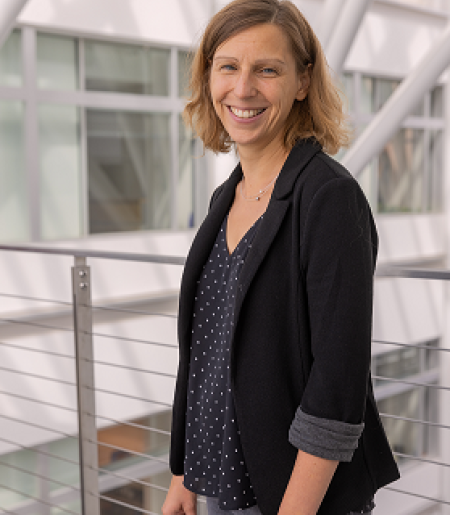
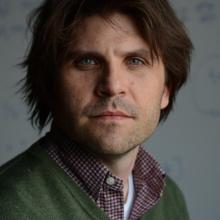
Prof. Peter Fierlinger is Chair of Precision Measurements at Extreme Conditions at the Technical University of Munich (TUM) School of Natural Sciences. His research focuses on precision experiments to probe fundamental physics questions, particularly the matter-antimatter asymmetry in the Universe and CP violation through electric dipole moment (EDM) measurements. Key Techniques: Ultra-cold neutrons, hyperpolarized noble gases, SQUID magnetometry Applications: Fundamental symmetry tests, fetal cardiac monitoring, quantum sensing Research Trends: Recent publications highlight EDM searches ( 2025 ), neutron-antineutron oscillation experiments at the European Spallation Source ( 2024 ), and quantum sensor applications in medical diagnostics ( 2023 ). His work bridges particle physics , cosmology , and applied quantum technologies . Scientific Awards: Changjiang Scholar Award (2019) Karl-VanBibber Fellowship (2007) Academic Journey: PhD from ETH Zurich (2005) Junior Research Group Leader at Cluster of Excellence 'Origin and Structure of the Universe' (2008) Founded Fierlinger Magnetics GmbH for commercializing quantum sensors
Dr. Lisa Paulius is a Professor of Condensed Matter Physics in the Department of Physics at Western Michigan University. Her research program focuses on vortex dynamics in high-temperature superconductors, with expertise in electrical transport measurements and SQUID microscopy techniques. Education Ph.D. in Physics, University of California San Diego (1993) M.S. in Physics, University of California San Diego (1989) A.B. with honors in Physics, University of Chicago (1987) Research Focus Investigates fundamental vortex dynamics in superconducting materials using advanced irradiation techniques to engineer defect structures. Research combines theoretical modeling with experimental characterization of pinning mechanisms and phase transitions in high-temperature superconductors under varying magnetic field conditions. Publication Trends Recent articles demonstrate sustained focus on defect engineering in YBCO superconductors, particularly through particle irradiation techniques. Work advances understanding of vortex pinning anisotropy, phase diagram evolution, and optimization of critical currents in applied magnetic fields. Teaching Develops courses in mechanics, astronomy, and energy-environment relationships, emphasizing experimental physics foundations.
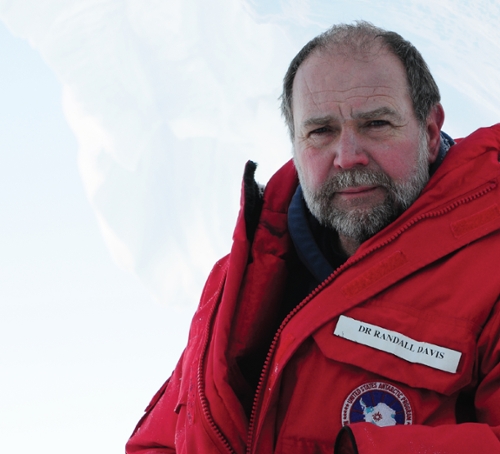
Randall W. Davis is a Regents Professor in the Department of Marine Biology at Texas A&M University at Galveston. He earned a Ph.D. in Physiology from the University of California, San Diego (1980) and a B.S. in Biology from the University of California, Riverside (1970). His research focuses on marine mammal physiology, behavior, and ecology, with emphasis on diving adaptations, foraging strategies, and the use of animal-borne technology for ecological monitoring. He has pioneered the development of miniature video and data recorders to study marine animals in their natural environments. Professional Roles: Head of Department (1990–1997), Director of the Laboratory for Aquatic Animal Performance and Physiology (since 1990). Grants: Over 10 major grants from NSF, NOAA, and other agencies, totaling millions in funding. Key awards include the Fulbright Fellowship (2012) and the Regents Professor title (2011). His work integrates physiology, technology, and ecology to address challenges in marine conservation and animal behavior. He has advised graduate students and collaborated on projects spanning Alaska, Antarctica, and the Gulf of California. Teaching includes courses on comparative animal physiology, marine mammalogy, and Alaska coastal ecology. He also contributed to sea otter rehabilitation efforts post-Exxon Valdez spill (1989–1990).
Kathryn Moler serves as Vice President of SLAC National Accelerator Laboratory and holds the Marvin Chodorow Professorship while being a Professor of Applied Physics, Physics, and Energy Science & Engineering at Stanford University. She has extensive administrative experience including serving as Vice Provost and Dean of Research (2018-2023), Transition Dean of the Doerr School of Sustainability (2022), and Senior Associate Dean for Natural Sciences in the Humanities and Sciences Deans Office (2016-2018). Professor Moler's research focuses on superconductivity, quantum materials, and mesoscopic physics, with particular expertise in magnetic imaging techniques. Her laboratory develops advanced tools for measuring magnetic properties of quantum materials at micron length-scales. She specializes in scanning SQUID (Superconducting Quantum Interference Device) susceptometry, which enables imaging of local magnetic fields and susceptibilities with sub-micron spatial resolution. Her work spans fundamental materials physics, exotic Josephson effects, and superconducting device characterization. Analysis of her recent publications reveals a strong focus on unconventional superconductors including UTe 2 , URu 2 Si 2 , and iron-based superconductors. Her work frequently examines vortex dynamics, superfluid density, and magnetic properties at the nanoscale. A significant portion of her research investigates fractional vortices and non-universal flux quantization in multiband superconductors, which could have implications for fluxonics-based computing. Sapp Family University Fellow in Undergraduate Education, Stanford University (2014-) Richtmyer Award for "Outstanding Leadership in Physics Education", American Association of Physics Teachers (2011) APS Fellow, American Physical Society (2008-) Packard Fellow, Packard Foundation (2001-2006) Presidential Early Career Award for Scientists and Engineers (2000) CAREER Award, National Science Foundation (1999-2003) Alfred P. Sloan Research Fellow (1999-2001) Professor Moler actively mentors graduate students and postdocs, currently serving as Doctoral Dissertation Reader for Praveen Sriram, Postdoctoral Faculty Sponsor for Nabhanila Nandi, and Doctoral Dissertation Co-Advisor for Alexander Kiral. She leads the Moler Group, a mesoscopic magnetic imaging laboratory that develops new measurement techniques for quantum materials. Her lab maintains the Stanford Nano Shared Facilities and was previously the Center for Probing the Nanoscale, an NSF Nanoscale Science and Engineering Center. The group also develops open-source software tools like SuperScreen for simulating magnetic responses in superconducting devices.
Michael Niemack is a Professor of Physics and Astronomy at Cornell University, where he has been a faculty member since 2013. He is affiliated with the College of Arts and Sciences and holds joint appointments in both the Physics and Astronomy departments. His research focuses on experimental cosmology and astrophysics, particularly through precision measurements of microwave radiation. Education: B.A. Physics, Amherst College, 2002 Ph.D. Physics, Princeton University, 2008 Professor Niemack's research interests span cosmology, astrophysics, and fundamental physics, with a focus on studying inflation, dark energy, dark matter, neutrinos, galaxy clusters, and galaxy evolution using cosmic microwave background and sub-mm measurements. His work also encompasses detector arrays and applied superconductivity, including low-temperature detector arrays, superconducting detectors, transition-edge sensor bolometers, and SQUID measurement systems. Additionally, he specializes in astronomical optics and receivers, with expertise in optics design, optical coatings, material properties, and cryogenic instruments. His research group develops new instrumentation to study the formation and evolution of the universe through precision measurements of microwave radiation, building on past measurements of the cosmic microwave background that provided an exquisite picture of the early universe. Professor Niemack's work has led to significant advancements in cosmological observations, including contributions to the Atacama Cosmology Telescope (ACT) which operated from 2008-2022, and ongoing work with the CCAT Observatory, Simons Observatory, and CMB-S4 projects. His research has produced first detections of the power spectrum of CMB gravitational lensing and the kinematic Sunyaev-Zel'dovich effect, as well as some of the best constraints on the Hubble constant yet. Scientific Awards: Centennial Fellow, Princeton University (2002-2007) National Research Council Postdoctoral Fellow, National Institute of Standards and Technology, Boulder, CO (2008-2010) NSF CAREER Award Young Scientist by World Economic Forum (2018) Professor Niemack has advised numerous graduate students and postdoctoral researchers, including Zachary Huber, Benjamin Keller, Lawrence Lin, Alicia Middleton, Cody Duell, Eve Vavagiakis, and others. His research is supported by major funding sources including the National Science Foundation, National Aeronautics and Space Administration, and Simons Foundation, which have enabled the development of cutting-edge instrumentation for cosmological observations. His work has led to significant advancements in detector technology, including the design, build, and deployment of some of the largest arrays of superconducting detectors yet, with thousands of transition-edge sensor (TES) detectors cooled to sub-Kelvin temperatures. Professor Niemack leads the Experimental Cosmology and Astrophysics group at Cornell, which works in the Cornell Nanoscale Facility developing new optics and detector microfabrication techniques. The group has played a significant role in building and observing with the six-meter Atacama Cosmology Telescope and is now developing new instruments for the CCAT Observatory and Simons Observatory, as well as longer-term development of CMB-S4 to measure microwave radiation with far better sensitivity than previous observatories.
John P Wikswo is a University Distinguished Professor of Biomedical Engineering, Molecular Physiology and Biophysics, and Physics at Vanderbilt University’s School of Engineering. He also holds the A. B. Learned Professorship in Living State Physics and serves as Founding Director of the Vanderbilt Institute for Integrative Biosystems Research and Education (VIIBRE). His research focuses on biological physics, systems biology, and biomedical engineering, emphasizing microfluidic systems, organs-on-chips, and automated biology. Wikswo earned his Ph.D., M.S., and B.A. in Physics from Stanford University and the University of Virginia, respectively. His work integrates engineering, physics, and biology to advance medical technologies and disease modeling. Research interests include cellular instrumentation, microfabrication, and applications of SQUID magnetometry. He pioneered organ-on-chip platforms to study complex biological systems, such as the blood-brain barrier and neurovascular units. Wikswo’s lab develops automated systems for high-throughput experimentation, such as CAPCAS and microfluidic multitrap nanophysiometers. Recent work explores AI-robotic systems for scientific discovery and multi-omics approaches to drug mechanism analysis. Publications span microfluidic bioreactor design, organ-on-chip integration, and predictive toxicology. His interdisciplinary projects bridge engineering, biology, and medicine, addressing challenges in drug development, disease modeling, and personalized healthcare. VIIBRE, under his leadership, focuses on systems biology and translational research, emphasizing quantitative methods and technology development. Wikswo’s contributions include over 100 patents and seminal papers in Nature Biomedical Engineering, Lab on a Chip, and Analytical Chemistry. His work has advanced in vitro models for drug testing and disease mechanisms, with applications in neuroscience, cardiology, and infectious diseases such as SARS-CoV-2. Ongoing efforts aim to create integrated human-on-a-chip systems for predictive toxicology and systems pharmacology.
David Pekker is an Associate Professor in the Department of Physics & Astronomy at the University of Pittsburgh, affiliated with the Dietrich School. His research focuses on quantum many-body systems, including dynamics of ultracold atoms and condensed matter physics. Key interests include alternatives to thermalization, topology, and non-Abelian excitations for quantum computing applications. Education: BA in Mathematics and BS in Physics from Rice University (2002), PhD in Physics from University of Illinois at Urbana-Champaign (advised by Paul Goldbart). Postdoctoral training at Harvard University and Caltech, focusing on ultracold atom physics and topological systems. Research emphasizes quantum interference devices, superconducting nanowires, and many-body localization. Notable contributions include work on Majorana fermions in cold atom systems and the 'Higgs' amplitude mode in superfluid transitions. Current advisees include Chenxu Liu and Binbin Tian. Collaborates on nanoscale superconducting devices and quantum information technologies.
Roman Kolevatov is a Postdoctoral Research Associate at Princeton University, focusing on theoretical and experimental physics at the intersection of cosmology, particle physics, and quantum technology. His work bridges fundamental theoretical models of the early universe with cutting-edge experimental tools for dark matter detection, particularly QCD axion searches. His research interests span cosmological bounce models in modified gravity frameworks (e.g., Horndeski theory), superconducting resonator development for axion detection experiments like DMRadio, and noise analysis in quantum sensor systems. He explores both theoretical aspects of early universe dynamics and applied experimental techniques for detecting ultralight dark matter particles. Recent work emphasizes interdisciplinary approaches combining astrophysical observations, precision instrument design, and high-energy physics. His contributions include advancing electromagnetic modeling for axion detectors and proposing novel experimental strategies for GUT-scale physics exploration.
Thomas Schönau is a Researcher at the Leibniz Institute of Photonic Technology within the Quantum Systems department. His work focuses on advancing superconducting sensor technologies for precision magnetic field measurements. Quantum Systems Department Leibniz Institute of Photonic Technology Research Interests: Schönau specializes in SQUID-based technologies, magnetometry, and cryogenic current comparators. His research addresses noise reduction, field stability, and sensor optimization for applications in particle physics and geophysics. Recent Publications: His 2025 work on optically pumped vector magnetometers demonstrates unshielded ultrasensitive measurements. 2024 studies focus on high-inductance CCCs for beamline diagnostics, achieving sub-pA noise levels. Earlier works (2021-2017) cover SQIF-based sensors, flux trapping analysis, and nanoSQUID development. Technical Contributions: Schönau has pioneered innovations in: Background field-tolerant sensors Coreless SQUID comparators Submicron Josephson junctions Mobile magnetometry systems
Dr. Aidar Sultanov is a Scientist at the Leibniz Institute of Photonic Technology, working in the Quantum Systems department within the Quantum Circuits work group. His research focuses on the development and fabrication of superconducting quantum circuits and related photonic technologies for quantum computing applications. His research interests include: Quantum Computing Hardware Development Wafer-Scale Fabrication of Superconducting Circuits Cryogenic Optical Sensing Technologies Josephson Junction Characterization Quantum Circuit Design and Optimization Dr. Sultanov's recent publications demonstrate expertise in practical quantum computing implementation challenges. His work shows significant advancements in wafer-scale fabrication techniques achieving critical current standard deviations of approximately 3% on-chip and 7% on-wafer. He has developed transmon-type qubits with relaxation and decoherence times of T1 = 12.5 µs and T2 = 15.0 µs. His research also extends to cryogenic optical sensing, demonstrating fluoride fiber Bragg gratings with detectable sensitivity of 0.5-1.7 pm/K below 50 K. Dr. Sultanov collaborates extensively with researchers including Evgenia Mutsenik, Matthias Schmelz, Gregor Oelsner, and Ronny Stolz across multiple publications. His work bridges theoretical quantum computing concepts with practical manufacturing solutions for scalable quantum technologies.
Markus Schiffler is a Researcher at the Leibniz Institute of Photonic Technology (Leibniz-IPHT) within the Quantum Systems department, focusing on Quantum Magnetometry. His work centers on quantum magnetometer systems (SQUID sensors) for geophysical applications, particularly airborne and underwater magnetic gradiometry and electromagnetic exploration. Current position: Researcher, Leibniz-IPHT Key institutions: Leibniz-IPHT, collaborations with BGR, industry partners His research involves developing and applying full tensor magnetic gradiometers (FTMG) and semi-airborne electromagnetic systems for mineral exploration, UXO detection, and geological mapping. Projects like DESMEX highlight his contributions to integrating ground transmitters with airborne receivers for deep resource detection. Recent publications (2024–2017) emphasize advancements in SQUID-based sensors, noise compensation for airborne platforms, multivariate EM data processing, and underwater FTMG deployment. These works demonstrate applications in kimberlite, gold, and nickel exploration, as well as alum shale identification in Germany. While no scientific awards are explicitly listed, his collaborative papers with leading researchers in geophysics (e.g., Ronny Stolz, Michael Becken) underscore his impact. He contributes to technical workflows and commercial implementations of quantum sensor systems, including motion noise reduction and frequency domain signal separation. Labs/teams: Quantum Magnetometry work group at Leibniz-IPHT Collaborations with institutions like BGR, industry stakeholders
Professor Martino Poggio is a faculty member in the Department of Physics at the University of Basel, within the Faculty of Humanities and Natural Sciences. His office is located at Klingelbergstrasse 82, 4056 Basel, Switzerland, and he can be reached at martino.poggio@unibas.ch or +41 61 207 37 61. As an active researcher with numerous publications extending into 2025, he maintains a prominent position in the field of nanoscale physics. Professor Poggio's research focuses on nanoscale magnetic imaging , quantum sensing , and quantum computing technologies . His work bridges fundamental physics with practical applications in quantum information processing. Key areas include the development of advanced scanning probe techniques, particularly SQUID-based systems for high-resolution magnetic imaging, and the investigation of quantum phenomena in nanoscale systems. His recent publications demonstrate a strong focus on cutting-edge techniques for imaging magnetic structures at the nanometer scale, with applications ranging from quantum computing hardware to novel magnetic materials. The research spans experimental implementation of quantum systems, characterization of 2D magnetic materials, and development of novel quantum sensors. Professor Poggio's work shows consistent productivity with multiple high-impact publications each year, including several in 2025, indicating an active research program with ongoing contributions to the field of quantum physics and nanotechnology.
Joonas Iivanainen is a Postdoctoral Researcher in the Department of Neuroscience and Biomedical Engineering at Aalto University. His research focuses on magnetoencephalography (MEG), magnetic sensor design, and computational modeling of magnetic fields in biomedical contexts. He works with advanced magnetometer technologies, including induction coil magnetometers and optically pumped magnetometers, to improve neural signal acquisition and environmental magnetic sensing. Institution: Aalto University Department: Neuroscience and Biomedical Engineering Role: Postdoctoral Researcher His research explores novel approaches to MEG sensor array design, thermal magnetic noise computation, and magnetic field modeling. Recent publications highlight advancements in single-trial neural response classification, high-sensitivity rf detection, and calibration techniques for optically pumped magnetometers. His work bridges theoretical physics and practical biomedical engineering applications. Key trends in his publications include: Development of on-scalp MEG systems for improved spatial resolution Quantification of thermal noise in conducting materials Integration of active ambient-field cancellation in sensor arrays Comparative studies of OPM and SQUID-MEG technologies Optimization of electromagnetic coil configurations Advancements in generalized spatial-frequency analysis for neural signals
Katja Nowack is an Assistant Professor at Cornell University in the Department of Physics, College of Arts and Sciences. Her research focuses on low-temperature scanning probe microscopy and quantum materials. Education: M.S. in Physics, RWTH Aachen (2005) Ph.D. in Physics, Delft University of Technology (2009) Her group develops scanning SQUID microscopes and hybrid probes to study emergent phenomena in quantum materials like topological insulators and complex oxides, combining imaging with low-noise transport measurements. Recent publications highlight trends in superconducting interfaces, graphene Hall sensors, Bayesian current reconstruction, and stress-engineered superconductivity, reflecting her group's work on quantum sensing and mesoscopic systems. Scientific Awards: DOE Early Career Award New Frontier Grant Her lab at Cornell's Physical Sciences Building includes a Bluefors dilution refrigerator and Montana workstation, with opportunities for postdocs and students. She previously held postdoctoral positions at Delft University of Technology and Stanford University's Moler lab.
Bradley Johnson is an Associate Professor in the Department of Astronomy at the University of Virginia . His research focuses on the development of advanced instrumentation for cosmic microwave background (CMB) observations, including superconducting detectors, cryogenic systems, and polarization-sensitive technologies. Affiliation: University of Virginia, College of Arts and Sciences Contact: bj6fu@virginia.edu Research Interests: Specializing in millimeter-wave astronomy and astrophysical instrumentation, Johnson contributes to experiments like the Simons Observatory, targeting CMB polarization, foreground removal, and cosmological parameter constraints. His work spans detector design, optical testing, and cryogenic engineering. Recent Work Trends: 2025 publications highlight advancements in large aperture telescope receivers, superconducting magnetic bearings for polarization modulation, and optical imaging systems using kinetic inductance detectors. Earlier articles focus on SQUID multiplexers, achromatic half-wave plates, and cryogenic test facilities for CMB experiments. Technical Contributions: Johnson has developed scalable kilo-pixel detector modules, magnetic shielding techniques, and precision calibration systems for millimeter-wave polarimeters. His collaborations include projects like PICO (Probe of Inflation and Cosmic Origins) and CMB-S4, aiming to constrain primordial gravitational waves.