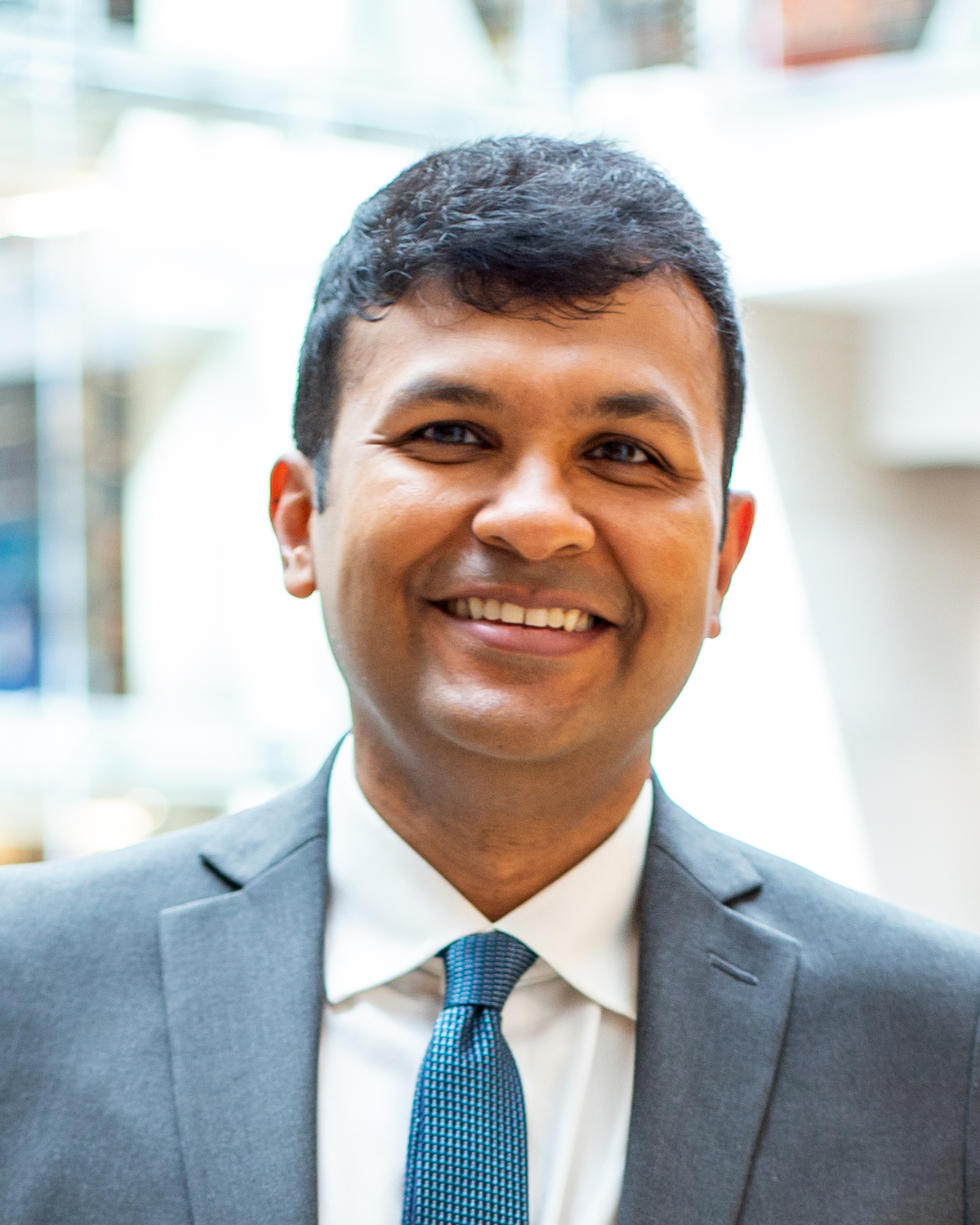
Arnab Nandi is a Professor in the Department of Computer Science & Engineering at The Ohio State University. His work bridges human interaction with data infrastructure, focusing on database systems, LLM-augmented analytics, and immersive query interfaces. Education: PhD in Computer Science & Engineering from the University of Michigan Leadership: Co-founder of OHI/O Hackathon Program and STEAM Factory interdisciplinary network Research spans human-in-the-loop data analytics , vibe querying (natural language + gestural interfaces), LLM integration into education, and climate response systems . Key projects include Omni (multimodal exploration), GestureDB , and Icarus (clinical pipelines). Recent publications analyze LLM-driven query stacks (HILDA 2025), video analytics (SIGMOD 2022), and data sunglasses for cognitive limits (HILDA 2025). Awards include NSF CAREER Google Faculty Research Award IEEE TCDE Early Career Award ACM Distinguished Member Advises students in database innovation , with alumni at Amazon, AWS, Roblox, and Meta. Teaches CSE 3241 (Database Systems), CSE 5889 (Software Startups), and CSE 5242 (Advanced Databases).
Saptarashmi Bandyopadhyay is a Tenure-Track Assistant Professor of Computer Science at the City College of New York and the Graduate Center at the City University of New York (CUNY). Her research focuses on Artificial Intelligence Agents and Autonomous Decision Making, with special emphasis on Multi-Agent Reinforcement Learning, Multi-Agent Imitation Learning, and related paradigms. She has established significant collaborations with leading institutions including Google DeepMind, Carnegie Mellon University, Oxford University, and MIT. Dr. Bandyopadhyay received her PhD from the University of Maryland, College Park, where she was advised by Professor John Dickerson and Professor Tom Goldstein. Prior to that, she graduated from Penn State in 2020 with a thesis on Multimodal Computer Vision in Medical Domain advised by Prof. William Evan Higgins. Her research expertise spans multiple domains of AI including Multi-Agent Systems, Reinforcement Learning, Imitation Learning, and Multimodal Perception. She specializes in developing AI agents for applications in climate conservation, economic systems, and AI safety. Her work integrates techniques from computer vision, natural language processing, and robotics to create more robust and explainable AI systems that can operate effectively in complex, real-world scenarios. Current work includes improving explainable AI, developing Multimodal LLM/VLM/Robotic Agents, and creating libraries to speed up Multi-Agent evolutionary training with JAXMARL. Analysis of Dr. Bandyopadhyay's publication record reveals a clear progression from foundational work in medical imaging and natural language processing toward increasingly sophisticated multi-agent AI systems. Her recent publications demonstrate a strong focus on Multi-Agent Reinforcement Learning frameworks like JAXMARL, with applications spanning from supply chain orchestration to climate conservation. The interdisciplinary nature of her work is evident in publications spanning computer vision, NLP, and multi-agent systems conferences including AAAI, NeurIPS, AAMAS, EMNLP, and ACL. DoGood Fellow (2022) UMD Dean's Summer Fellow (2021) Dr. Bandyopadhyay has been actively involved in securing research funding from major agencies including NSF, NIH, DoD, and ARL. She served as the lead PhD student RA in a DoD project for Multi-Agent Explainable AI to improve AI trustworthiness. Her service to the academic community includes membership on program committees for major conferences including IJCAI 2024, KDD 2024, ACL 2024, and AAMAS 2023-2024. She has also created the AI Agents Seminar Series at UMD in 2022 with over 1,000 participants from six continents. Currently, Dr. Bandyopadhyay leads research on improving explainable AI, developing Multimodal LLM/VLM/Robotic Agents, and creating libraries to speed up Multi-Agent evolutionary training with JAXMARL. Her lab collaborates prominently with researchers from Google DeepMind, Carnegie Mellon University, Oxford University, University of Sheffield, Waymo, Meta AI, and MIT, with special focus on Dr. Jakob Foerster's and Dr. Robert Loftin's groups.
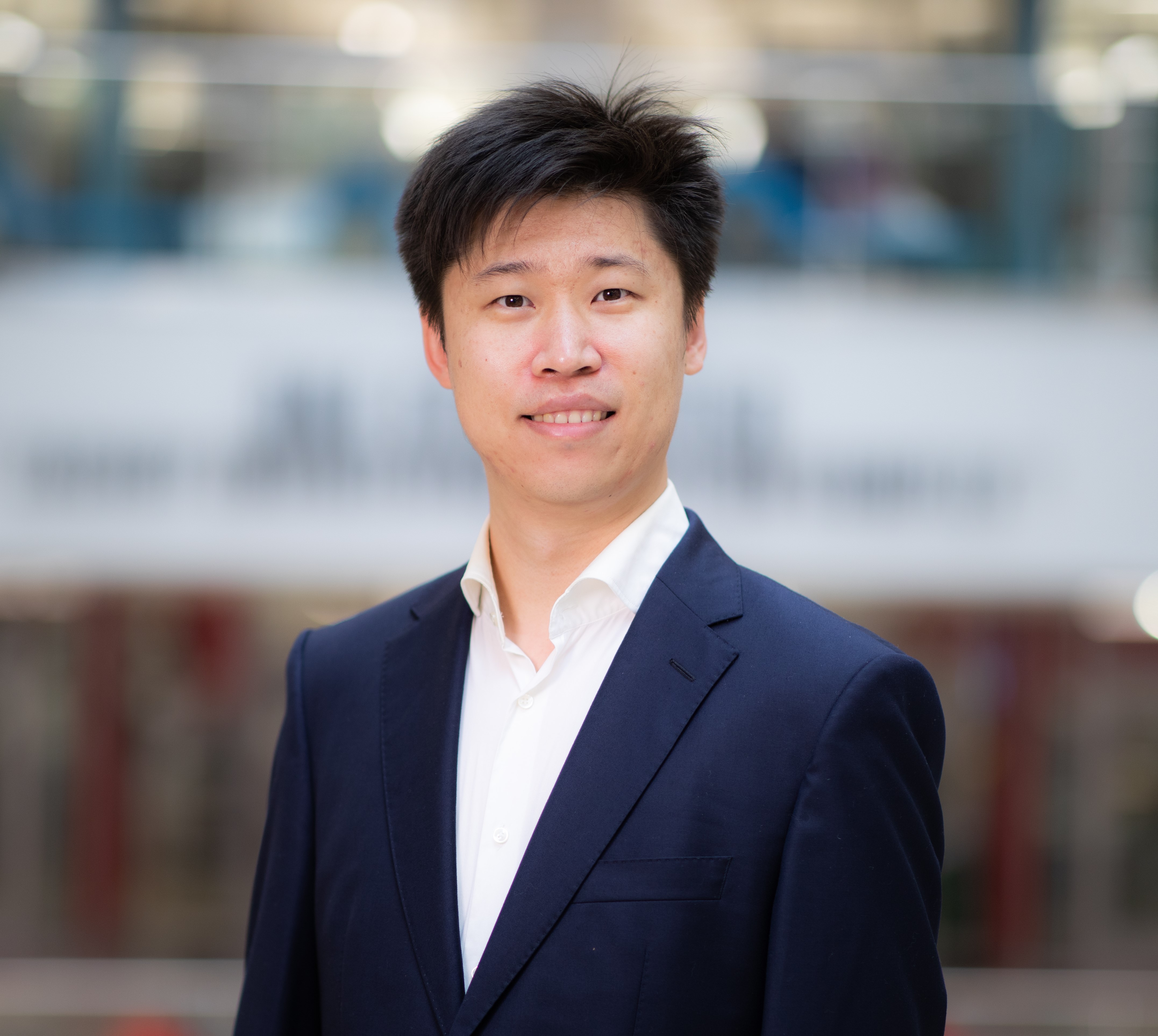
Yupeng Zhang is an Assistant Professor at the University of Illinois Urbana-Champaign in the Department of Electrical and Computer Engineering, with an affiliate appointment in Computer Science. His research focuses on cybersecurity and applied cryptography , particularly zero-knowledge proofs , secure multiparty computations , and their applications in blockchain and machine learning. Education: Ph.D., Electrical and Computer Engineering, University of Maryland (2018) M.Phil., Information Engineering, Chinese University of Hong Kong (2013) Bachelor of Engineering, Information Engineering, Chinese University of Hong Kong (2011) Research Highlights: Developed scalable zero-knowledge proof systems for blockchain and machine learning Created verifiable computation frameworks for SQL and RAM Advancing privacy-preserving ML and cross-chain blockchain bridges Grants: NSF CAREER award Air Force Research Lab DARPA Google Research Scholar Award Facebook Research Award Latticex Foundation Teaching: CS 461/ECE 422: Computer Security I CS 591 SP: Security and Privacy ECE 407/CS 407: Cryptography ECE 598 YPZ: Advanced Topics in Applied Cryptography Co-taught MOOC on Zero-Knowledge Proofs (Spring 2023) Professional Service: Program Vice Co-Chair, USENIX Security 2024 Program Committee, Crypto 2025, S&P 2025 Reviewer for major journals and conferences
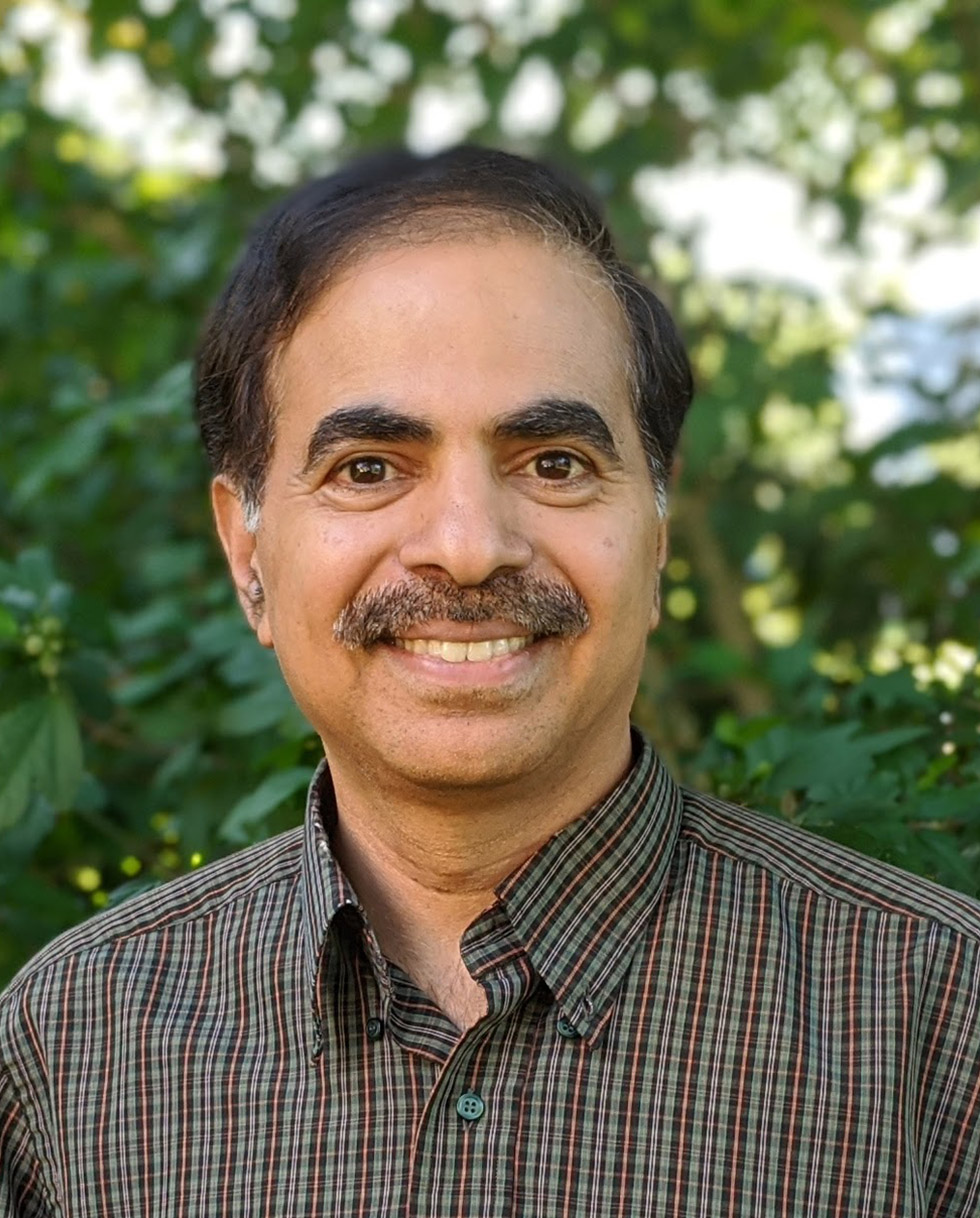
R. Sekar serves as SUNY Empire Innovation Professor and Associate Chair in the Department of Computer Science at Stony Brook University, actively contributing to academic leadership and research initiatives. Education Ph.D. in Computer Science from Stony Brook University (1991) B. Tech in Electrical Engineering from Indian Institute of Technology, Madras (1986) Research Interests Professor Sekar's research focuses on practical software and systems security solutions, integrating principles from programming languages, compilers, operating systems, algorithms, networks, and artificial intelligence. His work addresses critical challenges including software vulnerability mitigation (buffer overflows, SQL injection, XSS), malware defense, high-performance intrusion detection (network and host-based), attack isolation/recovery mechanisms, self-healing systems, and distributed system monitoring. This interdisciplinary approach emphasizes building real-world systems to solve tangible security problems. Scientific Awards Chancellor's award for Excellence in Scholarship and Creative Activities (2011) SUNY Research and Scholarship Award (2006) Faculty Service award, Department of Computer Science (2002-2004) Promising Inventor Award, Research Foundation of SUNY (2003) Department Research Excellence award (2000-2002) Advising and Grants While the source text does not specify doctoral advisees or individual grant projects, Professor Sekar's sustained research productivity and award history indicate substantial external funding and mentorship activities. His leadership as Associate Chair further demonstrates institutional commitment to academic guidance. Labs and Teams Professor Sekar directs the Security Lab (SECLab) at Stony Brook University, as evidenced by his research website https://seclab.cs.sunysb.edu/sekar/ , which serves as the operational hub for his security research initiatives and team collaborations.
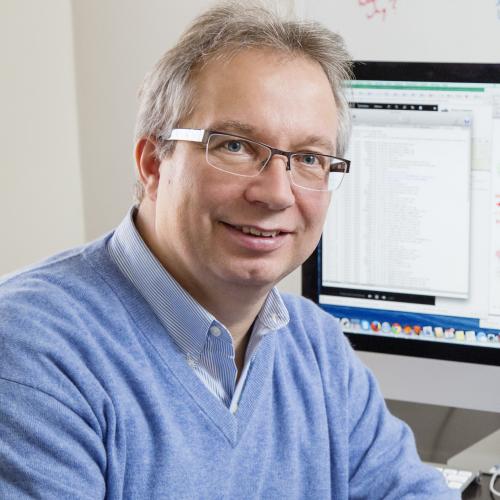
Zheng Zhang is a Ph.D. candidate in the Department of Computer Science and Engineering at the University of Notre Dame, where he focuses on human-AI interaction. He also works as an Applied Scientist in Adobe's GenAI team, developing interactive AI systems for user experience enhancement. He has held internships at Apple, AWS AI, and Meta Reality Labs. Education: Ph.D. (in progress) at University of Notre Dame M.S. in Computer Science from University of Rochester and University of Minnesota B.Eng. in Software Engineering from Shaanxi Normal University His research explores the intersection of human-computer interaction (HCI) and machine learning (ML), emphasizing systems that provide adaptive, context-sensitive support for complex cognitive tasks. Key areas include collaborative tools for team ideation, incremental learning from user demonstrations, and multimodal context-aware interfaces. Recent publications demonstrate a focus on AI-augmented collaboration through large shared displays (LADICA), audio-visual annotation (PEANUT), and interactive qualitative coding (PaTAT). His work increasingly integrates generative AI with real-time human input, particularly for co-located teams and educational applications. He serves as a Program Committee member and reviewer for top HCI/ML conferences including CHI, UIST, IUI, and ACL. Teaching experience spans courses in human-AI systems, algorithms, and data structures.
Irina Vayndiner is an Adjunct Professor in the Data Science and Analytics program at Georgetown University's Graduate School of Arts and Sciences (GSAS), a position she has held since 2018. She has made significant contributions to the curriculum by developing core courses such as Database Systems and SQL (DSAN 6300), Digital Storytelling (DSAN 5900), and co-leading the development of Big Data and Cloud Computing (DSAN 6000). Her research and professional expertise span data science, big data engineering, cloud computing, and database security . With a background in space mechanics, she transitioned into information technology and now serves as a Principal Big Data Engineer at MITRE Corporation, where she also holds roles as Chief Data Engineer and Enterprise Data Architect, advising various U.S. government agencies. Although specific publications are not listed, her work includes multiple authored publications and a patent in the domain of Big Data and Database Security. She has presented at numerous scientific and technology conferences, demonstrating active engagement in the research community. Professional Affiliations and Roles: Adjunct Professor, Georgetown University (GSAS) – Data Science and Analytics Principal Big Data Engineer, MITRE Corporation Chief Data Engineer and Enterprise Data Architect – U.S. Government Projects Other Recognitions and Activities: Award-winning storyteller Member of a long-form improv group Docent at the National Gallery of Art, Washington, DC In addition to her technical and academic work, Irina integrates creativity and communication into her profile through digital storytelling and the arts, bridging technical rigor with narrative expression.
Madhusudan Parthasarathy is a Professor in the Department of Computer Science at the University of Illinois at Urbana-Champaign, College of Engineering. His research focuses on software verification, formal methods, and logic in computer science, with significant contributions to trustworthy AI systems, program synthesis, and security. Ph.D. in Theoretical Computer Science (2002), Institute of Mathematical Sciences, University of Madras Research interests include automating software verification, building correct-by-design systems, and exploring synergies between machine learning and program synthesis. He pioneered visibly pushdown languages , impacting XML processing and program verification. His tools like VEX and Strand advanced security and heap reasoning. Recent articles focus on blockchain verification, timed automata, and learning logics from data. His work has been widely cited, with the visibly pushdown language paper alone generating over 940 scholarly entries. Best Paper Award, 19th USENIX Security Symposium (2010) He has advised numerous students and postdocs, with former advisees now at institutions like Purdue University and Google. His outreach initiatives include the ConTraIL privacy-preserving contact tracing project and the MASSIVELY EMPOWERED CLASSROOMS MOOC platform for Indian undergraduates. He teaches courses like CS 521: Advanced Topics in Programming Systems and CS 474: Logic in Computer Science , while actively serving on program committees for top-tier conferences such as POPL and PLDI.
Bertram Ludäscher is a Professor at the School of Information Sciences at the University of Illinois, with affiliate appointments at the National Center for Supercomputing Applications (NCSA) and the Department of Computer Science. He leads the Center for Informatics Research in Science and Scholarship and directs the NSF-funded Euler project focused on logic-based taxonomic alignment. His research emphasizes scientific workflow systems, data provenance, and knowledge representation. Ludäscher co-founded the Kepler workflow system and contributed to DataONE’s provenance initiatives. He previously held roles at UC Davis and the San Diego Supercomputer Center. Education: PhD in Computer Science, University of Freiburg (1998) MS in Computer Science, Technical University of Karlsruhe (1992) Research Interests: Data and knowledge management, scientific workflows, provenance tracking, biodiversity data curation, and taxonomic reconciliation using logic-based methods. Ludäscher’s work bridges computational methods with biological and environmental sciences, focusing on reproducibility and interoperability in data-driven research. Recent Work Trends: His articles address provenance unification in databases, workflow automation recovery, and resolving taxonomic conflicts. Key themes include reproducibility frameworks (e.g., the Whole Tale project), ontology alignment, and scalable workflow systems for diverse scientific domains. Awards: 2018 ProvenanceWeek Best Paper, Google Scholar Classic Papers recognition. Advising & Grants: Leads NSF-funded projects like Euler and Kurator. Active in collaborative initiatives such as DataONE and the Whole Tale. Courses taught include data curation, workflow design, and data cleaning methodologies. Labs/Teams: Directs the Center for Informatics Research in Science and Scholarship and collaborates with NCSA on cyberinfrastructure projects. Key partnerships include the San Diego Supercomputer Center and UC Davis Genome Center.
James D. Moore serves as Assistant Professor in the Department of Near Eastern and South Asian Languages and Cultures at The Ohio State University, with additional affiliation in the History department. He held a position as Chargé de Conférence at the École Pratique des Hautes Études (2023-2024) and collaborates on the ERC project SLaVEgents (2023-2028). He co-directs the OSU Digital Lab for Ancient Textual Objects (DLATO) and manages the Online Corpus of the Inscriptions of Ancient North Arabia (OCIANA). His academic training includes: Ph.D. in Near Eastern and Judaic Studies, Brandeis University, specializing in the Bible and Ancient Near East. Moore's research centers on Northwest Semitic epigraphy, the Hebrew Bible, and Ancient Near Eastern scribal culture, with a focus on religious economies within imperial frameworks, especially the Achaemenid Empire. He also investigates Achaemenid Mediterranean social history, Dead Sea Scrolls, Syriac, Archaeology, and Comparative Semitics, integrating philological analysis with social-historical context to explore administrative and economic structures. His recent publications reveal a concentration on Hebrew and Aramaic epigraphic evidence to study administrative reforms, religious practices, and scribal techniques during the Persian period. He is a proponent of digital humanities, developing resources for digital editions and databases of ancient texts. Moore is actively involved in major grant-funded projects, notably the ERC's SLaVEgents. He advises graduate students in philological and social-historical research, serving on the NESA Graduate Student Committee and co-advising the CANE graduate program. He emphasizes training students in digital research methods (SQL). He co-directs the DLATO, which creates digital tools for ancient textual scholarship, and manages OCIANA, a comprehensive corpus of Ancient North Arabian inscriptions, reflecting his commitment to digital innovation in the field.
Venkat Venkatakrishnan is a Professor of Computer Science and Director of Research at the Discovery Partners Institute at the University of Illinois at Chicago. As Associate Dean for Research and Graduate Studies in the College of Engineering, he leads initiatives in cybersecurity research and education. His research focuses on Computer Systems Security , utilizing techniques from Compilers Operating Systems Formal Methods to defend against cyber attacks. He has developed innovative approaches to secure desktop systems, detect web vulnerabilities, and reconstruct attack scenarios. Recent publications highlight his work in areas including: Advanced Persistent Threat detection Web application security Automated exploit generation Security sanitization tools SQL injection prevention Content security policies Scientific achievements include Distinguished Paper Award at USENIX Security Symposium (2018) Best Paper Awards at IEEE QRS (2016), Oakland (2009), and ACSAC (2003) Finalist for AT&T Best Applied Security Research Paper (2010) He has mentored numerous students and postdoctoral researchers, many of whom have become faculty members at prestigious institutions or joined leading technology companies. His work bridges academic research with practical applications for businesses and websites seeking to patch security vulnerabilities.
Pascal Bizarro, Ph.D., is an Associate Professor in the Department of Accounting and Information Systems at Bowling Green State University (BGSU), part of the Schmidthorst College of Business. He holds a Ph.D. and M.Acc. from the University of Alabama and a B.B.A. in Commercial Engineering from HEC, Liège, Belgium. A Certified Information Systems Auditor (CISA), he specializes in IT Auditing, Accounting Information Systems, and emerging technologies like blockchain. He advises BGSU's Information System Audit and Control (ISAC) programs and serves as president of the Northwest Ohio ISACA Chapter and academic board member of the Northwest Ohio IIA Chapter. Dr. Bizarro's research focuses on cybersecurity, audit technology, data privacy, and blockchain applications in accounting. His work has been published in leading journals such as ISACA Journal , Internal Auditing , and The CPA Journal . Notable contributions include studies on phishing attacks, IoT security, AI in auditing, and XBRL implementation. He has received awards including the Schmidthorst Leadership Council Faculty Excellence Award (2015) and the Primrose Family Professorship (2013–present). His professional certifications and academic leadership roles reflect his expertise in bridging accounting practices with information systems innovation.
Dr. Sikha S Bagui is a Distinguished University Professor in the Department of Computer Science at the Hal Marcus College of Science and Engineering, University of West Florida . She served as the former Chair of Computer Science and was the Founding Director of the Center for Cybersecurity . Her research spans database design, Big Data analytics, machine learning, and cybersecurity . Research Focus: Machine Learning, Data Mining, Network Traffic Analysis, Graph Databases, and Resampling Techniques for Imbalanced Data Awards: Askew Fellow (2018–2021), multiple Excellence in Teaching and Distinguished Research Awards (2001–2024) Contributions: Authored books on databases/SQL (translated internationally), developed the UWF-ZeekData datasets for cybersecurity research, and served as Associate Editor for multiple journals Tools & Frameworks: Active in Hadoop, Spark, Memgraph, and MITRE ATT&CK-based threat modeling Publication Trends: Recent work focuses on MITRE ATT&CK datasets , graph-based cybersecurity , resampling rare attacks , and educational impacts in computing . Her research bridges theoretical and applied domains, including clinical decision support systems and K-12 computer science education. Scientific Awards: Askew Fellow (Reubin O’D. Askew Institute for Multidisciplinary Studies, 2018–2021) Excellence in Teaching and Advising Award (UWF, 2012) Distinguished Research and Creative Activities Award (UWF, 2007, 2012) Excellence in Undergraduate Teaching and Advising Award (UWF, 2001–2006) Leadership & Service: Directed the Center for Cybersecurity, contributed to journals as Associate Editor, and engaged in initiatives like NCWIT Aspirations in Computing and the Association for Women in Computing.
Alessandro (Alex) Orso is a Professor in the School of Computer Science and Interim Dean of the College of Computing at Georgia Institute of Technology. He holds an M.S. in Electrical Engineering (1995) and a Ph.D. in Computer Science (1999) from Politecnico di Milano, Italy. Since 2000, he has been a faculty member at Georgia Tech. Affiliations: School of Computer Science, Scientific Software Engineering Center, Center for Experimental Research in Computer Systems (CERCS), and Online Master of Science Computer Science (OMSCS). Research Focus: Software engineering with emphasis on testing, program analysis, and improving software reliability/security through formal methods and tools. His research has been funded by DARPA, NSF, IBM, and Microsoft, among others. He co-founded the Scientific Software Engineering Center to advance methodologies for high-performance scientific software. Orso is a Distinguished Member of the ACM and an IEEE Fellow. Key contributions include developing techniques for automated REST API testing, program debloating, and cross-browser web application testing. His work bridges theory and practice, emphasizing real-world system validation. Awards: Four impact awards: ISSTA (2017, 2021), ASE (2020), IBM Haifa (2013) Editorial roles: ACM TOSEM, IEEE TSE Program chairs: ISSTA 2010, FSE 2014, ICSE 2017 Advising & Grants: Supervised over 40 students (PhD, Master's, undergrad). Secured funding from government/industry partners. Tools developed include AutoRestTest, Barista, and X-PERT. Labs/Teams: Leads the Arktos Research Group, focusing on software testing, analysis, and tool development. Collaborates with industry and government on applied research projects.
Nesime Tatbul is a Senior Research Scientist at Intel Labs and MIT's Computer Science and Artificial Intelligence Lab (CSAIL). She leads Intel's Data Systems and AI Lab (DSAIL) and previously held a faculty position at ETH Zurich. She holds a PhD and MS from Brown University and BS/MS from Middle East Technical University (METU). Her research focuses on large-scale data management systems, learned systems, time series analytics, and observability. Key contributions include the Aurora/Borealis and S-Store systems. She has served on program committees for SIGMOD, VLDB, and CIDR, and holds roles as an ACM Distinguished Member and IEEE Senior Member. Her work spans over 70 publications, including influential contributions to stream processing and query optimization. Awards include the PVLDB Distinguished Editor Award (2023), CIDR Test of Time (2025), and ACM SIGMOD Best Paper (2021). Current projects include DSAIL, Exathlon, and Mach, advancing observability and AI-driven data systems. She also contributes to editorial roles at VLDB and PVLDB.
V. N. Venkatakrishnan is a Professor and Associate Dean for Research and Graduate Studies at the College of Engineering, University of Illinois at Chicago. His research focuses on Computer Systems Security with applications in web security, exploit detection, and security automation. Education: Ph.D in Computer Science (2004), Stony Brook University Research Interests: Spanning Computer Systems Security , Venkatakrishnan's work integrates compilers , operating systems , and formal methods to develop defenses against cyber attacks. His recent publications emphasize automated attack detection, exploit generation, and security frameworks for web applications. Scientific Awards: Distinguished Paper Award at USENIX Security 2018 Best Paper Award at IEEE QRS 2016 2009 ATT Award for Best Applied Security Research Best Paper Award at ACSAC 2003 Advising and Collaborations: He has mentored numerous Ph.D. and M.S. students including Sadegh Momemi and Maliheh Monshizadeh. Former advisees include Birhanu Mekuria (now at University of Michigan) and Rigel Gjomemo (now Research Assistant Professor at UIC).