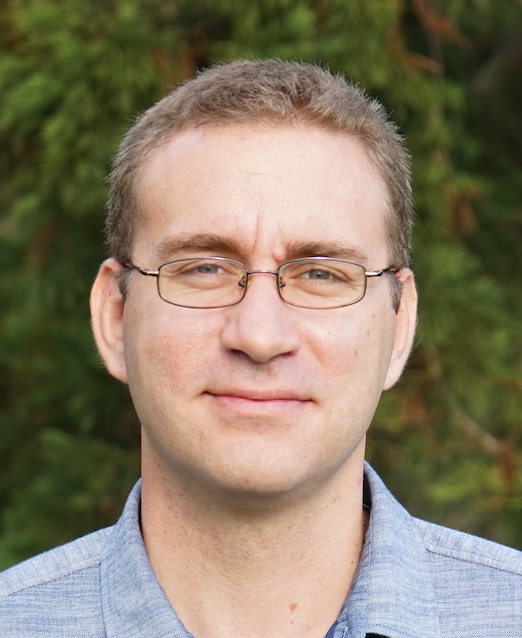
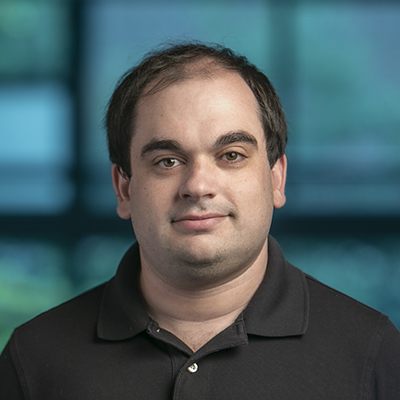
Professor Farookh Hussain is a distinguished academic at the School of Computer Science , University of Technology Sydney , specializing in Artificial Intelligence , Cloud Computing , and Software Engineering . His research spans diverse sectors including agriculture, manufacturing, healthcare, and transportation. Affiliated with the Australian Artificial Intelligence Institute (AAII) , he leads impactful work in business intelligence and carbon credit systems. Key research areas: AI applications, blockchain for provenance, carbon credit analytics Active in Masters/PhD supervision and cloud computing education Research Highlights : Developed KACINO framework for carbon dynamics modeling Created hybrid cybersecurity frameworks for supply chain risk management Advanced chatbot dialogue breakdown solutions through systematic reviews Proposed hypercomplex knowledge graph recommenders Published extensively on carbon credit price prediction and blockchain storage methods Contributions to water demand forecasting and collaborative robotics adoption Grant Activities : Secured funding from Hampton Capital Asset Management , Innovation Connections , and Science and Industry Endowment Fund Projects include LLM-driven text-to-SQL conversion , blockchain for melanoma data , and AI for storm water management
Peter Haas is a Professor at the Manning College of Information and Computer Sciences at the University of Massachusetts Amherst, with an adjunct role in Industrial Engineering. Previously, he spent 30 years as a Principal Research Staff Member at IBM Research and held a consulting professorship in Management Science and Engineering at Stanford University. His research focuses on applying probability and statistics to data management, simulation of complex systems, and machine learning scalability. Education : PhD, Operations Research, Stanford University, 1986 MS, Statistics, Stanford University, 1984 MS, Environmental Engineering, Stanford University, 1979 SB, Engineering and Applied Physics, Harvard University, 1978 Research Interests : Haas’s work spans stochastic systems, probabilistic databases (e.g., MCDB and SimSQL), sampling techniques, and simulation optimization. He pioneered methods for managing uncertain data and scalable machine learning, including compressed linear algebra for declarative systems. His recent focus includes in-database decision support and hybrid simulation metamodeling with neural networks. Key Contributions : He developed the Online Aggregation framework (SIGMOD 1997), which earned a Test-of-Time Award in 2007. His work on matrix factorization and distributed stochastic gradient descent (DSGD) revolutionized large-scale machine learning. He also advanced techniques for estimating distinct-values and correlation discovery in databases. Awards : A six-time recipient of IBM’s Pat Goldberg Memorial Award, he is an ACM and INFORMS Fellow. His honors include the VLDB Best Paper Award (2016), EDBT Best Paper (2018), and recognition in Communications of the ACM. Advising & Grants : He advises four current PhD students and has graduated Matteo Brucato. His IBM career included over 30 patents, including foundational work for DB2’s sampling capabilities and IBM Watson analytics. He leads the DREAM Lab, focusing on data systems for exploration and analytics. Labs/Teams : Directs the Data systems Research for Exploration, Analytics, and Modeling (DREAM) Lab, advancing projects like Splash (health system simulation) and SuDocu (document summarization by example).
Mitchel Langford is a Professor and Co-Director of the Wales Institute of Socio-Economic Research and Data (WISERD). He holds an academic position within the Faculty of Computing, Engineering and Science, focusing on spatial analysis, geoinformatics, and computational geography. His research spans over 35 years, emphasizing geographical accessibility, dasymetric mapping, and software engineering solutions for spatial problems. Langford earned his first degree in Physical Geography and Geology, followed by a PhD in software development for palynology using FORTRAN. He has extensive teaching experience in software engineering (C#, SQL, Python) and geoinformatics (PostgreSQL/PostGIS, web mapping). His key research contributions include pioneering work in dasymetric areal interpolation and multi-modal accessibility modeling, notably the Enhanced Two-Step Floating Catchment Area (E2SFCA) method. He has published over 119 peer-reviewed articles and consulted for international organizations like CIAT. Notable awards include the 2019 Impact Awards for contributions to spatial accessibility research. Current projects include investigating accessibility to public services (transport, healthcare, childcare) using GIS and multi-modal transport networks. Langford is also involved in policy-oriented research, contributing to Welsh Senedd inquiries on banking and healthcare access. His software engineering skills enable bespoke solutions for spatial analysis, emphasizing modern languages like Python and JavaScript.
Professor Foto N. Afrati is a Distinguished Faculty Member at the National Technical University of Athens, specifically within the School of Electrical and Computing Engineering and the Division of Communication, Electronic and Information Engineering. She has held this position since 1993, following previous academic ranks at the same university as Associate Professor (1989-1993), Assistant Professor (1985-1989), Lecturer (1982-1985), and Research Fellow (1980-1982). She completed her PhD in Electrical Engineering at Imperial College of the University of London in March 1980, with a dissertation focused on Error Correcting Codes by Algorithms. Her academic journey also included a Diploma from Imperial College (March 1980) and an earlier Diploma in Electrical and Mechanical Engineering from the National Technical University of Athens (June 1976). Professor Afrati's research interests span several critical areas in computer science: Parallel and distributed computation Processing of very large data (including MapReduce) Data and web mining Database Systems Information integration Query optimization Computation and complexity of algorithms Approximation algorithms Her most recent publications demonstrate expertise in MapReduce environments, query optimization with views, and data exchange frameworks. These works are published in prestigious venues like EDBT, VLDB, PODS, and ICDT, with specific focus areas including adaptive sampling techniques, data source integrity, and algorithm complexity in database environments. Professor Afrati has received significant recognition in her field, including Fellow of the Association for Computing Machinery (ACM) Best Paper Award at the International Conference on Database Theory (ICDT) 2009 She has advised numerous PhD students throughout her career, including Theodoros Mitakos, Ezz Hattab, Nikos Kiourtis, and Angelos Vasilakopoulos. Her current PhD students include Victor Kyritsis and Nikos Stassinopoulos. Professor Afrati maintains strong professional networks through her various visiting positions at institutions such as Google, Stanford University, IBM Research Center, University of Helsinki, University of Paris, DIMACS, and others. She has served as associate editor and reviewer for major academic journals and conferences including IEEE TKDE, ACM Transactions of Database Systems (TODS), Journal of ACM (JACM), and Theoretical Computer Science (TCS). Her extensive work in research projects spans both national and international initiatives, with funding from sources including the European Union's Thalis project, ESPRIT working groups, HCM networks, and Greek General Secretariat of Research and Technology grants.
Mostafa Milani is an Assistant Professor in the Department of Computer Science at Western University. His research focuses on data management, databases, and their applications in data cleaning, privacy, provenance, and fairness. Before joining Western, he held postdoctoral positions at the University of British Columbia and McMaster University, and earned his Ph.D. from Carleton University under Dr. Leopoldo Bertossi. Education: Ph.D. in Computer Science from Carleton University (supervised by Leopoldo Bertossi), Postdoctoral Fellowships at University of British Columbia and McMaster University. Research Interests: Data Quality, Privacy, Provenance, Fairness, Entity Matching, Query Optimization, and Database Systems. His work emphasizes ethical data practices and integrates machine learning for improved database interactions. He has contributed to projects like Building Trust in Data (privacy/fairness integration) and Unified Data Exploration (provenance and query recommendations). Courses taught include Databases I/II, Applied Logic, and Web Systems. Current advisees include 7 MSc and 1 PhD student. Former students have graduated across MSc and undergraduate programs. His research is supported by grants and collaborations, and he actively participates in program committees for top conferences like SIGMOD and VLDB.
Dr Mahir Arzoky is a Lecturer in the Department of Computer Science at Brunel University London's College of Engineering, Design and Physical Sciences. He holds a PhD from Brunel University London (2015) and has extensive research experience in artificial intelligence and software engineering. His research focuses on: Artificial Intelligence and Intelligent Data Analysis Search Based Software Engineering (SBSE) Clustering algorithms and heuristic search methods Software refactoring and quality assessment Data mining applications in healthcare and education Analysis of his 15 most recent publications (2018-2022) reveals strong interdisciplinary work bridging computer science with healthcare (diabetes patient modeling, medical imaging) and education (chatbot design, algorithm visualization). His technical focus centers on clustering optimization, refactoring impact analysis, and explainable AI, with frequent use of empirical validation methods. Key collaborations include researchers like Stephen Swift, Steve Counsell, and Giuseppe Destefanis. Dr Arzoky has secured significant research funding through EPSRC grants including: AQUATIC project (EP/M024083/1): Assessing Test Suite Quality in Industrial Code FIAR-NET (EP/N011627/1): Fault Analyses in Industry and Academic Research Network His professional network includes active collaborations across computer science, healthcare informatics, and educational technology domains, with recent work extending into transformer models for healthcare SQL conversion and graph partitioning for software modularization.
Peter McBrien is an Associate Professor in the Department of Computing at Imperial College London, affiliated with the Faculty of Engineering. He holds dual affiliations with the Distributed Software Engineering group. His research focuses on conceptual modeling, ontology engineering, database systems, and temporal data management. He has been active in advancing techniques for data visualization, semantic web technologies, and relational database integration. Key research areas include: Ontology extraction from relational databases Type inference in transactional systems Schema transformation between heterogeneous models Peer-to-peer data integration protocols Temporal database systems His publication trends emphasize integration of heterogeneous data sources through formal methods, with notable contributions to OWL ontology implementation, hypergraph data models, and benchmarking big data query languages. Recent work focuses on Spark-based semantic reasoning and distributed knowledge exchange systems. Peter McBrien's research has been supported through Imperial College's infrastructure, with ongoing contributions to the AutoMed data integration framework and RoDEx protocols for unreliable networks. His work bridges theoretical foundations of data management with practical implementations in distributed systems.
Alin Deutsch is a Professor of Computer Science at the University of California, San Diego (UCSD), specializing in database systems, graph databases, and formal verification. He has contributed significantly to research areas including query optimization, data integration, and privacy-preserving systems. His work spans theoretical foundations and practical implementations, such as the Linked Data Benchmark Council (LDBC) and the TigerGraph database system. He co-authored over 100 papers and has been involved in major conferences like SIGMOD and VLDB. Research interests include graph query processing, parallel computing, data-centric business processes, and automated system verification. Recent work focuses on scalable hybrid analytics and graph databases. Deutsch is also active in database education, co-authoring a paper on UCSD's database curriculum. He has led projects in privacy-aware systems, such as policy-aware location-based services, and contributed to tools like CLIDE for interactive query formulation in service-oriented architectures. His collaborations involve industry partners like TigerGraph and academic institutions globally.
Madhusudan Parthasarathy is a Professor in the Department of Computer Science at the University of Illinois at Urbana-Champaign, College of Engineering. His research focuses on software verification, formal methods, and logic in computer science, with significant contributions to trustworthy AI systems, program synthesis, and security. Ph.D. in Theoretical Computer Science (2002), Institute of Mathematical Sciences, University of Madras Research interests include automating software verification, building correct-by-design systems, and exploring synergies between machine learning and program synthesis. He pioneered visibly pushdown languages , impacting XML processing and program verification. His tools like VEX and Strand advanced security and heap reasoning. Recent articles focus on blockchain verification, timed automata, and learning logics from data. His work has been widely cited, with the visibly pushdown language paper alone generating over 940 scholarly entries. Best Paper Award, 19th USENIX Security Symposium (2010) He has advised numerous students and postdocs, with former advisees now at institutions like Purdue University and Google. His outreach initiatives include the ConTraIL privacy-preserving contact tracing project and the MASSIVELY EMPOWERED CLASSROOMS MOOC platform for Indian undergraduates. He teaches courses like CS 521: Advanced Topics in Programming Systems and CS 474: Logic in Computer Science , while actively serving on program committees for top-tier conferences such as POPL and PLDI.
Bertram Ludäscher is a Professor at the School of Information Sciences at the University of Illinois, with affiliate appointments at the National Center for Supercomputing Applications (NCSA) and the Department of Computer Science. He leads the Center for Informatics Research in Science and Scholarship and directs the NSF-funded Euler project focused on logic-based taxonomic alignment. His research emphasizes scientific workflow systems, data provenance, and knowledge representation. Ludäscher co-founded the Kepler workflow system and contributed to DataONE’s provenance initiatives. He previously held roles at UC Davis and the San Diego Supercomputer Center. Education: PhD in Computer Science, University of Freiburg (1998) MS in Computer Science, Technical University of Karlsruhe (1992) Research Interests: Data and knowledge management, scientific workflows, provenance tracking, biodiversity data curation, and taxonomic reconciliation using logic-based methods. Ludäscher’s work bridges computational methods with biological and environmental sciences, focusing on reproducibility and interoperability in data-driven research. Recent Work Trends: His articles address provenance unification in databases, workflow automation recovery, and resolving taxonomic conflicts. Key themes include reproducibility frameworks (e.g., the Whole Tale project), ontology alignment, and scalable workflow systems for diverse scientific domains. Awards: 2018 ProvenanceWeek Best Paper, Google Scholar Classic Papers recognition. Advising & Grants: Leads NSF-funded projects like Euler and Kurator. Active in collaborative initiatives such as DataONE and the Whole Tale. Courses taught include data curation, workflow design, and data cleaning methodologies. Labs/Teams: Directs the Center for Informatics Research in Science and Scholarship and collaborates with NCSA on cyberinfrastructure projects. Key partnerships include the San Diego Supercomputer Center and UC Davis Genome Center.
Dr. LIANG Zhenkai is an Associate Professor and Chairman of the Department of Computer Science at the National University of Singapore's School of Computing. He also serves as the Lead Principal Investigator for the National Cybersecurity R&D Lab (NCL). With extensive experience in academic leadership and cybersecurity research, Dr. Liang has established himself as a prominent figure in the field of system and software security. Dr. Liang received his Ph.D. in Computer Science from Stony Brook University in 2006 and his B.S. degrees in Computer Science and Economics from Peking University in 1999. His dual background provides a unique perspective on security challenges that bridges technical expertise with economic understanding. Dr. Liang's research focuses on system and software security , with particular emphasis on security in emerging platforms including Web, mobile, and Internet-of-Things (IoT) systems. His specific research interests include program analysis, Web and IoT system security, and virtualization. As the leader of the Curiosity Research Group, his team pursues missions centered around "Understanding systems (理解系统), abstracting knowledge (提炼知识), and connecting facts (参悟规律)". This philosophical approach to security research has yielded numerous significant contributions to the field. Dr. Liang's recent publications demonstrate a strong evolution from fundamental security mechanisms to sophisticated solutions addressing AI security, blockchain, and advanced vulnerability analysis. His work increasingly integrates machine learning techniques with traditional security approaches, focusing on developing robust defenses against sophisticated attacks while maintaining system usability. The trend shows a progression toward addressing contemporary challenges in large language models, secure system observability, and vulnerability propagation analysis. Dr. Liang has received numerous prestigious awards recognizing his research excellence: Outstanding Paper Award at ACSAC (2003) Best Paper Award at USENIX Security Symposium (2007) ACM SIGSOFT Distinguished Paper at ESEC-FSE (2009) Best Paper Award at W2SP Workshop (2014) Annual Teaching Excellence Award at NUS (2014, 2015) As an educator, Dr. Liang has taught various undergraduate and graduate courses including CS3235 Computer Security, CS5231 Systems Security, and CS5321 Network Security. His teaching philosophy, which he has published on in "Tool, Technique, and Tao in Computer Security Education," emphasizes both technical expertise and philosophical understanding of security principles. He has successfully mentored numerous students and researchers in the cybersecurity field. Dr. Liang leads the Curiosity Research Group, which actively seeks curious minds to join their exploration of security systems. The group maintains strong connections with industry and government cybersecurity initiatives, particularly through the National Cybersecurity R&D Lab (NCL). Their research environment encourages innovative thinking with the requirement that "Curiosity is required, while mentality for repairing things (such as bicycles) is a plus."
Milos Nikolic is a Lecturer in Database Systems at the School of Informatics, University of Edinburgh. He is a member of the Database Group and the Laboratory for Foundations of Computer Science. Prior to joining Edinburgh, he was a Departmental Lecturer in the Department of Computer Science at the University of Oxford. He holds a PhD in Computer Science from EPFL. Research Interests: Milos Nikolic's research focuses on databases and large-scale data management, with emphasis on incremental computation, in-database learning, stream processing, and query compilation. His work explores how complex analytical queries—such as SQL, linear algebra, and machine learning tasks—can be efficiently maintained and evaluated in dynamic and distributed environments. He develops novel techniques in query optimization and compilation to enable real-time analytics over evolving data. His recent publications demonstrate a strong trend in dynamic query evaluation, particularly around conjunctive and hierarchical queries under updates, incremental view maintenance (e.g., F-IVM), and scalable processing of nested and biomedical data. His work often leverages theoretical foundations to achieve worst-case optimal performance, grounded in conjectures like the Online Matrix-Vector Multiplication (OMv) hypothesis. Scientific Awards: Best Paper Award, ICDT 2019 Advising and Grants: Milos is actively seeking PhD students to work on data management topics. While no formal list of advisees is provided, he collaborates extensively with researchers such as Dan Olteanu, Ahmet Kara, and Haozhe Zhang. His projects, including Adaptive Query Processing , Incremental Maintenance of Complex Analytics , and Declarative Data Pipelines (industry-supported), suggest ongoing grant and industry collaborations. Labs and Teams: He is a key member of the Database Group and the Laboratory for Foundations of Computer Science at the University of Edinburgh, contributing to cutting-edge research in foundational and applied database systems.
Vivek R. Narasayya is a Researcher at Microsoft Research , specializing in database systems, query optimization, index tuning, and scalable data management. His work focuses on improving the efficiency of relational databases through machine learning, resource allocation, and performance isolation techniques in multi-tenant environments. Primary Affiliation: Microsoft Research Research Interests Database Systems Query Optimization Index Tuning Data Cleaning Scalable Data Management Machine Learning in Databases Recent Article Trends emphasize workload-driven index tuning, budget-aware optimization, and performance isolation in cloud databases. Key subfields include reinforcement learning for index selection, multi-vector search, cache-efficient aggregation, and resource allocation in database-as-a-service clusters.
Joydeep Banerjee is an Adjunct Professor in the Department of Data Sciences and Operations at the Marshall School of Business, University of Southern California. He combines academic expertise with extensive industry experience as a Senior Technical Leader at Red Hat, former technology strategist at The Walt Disney Studios, and key project leader during his tenure at IBM. Current focus areas: Observability, Far Edge & Scalability at Red Hat Pioneered cloud migration and microservices implementation at Disney Studios Expertise in distributed computing, streaming analytics, and J2EE technologies from IBM experience His research interests center on applying AI/ML methodologies to observability challenges, while advocating for DevOps transformation and agile development practices. As an instructor, he teaches SQL and NoSQL database systems for business analytics, covering relational databases, distributed database architectures, and data manipulation techniques. Current course: DSO-552 SQL Databases for Business Analysts Previous course: DSO-553 NoSQL Databases in Big Data
Ryan Marcus is an Assistant Professor in the Department of Computer and Information Science at the University of Pennsylvania. His research focuses on integrating machine learning into data management systems to create adaptive tools that optimize hardware utilization, invent novel processing strategies, and interpret user intentions. Currently based in Office 407, Amy Gutmann Hall, he actively explores query optimization, index structures, intelligent clouds, programming language runtimes, program synthesis for data processing, and reinforcement learning applications to systems challenges. Key research themes include machine learning for databases , learned query optimization , intelligent cloud systems , and blockchain adaptability . Scientific achievements include the Best Paper Award at SIGMOD '21 for the Bao system and the development of AutoSteer, a cross-database learned query optimizer. Notable PhD advisees co-advised include Peizhi Wu (with Zack Ives), Jeffrey Tao (with Andrew Head), and Zixuan Yi (with Zack Ives). His recent work, presented at venues like VLDB and SIGMOD, emphasizes scalable LLM-augmented data systems (ScaleLLM), robust cardinality estimation, and adaptive Byzantine fault-tolerant consensus (BFTBrain). For full system evaluations, he created testing environments such as BFTGym. Contact: rcmarcus@seas.upenn.edu