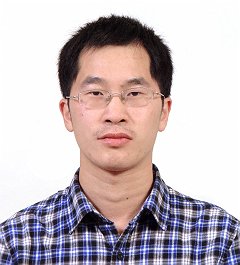
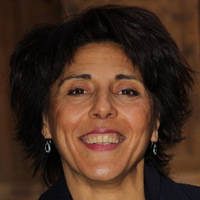
Ralf Lämmel is Professor and Head of the Software Languages group at the University of Koblenz. His research spans software language engineering, model-driven development, and semantic web technologies. He specializes in API analysis, data validation (SHACL constraints), and variability management for software systems. Recent work focuses on AI-assisted workflows for archaeology and trust analysis in large language models. Publications demonstrate growing interest in knowledge graph validation and semantic web applications. He has developed tools like the Virtual Platform for software variability and ProGS for property graph validation. Service includes program committee memberships for software engineering conferences and editorial roles. He leads research groups exploring API evolution and RDF validation techniques.
Mohamed Ahmed Sherif is an academic affiliated with Paderborn University's Department of Computer Science and the University of Leipzig's Institute of Computer Science. His primary research focuses on semantic web technologies, knowledge graph integration, and machine learning applications in data integration. Key affiliations: Paderborn University, University of Leipzig Specialization: Link discovery, knowledge graph construction, semantic web standards His work emphasizes scalable methods for linking heterogeneous data sources, explainable AI techniques for knowledge integration, and geospatial semantic technologies. Recent contributions include the ANTS system for entity summarization in knowledge graphs and the NELLIE framework for continuous linked data integration. Notable projects include LIMES - a widely-used link discovery framework - and contributions to the HOBBIT benchmarking platform. His research has been applied in disaster management (I-AID system), Quran semantification, and global health data integration.
Sebastian Skritek is a Senior Lecturer at the Technische Universität Wien in the Department of Databases and Artificial Intelligence. His research primarily focuses on database theory, semantic web technologies, and query processing. Research interests include foundational aspects of database systems, complexity analysis of query languages, and optimization techniques for semantic web applications. His work bridges theoretical computer science with practical database implementations. His publications demonstrate a consistent focus on query evaluation complexity and optimization, particularly in SPARQL and conjunctive query systems. Recent work explores diversity in query answers and tractability boundaries. Supervision includes guiding students in database theory projects and theses. Research projects include 'SEE: SPARQL Evaluation and Extensions' and 'Theoretical Tractability vs. Practical Computation'.
Patrick Brosi is a researcher at the Chair of Algorithms and Data Structures at the University of Freiburg. He earned his bachelor's degree in computer science from the University of Tübingen and his master's from the University of Freiburg. After working as a software developer for two years, he joined his current position in 2016 and completed his PhD in 2022. His research focuses on public transit data, geographic information systems (GIS), and algorithmic solutions for spatial data processing. Brosi has contributed to projects like Global Metro Maps from OSM data, Petrimaps, and staty, which address challenges in transit network visualization and data quality assurance. His teaching responsibilities include assisting in courses on algorithms, data structures, and programming languages such as C++. He has supervised numerous theses on topics ranging from geospatial data processing to public transit system analysis. Brosi has received recognition for his work, including Best Paper Candidate nominations at SSTD 2021 and ACM SIGSPATIAL 2018. His research emphasizes bridging the gap between theoretical algorithms and practical applications in cartography and transportation systems.
Michael Benedikt is Professor of Computer Science at the Department of Computer Science, University of Oxford, and a Fellow of University College, Oxford. His research lies at the intersection of computational logic, database theory, and theoretical computer science, with a focus on query answering, logic-based data management, and formal methods for data integration. Institution: University of Oxford, Department of Computer Science Position: Professor of Computer Science Email: michael.benedikt@cs.ox.ac.uk Office: 355 Wolfson Building, Parks Road, Oxford OX1 3QD, UK His primary research interests include data management, computational logic, model theory, query reformulation, integrity constraints, existential rules, and fixpoint logics. He investigates theoretical foundations of querying Web and social network data, ontology-based data integration, and finite model reasoning. His recent publications span top venues such as VLDB, PODS, LICS, ICALP, and IJCAI, covering topics like scalable querying of nested data, interpolation in fixpoint logics, finite open-world query answering, and rewriting recursive queries. A unifying theme across his work is the application of logical methods to ensure correctness, decidability, and efficiency in data access and transformation. Best Paper Award, ICALP 2017 (Track B) EPSRC Established Career Fellowship (2015–2020) He has supervised numerous PhD students and postdoctoral researchers, including Jaclyn Smith, Djordje Zivanovic, Antonia Kormpa, and Benjamin Spencer. His research group has been supported by grants from EPSRC and Microsoft Research. He actively contributes to the academic community through service on program committees (e.g., LICS, PODS, IJCAI, VLDB) and editorial boards (e.g., Journal of Computer and System Sciences). He co-authored a book on interpolation-based query reformulation published by Morgan Claypool.
Pieter Colpaert is an Assistant Professor at Ghent University's Faculty of Engineering and Architecture, affiliated with the Department of Electronics and Information Systems and the IMEC research unit Internet Technology and Data Science Lab. His work focuses on Semantic Web technologies, Linked Data, and data interoperability with a specialization in intelligent transportation systems and decentralized architectures. Research areas: Semantic Web, Linked Data, Decentralized Data Governance, Intelligent Transportation Systems Projects: Materializable Linked Data Web APIs (2024-2025, funded by Special Research Fund), Local Digital Twins for Smart Communities (2025-2028, European funding) Students supervised: Wout Slabbinck, Harm Delva, Ruben Dedecker, Andrei Popescu, Arthur Vercruysse, Bryan-Elliott Tam, Ieben Smessaert, Els de Vleeschauwer, Shehabeldeen Mohamed Abdelfatah, Min Oo Sitt Min Oo Labs: Internet Technology and Data Science Lab at Ghent University
Aleksandr Perevalov is a researcher and PhD student at Anhalt University of Applied Sciences, affiliated with the Department of Computer Science and Languages. His work focuses on question answering systems over knowledge graphs, multilingual accessibility, and quantitative text analysis. Education: BS in Informatics (Perm National Research Polytechnic University), MS in Informatics (Perm), and MS in Data Science (Anhalt University of Applied Sciences, double degree) Employment: Research staff at Hochschule Anhalt since 2020 Research interests center on knowledge graph question answering systems, including automated semantics-driven service composition, entity-aware machine translation, and linguistic analysis of human-computer dialogues. He also explores conversational AI implementation strategies and language model evolution. Recent publications demonstrate expertise in semantic computing, multilingual system design, and benchmark creation. His work bridges academic research with practical applications in web engineering and language technology. 2018: 1st prize at Perm University conference 2018: TOP10 in Russian AI forum Machine Learning competition 2019: TOP9 in Data Mining Cup 2020: Bronze medal on Kaggle toxic comment classification Currently contributing to academic discourse through both peer-reviewed conference papers and industry-focused Medium publications.
Ladjel Bellatreche is a Full Professor of Data Engineering at the National Engineering School for Mechanics and Aerotechnics (ENSMA) in Poitiers, France, where he has been a faculty member since September 2010. He leads the Data and Model Engineering Team at the Laboratory of Computer Science and Automatic Control for Systems (LIAS) . His educational background includes an Engineering degree in Computer Science obtained in 1992 from the Department of Computer Science at Sidi Bel Abbès, Algeria. He later held positions as Assistant and Associate Professor at the University of Poitiers, France, and served as a Visiting Professor at the University of Québec in Outaouais, Canada, and a Visiting Researcher at Purdue University and Hong Kong University of Science and Technology. His research interests span a wide range of topics in data engineering, including semantic data integration , ontology-based database design , big data and cloud computing , green computing , and database deployment . He has made significant contributions to the design and optimization of data warehouses, particularly in the context of large-scale and distributed systems. Bellatreche has an extensive publication record, including over 60 journal articles and numerous conference proceedings. His recent work focuses on scalable RDF query processing, green query optimization, and leveraging linked open data for enhancing traditional data warehouses. He has also co-authored several books and book chapters on data warehousing and big data analytics. He actively participates in the research community by serving as a reviewer for top-tier journals such as IEEE TKDE and DKE , and as an editorial board member for various international journals. He has organized and co-organized numerous conferences and workshops, including DAWAK , DASFAA , and MEDI , and has served on the program committees of over 40 international conferences. Bellatreche is deeply involved in promoting research in Africa and Asia, where he co-supervises several PhD and Master's students and organizes conferences and workshops to foster collaboration and knowledge exchange.
Prof. Dr. Michael Martin serves as Professor for Data Management Systems at TU Chemnitz, where he heads the Emergent Semantics research group as part of the AKSW network. His academic work bridges theoretical research and practical applications of semantic technologies, with strong connections to both TU Chemnitz and the University of Leipzig where he teaches courses in E-Business, Software Engineering and Software Management. Michael Martin's research focuses on Engineering of Web Applications using Semantic Web Technologies, Data Science, and Management of Linked (Open) Data. His work explores how semantic technologies transform traditional web applications into data-driven systems, with particular emphasis on knowledge graph engineering, LLM-assisted semantic technologies, and industrial applications in sectors like steel and copper production. Recent work demonstrates growing interest in applying these technologies to crisis management and resilience research. His publication record shows a clear evolution from foundational semantic web technologies toward integrating large language models with knowledge graphs. Current research trends include developing benchmarks for LLM capabilities in knowledge graph engineering (LLM-KG-Bench), creating ontology-based digital representations for industrial processes (KupferDigital, StahlDigital), and building practical tools for geo-spatial data integration with semantic technologies. These works demonstrate increasing sophistication in applying semantic technologies to real-world industrial challenges. Michael Martin leads significant research projects including LEDS (Linked Enterprise Data Services funded by BmBF), SlideWiki (EU-funded), and previously contributed to major initiatives like LOD2, LATC, OntoWiki, and the Digital Agenda Scoreboard of the European Commission. His work demonstrates strong grant acquisition capabilities across both national and European funding programs, with clear translational impact from academic research to practical applications. As head of the Emergent Semantics research group within the AKSW network, Martin leads a team focused on practical applications of semantic technologies. The group develops tools like OntoWiki for semantic web application development and participates in creating knowledge graph platforms for industrial applications and crisis management, demonstrating strong industry-academia collaboration and real-world impact of semantic technologies.
Vera Meister is a Professor of Business Informatics at the Department of Economics, Brandenburg University of Technology (TH Brandenburg) since 2013, specializing in business applications and knowledge management with expertise in semantic technologies and process modeling. Her educational background includes: Diplom-Mathematikerin (Mathematics) from State University of Kharkiv, Ukraine (1977) Dr. rer. nat. (Natural Sciences) from St. Petersburg State University, Russia (1988) Additional studies in 'Economics for Engineers and Scientists' from FernUniversität Hagen (2000) Professor Meister's research integrates business process modeling (BPMN, CMMN, DMN, SBVR) with semantic knowledge technologies (RDF, RDFS, OWL, SPARQL), extending to IT governance frameworks (ITIL, COBIT), project management methodologies (PRINCE2, PMBOK), and competency-based e-learning systems. Her work emphasizes practical implementations in organizational contexts through tools like Camunda, Protégé, and OntoWiki. Her publications demonstrate consistent focus on applying semantic web standards to business process optimization and IT sourcing management, with interdisciplinary connections between knowledge engineering and project governance frameworks. She actively contributes to academic leadership as Head of TH Brandenburg's IT Commission, Deputy Ombudsman for Scientific Integrity, and Deputy Speaker of the German-speaking Working Group on Business Informatics at Universities of Applied Sciences. She also serves as ASIIN accreditation reviewer for Business Informatics programs and participates in the Departmental Council for Economics. Professor Meister maintains significant international collaborations with Alfred Nobel University in Dnipro (Ukraine) for teaching exchanges, Gdansk University of Technology (Poland) for semantic text analysis research, and University of Economics in Katowice (Poland) for International Week participation, focusing on joint courses in Social Network Analysis and Business Process Modeling.
Beata Megyesi is a Professor of Computational Linguistics at Stockholm University , leading groundbreaking work in Historical Cryptology and Digital Humanities . Her research bridges Artificial Intelligence with Philology to decode secret historical documents through projects like DESCRYPT (2025-2032) and DECRYPT (2018-2024), funded by Riksbankens Jubileumsfond and Vetenskapsrådet . Current Chair of Swedish Research Council's Linguistics Review Group (2024-2025) Director of the international Master's Program in AI and Language Advisor to PhD candidates Micaella Bruton and Crina Tudor Research Focus includes: Automatic analysis of 17th-19th century ciphers with AI Development of Linked Open Data infrastructure for cryptology Decryption of papal and diplomatic correspondences from 1500-1965 Creation of HistCorp multilingual historical corpus collection Key Collaborations span institutions in Sweden, Norway, Spain, Germany, Hungary, and the USA , with notable projects like DECODE2LOD and Swe-CLARIN . Her lab has pioneered automated key extraction and neural network-based alignment of encrypted manuscripts to plaintext.
Andreas Both is a Professor at the Faculty of Computer Science and Media at Leipzig University of Applied Sciences (HTWK Leipzig), where he leads the Web & Software Engineering (WSE) research group. His work spans multiple domains of computer science with a strong focus on bridging theoretical foundations with practical applications in software engineering, web technologies, and artificial intelligence. His research interests primarily revolve around Software Engineering (particularly test automation with AI and source code analysis), Web Engineering , Applied Artificial Intelligence (including Machine Learning, Deep Learning, and Large Language Models), Question Answering & Chatbots , and Data-driven Applications . He has developed innovative approaches in knowledge graph question answering systems, multilingual NLP applications, and privacy-preserving data sharing technologies using the Solid protocol framework. The analysis of his recent publications reveals a strong trajectory toward leveraging Large Language Models for knowledge graph applications, with particular emphasis on multilingual capabilities, explainability, and quality improvement in question answering systems. His work increasingly integrates privacy considerations with advanced AI techniques, particularly through Solid protocol implementations for data sovereignty. Best Paper Award at ICWE 2024 for AuthApp - a GDPR-compliant access granting system Outstanding Paper Award at ICWI 2024 for LLM-generated explanations in question answering systems Multiple first-place awards at the TEXT2SPARQL Challenge 2025 Best Paper Awards at ICWE 2025 and IEEE ISI 2025 CHI 2015 Honorable Mentions for search interface research Professor Both actively mentors students through the Google Summer of Code program and serves on the leadership board of the Architecture (ARC) working group of the German Computer Science Society (Gesellschaft für Informatik). His teaching portfolio includes Software Engineering, Question Answering & Chatbots, Software Projects, Project Management Practicum, Web Engineering, and Software Engineering & AI courses. His office hours are Thursdays from 11:15-12:15, requiring advance email appointment with topic specification.
Wensheng Dou is a Researcher at the Institute of Software, Chinese Academy of Sciences . His work bridges software engineering, distributed systems, and database technologies, with a strong emphasis on improving system reliability through advanced testing methodologies. Research Focus: Dou's interests span: Software Testing & Analysis : Differential testing, fault injection, and bug detection in databases and distributed systems. Systems Reliability : Cloud systems, graph databases (Gremlin/RDF), and transaction processing. Emerging Platforms : IoT, mobile apps (WeChat), and LLM-assisted bug fixing. Publication Trends: His recent work (2022–2025) demonstrates a consistent focus on: Automated testing tools for databases (e.g., FaultFuzz ) and distributed systems. Bug characterization in real-world systems (cloud, IoT, mini-apps). Innovations in differential testing and coverage-guided fault injection.
Sergio Rodriguez Mendez is a Research Fellow in Knowledge Graph Engineering at the School of Computing, Australian National University. His work focuses on advancing ontology engineering, linked data, semantic web technologies, and their applications in domains like astronomy, brain-computer interfaces, and IoT. He is a member of the Australian Government Linked Data Working Group (AGLDWG) and the W3C Knowledge Graph Construction Community Group, and holds a senior role at the Software Innovation Institute (SII). His research interests include Knowledge Graphs, Ontology Engineering, Linked Data, Data Science, Machine Learning, Natural Language Processing, Brain-Computer Interfaces, IoT, Cloud/Fog/Edge Computing, and Software Engineering. He has contributed to frameworks like pathfinder for astronomical literature review and Doc-KG for document-to-KG conversion. Recent work emphasizes integrating large language models (LLMs) with knowledge graphs, such as AstroLLaVA for astronomical data unification and hybrid frameworks for entity linking. His publications span conferences like WWW, JCDL, and the ACM/IEEE Joint Conferences. He actively supervises research students and is involved in initiatives like the ASKG project for enriching scholarly knowledge graphs. His work addresses challenges in semantic data representation, automated query processing, and syntactic complexity reduction, with a focus on domain-specific applications in science and cultural heritage.
Dr. Ana María Fermoso García is a Professor at the Facultad de Informática , Universidad Pontificia de Salamanca . Her academic profile includes a PhD from Universidad de Deusto (2004) with the thesis "XBD sistema de consulta basado en XML a bases de datos relacionales". Research groups: ICS. Innovación en Ciencias Sociales and MARATON. Mobile applications, internet of things, data processing, semantic technologies, open data Email: afermosoga@upsa.es Her research focuses on semantic technologies , internet of things , machine learning , and XML data integration . She has contributed to inclusive educational systems for people with intellectual disabilities, open access data systems , and smart tracking frameworks for IoT applications. Her recent work combines BLE technology with capacity control in indoor spaces during pandemics. The 15 most recent publications show expertise in semantic web applications for university transparency, conversational AI for education, event mesh architectures for IoT, and open data systems for academic information. These works span disciplines including computer science , artificial intelligence , and educational technology . Key projects include: Inclu-sí lab - Artificial intelligence system for labor inclusion ViAFACILITA - Educational mobile app using computer vision SCIFI Framework - Smart tracking for IoT systems Open UPSA 4.0 - CRIS system for university research