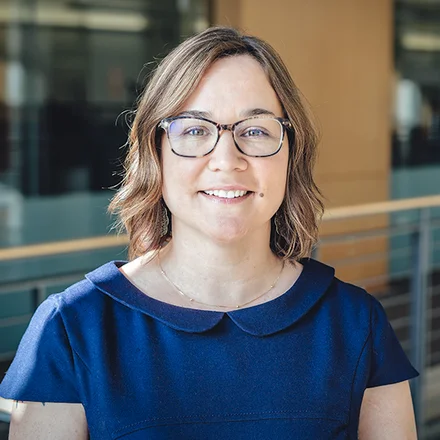
Jung Sun Lee is the Georgia Athletic Association Professor in Family and Consumer Sciences at the University of Georgia (UGA), College of Family and Consumer Sciences (FACS), Department of Nutritional Sciences. She is also affiliated with the Faculty of Gerontology and serves as the Director of the UGA SNAP-Ed project. Postdoctoral, Geriatric Medicine/Public Health, University of Pittsburgh Ph.D., Community Nutrition, Cornell University M.S., Food and Nutrition, Seoul National University B.S., Food and Nutrition, Seoul National University Her research focuses on food insecurity, health disparities in nutrition, and policy evaluation, particularly for low-income populations and older adults. She employs mixed-methods and multidisciplinary approaches to improve food assistance programs like SNAP and aging services. 2024 - Bill and June Flatt Outstanding Extension and Outreach Faculty Award 2023 - Joint NEAFCS Social Media Education Award 2020 - NEAFCS Program Excellence Through Research Award 2019 - UGA Athletic Association Professorship Lee leads initiatives such as the Georgia CAFE project, GA Advanced POMP, and the statewide Georgia Hunger Study. She has published extensively on food policy, eLearning nutrition programs, and healthcare utilization linked to food insecurity.
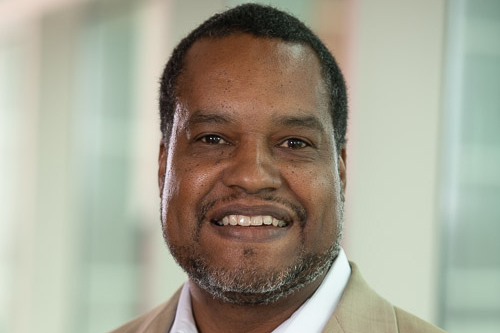
Mark R. Bell is a Professor of Electrical and Computer Engineering at Purdue University, based in the Elmore Family School of Electrical and Computer Engineering. His research focuses on information theory, communication systems, radar signal processing, and free-space optical communications. He holds a BS from California State University, Long Beach (1981), an MS (1982), and a PhD (1988) from the California Institute of Technology. His work spans diverse areas including radar waveform design, signal detection in noisy environments, and interdisciplinary applications like biomedical manufacturing and disaster management. Key research interests include advanced radar systems (e.g., bistatic configurations, LFM chirp processing), communication theory (e.g., time-frequency modulation, interference management), and emerging technologies such as AAV production for biotechnology. His contributions also extend to sensor networks, smart grid monitoring, and statistical modeling of wireless interference. Recent publications highlight innovations in radar resolution enhancement, adaptive threshold detection, and cost-effective manufacturing processes. Collaborative projects include spectrum-sharing frameworks for communications and radar systems, and integration of GPR with surface imaging for civil infrastructure analysis. Prof. Bell’s work has been recognized through sustained contributions to IEEE journals and conferences. His research bridges theoretical signal processing with practical applications in defense, healthcare, and environmental monitoring.
Dr. Michael B. Edwards is an Associate Professor at North Carolina State University's Department of Parks, Recreation and Tourism Management, part of the College of Natural Resources. His research focuses on social inequality in physical activity access, community health through sport, and policy-driven solutions for health disparities, particularly in rural areas. He holds a Ph.D. from NC State (2009), an M.A. from East Carolina University (2006), and a B.A. from the University of North Carolina (1996). His work emphasizes quantitative methods like multilevel modeling, addressing topics such as sport's role in community capacity building, policy impacts on youth physical activity, and leveraging sport for health development. Notable awards include the 2011 Oak Ridge Junior Faculty Award and the Texas A&M Fish Camp Namesake Award. Grants include evaluations of youth development programs, conservation corps impacts, and SNAP-Ed initiatives promoting nutrition and physical activity. He collaborates extensively with organizations like the Public Lands Service Coalition and the USDA, focusing on environmental stewardship, public health, and policy implementation.
Robin Maille is an Associate Professor of Practice at Oregon State University's College of Health, affiliated with the School of Nutrition and Public Health and the OSU Extension Service. She serves Union and Baker counties in Eastern Oregon, focusing on community food systems, food security, and garden-based nutrition education. Her current work expands into trauma-informed care, community resiliency, and rural mental health promotion through initiatives like the USDA NIFA-funded Coast to Forest project. Institution: Oregon State University School: College of Health Department: School of Nutrition and Public Health Program: OSU Extension Service – Family & Community Health (FCH) Role: Associate Professor of Practice, Outreach Coordinator, Program Manager Her academic background includes a BA in Comparative Sociology, a Master’s in Forestry, and an MA in Secondary Science Education, complemented by a Graduate Certificate in Public Health. Her interdisciplinary training supports her integrative approach to public health and community development. Robin's research and outreach interests center on strengthening rural communities through sustainable food systems, nutrition education, and mental well-being. She actively promotes health equity by addressing food insecurity and expanding access to health resources for underserved populations. Her recent focus on trauma-informed practices reflects a deeper commitment to holistic community health and resilience-building in regions affected by substance use and economic challenges. While no scientific publications are listed in the provided text, her professional work involves applied research in community health, environmental education, and rural development. Her programming integrates public health, agriculture, and social services, suggesting interdisciplinary collaboration across fields such as public health, sociology, forestry, and education. Nutrition Education and Outreach Programs (SNAP-Ed) Walk With Ease Coast to Forest: Building on Community Strengths to Promote Mental Health and Reduce Opioid Abuse in Rural Oregon Robin has received national recognition for her work in Family and Community Health, though specific awards are not named. She actively contributes to local governance and emergency preparedness, having served on the La Grande School Board (2015–2023) and participating in coalitions focused on trauma-informed care, emergency response, and STEM education. She supervises the Master Gardener program in Union County and collaborates with multiple agencies to enhance community health infrastructure. Her leadership in cross-sector partnerships highlights her role in bridging academic outreach with local needs. Robin’s work is supported by federal and state grants, particularly in public health and rural development, though specific grant details are not elaborated.
Anne Hoisington is an Associate Professor of Practice at Oregon State University, affiliated with the College of Health and the School of Nutrition and Public Health. She is a registered dietitian (RD) with a Master of Science (MS) and works extensively with the Nutrition Extension and Family and Community Health Program, particularly through the SNAP-Ed state team in Multnomah County. Her academic interests include: Nutrition education within food assistance programs Community and household food security Evaluation of brief health education interventions Theories of learning and behavior change Hunger in Oregon Development of web-based teaching and learning tools She has contributed to public-facing educational content, including a free online course on Childhood Food Insecurity developed in partnership with the Childhood Hunger Initiative of Oregon, which offers continuing medical education (CME) credits. She also answers public nutrition questions, such as on the retention of vitamin K in frozen leafy greens. Anne is actively involved in outreach and extension services across Oregon, particularly in the Portland metro area. She has no listed scientific awards or publications in the provided text. She advises on nutrition outreach programs and leads educational initiatives through SNAP-Ed. Her work is supported by extension grants and state-level public health funding, though specific grants are not detailed. She is part of the Family & Community Health team and contributes to statewide efforts in nutrition education and food security.
Lauren M. Kraemer, MPH, is an Associate Professor of Practice in the College of Health at Oregon State University, where she is affiliated with the School of Nutrition and Public Health and the OSU Extension Service. She serves communities in Hood River and Wasco Counties, focusing on public health outreach, education, and program implementation. University: Oregon State University School: College of Health Department: Family and Community Health Role: Associate Professor of Practice Extension Affiliation: OSU Extension Service Her educational background includes a Master of Public Health (MPH), though specific institutions and dates are not detailed in the provided text. Lauren's research and professional interests center on chronic disease prevention through nutrition and physical activity, with a strong emphasis on food systems, health equity, and climate resilience. She is deeply engaged in community-based interventions that address the social determinants of health, including policy, systems, and environmental changes. Her work spans three primary domains: food systems (e.g., community gardens, SNAP-Ed), chronic disease prevention (e.g., StrongPeople™ Program), and climate health (e.g., wildfire smoke response, air quality monitoring). She applies public health theory to design and evaluate outreach programs that are trauma-informed, inclusive, and equitable. Although specific peer-reviewed publications are not listed in the provided materials, her work includes developing educational resources such as the Survival Basics series and an online preparedness course for the Cascadia Subduction Zone. Her initiatives reflect a consistent focus on applied public health, community engagement, and resilience-building in rural populations. Lauren has received no explicitly named scientific awards in the provided texts. She advises and collaborates with community volunteers and organizations, though no formal graduate students are listed. Her work is supported by grants from the Oregon Department of Environmental Quality, OHSU Knight Cancer Foundation, and USDA-NIFA, enabling programs in air quality, nutrition education, and disaster preparedness. She actively seeks partnerships with campus-based faculty to expand community impact. Lauren leads several community initiatives, including the Mid-Columbia SNAP-Ed Program, the Gorge Food Security Coalition, and a community air quality monitoring network with 20 deployed sensors. She also manages the StrongPeople™ Program across multiple counties and has developed outreach campaigns for DIY air filtration during wildfire events. Her work integrates research, practice, and education through the OSU Extension Service model.
Christine L. Mouzong is a Senior Faculty Research Assistant and Food Hero Outcomes Coordinator at Oregon State University (OSU) Extension Service, affiliated with the College of Health and the School of Human Development and Family Sciences. She leads program evaluation for the Food Hero Social Marketing Campaign, focusing on improving fruit/vegetable intake among low-income Oregonians through policy and environmental changes. Her work spans health promotion interventions, program evaluation design, garden-based nutrition education, and participatory research practices. Previously, she served as an instructor in Human Development and Family Science from 2011 to 2017. Her expertise includes designing evidence-based interventions for SNAP-Ed programs and fostering community engagement. She co-authored a peer-reviewed guide on preventing malnutrition in older adults, emphasizing nutrient needs and disease prevention strategies. Ms. Mouzong’s roles involve collaboration with the Family and Community Health Program, Washington County Extension Service, and broader OSU Extension networks. She advocates for equitable health access through localized, theory-driven initiatives.
Dr. Allison E. Myers is a Professor and Associate Dean for Extension and Engagement at Oregon State University's College of Health, where she leads the Family and Community Health Program and directs the Center for Health Innovation. She holds adjunct roles in Health Management and Policy and champions initiatives like the AgriStress Helpline for rural communities. Myers earned her PhD and MPH in Health Behavior from UNC Chapel Hill and a BS from Penn State, complemented by Peace Corps service in Gabon. Her research integrates health promotion, behavioral health, and policy advocacy, with emphases on: Community Engagement : Designing multilevel interventions for rural mental health and substance use prevention. Health Equity : Addressing disparities in tobacco access, maternal health, and language services. Systems Innovation : Bridging public health, healthcare, and policy via extension programs like Coast to Forest. Myers' recent publications (2020–2025) reveal a focus on policy implementation, rural resilience, and equity-driven interventions. Trends include community-based participatory research, digital storytelling for advocacy, and data-driven tobacco control. Earlier work emphasized retail environment analysis and military health. Awards & Honors : Emerging Leader Award, Oregon Public Health Association (2020) Advising & Grants : Myers mentors graduate students in public health and health policy, securing ~$6M in grants for projects like SNAP-Ed nutrition programs and crisis line infrastructure. She oversees workforce development, including community health worker training. Leadership : She directs the Center for Health Innovation, coordinating partnerships with state agencies (e.g., Oregon Health Authority) and national organizations (AARP). Her team advances mental health outreach, food security, and disaster preparedness in Oregon.
Lauren Tobey is an Associate Professor of Practice at Oregon State University's College of Health, affiliated with the Department of Family and Community Health Extension. She leads the Oregon Nutrition Education Program (SNAP-Ed) and oversees the Food Hero social marketing campaign, which promotes fruit and vegetable consumption through bilingual digital resources. Her work focuses on low-income populations, emphasizing accessible nutrition education and community health initiatives. Affiliations: OSU Extension Service, School of Nutrition and Public Health Key programs: Food Hero, Growing Healthy Kids, Healthy School Celebrations Toolkit Research emphasizes behavioral nutrition, social marketing strategies, and program evaluation for public health interventions targeting families and schools. Her Food Hero initiative has been funded by USDA SNAP-Ed and has produced over 15 peer-reviewed studies since 2011. Notable collaborations: Oregon Department of Human Services, local school districts Advocates for culinary literacy and food security through recipe development, social media outreach, and policy advocacy. Current projects include a statewide seed distribution program and pollinator education materials.
Tracy Wilson is an Assistant Professor of Practice in 4-H Youth Development and Community Food Systems at Oregon State University, affiliated with the School of Human Development and Family Sciences . She serves as the Leonard and Brenda Aplet Financial Literacy Professor and works closely with the Warm Springs Extension Team and Warm Springs 4-H on the Confederated Tribes of Warm Springs reservation. Her work focuses on fostering youth development through community engagement, food systems resilience, and soil science applied to sustainable agriculture. Tracy leads programs such as the Warm Springs 4-H and collaborates on initiatives like the Fruit Loop Tour to rebuild community food preservation networks. Her research emphasizes local food systems, soil health, and culturally relevant education. Key projects include the Skuliłama Garden honoring community contributors and the Jefferson County SNAP-Ed video storytelling initiative. Publications highlight her expertise in camelina crop management, carbon sequestration, and climate-smart agricultural practices. She actively bridges research and community needs through OSU Extension’s outreach, addressing food security, soil conservation, and youth empowerment in rural and Indigenous communities. Tracy’s work integrates education, environmental science, and community development, with a focus on creating sustainable solutions for marginalized populations. She collaborates across disciplines to advance interdisciplinary approaches to youth development and food systems equity.
Dave Weatherspoon is a Professor in the Department of Agricultural, Food, and Resource Economics at Michigan State University (MSU), where he also serves as Associate Provost of Enrollment and Academic Strategic Planning. He holds a Ph.D. in Food & Resource Economics from the University of Florida, an M.S. from Penn State, and a B.S. from MSU. His academic roles include teaching courses on food industry marketing and industrial organization. Professionally, he leads research and policy initiatives to address food insecurity, poverty, and equitable access to education and resources. He has collaborated globally with institutions like the World Bank, FAO, and USAID to combat poverty through agribusiness and food system interventions. Research interests focus on food supply chain economics, food security, nutrition policy, and international development. His work has been featured in major publications like the New York Times and BBC. Notable contributions include analyzing food deserts, evaluating SNAP program impacts, and studying armed conflict effects on food systems. He has received the College of Agriculture and Natural Resources (CANR) Diversity, Equity, and Inclusion Award (2020) for empowering minorities in academia. His administrative role involves strategic enrollment planning and policy development to enhance undergraduate student success and reduce opportunity gaps at MSU. Weatherspoon’s research spans 30+ countries, emphasizing solutions for poverty and malnutrition. Current projects explore food access economics and the interplay between food systems and health outcomes in low-income regions like Malawi and Rwanda.
Alisha Gaines is an Extension Associate in the Division of Nutritional Sciences at Cornell University's College of Human Ecology. Her work focuses on applied research in public health, community nutrition, and food security. She specializes in evaluating interventions such as school lunchroom modifications, SNAP-Ed initiatives, and programs targeting adolescent and family nutrition. Her research emphasizes evidence-based practices, stakeholder collaboration, and behavioral outcomes in food environments. Key research areas include food agency in adolescents, SNAP-Ed policy implementation, and process evaluations of school-based interventions. She has contributed to studies on the Smarter Lunchrooms initiative, food deserts, and college student food insecurity. Her work bridges academic research with real-world applications, aiming to improve dietary behaviors and health equity. Notable projects include the evaluation of the Smarter Lunchrooms Randomized Controlled Trial (years 1-3) and the Healthy Corner Store Initiative in New York State. Her findings highlight the effectiveness of environmental modifications and parental engagement strategies in promoting healthful food choices. Ms. Gaines holds a position in Cornell’s Division of Nutritional Sciences, emphasizing practical solutions to complex nutritional challenges. Her research often employs mixed-methods approaches, including photo-elicitation and qualitative analysis, to understand food routines and decision-making processes.
Sarah Ann Hess is an Extension Associate in the Division of Nutritional Sciences at Cornell University, serving as the Regional Coordinator for the Expanded Food and Nutrition Education Program (EFNEP) and part of the Food and Nutrition Education in Communities (FNEC) group. She provides leadership to EFNEP staff, facilitates eCornell's Navigating for Success training, and specializes in curricula development and social media strategies. Her work focuses on policy, system, and environmental approaches to improve school wellness and low socioeconomic populations' health behaviors. Education: Holds a Master of Science in Nutrition from Mansfield University and is pursuing a Ph.D. in Community Nutrition at Cornell University to study behavior changes aligned with healthy lifestyles in underserved communities. Research Interests: Prioritizes community-based interventions, leveraging social media and policy initiatives to promote nutrition education and sustainable health practices. Advising/Grants: No grants or student advising information provided. Active in program coordination and curriculum design for EFNEP and SNAP-Ed.
Krystal Lynn Hodge is an Assistant Professor in the Department of Food Science and Human Nutrition at the University of Illinois, with a secondary appointment in Nutritional Sciences. Her research focuses on public health nutrition interventions, food policy analysis, and community-based program evaluation. She can be contacted at klhodge@illinois.edu. Her primary research examines: Nutrition education program effectiveness Food environment influences on obesity Policy implications of food waste Community health coalition assessments SNAP-Ed program outcomes Recent publications (2019-2025) demonstrate consistent focus on nutrition interventions in underserved communities, particularly through randomized trials of food assistance programs, analyses of neighborhood food environments, and evaluations of health policies. Her work frequently employs mixed-method approaches and focuses on Midwestern U.S. populations. No awards, students, research grants, or lab affiliations are mentioned in the source materials.
Gabriella Maria Mcloughlin is an Assistant Professor in the Department of Social and Behavioral Sciences within the College of Public Health at Temple University. She leads the RISE (Research in Implementation Science to Advance Equity) Lab, focusing on health equity, policy implementation, and chronic disease prevention. Her work integrates community-engaged approaches to strengthen public health interventions in schools and underserved communities. Her research interests center on implementation science , health equity , school nutrition policies , physical activity promotion , and dissemination and sustainability of evidence-based programs. She employs mixed methods and community advisory boards to ensure equitable policy evaluation and program design. The recent publications demonstrate a strong trajectory in advancing equitable implementation of school-based health interventions, particularly around universal school meals, physical activity, and measurement development. Her work consistently applies implementation science frameworks such as CFIR and focuses on structural and contextual determinants of health. K01 Career Development Award, National Heart, Lung, and Blood Institute (NHLBI) Dr. Mcloughlin is actively funded on multiple projects, including NIH and NIDDK grants, focusing on dissemination and sustainability (D4DS), policy evaluation tools grounded in health equity, and improving implementation of healthy eating and physical activity programs. She advises graduate students and teaches courses such as Health Promotion in Vulnerable Populations . Her lab, the RISE Lab, collaborates with the School District of Philadelphia and has established a Community Advisory Board to guide community-centered research. The RISE Lab conducts transdisciplinary research involving implementation mapping, measurement development, and community partnerships to ensure that public health policies are equitably implemented and sustained.