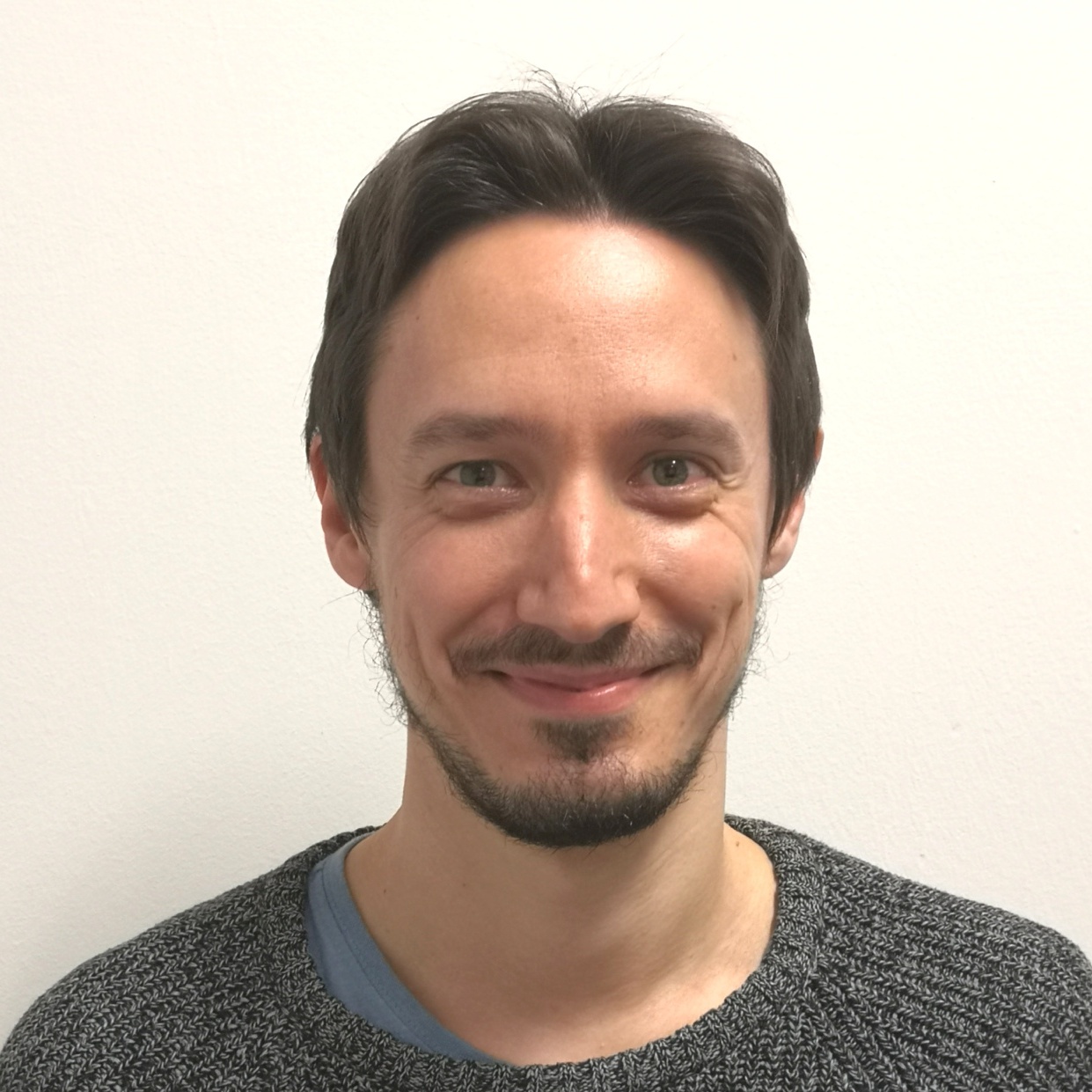
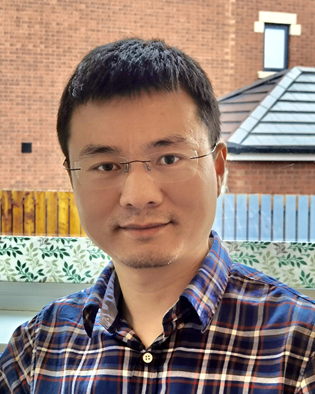
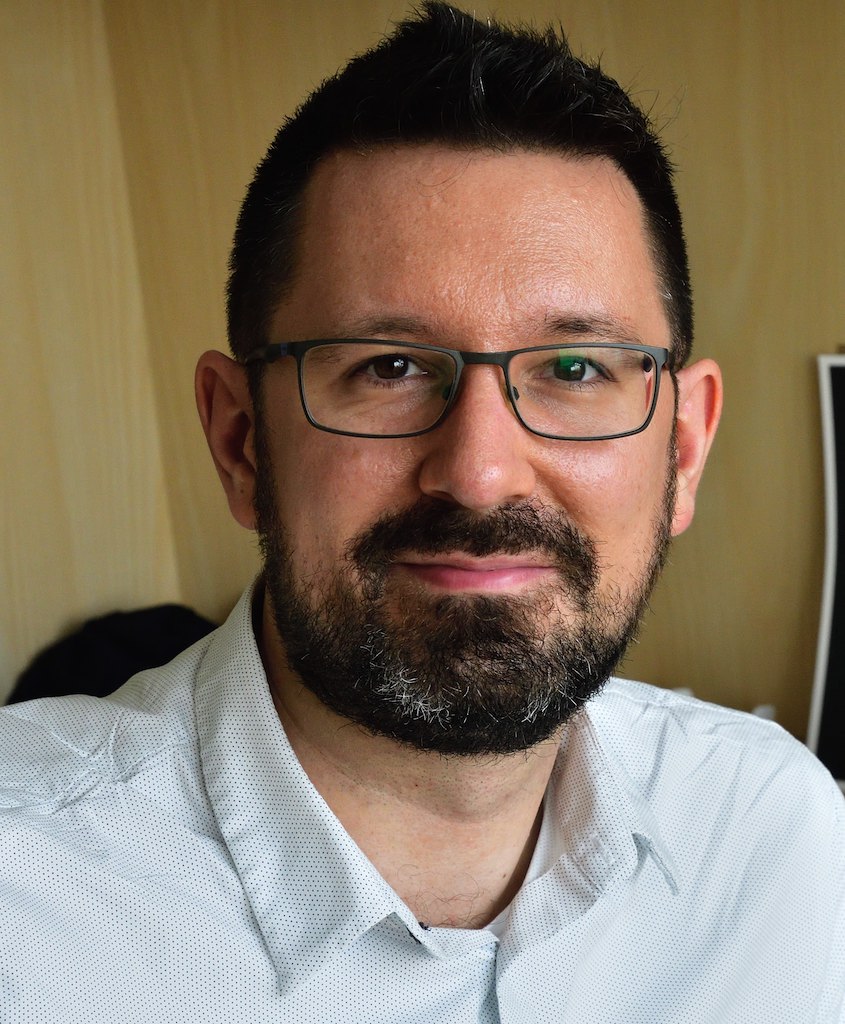
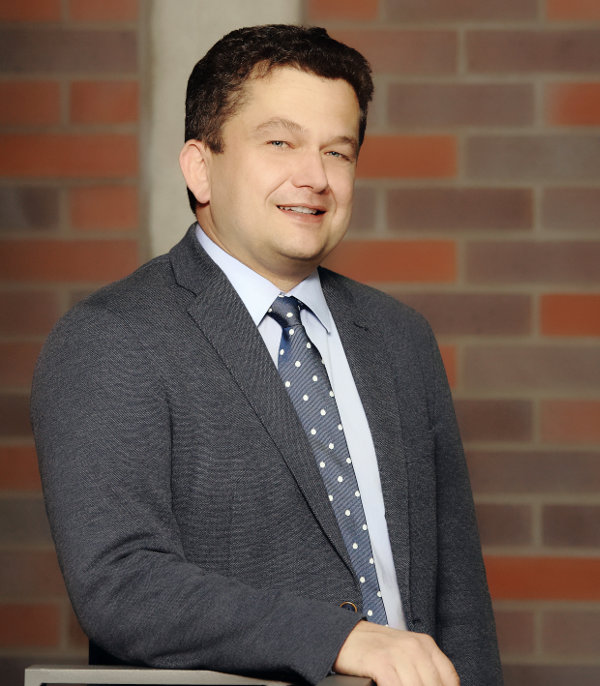
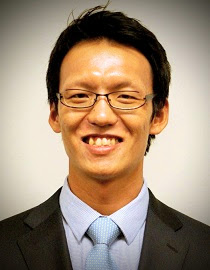
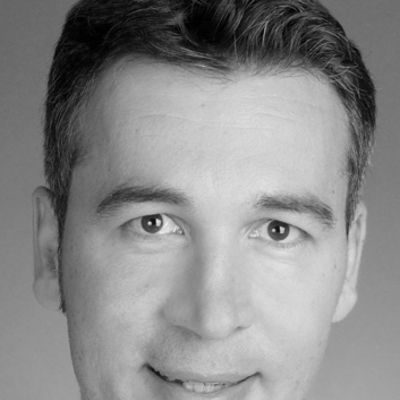
Fausto Francesco Lizzio is a Fixed-term Researcher at the Department of Mechanical and Aerospace Engineering (DIMEAS) within the College of Mechanical, Aerospace and Automotive Engineering at the Polytechnic University of Turin . His work focuses on consensus protocols , distributed control , and unmanned aerial systems (UAVs) . Research Interests: Multi-agent systems, time-delay networks, robotics, and aerospace engineering. Teaching Roles: Course instructor for advanced flight dynamics and collaborator in courses on spacecraft control, flight mechanics, and aerospace simulation. His recent research explores stability-switching properties in multi-agent systems, decentralized target estimation for UAV swarms, and digital twin applications for prognostic health management. These studies intersect aerospace engineering, control theory, and networked robotics. Scientific Contributions: He has been recognized with an open badge for participating in research funding calls through the Rimini School 2025. His publications span journals like IEEE Control Systems Letters , Drones , and conference proceedings for SICE and EASN events.
Eric Demeester is an Associate Professor at the Faculty of Engineering Technology, KU Leuven, affiliated with the Department of Mechanical Engineering and the Robotics, Automation and Mechatronics (RAM) group. He leads RAM and the Subdivision ACRO, with additional roles as contact person for robotics initiatives and council member for academic governance. Academic Rank: Associate Professor Leadership Roles: Head of RAM, Head of Subdivision ACRO Research Focus: State estimation, decision-making under uncertainty, robotic wheelchairs, user modeling, plan recognition, shared control His research spans robotics applications in diverse domains including humanitarian demining, agricultural automation, pharmaceutical manufacturing, and radiological mapping. Projects involve sensor fusion (GNSS-IMU), machine learning for low-data environments, and haptic control systems. Current advisees include Wouter Abbeloos and Pieter Aerts. Key projects include MineInsight (2024-2028), APL-SuppOr (2024-2027), and ROBUST (2024-2025), where he serves as promotor or co-promotor. His work emphasizes practical implementation in industrial and challenging environments.
Matteo Poggi is a Tenure-Track Assistant Professor at the University of Bologna, where he teaches courses on Logic Circuits and Computer Architectures. His academic career is deeply rooted in computer vision and 3D perception, with a focus on stereo vision, depth estimation, and SLAM systems. Dr. Poggi earned his MSc and PhD degrees from the University of Bologna in 2014 and 2018 respectively, working on stereo vision under the supervision of Prof. Stefano Mattoccia. His educational background has provided a strong foundation for his current research endeavors in computer vision and 3D scene understanding. Dr. Poggi's research primarily focuses on stereo matching, multi-view stereo, optical flow, single-image depth estimation, online adaptation, federated learning, and neural SLAM. His work bridges the gap between theoretical computer vision and practical applications, with particular emphasis on robustness in real-world scenarios. His recent publications demonstrate a growing interest in 3D Gaussian splatting, neural radiance fields, and environmental monitoring applications like river plastic detection. His scholarly output shows a consistent trajectory of high-impact publications at top computer vision conferences including CVPR, ICCV, and ECCV. The trend in his work reveals an evolution from traditional stereo vision techniques toward more advanced neural representations and applications in environmental monitoring. His research has significant implications for autonomous systems, robotics, and environmental science. Area Chair for CVPR 2026 Associate Editor for IJCV Outstanding Reviewer at CVPR 2025 Dr. Poggi actively collaborates with researchers across the globe, as evidenced by his extensive publication record. His GitHub profile shows active engagement with the research community through open-source implementations of his work. While specific grant information isn't provided in the available texts, his numerous publications in top venues suggest successful funding for his research endeavors. His work appears to be conducted within a vibrant research group at the University of Bologna, with connections to other researchers in the computer vision community as seen through his GitHub followers and collaborators. His research has practical applications in autonomous driving, robotics, and environmental monitoring.
Jan-Matthias Braun is an Associate Professor at the Maersk Mc-Kinney Moller Institute, University of Southern Denmark, specializing in Applied AI and Data Science. His research bridges artificial intelligence, robotics, and medical device engineering. Current projects focus on explainable AI integration in colon capsule endoscopy Development of real-time FPGA-based systems for colorectal diagnostics Biomechanical modeling for adaptive orthotic devices His work emphasizes cross-disciplinary applications of machine learning in healthcare, particularly for gastrointestinal disease detection and assistive robotics. Publications demonstrate expertise in deep neural networks, hardware acceleration, and smart environment control systems. Teaching responsibilities include: Advanced cybersecurity courses Deep learning applications in epilepsy detection Mentorship in capsule endoscopy image analysis
Francesco Nex is an Associate Professor at the University of Twente in the Department of Earth Observation Science , where he holds the chair of real-time analytics for ubiquitous geo-sensors. He earned a Master's in Environmental Engineering (2006) and a PhD (2010) from TU Turin. His career spans roles at Italy's FBK institute (2011-2015) and the University of Twente (2015-present). His research integrates photogrammetry , deep learning , and robotics to enable automated UAV-based solutions for applications like disaster management , infrastructure monitoring , and precision farming . Key projects include EU-funded initiatives (Ingenious, Panoptis, RECONASS) and leadership roles in the ISPRS (Chairman of ICWG II/Ia). He has supervised 12 PhD students directly and co-supervised others at institutions like Politecnico Milano and Politecnico Torino. Recent publications highlight advancements in glacier monitoring using low-cost UAV systems, real-time 3D reconstruction , and autonomous drone navigation . Awards include the ISPRS President’s Honorary Citation (2021) and the E.H. Thomson award (2020). His work aligns with UN Sustainable Development Goals for Smart Industry , Climate Action , and Robotic Mobility .
Dr. Chongfeng Wei is an Associate Professor (University Senior Lecturer) at the James Watt School of Engineering, University of Glasgow. Prior to joining the University of Glasgow, he was a lecturer at Queen's University Belfast. His research focuses on intelligent vehicles, autonomous systems, and human-robot interaction, with applications in transportation and robotics. Dr. Wei's research spans several key areas in autonomous systems and vehicle dynamics: Decision-making and Planning of Intelligent Vehicles Collective Autonomy: Perception and Planning Robotic System Design and Dynamical Control Dynamics and Control of Mechanical Systems Human Behaviour Study and Prediction His recent publications demonstrate a strong focus on human-vehicle interaction, with particular emphasis on pedestrian-vehicle interactions, decision-making frameworks, and control strategies for autonomous systems. His work often combines AI technologies, bio-designs, and first principles of dynamics and control to create smarter or human-acceptable autonomous systems. Dr. Wei serves as an Associate Editor for several prestigious journals including IEEE Transactions on Intelligent Transportation Systems (TITS), IEEE Transactions on Vehicular Technology (TVT), IEEE Transactions on Intelligent Vehicles (TIV), IEEE Open Journal of Intelligent Transportation Systems (OJ-ITS), and Frontiers on AI and Robotics. He actively supervises PhD students and postdoctoral researchers, with current projects focusing on vision-based 3D flow prediction, pedestrian interaction modeling, and multimodal interaction for behavior prediction in autonomous driving.
Professor Piotr Małka is affiliated with the Krakow University of Technology as a faculty member in the Department of Infotronics and Cybersecurity under the Faculty of Electrical and Computer Engineering . His work focuses on robotics, mechatronics, and infrastructure monitoring. Academic Rank: Professor Contact: piotr.malka@pk.edu.pl Research interests span mobile robot design for pipeline inspection , SLAM techniques in rough terrain, and intelligent infrastructure systems. His publications demonstrate expertise in: Robot kinematics and dynamics Control systems for tracked robots Structural health monitoring Smart water supply infrastructure Virtual prototyping of inspection systems Recent work shows increasing focus on autonomous navigation and cyber-physical systems integration for industrial applications.
Myriam Servières is a Professor of Computer Science at Centrale Nantes, where she has taught since 2006. She currently serves as Director of AAU-CRENAU and Deputy Director of the AAU Laboratory. Her academic journey includes a PhD in Applied Computer Science from the University of Nantes (2002-2005) and an engineering diploma from École Centrale de Nantes (1999-2002). Her research explores the intersection of digital technology and urban environments, with key interests in: Geolocation : Developing advanced positioning systems for urban navigation Augmented/Virtual Reality : Creating multisensory urban simulations 3D Modeling : Reconstructing and analyzing urban spaces Citizen Sensing : Engaging communities in environmental monitoring Her recent publications demonstrate strong focus on VR-based urban perception analysis, pedestrian navigation systems, and geospatial data processing. Work frequently appears in premier journals like ISPRS and IEEE Transactions . She leads significant initiatives including the IRSTV 'Urban Tomography' research axis and the '3D geospatial data' prospective action. Her teaching spans core computer science courses and specialized programs in digital cities. At AAU-CRENAU, she directs research on computational urban analysis, collaborating across disciplines to develop new methods for understanding and designing urban spaces through digital mediation.
Torsten Sattler is a Senior Researcher at the Czech Institute of Informatics, Robotics and Cybernetics (CIIRC) at the Czech Technical University in Prague (CTU), where he heads the Spatial Intelligence group. Previously, he was a tenured Associate Professor at Chalmers University of Technology in Sweden and spent five years as a PostDoc and Senior Researcher at ETH Zurich in Switzerland. He received his PhD from RWTH Aachen University in Germany. His research focuses on the intersection of 3D computer vision and machine learning, with specific interests in image-based localization, 3D mapping and reconstruction, neural scene representations, and applications in robotics and AR/VR. He aims to make localization and mapping algorithms more robust by incorporating higher-level scene understanding. Dr. Sattler has published extensively at top computer vision conferences including CVPR, ICCV, and ECCV, with recent papers focusing on robust visual localization in changing environments, neural scene representations, and 3D reconstruction. His work has direct applications in autonomous systems and augmented reality. Best Paper Candidate at CVPR 2021 Best Paper Award at Photogrammetric Image Analysis 2019 Multiple Outstanding Reviewer Awards from 2015-2021 Ranked among top-10 computer scientists in Czech Republic by Research.com He currently supervises five PhD students and has served in various leadership roles including program chair for ECCV 2024, general chair for 3DV 2022, and area chair for multiple major conferences. His lab benefits from connections to the RICAIP Centre, one of the largest EU projects in AI and Industry 4.0, providing access to state-of-the-art infrastructure and industrial collaborations.
Mohamed Alimoussa is a Postdoctoral Researcher at the National Institute of Applied Sciences of Toulouse since June 2025, working in the MICS (Metrology, Identification, Control and Surveillance) group at Espace Clément Ader. His research focuses on multi-instrumentation methods for drone pose estimation to characterize deformations of kite-sails in maritime propulsion systems using sensor fusion and computer vision. He holds a PhD from the University of the Littoral Opal Coast (2020-2024) where he developed compact hybrid descriptors for texture classification in color and hyperspectral imaging. His educational background includes advanced work in feature selection, dimensionality reduction, and GPU-accelerated image processing algorithms. Dr. Alimoussa's research spans drone navigation, sensor fusion (visual odometry, RTK GPS, laser rangefinders), SLAM algorithms, and Digital Image Correlation for mechanical deformation measurement. His work bridges computer vision with mechanical engineering, emphasizing robust real-world applications in non-structured outdoor environments and industrial metrology. His publication record shows consistent innovation in texture analysis and feature engineering, evolving from foundational work on color texture descriptors to current applications in drone-based metrology. Recent publications demonstrate increasing focus on multi-sensor fusion systems and robustness against environmental variables like lighting changes and rapid motion. He actively co-supervises Master's students and interns in texture classification projects while participating in the ANR-funded ESKIF project (JCJC 2024). His experimental work involves collaborations with LMGC (University of Montpellier) and Beyond the Sea for coastal validation trials. As a core member of the MICS research group at Espace Clément Ader, he contributes to metrology systems development and participates in workshops on drone applications for mechanical measurement, maintaining strong industry-academia partnerships for experimental validation.
Prof. Dr.-Ing. Andreas Wenzel is a Professor at Schmalkalden University of Applied Sciences in the Faculty of Electrical Engineering, specializing in Embedded Systems. His office is located in Building M, Room 0401, and he can be reached at +49 3683 688 5113. With a distinguished research career spanning over two decades, Prof. Wenzel has established himself as a leading expert in embedded diagnostic systems with applications across multiple domains including biomedical engineering, industrial automation, and assistive technologies. Prof. Wenzel's primary research interests focus on the development and application of embedded diagnostic systems, with particular emphasis on neural networks for pattern recognition, fuzzy logic systems for classification problems, and real-time monitoring solutions. His work bridges theoretical machine learning approaches with practical engineering applications, resulting in innovative solutions for quality control in manufacturing processes, medical diagnostics, and mobility assistance technologies. He has made significant contributions to EEG data analysis for sleep stage and anesthesia depth monitoring, as well as developing smart systems for injection molding quality assessment and advanced mobility solutions for elderly individuals. Analysis of Prof. Wenzel's publication record reveals a consistent research trajectory focused on applying computational intelligence to solve practical engineering problems. His work demonstrates exceptional versatility across domains while maintaining a cohesive research theme centered on embedded diagnostic systems. From 2012-2016, his research output shows increasing focus on real-time embedded solutions with industrial applications, particularly in manufacturing quality control and assistive technologies, while continuing his foundational work in biomedical signal processing. The interdisciplinary nature of his research is evident in collaborations with medical professionals, industrial partners, and robotics specialists. Prof. Wenzel leads the Embedded Diagnostic Systems Research Group at Schmalkalden University of Applied Sciences, which maintains strong industry partnerships, particularly in plastics manufacturing and medical technology sectors. His team develops practical embedded solutions that address real-world challenges in production quality monitoring, medical diagnostics, and mobility assistance. The research group's work is characterized by its practical orientation, with many projects resulting in deployable systems rather than purely theoretical contributions. Prof. Wenzel's strategic focus on applied research ensures that his work has direct industrial relevance and practical impact.
Bryan Donyanavard is an Assistant Professor in the Department of Computer Science at San Diego State University's College of Sciences. His research focuses on self-aware computing systems and cyber-physical systems optimization. Ph.D. in Computer Science from UC Irvine B.S. & M.S. in Computer Engineering from UC Santa Barbara Research interests span self-aware systems, embedded systems, and machine learning applications in resource-constrained environments. Current projects explore runtime optimization for autonomous vehicles and cyber-physical systems management. Recent publications analyze reversible neural network pruning for safety-critical systems, hybrid learning models for edge-cloud networks, and cross-layer optimization for mobile devices. Key trends include machine learning integration with hardware systems and performance maximization in embedded environments. Actively advising graduate and undergraduate researchers, with past advisees working on topics like lane following system optimization, SLAM algorithms, and sensor perception in platooning vehicles. Email: bdonyanavard@sdsu.edu Lab: DRG-Lab LinkedIn: https://linkedin.com/in/bryandony
Adriano Jorge Cardoso Moreira is an Associate Professor with Habilitation at the Department of Information Systems, School of Engineering, University of Minho, Portugal. He holds multiple leadership roles including Scientific Coordinator of Urban Computing at Centro de Computação Gráfica and Director of the MAP-tele PhD Program. His research is conducted primarily through the Urban Computing Lab , focusing on smart place technologies. Education: PhD in Electrical Engineering (1997) and Bachelor's in Electronic and Telecommunications Engineering (1989), both from University of Aveiro, Portugal. Research Focus: His work spans indoor positioning, mobile/context-aware systems, urban computing, and wireless network simulation. Key innovations include fingerprinting algorithms for localization, multi-sensor fusion techniques, and human mobility analysis. Research outputs consistently address real-world industrial challenges such as warehouse management, factory automation, and urban infrastructure. Research Output Trends: Recent publications (2021-2023) emphasize practical applications of Wi-Fi/LoRaWAN fingerprinting, machine learning for sensor calibration, and industrial vehicle tracking. Over 70% of recent works involve experimental validation in real environments, reflecting a strong applied research focus. Key thematic clusters include radio map optimization, multi-sensor datasets, and scalability of positioning systems. Awards & Recognition: First Prize, EvAAL-ETRI Indoor Localization Competition (Off-site track, 2015 & 2017) Second Prize, EvAAL-ETRI Indoor Localization Competition (2016) IEEE Senior Member status Patent in computational geometry Projects & Funding: He leads/participates in numerous EU/national projects including: ORIENTATE (2021-2023): Low-cost indoor positioning for factories Lab4U&Spaces (2021-2023): Urban space solutions AR WARE (2018-2022): AR for warehouse management SAMU (2015-2018): Smart autonomous mobile units Lab & Team: He established/leads the Urban Computing Lab developing technologies for smart environments. Previously headed the Computer Communications and Pervasive Media Group (until 2016). Current team includes PhD/Master students working on wireless positioning and mobility analysis.
HeonYong Kang serves as Assistant Professor of Ocean Engineering at Texas A&M University and Assistant Director of the Ocean System Simulation and Control Laboratory. His expertise bridges computational mechanics and offshore structural dynamics with applications in renewable energy systems. His educational background includes: Ph.D. in Ocean Engineering, Texas A&M University (2014) M.S. in Ocean Engineering, Texas A&M University (2010) B.S., Pusan National University (2008) Dr. Kang's research focuses on hydroelastic interactions between waves and deformable floating structures, with emphasis on computational methods for real-time load mapping and renewable energy system optimization. His work integrates advanced wave mechanics, GPU parallel computation, and dynamic positioning control for offshore platforms and wind turbines. His 2013-2016 publications demonstrate consistent innovation in time-domain hydroelastic analysis, particularly for floating wind turbines and offshore platforms. Key themes include efficient load estimation algorithms, wave-structure interaction modeling, and statistical assessment of flexible structures under extreme wave conditions. His awards include: American Bureau of Shipping Scholarship (2012, 2013) ISOPE Outstanding Graduate Student (2012) Graduate Student Presentation Grant, Texas A&M University (2013) Civil Department Head Fellowship, Texas A&M University (2008) As Assistant Director of the Ocean System Simulation and Control Laboratory, Dr. Kang leads research on simulation methodologies and control systems for ocean renewable energy converters, with particular focus on wave energy devices and dynamic positioning systems for offshore operations.
Prof. Reiner Marchthaler is a Professor at Esslingen University of Applied Sciences within the Faculty of Computer Science and Information Technology. He serves as Deputy Director of the Institute for Intelligent Systems (IIS), Scientific Director of the Green IT 2026 Conference, and Liaison Lecturer for the Friedrich Ebert Foundation. His academic leadership spans autonomous systems research and educational initiatives in embedded technologies. His research centers on Embedded Systems and Sensor Data Fusion, with pioneering work on Kalman filters for autonomous systems. He maintains the authoritative resource kalman-filter.de and has developed real-time capable SLAM algorithms, camera-based reference systems, and parking space detection frameworks. His expertise extends to entropy-based safety evaluation in autonomous driving and semantic segmentation using mixed real/synthetic data. Analysis of his 2020-2025 publications reveals dominant trends in autonomous driving systems, emphasizing real-time sensor fusion, deep learning for perception, and safety validation. Key subfields include adaptive Kalman filtering (ROSE-Filter), landmark-based navigation, neural network training with synthetic data, and maximum entropy safety frameworks. His work bridges theoretical innovation with automotive applications, particularly in model vehicle testing environments. Prof. Marchthaler leads research at the Institute for Intelligent Systems, directing the Green IT 2026 initiative and advising the Friedrich Ebert Foundation. His team develops ROS-based validation environments for autonomous algorithms and maintains the Kalman filter knowledge portal. Current projects focus on connected traffic systems using conventional infrastructure landmarks and entropy-optimized safety protocols for production vehicles.