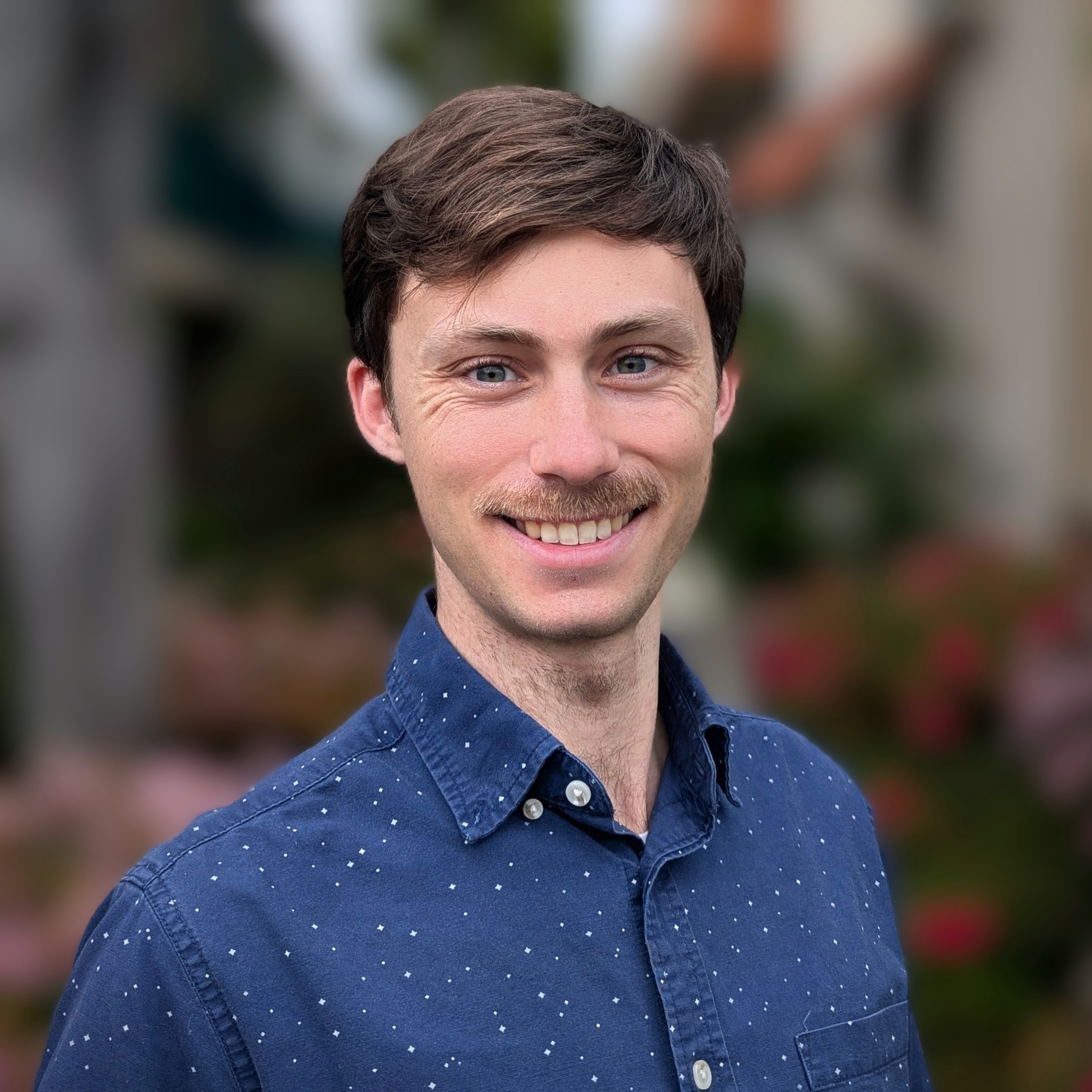
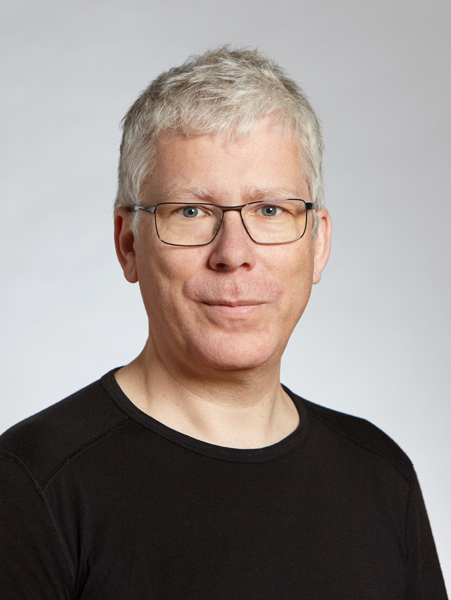
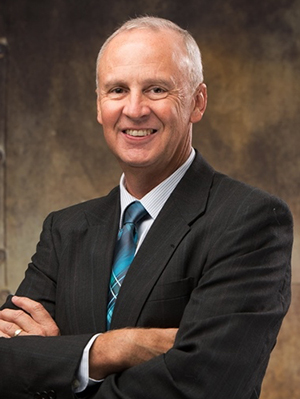
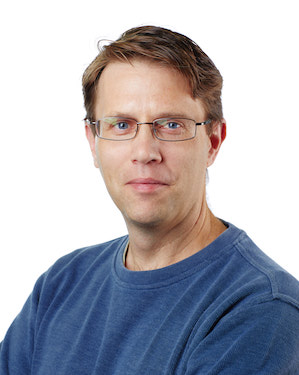
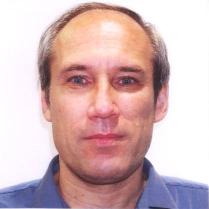
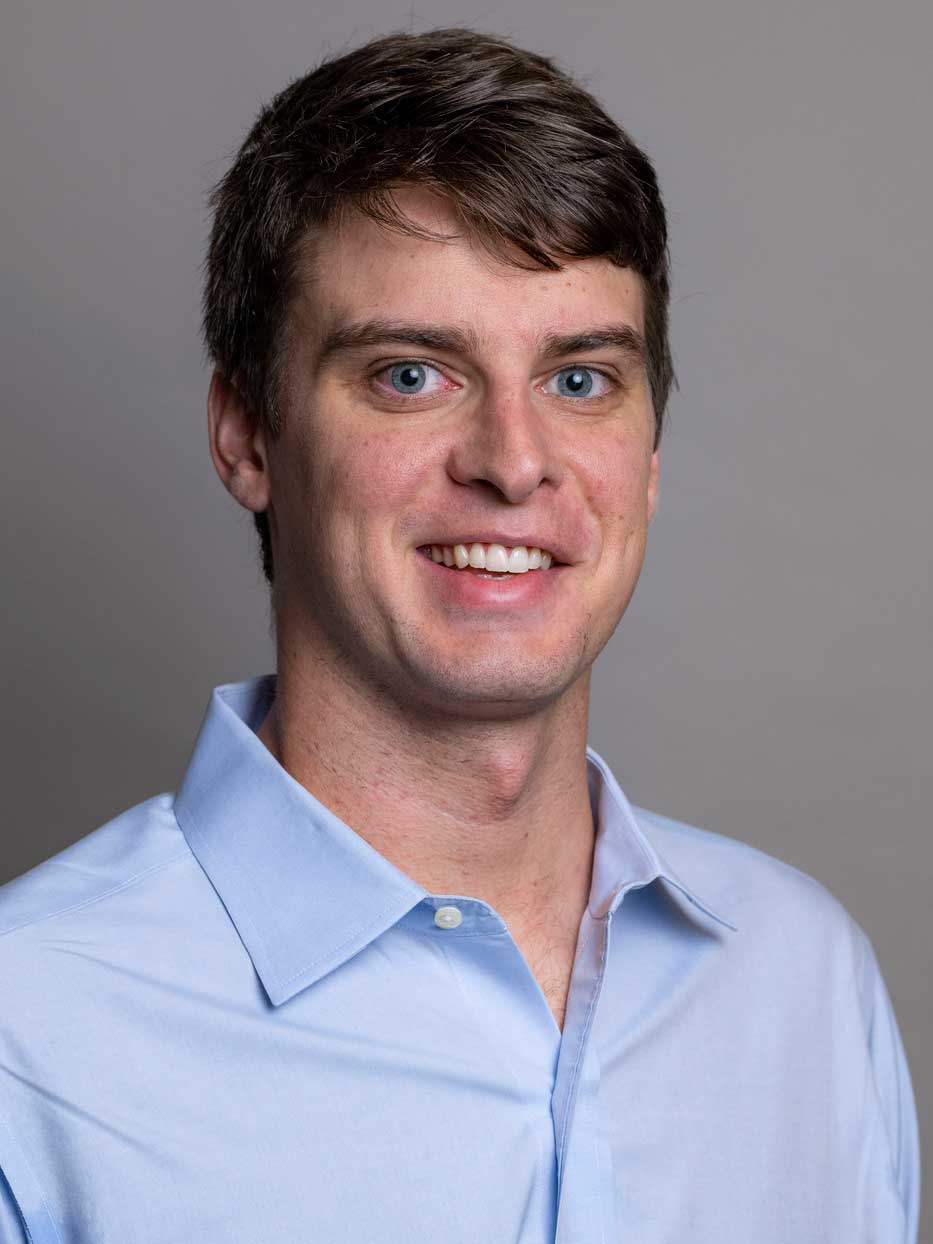
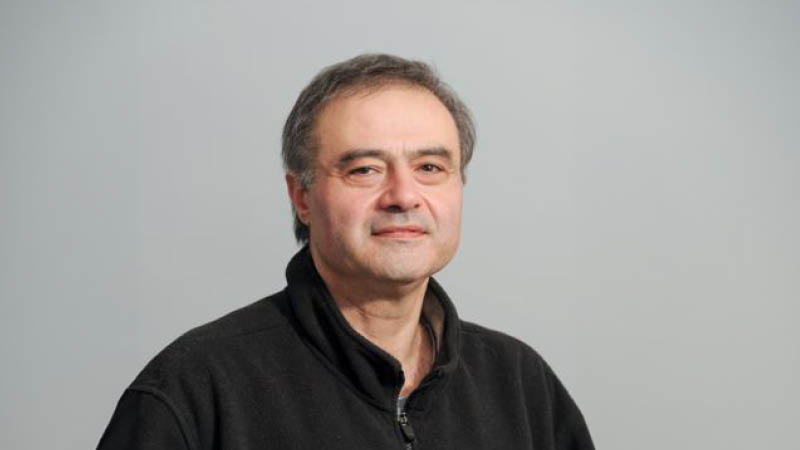
Keenan Albee is a Robotics Technologist at NASA’s Jet Propulsion Laboratory and an incoming Assistant Professor at the University of Southern California (starting Fall 2025). His research focuses on autonomous robotics for extreme environments including lunar missions, microgravity, and underwater operations. Education: Ph.D. in Aeronautics and Astronautics (Autonomous Systems), MIT (2022) S.M. in Aeronautics and Astronautics, MIT (2019) B.S. in Mechanical Engineering, Columbia University (2017) Albee’s work integrates optimal control , reinforcement learning , and motion planning to develop autonomy for mobile robotic systems operating under uncertainty. His expertise spans space robotics , microgravity systems , and underwater robotics , with a focus on environment-aware algorithm design. Recent research includes parametric information-aware motion planning (RATTLE algorithm), distributed multi-agent exploration, and robust control for uncooperative targets. His publications highlight on-orbit validation of autonomy algorithms via NASA’s Astrobee platform and upcoming lunar missions. Scientific Awards: NASA Space Technology Research Fellowship (2022) Albee actively develops open-source autonomy frameworks and will establish the Laboratory for Autonomous Systems in Exploration and Robotics (LASER) at USC. His work bridges theoretical control methods with real-world deployment, including first-of-its-kind achievements in space robotics.
Marc Pollefeys is a Full Professor of Computer Science at ETH Zurich and Director of the Microsoft Mixed Reality and AI Zurich Lab. He has held roles such as Visiting Professor at Stanford University (2007) and Assistant/Associate Professor at UNC-Chapel Hill (2002–2009). His research focuses on 3D computer vision, robotics, machine learning, and augmented reality. Education: PhD in Computer Science from KU Leuven (1999), followed by postdoctoral research there until 2002. He transitioned to academic roles at UNC-Chapel Hill before joining ETH Zurich in 2007. Research interests include 3D reconstruction, visual localization, SLAM, and applications in archaeology, urban modeling, and robotics. Notable projects include real-time 3D scanning, city-scale reconstruction, and autonomous vision-based drones. Key awards include ACM Fellow (2022), IEEE Fellow (2012), and ERC Starting Grant (2008). He advises numerous PhD students and collaborates with institutions like Google and Microsoft. Labs and teams: Leads the Computer Vision and Geometry (CVG) lab at ETH Zurich and directs the Microsoft Mixed Reality and AI Lab. His work bridges academia and industry, focusing on perception for mixed reality and autonomous systems.
Karthik Dantu is an Associate Professor in the Department of Computer Science and Engineering at the University at Buffalo, State University of New York, within the School of Engineering and Applied Sciences. His research focuses on mobile sensor networks, robot networks, networked embedded systems, mobile computing, wireless networks, and embedded operating systems. He leads the Distributed Robotics and Networked Embedded Sensing (DRONES) Lab and has received significant funding including an NSF CAREER Award. Dr. Dantu's educational background includes: PhD in Computer Science from University of Southern California (2009) BE in Computer Science from Sri Jayachamarajendra College of Engineering (1999) His research interests center on algorithmic and systems challenges in Edge Computing Systems, with particular focus on enabling seamless vision sensing in cloud-edge environments. Dantu's work bridges mobile systems and robotics, developing novel approaches for UAV software, visual SLAM, and distributed sensing. His research addresses critical challenges in resource-constrained environments, security, and real-time performance for mobile and robotic systems, with emphasis on practical implementations that solve real-world problems in autonomous systems. Dr. Dantu's publication record shows a strong trajectory in mobile systems and robotics research, with increasing focus on edge computing applications for visual sensing. His recent work demonstrates expertise in adapting visual SLAM to edge environments, securing mobile systems through technologies like Rushmore, and developing novel approaches for UAV software reliability and depth sensing. The research spans theoretical algorithms and practical system implementations, with particular strength in bringing academic research to practical applications in robotics and mobile computing. Dr. Dantu has received several scientific honors: NSF CAREER Award on Enabling Seamless Vision Sensing in Cloud-Edge Systems Outstanding service award from the Office of International Services NSF Travel Grant for SenSys 2005 Conference Travel Grant for SIGCOMM 2002 As an advisor, Dr. Dantu has mentored numerous PhD students to completion, with graduates now working at companies like Samsung Research and Zoox Inc., or continuing academic careers as Assistant Professors. His research is supported by substantial grants including a DARPA OFFSET Sprint 4 award ($470k), an NSF CAREER award ($550k), and multiple NSF collaborative grants totaling over $1.5 million. He serves on numerous conference committees including Mobicom, MobiSys, and ICRA, demonstrating leadership in the mobile systems and robotics research communities. Dr. Dantu leads the Distributed Robotics and Networked Embedded Sensing (DRONES) Lab at UB, which focuses on developing algorithms and systems for mobile sensor networks, robot networks, and embedded sensing applications. The lab's work spans theoretical foundations to practical implementations, with particular expertise in UAV systems, visual SLAM, and edge computing for robotics, maintaining strong collaborations with industry partners and other academic institutions to advance the state of the art in mobile and robotic systems.
John Valasek is a Professor in the Department of Aerospace Engineering at Texas A&M University, holding the Drs. L. Diane '88 and John E. Hurtado '91 Professorship. He directs the Vehicle Systems & Control Laboratory (VSCL) and serves as Site Director for the NSF Center for Autonomous Air Mobility and Sensing (CAAMS) and the FAA Center for General Aviation Research (PEGASAS). His research focuses on autonomous control systems, UAV navigation, and cybersecurity for aerospace vehicles. Valasek earned his Ph.D., M.S., and B.S. in Aerospace Engineering from the University of Kansas (1995) and California State Polytechnic University (1986). Education: Ph.D., Aerospace Engineering, University of Kansas - 1995 M.S., Aerospace Engineering, University of Kansas - 1990 B.S., Aerospace Engineering, California State Polytechnic University - 1986 Research Interests: Autonomous systems, nonlinear control, vision-based navigation, UAV control, bio-nano materials control, and aerospace systems engineering. Key Contributions: Over 100 invited lectures/seminars, leadership in NSF-funded research centers, and development of advanced control algorithms for aerospace systems. Notable publications include work on reinforcement learning for autonomous systems and real-time system identification for UAS. Awards: John Leland Atwood Award (2015) McElmurry Outstanding Teaching Award (2001, 2004, 2014) Engineering Hall of Fame inductee (2019) Advising & Grants: Advised over 60 graduate students, including recent NSF GRFP winner Evelyn Madewell. PI on multi-million-dollar grants, including the NSF CAAMS project and Air Force-funded research on autonomous systems. Labs & Teams: Directs the Vehicle Systems & Control Laboratory (VSCL), focusing on low-cost attritable aircraft technology and autonomy. Collaborates with industry partners like Stratolaunch and VectorNav through CAAMS initiatives.
Dr. João Henriques is a Research Fellow of the Royal Academy of Engineering (RAEng) at the Visual Geometry Group (VGG), University of Oxford. His research focuses on advancing computer vision, deep learning, and robotics, particularly in areas like 3D scene understanding, reinforcement learning, and multi-agent systems. He is renowned for developing the KCF and SiameseFC visual trackers, which won the VOT Challenge and are deployed in consumer hardware. His work spans 3D geometry, self-supervised learning, causal inference, and neuro-symbolic systems. Key contributions include methods for egocentric video analysis, unsupervised reconstruction, and robot navigation. He leads the VGG's research on neural feature fields, hierarchical scene understanding, and real-time 3D perception. Recent publications emphasize 3D-aware segmentation, universal place recognition, and neuro-symbolic world modeling for robotics. His research often bridges theoretical guarantees with practical applications, such as medical imaging and autonomous systems. Dr. Henriques collaborates with industry and academia on AI ethics, friendly AI, and interpretable learning. His lab hosts DPhil students advancing creative AI applications, such as generative models for gameplay design and LLM evaluations in real-world editorial workflows.
Luis Sentis is a Professor in the Department of Aerospace Engineering and Engineering Mechanics at The University of Texas at Austin and holds the Frank and Kay Reese Endowed Professorship in Engineering . He leads the Human Centered Robotics Laboratory, focusing on control systems, human-robot interaction, and exoskeleton robotics. His affiliations include UT Austin's Good Systems initiative and Apptronik Systems as an innovation advisor. Ph.D. , Electrical Engineering, Stanford University B.S. , Telecommunications and Electronics Engineering, Polytechnic University of Catalonia His research spans humanoid robotics , agile manipulation , autonomous systems , and human-robot teaming . Recent work emphasizes FAIR datasets , EEG monitoring , and collision detection for legged robots, with applications in industrial automation and ethical AI. Scientific awards include the NASA Elite Team Award and La Caixa Foundation Fellowship . Funding sources include DARPA , NSF , NASA , and ONR .
Nicola Capodieci is an Associate Professor at the Department of Physical, Computer and Mathematical Sciences at the University of Modena and Reggio Emilia, specializing in Information Processing Systems (IINF-05/A). He actively teaches multiple courses including Object-Oriented Programming, Web Technologies, and General Computer Science across Computer Science and Mathematics degree programs. His research interests focus on GPU acceleration for embedded systems, autonomous vehicles, and real-time computing. Dr. Capodieci's work addresses critical challenges in heterogeneous computing platforms, particularly for automotive applications and smart city infrastructure. His research bridges theoretical computer science with practical applications in autonomous driving and urban mobility systems. Analysis of his recent publications reveals a strong focus on optimizing GPU performance for latency-sensitive applications, particularly in autonomous vehicles. His work spans path planning algorithms, memory interference management, and real-time scheduling on heterogeneous platforms. A significant portion of his research addresses practical implementation challenges in embedded systems where computational resources are constrained but timing predictability is critical. Dr. Capodieci's teaching portfolio demonstrates expertise in both foundational programming concepts and advanced topics in web technologies. His courses emphasize practical implementation skills while covering theoretical foundations of object-oriented programming, web development frameworks, and computational thinking.
Sean B. Andersson is a Professor in the Department of Mechanical Engineering at Boston University's College of Engineering. His research focuses on optimal estimation, system identification, single particle tracking, robotics, and control theory. He earned his Ph.D. from the University of Maryland, College Park. Education : Ph.D. in Mechanical Engineering (University of Maryland, College Park) His work integrates control algorithms with applications in microscopy, nanofabrication, and multi-agent systems. Recent research trends highlight persistent monitoring, trajectory optimization, MRI reconstruction, and dip-pen nanolithography. He has mentored numerous graduate and undergraduate students, many of whom now hold positions at institutions like MIT Lincoln Labs, University of Pennsylvania, and Juniper Networks. Scientific Contributions : Developed robust multi-agent control policies for data harvesting Advanced single particle tracking with real-time feedback Innovated in non-raster scanning probe microscopy Optimized sensor scheduling via minimax and semidefinite programming His lab team combines theoretical and applied research in robotics and control systems, with alumni contributing to academia, industry, and research labs globally.
Guoquan Huang is an Assistant Professor in the Department of Mechanical Engineering at the University of Delaware. He holds a B.Eng. in Automation from the University of Science and Technology, Beijing (2002), and M.Sc. and Ph.D. degrees in Robotics from the University of Minnesota (2009 and 2012). Prior to his current role, he was a Postdoctoral Associate at MIT's Computer Science and Artificial Intelligence Laboratory (CSAIL). His research focuses on robotics, computer vision, and autonomous systems, emphasizing probabilistic perception, estimation, and control for ground, aerial, and underwater vehicles. He leads the development of the OpenVINS platform for visual-inertial estimation and has contributed to advancements in SLAM (Simultaneous Localization and Mapping), sensor fusion, and multi-robot coordination. Education: B.Eng in Automation (Electrical Engineering), University of Science and Technology, Beijing, 2002 M.Sc. in Robotics, University of Minnesota, Twin Cities, 2009 Ph.D. in Robotics, University of Minnesota, Twin Cities, 2012 His research interests span robotics, computer vision, and autonomous systems , with a focus on: Visual-inertial navigation and SLAM Sensor fusion (LiDAR, IMU, camera) Autonomous vehicle control and safety Multi-robot cooperative localization His recent publications (2023–2025) emphasize robust algorithms for navigation in GPS-denied environments, real-time sensor calibration, and dataset development for aerial visual localization. He has pioneered techniques like decoupled error-state estimation and consistent parallel frameworks for SLAM. Labs/Teams: Leads the development of the OpenVINS research platform, focusing on visual-inertial state estimation. Collaborates on projects involving human-swarm interactions and resilient ground vehicle navigation.
Liuping Wang is a Professor in the School of Electrical and Computer Engineering at RMIT University, Australia, since 2007. He serves as Head of Discipline for Electrical Energy and Control Systems since 2005 and teaches Advanced Control Systems (EEET 2100) and Real Time Estimation and Control (EEET 2221). Current academic rank: Professor Location: City Campus, Australia Industry collaborators: ANCA, Australian Power Academy, Advanced Manufacturing CRC His research interests span: Control Theory with applications to UAVs and industrial processes Development of Model Predictive Control systems System Identification using neural networks Robust Control for constrained systems Control of AC motors and power electronics Applications in biomedical research and food process monitoring The 15 most recent publications (2015-2025) demonstrate expertise in: UAV control systems with segmented surfaces Battery condition monitoring for electric vehicles Mult-agent robotics with coordination algorithms Smart grid security and electricity dispatch GPS-denied localization for mobile robots Disturbance observer control with input constraints As a supervisor, he oversees Masters Research and PhD projects but no specific student names are listed. His email is liuping.wang@rmit.edu.au for collaboration or supervision inquiries.
Professor Spiridon Ivanov Penev is a leading academic in the School of Mathematics and Statistics at the University of New South Wales. He holds a PhD in Mathematical Statistics from Humboldt University (Berlin, Germany) and has been affiliated with UNSW since 1992, progressing from Lecturer to Professor in 2019. His research spans wavelet methods, saddlepoint approximations, structural equation models, and stochastic risk analysis. Education: PhD in Mathematical Statistics, Humboldt University Current Affiliation: Department of Statistics, School of Mathematics and Statistics, UNSW His work focuses on advanced nonparametric techniques, including wavelet-based signal recovery with adaptive sampling rates, and robust inference in structural equation models. He has developed bias-corrected reliability measures for psychometric applications and contributed to stochastic optimization problems in finance and engineering. Recent publications highlight his expertise in semiparametric regression, robust portfolio optimization, and marine engineering applications using machine learning. Key trends include the use of Bregman divergence for shape-preserving estimation and Markov chain methods for climate model weighting. Scientific Awards: DAAD award Elected member of the International Statistical Institute (ISI) He has supervised numerous grants as Chief Investigator, including Australian Research Council projects and industry collaborations. Administrative roles include membership in the School of Mathematics and Statistics Executive Committee. Teaching duties span advanced statistical inference, multivariate analysis, and data science applications.
Dr. Chen Wang is an Assistant Professor in the Department of Computer Science and Engineering at the University at Buffalo. He holds a PhD from Nanyang Technological University and a B.Eng from the Beijing Institute of Technology. His research focuses on robotic perception, vision, and learning, emphasizing algorithm development for autonomous systems. He is affiliated with the Spatial AI and Robotics Lab (SAIR Lab) and serves as an Associate Editor for The International Journal of Robotics Research (IJRR) and IEEE Robotics and Automation Letters (RA-L) . His work spans neuro-symbolic AI, SLAM systems, and reinforcement learning for robotics. Dr. Wang's research interests include creating efficient algorithms with theoretical guarantees, open-source distribution, and real-world validation. He has contributed to areas like visual navigation, few-shot detection, and robot autonomy frameworks. His educational background in electrical engineering and robotics underscores his expertise in bridging theory and practical applications. Notable contributions include the iWalker framework for humanoid robots, AirSLAM for visual SLAM, and SuperPC for 3D point cloud processing. His editorial roles and conference service (e.g., CVPR Area Chair) reflect his leadership in the field. The SAIR Lab under his direction advances spatial AI, robotics, and autonomous systems through interdisciplinary collaboration.
Michael Everett is an Assistant Professor at Northeastern University with a joint appointment in the Department of Electrical & Computer Engineering and the Khoury College of Computer Sciences. He directs the Autonomy & Intelligence Laboratory, focusing on certifiable learning machines at the intersection of robotics, deep learning, and control theory. His research emphasizes safety, reliability, and efficiency in robotics applications like off-road navigation and social environments. Education: PhD in Mechanical Engineering, Massachusetts Institute of Technology (2020) SM in Mechanical Engineering, MIT (2017) SB in Mechanical Engineering, MIT (2015) Research Interests: Robotics and motion planning Control theory and neural network verification Reinforcement learning applications Certifiable safety guarantees for autonomous systems Navigation in dynamic/human environments Awards: Runner-Up: Best Paper Award (ICML 2022) Winner: Best Student Paper (IROS 2017/2023) Editors’ Top 5 Published Articles (IEEE Access 2021) Lab & Contributions: The Autonomy & Intelligence Lab develops algorithms for high-speed off-road autonomy, socially aware navigation, and neural feedback verification. His work includes the RAMP planning pipeline and Evora traversability learning framework. He collaborates with Google’s PAIR team on trustworthy AI.
Professor Mihran Tuceryan is a Professor of Computer Science at Purdue University Indianapolis, affiliated with the Department of Computer Science within the College of Science. He holds a PhD from the University of Illinois at Urbana-Champaign (1986) and a BS from MIT (1978). His expertise spans Computer Vision, Image Processing, Pattern Recognition, and Augmented Reality. Recent research focuses on crime prediction via video analysis, forensic imaging, and distributed tracking systems. He is a Senior Member of IEEE and ACM. Key research interests include augmented reality integration for industrial training, real-time illumination modeling, and monocular SLAM algorithms. His work addresses challenges in photorealistic AR, dynamic object labeling, and medical imaging applications such as hepatic fibrosis detection. He has contributed to projects like the e-DOTS indoor tracking system and forensic 3D impression acquisition. His publications span over three decades, emphasizing real-world applications in security, healthcare, and robotics. Education: Bachelor of Science in Computer Science and Engineering, MIT, 1978 PhD in Computer Science, University of Illinois at Urbana-Champaign, 1986 Awards: Senior Member, IEEE Senior Member, ACM Labs/Teams: Focus on AR, SLAM, and medical imaging applications Collaborative frameworks for distributed visual SLAM
Joshua Marshall is a Professor of Electrical & Computer Engineering at Queen’s University, Canada, and Director of the Offroad Robotics research group. He holds a PhD from the University of Toronto and has cross-appointments in Mechanical & Materials Engineering and the Robert M. Buchan Department of Mining. His expertise spans field robotics, autonomous systems, control engineering, and harsh-environment applications in mining, space, and marine domains. He led the Ingenuity Labs Research Institute (2018–2024) and served as a Visiting Professor at Örebro University (2016–17). Dr. Marshall’s work focuses on autonomous vehicle navigation, robotic excavation, and spatiotemporal mapping. He has received the 2025 OPEA Engineering Medal and has commercialized technologies through partnerships with companies like Epiroc and RockMass Technologies. Education: PhD, Electrical & Computer Engineering, University of Toronto (2005) MSc(Eng), Mechanical Engineering, Queen’s University (2001) BSc (Hons), Engineering, (details not specified) Research Interests: Autonomous robotics in mining, space, and marine environments Data-driven control systems and model predictive control Proprioceptive sensing and terrain classification Multi-robot coordination and task planning Underground navigation and SLAM Professional Activities: Senior Member, IEEE Editorial roles: International Journal of Robotics Research , IEEE Transactions on Mechatronics Co-founded the NSERC Canadian Robotics Network (NCRN) Contributions to the IEEE Medal for Environmental & Safety Technologies Committee Labs/Teams: Offroad Robotics Group (Queen’s University) Ingenuity Labs Research Institute (founding Director) Advisor to Queen’s AutoDrive Challenge II Team and aQuatonomous ASV Design Club