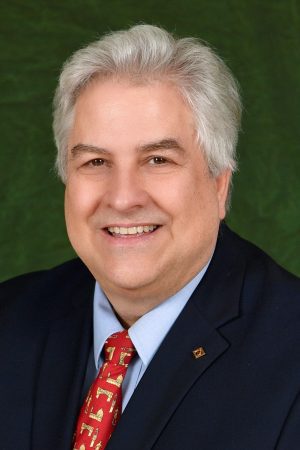
María del Carmen Benavides Cuéllar is a Professor at the Department of Electrical, Systems and Automation Engineering within the College of Industrial, Informatics and Aerospace Engineering at the University of Leon. Her research focuses on Systems Engineering and Automation, with particular emphasis on Cybersecurity, IoT Networks, Ontology-Based Knowledge Representation, and Intelligent Distributed Systems. Doctorate in Control Engineering (University of Leon, 2009) Currently leads research in Cybersecurity and IoT Her recent publications span topics from Cybersecurity in IoT 5G networks to Medical AI applications for Parkinson's disease severity analysis. She has contributed significantly to LiDAR-based navigation systems and Social Network Analysis in healthcare contexts. Key research areas include: Ontology-based knowledge representation for control engineering Distributed intelligent systems and middleware development Biomedical applications of deep learning Social media analysis using NLP techniques She has supervised multiple research projects at the intersection of Computer Science and Healthcare, with notable works in nursing management and adolescent alcohol consumption studies. Her lab SECOMUCI focuses on cybersecurity and knowledge management in cyber-physical systems.
Josep Maria Porta Pleite is an Associate Researcher at the Institut de Robòtica i Informàtica Industrial (IRI), a joint center of the Spanish National Research Council (CSIC) and Universitat Politècnica de Catalunya (UPC). He leads the Kinematics and Robot Design (KRD) research group and has been actively contributing to robotics and computational kinematics since 2007. His work bridges theoretical algorithm development and practical applications in robotics, molecular biology, and environmental toxicology. Porta’s research spans motion planning , robot kinematics , SLAM , and planning under uncertainty . He has made significant contributions to solving complex kinematic problems in closed-chain systems and molecular conformational spaces. His work often involves developing efficient algorithms and open-source software tools such as the CuikSuite , Cuik-KDtree , and Pose SLAM , which are widely used in robotics research. His recent publications (2019–2025) reveal a strong trend toward interdisciplinary applications, particularly in zebrafish behavioral analysis and neurotoxicology , where computational methods are applied to assess environmental contaminants. He also continues to advance core robotics problems, including trajectory optimization, hand-eye calibration, and closed-form solutions in rotation geometry. His work appears in top-tier journals such as IEEE Transactions on Robotics , Mechanism and Machine Theory , and Science of the Total Environment . Porta has served as an associate editor for IEEE Transactions on Robotics (2015–2018) and has supervised numerous students and collaborators. He has led long-term software development efforts and secured research funding through national and European projects. Scientific Contributions: Lead developer of the CuikSuite for motion analysis of closed-chain systems. Coordinator of the KRD research group since 2011. Contributor to ambient intelligence and robot localization during his postdoc at the University of Amsterdam. He advises multiple students in robotics, computer vision, and biomedical applications, and his team develops tools for path planning, singularity analysis, grasp optimization, and molecular modeling. There is no indication of part-time status, retirement, or former affiliation.
Jim Tørresen is a senior researcher at the Department of Informatics , University of Oslo , with a focus on Robotics , Artificial Intelligence , and Human-Robot Interaction . His work spans autonomous systems, machine learning applications, and ethical considerations in AI. Current Affiliation : University of Oslo, Norway Research Interests : Robotics for elderly healthcare and assistive technologies Machine learning in multimodal sensing and personalization Explainable AI and ethical user modeling Adaptive control systems and motion planning Embodied intelligence in creative domains like dance Recent Article Trends include AI-driven healthcare monitoring, social robotics for senior engagement, reinforcement learning in constrained environments, and computational creativity applications. His work emphasizes privacy preservation , real-time interaction , and human-centered design . Collaborations : Frequent collaborations with researchers like Kai Olav Ellefsen , Diana Saplacan Lindblom , and Charles Martin across EU projects and robotics conferences.
Shengkai Zhang is an active researcher with 26 publications and 444 citations spanning engineering, computer science, and environmental disciplines. His work demonstrates strong interdisciplinary collaboration through co-authorship with researchers like Kezhong Liu and Mozi Chen across multiple high-impact venues including IEEE conferences, arXiv, and specialized journals. His research interests center on Machine Learning applications in maritime systems , with significant contributions to Large Language Model integration for ship navigation, wireless sensing for bridge officer monitoring, and sensor fusion techniques. Additional expertise spans robotics perception (visual-inertial systems, mmWave radar enhancement), environmental modeling (urban energy systems, climate studies), and biomedical applications of traditional medicine. Recent work shows increasing focus on AI foundation models and their security implications. Zhang's publication trajectory reveals consistent output with accelerating impact since 2023, featuring 15+ papers in 2024 alone. His research clusters around three core themes: Maritime AI Systems (LLM navigation, track association, watchkeeping monitoring) Advanced Sensing Technologies (mmWave radar, Wi-Fi sensing, GNSS fusion) Environmental & Biomedical Applications (urban energy modeling, gut microbiome studies) These areas demonstrate both technical depth in signal processing/computer vision and practical focus on real-world engineering challenges.
Abdelhamid Tayebi is a Distinguished Professor and Research Chair in the Department of Electrical and Computer Engineering at Lakehead University. He also holds a courtesy professorship at Western University. His research focuses on control systems, autonomous navigation, and robotics, with applications to UAVs and multi-agent systems. Key roles include Graduate Coordinator and founder/director of the Robotics & Automatic Control Laboratory. Education: B.Sc. in Electrical Engineering, Ecole Nationale Polytechnique (1992) M.Sc. in Robotics, Université Pierre & Marie Curie (1993) Ph.D. in Robotics and Automatic Control, Université de Picardie Jules Verne (1997) Research Interests: Control systems theory, iterative learning control, autonomous vehicles, UAV navigation, hybrid feedback control, and nonlinear state estimation. His work emphasizes provable stability guarantees and real-world applications. Recent Articles Trends: Focus on hybrid control for obstacle avoidance, distributed estimation in multi-agent systems, and nonlinear observers for inertial navigation. Publications span IEEE Transactions on Automatic Control , Automatica , and robotics conferences like CDC and ACC. Awards: 2024 Distinguished Instructor Award (Lakehead University's top teaching honor) 2023 IEEE Fellow and EIC Fellow NSERC Discovery Accelerator Supplements (2013) Top 2% Highly Cited Scientist (Stanford, 2019–) Students & Labs: Advised over 20 PhD/MSc students and postdocs. Current research group includes postdocs Mayur Sawant (autonomous robotics) and Ishak Cheniouni (navigation algorithms). Notable former students include Miaomiao Wang (geometric observers) and Mouaad Boughellaba (multi-agent systems). Grants & Editorial Work: Holder of NSERC grants and Lakehead Research Chairs (2012–2027). Associate Editor for Automatica , IEEE Transactions on Control Systems Technology , and others. Active in reviewing for top journals/conferences.
Associate Professor Jinling Wang is an academic at the University of New South Wales (UNSW), affiliated with the School of Civil Engineering and the Department of Civil Engineering. Her research focuses on geospatial mapping and navigation, including Global Navigation Satellite Systems (GNSS), Inertial Navigation Systems (INS), and multi-sensor integration for applications in autonomous vehicles and high-definition mapping. She has supervised 22 PhD and 6 Master’s students, seven of whom won prestigious international awards during their studies. Her awards include being named on the World’s Top 2% Scientists List from 2020 to 2024 and recognized as Australia’s Research Leader in 'Radar, Positioning, and Navigation' multiple times. She leads projects such as the UNSW Engineering Goldstar Award 2024 Research Grant and the UNSW-Tsinghua Collaborative Research Seed Project. Dr. Wang’s research trends emphasize ionospheric analysis, robust positioning algorithms, and sensor fusion for autonomous systems. Her articles span disciplines like atmospheric science, data science, and geomatics engineering, addressing challenges in GNSS reliability and real-time navigation integrity. Her advisory and grants section highlights her role in advancing autonomous vehicle technologies and HD mapping. She is part of research teams utilizing advanced facilities at UNSW’s Mark Wainwright Analytical Centre and collaborates on global navigation challenges.
Professor Peter D. Lawrence holds a faculty position at the University of British Columbia (UBC) within the Department of Electrical & Computer Engineering, part of the Faculty of Applied Science. He has been a Professor since 1974 and has held visiting research roles at Chalmers University of Technology (1970-1972) and MIT (1972-1974). His educational background includes a B.A.Sc. from the University of Toronto (1965), M.Sc. from the University of Saskatchewan (1967), and Ph.D. from Case Western Reserve University (1970). He is a Professional Engineer (P.Eng.) and Fellow of the Canadian Academy of Engineering (FCAE). Research interests focus on improving human-machine interfaces, sensor technologies for control systems, and medical robotics. Key areas include teleoperation of heavy machinery, vision-based control, EEG-based brain interfaces, and functional approximation methods for complex systems. Collaborations span multiple disciplines at UBC, including Mechanical Engineering, Computer Science, Mining Engineering, and Forestry, with funding from NSERC and PRECARN/IRIS. Medical Robotics: Brain-computer interfaces and ultrasound-guided surgery. Autonomous Systems: Path planning and vision-based tracking for excavators and haul trucks. Sensing Technologies: Eye-tracking, joint-angle sensors, and slip detection for mobile robots. His teaching contributions include coordinating the Project Integrated Program (PIP) for ECE students and co-developing the interdisciplinary New Venture Design course with the Sauder School of Business. He leads the RCL Lab and has authored books on real-time microcomputer systems and contributed to IEEE publications. Awards include recognition as a Fellow of the Canadian Academy of Engineering.
Frederike Dümbgen is an incoming Assistant Professor in the Department of Mechanical Engineering at Carnegie Mellon University's College of Engineering, starting in Spring 2026. She is currently a researcher with the Willow team at Inria Paris, focusing on optimization for robotics, and previously served as a postdoctoral fellow at the University of Toronto's Robotics Institute. Education: Ph.D. in Computer and Communication Sciences, École Polytechnique Fédérale de Lausanne (EPFL), Switzerland (2021) M.Sc. in Mechanical Engineering, EPFL (2016) B.Sc. in Mechanical Engineering, EPFL (2013) Her research centers on improving the efficiency and safety of robots operating in the physical world through principled optimization and machine learning methods. She emphasizes certifiable and globally optimal algorithms to build reliable foundations for next-generation robotics in domains such as autonomous vehicles, assistive technology, and manufacturing. Her work bridges robotics, control systems, and artificial intelligence, with a strong focus on mathematical rigor and scalability. The 15 most recent publications highlight a consistent trajectory in robotics-focused optimization, particularly in state estimation, SLAM, pose estimation, and data-driven methods. These works frequently employ semidefinite programming, convex relaxations, and Koopman-based linearization, demonstrating a deep integration of theoretical optimization with practical robotic applications. Keywords across these papers include robotics, optimization, machine learning, and estimation, with subfields like certifiable algorithms, global optimality, and sensor fusion recurring throughout. Dr. Dümbgen has not yet had scientific awards listed in the provided text. She has not yet advised any named students in the provided materials, and there is no mention of grants or funding sources. However, her research trajectory and publication record suggest active involvement in competitive research environments. Her experience includes internships at Disney Research and ABB, and her master’s thesis was completed at ETH Zürich’s Autonomous Systems Lab. She is currently affiliated with the Willow research team at Inria Paris, a group known for foundational work in computer vision, machine learning, and robotics. This team emphasizes mathematical rigor in algorithm design, aligning closely with her focus on certifiable and globally optimal methods.
Aaron Johnson is a Professor in the Department of Mechanical Engineering at Carnegie Mellon University's College of Engineering, where he directs the Robomechanics Lab . He also holds courtesy appointments in the Robotics Institute and the Department of Electrical & Computer Engineering. His research focuses on enabling robots to operate robustly in complex, real-world environments through innovations in robot design, control, and interaction dynamics. Ph.D., Electrical & Systems Engineering, University of Pennsylvania (2014) B.S., Electrical & Computer Engineering, Carnegie Mellon University (2008) Johnson’s research interests lie at the intersection of legged robotics, adaptive control, bioinspired design, and physics-based planning . He investigates how robots can intelligently interact with unstructured environments—such as rocky terrain, cluttered homes, or industrial sites—by integrating mechanical design, sensor feedback, and intelligent control. His lab develops platforms like Zippy (the world’s smallest bipedal robot) and Picotaur , and works on dynamic behaviors including climbing, jumping, and navigating entanglements. The most recent publications highlight a strong trend in hybrid dynamical systems, robust state estimation, terrain-aware navigation, and ethical considerations in robotics . His group advances techniques in contact-implicit control, MPC, Kalman filtering for hybrid systems, and field deployment of autonomous robots for environmental monitoring. Themes of scalability, energy efficiency, and bioinspiration recur across the work. Johnson has received several prestigious awards: NSF CAREER Award (2020) Army Research Office Young Investigator Award (2019) Best Workshop Paper Award at ICRA 2022 (Quad-SDK) David Thuma Laboratory Project Award (2008) Honorable mention, CRA Outstanding Undergraduate Award (2008) He actively mentors students through his graduate course 24-775 Robot Design & Experimentation and lab outreach programs, including partnerships with Gwen’s Girls. He has secured grants for fielding legged robots in real-world applications, such as soil contamination sampling and hill climbing. Johnson co-organizes the CMU Locomotion Seminar and is committed to diversity, equity, and inclusion in robotics, co-authoring the Black in Robotics Reading List and advocating for ethical research practices. The Robomechanics Lab emphasizes ethical research, academic reform, equitable access, and community support. It develops full-stack frameworks like Quad-SDK and conducts field experiments in diverse environments—from deserts to power plants—pushing the boundaries of where robots can go and what they can do.
Davide Amato is an Assistant Professor in Spacecraft Engineering at the Department of Aeronautics, Faculty of Engineering at Imperial College London. He leads the Computational Astrodynamics (COAST) research group focused on developing advanced computational methods to enhance space situational awareness and satellite dynamics analysis. His work emphasizes error correction in orbital data, machine learning applications for space systems, and sustainable space operations. Education: PhD from Technical University of Madrid (2017), MSc and BSc from University of Naples Federico II (2013, 2009). Prior positions include Postdoctoral roles at University of Arizona and University of Colorado Boulder. Research interests include astrodynamics, space debris mitigation, orbit propagation, and computational methods. His group develops algorithms for satellite maneuver reconstruction, error-bounded orbit prediction, and scientific machine learning applications in space systems. Recent work addresses challenges in space catalog accuracy and collision avoidance through advanced mathematical techniques. He actively supports PhD applications for computational astrodynamics research via Imperial's President's PhD scholarships. His research spans applied mathematics, aerospace engineering, and interdisciplinary collaborations with the Space Lab and Artificial Intelligence Network at Imperial.
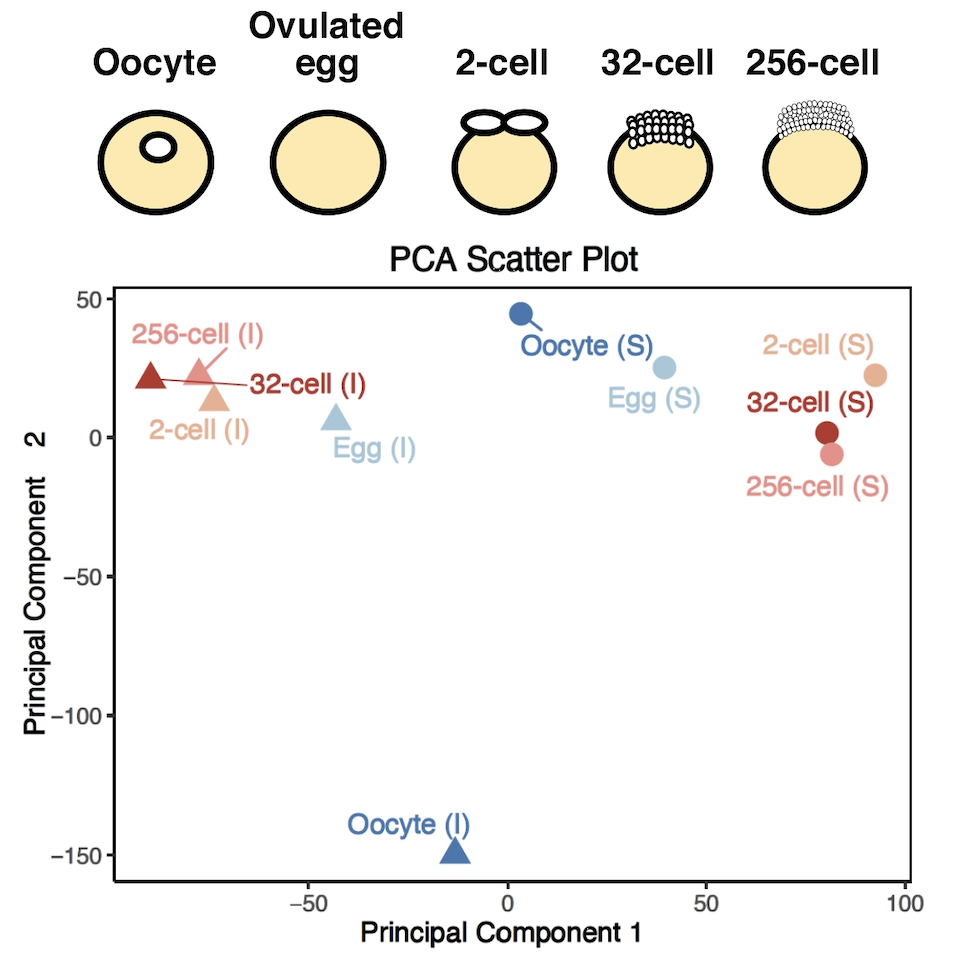
Jing Yang is a Professor of Comparative Biosciences at the University of Illinois at Urbana-Champaign, affiliated with the Carl R. Woese Institute for Genomic Biology. She holds dual roles within the College of Liberal Arts & Sciences and School of Molecular & Cellular Biology. Her research focuses on cytoplasmic structure dynamics, developmental biology, reproductive systems, and RNA mechanisms, alongside interdisciplinary work in robotics and medical imaging. Research Interests: Yang’s biological research explores germ plasm dynamics in vertebrate development, RNA phase transitions, and reproductive cell biology. Her robotics work integrates vision-guided systems, surgical navigation, and human-robot interaction, with applications in precision agriculture and medical robotics. Key themes include adaptive control, SLAM algorithms, and immersive learning frameworks. Recent Trends: Articles emphasize robotics advancements (e.g., telerobotics, SLAM systems) and biological studies on Xenopus and zebrafish embryology. Cross-disciplinary projects bridge molecular mechanisms with engineering solutions, such as robotic platforms for strawberry harvesting and AI-enhanced surgical tools. Labs & Teams: The Yang lab develops technologies at the intersection of biology and robotics. Ongoing projects include automated micromanipulation systems and educational frameworks for engineering curricula. Collaborations span departments in genomic sciences, mechanical engineering, and computer vision.
George Wolberg is a Professor of Computer Science at the City College of New York (CCNY), affiliated with the Computer Engineering program. His research focuses on computer graphics, image processing, 3D modeling, and multimedia surveillance, with contributions to digital image warping, feature extraction, and algorithmic art. He holds an office at North Academic Center 8/202G and can be reached at wolberg@ccny.cuny.edu. Over his career, Wolberg has explored interdisciplinary applications such as medical imaging for hypertension analysis and robotic page-turning mechanisms for musicians. His work bridges theoretical foundations with practical implementations, including contributions to 3D urban modeling and sensor fusion systems. Notable trends in his publications include advancements in 3D reconstruction techniques (e.g., RGB-D camera calibration), interactive media systems (e.g., smart picture frames), and medical imaging applications. His research also extends to educational resources like Introduction to Image Processing . No scientific awards or major grants were explicitly listed in the provided materials. While no formal advisees are documented here, his extensive publication record reflects collaborative research efforts in computer vision and graphics.
Jim Conrad is a Professor and Associate Chair of Undergraduate Programs in the Department of Electrical and Computer Engineering at the University of North Carolina at Charlotte (UNC Charlotte). He also serves as Program Coordinator for Computer Engineering. His affiliations include the William States Lee College of Engineering and IEEE, where he held leadership roles such as IEEE Board of Directors (Region 3 Director) and IEEE-USA President. Conrad holds a Ph.D. in Computer Engineering from North Carolina State University (1992), an M.S. (1987), and a B.S.C.S. from the University of Illinois (1984). His research focuses on embedded systems, robotics, parallel processing, and engineering education. Notable projects include the ZapataBot autonomous robotic ATV, spanning phases from mechanical integration to autonomous navigation. He is the author of influential books like Embedded Systems: An Introduction Using the Renesas RX63N Microcontroller and Stiquito(tm) for Beginners . Conrad’s professional contributions extend to IEEE leadership, teaching, and industry collaborations. He advises students in graduate programs and has led initiatives like summer robotics workshops for educators. His work bridges academic research with practical applications in autonomous systems and STEM education.
Luis Enrique Moreno Lorente is a Full Professor in the Department of Systems Engineering and Automation at Carlos III University of Madrid, where he leads research in the Robotics Lab. He is affiliated with the Pedro Juan de Lastanosa Institute of Technology Development and Innovation and the Research Institute for Higher Education and Science (INAECU). Research Focus: Robotics, Soft Robotics, Control Systems, and Human-Machine Interaction Key Applications: Neurorehabilitation, Unmanned Aerial Vehicles, and Industrial Automation Research Trends in his recent work include: Soft robotic actuators using Shape Memory Alloys (SMA) Advanced path planning for UAV teams and Mars rovers Integration of Gaussian processes and evolutionary algorithms Wearable rehabilitation devices controlled by sEMG signals Mechanical design optimization for high-displacement actuators Supervised Theses cover topics like Global localization algorithms Evolutionary optimization techniques Intelligent actuator systems Cerebral palsy rehabilitation robotics Key Grants include projects funded by the European Commission, Arquimea Aerospace, and Spanish government initiatives in robotics and rehabilitation.
Salvador Pane is a Professor at ETH Zurich's Department of Mechanical and Process Engineering within the Institute of Robotics and Intelligent Systems. His research focuses on developing advanced medical robotics systems, particularly magnetic navigation technologies for minimally invasive procedures. His research expertise spans Medical Robotics , Magnetic Actuation Systems , and Shape Memory Polymers , with emphasis on targeted drug delivery, catheter navigation, and variable stiffness mechanisms. Key innovations include electromagnetically guided microcatheters, human-scale clinical navigation systems, and programmable magnetic cilia for fluid control. His publication portfolio demonstrates strong trends in translational medical robotics with 8 high-impact publications between 2020-2024 in journals including Advanced Science , Nature Communications , and IEEE Transactions on Robotics . Work frequently addresses clinical implementation challenges in electromagnetic navigation and biomaterial integration. Pane leads collaborative research with significant clinical relevance, evidenced by news coverage of multiple publications. His team has developed clinically ready systems for magnetic particle injection and human-scale navigation, with research picked up by multiple news outlets and demonstrating strong Mendeley readership. Current work centers on the Robotic Materials Lab at ETH Zurich, focusing on electromagnetic navigation systems, variable stiffness catheters, and magnetic swarm control. The lab maintains strong industry and clinical partnerships for translating robotic technologies into medical practice.