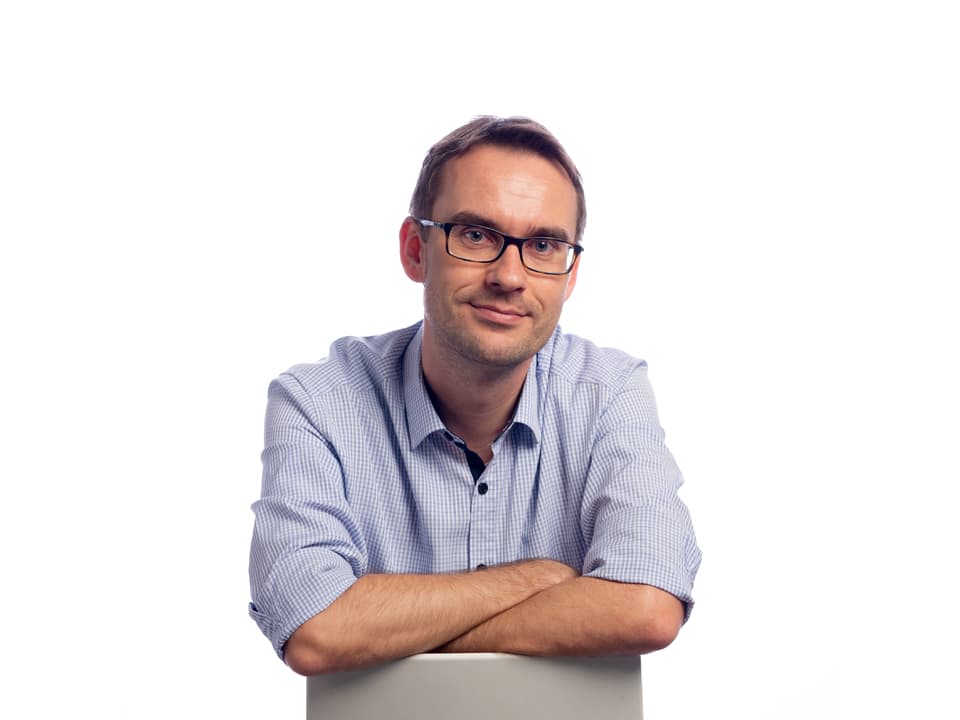
Dr. Maryam Haghighat is a Lecturer at QUT's School of Electrical Engineering & Robotics, specializing in Machine Learning, Computer Vision, and Robotics. She holds a PhD from UNSW's School of Electrical Engineering and Telecommunications, where her thesis earned the 2020 UNSW Award for Outstanding Doctoral Thesis. Her postdoctoral research at the University of Oxford's Big Data Institute (2020–2022) focused on medical image analysis for the PathLAKE project. Currently, she leads AI projects with over $10M in funding, including ARC grants and industry collaborations. Her research spans applications in robotics, healthcare, and remote sensing. Notable contributions include developing machine learning algorithms for histopathology image analysis and robust multi-robot localization systems. Awards include the UNSW Doctoral Thesis Award (2020). She actively supervises PhD students in topics like multimodal fusion and 3D visual understanding. Publications highlight advancements in AI-driven medical imaging, hyperspectral transformers, and illumination-aware video compression. Her work bridges theoretical machine learning with practical applications in healthcare, robotics, and environmental monitoring.
Professor Niko Suenderhauf is a leading researcher in robotic vision and AI at Queensland University of Technology (QUT). He focuses on enabling robots to understand and interact with their environment through advancements in SLAM, scene understanding, and semantic mapping. His work bridges robotics, computer vision, and machine learning, aiming to create reliable, relatable, and sustainable robotic systems that collaborate with humans to address societal challenges like climate change and aging populations. His key achievements include pioneering graph-based SLAM methods integrated into the ROS ecosystem, developing object-based semantic SLAM systems, and demonstrating the efficacy of deep learning for place recognition. Collaborations with institutions like DeepMind and Amazon reflect his interdisciplinary approach. Awards include recognition for groundbreaking SLAM research and highly cited publications. Research interests emphasize open-world navigation, privacy-preserving vision, and embodied AI, with a focus on practical applications in construction, environmental monitoring, and domestic robotics. His work on uncertainty quantification and robust perception ensures systems operate safely in unpredictable environments. Professor Suenderhauf actively engages in education, mentoring students across undergraduate and postgraduate levels, and emphasizes the societal impact of technology through collaborations with neuroscience, law, and design experts.
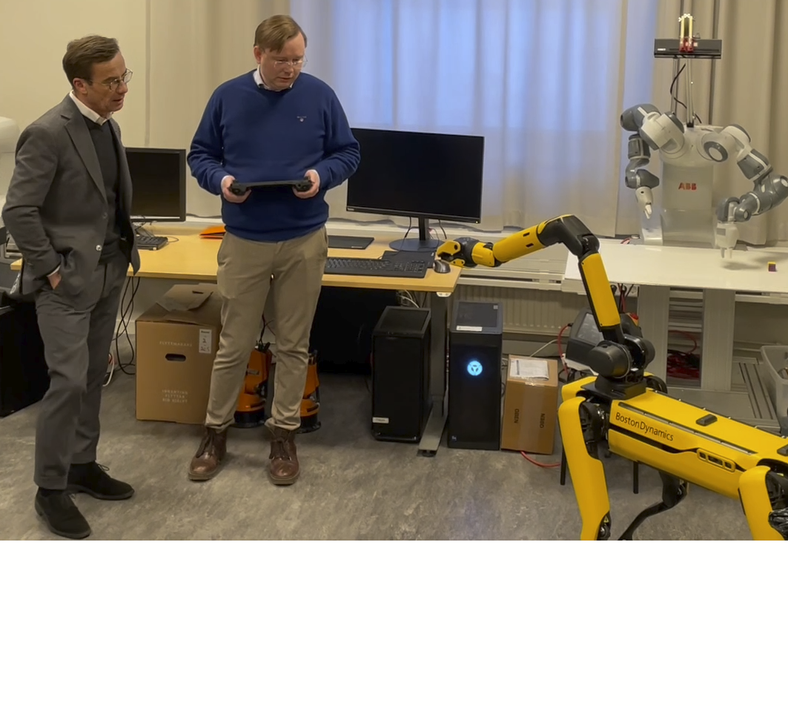
Olov Andersson is an Assistant Professor and WASP Fellow in AI for Autonomous Systems at KTH Royal Institute of Technology, leading the Division of Robotics, Perception and Learning. His research focuses on Embodied AI for autonomous robots and vehicles, combining advancements in Vision-Language Models (VLM), Large Language Models (LLM), and real-world navigation challenges. Key projects include the DARPA SubT Challenge-winning team CERBERUS and the EU H2020 Heron project for robotic road repair. He supervises multiple PhD students and postdocs, including Timon Homberger, Finn Lukas Busch, and Jesper Eriksson. Research interests emphasize full-stack autonomy in dynamic environments, including planning, mapping, and navigation. Notable contributions include the OneMap real-time open-vocabulary mapping system and self-supervised scene flow methods like Seflow. He has been recognized for technical leadership in autonomous systems through awards like the WASP Fellowship. Professional activities include co-chairing the 2024 IROS workshop on robot perception in dynamic environments and advising the Swedish Prime Minister’s AI initiative. Teaching roles span multiple graduate courses in machine learning, robotics, and systems engineering at KTH.
Josep Maria Porta Pleite is an Associate Researcher at the Institut de Robòtica i Informàtica Industrial (IRI), a joint center of the Spanish National Research Council (CSIC) and Universitat Politècnica de Catalunya (UPC). He leads the Kinematics and Robot Design (KRD) research group and has been actively contributing to robotics and computational kinematics since 2007. His work bridges theoretical algorithm development and practical applications in robotics, molecular biology, and environmental toxicology. Porta’s research spans motion planning , robot kinematics , SLAM , and planning under uncertainty . He has made significant contributions to solving complex kinematic problems in closed-chain systems and molecular conformational spaces. His work often involves developing efficient algorithms and open-source software tools such as the CuikSuite , Cuik-KDtree , and Pose SLAM , which are widely used in robotics research. His recent publications (2019–2025) reveal a strong trend toward interdisciplinary applications, particularly in zebrafish behavioral analysis and neurotoxicology , where computational methods are applied to assess environmental contaminants. He also continues to advance core robotics problems, including trajectory optimization, hand-eye calibration, and closed-form solutions in rotation geometry. His work appears in top-tier journals such as IEEE Transactions on Robotics , Mechanism and Machine Theory , and Science of the Total Environment . Porta has served as an associate editor for IEEE Transactions on Robotics (2015–2018) and has supervised numerous students and collaborators. He has led long-term software development efforts and secured research funding through national and European projects. Scientific Contributions: Lead developer of the CuikSuite for motion analysis of closed-chain systems. Coordinator of the KRD research group since 2011. Contributor to ambient intelligence and robot localization during his postdoc at the University of Amsterdam. He advises multiple students in robotics, computer vision, and biomedical applications, and his team develops tools for path planning, singularity analysis, grasp optimization, and molecular modeling. There is no indication of part-time status, retirement, or former affiliation.
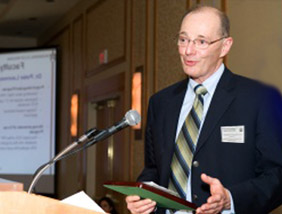
Professor Peter D. Lawrence holds a faculty position at the University of British Columbia (UBC) within the Department of Electrical & Computer Engineering, part of the Faculty of Applied Science. He has been a Professor since 1974 and has held visiting research roles at Chalmers University of Technology (1970-1972) and MIT (1972-1974). His educational background includes a B.A.Sc. from the University of Toronto (1965), M.Sc. from the University of Saskatchewan (1967), and Ph.D. from Case Western Reserve University (1970). He is a Professional Engineer (P.Eng.) and Fellow of the Canadian Academy of Engineering (FCAE). Research interests focus on improving human-machine interfaces, sensor technologies for control systems, and medical robotics. Key areas include teleoperation of heavy machinery, vision-based control, EEG-based brain interfaces, and functional approximation methods for complex systems. Collaborations span multiple disciplines at UBC, including Mechanical Engineering, Computer Science, Mining Engineering, and Forestry, with funding from NSERC and PRECARN/IRIS. Medical Robotics: Brain-computer interfaces and ultrasound-guided surgery. Autonomous Systems: Path planning and vision-based tracking for excavators and haul trucks. Sensing Technologies: Eye-tracking, joint-angle sensors, and slip detection for mobile robots. His teaching contributions include coordinating the Project Integrated Program (PIP) for ECE students and co-developing the interdisciplinary New Venture Design course with the Sauder School of Business. He leads the RCL Lab and has authored books on real-time microcomputer systems and contributed to IEEE publications. Awards include recognition as a Fellow of the Canadian Academy of Engineering.
Davide Amato is an Assistant Professor in Spacecraft Engineering at the Department of Aeronautics, Faculty of Engineering at Imperial College London. He leads the Computational Astrodynamics (COAST) research group focused on developing advanced computational methods to enhance space situational awareness and satellite dynamics analysis. His work emphasizes error correction in orbital data, machine learning applications for space systems, and sustainable space operations. Education: PhD from Technical University of Madrid (2017), MSc and BSc from University of Naples Federico II (2013, 2009). Prior positions include Postdoctoral roles at University of Arizona and University of Colorado Boulder. Research interests include astrodynamics, space debris mitigation, orbit propagation, and computational methods. His group develops algorithms for satellite maneuver reconstruction, error-bounded orbit prediction, and scientific machine learning applications in space systems. Recent work addresses challenges in space catalog accuracy and collision avoidance through advanced mathematical techniques. He actively supports PhD applications for computational astrodynamics research via Imperial's President's PhD scholarships. His research spans applied mathematics, aerospace engineering, and interdisciplinary collaborations with the Space Lab and Artificial Intelligence Network at Imperial.
Antoni Grau Saldes is a Professor at the Department of Systems, Automation and Industrial Informatics at the Escola d'Enginyeria de Barcelona Est (EEBE), Universitat Politècnica de Catalunya (UPC). He is a member of the UPC VIS - Artificial Vision and Intelligent Systems research group, focusing on robotics, computer vision, and automation. His academic background includes a Licentiate and a Doctorate in Informatics. University: Universitat Politècnica de Catalunya School: Escola d'Enginyeria de Barcelona Est (EEBE) Department: Department of Systems, Automation and Industrial Informatics Research Group: UPC VIS - Artificial Vision and Intelligent Systems His research interests center on autonomous robotics, robot navigation, robotic sensing, and computer vision. He has extensively contributed to Simultaneous Localization and Mapping (SLAM), UAV navigation, industrial robotics, and environmental monitoring applications. His work integrates sensor fusion, real-time control, and deep learning techniques for robotic perception and decision-making. His recent publications show a strong trend in applying computer vision and robotics to environmental and urban challenges, such as autonomous last-mile delivery, wildfire smoke detection, underwater and aerial image enhancement, and robotic solutions for wastewater and urban infrastructure. The research spans from theoretical advancements in SLAM and sensor fusion to practical implementations in agriculture, urban logistics, and environmental protection. A significant portion of his work involves collaboration with other experts in autonomous systems and intelligent control. Premiada Index h 17.0 Antoni Grau Saldes has supervised several doctoral students and has been involved in numerous competitive R+D+i projects. His collaborations span across multiple research groups at UPC, including robotics, intelligent control, and environmental technologies. He has contributed to educational innovation in robotics engineering, developing simulators and pedagogical tools for higher education. He has also participated in scientific committees of international conferences, supporting academic dissemination in robotics and pattern recognition. He leads and participates in research labs and teams focused on intelligent systems and robotics, particularly the UPC VIS group, which works on vision-based robotic applications. His projects often involve multi-institutional and European collaborations, especially in the context of urban mobility, sustainable development, and industrial automation.
Stjepan Bogdan is a Full Professor at the Department of Control and Computer Engineering, Faculty of Electrical Engineering and Computing (FER), University of Zagreb. His work bridges advanced robotics, control systems, and manufacturing innovation. Key research areas: UAV control, multi-agent coordination, and fuzzy logic applications Active in simulator-based development (e.g., X-Plane, USARSim, Simulink) Research focuses on: Dynamic UAV control systems (magnetic field localization, moving mass control) Swarm robotics and decentralized coordination protocols Flexible manufacturing system optimization His publications show strong emphasis on practical implementations in: Maritime and GNSS-denied environments Human-in-the-loop aerial systems Industrial automation with autonomous vehicles
Yu David Liu is a Professor at the School of Computing, State University of New York at Binghamton. He received his Ph.D. from Johns Hopkins University under Scott Smith. Research interests include Software Systems Energy Efficiency Reliability Performance Optimization Security Unmanned Aerial Vehicles Data-Intensive Software Side-Channel Attack Mitigation His work spans runtime systems, compilers, and programming languages for cross-cutting concerns. Key trends in recent publications: 2025-2024 focus on TEE security , UAV regulation , and energy-aware data processing . Earlier works explore secure caches , Green JVM methods , and SLAM system bottlenecks . Scientific Awards NSF CAREER Award (2010) Google Faculty Research Award (2011) Outstanding Research Achievement Award (2018, SUNY Binghamton CS Dept) Outstanding Research Achievement Award (2019, Watson School) Advising: Mentored 11 Ph.D. students (including 2025 Distinguished Dissertation Award winner Timur Babakol) and 14 M.S./B.S. students. Current advisees include Kerem Arikan (Ph.D.), Joseph Raskind (Ph.D.), and Huaxin Tang (Ph.D.). Grants: Funded by NSF awards 2053391 and 2215016 . Former NSF grants include 1910532, 1815949, and 1823260. Labs: Leads the programming language group at SUNY Binghamton, collaborating on UAV software (JCopter, ICRA'21), energy-efficient systems (Vesta, PLDI'24), and security (TEE-SHirT, NDSS'24).
Lukas Luft is a postdoctoral researcher at the Autonomous Intelligent Systems group within the Department of Computer Science at the University of Freiburg. His work spans robotics and quantum physics, focusing on probabilistic methods for robot localization, multi-robot systems, and causal inference. Post Doc (2020–present) PhD in Computer Science, University of Freiburg (2020) Master and Bachelor in Physics, RWTH Aachen and University of Freiburg His research in Robot Localization and Mapping includes advanced probabilistic techniques like Bayes filters, decentralized algorithms for multi-robot systems, and change detection in environments using full posterior distributions. He also explores Causality and Foundations of Quantum Physics , applying entropic inequalities and information theory to causal discovery and non-locality. The articles highlight his contributions to robotics, particularly in sensor modeling for Lidar, simultaneous localization and mapping (SLAM), and efficient probabilistic methods. In quantum physics, his work addresses causal structures and entropic information, bridging AI with foundational physics. Luft has collaborated with leading researchers, including Prof. Wolfram Burgard and Bernhard Schölkopf, and contributed to key conferences like Robotics: Science and Systems (RSS) and IEEE IROS.
Joaquim Agullo Batlle is a Professor at the Universitat Politècnica de Catalunya (UPC), affiliated with the Department of Mechanical Engineering at the Barcelona School of Industrial Engineering (ETSEIB). His research focuses on musical acoustics, percussive dynamics, automatic guidance systems, and omnidirectional wheel design. He has authored numerous publications and collaborated on projects related to multibody dynamics, robotics, and vibration analysis. His academic career includes over 295 documented activities, spanning research articles, book chapters, and contributions to conferences. Notable works include studies on rigid body dynamics, impact scenarios in mechanical systems, and acoustic analysis of musical instruments. He has also contributed to educational materials, such as textbooks on mechanical engineering and vibration theory. Agullo Batlle’s research has addressed practical applications like robot calibration, mobile localization, and the design of orthotic devices for spinal injury patients. His work frequently intersects engineering mechanics with interdisciplinary fields like acoustics and mechatronics.
Cédric Buche is a Professor at the National Engineering School of Brest (ENIB) in France and serves as the R&D Director at Naval Group Pacific in Australia. He holds honorary adjunct professorships at the University of Adelaide and Flinders University, contributing to international research collaborations through his work at CNRS's International Research Lab "CROSSING" in Australia. His research spans artificial intelligence, robotics, and virtual reality, with a focus on adaptive systems and human-robot interaction. He has led projects like RoboCup@Soccer and CHAMELEON2, integrating machine learning with real-world applications in navigation, perception, and decision-making. Buche teaches interactive machine learning at ENIB, emphasizing robot programming via hands-on projects using ROS 2. Students engage in coding exercises involving sensory-motor control, SLAM, and line-following algorithms, applying principles of PID control and computer vision with OpenCV.
Robin Dietrich is a Researcher at the Department of Informatics 6 - Chair of Robotics, Artificial Intelligence and Real-time Systems at the Technical University of Munich . His work bridges computational neuroscience and robotics, focusing on translating neural mechanisms from mammalian brains into algorithms for mobile robot navigation. B.Sc. and M.Sc. in Computer Science Research on hippocampal temporal dynamics for neuromorphic SLAM Specializes in spiking neural networks for navigation and radar processing Research Interests : Robin's research explores the intersection of robotics, artificial intelligence, and computational neuroscience . His work specifically investigates spiking neural networks, FMCW radar data processing, and neuromorphic algorithms for autonomous systems. Recent projects focus on uncertainty quantification, evolutionary optimization, and multi-robot exploration using biologically inspired models. Publication Trends : Robin's publications (2019-2025) demonstrate a consistent focus on neuromorphic computing for robotic perception , with increasing specialization in spiking neural networks for radar processing and biologically inspired navigation algorithms . Key collaborations include contributions to multi-robot exploration metrics and hardware acceleration frameworks. Teaching Contributions : Robin has taught Digital Signal Processing and Real-Time Systems lectures since 2019, co-led seminars on Bio-inspired Data Processing , and supervised practical courses on Intelligent Mobile Robots using ROS.
David Mansfield serves as a Research Associate and Associate Lecturer at Lancaster University's School of Engineering while completing his PhD. His work integrates deep learning with robotics and environmental science to solve real-world sensing challenges. Research Focus Specializing in AI-driven environmental monitoring and speech processing , his research emphasizes: Automatic speech separation using advanced deep learning architectures Cooperative robotic mapping in GPS-denied environments via Gaussian process regression Unifying reinforcement learning with active sensing for adaptive environmental data collection Publication Trends His 2024 publications reveal a strategic convergence of robotics and environmental AI—combining Gaussian process regression for physical navigation challenges with reinforcement learning frameworks for optimal sensing strategies. This dual-track approach bridges theoretical machine learning with field-deployable environmental monitoring systems. Research Affiliation Mansfield contributes to Lancaster's Centre of Excellence in Environmental Data Science, focusing on data-driven solutions for ecological monitoring and sustainable resource management.
Pascual Campoy Cervera is a Full Professor at the Universidad Politécnica de Madrid (UPM) and holds visiting professor positions at Delft University of Technology, Tongji University, and Queensland University of Technology. His work focuses on Control Systems , Machine Learning , and Computer Vision for Unmanned Aerial Vehicles (UAVs) . As Principal Investigator of the Computer Vision and Aerial Robotics group at UPM's Center for Automation and Robotics (CAR), he has led over 40 R&D projects with European, national, and industrial funding. Current affiliations: UPM, TU Delft, CAR-UPM Research themes: UAV autonomy, swarm robotics, embedded vision systems His research integrates cutting-edge technologies in image processing, control theory, and artificial intelligence to enhance UAV capabilities in unstructured environments. Recent projects include: Autonomous firefighting systems High-speed drone racing frameworks Swarm-based solar farm inspection Thrust vectoring for heavy UAVs Notable scientific awards include multiple international prizes at UAV competitions (IMAV12–17). His team has developed the Aerostack and Aerostack2 frameworks for aerial robotics, which address execution control, mission planning, and sensor fusion challenges.