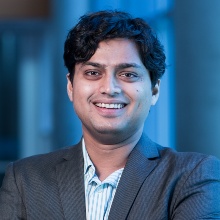
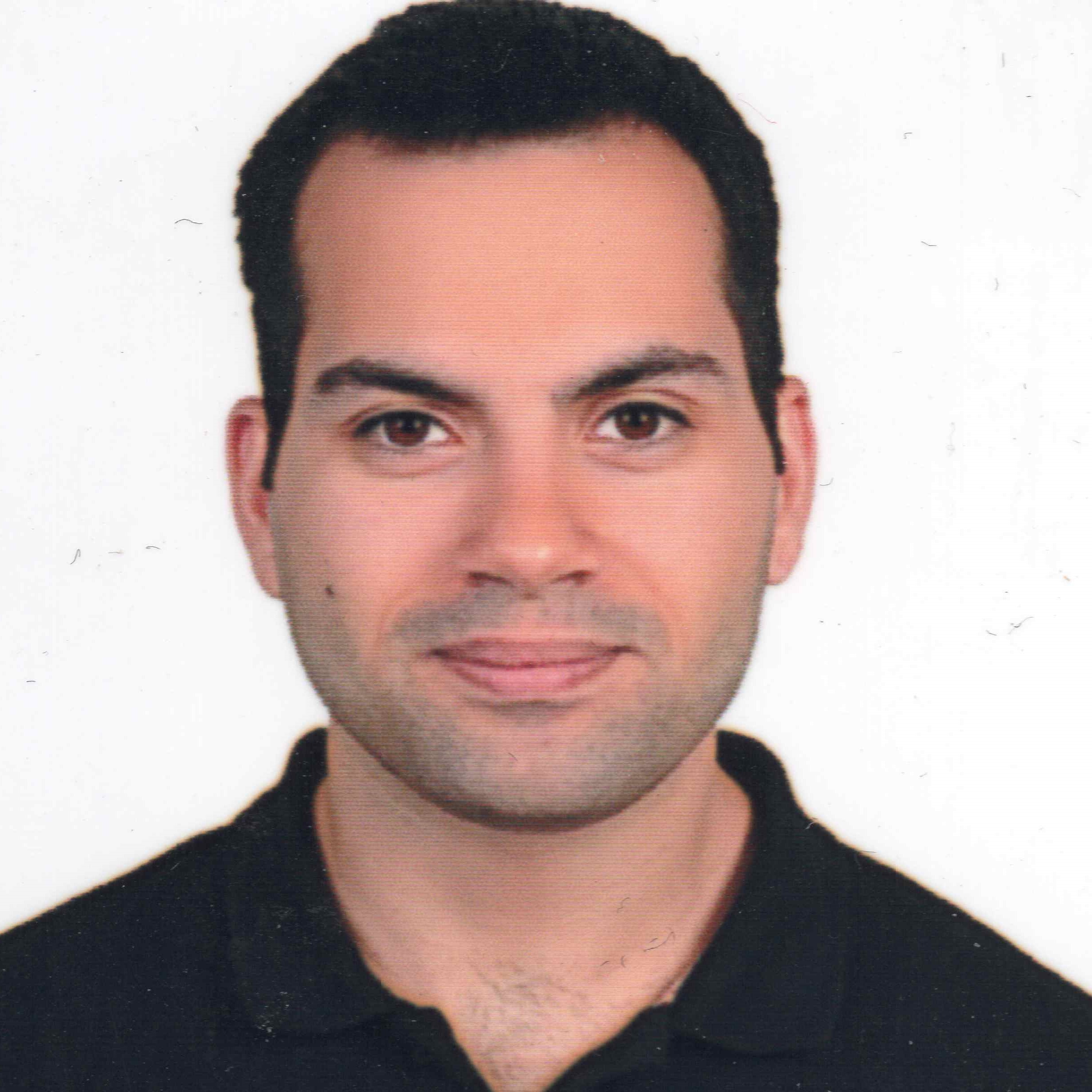
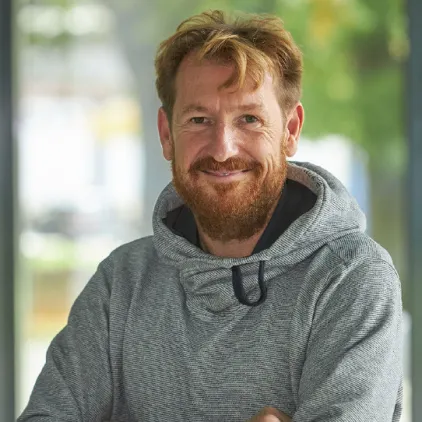
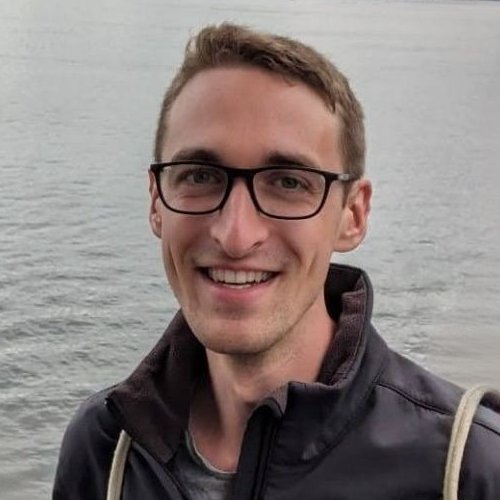
Giorgio Grisetti is a full professor at Sapienza University of Rome, affiliated with the Department of Systems and Computer Science. He is a member of the RoCoCo lab at Sapienza since 2010 and the Autonomous Intelligent Systems Lab at Freiburg University (headed by Wolfram Burgard). His research focuses on mobile robotics, including SLAM, localization, and path planning. He holds a PhD in Computer Engineering from Sapienza (2006), advised by Daniele Nardi, and a M.Sc. in Computer Engineering from the same institution (2001). Education: PhD in Computer Engineering, Sapienza University of Rome (2006) M.Sc. in Computer Engineering, Sapienza University of Rome (2001) Research interests emphasize probabilistic methods for robotics, with a focus on SLAM using Rao-Blackwellized particle filters. His work spans theoretical and applied robotics, contributing to navigation systems for autonomous robots. Collaborations include Freiburg University’s lab, where he conducted postdoctoral research since 2006.
Prof. Dr.-Ing. Darius Burschka is a Professor of Robotics, Artificial Intelligence, and Embedded Systems at Technische Universität München (TUM), specifically within the TUM School of Computation, Information and Technology. He leads the Professorship of Robotics, Artificial Intelligence and Embedded Systems and collaborates closely with the German Aerospace Center (DLR). His academic career includes postdoctoral research at Yale University (1998), associate research scientist and assistant research professor roles at Johns Hopkins University (1999-2005), and has been at TUM since 2005. His research focuses on sensor systems in robotics, human-machine interfaces, video-based navigation, and 3D reconstruction. Notable contributions include advancements in laser-based map generation, monocular navigation algorithms, and endoscopic image registration for medical applications. Prof. Burschka has received awards such as the Airtec 2010 Silver Award and best paper awards from prominent conferences like IROS and MICCAI. His work spans robotics, autonomous systems, computer vision, and medical imaging, with a strong emphasis on real-world applications in automotive, healthcare, and industrial automation. Education: Bachelor/Master in Electrical Engineering at TUM Doctorate (Dr.-Ing.) in Electrical Engineering, TUM (1998) His research interests include: Autonomous navigation and control Multi-sensor fusion and 3D reconstruction Human-robot interaction and haptic systems Robotic perception in dynamic environments Recent articles highlight advancements in graph neural networks for action segmentation, hybrid tracking systems, and latency modeling in industrial robotics, reflecting his ongoing contributions to cutting-edge robotics and AI.
Charles E. Thorpe is a Professor at Carnegie Mellon University, affiliated with the Robotics Department within the College of Engineering. His work focuses on robotics, autonomous systems, computer vision, and sensor-based navigation. He has contributed significantly to projects like the NavLab, an early autonomous vehicle initiative, and has pioneered research in simultaneous localization and mapping (SLAM), obstacle detection, and machine learning applications in robotics. His collaborations span across academia and industry, with notable partnerships in autonomous vehicle development and robotics education. Key Research Areas: Autonomous Vehicles, SLAM, Computer Vision, Robotics Algorithms, Human-Robot Interaction. Major Projects: NavLab, Urban Navigation Systems, Laser-Based Perception. Thorpe's publications emphasize practical robotics solutions, from theoretical algorithms to real-world implementations in urban environments. His work bridges robotics theory with applications in healthcare, transportation, and education.
Andreas Lars Wachaja is a Doctoral Research Assistant at the Autonomous Intelligent Systems group within the Department of Computer Science at Albert-Ludwigs-Universität Freiburg, Technical Faculty, Germany. He has been actively contributing to research since 2013 under the supervision of Prof. Dr. Wolfram Burgard. His office is located at Georges-Köhler-Allee 080, Room 00-023, Freiburg i. Br. Education: Dipl.-Ing. in Mechanical Engineering, Karlsruhe Institute of Technology (2007–2013) Current Affiliation: Department of Computer Science, Albert-Ludwigs-Universität Freiburg Research Group: Autonomous Intelligent Systems Co-Founder: dotscene GmbH (2016) Andreas Lars Wachaja’s research interests lie at the intersection of robotics and assistive technology. He focuses on developing robotic systems for ambient assisted living , particularly for individuals with visual and mobility impairments. His work includes precise 3D SLAM using LiDAR , machine learning for sensor data analysis , and the design of smart walkers equipped with vibrotactile feedback systems. His research emphasizes real-world applications, usability, and human-centered design in robotic navigation aids. The recent publications highlight a strong trend in assistive robotics , especially in creating navigation solutions for the visually impaired. His work integrates SLAM, haptic feedback, and shared autonomy to develop inclusive technologies. The research spans both academic publications and practical implementations, reflecting a commitment to bridging the gap between robotics and rehabilitation. Andreas has contributed to teaching in areas such as operating systems and robot navigation. While no formal scientific awards are listed, his work has been featured in notable media outlets such as ingenieur.de, Heilbronner Stimme, and idw - Informationsdienst Wissenschaft, indicating public and scientific recognition. He has not supervised any students formally listed, but has collaborated extensively with researchers like Pratik Agarwal, Wolfram Burgard, and Knut Möller. He is involved in significant research projects including ZAFH-AAL (Center for Applied Research on Ambient Assisted Living) and iVIEW (intelligent vibrotactile-induced extended perception), which focus on cognitive and physical assistance through intelligent systems. These projects reflect a multidisciplinary approach combining engineering, computer science, and healthcare applications. Andreas is associated with the Autonomous Intelligent Systems lab at the University of Freiburg, a leading group in robotics and AI research. The lab specializes in mobile robotics, perception, and human-robot interaction, providing a strong foundation for his work in assistive technologies.
Prof. Dr. Paulo Drews-Jr is a Visiting Professor at the Department of Computer Science, Faculty of Engineering, University of Freiburg, Germany. His research focuses on Robotics, Computer Vision, and Deep Learning, particularly for autonomous systems operating in underwater and aerial environments. He holds a D.Sc. and M.Sc. in Computer Science with minors in Robotics and Computer Vision from the Federal University of Minas Gerais, Brazil, and a B.Sc. in Computer Engineering from the Federal University of Rio Grande, Brazil. Education: D.Sc. in Computer Science (Minor: Robotics and Computer Vision), Federal University of Minas Gerais, Brazil M.Sc. in Computer Science (Minor: Robotics and Computer Vision), Federal University of Minas Gerais, Brazil B.Sc. in Computer Engineering, Federal University of Rio Grande, Brazil Research Interests: Paulo Drews-Jr specializes in Robot Perception, Robotics, and Computer Vision. His work addresses challenges in Underwater Robotics, Aerial Robotics, and Industrial Automation, including Active Perception to Account for Uncertainty in Deep Learning Applied to Robotics. His recent publications emphasize Deep Reinforcement Learning, Image Processing, and Trans-Media Navigation for Hybrid Unmanned Vehicles.
Christian Schlegel is a Professor at Ulm University of Applied Sciences (THU), where he leads the Service Robotics Research Group Ulm. His teaching responsibilities include Realtime Systems and Autonomous Mobile Systems for Bachelor students, and Autonomous Systems and Seminar courses for Master students. His research spans critical domains in modern robotics and software engineering: Real-time and distributed embedded systems Service robotics and decision-making systems Model-driven composition of sensorimotor software systems Industry 4.0 technologies including OPC UA and Administration Shell Non-functional property management in robotic ecosystems Analysis of his 2019-2023 publications reveals a dominant focus on model-driven approaches for service robotics, with strong emphasis on run-time dependency management, resource allocation, and Industry 4.0 standardization. His work consistently addresses non-functional properties (real-time constraints, resource efficiency) to enable flexible intralogistics solutions through component-based architectures. He directs the Service Robotics Research Group Ulm, which pioneers software frameworks for robust service robot operation in dynamic environments. The group's research integrates model-driven engineering with component-based development to solve real-world challenges in robot system composition and adaptability. No information was provided regarding academic advisees, research grants, or scientific awards in the available documentation.
Daniel Vidal Soroa is a Professor at the Technical University of Munich (TUM) , affiliated with the Department of Materials Handling, Material Flow, Logistics . His research focuses on enhancing precision and autonomy in robotic systems for industrial environments, particularly through advanced techniques in Simultaneous Localization and Mapping (SLAM), 3D object detection, and sensor fusion. Research Interests: Daniel specializes in developing autonomous robotics solutions for logistics and construction sectors. Projects like High Precision SLAM and CoCoRo highlight his work in achieving sub-millimetric accuracy in indoor localization and transitioning construction sites toward autonomous operations using intelligent machinery. Advising & Collaborations: He actively engages students in research opportunities related to autonomous robots , computer vision , and logistics automation , offering roles in bachelor’s, master’s, and semester projects.
Markus Ryll is a Professor at the Technical University of Munich (TUM) , affiliated with the TUM School of Engineering and Design . His research focuses on autonomous aerial systems, particularly in the fields of robotics, UAVs, and control systems. University: Technical University of Munich School: TUM School of Engineering and Design Rank: Professor Ryll’s work spans motion planning, SLAM (Simultaneous Localization and Mapping), geometric control, and energy-efficient trajectory generation. He has pioneered advancements in dual quaternion control, aerial manipulation with cable-suspended loads, and reactive navigation for UAVs in dynamic environments. His recent publications highlight trends in differentiable motion planning , neural MPC (Model Predictive Control) , and collision-free trajectory generation . These studies emphasize real-time optimization, geometric modeling, and sensor fusion for agile robotic systems. Ryll’s research also integrates machine learning with classical control frameworks, enabling data-driven optimization for quadrotors and multirotor platforms. His work includes hardware/software architectures, morphing UAV designs, and fail-safe robustness in rotor failure scenarios. While no specific awards or student advisories are listed here, Ryll’s contributions to autonomous aerial systems and compliant rover navigation underscore his leadership in robotics and aerospace engineering.
Aamir Ahmad is a Tenure-track Professor (Flugrobotik) and Deputy Director (Research) at the Institute of Flight Mechanics and Control, Faculty of Aerospace Engineering and Geodesy, University of Stuttgart. He also leads the Robot Perception Group (RPG) at the Max Planck Institute for Intelligent Systems in Tübingen. His research focuses on aerial robotics, multi-robot systems, deep reinforcement learning, formation control, and perception-driven navigation. He leads the Flight Robotics Group (FRG) and Robot Perception Group (RPG), which are part of the Cyber Valley and IMPRS-IS initiatives. His work includes developing autonomous aerial systems for tasks like motion capture, environmental monitoring, and cooperative target tracking. Key projects include AirCap (aerial human motion capture) and GRADE (generating dynamic environments for robotics). Research interests span reinforcement learning for autonomous systems, SLAM algorithms, and bio-inspired robotics. Notable contributions include autonomous multi-rotor landing on moving platforms, viewpoint-driven airship formations, and synthetic data-driven wildlife tracking. Ahmad has secured grants such as the EU H2020-funded DeepField project. He advises PhD students through the IMPRS-IS program and offers postdoc and research positions. His groups collaborate with institutions globally and engage in open-source software development for robotics.
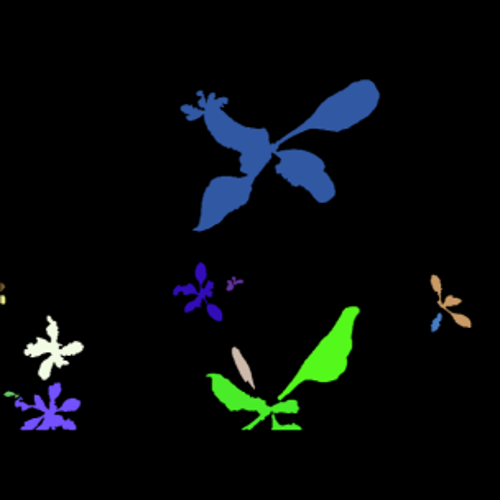
Slawomir Sander (formerly known as Slawomir Grzonka) is a researcher at the Department of Computer Science at Albert-Ludwigs-University of Freiburg, working in the Autonomous Intelligent Systems Group led by Professor Wolfram Burgard. His research focuses on robotics, particularly in the areas of aerial robotics, navigation systems, and agricultural applications. Dr. Sander's primary research interests include Quadrotors, SLAM (Simultaneous Localization and Mapping), Navigation, Machine Learning, Human Motion Tracking, and Agricultural Robotics. His work bridges theoretical robotics with practical applications, especially in precision farming where robotic systems can reduce herbicide usage through targeted weed detection and removal. His research demonstrates a strong progression from fundamental navigation algorithms to applied agricultural robotics. An analysis of his publication history shows a clear evolution from indoor navigation and SLAM techniques (2007-2012) toward agricultural robotics applications (2013-2016). His earlier work focused on quadrotor navigation, place recognition, and state estimation, while his more recent publications center on precision farming applications, particularly weed detection in sugar beet fields and integration of UAV-UGV systems for crop management. His notable scientific achievements include: Wolfgang-Gentner-Award (Wolfgang-Gentner-Nachwuchsförderpreis) for his PhD thesis Best Conference Paper Award for "Towards Palm-Size Autonomous Helicopters" Finalist for Best Student Paper Award and Best Paper Award in Cognitive Robotics for "Mapping Indoor Environments Based on Human Activity" Best Conference Paper Award for "Towards a Fully Autonomous Indoor Helicopter" Dr. Sander has been actively involved in several major robotics projects including the BoniRob platform development, RemoteFarming.1, and the Flourish project. His work often involves interdisciplinary collaborations with agricultural scientists and engineers. While specific grant information isn't detailed in the provided materials, his involvement in multiple substantial projects suggests successful grant acquisition for robotics research. He has been a key contributor to the Autonomous Intelligent Systems group's work on agricultural robotics, particularly in developing the BoniRob platform and its various applications (BoniRob-Apps) for field robotics. His work connects fundamental robotics research with practical agricultural applications, demonstrating the real-world impact of robotics technology in addressing challenges in modern farming.
Aamir Ahmad is a Tenure-Track Professor and holder of the chair 'Flugrobotik' (Flight Robotics) at the University of Stuttgart. He serves as Deputy Director (Research) at the Institute of Flight Mechanics and Control and leads the Flight Robotics and Perception Group (FRPG). Additionally, he is a Research Group Leader at the Max Planck Institute for Intelligent Systems (Perceiving Systems Department). His research focuses on aerial robotics, multi-robot systems, deep learning, and reinforcement learning applied to autonomous systems. Key research areas include formation control, aerial vision, and simultaneous localization and mapping (SLAM). He has published extensively on topics like reinforcement learning for multi-rotor landing, autonomous motion capture using aerial vehicles, and cooperative target tracking. His work often integrates theoretical advancements with practical applications in robotics, such as archaeological site mapping and environmental monitoring. Recent publications highlight trends in reinforcement learning for control systems, multi-agent coordination, and perception-driven robotics. Ahmad's group collaborates on projects funded by institutions like the European Union and German research networks. He actively mentors students and hosts research positions across all academic levels, emphasizing innovation in intelligent systems and robotics. His contributions have led to advancements in autonomous aerial systems, with applications in both academic and industrial settings. The FRPG team’s work has been showcased at conferences like IROS and ICRA, reflecting a balance between foundational research and real-world implementation.
Berk Gueler is a researcher at the Intelligent Autonomous Systems lab within the Technical University of Darmstadt , collaborating with the Honda Research Institute . His work bridges robotics, human-robot interaction, and machine learning. M.Sc. in Mechanical Engineering (2023) from Koç University B.Sc. in Control and Automation Engineering (2020) from Istanbul Technical University His research focuses on assisted teleoperation and physical human-robot interaction , particularly for tasks like knot untangling , collaborative drilling , and co-manipulation . He develops adaptive control systems and deep learning models to enhance robot autonomy and human-robot collaboration. The 2025 publications highlight his work on grasp prediction and knot untangling using sampling-based algorithms and human-in-the-loop control. Earlier work (2022-2023) laid the foundation with adaptive admittance controllers and deep reinforcement learning for pHRI. Supervised students on Control Barrier Functions and deformable object tracking Technical expertise in C++ , Python , KUKA FRI , ROS , and Mixed Reality (MRTK)
Sebastian Thrun is a Professor at Stanford University, USA, with a prolific research career spanning robotics, artificial intelligence, and machine learning. His work has significantly impacted autonomous vehicle technology, computer vision, and medical AI applications. Thrun's research interests focus on robotics, particularly simultaneous localization and mapping (SLAM), autonomous driving systems, and probabilistic state estimation techniques. His work extends to deep learning applications in medical imaging, notably achieving dermatologist-level skin cancer classification. He has pioneered approaches in meta-learning, vector quantization, and efficient clustering algorithms using multi-armed bandits. His recent publications demonstrate a strong trend toward improving efficiency in machine learning algorithms, particularly in areas like decision trees, vector quantization, and nearest neighbor search. Thrun has also made significant contributions to medical AI, applying deep learning to skin cancer detection and molecular property prediction. Max Planck Research Award (2011) Thrun has advised numerous PhD students who have become prominent researchers in robotics and AI, including David Stavens, Anna Petrovskaya, and Jesse Levinson. His research has been supported by significant grants, particularly for autonomous vehicle development, including Stanford's entry in the DARPA Urban Challenge (Junior). His work bridges theoretical advances with practical applications across multiple domains. Thrun has led research teams focused on autonomous driving systems, 3D reconstruction, and medical AI applications. His work on the DARPA Urban Challenge demonstrated advanced capabilities in urban autonomous navigation, while his more recent research explores the intersection of deep learning and efficiency optimization in machine learning algorithms.
Prof. Andreas Birk is a Professor of Electrical Engineering & Computer Science at Constructor University Bremen gGmbH, leading the Robotics Research Group. His work bridges basic research in artificial intelligence and applied robotics, with a focus on underwater systems, disaster response, and autonomous navigation. He holds a PhD from Universität des Saarlandes and has held visiting professorships at Vrije Universiteit Brussel and other institutions. Education: Dr. rer. nat. (1995) – Universität des Saarlandes, Saarbrücken MSc (Diplom) – Computer Science (1993) BSc (Vordiplom) – Computer Science (1991) Research Interests: Birk’s dual focus spans theoretical intelligence modeling and engineering applications like underwater robotics, SLAM (Simultaneous Localization and Mapping), and human-robot interaction. His projects include underwater cultural heritage mapping, autonomous container unloading, and deep-sea exploration. Key Projects: CADDY: Cognitive Autonomous Diving Buddy (EU-funded HRI research) MORPH: Multimodal Underwater Surveys with UUVs FloodEvac: Robotic assessment of flood risks in infrastructure Awards: Recognized for innovation in robotics competitions (e.g., RoboCup, ICRA), and leadership in IEEE TC Safety, Security, and Rescue Robotics. Received the Ernst-Lange-Prize and Faulhaber Award. Teaching & Outreach: Pioneered online robotics education during the pandemic, emphasizing hands-on labs. Co-founded Constructor’s Robotics program and mentors through Entrepreneurship and Innovation initiatives. Labs & Teams: Leads the Robotics Research Group, collaborating with teams on underwater vision, simulation-in-the-loop validation, and multi-robot systems.
Niclas Vödisch is a Ph.D. student and researcher at the Autonomous Intelligent Systems Lab in the Department of Computer Science at the University of Freiburg. Supervised by Prof. Dr. Wolfram Burgard and co-supervised by Prof. Dr. Abhinav Valada, he is actively contributing to the field of robotics and AI as a member of the ELLIS Society. His research focuses on enhancing machine perception and SLAM systems using deep learning methods, with primary applications in mobile robotics and autonomous driving. Education: Ph.D. Student at University of Freiburg (June 2021 - June 2025, thesis submitted, defense pending) Visiting Ph.D. Student at University of Zurich (June 2024 - December 2024) M.Sc. in Computational Science and Engineering at ETH Zurich (September 2018 - May 2021) Visiting Undergraduate Student at Carnegie Mellon University (August 2016 - May 2017) B.Sc. in Computational Engineering Science at RWTH Aachen University (September 2014 - June 2018) Vödisch's research interests center around Continual Learning for Robotics, Machine Perception, and Simultaneous Localization and Mapping (SLAM). His work addresses the critical challenge of reducing dependency on extensive annotated training data in robotic perception systems. Through innovative approaches leveraging foundation models, he has developed methods that achieve high performance with minimal supervision, making robotic systems more adaptable to real-world environments. His research spans theoretical advances in deep learning and their practical implementation in autonomous systems. An analysis of his publication record reveals a clear progression from foundational SLAM techniques to sophisticated continual learning frameworks and foundation model applications. A unifying theme across his work is data efficiency in robotic perception, with increasing emphasis on collaborative multi-agent systems and cross-modal information integration for robust performance in challenging conditions. His recent publications demonstrate growing influence in the robotics community, evidenced by the IROS 2024 Best Paper Award for his BEVCar work. Scientific Awards: IROS 2024 Best Paper Award on Cognitive Robotics (BEVCar) IROS 2024 Best Student Paper Award Finalist (BEVCar) Dean's List at Carnegie Mellon University (fall 2016) DAAD full scholarship for CMU studies (2016-2017) Niclas has mentored numerous Master's students on projects spanning LiDAR panoptic segmentation, collaborative scene graph generation, and autonomous driving systems. His teaching portfolio includes co-organizing seminars on Robot Learning and Learning with Limited Supervision, as well as leading the FreiCAR practical autonomous driving course across multiple semesters. His research has received substantial funding from the German Research Foundation (DFG) Emmy Noether Program, NVIDIA academic grants, and Qualcomm Technologies Inc., reflecting the significance and potential impact of his work. As a key contributor to the Autonomous Intelligent Systems group at Freiburg, Vödisch collaborates closely with the Robot Learning group and has extended his research network through his visiting position at the University of Zurich's Robotics and Perception Group. His interdisciplinary approach bridges computer vision, robotics, and machine learning, positioning him at the forefront of research in AI-powered autonomous systems with practical real-world applications.