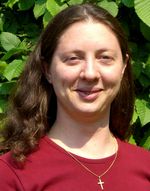
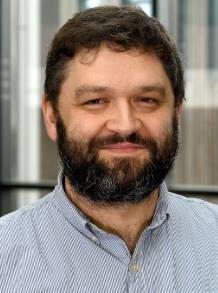
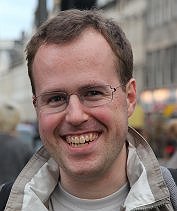
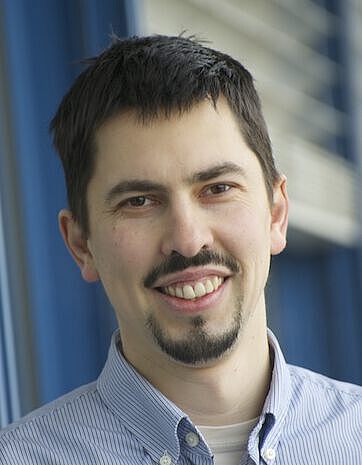
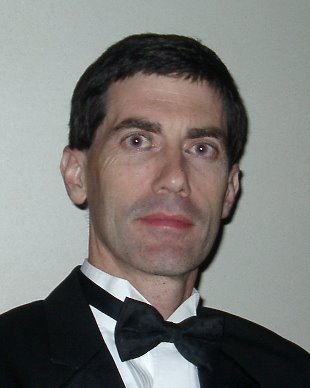
Dr. Stephanie Kemper is a Researcher in the Correct System Design Group at the Department of Computing Science, University of Oldenburg, Germany. Her career spans roles including Research Assistant at Centrum Wiskunde & Informatica (2006-2011), OFFIS (2012-2015), and continuous contributions to the University of Oldenburg since 2011. Education Diploma in Computer Science with distinction (University of Oldenburg, 2006) PhD in Computer Science (Leiden Institute of Advanced Computer Science, 2011) Research Interests Specializing in formal methods for real-time systems, her work emphasizes: Timed Automata and Timed Constraint Automata SAT-based Model Checking for verification Component-based Software Engineering Abstraction Refinement with Craig Interpolation Concurrency and True Concurrency in systems Scalable verification techniques overcoming state explosion Publication Trends Her publications (2007-2013) focus on real-time coordination patterns, SAT-based verification, and compositional analysis of timed systems. Key areas include formal modeling of traffic scenarios, constraint automata for component connectors, and counterexample-guided abstraction refinement. Affiliations University of Oldenburg (2011-present) Centrum Wiskunde & Informatica (2006-2011) OFFIS Group SAV-RSM (2012-2015)
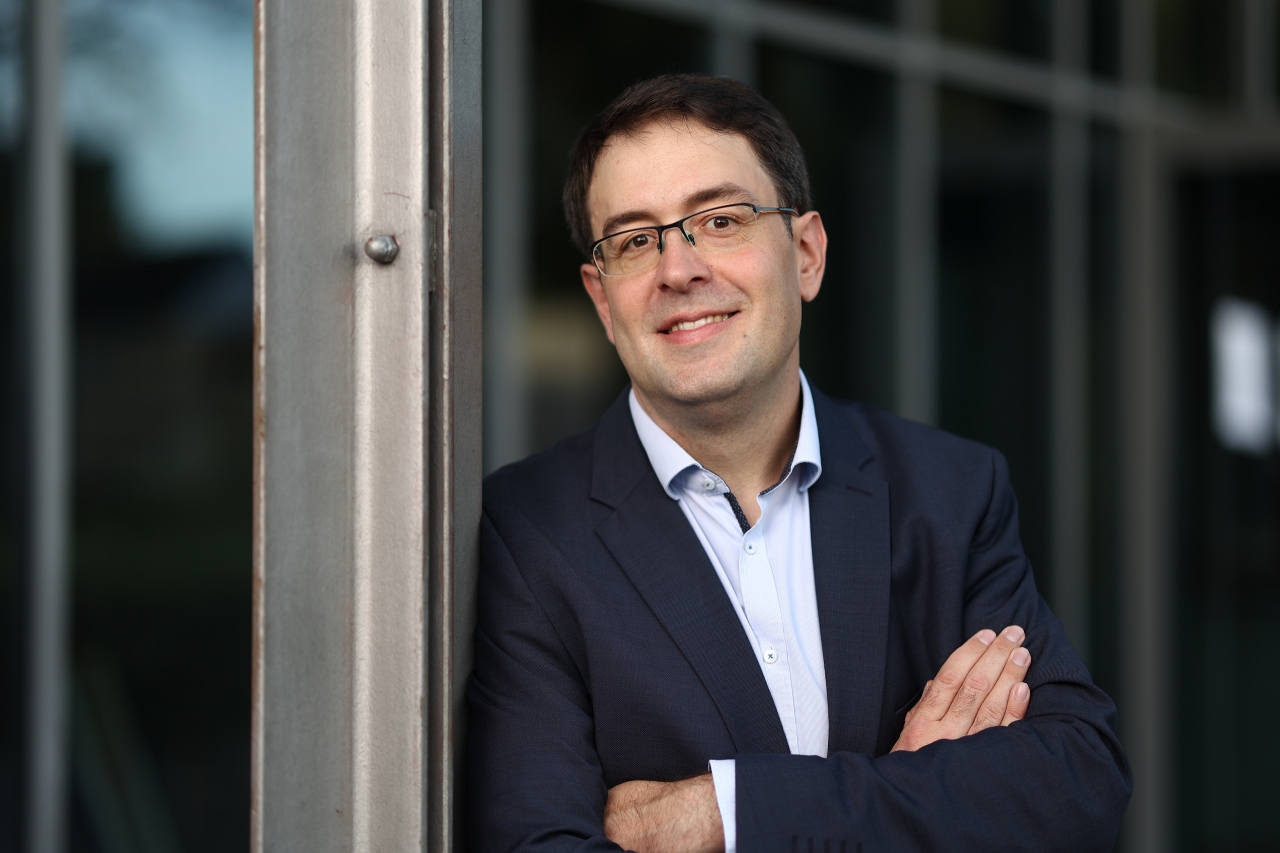
Daniel Höller is a researcher in the Foundations of Artificial Intelligence (FAI) Group at the Department of Computer Science, Saarland University, Germany. He joined the group in January 2020, having previously worked at the Institute of Artificial Intelligence at Ulm University from November 2013 to December 2019. He holds an M.Sc. in Computer Science from Bonn-Rhein-Sieg University, where he studied from 2007 to 2013. Ph.D., Computer Science, Ulm University M.Sc., Computer Science, Bonn-Rhein-Sieg University (2013) Daniel Höller's research lies at the intersection of theoretical and practical aspects of AI planning. His primary focus is on Hierarchical Task Network (HTN) planning, where he has made significant contributions to expressivity analysis, solver development, and the use of classical planning heuristics to guide HTN search. He also works on lifted planning, plan repair, plan recognition, and the integration of planning with deep reinforcement learning. His work often involves formal analysis, heuristic development, and the creation of practical planning systems. He is particularly interested in how planning can be made more efficient, reliable, and applicable to real-world problems, including human-aware applications. His recent publications demonstrate a consistent trend in advancing HTN planning through novel formalisms (e.g., HDDL), sophisticated solving techniques (e.g., progression search, SAT-based approaches), and the development of robust software frameworks (e.g., PANDA, TOAD, LiSAT). His work increasingly bridges planning with learning, exploring how learned models can inform planning and how planning can provide structure for learning. The subfields span formal methods, search algorithms, knowledge representation, and system building. ICAPS 2024 Best Dissertation Award for his thesis on hierarchical planning SoCS 2024 Best Student Paper Award (co-authored) Winner in 4 out of 6 tracks in the 2023 IPC HTN competition ICAPS 2018 Best Student Paper Award ICTAI 2018 Best Paper Award TCTS 2018 Best Paper Award Shortlisted for Best Paper at KI 2020 Daniel Höller has been actively involved in teaching and mentoring, having taught courses on Artificial Intelligence and AI Planning at Saarland University, and previously served as a teaching assistant for a wide range of AI and computer science courses at Ulm and Bonn-Rhein-Sieg Universities. He has received funding through his involvement in the Transregional Collaborative Research Center SFB/Transregio 62 at Ulm University. He has organized and contributed to numerous workshops and conferences, demonstrating strong service to the academic community. Daniel Höller is a core developer of the PANDA planning framework, the TOAD HTN solver, and the LiSAT system for lifted planning. These systems are state-of-the-art tools that implement his research on heuristic search, model transformation, and SAT-based compilation. His work is conducted within the FAI group at Saarland University, a leading research group in automated planning.
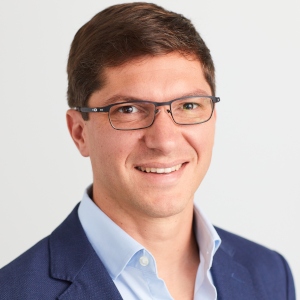
André de Matos Pedro is an Assistant Professor in the Department of Computer Science at the University of Beira Interior. He teaches courses including Teoria da Computação (Theory of Computation), Programação Funcional (Functional Programming), and Segurança e Fiabilidade de Software (Software Security and Reliability). His research focuses on formal methods, runtime verification, and programming language theory. His publication record shows consistent focus on formal verification methods applied to real-time and embedded systems. Recent work emphasizes runtime monitoring frameworks, SAT/SMT-based verification techniques, and applications in safety-critical domains like autopilot systems. The research trajectory demonstrates increasing emphasis on practical applications of temporal logic and co-simulation testing platforms.
Professor Serge Gaspers is a faculty member in the School of Computer Science and Engineering at the University of New South Wales (UNSW), specializing in algorithms for computationally intractable problems. His research focuses on parameterized algorithms, quantum algorithms, and graph theory, with applications in computational social choice and constraint satisfaction. He joined UNSW in 2012 as an ARC DECRA Fellow and later held an ARC Future Fellowship. Gaspers obtained his PhD from the University of Bergen (Norway) in 2008, followed by postdoctoral positions in Montpellier, Santiago, and Vienna. His research interests include algorithms for NP-hard problems, quantum computing, and fair resource allocation. He has been awarded grants totaling over A$2 million, including an ARC Discovery Project (DP210103849) on improved algorithms via random sampling and collaborations with Data61/CSIRO and NICTA. Notable awards include the ARC Future Fellowship (2014), IJCAI 2013 Most Educational Video Award, and DECRA (2012). Teaching: Gaspers teaches COMP6741 - Algorithms for Intractable Problems . His advising spans parameterized algorithms, quantum algorithms, and graph algorithms. Research grants highlight his work in algorithms, with a focus on turbocharging heuristics and computational complexity of resource allocation problems.
Philipp Rümmer is a Professor of Theoretical Computer Science at the University of Regensburg and a Senior Lecturer/Associate Professor at the Department of Information Technology , Uppsala University. His career spans over two decades of academic and industrial collaboration in formal verification, SMT solvers, and program analysis. Professor (2022–present), Faculty of Informatics and Data Science, University of Regensburg Senior Lecturer/Associate Professor (2018–present), Department of Information Technology, Uppsala University His research focuses on formal verification of software and embedded systems, SMT solvers (e.g., Princess, Norn), model checking (Eldarica), and integrating machine learning with verification techniques. He has pioneered tools like JayHorn for Java verification and Sloth for string constraint solving. Recent publications emphasize probabilistic verification of parameterized systems, timing analysis in embedded updates, heap invariants via Horn clauses, and graph neural networks in solving word equations. These works reflect his commitment to advancing formal methods through interdisciplinary approaches. Awards include: Oscarspris (2013), Uppsala University SAP Award for top Computer Science graduate (2005) Bosch Telecom Award for natural science excellence (1998) He has secured significant grants from the Swedish Research Council , Knut and Alice Wallenberg Foundation , and Microsoft Research , supporting projects like UPDATE (2020–2024) and WebSec (2018–2023). His leadership in tools such as Princess and Eldarica underscores his influence in automated reasoning and verification.
Dirk Beyer is a Full Professor and Head of Research Chair at the Department of Computer Science, Ludwig-Maximilians-Universität München (LMU Munich), where he leads the Software and Computational Systems Lab. His research focuses on developing models, algorithms, and tools for constructing and analyzing reliable software systems, with emphasis on software verification, model checking, and static analysis. Professor Beyer's research spans multiple critical areas in software engineering and formal methods. He has made significant contributions to software model checking through tools like CPAchecker and BLAST, structure analysis of large systems using CrocoPat and CCVisu, and formal verification of real-time systems with Rabbit. His work on interfaces for component-based design (Chic) has advanced modular software development approaches. Beyer has pioneered methodologies in benchmarking and reliable experimental evaluation through BenchExec, which has become a standard in tool competitions. Analysis of his recent publications reveals a strong focus on advancing software verification techniques, particularly in transferring knowledge between hardware and software verification domains, decomposing verification tasks for parallel processing, and improving the effectiveness of verification witnesses. His work consistently bridges theoretical foundations with practical tool implementations, with a growing emphasis on comparative evaluation and competition frameworks that drive the field forward. ACM SIGSOFT Distinguished Paper Award (FSE 2024) ACM SIGSOFT Best Artifact Award (FSE 2024) As a principal investigator of the DFG Research Training Group ConVeY, Beyer has secured significant funding for advancing verification techniques. He has played leadership roles in numerous software verification competitions including SV-COMP and Test-Comp, serving as PC Chair for major conferences like TACAS 2018 and VMCAI 2020. His service contributions extend to chairing ETAPS 2022 and organizing multiple workshops on CPAchecker. Professor Beyer leads the Software and Computational Systems Lab at LMU Munich, which has developed numerous influential verification tools including CPAchecker (configurable software verification), BenchExec (reliable benchmarking), and CCVisu (software structure visualization). The lab maintains active collaborations with research groups worldwide and contributes significantly to the international verification community through competitions, benchmarks, and open-source tool development.
Zhoulai Fu is a tenured Associate Professor at the State University of New York (SUNY), Korea, specializing in programming languages and software security. He also holds joint appointments as a Research Associate Professor at Stony Brook University and is affiliated with the Electrical and Computer Engineering Department at Virginia Tech. His educational background includes: Ph.D., 2009-2013, INRIA – Université de Rennes 1, France M.Eng., 2008-2009, Télécom ParisTech, France M.S, B.S, and French engineer degrees (Ingénieur), 2005-2008, École Polytechnique, France Professor Fu's research focuses on the intersection of Programming Languages, Software Security, and Large Language Models, with special emphasis on improving software reliability through formal methods, numerical error analysis, and scalable verification techniques . His work spans abstract interpretation, automated testing, and verification tools development. He has made significant contributions to floating-point analysis and program verification, with publications at top-tier conferences including PLDI, POPL, OOPSLA, ICSE, and CAV. His publication record shows a consistent trajectory in programming language theory with increasing practical applications. Early work focused on foundational aspects of abstract interpretation and floating-point analysis, while recent papers address security concerns through programming language techniques and incorporate modern approaches like incorrectness logic. Key themes across his publications include formal verification of low-level code, numerical error analysis, and developing scalable analysis tools for real-world software systems. His notable achievements include: Principal Investigator for DARPA E-BOSS Program funding Sole Principal Investigator for National Research Foundation of Korea funding Program Committee membership for POPL 2026, FSE 2024, and PLDI 2023 Professor Fu actively mentors students and has taught courses including Foundations of Computer Science, Programming Abstractions, and Research in Computer Science. His research is supported by significant grants from DARPA and NRF, enabling him to lead the Data & Intelligent Computing Lab at SUNY Korea. He is currently seeking postdocs, PhD, and graduate students to join his research team. He leads the Data & Intelligent Computing Lab, which focuses on advancing programming language techniques for software reliability and security. The lab collaborates with institutions including Virginia Tech, Stony Brook University, and international partners across Europe, working on projects that bridge theoretical computer science with practical software engineering challenges.
Dr. Felix Ulrich-Oltean is a Lecturer in the Department of Computer Science at the University of York. His research focuses on constraint satisfaction, combinatorial optimization, boolean satisfiability, and machine learning applied to automated algorithm selection and configuration. He holds a PhD in Computer Science from the University of York (2019–2023), a PGCE in Secondary Mathematics from Leeds Trinity University, and a BSc in Computer Science from the University of York. His recent work emphasizes SAT encoding techniques for pseudo-boolean and linear integer constraints, with contributions to automated tabulation methods in constraint models. Research trends include integrating machine learning for algorithm selection, optimizing constraint satisfaction problem resolution, and developing efficient SAT-based solutions for complex combinatorial problems. No scientific awards or grants are explicitly mentioned in the provided texts. He advises no listed students and has no disclosed lab affiliations. His office is located at CSE/108, and contact is facilitated through a university web form to protect email privacy.
Sorina Ionica is a Lecturer at the University of Picardie Jules Verne, specializing in Cryptography , Mathematics , and Artificial Intelligence . Her research focuses on the application of optimization techniques and algebraic geometry to cryptographic protocols, particularly in the context of genus 3 curves and isogeny-based cryptography. Research Interests: Cryptography, isogeny graphs, complex multiplication, index calculus, and AI-driven optimization algorithms. Projects: Involved in BforSAT (application of SAT solvers to cryptographic problems) and POSTCRYPTUM (post-quantum cryptography research). Recent Articles: Her work spans mathematical cryptography (e.g., CM curves and Weil descent attacks), algorithm optimization (Crossbred algorithm), and AI integration in cryptanalysis (tree search and SAT solvers). Labs: Sorina is affiliated with the OCIA Lab (Optimization and Cryptography, AI).
Carsten Fuhs is a Senior Lecturer at the School of Computing and Mathematical Sciences at Birkbeck, University of London . His research focuses on Program Analysis , Termination , Complexity Bounds , and Term Rewriting , with applications in Verification and SAT Encodings . Research Group Lead of the Logical Methods research group (2023–present) Member of the Board of Trustees for CADE (2023–present) Chair of the Bill McCune PhD Award Expert Committee (2024, 2025) Active in conference organization and program committees (FSCD, IJCAR, LOPSTR, etc.) Research Interests : Carsten Fuhs specializes in automated termination and complexity analysis for term rewriting and programming languages. His work leverages SAT solving and constraint-based methods to develop tools like AProVE for program verification. Key areas include parallel term rewriting , higher-order dependency pairs , and memory safety proofs . Selected Publications Trends : Recent articles emphasize higher-order rewriting (2025), parallel complexity analysis (2024), and modular termination proofs (2022–2024). Earlier work (2014–2017) explores pointer arithmetic verification , separation logic , and integer program complexity . Scientific Awards : Best Paper Award, LOPSTR 2022 Teaching and Mentoring : Carsten Fuhs has lectured on Java programming , compilers , and term rewriting at Birkbeck and international summer schools. He contributes to SAT competitions as a benchmark submitter and organizes regional programming language seminars like S-REPLS 10 (2018).
Jukka Mikael Kohonen is a University Lecturer in the Department of Mathematics and Systems Analysis at Aalto University, Finland. He is affiliated with the Mathematical Statistics and Data Science, as well as Algebra and Discrete Mathematics research groups. His research interests span lattice theory and combinatorics, with recent work focusing on modular lattice reduction and enumeration techniques. He has contributed to algorithmic optimization and outlier correlation detection, collaborating across disciplines such as biomedical signal processing and computational mathematics. In his publications since 2017, Kohonen has explored topics ranging from symmetry reduction algorithms to additive number theory, with a notable emphasis on computational methods in discrete mathematics. Recent work (2025) advances techniques for simplifying modular lattices through elimination of irreducible elements. Research groups: Mathematical Statistics and Data Science, Algebra and Discrete Mathematics Email: jukka.kohonen@aalto.fi
Sylwia Stachowiak serves as an Assistant Professor at SWPS University within the Faculty of Design in Warsaw and the Department of Mathematics and Logic. Holding a Doctor of Engineering degree in information and communication technology, she bridges theoretical computer science with practical security applications through her research and teaching. Her research specializes in formal methods for analyzing computer network security systems, with particular focus on cryptanalysis of symmetric ciphers using computational techniques for solving Boolean satisfiability problems (SAT). This work represents a critical intersection of theoretical mathematics and real-world security solutions, emphasizing rigorous mathematical approaches to vulnerability assessment. Dr. Stachowiak contributed to a significant 2020 National Centre for Research and Development project (POIR.01.01.01-00-0829/18-00) conducted with the Institute of Computer Science of the Polish Academy of Sciences, developing secure communication protocols for the Warsaw Stock Exchange. Her teaching portfolio comprehensively covers foundational computer science subjects including cryptography and number theory, logic and set theory, discrete mathematics, and algorithms and data structures, reflecting her dual expertise in mathematics and computer science.
Nian-Ze Lee is an Assistant Professor at the Department of Electrical Engineering of National Taiwan University, leading the Formal Methods and Analysis for Computing and Engineering Laboratory (ForMACE Lab). He is also a Guest Professor affiliated with the Software and Computational Systems Lab (SoSy-Lab) at Ludwig-Maximilians-Universität München (LMU Munich), Germany. He holds a Ph.D. in Electronics Engineering from National Taiwan University (2021). His research focuses on formal methods, hardware and software verification, and circuit-based analysis. Education: Ph.D. in Electronics Engineering, National Taiwan University (2021) Research Interests: Formal methods for hardware and software systems Model checking and verification frameworks Circuit-based program verification (e.g., Btor2C translator) Algorithm selection for verification tools Awards: ACM SIGSOFT Distinguished Paper Award (2025) Best Artifact Award (2024) DFG Grant for Bridging Hardware and Software Analysis (2024) Advising & Grants: Supervises Ph.D./Master’s students on topics like algorithm selection and verification frameworks Recipient of DFG grant enabling collaboration between NTU and LMU Munich Labs/Teams: ForMACE Lab (NTU) – Focuses on formal methods and system analysis SoSy-Lab (LMU) – Collaborations on verification tools and frameworks
Dr. Yevgeny Kazakov is a Research Fellow at the University of Ulm's Institute of Artificial Intelligence. His work focuses on knowledge representation, automated reasoning, and ontology engineering, particularly in Description Logics and OWL. He has contributed to systems like ELK and ConDOR, emphasizing algorithm optimization and practical reasoning solutions. Education: No formal education details explicitly mentioned in the text. Research Interests: Kazakov's research centers on reasoning support for Description Logics, ontology languages (e.g., OWL), and modular integration of ontologies. He explores theoretical properties and practical implementations, including consequence-based reasoning, modularity, and algorithmic efficiency. His work also addresses challenges like SPARQL query optimization over OWL ontologies and incremental reasoning. Professional Activities: Kazakov has held roles such as General Co-chair of the Description Logic Workshop (2013), Guest Editor of the JAIR special track on Description Logics, and PC member for conferences like KR, IJCAI, and ECAI. He has reviewed for top journals and conferences, contributing to the field's academic rigor. Teaching: Recent courses include Cognitive Systems 2, Explainable AI, and Knowledge-Based AI at the University of Ulm. He also supervises projects in automated reasoning. Grants & Projects: Led the DFG-funded 'Live Ontologies' project (2012–2017). Co-investigated EPSRC-funded projects like ConDOR (2009–2011) and REOL (2005–2008). These projects focused on ontology reasoning systems and modular integration. Students: Advised Trung-Kien Tran (since 2012, with Birte Glimm) and František Simančík (2009–2013, with Ian Horrocks). Labs/Teams: Active in the Institute of Artificial Intelligence, collaborating on systems like ELK and ConDOR. His research group develops tools for efficient ontology reasoning and knowledge representation.
Thomas W. Reps is a Professor in the Department of Computer Science at the University of Wisconsin, holding the position since 1985. He has served as President and Co-founder of GrammaTech, Inc. since 1988, and held visiting roles including Guest Professor at the University of Paris 7 (2007-08), Visiting Researcher at CNR in Pisa, Italy (2000-01), and Guest Professor at the University of Copenhagen (1993-94). He previously served as Associate Chairman of the Computer Sciences Department at Wisconsin (1990-93) and held postdoctoral roles at Cornell University and INRIA. Reps' research spans programming languages, software engineering, and computer security, with a focus on static program analysis, machine-code analysis, and program slicing. His work in model checking, software maintenance, and analysis techniques for information security has significantly impacted the field of computer science. 2017 ACM SIGPLAN Programming Languages Achievement Award 2015 WARF Named Professorship 2005 ACM Fellow 2000 Guggenheim Fellowship 1986 NSF Presidential Young Investigator Award Reps' publications highlight advancements in interprocedural dataflow analysis, weighted pushdown systems, and symbolic computation. His work bridges theoretical foundations with practical applications in software verification and security, creating tools that have shaped modern program analysis techniques. He has collaborated extensively with researchers like Somesh Jha, Mooly Sagiv, and Gogul Balakrishnan across institutions in Europe and the U.S.