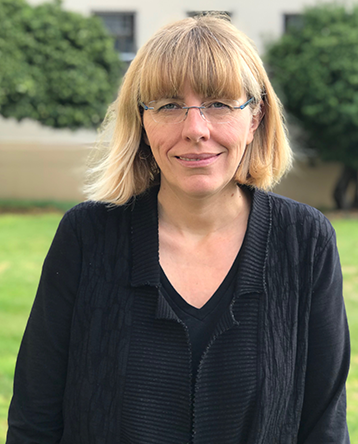
Omar Nibouche is a Lecturer at the School of Computing, Ulster University. With expertise spanning Machine Learning, Internet of Things (IoT), and Spectral Data Analysis, his research focuses on developing intelligent systems for trust management in IoT environments and food quality/authentication applications. Active in 17+ research areas including Trust Management (100%), Food Fraud (63%), and Machine Learning (51%) Collaborates with researchers in Computer Science and Food Science domains Works on IoT trust management, food authentication, and spectral data analysis Based at Belfast campus with office in room BC-05-121 Focuses on practical applications of machine learning in real-world problems Research Highlights: His work includes creating hybrid deep learning models for IoT trust management, explainable AI systems for device behavior analysis, and innovative approaches to food fraud detection using miniature spectrometers. He has contributed to over 36 research outputs across multiple disciplines. Contact Information: Email - o.nibouche@ulster.ac.uk | Phone: +44 28 9536 5847
Michele Valsesia is a Research Fellow at the Department of Control and Computer Engineering (DAUIN) at Politecnico di Torino . His work is affiliated with the SOFTENG - Software Engineering Group , focusing on software certification and IoT security. His research interests lie at the intersection of Software Engineering and Cybersecurity , particularly in Internet of Things (IoT) systems. Key areas include automated firmware analysis , formal verification , and code quality metrics for secure software development. Recent publications highlight advancements in IoT supply chain security and Rust-based automated tools for code assessment. Contributions span journal articles in IEEE IoT Journal and conferences like DCOSS-IoT and ARES , emphasizing embedded systems and security analysis . He actively contributes to the SOFTENG research group , developing methodologies for software reliability and security through code metrics and certification frameworks.
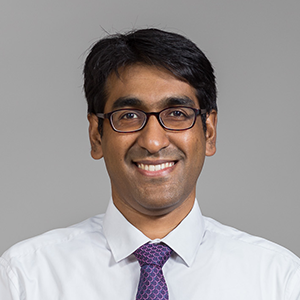
Vijay Chidambaram is an Associate Professor in the Department of Computer Science at The University of Texas at Austin, where he leads the UT Systems and Storage Lab. His research focuses on building next-generation storage systems with higher performance and stronger reliability, developing both storage systems and testing frameworks to ensure rigorous development. He is also part of the UT Data Systems group and the LASR research group at UT Austin. Ph.D. in Computer Science, University of Wisconsin–Madison M.S. in Computer Science, University of Wisconsin–Madison B.E. in Computer Science, College of Engineering, Guindy Chidambaram's research interests center on computer systems, particularly storage systems, distributed systems, and databases. His work addresses critical challenges in crash consistency, persistent memory file systems, and storage reliability. His group has made significant contributions to understanding and solving crash-consistency bugs, developing innovative testing frameworks, and building open-source storage systems that impact both academia and industry. They focus on innovation at both the data-structure level and systems level, with recent work exploring CXL-based database architectures and verification tools for storage systems. His research group has produced numerous influential publications in top-tier conferences including OSDI, FAST, ATC, and EuroSys, with several best paper awards. Their work spans from theoretical foundations of crash consistency to practical implementations of high-performance storage systems, with a consistent emphasis on open-sourcing their software to maximize impact. Distinguished Artifact Award at OSDI 2025 Best Paper Award at EuroSys 2023 Best Paper Award at ATC 2018 Best Paper Award at FAST 2018 NSF CAREER Award 2018 Microsoft Research Graduate Fellowship 2014 ACM SIGOPS Dennis M. Ritchie Dissertation Award 2016 Chidambaram actively mentors PhD students, with current advisees including Minh Phan, Talia Chen, Nitin Mathai, and Shurang Wu. His former students have gone on to positions at Microsoft Research, HP Labs, Apple, and academia. He has secured significant research funding, including NSF grants and industry collaborations. Beyond research, he serves on program committees for major systems conferences and co-founded the open-access Journal of Systems Research. He also teaches courses including Virtualization, Advanced Operating Systems, and Distributed Systems, and authored the CS Assistant Professor Handbook, a guide for new computer science faculty. His UT Systems and Storage Lab maintains close industry collaborations while pursuing fundamental research questions in storage systems. The lab is known for its rigorous approach to systems research, combining theoretical insights with practical implementations, and has developed multiple open-source systems that have influenced both academic research and industry practice.
Christoph Matheja is a Professor at the University of Oldenburg, Germany, leading the Theory of Correct Systems group , and an Associate Professor at the Technical University of Denmark (DTU) in the Software Systems Engineering section. His work focuses on formal methods and verification, particularly for probabilistic and heap-manipulating systems. He develops rigorous mathematical techniques to enhance software correctness and trustworthiness, with contributions to quantitative verification, probabilistic program analysis, separation logic, Rust verification, and static analyses using graph grammars. Before his current roles, he was a postdoctoral researcher at ETH Zürich (Programming Methodology Group) and earned his Ph.D. at RWTH Aachen University under Joost-Pieter Katoen. His research bridges theoretical foundations and practical tool development, as seen in works like LogPPL for probabilistic process mining and the Prusti project for Rust verification. Recent publications emphasize probabilistic systems, POMDPs, and formal verification frameworks. He actively contributes to academic communities, serving on PCs for ESOP 2026, LICS 2026, and CAV 2025. His current focus includes recruiting a PhD student (see UOL openings ) and advancing verification methodologies for probabilistic and concurrent systems.
Aravind Machiry is an Assistant Professor at the Elmore Family School of Electrical and Computer Engineering at Purdue University. His research focuses on system and software security, particularly in securing embedded systems, firmware, and leveraging modern tools like static analysis and fuzzing to mitigate vulnerabilities. He leads the Purdue Systems and Software Security Lab (PurS3) , which emphasizes principled yet practical security solutions. Research interests include embedded systems security (e.g., Rust adoption in embedded contexts), vulnerability detection in firmware and network stacks, and securing continuous integration workflows. He has explored topics like language model integration in Android apps, fault injection in API error handling, and mitigating data poisoning in federated learning. His work bridges hardware and software domains, with contributions to secure execution environments (e.g., ARM TrustZone via Tarnhelm) and binary analysis tools like BinTrimmer. While no formal awards are listed, his grant-funded projects (e.g., CAREER award) reflect recognition of his research impact. Advising focuses on graduate students in cybersecurity and embedded systems domains. Key projects include rehosting embedded applications as Linux apps (LEMIX), automated firmware analysis (KARONTE), and feedback-driven binary generation (Cornucopia). His research often addresses scalability challenges in vulnerability detection across large codebases.
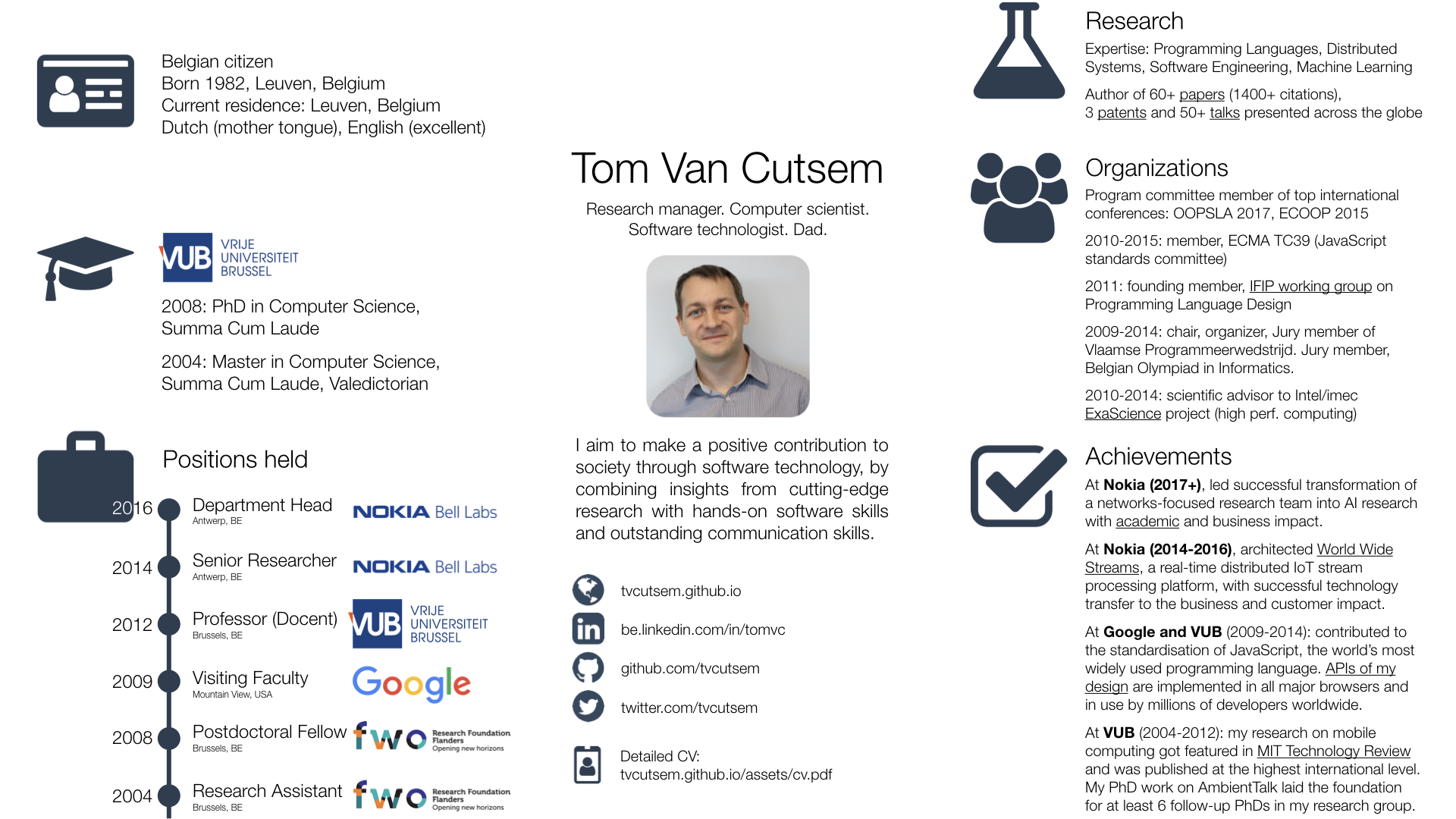
Tom Van Cutsem is an Associate Professor of computer science at KU Leuven in Belgium, where he is affiliated with the Distributed and Secure Software (DistriNet) research group within the Faculty of Engineering Science and Department of Computer Science. He also maintains an affiliation with Nokia Bell Labs, where he previously served as a Research Department Head with research interests in decentralized systems, IoT, stream processing and machine learning for software engineering. His academic career includes a previous position as Assistant Professor at Vrije Universiteit Brussel from 2010 to 2014. Dr. Van Cutsem holds a PhD in Computer Science from Vrije Universiteit Brussel. His educational background has provided the foundation for his expertise in distributed systems, programming languages, and software security. His primary research interests span Distributed Systems , Software Security , Blockchain , and Programming Language Design . With the DistriNet research group, he pursues work on decentralized systems, IoT, stream processing, and machine learning for software engineering. His research focuses on making distributed systems more secure, reliable, and accessible, with particular attention to blockchain technology and Web3 infrastructure. He is a founding member of IFIP WG 2.16 on Programming Language Design. His recent publications demonstrate a strong focus on blockchain security and infrastructure, with numerous papers on Web3, smart contracts, and decentralized systems from 2023-2025. His work addresses critical challenges in blockchain validation, smart contract security, and Web3 infrastructure, reflecting his commitment to making decentralized systems more secure and accessible to low-resource participants. Several of his current projects focus on secure middleware for smart contracts and scalable infrastructure for self-sovereign applications. Dr. Van Cutsem supervises PhD students including Weihong Wang, with whom he has co-authored multiple recent publications. He is currently leading several research projects including SODISA (Scalable Software Development and Infrastructure for Self-sovereign Applications), Secure Sandboxing for WebAssembly-based Smart Contracts, and Programming languages for privacy-preserving and verifiable computing, with funding extending through 2028-2029. He leads research within the Distributed and Secure Software (DistriNet) group at KU Leuven, which focuses on creating secure and dependable distributed systems. His team works on cutting-edge challenges in blockchain infrastructure, smart contract security, and decentralized application development, with connections to both academic and industrial partners including Nokia Bell Labs.
Alexander J. Summers is an Associate Professor and Associate Head of Graduate Affairs in the Department of Computer Science at the University of British Columbia (UBC), where he joined in 2020. Prior to UBC, he was a senior researcher (Oberassistent) at ETH Zurich. His research focuses on program correctness, including specification and verification logics, type systems, and automated tools for deductive verification. He leads the Prusti Project, developing verification tools for the Rust programming language, and collaborates on the Viper Project, an intermediate verification language framework. Summers is also actively involved in teaching, offering courses on advanced software engineering and program verifiers. His research interests span formal methods, programming languages, and automated reasoning, with a particular emphasis on Rust and ownership-based systems. He has contributed to the development of verification tools like Viper and Prusti, which aim to enhance software reliability through deductive techniques. Summers has been recognized with awards such as the Distinguished Reviewer Award (ACM SIGPLAN) and the Amazon Research Award. Summers has published extensively in top venues like POPL, PLDI, and OOPSLA, with recent work addressing challenges in Rust's ownership model, formal verification frameworks, and automated reasoning techniques. His lab focuses on advancing the state of the art in program verification while maintaining strong ties to practical tool development and empirical studies of programming practices. He actively mentors students at UBC, including PhD and M.Sc. candidates, and has supervised postdoctoral researchers. Summers is also engaged in academic service, serving on program committees for conferences like OOPSLA and IJCAR, and contributes to the broader formal methods community through tool development and educational initiatives.
Ryan Doenges is a Distinguished Postdoctoral Fellow at Northeastern University in Boston, working with Amal Ahmed. He holds a PhD from Cornell University under Nate Foster and completed undergraduate studies with Zach Tatlock. His educational background includes: PhD in Computer Science, Cornell University Bachelor's degree, institution unspecified Doenges' research focuses on enhancing programming safety through type systems and verification, specializing in program logics for effects/resources like concurrency and memory. His doctoral work established formal semantics and verification frameworks for the P4 network programming language, ensuring termination and correctness. His publications (2017-2025) show consistent advancement from distributed systems verification to network programming (P4) and foundational program logics, culminating in categorical semantics for separation logic. Key themes include certified equivalence, stateful packet processing, and fibrational weakest preconditions. No scientific awards are documented in available sources. He formally supervised Tia Vu's Master's thesis (Cornell MS, now MIT PhD) and informally mentored eight students including Rudy Peterson (ETH Zürich PhD) and Amanda Xu (UW Madison PhD). No grant details are provided. Doenges collaborates with Amal Ahmed's group at Northeastern and previously worked in Nate Foster's Cornell research team focused on network programming languages.
Corina Pasareanu is a Principal Scientist at Carnegie Mellon University's CyLab and Technical Professional Leader for Data Science at NASA Ames Research Center (working through KBR). She maintains strong affiliations with both CMU's School of Computer Science and NASA Ames, leading cutting-edge research at the intersection of formal verification, AI safety, and software security. She earned her Ph.D. in Computer Science from Kansas State University in 2001, following MS (1995) and BS (1994) degrees in Computer Science from University Politehcnica of Bucharest. Her academic foundation has propelled her to become a leading expert in verification techniques for complex software systems. Dr. Pasareanu's research program focuses on model checking, symbolic execution, compositional verification, and probabilistic software analysis, with growing emphasis on ensuring safety and reliability of AI systems. Her work bridges theoretical formal methods with practical applications in autonomous systems and security-critical domains. Recent efforts target verification challenges in large language models and vision-based autonomous systems, developing techniques to provide mathematical guarantees of system behavior despite AI component uncertainties. Analysis of her publication trends reveals a strategic evolution from foundational verification techniques toward increasingly complex AI systems, with strong emphasis on practical applications in safety-critical contexts. Her work consistently connects theoretical advances in formal methods with real-world security and safety challenges. Her scientific contributions have earned exceptional recognition: ACM Fellow and IEEE ASE Fellow ETAPS Test of Time Award (2021) ASE Most Influential Paper Award (2018) ESEC/FSE Test of Time Award (2018) ISSTA Retrospective Impact Paper Award (2018) Multiple historical impact awards including ACM Impact Paper Award (2010) and ICSE Most Influential Paper Award (2010) Dr. Pasareanu actively mentors the next generation of computer scientists, currently advising PhD students Aymeric Fromherz (with Bryan Parno), Yoshiki Takashima, Zichao Zhang, and Chi Zhang (all with Limin Jia), plus postdoc Ravi Mangal. She has secured substantial research funding from NSF, DARPA, AWS, NASA, and industry partners for projects including 'LLM Self-Defense Against Adversarial Attacks,' 'Trinity: Neurosymbolic Learning and Reasoning,' and 'HUGS: Human-Guided Software Testing.' Her leadership extends to Program Co-Chair for ICSE 2025 and multiple other major conferences, plus service on steering committees for ICSE, ETAPS, TACAS, and ISSTA. As Principal Scientist at CMU CyLab, she leads research teams developing verification techniques for AI systems, with particular focus on autonomous vehicles and large language models. Her NASA Ames work applies formal methods to space-related autonomous systems, while her collaborations with industry partners translate theoretical advances into practical tools. She remains at the forefront of addressing verification challenges for increasingly complex AI technologies, with upcoming keynotes at CAV 2025 and FormaliSE 2025 demonstrating her continued leadership in the field.
Bas Spitters is an Associate Professor in the Department of Computer Science at Aarhus University, Denmark, specializing in the rigorous intersection of programming languages, formal methods, and cryptography. His work prioritizes mathematical precision in software verification, particularly for security-critical systems like cryptographic protocols and blockchain applications. His research focuses on Programming Languages , Formal Verification , and Cryptology , with deep expertise in Type Theory , Homotopy Type Theory , and Blockchain . Key themes include verified compiler backends (e.g., WebAssembly), formal security analysis of Rust implementations, and foundational verification of cryptographic primitives. His fingerprint reveals dominant associations with Smart Contracts (100%), Type Theory (99%), and Blockchain (47%), reflecting his commitment to eliminating vulnerabilities through formal proofs. Analysis of his 15 most recent publications (2022-2025) shows a consistent trajectory toward end-to-end verification of high-assurance systems. He bridges theoretical foundations (e.g., homotopy type theory) with practical implementations in Rust, targeting real-world problems in blockchain consensus, zero-knowledge proofs, and side-channel-resistant cryptography. His work increasingly integrates multiple verification tools (e.g., Coq, hax) to address complex security properties. Scientific awards: None documented in available sources. Dr. Spitters has supervised 2 PhD students and led the project Verifiable Cryptographic Software (2019-2023), developing foundational tools for verifying cryptographic implementations. His research group collaborates globally on formalizing decentralized exchanges, optimizing verified cryptographic libraries, and advancing proof automation for security protocols. Current efforts focus on Rust-based verified pipelines and formal specifications for zero-knowledge protocols like halo2, with implications for blockchain scalability and security.
Jonathan Protzenko is a Principal Researcher at Microsoft Azure Research, focusing on advancing software verification through formal methods and programming language design. His work bridges theoretical rigor with practical impact, particularly in cryptography, Rust verification, and computational law. He has contributed to verified cryptographic libraries like HACL* and EverCrypt, which are integrated into major systems such as Python, Firefox, and Linux. His projects include Aeneas , a Rust verification tool, and Eurydice , which compiles Rust to C for legacy compatibility. Prior to Microsoft Azure, he spent nine years at Microsoft Research and was part of the Gallium team at INRIA Paris, where he developed Mezzo for his PhD. His research interests span Type Systems and Programming Languages Software Verification and Formal Methods Security Protocols and Cryptographic Libraries Computational Law and Legal Code Modeling Rust Verification and Compiler Design Low-Level Programming and Memory Safety Recent projects highlight his commitment to transitioning verified codebases to Rust while ensuring backward compatibility with legacy systems. He co-authored the ICFP 2023 paper on modularity and zero-cost abstractions , and his work on Catala explores formal methods in computational law, featured in Communications of the ACM. Jonathan's scientific awards include the Internet Defense Prize and SIGPLAN Research Highlight . He mentors students like Théophile Wallez, Son Ho, and Denis Merigoux, and advises the startup Cryspen. His verified cryptographic libraries power critical infrastructure, with code in BoringSSL, Linux, Python, and Firefox. He maintains open-source projects, including a Thunderbird add-on with 200k users.
Jia (Cindy) Song is an Assistant Professor in the Department of Computer Science at the University of Idaho, affiliated with the College of Engineering. Her research focuses on cybersecurity, software testing, IoT security, fuzzing techniques, and real-time systems. She holds a Ph.D. in Computer Science from the University of Idaho (2014), an M.S. in Computer Science from the same institution (2012), and dual B.S./B.A. degrees in Information Security and Human Resource Management from Sichuan University, China (2009). Dr. Song’s work emphasizes practical applications of automated testing tools and formal methods to enhance software security and reliability. Her contributions include developing fuzzing frameworks, analyzing real-time operating systems compliance, and designing IoT security protocols. She maintains an active research website and is professionally active on LinkedIn. Her recent publications span innovations in grammar-based fuzzing, Rust programming language safety analysis, IoT firmware labeling systems, and cybersecurity benchmarking methodologies. She has contributed to academic conferences such as the Cyber Security Symposium and published reviews on symbolic execution tools and dynamic taint analysis.
Diomidis Spinellis is a Professor at the Department of Management Science and Technology, Athens University of Economics and Business. He is a leading researcher in software engineering, IT security, and cloud systems engineering, with over 300 publications and 10,000 citations. He has authored award-winning books including Code Reading , Code Quality: The Open Source Perspective , and Effective Debugging: 66 Specific Ways to Debug Software and Systems (2016). As a Senior Member of ACM and IEEE, he served as Editor-in-Chief of IEEE Software (2015–2018) and contributed to open-source tools like CScout, UMLGraph, and dgsh. Award-winning author in software engineering Developer of critical open-source tools Editorial leadership in IEEE Software Contributor to macOS and BSD Unix His research spans code quality, software evolution, security, and developer productivity. Articles highlight Unix modernization, AI-assisted coding, dependency analysis, and incident management. He has served on the IEEE Computer Society Board of Governors and holds degrees from Imperial College London (MEng, PhD). Scientific contributions include open-source datasets (e.g., VulinOSS, Alexandria3k) and innovative tools for software analysis. His work bridges academic research and industrial practice, with case studies on Eclipse, Android APIs, and ING’s incident management.
Elias Athanasopoulos is an Associate Professor in the Department of Computer Science at the University of Cyprus. His research focuses on systems security and privacy, with particular emphasis on web application security, hardware-based defenses, and privacy-preserving technologies. He holds a Ph.D. in Computer Science from the University of Crete (2011) and a BSc in Physics from the University of Athens (2005). Prior to joining the University of Cyprus, he served as an Assistant Professor at Vrije Universiteit Amsterdam. His work has been recognized with awards such as the Best Paper Award at IEEE European Symposium on Security and Privacy 2020 and the DCSR Best Paper Award at the 23rd USENIX Security Symposium. His research spans topics including fuzzing frameworks, adversarial machine learning, and network security. Elias has published extensively in top-tier conferences like IEEE Security & Privacy, ACM CCS, and Usenix Security. His contributions include practical solutions like Lethe for data breach detection and auth.js for advanced web authentication. He has also held fellowships at Columbia University (Marie Curie) and collaborated with organizations like Microsoft Research and FORTH. His teaching and research interests integrate theoretical and applied aspects of security, emphasizing real-world impact. Current projects explore vulnerabilities in modern systems and developing robust defenses against emerging threats.
Prateek SAXENA is an Associate Professor in the Computer Science Department at the School of Computing, National University of Singapore. He serves as Co-Director of the CRYSTAL Centre and teaches courses including CS3235 Computer Security and CS5562 Trustworthy Machine Learning. His research spans multiple domains within computer security and systems. Dr. SAXENA earned his Ph.D. in Computer Science from the University of California, Berkeley (2012), an M.S. in Computer Science from Stony Brook University (2007), and a B.E. in Computer Engineering from the University of Pune, India (2004). His research focuses on building better security and privacy in practical systems through principled approaches combining formal reasoning, tools and ideas from several computer science domains. Current research thrusts include machine learning security, decentralized systems security, security processors, and automatic program translation. His work has resulted in several practical artifacts powering real-world systems, including spinoffs like Zilliqa and Kyber Network. His publication record demonstrates consistent high-impact research across security domains including web security, blockchain, trusted execution environments, and machine learning security. His work shows a progression from foundational web security research to cutting-edge work on blockchain systems and machine learning security. MIT Technical Review, Top 10 Innovators under 35, Asia - 2017 Security and Privacy Research Award, 2018 Young Research Award, NUS, 2017 David J. Sakrison Memorial Prize for outstanding doctoral work, UC Berkeley, 2012 AT&T Best Applied Security Research Paper Award 2010 Dr. SAXENA has advised numerous successful PhD students who have gone on to prominent positions at Microsoft Research, Georgia Tech, ETH Zurich, and industry leaders like Zilliqa and Kyber. His research has been generously supported by CISCO Research, Google, Intel, Symantec, MoE-Singapore, DSO Labs, and NRF-Singapore. He leads the KISP Lab (Keep It Secure and Private), which has produced influential research in blockchain, trusted execution environments, and security tools.