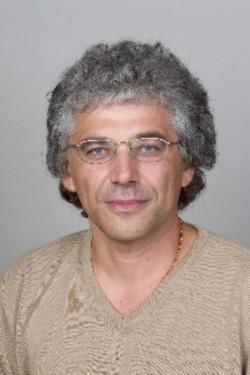
Maria Gouskova is a Professor of Linguistics at the Department of Linguistics, New York University (NYU). She is affiliated with the College of Arts and Science and holds editorial roles as an Associate Editor of Language and board member of NLLT and Phonology . Her research focuses on phonology, morphology, and lexicon, with a particular emphasis on morphophonological interactions, sublexicons, and phonotactic constraints. She earned her Ph.D. in Linguistics from the University of Massachusetts, Amherst (2003) and a B.A. in English Linguistics and German Language/Literature from Eastern Michigan University (1998). Her work bridges theoretical phonology and experimental methods, addressing questions such as how phonological patterns interact with morphology, the role of sublexical phonotactics in grammatical processes, and the learnability of complex segmental inventories. Recent research includes studies on Russian diminutive affixes, gradient phonological constraints, and the phonological properties of compounds. Her publications span topics like allomorphy, lexical phonology, and the typology of morpheme structure constraints. She frequently collaborates on projects investigating the interplay between syntax, phonology, and morphology, as seen in studies of Russian prepositions and compound stress patterns. Her contributions to phonological theory include advancing models of sublexicon theory and nonlocal constraint induction.
Harsha Ram is an Associate Professor in the Department of Comparative Literature at the University of California, Berkeley. His research focuses on Russian and European Enlightenment, modernist literature, and the cultural histories of the Caucasus region. He holds dual B.A. Honors degrees in Italian and Russian from the University of Sydney and University of New South Wales, and a Ph.D. in Comparative Literature from Yale University. His work bridges literary theory, post-colonial studies, and geopoetics, with a particular emphasis on Georgia's literary modernism and its intersections with Russian imperial culture. Key themes include spatial theory, peripheral modernisms, and the transnational dimensions of cultural production. Recent work examines the role of ritual feasts in Georgian national identity and the geopoetics of Eurasian avant-garde movements. Ram has published extensively on figures like Velimir Khlebnikov and Boris Pasternak, exploring their engagement with imperial legacies and revolutionary aesthetics. His book The Imperial Sublime: A Russian Poetics of Empire (2003) remains a seminal study of Russian imperial poetics. Current projects include studies on Georgian literary encounters with Russian culture and the symbolic dimensions of Caucasus representations. His scholarship frequently appears in leading journals such as Modernism/Modernity , Slavic Review , and Ab Imperio . He has held visiting positions at institutions globally and actively participates in interdisciplinary dialogues between literary studies, history, and cultural geography.
Professor Todd Squires is a distinguished faculty member in the Department of Chemical Engineering at the University of California, Santa Barbara, within the Robert Mehrabian College of Engineering. His research focuses on the fundamental principles of transport phenomena as applied to interfaces, membranes, and complex fluids, employing theoretical, computational, and experimental approaches to address significant challenges in micro-scale fluid mechanics. Dr. Squires' educational background includes: BS in Physics, UCLA (1995) BA in Russian Language and Literature, UCLA (1995) PhD in Physics, Harvard University (2002) His research interests span microfluidics and electrokinetics, active and nonlinear microrheology of complex materials, polymer dynamics and sensors, with particular emphasis on non-linear electrokinetic flows, interfacial rheology, and the self-assembly of nanostructured materials. His work bridges fundamental fluid mechanics with practical applications in microfluidic devices, energy storage, and biomedical systems, demonstrating the versatility of this fascinating field. Analysis of Professor Squires' recent publications reveals a consistent focus on interfacial phenomena, with particular attention to the rheological properties of fluid interfaces, particle dynamics in complex fluids, and novel microfluidic techniques for measuring and manipulating these systems. His research demonstrates strong interdisciplinary connections between chemical engineering, physics, and materials science, with applications spanning energy storage, biomedical engineering, and environmental systems. Professor Squires has received numerous prestigious awards and honors: 2018 Robert W. Vaughan Lecture in Chemical Engineering, Caltech 2015 Elected Fellow of the American Physical Society 2013 Mid-Career Award, American Electrophoresis Society 2012 The Dudley Saville Memorial Lecture at Princeton 2010 Pierre Gilles de Gennes Prize 2010 Allan P. Colburn Memorial Lectureship, University of Delaware 2009 Francois Frenkiel Award for Fluid Mechanics 2009 Camille Dreyfus Teacher-Scholar Award 2008 Beckman Young Investigator 2007 NSF CAREER Award 2005 'Rising Star' - Chronicle of Higher Education As principal investigator of the Squires Group, Professor Squires leads a dynamic research team that combines experimental, theoretical, and computational approaches to investigate transport phenomena at interfaces. His work has been supported by major funding agencies including the National Science Foundation, with his CAREER award indicating early recognition of his potential as both researcher and educator. While specific grant details aren't provided in the source material, his extensive publication record and prestigious awards suggest robust and sustained research funding. The Squires Group maintains state-of-the-art laboratory facilities for studying micro-scale fluid mechanics, including specialized equipment for microrheology measurements, microfluidic device fabrication, and interfacial characterization. Their research environment fosters collaboration across disciplines, with connections to materials science, physics, and biomedical engineering researchers at UCSB and beyond.
Alaina Lemon is a Professor of Anthropology at the University of Michigan, affiliated with the College of Literature, Science, and the Arts (LSA). She serves as Director of Undergraduate Studies in Anthropology and holds affiliations with the Center for Russian, East European, and Eurasian Studies (CREES), the Weiser Center for Europe and Eurasia, and the Interdepartmental Program in Anthropology and History. Her research focuses on socio-cultural anthropology, performance studies, and visual culture, with expertise in Russia, the Romani diaspora, and post-Socialist states. Education: BA in Anthropology (University of Wisconsin, 1987), MA (University of Chicago, 1988), and PhD (University of Chicago, 1996). Notable awards include the Wayne S. Vucinich Book Prize (2001), Heldt Book Prize (2001), and a 2023 visiting scholar position at the École des Hautes Études en Sciences Sociales (Paris). Her work bridges historical and contemporary issues, exploring themes like phatic labor, media infrastructures, and affective politics. Recent projects include editing the documentary Tremors (2023) and researching Soviet-era moral projects through studies of Moscow’s Metro and canine-human interactions. Lemon’s interdisciplinary approach integrates performance studies, linguistic anthropology, and critical race theory to analyze cultural dynamics in transitional societies. Grants include a 2019-2024 University of Michigan Office of Research grant for film collaboration and a 2002-2003 International Research and Exchanges Board fellowship. She has authored influential books such as Between Two Fires (2000) and Technologies for Intuition (2017), and her films document Romani experiences and urban cultural phenomena.
Svetlana Evdokimova is a Professor of Slavic Studies and Comparative Literature at Brown University, where she has been a faculty member since 1991. She previously taught at Yale University and holds a PhD in Slavic Languages and Literatures from Yale University and an MA in French Language and Literature from St. Petersburg University. She is a leading scholar in Russian literature of the 19th and 20th centuries, with a focus on Pushkin, Dostoevsky, Tolstoy, and especially Chekhov. Her research explores the intersections between literature, philosophy, history, and aesthetics. She has published extensively on Russian Romanticism, the Russian intelligentsia, and the cultural significance of St. Petersburg. Her major works include Pushkin's Historical Imagination (1999) and Staging Existence: Chekhov's Tetralogy (2023), with a forthcoming monograph A Genius of Culture: The Chekhov Phenomenon . The recent publications reflect a deep engagement with Chekhov’s aesthetics, corporeality, and cultural philosophy, as well as Dostoevsky’s dialogues with Nietzsche and postmodern thought. Her work frequently examines the ethical dimensions of literature and the interplay between fiction and historical consciousness. Choice Outstanding Academic Title (2004) for Alexander Pushkin's Little Tragedies: The Poetics of Brevity NEH Research Fellowship (1995–1996) IREX Research Fellowship (1995) The Bogliasco Foundation Residency Fellowship (2018) Paul C. Gignilliat Fellowship, Yale University (1988–1989) Council on Russian and East European Studies Summer Fellowship, Yale University (1985) She has advised numerous graduate students and has secured competitive research grants from the National Endowment for the Humanities, IREX, and Brown University. She is actively involved in scholarly communities, including the Modern Language Association, AATSEEL, and author-specific societies such as the North American Chekhov Society and the North American Dostoevsky Society. She teaches courses on Russian Romanticism, major novelists, theater, and cultural history.
Elizabeth Blake is an Associate Professor of Russian and Division Coordinator in the Department of Languages, Literatures and Cultures at Saint Louis University's College of Arts and Sciences. Her research focuses on 19th-century Russian literature, particularly Dostoevsky and Tolstoy, with emphases on empire studies, exile cultures, and religious dialogues between Russian Orthodoxy and Polish/French Catholicism. She has published two major books: *Dostoevsky and the Catholic Underground* (2014) and *Travels from Dostoevsky’s Siberia* (2019). Her work bridges literary analysis with historical context, examining themes like human rights, cultural mobility, and gender roles. Blake teaches courses ranging from language proficiency to advanced topics in Russian literature and cinema, including *Russian and Soviet Cinema* and *Dostoevsky Through the Centuries*. She has received numerous grants including Mellon and Fulbright-Hays awards for research in Russia and Poland. Her academic career includes extensive reviews for journals like *Slavic Review* and *Canadian Slavonic Papers*, alongside professional involvement with organizations such as the North American Dostoevsky Society. Blake’s teaching excellence is recognized through awards like the Spirit of the Billiken Award (2016), reflecting her impact on both scholarship and student mentorship.
Ksana Blank is a Senior Lecturer at Princeton University’s Department of Slavic Languages and Literatures. She coordinates the Russian Language Program and directs the Princeton-in-Petersburg Program, fostering academic exchange and interdisciplinary research. With a PhD in Russian Literature (Columbia University, 1997) and a BA in French Philology (St. Petersburg State University, 1979), her academic career spans over two decades at Princeton, preceded by teaching roles at Hunter College and Middlebury College Russian Summer School. Education: PhD, Russian Literature, Columbia University (1997) BA, French Philology, St. Petersburg State University (1979) Her research centers on Russian literature, emphasizing stylistic analysis and interdisciplinary connections with music, visual arts, folklore, and religious philosophy. Notable works include studies on Dostoevsky’s dialectics, Gogol’s The Nose , and the interplay between Russian modernism and Western art movements. She has authored multiple books and articles, many translated into Russian, and has published in academic journals across Russia, Europe, and China. Recent publications explore Dostoevsky’s paradoxes, Gogol’s linguistic innovation, and the intersection of Russian literature with music (Shostakovich), art (Malevich), and philosophy. Her 2023 book Парадоксы классики expands traditional interpretations of classic works through interdisciplinary lenses, while her 2021 The Nose guide deciphers Gogol’s wordplay and its narrative function. Earlier works address Tolstoy’s spiritual crisis and Bakhtinian dialogism in Russian literary theory. While no scientific awards are listed, her contributions to pedagogy include advanced Russian language courses and graduate-level Tolstoy studies. She currently works on Leo Tolstoy’s The Prisoner of the Caucasus and teaches courses on Russian literature, spirituality, and translation.
Laura Matthews is a Lecturer in the Department of Slavic Languages and Literatures at Princeton University. Her work bridges nineteenth-century Russian literature with interdisciplinary themes such as pedagogical theory, social justice, and trauma-informed practices. Education B.A. from University of Pennsylvania Ph.D. in Slavic Languages and Literatures from Princeton University (2022) Research Interests span the intersection of literature and education, focusing on nineteenth-century Russian pedagogical reforms, metaphor theory in educational contexts, ethical dimensions in literature, and trauma-responsive child welfare frameworks. She also explores narratives of exile and displacement.
Carol Apollonio is a Research Professor in the Department of Slavic and Eurasian Studies at Duke University's Trinity College of Arts & Sciences. She specializes in Russian literature, Russian-Japanese translation, and language pedagogy, with a career spanning academia and high-level U.S. Government interpretation in nuclear weapons negotiations. Education: Ph.D. in Slavic Languages and Literatures (1987) from University of North Carolina, Chapel Hill Her research focuses on Anton Chekhov's literary legacy, cross-cultural translation dynamics, and pedagogical innovation. Recent publications in The Times Literary Supplement explore Chekhov's reception in English-speaking contexts and translation methodologies. Professional Activities: Co-editor of Chekhov's Letters (2018) Translator of Alisa Ganieva's works (2015-2022) Public intellectual contributions on Russian culture and academic labor
Jeffrey Rossman is an Associate Professor at the University of Virginia , affiliated with the Department of History and serving as Director of the Center for Russian, East European, and Eurasian Studies . His work bridges historical analysis with cultural and literary studies, focusing on Russia/USSR, Modern Europe, Communism, Genocide, Espionage, and Jewish Cultural Studies. Education: Ph.D., University of California, Berkeley, 1997 A.B., Harvard University, 1989 His research explores worker resistance under Stalin, the intersection of Jewish identity and German literature, and the role of translation in cultural exchange. He has authored key works on Soviet labor movements and Holocaust memory, blending historical narratives with literary theory. Jeffrey’s recent publications and Google Scholar contributions highlight trends in 20th-century European history , Yiddish-German literary dynamics , and translation as a tool for identity formation . His work spans comparative literature, cultural memory, and diaspora studies, emphasizing interdisciplinary approaches. Scientific Awards: ACLS Collaborative Research Fellowship (2013-15) Harry Frank Guggenheim Foundation Research Grant (2013-15) Multiple grants from the University of Virginia’s College of Arts & Sciences and Faculty Summer Research Grant program Fulbright-Hays and IREX fellowships for international research As an educator, Rossman has taught courses such as Genocide: A Global History and Stalinism , mentoring students in historical and literary analysis. His lab, the Center for Russian, East European, and Eurasian Studies, fosters research on Soviet history, Jewish cultural studies, and transnational literary exchange.
Vladimir Golstein is Professor of Slavic Studies and Interim Chair of Slavic Studies at Brown University. He has previously held teaching positions at Oberlin College (1990–1993) and Yale University (1993–2003), where he taught a wide range of courses on Russian and Western literary traditions. Ph.D. in Slavic Languages and Literatures, Yale University, 1992 B.A. in Philosophy, Columbia University, 1982 M.S. in Computers, Moscow Institute of Management His research centers on Russian culture, religion, philosophy, and poetry from the 19th and 20th centuries. He has published extensively on major Russian authors including Pushkin, Gogol, Tolstoy, Dostoevsky, Chekhov, Tsvetaeva, and Bulgakov. His book Lermontov's Narratives of Heroism (1998) explores heroism in 19th-century Russian literature. He is currently completing a monograph on generational conflict in Russian society. The recent publications reflect a consistent engagement with Russian intellectual and cultural history, blending literary analysis with philosophical and religious inquiry. His work often examines the moral and spiritual dimensions of literature, particularly in relation to the role of the intelligentsia and artistic expression under political pressure. There are no scientific awards listed in the provided text. Professor Golstein has supervised graduate and undergraduate students and teaches courses such as Russian Culture: From Peter the Great to Putin , Dostoevsky , Russian Poetry: Silver Age , and Roaring Twenties: Literature, Arts, and Politics in Post-Revolutionary Russia . While specific grant information is not mentioned, his ongoing research and publication record suggest active scholarly engagement. He is deeply involved in the academic life of the Department of Slavic Studies at Brown, contributing to curriculum development and leadership as Interim Chair. His interdisciplinary approach connects literature with philosophy, religion, and visual arts, fostering a holistic understanding of Russian cultural evolution.
Susan Smith-Peter is a Professor of History at the College of Staten Island, City University of New York, specializing in Russian history beyond Moscow and St. Petersburg. Her research focuses on regional identity, civil society development, and imperial governance in 19th-century Russia, with particular attention to Siberia and provincial dynamics. She holds a Ph.D. from the University of Illinois at Urbana-Champaign and a B.A. from Ohio University. Her work analyzes how Tsarist administrative frameworks fostered subnational identities through statistical bureaus, agricultural societies, and provincial newspapers. Notable contributions include *Imagining Russian Regions* (2018), which argues that autocracy’s civil society initiatives inadvertently fueled revolutionary movements. Her research has been supported by grants from the Fulbright Program, American Historical Association, and IREX. Professor Smith-Peter’s publications span journals like *Slavic Review* and *Kritika*, exploring topics from sugar beet industries to colonial Alaska. She has translated key texts into Russian and edited historical documents such as *The Great Republic Tested by the Touch of Truth*. She serves on campus committees and previously chaired Columbia University’s Seminar on Slavic History and Culture. Key Awards: Fulbright Fellowship, American Historical Association Grant, IREX Grant Grants: Fulbright-Hays Fellowship, University of Illinois Grant, CUNY Grant Her interdisciplinary approach bridges economic, cultural, and political history, emphasizing regional agency within imperial contexts. Ongoing projects explore Siberian historiography and the legacy of 19th-century provincial activism.
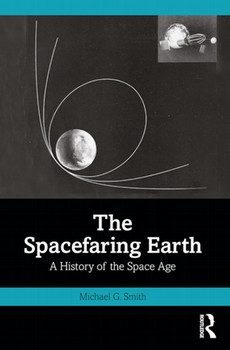
Michael G. Smith is a Professor of History at Purdue University's College of Liberal Arts, specializing in Russian History and Aerospace History. His office is located in BRNG 6170, where he holds office hours by appointment and before or after class. Dr. Smith teaches a diverse range of courses including History of Russia to 1861 (HIST 238), History of Russia from 1861 (HIST 239), History of Aviation (HIST 384), and History of the Space Age (HIST 387), along with numerous advanced seminars on Russian history, aerospace history, and global historical topics. Dr. Smith earned his Ph.D. from Georgetown University in 1991 and has established himself as a leading scholar in both Russian revolutionary history and aerospace history. His research demonstrates remarkable interdisciplinary breadth, connecting linguistic studies with political history in the Soviet context while simultaneously exploring the cultural dimensions of space exploration and aviation history. His scholarly output reveals two major research trajectories: deep investigations into the Russian Revolution with particular focus on language policy, nationalities issues, and revolutionary violence in Azerbaijan and the Caucasus region; and pioneering work on the history of aerospace, space exploration, and the cultural dimensions of the Space Age. These dual interests converge in his examination of how technological innovation intersects with political ideology and national identity formation. Dr. Smith has successfully mentored numerous undergraduate and graduate students whose research has resulted in publications in respected journals such as the Journal of Purdue Undergraduate Research, Quest: The History of Spaceflight Quarterly, and Astropolitics. His students have explored diverse topics including Purdue's aviation pioneers, NASA mission insignia, Shuttle-Mir program, and regional impacts of space programs. Working closely with the Purdue Archives, Dr. Smith has developed innovative archival-research seminars that have produced multiple student publications and special projects including Flight Paths: Purdue University's Aerospace Pioneers and Purdue Students Study Boilermaker Eugene Cernan's Remarkable Career. His commitment to connecting historical research with contemporary technological heritage has created unique opportunities for students to engage with primary sources related to aerospace history.
Auritro Majumder is Associate Professor of English at the University of Houston's College of Liberal Arts and Social Sciences, holding a courtesy appointment in the India Studies Program. His academic profile spans literary scholarship, critical theory, and intellectual history with a focus on non-Western perspectives. His educational background includes a Ph.D. in English from Syracuse University (2014), a Certificate in Critical Theory from Cornell University (2012), an M.A. (First Class) in English from Jadavpur University (2009), and a B.A. (First Class Honours) in English from Jadavpur University (2007). Majumder's research centers on peripheral internationalism and decolonial knowledge production , examining literary traditions across India, the Soviet Union, China, Latin America, and the United States. His work bridges literary theory , critical race studies , and global political movements , with particular emphasis on Bengali literature, caste-race intersections, and South-South cultural networks. His monograph Insurgent Imaginations: World Literature and the Periphery (Cambridge University Press, 2020) redefines world literature through non-Western frameworks. Analysis of his 15 most recent publications reveals consistent engagement with decolonial aesthetics , transnational solidarity , and subaltern epistemologies . His scholarship demonstrates interdisciplinary reach spanning literary studies, political theory, film criticism, and comparative intellectual history, with increasing focus on contemporary debates around planetary consciousness and peripheral modernities. His scientific recognition includes: Project Completion Grant, CLASS (2019) William Lee Pryor College Professorship (2018-2019) Research Progress Grant (2017) CLASS Research Funds (2016) New Faculty Summer Research Grant (2015) Majumder actively contributes to academic service as Executive Committee member of the Modern Language Association’s South Asian and South Asian Diasporic Language, Literature and Culture Forum, editorial board member for Mediations , jurist for the National Endowment for the Humanities, and reviewer for multiple international journals. He has lectured globally across North America, South Asia, Europe, and Brazil. His teaching portfolio includes courses on postcolonial literature, modern Indian literature, and graduate seminars in postcolonial theory. Current projects include a monograph titled The Global South in Literature and Theory and a co-edited anthology Cultures of the Cold War in South Asia .
Anindita Banerjee is an Associate Professor in the Department of Comparative Literature at Cornell University's College of Arts and Sciences, with cross-appointments in the Environment & Sustainability Program, History of Art and Visual Studies, Literatures in English, and Romance Studies. She serves as SAP Core Faculty for the South Asia Program and has been instrumental in establishing Cornell's Environmental and Sustainability Program, where she built and chaired the environmental humanities concentration for four years. Her research explores the relationship between imagining and making futures across diverse contexts, focusing on the evolving interfaces between science, technology, and culture; natural and built environments; media and information systems; and the migration of people, things, ideas, and images. Spanning Eastern Europe, Central Asia, the Indian subcontinent, and Latin and African Americas, her work examines networks of exchange, innovation, production, and consumption that emerge outside conventional coordinates of the modern world. Her scholarship has been featured in BBC Culture, Radio Free Europe, Medium, and Meduza. She has authored multiple books including the award-winning We Modern People: Science Fiction and the Making of Russian Modernity (2013), which won the Science Fiction and Technoculture Studies book prize, and is currently working on Reactionary Worldbuilding (MIT Press, 2026) and Border Environments (Cornell, 2026). Her research demonstrates consistent engagement with science fiction as a critical lens for examining global environmental, technological, and social transformations. Science Fiction and Technoculture Studies book prize Ivy+ Mellon Leadership Fellow (2024-25) Academic Venture Fund grant from Cornell Atkinson Center for Sustainability Social Sciences and Humanities Research Fellowship Banerjee serves as a faculty fellow of the Cornell Atkinson Center for Sustainability and is a participating member of cross-college programs in Biology and Society, Media Studies, and Visual Studies. She co-led a workshop series and engaged-learning course on border spaces and environmental justice supported by a grant from the Mario Einaudi Center for International Studies. As an Ivy+ Mellon Leadership Fellow, she serves as Special Assistant to the Dean of the Cornell School of Continuing Education, focusing on academic leadership and governance with an emphasis on diversity and inclusion.