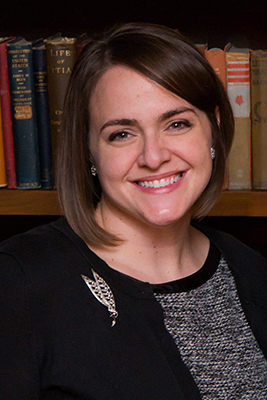
Yin Liu is a Professor and Department Head of English at the University of Saskatchewan’s College of Arts and Science. She holds a Ph.D. from the University of Alberta and specializes in medieval English language, literature, and digital humanities. Her research focuses on Middle English romances, medieval manuscript studies, and the intersection of textual and visual communication. Current projects include the Medieval Codes initiative. Education: B.A. and Ph.D. (English) from the University of Alberta. Research interests include: Medieval English language and literature History of the English language Manuscript studies Medieval reading practices Digital humanities applications Teaching includes courses like Middle English Romances and historical linguistics. She has been honored with three Teaching Excellence Awards (2005, 2017, 2018) from the University of Saskatchewan. Her work bridges textual analysis and digital innovation, exploring how medieval texts were read, annotated, and transmitted. She supervises graduate students in English and collaborates on interdisciplinary projects such as ArchBook and the Oxford English Dictionary’s historical methodologies.
Marco Bianchi serves as Senior Lecturer and Head of the Department of Nordic Languages at Uppsala University, where he also acts as Proinspector at Gotland Nation. His academic leadership extends to editorial roles as Editor of Futhark: International Journal of Runic Studies and member of the Samnordisk runetext database committee. His educational trajectory includes a PhD in Nordic Languages from Uppsala University (2010) and a lic.phil. degree in general history, Old Norse philology, and comparative Old Germanic linguistics from the University of Zurich (2003). PhD in Nordic Languages, Uppsala University (2010) lic.phil. in History/Old Norse/Comparative Germanic Linguistics, University of Zurich (2003) Bianchi's research centers on runology, historical sociolinguistics, and Germanic language history, with particular emphasis on textual boundaries and sociocultural contexts of runic inscriptions. His current Eternity Runes Project investigates interdisciplinary connections between epigraphy, semiotics, and Viking Age communication practices, revealing how runestones functioned as social media in early Scandinavian societies. Methodologically, he bridges digital humanities with traditional philological analysis to decode multilinear inscriptions and para-graphic elements. His 12+ publications since 2007 demonstrate consistent focus on runic studies, evolving from technical analyses of inscription boundaries (2012) to contemporary digital corpus management (2022). Key thematic clusters include sociolinguistic interpretations of runestones, editorial standardization for international databases, and critical reassessments of historical runology pioneers like Otto von Friesen. Bianchi actively shapes the field through graduate supervision and editorial stewardship, mentoring students like Sonja Entzenberg and Simon Karlin Björk while guiding Futhark 's publication strategy. His work receives international recognition through citations in Wikipedia and academic discourse, though formal awards aren't documented.
Jonatan Pettersson is an Associate Professor in Scandinavian languages at Stockholm University, working within the Department of Swedish Language and Multilingualism. His academic work focuses on medieval textual culture, Scandinavian philology, and historical linguistics, with particular emphasis on Bible translations and the evolution of Old Swedish language. He is actively involved in two key research groups: Scandinavian Philology and Language History, and Network Language and Power. Dr. Pettersson's research interests primarily center on medieval textual culture, with special focus on Bible translations in the Nordic region, vernacularization processes, and manuscript studies. His work examines how language evolved from Old Swedish to Early Modern Swedish, particularly through religious texts. He investigates the relationship between language, power structures, and cultural change in medieval Scandinavia, analyzing how translation practices reflected and shaped societal transformations. His research also explores the literary reception of courtly culture and romance literature in East Scandinavia. His recent publications (2021-2025) demonstrate a consistent focus on change in medieval textual culture, particularly examining how biblical texts were translated and adapted in the Nordic context. His work shows increasing attention to methodological approaches for studying textual change, with publications from 2023-2025 forming a cohesive exploration of models of change. The research spans from specific manuscript analyses to broader theoretical considerations of how we conceptualize textual evolution. Dr. Pettersson is actively involved in the Scandinavian philology and language history research group, which focuses on the study of language and literature from older periods, particularly runic, Old Swedish, Old Icelandic, and Early Modern periods. He also contributes to the Network Language and Power, which examines how language interacts with power structures - a field that has gained relevance with rising populism and societal polarization.
University of the Highlands and IslandsUnited Kingdom
Dr. Ragnhild Ljosland is a sociolinguist and lecturer at the University of the Highlands and Islands (UHI), affiliated with the Archaeology Institute and Language Sciences Institute at Orkney College. She specializes in Orkney and Shetland dialects, runology, and Norse cultural heritage. Her research explores linguistic shifts, historical discourse, and the interplay between language and identity in the Northern Isles. Education: PhD in Sociolinguistics, Norwegian University of Science and Technology (NTNU), 2008 Cand. Philol. (Master’s equivalent) in Scandinavian Studies Research Interests: Discursive construction of cultural identity Norn to Scots language transition Runic inscriptions and modern rune use Scots language revitalization Orkney witchcraft trials narratives Publications & Media: Over 30 peer-reviewed articles, books, and chapters, including works on Orkney dialect grammar, modern rune carving, and historical linguistics. Featured in documentaries like Mystic Britain: The Monster of Maeshowe and media appearances on Scandinavian heritage. Awards: 2017 Highlands and Islands Student Association Award for Best Research Supervisor. Roles: Module leader for MLitt courses on Orkney dialects, runology, and Norse Studies Editorial board member, Scottish Language journal External examiner, University of Stavanger Labs/Teams: Collaborates on projects like the AHRC-funded Orkney and Shetland Dialect Corpus and community heritage initiatives.
Felipe A Rojas Silva is an Associate Professor of Archaeology and the Ancient World at Brown University, affiliated with the Joukowsky Institute and Egyptology and Assyriology. His research focuses on the archaeology and history of the eastern Mediterranean, emphasizing the archaeology of memory, ancient scripts, and cross-cultural antiquarian traditions. Education: PhD in Archaeology from the University of California, Berkeley (2010); MA in Archaeology from Harvard University (2004); MA in Classics from New York University (2002). Research Interests: Explores how ancient communities interacted with material traces of their past, including studies on Anatolian rock-cut monuments, Roman interactions with pre-classical remains, and the global history of antiquarianism. Key themes include the archaeology of memory, sensory engagements with the past, and the cultural afterlives of ancient monuments. Recent Work Trends: His publications analyze the re-interpretation of ancient monuments, colonial encounters with material culture, and the role of smell and visual signs in historical consciousness. Collaborations include projects at Petra, Aphrodisias, and Sardis. Grants and Collaborations: Involved in multidisciplinary projects, such as the study of Petra’s rural landscapes and the analysis of ancient water systems in Anatolia. Co-edited volumes on antiquarianism and rock-cut monuments highlight his focus on cross-cultural comparisons. Labs/Teams: Active in fieldwork at sites like Umm Huwaiwitat (Petra) and Labraunda (Turkey), emphasizing landscape archaeology and material culture studies.
Mikael Males is a Professor in Old Norse Philology at the University of Oslo , affiliated with the Old Norse and Celtic Philology section. His research focuses on medieval Scandinavian literature, particularly skaldic and eddic poetry, textual criticism, and the intersection of language, faith, and historical context. Research Interests include dating criteria for Old Norse poetry, metrics and prosody, pseudonymous skaldic works, and the cultural impact of Irish and Christian elements on Norse paganism. He has extensively studied manuscripts like the Fifth Grammatical Treatise and Skáldskaparmál . Recent publications address the chronology of eddic poems, the role of textual criticism in philology, and the poetic genesis of Old Icelandic literature. His work often involves interdisciplinary analysis of historical, linguistic, and mythological dimensions. He is associated with research groups in Linguistics and Poetics and contributes to projects like Old Norse Poetry and the Development of Saga Literature .
Alexandra Pesch is a Senior Research Fellow at the Centre for Baltic and Scandinavian Archaeology (ZBSA) and Associate Professor at the Christian-Albrechts-University of Kiel, Faculty of Philosophy, affiliated with the Institute of Prehistory and Early History and the Institute of Scandinavian Studies, Frisian Studies and General Linguistics. She holds a venia legendi in Prehistoric and Early History Archaeology and Old Norse Philology and was appointed as an extraordinary professor in 2020. Her research focuses on archaeological imagery, particularly the interpretation of Germanic and Viking visual culture from the first millennium AD. She specializes in gold bracteates, gold neck collars (guldhalskragar), gold foil figures (guldgubbar), picture stones, and runestones, analyzing their symbolic meanings and role in elite communication and religious practices. Her interdisciplinary approach integrates archaeological evidence with Old Norse textual sources and philology. The trends in her recent publications reveal a sustained focus on the iconography and symbolism of Migration Period art, particularly goldwork. She investigates the continuity of Germanic artistic traditions into the early medieval period, the function of divine and elite imagery, and the social mechanisms behind artistic production. Her work often challenges popular misconceptions, such as the so-called 'Viking compass' (Vegvisir), and critically examines the modern reception and misuse of ancient symbols. Oscar Montelius Medal by Svenska Fornminnesföreningen, October 2016 Alexandra Pesch has supervised numerous research projects and workshops, often in collaboration with international scholars. She is a member of several academic boards, including the Scientific Advisory Board of the DFG Specialized Information Service Northern Europe and the Monument Council of the State of Schleswig-Holstein. She has not received specific grant mentions in the text but her long-term employment and project leadership imply sustained funding. She has edited multiple conference volumes and contributed extensively to academic discourse. She leads research at the ZBSA, particularly within the thematic area of 'Mensch und Artefakt' (Human and Artefact), and has continued the scholarly legacy of Karl Hauck on bracteate research. Her work is central to the Johanna Mestorf Academy at CAU Kiel, and she is involved in the Schleswig Section of the Schleswig-Holstein University Society and the International Saxon Symposium.
Jill Hamilton Clements is an Associate Professor of English at the University of Alabama at Birmingham (UAB), within the College of Arts and Sciences. Her research focuses on Old and Middle English literature, Old Norse-Icelandic texts, and medieval death practices. She explores themes like material culture, memory studies, and medieval law, with a current book project on the interplay of dead bodies and texts in early English commemorative genres. Her teaching spans Old English, medieval epic, and language history. She co-directs the Ancient, Medieval, and Renaissance Studies minor and co-organizes 'Dinner+Movie' events linking pre-modern texts to film. Education: B.A. (Phi Beta Kappa) from Truman State University, M.A. from Western Michigan University’s Medieval Institute, and Ph.D. from the University of Illinois. Her work appears in Review of English Studies , Gesta , and Anglo-Saxon England . Research interests include death and burial archaeology, medieval textual analysis, and interdisciplinary approaches to manuscripts and artifacts. She actively presents at conferences like the International Congress on Medieval Studies (Kalamazoo) and publishes on topics like hell-mouth imagery, legal texts, and gender in medieval literature.
Paola Peratello is a Researcher in Germanic Philology and Linguistics (GERM-01/A) at the Department of Comparative Linguistic and Cultural Studies, Ca' Foscari University of Venice. She specializes in runology, Old Norse manuscript traditions, and digital philology, with a focus on multispectral imaging and digital scientific editions. Research Projects: CHANGES - Cultural Heritage Active Innovation for Sustainable Society (PNRR-funded) Education: PhD in Germanic Philology (2023, University of Verona) and Master's in Digital Humanities (2019, Ca' Foscari University). Her work bridges paleography, codicology, and digital humanities, particularly through the Menota Archive collaboration. She has presented at major conferences like DH2024 and AIUCD2023. Scientific Awards: Doctoral scholarship from the Department of Excellence (2018-2022) She collaborates across disciplines, integrating neuroscience and digital methods for cultural heritage analysis, and has contributed to curatorial projects on marginalized historical narratives.
Kristel Zilmer is Professor of Runology and Iconography at the Department of Archaeology, Museum of Cultural History, University of Oslo since May 2020. Previously serving as Associate Professor at the same institution (2019-2020), she has held academic positions at Western Norway University of Applied Sciences (2013-2019) and University of Tartu, Estonia (1997-2008). Her career spans over 25 years of research in Scandinavian textual cultures with focus on runic inscriptions across historical periods. Her research interests encompass Runology , Epigraphy , and Textual Cultures from the Iron Age through Middle Ages, with specialized focus on writing practices, visuality, materiality, and identity construction in Norse societies. She investigates script-bearing artifacts as cultural interfaces, examining how runes functioned within social contexts and how Old Norse literature is received in modern times. Her methodological approach integrates archaeological, philological, and media-theoretical perspectives. Analysis of her recent publications reveals consistent focus on runic artifacts from Norwegian contexts (Bergen, Svingerud, Hole), demonstrating expertise in multimodal analysis of inscribed objects. Her work bridges archaeological findings with linguistic interpretation, particularly examining how runes operated within medieval urban environments and sacred spaces. The 2025 Antiquity paper represents cutting-edge integration of radiocarbon dating with epigraphic analysis. Series Editor for Bibliotheca Nordica (Novus Forlag) Norway representative on International Advisory Board of International Saga Conference Establishing member and former leader of 'Språk og Samfunn' research group Zilmer actively supervises graduate students and leads major research initiatives including the Ui3D project (Understanding and Immersion in 3D) and participation in the Research Network of Urban Literacy. Her grant portfolio includes projects on medieval Bergen literacy practices and Christian identity formation in Northern Europe. She directs the Centre for Viking-Age Studies (ViS) research group and serves on multiple editorial and advisory boards including Kjeldeskriftkommisjonen (National Archives). Her laboratory work centers on the Centre for Viking-Age Studies where she applies 3D modeling techniques to runic artifacts, developing new methodologies for analyzing inscribed objects through digital humanities approaches. Current collaborations with international teams focus on cross-cultural comparisons of medieval writing practices across Nordic regions.
Norwegian University of Science And TechnologyNorway
Jan Ragnar Hagland is a Professor at NTNU’s Department of Nordic Studies and Literature, specializing in Old Norse philology, runic studies, and the history of the Norwegian language. His research focuses on medieval legal texts, Icelandic sagas, and the intersection of literacy practices with socio-historical contexts. He has authored or co-authored numerous books and articles, including editions of medieval legal codes, translations of sagas, and studies on runic inscriptions. Affiliations: NTNU, Faculty of Humanities; Norwegian Academy of Science and Letters Key Projects: Trøndersk Språkhistorie (Trøndelag Language History Project), Runestone Analysis, Saga Translation Projects His work bridges textual analysis and historical context, examining how language and literature reflect cultural, legal, and social dynamics in medieval and early modern Scandinavia. Notably, he explores the role of literacy in shaping local identities and the transmission of legal and mythological knowledge.
Helen Kästik is a Lecturer at the University of Tartu, Faculty of Arts and Humanities, Department of Estonian and Comparative Folklore. She has been a contractual lecturer since 2011 and serves as Managing Editor of the Journal of Ethnology and Folkloristics since 2015. Her roles have included project coordination and management in cultural research at partial workloads, reflecting sustained engagement with academic administration and research infrastructure. Master’s Degree in Folkloristics, University of Tartu (2010, cum laude) Doctoral Studies in Cultural Studies and Arts, University of Tartu (2010–present) Bachelor’s Degree in Estonian and Comparative Folklore, University of Tartu (2007) German Language Studies, Bremer Volkshochschule (2000) Secondary Education, Rakvere Gymnasium (1999) Helen Kästik's research centers on ethnology, folklore, and cultural heritage, with a particular focus on Estonian regilaul (runic song), material culture, and community-based heritage practices. Her work explores how traditions are embodied, represented, and reinterpreted in contemporary contexts. She investigates the interplay between official heritage policies and grassroots cultural expressions, emphasizing participatory and inclusive approaches. Her recent publications, primarily as editor of the Journal of Ethnology and Folkloristics and contributions to Studia Vernacula , reflect a consistent thematic focus on narrative, belief, materiality, and cultural representation. These works highlight interdisciplinary trends in folklore studies, integrating ethnographic, historical, and theoretical perspectives. The editorial nature of many outputs underscores her role in shaping scholarly discourse in the field. Helen Kästik has not received publicly listed scientific awards in the provided text. She has been actively involved in research projects funded by the Estonian Research Council and the Ministry of Culture, including large-scale initiatives on vernacular interpretations of uncertainty and cultural heritage as a socio-cultural resource. She has served on doctoral program councils and faculty boards, contributing to academic governance. Her collaborative work with scholars like Kristin Kuutma and Ülo Valk demonstrates strong integration into Estonia’s academic folklore network. She is affiliated with several academic organizations, including the Academic Society of Folklore, Nefa Tartu, and has participated in the Graduate School of Culture Studies and Arts and the Centre of Excellence in Cultural Theory.
Karoline Kjesrud is an Associate Professor at the Department of Archaeology, University of Oslo, specializing in interdisciplinary medieval studies combining philology, art history, and archaeobotany. She works on cultural phenomena related to nature, religion, and knowledge through analyses of texts, images, and material culture. Research focuses on plant knowledge in Viking and medieval Norway, human-animal relations, and cultural heritage preservation Leading the Nordic People and Plants project and co-organizing archaeobotanical databases Collaborates with international institutions via Erasmus+ and other networks Her recent publications explore topics like medieval food rituals, plant symbolism, and right-wing appropriation of historical symbols. She serves as leader of Collegium Medievale and board member of Middelalder Oslo . Participates in the interdisciplinary REA:Life project for pharmaceutical innovation using cultural heritage Organizes exhibitions like Arv and Wake for Fehn Active in the Norse Hagiography Network and Arthurian Society
Norwegian University of Science and TechnologyNorway
Ingrid Ystgaard is an Associate Professor in the Department of Historical and Classical Studies at the Norwegian University of Science and Technology (NTNU), Faculty of Humanities. Her research focuses on social dynamics, environmental archaeology, and settlement patterns in the Iron Age (500 BCE–1000 CE), with particular attention to warfare, material culture, and human-environment interactions. She led archaeological excavations at Ørland Air Base (2015–2019), uncovering Early Iron Age and Viking Age settlements. Ystgaard earned her PhD in Archaeology from NTNU in 2014, analyzing warfare in Central Norway through weapon grave and fort analysis. She has extensive field experience in Norway and Roman Egypt. Her educational background includes a PhD in Archaeology (2014) and an MSc thesis on bygdeborger (village forts) in Trøndelag (1998). She teaches courses on archaeology, material culture, and methodological theory at NTNU. Research interests emphasize Iron Age social hierarchies, mobility, and environmental adaptation. Her work combines interdisciplinary methods like pollen analysis, radiocarbon dating, and geophysical surveys. Recent publications explore open access publishing in archaeology, Iron Age settlement organization, and environmental interactions at coastal sites. Ystgaard advises bachelor and master students on archaeological methods, theory, and historical periods. She collaborates with international institutions and actively disseminates findings through public lectures, podcasts, and media outlets. Key projects include excavations at Ørland and analysis of the 536 CE climate crisis's impact on settlements.
Rodney Edvinsson is a Professor at the Department of Economic History and International Relations at Stockholm University. His research spans multiple centuries of economic data, focusing on: Historical GDP reconstruction Monetary system evolution Demographic and climatic impacts on economies Gender economics Pre-industrial agricultural output Research Highlights: Edvinsson has pioneered long-term economic analyses through projects like: Constructing a 700-year Consumer Price Index for Sweden Analyzing Swedish GDP 1620-1800 using harvest data Studying gender labor dynamics during Sweden's 'housewife era' (1930-1970) Investigating copper standard monetary systems in early modern Sweden Publication Trends: His 15 most recent articles reveal sustained expertise in: Historical price indices Monetary policy continuity Demographic-economic interactions Gender role economics Climate impact modeling Pre-industrial market systems Key Contributions: Edvinsson's work has transformed historical economic analysis through: Creation of multi-century datasets Integration of climatic variables into economic models Re-evaluation of pre-industrial productivity Challenging traditional mercantilist narratives Developing time-use methodologies Exposing structural breaks in economic growth patterns