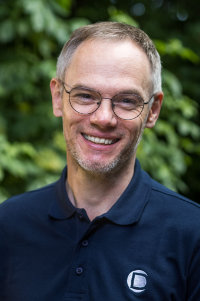
Batin Latif AYLAKView profile
Associate Professor
Batin Latif AYLAK serves as Associate Professor in the Department of Industrial Engineering at the Faculty of Engineering, Turkish-German University, Turkey. Previously, he held an Assistant Professor position at Hitit University starting in 2015. His academic career spans over a decade of research at the intersection of industrial engineering, logistics, and artificial intelligence. His educational foundation includes: Doctorate in Mechanical Engineering from University of Duisburg-Essen (2010-2015) Master's degree in Mechanical Engineering from University of Duisburg-Essen (2008-2010) Bachelor's degree in Industrial Engineering from Istanbul Kültür University (2001-2006) with full scholarship Dr. AYLAK's research pioneers the integration of artificial intelligence in supply chain optimization, with particular emphasis on sustainable logistics systems. His work bridges theoretical advancements with practical applications in blockchain implementation for supply chain transparency, machine learning-driven energy forecasting, and intelligent warehouse management. He has developed novel frameworks like SustAI-SCM for agentic AI in sustainable supply chains and contributed significantly to understanding digital transformation in Turkey's logistics sector. His publication trajectory (2021-2025) reveals a strategic evolution from foundational logistics research toward cutting-edge AI applications. Early work focused on optimization algorithms and blockchain integration, while recent publications demonstrate leadership in agentic AI systems for sustainability, advanced predictive modeling for renewable energy, and pandemic-responsive supply chain solutions. This progression highlights his adaptation to emerging technological paradigms while maintaining core focus on supply chain resilience. No scientific awards or fellowships were documented in the provided materials. Dr. AYLAK has secured competitive research funding including project BAP TAÜ - 2018BM0028 for digital trend analysis in Turkey's logistics sector. While his publications indicate collaborative research with multiple co-authors across institutions, no formal graduate student advisement relationships were specified in the available documentation.