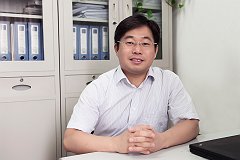
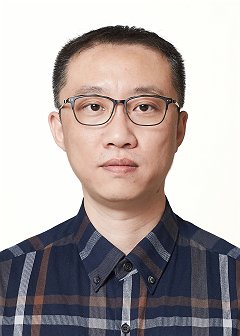
Dr. St. Elmo Wilken is a Researcher at the Institute for Quantitative and Theoretical Biology, Heinrich Heine University Düsseldorf, specializing in the integration of plant development, metabolism, and microbiome interactions through computational modeling approaches. His research spans critical areas in modern plant science: Optimizing plant performance via development-metabolism interfaces Plant microbiota metabolic networks and edaphic adaptation Synthetic and reconstruction biology Theoretical plant biology and data science Dr. Wilken employs constraint-based metabolic models to investigate microbial community design rules and engineering principles for biotechnological applications, leveraging specialized facilities including the Plant Metabolism and Metabolomics Facility and CEPLAS Imaging Platform. His archived funding period (2013-2018) indicates sustained research support for these interdisciplinary projects at the intersection of systems biology and biotechnology.
Chang-ai Sun is a full professor at the School of Computer and Communication Engineering, University of Science and Technology Beijing (USTB). He currently serves as Vice Dean of the Institute for Multidisciplinary Innovation (IMI), Head of the Department of Computer Science, and Director of the Software Engineering Institute at USTB. He received his bachelor's degree in computer science from the University of Science and Technology Beijing and his PhD in computer science from Beihang University, China. Prof. Sun's primary research focuses on software engineering with particular emphasis on software testing, program analysis, and service-oriented computing. Recently, he has been devoted to developing novel theories, techniques, and supporting tools for intelligent software development and maintenance. His work spans theoretical foundations to practical applications in software quality assurance, with increasing focus on AI-driven approaches to traditional software engineering challenges. His publication record shows consistent contributions to metamorphic testing, program repair, and the application of AI techniques to software engineering problems. Recent work explores the intersection of large language models and software testing methodologies, demonstrating both theoretical innovation and practical implementation. Prof. Sun has received significant recognition for his contributions: 11 national Software Prototype/Service Innovation Awards Senior Member of IEEE Distinguished Member of China Computer Federation (CCF) As principal investigator and major investigator, he has completed over 40 research projects funded by the European Union, Australia, China, and Hong Kong. His extensive grant portfolio demonstrates strong international collaboration and significant impact in the software engineering community. He actively mentors students and junior researchers through his leadership roles. Prof. Sun leads the Software Engineering Institute at USTB, where his team focuses on advancing research in software testing, program analysis, and intelligent software development tools. His leadership extends to departmental administration as Head of the Department of Computer Science, shaping curriculum and research directions for one of China's leading technical universities.
Wei Chen is a Research Fellow at the Institute of Software, Chinese Academy of Sciences, where he serves as a PhD and Master's supervisor. He leads the Software Engineering Technology R&D Center and maintains affiliations with the University of Chinese Academy of Sciences and its Nanjing College. Dr. Chen has established himself as a leading figure in intelligent software engineering research within China's academic community. His primary research focuses on four interconnected areas: intelligent code maintenance and quality assurance (particularly Python ecosystem compatibility based on domain knowledge), reliability assurance of complex IoT systems in human-machine-object convergence scenarios, cloud-native system development with emphasis on Function-as-a-Service optimization, and quality assurance of deep learning frameworks in resource-constrained environments. Dr. Chen's work consistently bridges theoretical advances with practical applications, maintaining strong industry collaborations with major Chinese technology companies. Analysis of Dr. Chen's recent publications reveals a strategic integration of AI techniques with traditional software engineering challenges. His research shows increasing emphasis on leveraging large language models for IoT component synthesis, sophisticated dependency management solutions for Python ecosystems, and innovative approaches to testing autonomous systems. The work demonstrates both theoretical depth and practical utility, with many publications leading to implemented tools and systems. Second Prize of Science and Technology Progress Award of China Institute of Electronics (2022) First Prize of Science and Technology Progress Award of China Institute of Electronics (2021) ACM SIGSOFT Distinguished Paper Award (2023) Special Prize of the 4th China Software Open Source Innovation Competition (2021) First Prize in the 4th China Software Open Source Innovation Competition (2021) OW2 Programming Contest First Prize (2016) Dr. Chen has mentored over ten graduate students who have achieved notable success in academic competitions and industry placements. His laboratory (TCSE, http://tcse.cn/) currently manages multiple significant research projects including 'Complex IoT System Reliability Assurance Key Technology Research' (2025-2028), 'Intelligent Development, Testing, and Maintenance of Cloud-native Software Ecosystems' (2024-2027), and 'Traffic Infrastructure Digital Industrial Software Architecture and Core Technology Standard System' (2021-2024). The lab maintains active collaborations with Huawei, Alibaba, Tencent, and other leading technology enterprises.
Ajitha Rajan is a Professor (Personal Chair of Software Testing & Verification) at the School of Informatics, University of Edinburgh. She joined the university in December 2012 as a Reader (equivalent to Associate Professor in American terms) and was promoted to Professor in 2024. Prior to her position at Edinburgh, she held postdoctoral positions at Oxford University and Laboratoire d'Informatique de Grenoble in France. She earned her PhD in Computer Science from the University of Minnesota in August 2009 under Professor Mats Heimdahl. Her research focuses on two primary directions: Automated Software Testing (including test input generation, test oracles, and coverage measurement) and Biomedical AI (particularly cancer survival models and interpretability for biological sequences and medical images). Her work has applications in safety-critical systems, blockchains, embedded systems, and medical diagnostics. She has made significant contributions to explainable AI for healthcare applications, especially in lung cancer detection and cancer survival analysis. Her recent publications demonstrate a strong trend toward interdisciplinary research at the intersection of software engineering and biomedical applications. She has numerous publications in top venues including ICSE, ASE, and healthcare-focused conferences. Her work increasingly focuses on making AI systems more interpretable and trustworthy, particularly in medical contexts where model decisions can have life-or-death consequences. ACM SIGSOFT Distinguished Reviewer Award, ISSTA 2025 Best Paper Award at ICHI 2025 Promoted to Professor (Chair in Software Testing & Verification) 2024 SICSA Best Supervisor Award 2024 ACM Distinguished Paper Award 2008 Professor Rajan actively supervises PhD students in both software testing and biomedical AI domains. She leads several funded projects including MANIFEST (a cancer immunotherapy response research platform), a Huawei Joint Lab project on RobustCheck, a Royal Society Industry Fellowship on AutoTest, and the KATY project on clinical knowledge for personalized medicine. Her research group includes current PhD students working on explainable AI for medical image analysis, scenario-based testing for autonomous driving, and protein design applications.
Prof. Dr. Ralf Bruns is a full-time Professor in the Department of Computer Science at the Faculty of Business and Information Technology, Hannover University of Applied Sciences and Arts. His office is located at Ricklinger Stadtweg 120, 30459 Hanover, with direct contact available via phone (+49 511 9296 1817) and email. His research focuses on cutting-edge computational methodologies including: Real-time data stream processing systems Bio-inspired algorithms ( evolutionary and swarm intelligence ) Machine learning applications in enterprise systems Semantic Web technologies for knowledge representation Software architecture patterns for event-driven systems Complex Event Processing (CEP) frameworks His publications demonstrate a consistent focus on event-driven architectures applied to logistics, healthcare, IoT, and urban mobility systems. Recent work emphasizes agent-based modeling and real-time analytics for decision support in dynamic environments. Prof. Bruns leads two key research initiatives: the Software Architecture Working Group (AG SWA) and the Smart Data Analytics Research Cluster . He also serves as faculty representative in the Fachbereichstag Informatik (FBTI) and contributes to academic selection committees.