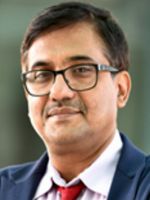
Dr. Jie Li is a Senior Lecturer at Teesside University's School of Computing, Engineering and Digital Technologies, specializing in Cybersecurity & Networks. He holds a PhD in Fuzzy Interpolation Systems from Northumbria University (2018), with prior master's and bachelor's degrees from the same institution. His research focuses on Machine Learning, Deep Learning, Computer Vision, and Generative AI, with applications in healthcare, IoT, and cybersecurity. Key projects include the D-PRIV data anonymization system (Innovate UK-funded, £90K), SuDs flood monitoring collaboration (£400K), and MC-IoT IoT security initiative. He has industry experience as AI Lead at THERAPYAUDIT and CTO of NewApex Ltd., developing healthcare AI systems and the StreetAway mobile app. Dr. Li actively engages in academic service, serving on program committees for IEEE conferences and the NCSC Cyberfirst Schools Scheme. His current research explores generative AI for synthetic data and real-time system optimization, aiming to bridge academic research with industrial applications.
Hua Fang is an Adjunct Professor in the Department of Population and Quantitative Health Sciences at UMass Chan Medical School and the T.H. Chan School of Medicine. She serves as Principal Investigator of the Computational Statistics and Data Science (CSDS) lab, which focuses on developing computational methods for health and behavior studies through the integration of statistics and computer science. Her educational background includes: BA in Business English from Sichuan International Studies University, China MA in Financial Economics from Ohio University, United States PhD in Statistics from Ohio University, United States Dr. Fang's research spans multiple domains at the intersection of computational statistics, data science, and healthcare. Her work primarily focuses on developing advanced methods for analyzing longitudinal data, particularly in the context of behavioral interventions and health monitoring. She has pioneered the Multiple-imputation based Fuzzy Clustering (MIFuzzy) approach for trajectory pattern recognition in incomplete longitudinal data, which has been applied across various health domains including substance use, dietary patterns, and mental health. Her research integrates statistical theory with computational approaches to address challenges in missing data, pattern recognition, and real-time monitoring through wearable biosensors. She leads multiple NIH and NSF-funded projects exploring computational methods for health applications, with a particular emphasis on digital health interventions and precision medicine. Her recent publications demonstrate a strong trend toward digital twin technology, federated learning approaches for healthcare data, and advanced neural network architectures for medical applications. There's a clear progression from traditional statistical methods to more sophisticated AI-driven approaches, with increasing focus on privacy-preserving techniques like federated learning for multi-site clinical data analysis. Her work bridges computational statistics with practical healthcare applications, particularly in substance use detection, dietary pattern analysis, and real-time health monitoring. Dr. Fang's scientific recognition includes: Patent "System and methods for trajectory pattern recognition" (US20160358040A1), issued June 1, 2021 Best Paper Award for "Deep Learning-based adaptive beam forming for 5G mmWave Wireless body area network" at GLOBECOM2020 Abstract Citation Award from the Society of Behavioral Medicine As an advisor, Dr. Fang has mentored numerous graduate students and researchers who have gone on to positions at prestigious institutions including Harvard, Stanford, MIT, and faculty positions at universities. Her research is supported by multiple NIH grants including R01, R56, and P30 awards, as well as NSF funding for projects related to wireless body area networks and connected vehicle technology. Current major projects include iPAT (NIH/NIDDK R01), VIP (NIH/NIDDK R56), and several NSF-funded initiatives in wireless communication and machine learning. The Computational Statistics and Data Science (CSDS) lab, led by Dr. Fang, collaborates with researchers across multiple disciplines including psychiatry, behavior medicine, emergency medicine, immunology, infectious diseases, and healthcare systems. The lab works closely with the IoT and Data Engineering Lab and the UConn Center for mHealth and Social Media, creating an interdisciplinary research environment that bridges computational methods with real-world health applications. Current research focuses on developing computational tools for adaptive interventions, pragmatic clinical trials, causal inference, and risk prediction using longitudinal data from diverse health domains.
Professor Yasser Roudi holds the position of Professor of Disordered Systems at King’s College London’s Department of Mathematics, within the Faculty of Natural, Mathematical & Engineering Sciences. He earned his PhD from SISSA (International School for Advanced Study) in 2005 and a physics degree from Sharif University of Technology in Tehran. Prior to joining King’s, he worked at prestigious institutions like the Kavli Institute for Systems Neuroscience in Norway and NORDITA. His research focuses on theoretical neuroscience, neural networks, and the physics of disordered systems, employing mathematical tools to model information processing in brains and machines. He has been recognized with awards including the Eric Kandel Young Neuroscientist Prize (2015) and membership in the Royal Norwegian Society of Sciences and Letters. His work explores topics such as grid cells’ toroidal topology, restricted Boltzmann machines, and maximum entropy models for cortical populations. Recent publications highlight advancements in understanding neural oscillations, stochastic processes, and reinforcement learning algorithms. Roudi leads the Disordered Systems research group at King’s, contributing to the study of complex systems and statistical mechanics. Education: PhD, SISSA (2005); BSc, Sharif University of Technology (Physics). Affiliations: King’s College London, Kavli Institute for Systems Neuroscience, NORDITA, UCL, and the Institute for Advanced Study. Roudi’s research bridges theoretical physics and neuroscience, addressing fundamental questions about neural information processing and system dynamics. His awards underscore his impactful contributions to the field, while his interdisciplinary approach continues to push boundaries in understanding complex biological and artificial systems.
Fabrizio Leisen is a Professor of Statistics at King’s College London, Department of Mathematics, within the Faculty of Natural, Mathematical & Engineering Sciences. Previously, he held positions at the University of Nottingham (Professor), University of Kent (Reader), and institutions in Spain and Italy. He earned a PhD in Mathematics from the Università di Modena e Reggio Emilia, specializing in Probability. His research focuses on Bayesian inference, nonparametric methods, objective Bayesian analysis, and foundational statistical theory, with notable contributions to predictive constructions, knockoff procedures, and stochastic processes. He serves as an Associate Editor for Bayesian Analysis , Statistics and Probability Letters , and Statistical Methods and Applications . Leisen’s work bridges theoretical and applied statistics, emphasizing Bayesian nonparametric priors for complex data structures and model selection. His recent articles address survival analysis, prior elicitation without subjective inputs, and algorithmic advancements in Bayesian computation. He collaborates globally, including co-supervising a PhD student at the Università di Bologna. His teaching includes Computational Statistics and Probability and Statistics Skills sessions. Research interests span Bayesian foundations, model selection via knockoffs, stochastic processes, and interdisciplinary applications like genomic and biostatistical analysis. His lab is affiliated with King’s Statistics group, focusing on MCMC methods, Bayesian nonparametrics, and experimental design.
Xinghan Liu is a PostDoc Researcher at the Knowledge-Based Systems group within Vienna University of Technology. Their work bridges Artificial Intelligence , Logic , and Environmental Engineering , as evidenced by their publications in both computer science and hydrology journals. Contact: xinghan.liu@tuwien.ac.at . Research Interests: Explainable AI and logic-based classifier modeling Counterfactual and intuitionistic conditional logics Legal case-based reasoning in computational frameworks Hydrodynamic and environmental adaptation to infrastructure projects Recent Work Trends: Recent articles focus on classifiers (2021–2024), explainable AI (2023–2024), and legal reasoning (2022–2023). A 2023 hydrology publication highlights interdisciplinary research on river systems affected by damming.
Prof. Daniel Merkle is a Professor in the Department of Mathematics and Computer Science at the University of Southern Denmark. His research focuses on computational systems chemistry, algorithmic methods for chemical reaction networks, and graph-based approaches in computational biology. He is actively involved in interdisciplinary projects addressing microbiome-driven diseases and computational systems chemistry. Merkle has held leadership roles in EU-funded initiatives and international research networks, including the COST Actions on complex chemical systems and origins of life. He contributes to teaching committees and organizes international conferences like the Dagstuhl Seminar on Algorithmic Cheminformatics. His research interests span chemical graph rewriting, pathway realizability, reaction database curation, and algorithmic design for biochemical systems. Recent work includes advancements in synthetic chemistry frameworks (e.g., ChemReservoir), efficient extraction of reaction rules (SynTemp), and formal modeling of unbalanced chemical reactions using ITS Graphs. Merkle’s projects, such as MATOMIC and TACsy, address microbial community metabolism and train computational systems chemists. He has published over 110 research outputs and actively engages in peer review and editorial roles. Key collaborations include work with Flamm, Stadler, and international research teams on computational methods for chemical systems. His contributions to open-source tools and algorithmic frameworks have advanced both theoretical and applied aspects of systems chemistry.
Petri Myllymäki is a Director at Helsinki Institute for Information Technology (HIIT) , Computer Science Adjunct Professors , and Finnish Center for Artificial Intelligence (FCAI) within Aalto University's School of Science, Department of Computer Science . His research focuses on Bayesian networks, information discovery, and interactive intent modeling . Active in ACM Transactions on Information Systems and SIGIR Conference publications Recipient of 2016 CPHC/BCS Academy of Computing Distinguished Dissertation runner-up and 2017 Kone Foundation Rajapinta award Collaborated with institutions like Stockholm University and researchers including Giulio Jacucci and Samuel Kaski His 15 most recent publications (2025-2015) span decision-making under conflicting objectives, machine learning applications in social science, Bayesian network structure learning algorithms , and cognitive modeling for exploratory search . Key technical subfields include hashing techniques, two-dimensional representation, computational efficiency, and user experience optimization . Scientific awards : 2016 CPHC/BCS Academy of Computing Distinguished Dissertation runner-up 2017 Kone Foundation Rajapinta award As an information discovery expert , he has contributed to open-access research through Interactive Visualization and Scinet frameworks, impacting Sustainable Development Goals related to digital innovation and knowledge dissemination.
Dr. David Carral is a former Research Associate at the International Center for Computational Logic (ICCL) within the Faculty of Computer Science at TU Dresden. His work focuses on Knowledge Representation , Database Theory , and Computational Logic , particularly in the context of ontology-based data access, existential rules, and chase termination analysis. He contributed to projects like CFAED and collaborated on systems such as VLog and ROWL . David supervised theses including "Don’t Repeat Yourself: Termination of the Skolem Chase on Disjunctive Existential Rules" by Lukas Gerlach. His research bridges formal methods with practical applications in AI and database systems. Research interests include ontology design patterns , query rewritability , and efficient reasoning algorithms . He actively participated in conferences like KR and IJCAI, contributing to advancements in nonmonotonic reasoning and hyperproperties. His work integrates description logics, answer set programming, and semantic web technologies to address challenges in knowledge-based systems.
Motonobu Kanagawa is an Assistant Professor (Maitre de Conférences) in the Data Science Department at EURECOM in France since 2019. Previously, he held research positions at the University of Tübingen and the Max Planck Institute for Intelligent Systems in Germany under Prof. Philipp Hennig. He earned his PhD in 2016 from the Institute of Statistical Mathematics in Tokyo under Prof. Kenji Fukumizu. His research focuses on statistical methodologies for complex systems simulation, including reliability validation of simulators, Gaussian processes, Bayesian optimization, and kernel methods. Recent work explores variable selection in distribution comparison and covariate shift adaptation. Key achievements include organizing the inaugural ProbNum 2025 conference, receiving the Chris Daykin Prize (2023) for pension system analysis with Bayesian optimization, and securing a chair position at the 3IA Côte d'Azur AI institute (2021). He reviews for leading journals like JMLR and conferences such as NeurIPS and ICML. Publications span topics like k-NN regression optimization, Gaussian process scale parameter estimation, and counterfactual mean embeddings. His work bridges theoretical statistics and applied machine learning, emphasizing computational efficiency and uncertainty quantification.
Toru Kitagawa is a Professor of Economics at Brown University, specializing in econometrics, causal inference, and policy analysis. His research focuses on developing quantitative methods for evidence-based policy decisions, with applications in labor, development, and environmental economics. He collaborates with global researchers on lab and field experiments to study human behavior and inform policy solutions. Education: PhD and MA in Economics, Brown University (2009, 2004) BA in Engineering, University of Tokyo (2002) Research Interests: Econometric theory and methods Statistical decision theory Bayesian analysis Experimental economics Policy evaluation and targeting His work bridges theoretical econometrics and applied economics to address real-world policy challenges, emphasizing robust Bayesian methods and empirical welfare maximization. Awards & Grants: Haavelmo Prize (2024) for best Econometrica paper Nakahara Prize (2023) for outstanding Japanese economist under 45 NSF Grant (2024–2027), ERC Horizon 2020 Starting Grant Affiliations: Research Staff, Center for Microdata Methods and Practice (Cemmap) Research Fellow, Institute for Fiscal Studies (IFS) Researcher, Yale Research Initiative on Innovation and Scale (Y-RISE) Teaching: Graduate courses in econometrics (ECON 1630/1640) Applied economics and policy analysis (ECON 2020, 2040)
Enrico Tassi is a researcher at Inria, France, affiliated with the STAMP team. His work focuses on the technology of formal proofs, particularly type theory, interactive theorem proving, and its application to formalizing mathematics. He is a key contributor to the development of tools like Coq-Elpi , Hierarchy-Builder , and the small scale reflection Coq extension. His research spans proof assistant architecture, software design, and formal verification, with a strong emphasis on free software principles. Enrico completed his Ph.D. at the University of Bologna in 2008, where he designed the Matita interactive theorem prover. He contributed to the formalization of the Odd Order Theorem and the Paral-ITP project, aiming to scale Coq for large mathematical libraries. His software projects include Elpi , a meta-language for proof assistants, and past contributions to Debian as a developer (2006–2016), focusing on integrating the Lua language into Debian systems. His publications highlight innovations in unification algorithms, tactical design, and proof structuring techniques. Articles address challenges in bi-directional type inference, pattern-based proof command focusing, and nonuniform coercion implementations. His work on small-scale reflection and Hierarchy-Builder demonstrates expertise in algebraic hierarchies and formal library management. Current efforts target enhancing OCaml-based systems through Elpi's high-level programming capabilities. Key Collaborations : Mathematical Components team (INRIA), D.A.M.A. Project Major Tools : Coq-Elpi, Hierarchy-Builder, Matita Formalization Efforts : Ordered Uniformities, Odd Order Theorem, Finite Group Theory
Yen-Ling Kuo is an Assistant Professor in the Department of Computer Science at the University of Virginia and a member of the Link Lab. Her research focuses on robot learning, human-AI/robot interaction, and integrating artificial intelligence with cognitive science to enable robots to generalize reasoning skills for human interaction, including language understanding and common sense reasoning. She holds a PhD from MIT CSAIL, advised by Boris Katz and Andrei Barbu. She teaches courses such as Artificial Intelligence and Learning for Interactive Robots, emphasizing foundational AI concepts, robotics applications, and generative AI. Research Interests: Robot Learning Human-AI/Robot Interaction Cognitive Science Integration Machine Learning for Robotic Systems Awards: NSF CAREER Award (2024) Advising & Grants: Actively recruiting students for her UVA research group, focusing on interactive robotics and AI collaboration. Her work is supported by grants including the NSF CAREER Award. Labs: Member of the Link Lab, a leading center for robotics and autonomous systems at UVA.
Dr. Ong Huey Fang is a Senior Lecturer in the School of Information Technology at Monash University Malaysia since 2019. She holds a PhD in Intelligent Computing from Universiti Putra Malaysia, with earlier degrees from Universiti Teknologi Malaysia. Her research focuses on artificial intelligence applications in bioinformatics (e.g., cancer biomarker discovery), machine learning (transfer learning for Malaysian English), and computer vision (micro-expression analysis). She has led projects like the 2022 Deep Associative Classification initiative. Professional memberships include IEEE, ACM, and AWS certification. Current work integrates multi-omics data analysis and causal graph modeling to address biases in AI systems. Education: BSc (UTM), MSc & PhD (UPM) Professional Certifications: AWS Cloud Practitioner Research spans cancer biomarkers via omics data, NLP for low-resource languages, and VR-based educational tools. Recent projects include causal analysis of video micro-expression bias and blockchain-enhanced healthcare systems. She actively collaborates internationally on topics like biomedical event extraction and supply chain digitalization.
Pushpak Bhattacharyya is a distinguished Professor in the Department of Computer Science and Engineering at the Indian Institute of Technology (IIT) Bombay. He holds the prestigious title of Abdul Kalam National Fellow and is a Fellow of the National Academy of Engineering (FNAE). His academic leadership extends to roles such as Professor Incharge of the IIT Bombay-Monash Australia Academy and Chairman of the MEITY Committee for Indian Language Standards. Professor Bhattacharyya's research spans multiple domains within computational linguistics and artificial intelligence. His work focuses on Natural Language Processing, Computational Linguistics, Machine Learning, Sarcasm Detection, Sentiment Analysis, Multilingual Processing, and Cognitive NLP. He has made significant contributions to Indian language technology, leading NITI Aayog's initiative on creating an Indian Language NLP stack and Virtual Agents. His recent publications reveal a strong focus on multilingual NLP for Indian languages, bias detection in language models, sarcasm and humblebragging detection, mental health applications of NLP, and code generation. His work bridges theoretical advances with practical applications in education, healthcare, and government services. The research demonstrates increasing integration of cognitive aspects with traditional NLP approaches and a growing emphasis on ethical AI considerations like bias detection and cultural competence. FNAE (Fellow of National Academy of Engineering) Abdul Kalam National Fellow Listed among top 10 Machine Learning Researchers in India Listed among most prolific NLP-ML researchers 2012-17 Professor Bhattacharyya has mentored numerous PhD and Masters students who have gone on to make significant contributions in academia and industry. His research has been supported by various grants from government agencies and industry partners, enabling large-scale projects in Indian language technology and NLP. He has led the development of comprehensive NLP resources for Indian languages and has been instrumental in establishing research collaborations between IIT Bombay and international institutions. He leads a vibrant research group at IIT Bombay focused on Natural Language Processing, with active projects in sarcasm detection, multilingual processing, cognitive NLP, and applications of NLP in healthcare and education. His team has developed several notable systems including those for Indian language translation, sarcasm detection, and mental health analysis through text.
Professor Hisao Ishibuchi is Chair Professor of Computer Science and Engineering at Southern University of Science and Technology (SUSTech) in Shenzhen, China, a role he has held since April 2017. Previously, he spent nearly three decades at Osaka Prefecture University, progressing from Research Associate (1987-1993) to Assistant Professor (1993), Associate Professor (1994-1999), and full Professor (1999-2017). He is an IEEE Fellow , served as Vice-President of the IEEE Computational Intelligence Society (2010-2013) , and is currently President of the Japan Society for Evolutionary Computation (2016-2018) . He is Editor-in-Chief of IEEE Computational Intelligence Magazine (2014-2019) and the Journal of the Japan EC Society (2014-2018). Education: Ph.D. in Engineering, Osaka Prefecture University, 1992 M.S. in Engineering, Kyoto University, 1987 B.S. in Engineering, Kyoto University, 1985 Research Focus: Professor Ishibuchi is internationally recognised as a pioneer of computational intelligence , with seminal contributions to evolutionary multi-objective optimisation , evolutionary machine learning , fuzzy systems , neural networks , and hybrid intelligent systems . He introduced the first multi-objective memetic algorithm and early methods for multi-objective fuzzy rule-based classifier design that balance accuracy and interpretability. Publications & Impact: With over 100 journal papers in top-tier venues such as IEEE Transactions on Evolutionary Computation and nearly 500 conference papers, his work has attracted more than 24 000 Google-Scholar citations and an h-index of 68. His recent articles concentrate on many-objective optimisation, fuzzy machine learning, and transfer learning techniques. Honours & Awards: IEEE Computational Intelligence Society Fuzzy Systems Pioneer Award 2019 IEEE Fellow 2014 JSPS Prize 2007 (Japan’s most prestigious mid-career award) Multiple Best Paper Awards from GECCO, FUZZ-IEEE, SCIS & ISIS, WAC, ACIIDS, HIS-NCEI, and others Teaching & Mentoring: At SUSTech he teaches Advanced Algorithms and Advanced Optimization Algorithms , covering greedy algorithms, hyper-heuristics, memetic algorithms, multi-objective optimisation, and performance assessment. His research group actively recruits post-doctoral fellows and research assistants in evolutionary computation, fuzzy systems, and neural networks. Labs & Teams: He leads the Computational Intelligence Research Group at SUSTech, maintaining active collaboration networks across Asia, Europe, and North America, and supervising several post-doctoral researchers and graduate students working on next-generation intelligent systems.