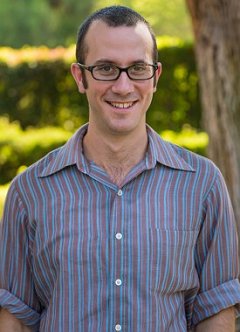
Michael GeneserethView profile
Professor
Michael Genesereth is a Professor of Computer Science at Stanford University and a professor by courtesy in the Stanford Law School. He serves as director of the Logic Group at Stanford and is the founder and research director of CodeX - the Stanford Center for Legal Informatics. Genesereth is renowned for his groundbreaking work on Computational Logic and its diverse applications in Enterprise Management, Computational Law, and General Game Playing. His academic journey includes an Sc.B. in Physics from M.I.T. and a Ph.D. in Applied Mathematics from Harvard University (1978). These foundational studies paved the way for his influential career at the intersection of logic, computer science, and law. Genesereth's research program spans from theoretical foundations of logic programming to practical implementations across multiple domains. His work on General Game Playing has established frameworks enabling AI systems to understand and play games based purely on logical descriptions of rules. In Computational Law, he pioneers approaches for representing legal rules in machine-processable formats to automate compliance checking and legal reasoning. His Logic For All initiative has successfully introduced logic education to high schools across the United States, with teachers reporting significant improvements in students' preparedness for college-level coursework. The publication pattern reveals a sustained research trajectory focused on logic foundations, with recent work expanding into practical applications in computational law, insurance portfolio management, and knowledge representation systems. His 2022-2025 publications demonstrate continued innovation in logic programming frameworks and their real-world implementations. Genesereth has founded multiple technology companies including Teknowledge, CommerceNet, Mergent Systems, and Symbium, translating theoretical work into practical solutions. His educational impact extends through widely adopted textbooks and his free massive open online course (MOOC) on Introduction to Logic, which has enrolled hundreds of thousands of students globally. His current initiatives include the International Logic Olympiad, launched in 2024, which engages high school students worldwide in logic problem-solving competitions. This effort builds on his observation that high school students consistently perform well in his university-level logic courses, demonstrating the readiness of secondary students for formal logic education.