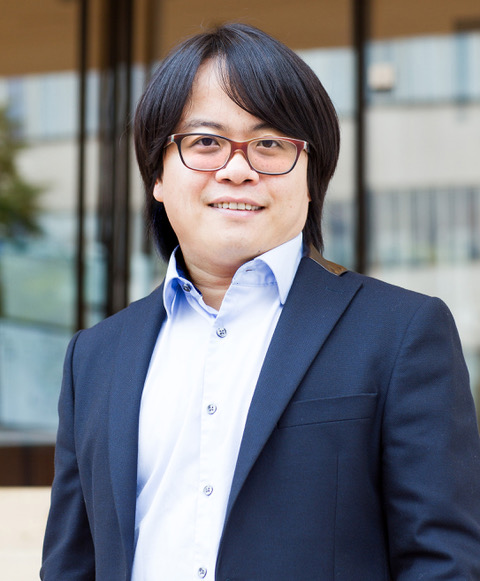
Rodrigo Ventura is an Associate Professor at the Department of Electrical and Computer Engineering, Instituto Superior Técnico (IST), University of Lisbon. He is also a senior researcher at the Institute for Systems and Robotics (ISR-Lisbon), leading the Space and Aeronautics thematic line. His research focuses on the intersection of Robotics and Artificial Intelligence, emphasizing human-robot interaction, space robotics, and cognitive architectures. He coordinates the Minor in Space Sciences and Technologies at IST and the MBE on Space Systems for Tecnico+. As Adjoint Faculty at the International Space University (ISU), he contributes to global academic initiatives. His work includes experiments on the International Space Station and participation in analog space missions. Research interests span biologically inspired systems, machine learning, and teleoperation interfaces. Recent publications address reinforcement learning for UAVs, microgravity experiments, and pseudo-haptic feedback for robotic control. He teaches subjects like Artificial Intelligence and Decision Systems, Satellite Engineering, and Autonomous Systems.
Natalie Enright Jerger is a Professor in the Department of Electrical and Computer Engineering at the University of Toronto's Faculty of Applied Science and Engineering. She holds the Canada Research Chair in Computer Architecture and serves as Director of the Division of Engineering Science (2023-2028). Previously, she was the Percy Edward Hart Professor (2016-2019). She received her B.S. in Computer Engineering from Purdue University (2002), and M.S./Ph.D. in Electrical Engineering from University of Wisconsin-Madison (2004/2008). Her research focuses on: Multi/many-core architectures and on-chip networks Cache coherence protocols and memory hierarchy optimization Approximate computing and sustainable systems Intermittent computing for energy-harvesting devices Hardware acceleration for machine learning Her publications demonstrate strong emphasis on networks-on-chip (NoC) innovations, including routing algorithms, deadlock handling, power-efficient designs, and topology optimizations. Recent work expands into approximate computing, mobile architectures, and ML-driven hardware design. Major Awards: Fellow of Engineering Institute of Canada (2023) McLean Senior Fellow (2019) IEEE Micro Top Picks (2016) ACM/IEEE Microarchitecture Hall of Fame (2015) Sloan Research Fellowship (2015) Canada Research Chair (current) Distinguished Scientist, ACM Fellow, IEEE She leads the NEJ research group and collaborates with industry partners including Intel, AMD, Qualcomm, and IBM. Her work is funded by NSERC, CFI, and industrial grants. She co-chaired ASPLOS 2023 and HPCA 2014, and actively promotes diversity through WICARCH and ACM initiatives.
Roy Dong is an Assistant Professor at the University of Illinois at Urbana-Champaign, affiliated with the Coordinated Science Laboratory. His research bridges Control Theory Economics Statistics Optimization to address challenges in cyber-physical systems and the Internet of Things, focusing on data manipulation, privacy, and strategic behavior in interconnected systems. His academic journey includes a Ph.D. in Electrical Engineering and Computer Sciences from UC Berkeley (2017) and dual B.S. degrees in Economics and Computer Engineering from Michigan State University (2010). At Illinois, he teaches courses ranging from Control Systems to Convex Optimization , with multiple teaching excellence awards. Roy's research explores Closed-loop effects of machine learning Causality in decision systems Incentive design for strategic agents Privacy-utility tradeoff optimization Human behavior modeling with applications in smart grids, transportation networks, and semi-autonomous vehicles. His work formulates privacy-preserving mechanisms as optimization problems, balancing data utility against user privacy in dynamic systems. Article trends show expertise in Game theory for strategic data sources Energy disaggregation techniques Nonlinear basis pursuit algorithms Privacy-aware control systems with a focus on cyber-physical systems and human-in-the-loop applications. Scientific recognition includes 'Teacher Ranked as Excellent' awards (ECE 120, ECE 486, ECE 515) Contributions to smartSDH building control and CPRL compressive sensing Roy leads the Privacy-aware Control Systems research group, collaborating with institutions like UC Berkeley and Michigan State University , and directs projects funded by grants including the New USDA NIFA grant for agricultural robot autonomy .
Ke Xu is a Professor in the Department of Computer Science at Tsinghua University's School of Information Science and Technology. With extensive research contributions in network security, privacy-preserving technologies, and machine learning applications for networking, Professor Xu has established himself as a leading researcher in computer science. Professor Xu's research interests span network security, privacy-preserving technologies, machine learning for networking, federated learning, internet protocols, encrypted traffic analysis, blockchain applications, and AI in networking. His work bridges theoretical foundations with practical implementations, focusing on real-world security challenges and network optimization problems. He has developed novel frameworks for secure network operations, privacy-preserving data sharing, and efficient AI deployment in distributed environments. Professor Xu's publication record shows a clear trend toward integrating artificial intelligence with traditional networking challenges. His recent work explores federated learning security, encrypted traffic analysis using deep learning, and novel approaches to network security that leverage machine learning techniques. The interdisciplinary nature of his research spans computer networking, security, privacy, and artificial intelligence. Professor Xu has received recognition for his contributions to network security and privacy-preserving technologies through publications in top-tier venues including IEEE journals, ACM conferences, and security symposia. His work has appeared in IEEE Transactions on Dependable and Secure Computing, IEEE/ACM Transactions on Networking, and security conferences like CCS and NDSS. Professor Xu actively collaborates with researchers across institutions, supervising students and junior researchers in exploring cutting-edge problems in network security and AI. His research has been supported by significant grants focusing on network security, privacy, and intelligent networking infrastructure. He leads projects that address fundamental challenges in secure communication, privacy-preserving data analysis, and intelligent network management. Professor Xu is involved with research laboratories focusing on network security and intelligent systems at Tsinghua University. His team works on developing practical security solutions, privacy frameworks, and AI-enhanced networking protocols that address real-world challenges in today's increasingly connected world.
Sean McGinnis serves as a Professor of Practice and Director of the Green Engineering Program within the Department of Materials Science and Engineering at Virginia Tech's College of Engineering. His academic and professional endeavors focus on advancing sustainable engineering practices through education, research, and industry collaboration. Dr. McGinnis earned his educational qualifications from prestigious institutions: a B.S. in Chemical Engineering and Materials Science from the University of Minnesota, followed by a Ph.D. in Materials Science and Engineering from Stanford University. His research program is centered on Green Engineering principles, with specific expertise in Life Cycle Assessment, Sustainable Manufacturing Processes, Design for Environment, Carbon Footprint Analysis, Renewable Energy systems, and Interdisciplinary Education methodologies. He has pioneered courses such as Introduction to Green Engineering (ENGR 3124) and Environmental Life Cycle Analysis (ENGR 4134) that equip students with tools to evaluate environmental impacts across product lifecycles. His Earth Sustainability course (UCCS 2984) further extends this interdisciplinary approach to broader societal challenges. Analysis of his publication record reveals a consistent trajectory toward sustainable technology innovation, particularly in the life cycle assessment of nanomaterials and waste streams. Recent work examines circular economy models for nanowaste recycling, environmental implications of nanoparticle synthesis, and the development of optical systems that mitigate harmful blue light exposure while maintaining visual performance. This research bridges materials science, environmental engineering, and human health considerations. Professional recognition for Dr. McGinnis includes: LEED AP BD&C certification Life Cycle Assessment Certified Professional designation Johnson & Johnson Standards of Leadership Award (2003) In his leadership capacity as Director of the Green Engineering Program, Dr. McGinnis oversees curriculum development that integrates sustainability across engineering disciplines. He has published on educational methodologies for assessing interdisciplinary integration of green engineering knowledge and has organized introductory green engineering courses for undergraduates. His work extends to operational phase life cycle assessment of facilities and sustainable provision of food and water systems.
Marco Caccamo is a Professor at the Technical University of Munich (TUM) , holding the Chair of Cyber-Physical Systems in Production Engineering within the Faculty of Mechanical Engineering. He is also a Principal Investigator and Professor at the Department of Computer Science, with courtesy appointments in Electrical and Computer Engineering, Coordinated Science Lab (CSL), and Aerospace Engineering at the University of Illinois at Urbana-Champaign (UIUC). His research spans Embedded Systems , Real-Time Systems , and Cyber-Physical Systems (CPS) , focusing on resource management, reinforcement learning architectures, and 6D pose recognition for robotics. University of Pisa (B.Sc., 1997) Scuola Superiore Sant'Anna (Ph.D., 2002) Research highlights include predictable resource management on heterogeneous platforms, security frameworks for AI-based controllers , and UAV testbed development . His work integrates deep learning and real-time constraints in industrial applications like avionics, farming, and automotive systems. His 15 most recent publications emphasize cache optimization , memory bandwidth regulation , and reinforcement learning for CPS , with a focus on multi-core processors and DNN inference . Awards include the IEEE Fellow (2018), Alexander von Humboldt Professorship (2018), and multiple Best Paper Awards at RTSS, RTNS, and RTAS. NSF CAREER Award (2003) IEEE Fellow (2018) Alexander von Humboldt Professorship (2018) Best Paper Awards (RTSS 2024, RTNS 2023, ECRTS 2019) He has advised numerous Ph.D. students and postdocs, with a track record in UAV development and industrial collaborations . His lab, the Real-Time and Embedded System Laboratory , focuses on real-time OS and predictable computing .
Dr. Ameer Abdelhadi is an Assistant Professor in the Department of Electrical and Computer Engineering at McMaster University. His research focuses on application-specific custom-tailored computer architectures, hardware-efficient deep learning, neurotechnology, and reconfigurable computing. He holds a PhD from the University of British Columbia and has held academic positions at the University of Toronto, Imperial College London, and Simon Fraser University, alongside industry experience in semiconductor design. Education: PhD in Computer Engineering (University of British Columbia, 2016). Research Interests: Hardware acceleration for machine learning and neurotechnology Reconfigurable computing and FPGAs/ASICs Asynchronous circuits and synchronization protocols VLSI physical design and CAD algorithms Publications span high-impact venues such as IEEE Journal of Solid-State Circuits, IEEE Hot Chips, and IEEE Micro. Notable achievements include the 2017 Best Paper Award at ASYNC for work on synchronization FIFOs. Teaching includes COMPENG 4DV4 (VLSI System Design) and ELECENG 4OI6B (Engineering Design). His lab focuses on advancing hardware systems for next-generation applications in AI and biomedical engineering.
Raouf Boutaba is a Professor at the University of Waterloo , serving as Director of the David R. Cheriton School of Computer Science since July 2020. He holds prestigious fellowships including FRSC , FIEEE , FIEC , and FCAE . 2024: Inaugural Rogers Chair in Network Automation 2024: Ontario Research Fund–Research Excellence (ORF–RE) $2M grant for next-gen mobile networks 2021: University Professor title, University of Waterloo Research Interests span network automation, resource management in wired/wireless networks, network function virtualization (NFV), software-defined networking (SDN), cloud computing, blockchain, future Internet architecture, and cybersecurity. His work focuses on zero-touch networks, 5G/B5G slicing, and AI-driven orchestration. Scientific Contributions include 15+ recent publications on topics like reinforcement learning for RAN slicing, encrypted traffic classification, quantum network optimization, and self-driving infrastructure. His projects 5G LEAP and 5G ELITE explore network isolation and Open RAN principles. 2024: IFIP/IEEE CNOM Test of Time Paper Award 2024: Graduate Supervision Excellence Award 2021: Kenneth C. Sevcik Outstanding Student Paper Award (advisor) Teaching includes co-developing the NSERC CREATE Network Softwarization program, offering courses like Network Softwarization: Principles and Foundations (Winter 2024) and Technologies and Enablers since 2018. He emphasizes hands-on training in SDN, NFV, Open RAN, and 5G. Students and Collaborations : Supervised PhD students such as Shihabur R. Chowdhury (2021), Nashid Shahriar (2020), and undergrad Leni Aniva (2022 Gov. Gen. Silver Medal ). His team includes researchers working on 5G, blockchain, and AI-driven network management. Professional Leadership : Organized Rogers TEP Workshops (2024-2025), delivered keynotes at IEEE Globecom, ColCom, and BalkanCom, and served on expert panels for AI orchestration and 5G cybersecurity at major symposia.
Hui Pan is a distinguished academic holding dual positions as Nokia Chair in Data Science and Professor of Computer Science at the University of Helsinki, and Chair Professor of Computational Media and Arts at the Hong Kong University of Science and Technology (HKUST). His research spans networking, mobile computing, augmented reality, and computational social science. He earned his Ph.D. in Computer Science from the University of Cambridge in 2007. His work bridges social networks with mobile systems, pioneering fields like mobile social networks and opportunistic forwarding algorithms. Research interests include data science, complex networks, and innovative applications of augmented reality. His recent publications focus on low-latency AR frameworks, blockchain for computation offloading, and mobile web visualization. He has received prestigious awards, including IEEE Fellow (2018), ACM Distinguished Scientist (2016), and the Nokia Chair Endowment (2017). He has supervised over 15 PhD and 12 MPhil graduates, with 13 current Ph.D. students and 2 MPhil students. His editorial roles include Associate Editorships at IEEE Transactions journals and guest editorships at top venues like IEEE JSAC and ACM Transactions. He has organized conferences such as WWW Track Chair and ExtremeCom General Chair.
Bruce MacDowell Maggs is a Professor in the Department of Computer Science at Duke University and serves as Vice President of Research at Akamai Technologies. His career bridges academic research and industrial innovation in computer science, particularly in distributed systems and networking. Research Interests: His work spans computer networks , distributed systems , parallel algorithms , content delivery , and fault-tolerant computing . He has made significant contributions to network routing, load balancing, scalability of web applications, and energy efficiency in large-scale systems. His research often combines theoretical rigor with practical system design. The recent publications highlight a consistent focus on scalability , network performance , and security in internet-scale applications. Key themes include query caching , traffic modeling , resilient routing , and energy optimization , reflecting his deep involvement in the infrastructure of modern web services. No scientific awards are mentioned in the provided text. Advising and Teaching: He has advised numerous Ph.D. students, many of whom are now faculty or researchers at top institutions. His former students include Ramesh Sitaraman, Anja Feldmann, and Andrea Richa. He currently advises Anat Talmy at Duke. He has taught a wide range of courses at Duke, Carnegie Mellon, and MIT, including Computer Networks, Operating Systems, Algorithms, and Discrete Mathematics. Labs and Teams: While not explicitly named, his research is closely tied to systems and networking groups at Duke and his industrial work at Akamai, a leader in content delivery networks. His collaborations with Tom Leighton and others at Akamai suggest leadership in research teams developing foundational internet technologies.
Tim Baarslag is a Senior Researcher and group leader of the Intelligent and Autonomous Systems group at CWI (The Dutch research institute for Mathematics and Computer Science). He holds the title of Professor of Mathematics of Cooperative AI at Eindhoven University of Technology and serves as a Visiting Associate Professor at Nagoya University of Technology, Visiting Fellow at the University of Southampton, and Visiting Scholar at MIT. His research focuses on automated negotiation systems for collaborative decision-making in smart energy trading, IoT, autonomous vehicles, and digital privacy. Education : MSc (cum laude) and BSc (cum laude) from Utrecht University; PhD (cum laude) from Delft University of Technology Tim pioneered the COMBINE project (NWO Vidi grant) for coordinating multi-deal negotiations and developed the widely-used Genius negotiation environment. His work appears in prestigious venues like Science Magazine , Artificial Intelligence , and MIT Technology Review . He also leads the International Automated Negotiating Agent Competition and contributes to policy through memberships in The Young Academy and Netherlands Academy of Engineering . Recent research trends emphasize multi-deal negotiation protocols (2024), preference uncertainty modeling in privacy negotiations (2022), and scalable algorithms for handling outcome spaces as large as 10²⁵⁰ possibilities. His 2023 work on search algorithms for large negotiation domains has applications in energy trading and supply chain management. Scientific Awards : Cor Baayen Young Researcher Award (2017), Springer Theses Award (2016), multiple Best Paper Awards (AAMAS 2022, WI-IAT 2015, IJCAI 2014), and recognitions as Science Talent (2018), Academic Pioneer (2020), and Young Talent (2019) As a grant recipient , Tim leads NWO Vidi project COMBINE and previously held a Veni grant for preference uncertainty research. He mentors through organizing competitions, serving on conference PCs (AAAI, IJCAI), and reviewing in top journals like Artificial Intelligence . His work bridges theory and practice through the Genius framework and real-world implementations in smart grid and vehicular platooning.
Jukka Manner is a Full Professor (tenured) of Networking Technology at Aalto University's Department of Communications and Networking (Comnet), School of Electrical Engineering. With a career spanning over two decades in internet technologies, he leads research in networking, wireless systems, and energy-efficient ICT solutions. Dr. Manner received his MSc (1999) and PhD (2004) degrees in computer science from the University of Helsinki. His academic journey has been marked by significant contributions to internet standardization through the IETF since 1999, where he served as co-chair of the NSIS working group. Professor Manner's research focuses on networking, software and distributed systems, with particular emphasis on wireless and mobile networks, transport protocols, energy efficient ICT and cyber security. His work bridges theoretical advancements with practical applications, addressing critical challenges in modern communication systems, sustainable networking practices, and security frameworks. His research group has made significant contributions to 5G technologies, UAV communications, and energy-efficient network design. His extensive publication record shows a clear evolution toward sustainability in networking technologies, with recent work focusing on energy efficiency in 5G systems, sustainable web technologies, and the environmental impact of digital infrastructure. The research demonstrates strong interdisciplinary connections between telecommunications engineering, computer science, and environmental science, with particular emphasis on reducing the carbon footprint of digital systems while maintaining performance. Cross of Merit, Signals (2014) Medal for Military Merits for contributions in national defence and C4 (2015) Professor Manner has supervised over 200 MSc theses and more than 20 doctoral dissertations, establishing himself as a dedicated mentor in the field. He has been principal investigator and project manager for over 15 national and international research projects, including serving as Academic Coordinator for the Finnish Future Internet research programme (2008-2012). His leadership extends to conference organization, having served as local co-chair of Sigcomm 2012 in Helsinki, and active participation as a peer reviewer and member of various Technical Program Committees. As an active contributor to internet standardization through the IETF, Professor Manner's work has practical impact on global networking technologies. His research group maintains strong connections with industry partners and participates in shaping future networking standards and practices, particularly in the areas of sustainable networking, 5G evolution, and security frameworks for emerging technologies.
Jiri Srba is a Professor at Aalborg University's Department of Computer Science, part of the Technical Faculty of IT and Design. He leads research in the Distributed, Embedded and Intelligent Systems group and contributes to projects like "ControLing wAter In an uRban Environment" and "Collective Adaptive System SynThesIs using Non-zero-sum Games". His office is located at Selma Lagerløfs Vej 300, 9220 Aalborg Øst, Denmark. Contact him at +4599409851 or srba@cs.aau.dk. His core research focuses on formal methods and applied computer science: Model checking and verification of concurrent systems Petri nets and their applications Network protocol verification and synthesis Distributed system correctness Automated reasoning for industrial systems His publication record shows strong emphasis on network verification, model checking optimization, and applying formal methods to environmental systems. Recent work integrates computer science with sustainable engineering, particularly in water management systems and energy control.
Satadru Dey serves as an Assistant Professor in the Department of Mechanical Engineering at Penn State University, where he leads research at the intersection of energy infrastructure and smart city systems. His work spans battery technology, transportation networks, and cyber-physical security, with institutional affiliations including the Integrated Energy Systems and Equitable Communities research initiatives. His primary research focuses include battery safety and security (covering fault diagnosis, thermal management, and fast charging protocols), second-life applications for batteries/supercapacitors, secure autonomous transportation systems, and socio-technical traffic modeling. He employs advanced control theory, machine learning, and physics-based modeling to address critical challenges in energy storage and urban mobility infrastructure. Analysis of his 15 most recent publications (2022-2024) reveals a consistent trajectory toward cyber-physical security in battery and transportation systems, with 60% of works addressing battery fault detection and 40% focused on transportation security. His methodologies increasingly integrate partial differential equations, reinforcement learning, and socio-technical data fusion across electrical engineering, mechanical engineering, and computer science domains. Scientific Awards: No awards or fellowships were documented in the source material. Advising and grant activities are not explicitly detailed in the provided information, though his editorial leadership for the 2024 Special Issue on Energy in Smart Infrastructures indicates academic service responsibilities. The absence of student listings suggests either early-career status or non-publication of advising relationships. Dr. Dey directs a specialized research laboratory focused on integrated energy systems within smart city frameworks, with documented projects spanning battery management, transportation security, and equitable infrastructure development. His lab maintains active collaborations across mechanical engineering, electrical systems, and urban planning disciplines as evidenced by multi-departmental publication venues.
Alexander J Sundermann serves as an Assistant Professor in the Department of Epidemiology at the University of Pittsburgh School of of Public Health. His research focuses on leveraging pathogen genomic surveillance and machine learning to revolutionize infection prevention practices in healthcare settings, with demonstrated impacts on outbreak detection accuracy and intervention speed. Education: 2013: BS in Microbiology, University of Rochester 2014: MPH in Infectious Diseases and Microbiology, University of Pittsburgh 2022: DrPH in Epidemiology, University of Pittsburgh Dr. Sundermann's work centers on whole-genome sequencing of pathogens to detect healthcare-associated transmission invisible to traditional methods. His research demonstrates how genomic surveillance reveals hidden outbreaks of vancomycin-resistant Enterococcus (VRE) and mucormycosis, directly linking colonization to clinical outcomes like ICU admission and mortality. He pioneers machine learning tools that analyze electronic health records to identify transmission routes, creating more efficient outbreak investigation frameworks across hospital networks. His publication portfolio (2019-2025) shows a clear trajectory toward integrated genomic-clinical surveillance systems, with recent work quantifying clinical and economic impacts while addressing implementation barriers. This interdisciplinary approach bridges epidemiology, genomics, and data science to transform infection prevention protocols. Scientific Awards: No awards listed in available information. Advising and Grants: While specific advisees and grant details aren't provided, his multi-institutional collaborations suggest active mentorship within genomic epidemiology research teams. His work with the National Healthcare Safety Network indicates engagement with major public health surveillance infrastructure. Labs and Teams: Dr. Sundermann leads cross-functional teams including microbiologists, data scientists, and clinicians across multiple healthcare systems. His UPMC outbreak investigations and national linen contamination studies demonstrate operational frameworks for real-time genomic surveillance implementation in complex hospital environments.