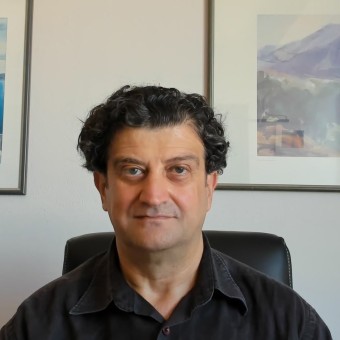
Prof. Vana Kalogeraki is a Faculty Member at the Department of Informatics , Athens University of Economics and Business (AUEB) , and serves as the Dean of the School of Information Sciences and Technology and Director of the Computer Systems and Communications Laboratory . She has held academic positions at the University of California, Riverside and was a Research Scientist at Hewlett-Packard Labs . PhD: University of California, Santa Barbara M.S. & B.S.: University of Crete, Greece Her research focuses on Distributed and Real-Time Systems , Big Data Systems , Cloud Computing , Human-Centered Systems , and Crowdsourcing . She has published over 200 papers at top journals (IEEE TPDS, ACM TOS, etc.) and conferences (RTSS, DSN, ICDCS, VLDB, MDM), including co-authoring the OMG CORBA Dynamic Scheduling Standard . Her 2023-2025 publications address AI pipelines in serverless environments, edge computing for trauma detection via eye-tracking, and fairness in resource scheduling. She has received prestigious awards including an ERC Starting Grant , Best Paper Awards (DEBS 2017, IPDPS 2009), a Best Poster Award (EuroSys 2024), and multiple UC Research Awards . Her research is funded by the European Union (ARISTEIA, THALIS), NSF, and industry partners like SUN and Nokia. Advising Legacy : Supervised 10 PhD graduates (now at Google, Amazon, IBM, Apple) and over 60 MS/PhD committees Labs & Teams : Leads the Computer Systems and Communications Laboratory at AUEB, focusing on mobile human-centered systems and urban data analytics
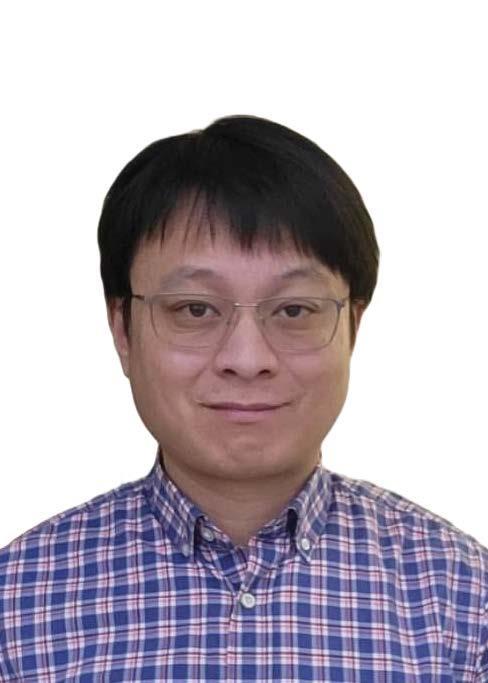
Yun Zhou is an Associate Professor in the Department of Operations Management at DeGroote School of Business, McMaster University. His research bridges theoretical operations research with practical applications in supply chain optimization, revenue management, and healthcare logistics. PhD: Rotman School of Management, University of Toronto Doctorate & B.Sc.: Tsinghua University Dr. Zhou specializes in revenue management , supply chain coordination , and dynamic pricing , particularly in on-demand delivery systems and sharing economy platforms . His work addresses uncertainty in demand , perishable product inventory , and healthcare operations challenges like vaccine allocation and surgical scheduling . Recent publications focus on robotic warehouse systems (e.g., rack-moving robots for order picking), price and matching dynamics in sharing economies , and blood supply chain coordination . These span optimization algorithms , stochastic modeling , and empirical retail analytics . SSHRC Grant: Addressing societal challenges through operations research
Olivier Labarthe is an Associate Professor at Kedge Business School , affiliated with the MEI team and collaborating with institutions like Laboratoire de l'intégration, du matériau au système (IMS-Bordeaux) , Université de Bordeaux , and School of Industrial and Systems Engineering [Georgia Tech] . His work bridges Physical Internet concepts with urban logistics and multi-agent systems . Academic Rank: Associate Professor Research Focus: Urban Freight Logistics, Multi-mode Mobility, Enterprise Interoperability Collaborations: Georgia Tech, CNRS, IMS-Bordeaux Research Interests : He specializes in Physical Internet applications for urban logistics , integrating freight transportation with people mobility . His studies explore multi-mode transport systems , synchromodality , and green logistics using agent-based modeling and data-driven optimization . Article Trends : His recent work (2024) emphasizes Physical Internet in urban freight transshipment and hyperconnected synchromodal networks . Earlier publications (2023-2010) cover cargo bike routing , multi-agent interoperability , and multicriteria supplier selection , reflecting a consistent focus on sustainable logistics and smart city solutions . Labs & Collaborations : He works with the MEI team at Kedge Business School, the IMS-Bordeaux laboratory, and the School of Industrial and Systems Engineering [Georgia Tech] . His collaborations span institutions like CNRS , CEA Leti , and industry partners such as Stellantis and Thales .
Fabrizio Giuliano is a Researcher at the University of Palermo in the School of Mathematics and Computer Science , focusing on Wireless Networks , Internet of Things (IoT) , and Network Protocols . His academic activities include teaching courses like Computer Networks , Internet of Things , and IoT and Cloud Security to students in Informatics, Biomedical Engineering, and Cyber-Physical Systems programs. Research Interests : Giuliano's work spans Wireless communication (LoRaWAN, Sigfox, WiFi, ZigBee) Smart water distribution systems and energy-autonomous IoT Interference detection and cross-technology coexistence 5G network infrastructure Augmented Reality for accessibility Privacy-preserving smart grid systems Publication Trends : His recent articles (2025–2023) focus on AI integration in IoT testbeds Scalable water distribution monitoring Information-theoretic analysis of fNIRS signals Interference mitigation in LPWANs Context-aware 5G architectures Hybrid VLC/WiFi networks Academic Contributions : Giuliano has edited theses on fNIRS signal analysis and IoT-integrated biosensors , reflecting his interest in biomedical applications of wireless systems.
Masato Uchida is a Professor at the School of Fundamental Science and Engineering, Waseda University, with a focus on information security and network systems. His career spans roles at Chiba Institute of Technology and Kyushu Institute of Technology, and he holds degrees in Engineering from Hokkaido University. Education: Master of Engineering (Hokkaido University, 2001), Doctor of Philosophy (Hokkaido University, 2005) His research interests include network security, peer-to-peer systems, machine learning for cybersecurity, and traffic analysis. His work addresses anomaly detection, malware classification, and resource allocation fairness in networks. Recent publications analyze adversarial machine learning, cloud service abuse, and domain parking security. Uchida's articles demonstrate expertise in cybersecurity, network modeling, and data science. He has received multiple awards for research excellence, including IEEE Outstanding Paper Awards and IEICE Communications Society honors. His leadership in committees like the Ministry of Internal Affairs and Communications' technical task forces highlights his policy influence. Scientific Awards: Outstanding Paper Award, IEEE International Conference on Teaching, Assessment, and Learning for Engineering (2020) MWS Outstanding Paper Award, Computer Security Symposium (CSS 2020) IEICE Activity Contribution Award (2016) Best Poster Award, SCIS & ISIS (2014) IEICE Network Systems Research Award (2012) He advises students in cybersecurity and collaborates on projects involving traffic load balancing, Android malware analysis, and cloud security. His professional memberships include IEEE, ACM, and the Information Processing Society of Japan.
Nives Doneus is a researcher at the Vienna Institute for Archaeological Science , University of Vienna, specializing in archaeological prospection and Roman landscape studies . Her work focuses on remote sensing, geoarchaeology, and 3D documentation of Mediterranean and Central European sites. Expert in airborne laser scanning (LiDAR) for submerged/coastal sites Key contributor to LBI ArchPro Research Initiative (2010-2015) Specializes in Roman-era field systems and dry stone wall analysis Her research integrates geophysical prospection with historical GIS to reconstruct Roman urban and rural landscapes. She has pioneered applications of airborne laser bathymetry for documenting submerged archaeological sites in Croatia's archipelagos. Recent publications emphasize interdisciplinary approaches to Mediterranean coastal archaeology, Roman surveying practices, and paleoenvironmental reconstructions. Key methodological themes include non-destructive excavation techniques and digital heritage modeling . Collaborates with teams at the Vienna Institute for Archaeological Science and contributes to the development of systemic archaeological prospection frameworks. Her work spans case studies in Austria, Croatia, and Bulgaria.
Marc Jochen Uetz is a Full Professor at the Mathematics of Operations Research department and affiliated with the Digital Society Institute. His research spans operations research and computer science, focusing on scheduling, game theory, and optimization problems. PhD in Mathematics from Technische Universität Berlin Research Interests: Active in algorithmic game theory and stochastic scheduling, he investigates equilibrium models, price of anarchy, and efficient resource allocation in transportation and network systems. His work contributes to UN Sustainable Development Goals related to education and infrastructure. Publication Trends: Recent work combines game theory with two-stage facility location, network routing, and stochastic scheduling of Bernoulli-type jobs. Key keywords include Nash equilibrium, approximation algorithms, and dynamic programming. Scientific Recognition: Excellent Reviewer Award (2017) Teaching Award (2018) Academic Activities: Currently chairs Platform Wiskunde Nederland, contributes to editorial work, and delivers invited talks at international conferences like IJCAI 2024.
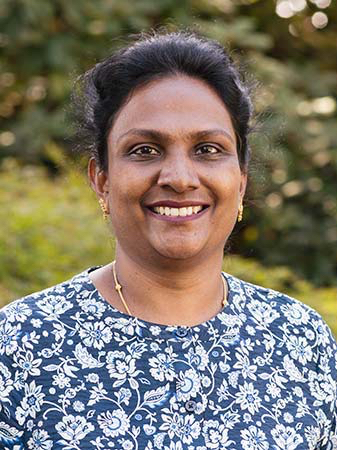
Jasmine Gnanadurai serves as an Associate Professor in the Department of Electrical Engineering & Computer Science at George Fox University's College of Engineering. She teaches a range of courses including Introduction to Computer Science, Software Engineering, Servant Engineering, and Senior Design. Her office is located in Wood-Mar 222, where she holds regular office hours for student consultation. Dr. Gnanadurai's educational background includes: Ph.D. in Computer Science (2017) from Anna University, Chennai, India M.Phil (2006) from Bharathidasan University, Tiruchirappalli, India M.C.A. (2000) from Bharathidasan University, Tiruchirappalli, India B.Sc. in Computer Science (1997) from Bharathidasan University, Tiruchirappalli, India Dr. Gnanadurai's research spans multiple cutting-edge domains in computer science and engineering. Her work in wireless sensor networks has focused on optimization algorithms for zone-based networks, particularly using techniques like DBSCAN clustering and particle swarm optimization. She has made significant contributions to cloud computing architecture, especially in resource allocation and load balancing for peer-to-peer networks. Her expertise extends to machine learning applications across diverse fields including agriculture productivity, student feedback analysis, and crowd behavior recognition. Her recent publications demonstrate a strong interdisciplinary approach, bridging computer science with practical applications in healthcare, education, smart cities, and transportation. She has published extensively on deep learning techniques for EMG-based hand gesture recognition, blockchain applications for electric vehicle charging infrastructure, and immersive technologies for educational settings. These works reflect her commitment to addressing real-world challenges through technological innovation. Dr. Gnanadurai actively contributes to the engineering education mission at George Fox University through multiple channels. She teaches foundational computer science courses, advanced software engineering, and participates in the university's distinctive Servant Engineering program where students develop solutions to humanitarian needs. She also guides senior engineering students through their capstone Senior Design projects, which partner with industry sponsors to solve real-world problems. As part of the College of Engineering, Dr. Gnanadurai works within interdisciplinary teams that collaborate on projects addressing humanitarian needs through the Servant Engineering program. This program connects students with community partners to develop engineering solutions that serve vulnerable populations, reflecting the university's Christian mission of service. Her involvement in Senior Design connects students with industry partners including Xerox, Intel, Garmin, and numerous regional companies, providing students with valuable real-world experience.
Nikolaos Samaras is a Full Professor at the Department of Applied Informatics, School of Information Sciences, University of Macedonia in Thessaloniki, Greece. He has been serving as director of the Computational Methodologies & Operations Research (CMOR) Laboratory since April 2016. His academic career includes positions as Assistant Professor (2007-2012) and Lecturer (2003-2007) at the same institution, and earlier as an adjacent Lecturer at the Technological Institute of Western Macedonia (1998-2000). Dr. Samaras earned his Diploma in Applied Informatics from the University of Macedonia in 1996 and his Ph.D. in Applied Informatics from the same university in 2001. His educational background forms the foundation for his extensive research in computational optimization and operations research. Professor Samaras's research focuses on the interface between computer science and operations research, with particular expertise in linear and nonlinear optimization, network optimization, integer optimization, and scientific computing including HPC and GPU programming. His work has resulted in the development of new algorithmic families for optimization problems, efficient GPU implementations of the revised simplex algorithm, and novel algorithms and software for operations research. His research spans theoretical algorithm development, practical implementation, and real-world applications across various engineering and scientific domains. His extensive publication record includes over 35 journal papers in prestigious venues such as Computers and Operations Research, European Journal of Operational Research, and Journal of Artificial Intelligence Research, more than 85 conference papers, and four textbooks (two in English and two in Greek). His work has been recognized through citations and the Thomson ISI/ASIS&T Citation Analysis Research Grant in 2005. ACM Senior Member (2016) Thomson ISI/ASIS&T Citation Analysis Research Grant (2005) Editorial board member of Operations Research: An International Journal Reviewer for numerous top journals including Mathematical Programming Computation and European Journal of Operational Research Professor Samaras has supervised four current Ph.D. students working on hybrid simplex algorithms, large-scale optimization using Apache Hadoop, algorithmic procedures in matrix theory, and smoothed complexity analysis. He has successfully guided five Ph.D. students to completion, including Nikolaos Ploskas who won the 2014 HELORS Doctoral Dissertation Award. Additionally, he has supervised 45 master's theses and 84 bachelor's theses. His research group has secured funding from diverse sources including the European Union, Greek Secretariat of Research and Technology, and industry partners like Veltio Greece LTD. The Computational Methodologies & Operations Research (CMOR) Laboratory, which he directs, focuses on developing and implementing optimization algorithms with applications in transportation, energy systems, and business process design. The lab has produced notable software tools including Euclides and Visual LinProg, which have educational applications in linear programming.
Amine Mhedhbi is an Assistant Professor at Polytechnique Montréal in the Department of Computer Engineering and Software Engineering. He is affiliated with the Institute for Data Valorization (IVADO) and the Software Engineering for Machine Learning Applications (SEMLA) group. His research focuses on data management systems, particularly graph-structured databases, multimodal data engineering, and AI-driven query optimization. Ph.D. in Computer Science from University of Waterloo Former technical advisor to enterprise companies Prior applied research leadership at Distyl AI and internships at Microsoft Research His recent work explores integrating large language models (LLMs) into database systems, optimizing SQL generation, and advancing graph database architectures. Key projects include GraphflowDB and FlockMTL , addressing scalability and declarative semantic applications. Scientific awards include: NSERC Discovery Grant with Discovery Launch Supplement (2025) Cheriton School Distinguished Dissertation Award (2024) Microsoft Research Ph.D. Fellowship (2020) VLDB Best Paper Award (2018) He supervises graduate students in database systems and machine learning applications and serves on program committees for top-tier conferences like VLDB and SIGMOD.
Dr. Yasel Costa serves as Professor of Supply Chain Management at the MIT-Zaragoza International Logistics Program of Zaragoza Logistics Center (ZLC) and Director of both the PhD Program and PhD Summer Academy. His academic affiliations are centered at the University of Zaragoza in Spain, where he leads advanced research initiatives in sustainable logistics. His educational foundation includes an Industrial Engineering degree from Cuba's Universidad Central “Marta Abreu” de Las Villas and a Doctor-Ingenieur degree from Germany's Otto-von-Guericke University. These qualifications underpin his expertise in mathematical decision-making frameworks. Dr. Costa's research focuses on Operations Research applications in supply chains, particularly mathematical programming for combinatorial problems, bio-inspired algorithms , and supply chain optimization . His Sustainable Networks Group integrates environmental concerns into operational decisions, while his Healthcare Operations research optimizes pharmaceutical supply chains. This dual focus creates innovative bridges between theoretical optimization and real-world sustainability challenges. Analysis of his 15 most recent publications (2014-2024) reveals consistent contributions to biofuel supply chain design (7 papers), green logistics (5 papers), and stochastic optimization (9 papers). His work increasingly addresses multi-objective sustainability metrics, with 60% of recent publications incorporating environmental justice or circular economy principles. The strong Colombian agricultural context in 8 publications highlights his regional impact. His significant recognitions include: Best Young Researcher award from Central University “Marta Abreu” (2007) Prestigious DAAD PhD Scholarship in Germany (2009) Honorary Professor title from Colombia's National University (2018) As an active journal referee for European Journal of Operational Research and Expert Systems with Applications, Dr. Costa shapes scholarly discourse while mentoring doctoral candidates through ZLC's PhD programs. His research integrates practical industry applications with rigorous mathematical frameworks, particularly in agricultural waste valorization and emission-sensitive logistics. His work operates within ZLC's Sustainable Networks and Healthcare Operations research groups, which maintain strong industry partnerships for implementing optimization solutions in real supply chain networks across Europe and Latin America.
Ibrahim Orhan serves as a Lecturer at KTH Royal Institute of Technology within the Division of Health Informatics and Logistics. His primary responsibilities include teaching core courses such as Communication Networks (HE1033), Mobile Communications and Wireless Networks (HI1035), and Routing in IP Networks (HI2002), while also supervising first-cycle degree projects in Computer and Electrical Engineering. His research centers on wireless sensor networks with specialized applications in healthcare and education. Key focus areas include time synchronization protocols for multi-sensor systems, performance monitoring in contention-based networks, and data fusion techniques for health monitoring applications like fall detection. Recent work demonstrates a strategic expansion into educational technology through serious games for engineering education. Analysis of his 15 most recent publications (2006-2023) reveals an evolving research trajectory: initial work concentrated on fundamental wireless network performance (2008-2011), shifting toward healthcare applications (2012-2016), and culminating in educational technology innovations (2023). Persistent themes include Bluetooth synchronization, mobile sensor integration, and quality-of-service management in resource-constrained environments. Dr. Orhan actively supervises undergraduate degree projects in computer and electrical engineering, though specific student names aren't publicly listed. His research has been supported through KTH institutional channels, with publications spanning IEEE conferences, specialized journals like the International Journal of Serious Games, and collaborative projects focused on ambient assisted living solutions.
Dr. Chetan Arora is a Senior Lecturer in Software Engineering at Deakin University's School of Information Technology, part of the Faculty of Science Engineering and Built Environment. He holds a PhD from the University of Luxembourg where he received the best PhD thesis award in the ICT domain. His research focuses on applied Artificial Intelligence in Software Engineering, with particular emphasis on Empirical Software Engineering, Requirements Engineering, and Applied Natural Language Processing. PhD in Computer Science from University of Luxembourg Masters in Software Engineering from Technische Universitat Kaiserslautern (Germany) Bachelors in Engineering (CS) from Thapar University (India) Arora's research interests center on the intersection of AI and Software Engineering, particularly how machine learning and natural language processing can enhance software development processes. His work explores requirements engineering, test automation, software trustworthiness, and human-centric software development. He investigates how large language models can be effectively deployed for tasks like test case generation, requirements analysis, and traceability. His recent publications reveal a strong focus on practical applications of AI in software engineering, with numerous studies examining the real-world implementation challenges and benefits. His publication record shows significant activity in top software engineering venues, with a notable emphasis on AI applications in software engineering processes. His recent work demonstrates expertise in retrieval-augmented generation systems, requirements-driven testing, and human-centric software development approaches. The publications collectively highlight his focus on bridging theoretical AI advancements with practical software engineering challenges. Best Ph.D. thesis award in the ICT domain at University of Luxembourg Arora actively supervises doctoral students working on cutting-edge topics including satellite communication systems, extended reality applications, and human-centered AI requirements engineering. His industry collaborations include work with Department of Defence on projects like Contextually Situated Anomaly Detection and Planning and Optimisation of Resources in Defence Satellite Communication Systems. He previously worked at SES Satellites on applied AI for IoT and Satcom, and as an FNR-PPP research fellow at the University of Luxembourg in software quality assurance. His laboratory work focuses on developing practical AI solutions for software engineering challenges, particularly in requirements engineering and test automation. Current projects involve multi-orbit satellite constellation optimization, dynamic radio resource management, and extended reality enabled human-centric requirements engineering.
Dr. Catherine Lou is an Associate Professor in supply chain and logistics at Victoria University Business School, part of the College of Arts, Business, Law, Education & IT. She serves as Discipline Leader for Transformative Research in Policy, Economy and Business at the Institute for Sustainable Industries & Liveable Cities, and is the Global Head of the WiLAT Capacity Building Centre. Her academic journey began at Victoria University where she completed her PhD in Supply Chain Optimisation in 2015, after which she joined as a lecturer. Dr. Lou's educational background includes: PhD in Supply Chain Optimisation, Victoria University (2015) Graduate Certificate in Tertiary Education, Victoria University (2018) MSc, BUAA, China (2010) Dr. Lou's research spans multiple interdisciplinary areas with a strong emphasis on quantitative approaches including optimisation modelling, statistics, and advanced data analysis. Her primary research areas include Supply Chain Management (focusing on sustainability, operations management, and risk management), Green Tourism and Visitor Economy, Leadership and Diversity initiatives, International Education, and Business Information Systems. Her work consistently integrates quantitative methods to address complex challenges in sustainable development and supply chain optimization, with particular attention to practical applications that benefit industry and society. Dr. Lou's publication portfolio demonstrates a clear trajectory toward increasingly interdisciplinary research that bridges supply chain management with sustainability, social justice, and wellbeing. Her recent work shows a growing emphasis on regional disparities in green manufacturing, social procurement systems, and the intersection of international student experiences with mental health. The thematic evolution of her research reflects a deepening commitment to addressing complex societal challenges through supply chain innovation, with publications appearing in D1 (top 5%) and Q1 journals across multiple disciplines. Dr. Lou has received numerous prestigious awards recognizing her contributions to academia and professional practice: International Student of the Year - Postgraduate by Victoria State (2013) VU Outstanding Student Alumni Award (2015) Young Professional of the Year award by the Chartered Institute of Logistics and Transport in Australia (2018) Excellence in Women's Leadership (Supply Chain Education) Award at the IEOM conference (2024) As an active researcher and mentor, Dr. Lou has secured over $$1.3$$ million in competitive research funding from diverse sources including international foundations, national and state government agencies, philanthropic organizations, and industry partners. She currently supervises multiple PhD students across various topics including AI adoption in SMEs, ESG activities, environmental sustainability in sports, and insurtech innovation. Her leadership extends to significant roles in professional organizations, particularly as Australia Chairperson and Global Vice Chairperson for Women in Logistics and Transport (WiLAT), where she champions initiatives that foster diversity and inclusion worldwide. Dr. Lou plays a pivotal role in the WiLAT Capacity Building Centre, leading global initiatives that develop leadership capabilities and promote gender diversity in the logistics and transport sector. Her work bridges academic research with practical industry applications, creating meaningful impact across multiple sectors including tourism, infrastructure, and international education, with alignment to UN Sustainable Development Goals including Partnerships for the Goals, Good Health and Well Being, Industry Innovation and Infrastructure, and Sustainable Cities and Communities.
Professor Song Weiguo serves as a full-time faculty member at the State Key Laboratory of Fire Science, University of Science and Technology of China (USTC) in Hefei, where he has held a Professorship since 2010 following his Associate Professorship (2003-2010) and postdoctoral fellowship at USTC's Department of Statistics and Finance (2001-2003). His international research experience includes a Guest Researcher position at the U.S. National Institute of Standards and Technology (NIST) during 2006-2007. His educational foundation comprises a PhD from USTC (2001) and specialized postdoctoral training in statistical finance. Research interests focus on pedestrian evacuation dynamics, fire system criticality, performance-based building fire protection, and remote sensing fire monitoring, with particular emphasis on complex systems modeling of crowd behaviors and fire spread phenomena. Analysis of his 2007-2011 publications reveals a dominant trend in microscopic pedestrian dynamics (60% of works), especially bottleneck flow, counter-flow, and exit selection behaviors, complemented by fire monitoring via remote sensing (22%) and weather-fire interaction modeling (18%). This portfolio demonstrates rigorous integration of experimental validation with computational modeling across fire safety disciplines. His scientific recognition includes: Huaxia Construction Award for Science and Technology (First-class, 2010) Lu Jia Xi Youth Excellence Prize (Chinese Academy of Sciences, 2009) National Liangxi Forestry Science and Technology Progress Award (Second-class, 2007) National Science and Technology Progress Award (Second-class, 2006) Chinese Academy of Sciences President Award Excellence (2001) Professor Song has secured significant research funding as principal investigator for three National Natural Science Foundation projects, three National Key Technologies R&D Program grants, and additional awards from the Ministry of Science and Technology and Ministry of Education. His role as Communication Expert for China's National Natural Science Foundation and reviewer for top journals like IEEE Transactions on Intelligent Transportation Systems reflects his leadership in fire safety science. Current projects likely involve mentoring graduate students through USTC's laboratory infrastructure. He remains actively engaged at USTC's State Key Laboratory of Fire Science, which serves as China's primary hub for interdisciplinary fire research, collaborating with international bodies like the International Association of Fire Safety Science while advancing evacuation modeling and fire monitoring technologies.