Helen He is a Lecturer in Medical Statistics within the Department of Mathematics and Statistics at the University of Strathclyde, United Kingdom. As a Real-World Evidence (RWE) pharmaco-epidemiologist, she utilizes routinely collected health data to generate reliable evidence for improved medication use, safety, and patient care, with specific applications in mental health, psychiatric diseases, children and women's health, cardiovascular conditions, and diabetes. Education Doctor of Health Science, The University of Hong Kong (2012-2016) Her research integrates pharmacoepidemiology, clinical pharmacy, health economics, and pharmacogenetics to analyze real-world data on medicines, vaccines, and medical devices. She focuses on vulnerable populations and disease epidemiology, emphasizing practical applications for healthcare improvement. Dr. He is currently accepting PhD students for research in her core areas of expertise and maintains active professional engagement through her institutional role.
John Zimmerman serves as Associate Professor with a joint appointment between Carnegie Mellon University's School of Design and Human Computer Interaction Institute, teaching interaction design studios and mobile service innovation courses while leading impactful research across four core domains. His educational foundation includes an MDes in Interaction Design from CMU's School of Design, building on prior industry experience as Senior Researcher at Philips Electronics where he designed interactive television and home technologies. Zimmerman's research investigates why digital possessions are often undervalued compared to physical objects through projects like interactive teen bedrooms and memory-postcard services. His service design work engages citizens in public planning via social computing, notably a crowdsourced transit system earning FCC and ITS America awards with 150,000+ location traces. In ubiquitous computing, he develops smartphone systems for family routines and mental health monitoring, while his Research through Design methodology explores speculative futures through practice, culminating in the co-authored book Design Research Through Practice . Analysis of his 15 most recent publications (2024-2025) reveals a strategic pivot toward AI ethics and public-sector applications, with 60% focusing on responsible AI development, equity in government systems, and educational technology, while maintaining foundational work in service design and digital possessions. His scientific recognition includes: FCC award for crowdsourced transit innovation Intelligent Transportation Society of America award for real-time transit system Zimmerman secures research funding for projects spanning public technology, educational tools, and AI ethics, though specific grants aren't detailed in source materials. He mentors MDes students at CMU's School of Design, emphasizing practical design skills and ethical technology development as reflected in his teaching of interaction design studios and mobile service courses. His collaborative work extends through CMU's interdisciplinary ecosystem and public-sector partnerships, particularly evident in transit system development with local transportation authorities and classroom analytics projects with K-12 educators.
Ana Maria Santos serves as Assistant Professor at the School of Social and Political Sciences, University of Lisbon (ISCSP-ULisboa), with office located in the Tejo Block. Her academic profile demonstrates sustained engagement with sports sociology and digital governance frameworks. Her research spans Sports Sociology , Digital Governance , and National Identity formation, with particular emphasis on cycling culture and digital-era sports management. Key investigations include comparative analyses of 'Volta a Portugal' versus 'Tour de France', e-sports legitimacy debates, and democratic dimensions of athletic participation. Recent work explores influenza vaccination hesitancy in Portuguese populations as collaborative public health research. Professional recognition includes election to the EGPA/IIAS Steering Committee, reflecting leadership in European governance studies. Her publication record shows consistent output since 1999, with increasing focus on digital transformation since 2020. Current academic activities center on digital sports governance and national identity construction through athletic narratives. Contact details include office location (3rd Floor - Office 26 - Tejo Block) and university email address.
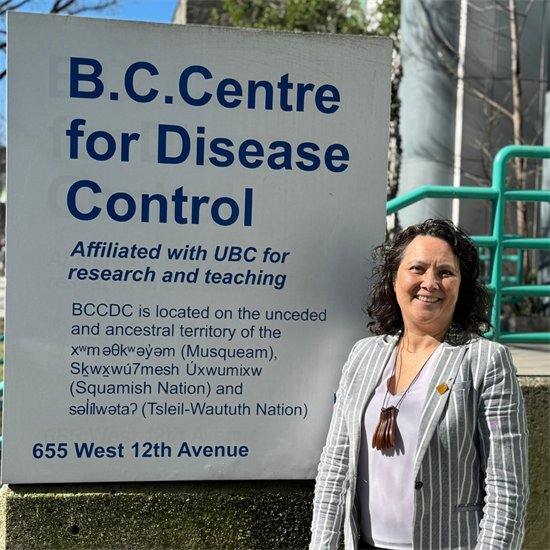
Linda Hoang is a medical microbiologist and medical director of the British Columbia Centre for Disease Control (BCCDC) Public Health Laboratory, and a clinical professor in the Department of Pathology & Laboratory Medicine at the University of British Columbia (UBC). Dr. Hoang completed both her medical school and medical microbiology residency training at UBC, becoming a Fellow of the Royal College of Physicians and Surgeons of Canada in 2006. She also obtained a diploma in tropical medicine and hygiene from the London School of Hygiene & Epidemiology in the UK. Dr. Hoang has been based at BCCDC since 2006, though she has been involved in BCCDC-led projects in Vietnam and BC since 1998. Dr. Hoang has pioneered advancements in public health laboratory science in British Columbia. Her research focuses on medical microbiology, genomic epidemiology, and infectious disease surveillance. She led the modernization of the Public Health Advanced Bacteriology and Mycology Program for over 17 years, implementing innovative diagnostic techniques such as 16S and ITS sequencing directly from clinical samples. Her work has significantly improved the province's capacity to detect and respond to infectious disease threats, including foodborne outbreaks and healthcare-associated infections. Analysis of Dr. Hoang's publications reveals a consistent focus on applying genomic technologies to public health challenges. Her research spans diagnostic test evaluation, pathogen surveillance, antimicrobial resistance monitoring, and pandemic response. She has made significant contributions to understanding the epidemiology of bacterial pathogens including Neisseria gonorrhoeae, Streptococcus pyogenes, and Streptococcus pneumoniae, as well as viral pathogens like SARS-CoV-2. Medical Director, BCCDC Public Health Laboratory Site Director, Medical Microbiology Residency Training Program Former Medical Co-Director for the Provincial Infection Control Network (PICNet) until 2023 Dr. Hoang has played a critical role in building British Columbia's public health laboratory infrastructure. She was instrumental in implementing Canada's first Laboratory Response Network program for the 2010 Olympics and has led the integration of genomic technologies into routine public health surveillance. Her leadership was particularly crucial during the COVID-19 pandemic, where she helped establish a high-throughput pathogen-agnostic genomics hub at the BCCDC Public Health Laboratory as a pandemic legacy.
Dr Susanna Dodd is a Research Fellow in the Department of Biostatistics at the University of Liverpool. She has been affiliated with the Clinical Trials Research Centre since 2001, contributing to trial methodology research, causal analysis, and digital health initiatives. Focus areas: Causal inference, mediation analysis, and adherence in clinical trials Key projects: COMET initiative, ORBIT project, and GeneSIS Project Statistical lead on trials using routinely collected data (RCD) and patient-reported outcomes Dr Dodd's research spans methodological advancements in clinical trial analysis, core outcome set taxonomy development, and digital health interventions. Her recent work emphasizes leveraging electronic health records and registry data for outcome reporting. Scientific awards and grants include: NIHR Doctoral Research Fellowship (completed) Current funding for COM-IC dementia translation (NHMRC, 2021–2024) Lead on Data Accelerator Project (NHS Cheshire and Merseyside ICB, 2023–2027)
Tiffany C.E. Veinot , MLS, PhD, is an Associate Professor at the University of Michigan , jointly appointed in the School of Information and the Department of Health Behavior and Health Equity within the School of Public Health. Her interdisciplinary scholarship sits at the intersection of health informatics, community health, and social justice. Education PhD, Library and Information Science, University of Western Ontario, 2008 MLS, Library Sciences, University of Toronto, 1994 BA, Women’s Studies, University of Toronto, 1992 Research Interests Dr. Veinot’s work centers on community health informatics and health equity . She studies how marginalized populations access, share, and use health information in everyday life, how social networks shape health behaviors, and how technology can be designed or re-imagined to reduce—rather than amplify—health disparities. Current projects examine: Information exchange among patients living with kidney disease Patient–provider communication in diabetes care Social-network-based HIV/STI prevention for youth Effects of structural racism (e.g., redlining) on chronic disease prevalence Digital equity and telehealth access in under-resourced communities Research Impact & Directions Across more than 150 peer-reviewed outputs, her scholarship reveals consistent themes: leveraging mixed-methods and community-engaged designs, foregrounding equity and intersectionality, and translating findings into practical informatics interventions. A 2024–2025 surge of publications—spanning environmental scans of medication-assistance programs, geospatial analyses of redlining and CKD, and human-centered evaluations of virtual care—demonstrates an expanding portfolio that links data science with on-the-ground community needs. Scientific Recognition While no formal awards are listed in the provided text, Dr. Veinot’s sustained funding record and invitations to shape national policy discourse (e.g., government-academic data collaborations for crisis response) underscore her stature in the field. Collaboration, Students & Labs Dr. Veinot mentors graduate students and post-docs across information science, public health, and health informatics programs. Her research group, embedded within the University of Michigan’s interdisciplinary culture, collaborates closely with community organizations, dialysis centers, and public health departments to co-design and evaluate informatics interventions that prioritize equity and community voice.
William Weiss is a Professor at the Bloomberg School of Public Health , Johns Hopkins University , with a focus on International Health . His work centers on health systems in low- and middle-income countries, particularly those affected by humanitarian emergencies. Education : DrPH (Johns Hopkins Bloomberg School of Public Health, 2004); MA (George Washington University, 1991). Research Interests include: Health systems management in crisis settings Data collection and analysis for program evaluation Community empowerment in health initiatives Refugee and maternal/child health HIV/AIDS and mental health in conflict regions Recent Publications emphasize global health metrics, pandemic recovery, and maternal/child mortality. Key collaborations span Uganda, Bangladesh, and Nigeria , with a focus on health information systems. Scientific Awards : Delta Omega Public Health Honors Society Projects include TSEHAI (Ethiopian HIV/AIDS support), CGPP (polio eradication), and the MET Approach for behavior change in youth. He also collaborates with USAID via an Interagency Personnel Agreement.
Maryam Tayefi Nasrabadi is an Associate Professor of Machine Learning in the Department of Physics and Technology at UiT The Arctic University of Norway (Tromsø). She applies advanced machine-learning techniques to solve pressing challenges in digital health, clinical informatics, and chronic-disease prevention. Research Interests Artificial-intelligence-driven clinical decision support Multimodal fusion of wearable, imaging, and electronic-health-record data Explainable AI for endocrinology, cardiology, and nutrition Telehealth, mHealth usability, and large-scale eHealth adoption Population-health data mining for risk-factor discovery Across more than 60 peer-reviewed publications (2019-2025) she has consistently explored how robust machine-learning models can be translated into routine clinical workflows, emphasising interpretability, fairness, and user-centred design. Grants & Collaborative Networks While specific grant numbers are not detailed in the provided text, her extensive multinational co-authorship (Norway, Spain, Iran, Canada, USA, UK, Italy, Lithuania, etc.) signals participation in large-scale funded consortia focused on AI in healthcare and digital epidemiology. Selected Professional Contributions Member of editorial boards and peer-review panels for leading journals in medical informatics and AI Active contributor to Norwegian national reports on AI implementation in healthcare (2022-2023) Frequent speaker at international conferences on machine learning in medicine
Professor Isabelle Boutron holds a faculty position at Paris Cité University as Professor of Epidemiology and Head of the METHODS research team within the Centre for Research in Epidemiology and Statistics (CRESS). She concurrently serves as Director of Cochrane France and Programme Director for the CER Master, positioning her at the nexus of academic research, international evidence synthesis, and graduate education. Her research program centers on methodological innovation across three interconnected domains: (1) Clinical trial methodology for pharmacological/non-pharmacological interventions with focus on blinding and bias; (2) Living evidence ecosystems exemplified by the pandemic-era COVID-NMA project; and (3) Research integrity through pioneering studies of 'spin' and leadership in SPIRIT-CONSORT reporting standards. This meta-research approach systematically diagnoses flaws in scientific practice while developing implementable solutions. Analysis of her 15 most recent publications reveals dominant trends in evidence synthesis innovation (40% of output), clinical trial transparency (30%), and research misrepresentation (20%). Her work consistently bridges methodological theory with urgent real-world applications, particularly evident in the rapid deployment of living review frameworks during the COVID-19 pandemic. Professor Boutron directs active research funding including Horizon 2020 Marie Curie Actions for doctoral training in research methodology and coordinates the international COVID-NMA consortium. Her supervision approach emphasizes collaborative, policy-relevant projects with students frequently co-authoring high-impact publications in journals like JAMA and Nature Medicine. The METHODS team maintains strategic partnerships with Cochrane, WHO, and European regulatory agencies to translate methodological advances into practice. Embedded within CRESS, her laboratory functions as a methodological hub where statisticians, clinicians, and science communicators develop tools for evidence assessment. Current priorities include AI-assisted living reviews and global implementation of CONSORT extensions for complex interventions, providing students with exposure to both theoretical methodology and large-scale evidence infrastructure projects.
Dr. Peter Stubbs is a Senior Lecturer in Physiotherapy at the University of Technology Sydney's Graduate School of Health, where he also serves as Higher Degree Research Coordinator. With extensive international experience across multiple healthcare systems, he contributes significantly to both clinical practice and academic research in rehabilitation sciences. Dr. Stubbs completed his BSc in Sport and Exercise Science from Auckland University (New Zealand) in 2005, followed by a Master of Physiotherapy from Sydney University (Australia) in 2008, and a PhD in Neurorehabilitation and Clinical Neurophysiology from Aalborg University (Denmark) in 2011. His academic journey includes post-doctoral research at Neuroscience Research Australia and Hammel Neurorehabilitation Centre in Denmark. His research spans multiple domains including neurorehabilitation (particularly acquired brain injury), development of research databases to improve patient outcomes, and application of emerging technologies like Virtual Reality, Blood Flow Restriction, and Robotics in rehabilitation. He also conducts meta-epidemiological research focusing on abstract spin, trial pre-registration, and systematic review quality. Analysis of his recent publications reveals a strong emphasis on evidence-based practice, with systematic reviews and meta-analyses across musculoskeletal conditions, stroke rehabilitation, and emerging technologies in rehabilitation. His work demonstrates a consistent pattern of collaboration across international institutions and interdisciplinary teams. Dr. Stubbs actively supervises Masters and PhD students and teaches courses including Sub-acute Rehabilitation (96084), Professional Practice (96081), and research design courses. His teaching approach integrates his diverse international experiences from working in India, Japan, the Philippines, New Zealand, Australia, and Denmark.
Thomas Ahrens is a Professor in the Department of Accounting at United Arab Emirates University in Al Ain. With 62 publications and over 5,400 citations, his work bridges management accounting theory with practical applications in both private and public sector organizations. His research has established him as a leading scholar in management control systems and practice theory approaches to accounting. Dr. Ahrens' research interests center on the roles of management control systems (MCS) in managerial practices. After initial work on the links between MCS, culture, and accountability, he has focused on how MCS are embedded in everyday organizational interactions, heavily influenced by Schatzki's practice theory. This work has produced significant concepts including enabling MCS, situated functionality of MCS, and management control anchor practices. His second major research stream applies MCS theory to public sector contexts, particularly examining budgeting, accountability, and the hybridization of financial and service expertise in local government. He has also made important contributions to research methodology for qualitative field research in organizations. Analysis of his recent publications (2020-2025) reveals several key trends: a deepening focus on public sector accounting challenges during crises (particularly the COVID-19 pandemic), increasing attention to social equity budgeting and fairness practices, growing interest in sustainability accounting and waste management, and sophisticated applications of Foucault's governmentality theory to understand accounting's role in governance. His work increasingly examines how accounting practices can simultaneously serve multiple institutional logics and value systems in complex organizational environments. Dr. Ahrens frequently collaborates with Laurence Ferry and other researchers in public sector accounting, demonstrating a strong commitment to collaborative scholarship. His work in the Jan Pfister's Lab at UAE University shows particular interest in how qualitative research methods can better capture the richness of organizational contexts. His contributions to special issues and workshops indicate active engagement in developing the methodological foundations of accounting research.
Dr. David McAllister is a Wellcome Trust Intermediate Clinical Fellow at the University of Glasgow's Institute of Health and Wellbeing, where he has been employed since December 2016. His research bridges clinical medicine and advanced epidemiological methods, focusing on generating evidence that directly informs real-world healthcare practice. Dr. McAllister's research primarily centers on diabetes (both Type 1 and Type 2), multimorbidity, and cardiovascular outcomes. His work examines how treatments perform in diverse patient populations beyond the controlled settings of clinical trials, with particular attention to how factors like age, sex, and multiple chronic conditions affect treatment effectiveness. He has developed expertise in analyzing routinely collected health data from sources like UK Biobank and national healthcare databases to address methodological challenges in comparative effectiveness research. His recent publications (2023-2025) demonstrate a strong focus on precision medicine approaches, examining sex and age differences in treatment responses, developing methods for better clinical guideline development, and investigating how social factors interact with clinical conditions. His work frequently appears in high-impact journals including JAMA, Diabetes Care, and Nature Communications. Dr. McAllister has secured substantial research funding, including multiple Wellcome Trust awards, Medical Research Council grants, and Diabetes UK funding. His current projects (running through 2029) focus on standardized protocols for research using routinely collected health data, understanding problematic polypharmacy in diabetes, and predictors of early trial termination. Wellcome Trust Intermediate Clinical Fellowship Canadian Institutes of Health Research grant (2024-2029) Diabetes UK grant (2024-2029) Medical Research Council grants UK Research and Innovation funding His methodological expertise includes individual participant data meta-analysis, network meta-analysis, instrumental variable methods, and latent class analysis for multimorbidity clustering. These approaches allow him to address critical questions about how treatments work for specific patient subgroups in real-world settings, helping bridge the gap between clinical trial evidence and everyday medical practice.
Elizabeth Ford is an Associate Professor in Health Data Science at Brighton and Sussex Medical School, with expertise in analyzing primary care data and linked routinely collected health data to identify areas for healthcare improvement. She serves as Lead for Data Science in the NIHR Applied Research Collaboration in Kent, Surrey, and Sussex (ARC KSS), where she works to enhance health data science capacity across the region. Her research focuses on developing early detection models for mental health conditions and dementia, and understanding groups at risk of delayed diagnosis of long-term conditions. Professor Ford's academic journey began with a BA in Psychology from Oxford University, followed by an MRC-funded DPhil in clinical health psychology at the University of Sussex. She has held progressive academic positions at Brighton and Sussex Medical School, advancing from Research Fellow to her current role as Associate Professor. Her career demonstrates a clear trajectory in health data science, epidemiology, and public engagement with health data. Her research spans health data science methodology, ethical considerations in data use, and practical applications for healthcare improvement. Professor Ford specializes in risk prediction modeling, data quality assessment using free text, Bayesian methods for handling missing data, and public engagement approaches to build social license for data sharing. Her work addresses critical challenges in using routinely collected health data for research while maintaining public trust. Professor Ford's recent publications reflect her leadership in navigating the technical, ethical, and governance dimensions of health data science. Her work addresses data privacy concerns, quality assessment of electronic health records, development of risk prediction models, and public perspectives on data sharing - all critical areas for advancing responsible health data research. Future Leader in Health Data Science by the Farr Institute of Health Informatics Research (2016) As an educator, Professor Ford oversees undergraduate research methods curriculum and teaches epidemiology and health data science to Masters students. She runs a specialized course on AI in healthcare for medical undergraduates and regularly supervises research projects at all levels. Her teaching reflects her commitment to developing the next generation of health data scientists who can navigate both technical and ethical challenges in the field. Professor Ford actively collaborates with NHS, public health, and public stakeholders across Sussex, Kent, and Surrey to support responsible use of routinely collected data in research. Her leadership in developing secure regional data environments and understanding public perspectives on data sharing positions her at the forefront of health data science infrastructure development in the UK.
Daniel Capurro, MD, PhD is an Associate Professor in the Department of Internal Medicine at Pontificia Universidad Católica de Chile and maintains an Affiliate Assistant Professor position in the Department of Biomedical Informatics and Medical Education at the University of Washington in Seattle. His academic appointments include: Associate Professor, Department of Internal Medicine, School of Medicine, Pontificia Universidad Católica de Chile Affiliate Assistant Professor, Department of Biomedical Informatics and Medical Education, University of Washington Former Chief Medical Information Officer of the university's healthcare network at Pontificia Universidad Católica de Chile Dr. Capurro's research program centers on developing innovative methods to improve the re-utilization of routinely collected clinical data for clinical and translational research, quality improvement, and public health initiatives. His work prominently features process mining techniques applied across various healthcare settings including emergency departments, primary care clinics, and specialized treatment pathways. He has made significant contributions to implementing health information systems in Chilean healthcare institutions and developing mobile health interventions for cervical cancer prevention in underserved populations. Analysis of his recent publication record reveals a strong emphasis on applying data science methods to extract meaningful insights from clinical workflows, with particular focus on emergency department operations, diabetes care processes, and medication management. His research bridges clinical medicine with informatics to create practical solutions that improve healthcare delivery and patient outcomes. As an educator, Dr. Capurro designs and leads the integration track for semesters 2 through 5 in the medical curriculum at Pontificia Universidad Católica de Chile, where students engage in practical problem-solving activities that connect knowledge from various disciplines. While maintaining limited outpatient clinical practice, he dedicates most of his professional time to advancing biomedical informatics research and its application to real-world healthcare challenges in Chile and beyond.