Marcus Völp is an Associate Professor and head of the CritiX research group at the University of Luxembourg's Interdisciplinary Centre for Security, Reliability and Trust (SnT). His research focuses on ultra-reliable operating systems, fault and intrusion tolerant systems for cyber-physical environments, and hierarchical hybridization techniques to construct resilient computing platforms. His work bridges theoretical foundations with practical implementations, particularly in developing dependable systems-on-chip that can withstand faults and intrusions. Research spans formal verification methods, radiation-hardened hardware, blockchain security, and autonomous vehicle safety systems. Recent publications demonstrate advancement in parameterized system verification, radiation effects on routers, and N-version machine learning for autonomous systems. His group maintains strong focus on practical resilience mechanisms for real-time and critical systems across computing layers.
Gabriela Nicolescu is a Professor at Polytechnique Montréal , affiliated with the Department of Computer Engineering and Software Engineering and the LAMA-WeST (Web, Semantics and Text) research group. Her work focuses on design methodologies , programming , and security for advanced systems integrating 3D SoCs , optical networks , and heterogeneous technologies . Education: B.Sc. and M.Sc., Politehnica Bucharest Ph.D., Institut National Polytechnique de Grenoble (2002), awarded Best Thesis in Microelectronics Research Interests include cybersecurity for avionics , security by design for cyber-physical systems , advanced programming models for multi-core systems , and modeling/simulation of heterogeneous systems . She has contributed to fields like optical networks on chip , real-time embedded systems , and edge computing security . Recent Publications highlight her leadership in all-optical neural networks , formal verification , and security for avionic systems . Her work spans machine learning-driven intrusion detection , photonic integrated circuits , and ontology-based cybersecurity frameworks . Scientific Awards: Best Thesis in Microelectronics, Institut National Polytechnique de Grenoble (2002) Student Supervision encompasses doctoral and master’s theses in areas such as multi-core RTOS , security in autonomous systems , AI-based penetration testing , and performance optimization in avionics . Current advisees include Felipe Magalhaes , Julien Carayol , and Kacem Khaled , while completed supervision includes A. S. Shahnejat Bushehri and Rami Zrelli . She is actively involved in collaborative research projects addressing national cybersecurity priorities and safer aircraft design , as highlighted in media outlets like The Globe and Mail and Science-Presse .
Dr. Nancy Samaan is an Associate Professor at the School of Electrical Engineering and Computer Science, University of Ottawa. She holds a Ph.D. in Computer Science from the University of Ottawa (2007), along with B.Sc. and M.Sc. degrees in Computer Science from Alexandria University, Egypt (1998 and 2001). Her research focuses on wireless communication, QoS in networks, autonomic networks, and policy-based management, with over 20 publications in refereed journals and conferences. Key achievements include the 2008 NSERC University Faculty Award and recognition for her 2006 paper highlighted in IEEE Wireless Communication magazine. She is an active IEEE member and contributes to advancing network management through innovative solutions like programmable data-plane architectures and machine learning integration. Her recent work emphasizes machine learning applications in networking, programmable data planes, and QoS optimization, reflecting a trend toward intelligent and adaptive network systems. Despite no explicitly listed grants or labs, her publications indicate significant contributions to network autonomy and resource management in dynamic environments.
Manolis G.H. Katevenis is a Professor at the Department of Computer Science, University of Crete, and the founder and Head of the Computer Architecture and VLSI Systems (CARV) Laboratory at the Institute of Computer Science (ICS), Foundation for Research and Technology – Hellas (FORTH) in Heraklion, Crete, Greece. He has held academic positions since 1986 and played a pivotal role in establishing the Computer Science Department at the University of Crete. His research spans computer architecture, interconnection networks, VLSI systems, and high-performance computing, with a strong focus on scalable, low-power, manycore systems and RISC-V. He has led numerous European R&D initiatives, including serving as Coordinator of the ExaNeSt project. PhD in Computer Science, University of California, Berkeley (1983) MSc in Electrical Engineering and Computer Science, University of California, Berkeley (1980) Diploma of Electrical Engineering, National Technical University of Athens (1978) Manolis Katevenis's research focuses on advancing scalable system architectures for high-performance and big data computing. His work in computer architecture includes RISC-V, exascale computing, and manycore systems. He has made foundational contributions to interprocessor communication, particularly through remote-write, remote-DMA, and remote-enqueue mechanisms, and has pioneered innovations in interconnection networks and low-latency network interfaces. His research integrates hardware and software co-design to optimize performance, energy efficiency, and scalability in large-scale computing systems. The recent publications highlight a strong trend in exascale computing, interconnection networks, and FPGA-based prototyping of manycore systems. His work emphasizes scalable, low-power architectures, with recurring themes in congestion management, fair scheduling, crossbar design, and hardware-software integration for HPC. The articles span high-impact journals such as IEEE/ACM Transactions on Networking, IEEE Micro, and Computer Networks, reflecting sustained contributions to computer architecture and networking. ACM Doctoral Dissertation Award (1984) David J. Sakrison Memorial Prize (1983) IBM PhD Fellowship (1981–1983) Greek State Fellowship (1973–1978) Stelios Pichoridis Award for Outstanding University Teaching (2015) Member of Academia Europaea (elected 2012) Award by the Secretary General of the Region of Crete (2003) IEEE Milestone recognition for the RISC Project (2015) Manolis Katevenis has supervised over 50 graduate theses and mentored many prominent Greek computer architects, including recipients of the ACM Maurice Wilkes Award. He has served as Principal Investigator or co-PI in over 30 R&D projects with a total budget exceeding 18 million euros, including major European initiatives such as ExaNeSt (which he coordinated), EuroEXA, EcoScale, SARC, ENCORE, and multiple HiPEAC Network of Excellence projects. His leadership extends to project coordination, architectural design, FPGA prototyping, and systems software development. Katevenis founded and leads the CARV Laboratory at FORTH-ICS, a major research team with 80–100 members focused on computer architecture and VLSI systems. The lab has spun off the Distributed Computing Systems (DCS) Laboratory and is central to European exascale computing efforts, including participation in the European Processor Initiative. CARV has developed large-scale prototypes such as the 768-core ExaNeSt system and the Formic FPGA platform for manycore research.
Dr. Amal Mersni is an Assistant Professor at the International University of Sarajevo (IUS). She holds a PhD in Telecommunication Systems and Networks, with expertise in Networking and Cybersecurity. Dr. Mersni actively promotes women's participation in computing through her involvement in ACM-W (Association for Computing Machinery - Women) and initiatives like the WoCa Lunch program . Her research spans two major areas: technical advancements in telecommunications (e.g., Software-Defined Networking, Fault Tolerance, Traffic Engineering, Cloud Computing) and gender-related challenges in ICT. Her recent work highlights intersections between cybersecurity, gender equality, and education, including studies on women's PhD motivations and gender disinformation threats. The 15 most recent publications reflect a balanced focus on network optimization (e.g., routing models, fault tolerance) and gender dynamics in computing (e.g., women in ICT, academic career perceptions). Dr. Mersni contributes to over 40 scientific publications and has developed educational tools like virtual laboratories for cybersecurity courses. She is also a certified Cisco Instructor with industry certifications.
Rahim Rahmani is a Professor in the Department of Computer and Electrical Engineering (DET) at Mid Sweden University , affiliated with the STC Research Centre . His work focuses on network congestion control, quality of service (QoS), and protocol optimization in heterogeneous and dynamic network environments.
Carolyn L Beck is a Professor in the Department of Industrial and Enterprise Systems Engineering at the University of Illinois at Urbana-Champaign . She holds affiliations with multiple departments, including Electrical and Computer Engineering (since 2014) and Mechanical Science and Engineering (since 1999). Beck is also a Research Professor at the Coordinated Science Laboratory (since 2019) and has served as Associate Head for Undergraduate Programs since 2020. Education : Ph.D. in Electrical Engineering from California Institute of Technology M.S. in Electrical & Computer Engineering from Carnegie Mellon University B.S. in Electrical & Computer Engineering with a Physics minor from California State Polytechnic University Research Interests focus on control and optimization , epidemic processes over networks , network inference , and dynamic network data clustering . Her work spans mathematical systems theory to real-world applications in bioengineering and smart grid optimization . Article Trends show a progression from system identification and network inference to complex epidemic modeling over time-varying networks and grid optimization. Recent works emphasize finite-sample analysis , distributed subgradient methods , and multi-layer contagion dynamics , reflecting her expertise in control theory and network science . Scientific Awards : IEEE Fellow (2023) Arthur Davis Faculty Scholar Award (2016) ONR Young Investigator Award (2001-2004) NSF CAREER Award (1998-2003) ORAU Junior Faculty Award (1997) Alcoa Foundation Award (1997) Advising and Grants include mentoring former PhD students like Puneet Sharma (AIMBE Fellow) and Philip Pare' (Purdue ECE) . Her research has been funded by the NSF , ONR , and IEEE , with a $500,000 grant for wind turbine efficiency. Labs and Teams : Beck is affiliated with the Coordinated Science Laboratory and collaborates with interdisciplinary teams in bioengineering , network control , and grid optimization . She also contributes to IEEE as a Guest Editor and Associate Editor .
Nirmala Shenoy is a Professor in the School of Information at the Golisano College of Computing and Information Sciences, Rochester Institute of Technology (RIT). She holds a BE/ME from the University of Madras (India) and a Ph.D. in Computer Science from the University of Bremen (Germany). Her research focuses on simplifying network operations, protocol efficiency, and security in data center networks (DCNs) and mobile ad hoc networks (MANETs). She has pioneered the Meshed Tree Protocol (MTP) for dynamic connectivity challenges and the Expedited Internet Bypass Protocol (EIBP) for scalable routing. Research Interests: Network Protocol Simplification Data Center Architecture MANET Clustering Solutions Non-IP Solutions for Security Energy-Efficient Networks Current Projects include: MR-MTP: A novel protocol for folded-Clos topology DCNs, replacing BGP/ECMP/BFD with auto-configuration and enhanced security. EIBP: A BGP/OSPF replacement protocol demonstrating superior performance in FABRIC testbeds. MTP Security: Non-IP layer 3 protocols mitigating IP-based vulnerabilities in dynamic networks. Teaching includes courses on Wireless Networking, Network Services, and Advanced Routing/Switching. Her work has been funded by NSF and defense organizations. She actively collaborates with industry and academia to advance next-generation network frameworks.
Andrea Bianco is a Full Professor at Politecnico di Torino in the Department of Electronics and Telecommunications. He serves as Vice Rector for Internal Affairs since 2024 and previously held roles such as Department Head and member of the Academic Senate. His research focuses on optical networks, software-defined networking, and networked music performance. He has authored over 220 publications with an h-index of 27 and received the Best Paper Award at IEEE GLOBECOM 2009. Education: Dr.Ing. in Electronics Engineering (1986) and Ph.D. in Telecommunications Engineering (1994), both from Politecnico di Torino. Research Interests: High-speed switching, SDN/NFV, network music performance, and energy-efficient optical networks. His work includes leading projects like SFINGI (virtualization in software routers) and ZeTON (Zero-Touch Optical Networks). He has collaborated with industries like Cisco, Alcatel, and BT. Bianco is an IEEE Senior Member and has co-chaired major conferences such as IEEE GLOBECOM and Networking.
Pierpaolo Loreti is an Adjunct Professor at the Department of Electronic Engineering and a Researcher at the University of Rome Tor Vergata. He holds a Ph.D. in Telecommunications and Microelectronics (2002) and a Degree in Electronic Engineering (1998), both from University of Rome Tor Vergata. His research focuses on wireless/mobile networks, framework design, analytic modeling, and performance evaluation through simulation and test-bedding. He has led projects on IoT, cybersecurity (e.g., medical device security, satellite networks), blockchain in healthcare, and wildlife tracking systems for endangered species like the Galápagos pink iguana. He collaborates with CNIT and coordinates initiatives in distributed computing, edge AI, and federated testbeds. Education: Ph.D. in Telecommunications and Microelectronics, University of Rome Tor Vergata, 2002 Electronic Engineering Degree (cum laude), University of Rome Tor Vergata, 1998 Research Interests: Wireless networks, IoT sensor systems, cybersecurity for healthcare and satellite infrastructure, blockchain applications in energy grids, and in-network machine learning. His work addresses challenges in privacy preservation, resource-sharing protocols, and energy-efficient designs for critical environments like wildlife monitoring and smart grids. Notable Projects: Developed miniaturized tracking systems for Galápagos pink iguanas Designed cybersecurity frameworks for medical devices and satellite networks Advanced eBPF program composition tools (HIKe/eCLAT) Co-led OpenSatRange and Cyber Range initiatives for space system training Awards: None explicitly mentioned in texts. Advising/Grants: Coordinated European/national projects since 1998 Supervised multiple research initiatives in IoT, blockchain, and network security Labs/Teams: Active member of Netgroup and collaborates with CNIT on interdisciplinary projects.
Weng Fai WONG is an Associate Professor and Deputy Head of the Department of Computer Science at the School of Computing, National University of Singapore (NUS). With over three decades of academic experience at NUS, he has established himself as a leading researcher in computer systems, with particular expertise in the interface between hardware and software stacks. Dr. Wong received his B.Sc. (First Class Honors) and M.Sc. from the National University of Singapore in 1989 and 1991 respectively, followed by a Dr.Eng.Sc. from the University of Tsukuba in 1993. His academic journey began at NUS (then DISCS) in 1985, where he progressed from student to Senior Tutor in 1989, and later returned from Japan as a Lecturer in 1993. Dr. Wong's research focuses on systems and networking, with special emphasis on hardware-software co-optimization. His current research interests include approximate computing , neuromorphic computing , and hardware acceleration for deep learning. His work spans computer architecture , embedded systems , compilers and runtime systems , and programming languages . He has made significant contributions to optimizing software for novel hardware including FPGAs, GPUs, and non-volatile memory technologies. His recent publications (2023-2025) demonstrate a strong focus on energy-efficient AI computing, with particular emphasis on spiking neural networks, large language model acceleration, and FPGA-based solutions for graph processing and machine learning workloads. His research shows a clear trajectory toward green AI through hardware-software co-design that minimizes energy consumption while maintaining computational effectiveness. Dr. Wong is a Member of ACM and a Senior Member of IEEE. His paper "Exploiting half precision arithmetic in Nvidia GPUs" was a Best Paper Finalist at the IEEE High Performance Extreme Computing Conference (HPEC 2017). As Deputy Head of the Department of Computer Science at NUS, Dr. Wong plays a key leadership role in academic administration while maintaining an active research program. His work has been supported by numerous research grants, though specific details are not provided in the available information. Dr. Wong leads research in the Systems & Networking area at NUS, with particular focus on the Hardware-Software Interface Laboratory. His team explores innovative approaches to bridge the gap between theoretical computer science and practical hardware implementation, with applications spanning from edge computing to large-scale data centers.
Laurent Vanbever is an Associate Professor at ETH Zürich's Department of Information Technology and Electrical Engineering and heads the Computer Engineering and Networks Lab. His research focuses on networking systems, with a strong emphasis on network security, routing protocols, software-defined networking (SDN), and distributed systems. He explores topics such as BGP convergence, energy-efficient router designs, and mitigating routing attacks on cryptocurrencies. His work bridges theoretical advancements with practical implementations, addressing challenges in network scalability, resilience, and sustainability. Key research areas include network verification, programmable packet processing (P4), and the security of decentralized systems like blockchain. Recent projects analyze transient forwarding anomalies, SDN-based network optimizations, and energy consumption in ISP networks. His contributions to network measurement and control plane innovations have significant implications for Internet architecture and operational practices. Vanbever actively publishes in top-tier conferences/journals and collaborates on open-source networking tools. His lab develops frameworks to enhance network performance and security, such as verifying link loads and mitigating BGP hijacks. Current efforts include exploring energy-efficient network designs and safeguarding cryptocurrency infrastructure against routing vulnerabilities.
Prof. Jens Rettkowski is a leading academic specializing in advanced computing architectures, particularly focusing on multi-core systems, reconfigurable hardware (FPGAs), and networks-on-chip (NoC). His work bridges theoretical computer architecture with practical applications in embedded systems, real-time processing, and autonomous technologies. Research Interests: Multi-Core Architecture Design and Optimization Networks-on-Chip (NoC) for High-Performance Systems Reconfigurable Computing and FPGA-Based Systems Hardware-Software Co-Design for Embedded Applications Real-Time Systems and Energy Efficiency Sensor Data Fusion and Autonomous Driving Publications reflect a strong focus on optimizing communication and computation in heterogeneous systems, with recent work emphasizing power savings in multi-core architectures and event-based debugging frameworks. His contributions include frameworks like MPSoCSim for simulating reconfigurable systems, and software-defined FPGA approaches for adaptive computing. He has led research in robotics applications for assisted living environments, combining navigation algorithms with real-time sensor processing. His work also addresses security aspects of FPGA configuration and partial bitstream analysis using machine learning.
Tom Hope is an Assistant Professor (Senior Lecturer) at the Hebrew University of Jerusalem's School of Computer Science and Engineering, and a Research Scientist at The Allen Institute for AI (AI2). His work focuses on developing AI methods that augment and scale scientific knowledge discovery by harnessing vast repositories of scientific knowledge through literature, knowledge bases, and electronic medical records. His educational background includes a PhD with Dafna Shahaf, followed by postdoctoral research at AI2 and the University of Washington working with Daniel Weld and Eric Horvitz. Prior to his PhD, he led an applied AI research team at Intel that published award-winning work. Hope's research spans a full-stack spectrum from constructing new datasets and machine learning models to designing user-facing systems. His primary focus areas include text mining, knowledge graphs, information extraction, multimodal models, LLMs, and human-computer interaction for scientific discovery. He explores how computational approaches can transform the scientific process by helping researchers explore literature, generate hypotheses, and make informed decisions. His work has been featured in top venues including NAACL, EMNLP, ACL, CHI, AAAI, KDD, CACM, and PNAS, with coverage in Nature and Science. His recent publications reveal a strong emphasis on scientific idea generation systems, literature-based hypothesis formation, and tools for navigating scientific literature. His work often bridges AI techniques with real-world scientific challenges, particularly in biomedicine. 2022 Azrieli Early Career Faculty Fellowship (awarded to eight scientists across all fields) KDD 2017 Best Research Paper Award AKBC 2021 Outstanding paper award Selected for 2021 Global Young Scientists Summit Selected for 2019 Heidelberg Laureate Forum ELLIS Society member Member of KDD 2020 Best Paper Selection Committee Hope has advised numerous students from leading institutions including Carnegie Mellon, University of Washington, Georgia Tech, and others. His research is organized around five main thrusts: AI Inspiration systems for idea generation, Biomed Predictions for clinical applications, Knowledge Graph construction, Scientific Information Extraction, and Scientific Search engines for discovery. His work has significant implications for accelerating scientific discovery and improving clinical decision-making through evidence-based AI systems.
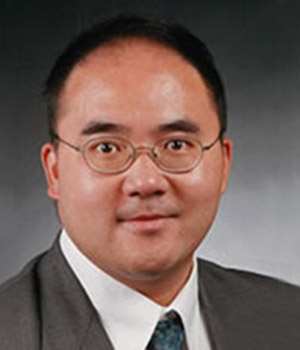
Weizhong Wang is Associate Professor in Electrical Engineering and Computer Science at University of Wisconsin-Milwaukee. Research develops magnetic content addressable memory for high-speed networking and radar applications. Innovations improve router efficiency and image search operations. Education includes PhD and MS in Electrical Engineering from University of Maryland, and BS from Southeast University (China). Research areas: Spintronic device architectures Radiation-hardened integrated circuits Magnetic field sensing technologies Anti-tampering hardware systems IEEE publications focus on MRAM optimization and sensor noise reduction. Community outreach includes science fair judging.