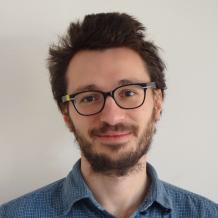
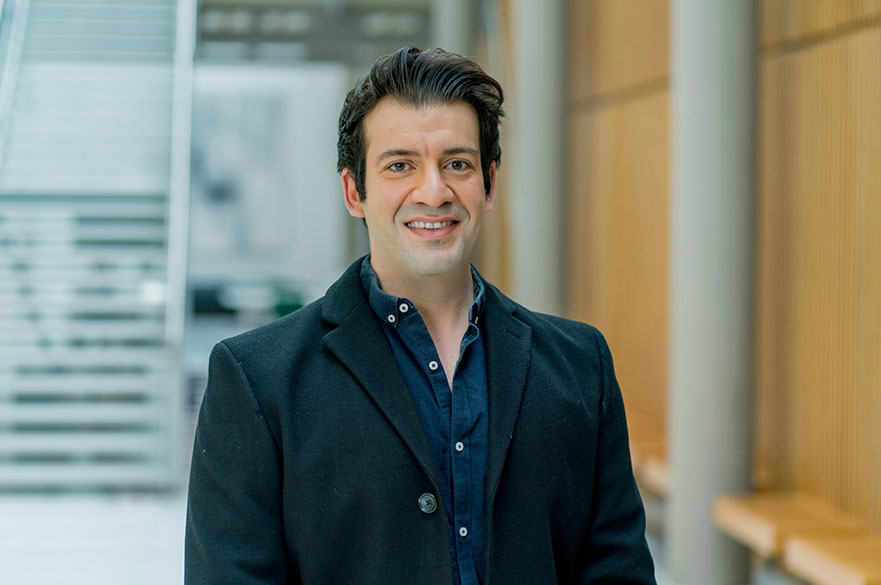
Christophe Eloy is a Professor of Fluid Mechanics at Centrale Marseille, conducting research at the IRPHE Institute in Marseille. His work focuses on fluid-structure interactions, hydrodynamic instabilities, animal locomotion, aeroelasticity, rotating flows, and plant biomechanics, combining analytical, experimental, and numerical methods. Affiliation : Centrale Marseille (IRPHE Institute) Research Themes : Fluid mechanics, biomechanics, turbulence, and computational physics at the intersection of biology and engineering. He leads the ERC-funded C0PEP0D project exploring fluid mechanics, AI, and biological systems. Collaborations include nuclear engineering (e.g., PWR fuel assembly dynamics), plant growth mechanics, and microorganism navigation strategies. His work spans experimental setups like ICARE facilities and theoretical models for optimal swimming and flow sensing. Recent studies address reinforcement learning for navigation, planktonic turbulence surfing, and seismic responses of cylinder assemblies. He actively mentors interns and PhD students in multidisciplinary projects.
Charlie Duclut is an Associate Professor at Sorbonne University and conducts research at the Physico-Chimie Curie laboratory. His work bridges physics and biology, focusing on theoretical approaches such as statistical physics and non-equilibrium thermodynamics to study collective cell behavior and tissue dynamics. Key research areas include the development of theoretical tools like integral geometry and renormalization group methods, applied to problems involving tissue mechanics, electrohydraulics, and morphogenesis. He holds a PhD from Université Paris VI (UPMC) and has held postdoctoral positions at the Max Planck Institute for the Physics of Complex Systems and Matière et Systèmes Complexes in Paris. His teaching includes thermodynamics, mechanics, and stochastic modeling courses at Sorbonne University and Technische Universität Dresden. Education: Bachelor/Master at École Normale Supérieure (ENS) with a focus on Macroscopic Physics and Complexity; PhD in theoretical physics under Bertrand Delamotte at LPTMC (UPMC). Research experience includes internships at LANL (USA) and LPS (Paris). Research Interests: Theoretical frameworks for tissue deformation, interplay of mechanical/hydraulic/electrical tissue properties, and active matter phenomena. Current projects explore electrohydraulic control of cell spheroids and chemotactic self-organization. Active collaborations address biological systems like Drosophila wing discs and ascidian notochords. Publications highlight contributions to tissue rheology, cellular network dynamics, and fluid-electric interactions. His work has appeared in PNAS , Proc. Natl. Acad. Sci. U.S.A. , and Physical Review series. Invited talks and seminars span international conferences and institutions including Rice Global Paris Center, Westlake University, and EMBL.
Christopher Hulme is an Associate Professor of Powder Metallurgy and Rapid Solidification at the Department of Materials Science and Engineering, KTH Royal Institute of Technology. His research focuses on understanding the physical mechanisms of metal powder atomization, including droplet formation and solidification, and linking production conditions to powder properties. He employs computational fluid dynamics, stochastic modelling, and thermodynamic analysis, supported by experimental techniques like shadowgraphy and water modelling. His work also examines powder behavior, developing new testing methods for flow and spreading properties, and explores sustainability and equality in engineering education. Key research areas include atomization process optimization, powder flow dynamics, additive manufacturing feedstock development, and X-ray source innovation. His teaching responsibilities span courses such as Casting Processing, Material Selection, and Metal Powder Characterization, emphasizing practical methods and ethical engineering practices. He has contributed to over 50 peer-reviewed publications, with recent work addressing rotating anode X-ray erosion, nickel silicide alloy optimization, and humidity effects on steel powder flowability. Teaching Roles: Course responsible for Metal Powder Production, Materials Processes I, and Material Selection Research Themes: Atomization Science, Powder Behavior Modelling, Sustainable Manufacturing
Wolfgang Losert is a **Professor of Physics** and Interim Associate Dean for Research in the College of Computer, Mathematical, and Natural Sciences at the University of Maryland. He is also Co-Director of the UMD-NCI Partnership for Integrative Cancer Research and affiliated with the Institute for Physical Science and Technology (IPST). His research bridges physics, biology, and data science, focusing on the quantitative analysis of living systems, including cell migration, neural networks, and granular materials. Losert’s work emphasizes using physical signals (light, EM fields, texture) to control cell behavior, particularly in epithelial and neural systems. He has pioneered methods like **excitable systems theory** to study cellular sensing and response, with applications in cancer research, neurobiology, and environmental health. Key collaborations include projects on astrocyte dynamics, actin wave signaling, and the impact of nanotopography on cell behavior. His lab integrates advanced microscopy, machine learning, and computational modeling. Notably, he contributed to founding the APS Group on Data Science (GDS) and received an APS Innovation Award for developing the Data Science Education Community of Practice (DSECOP). His interdisciplinary approach addresses challenges in biophysics, materials science, and systems biology. **Awards**: APS Innovation Award (2021). **Labs**: Biodynamics Lab, Optics Lab. **Outreach**: Maryland Day demonstrations on cell tracking and granular physics.
Peng Zhao is a Researcher affiliated with multiple institutions including University of Georgia (Department of Biochemistry and Molecular Biology) and Xi'an Jiaotong University , among others. His research spans interdisciplinary domains such as Computer Science Artificial Intelligence Biomedical Engineering Robotics Data Mining and focuses on neural networks, optimization algorithms, and signal processing. Peng Zhao's recent publications highlight trends in deep learning for vehicle routing problems Wi-Fi-based gesture recognition autonomous agricultural robotics federated learning for transportation systems UAV-assisted vehicle platoons applications. He has collaborated extensively with researchers like Wei Pang , Yilong Yin , and Xiang Zhang on projects involving computational modeling, biomedical imaging, and network security.
Christophe Brun is an Associate Professor at Laboratoire des Écoulements Géophysiques et Industriels (LEGI) , Université Grenoble Alpes, specializing in geophysical fluid dynamics and turbulence modeling. His research focuses on katabatic winds, atmospheric boundary layers, and Görtler instability through field experiments and numerical simulations. Key Research Areas: Katabatic Flow Dynamics Large Eddy Simulation (LES) Stably Stratified Turbulence Mountain Meteorology Recent Publications (2024): Analysis of turbulent boundary layers in alpine katabatic flows Wave turbulence evidence and Bolgiano spectra 3D velocity measurement techniques Technical Affiliation: Member of the MEIGE team at LEGI, working with advanced rotating platforms like Coriolis for geophysical flow experiments.
Daniel Kopta is an Assistant Professor and Lecturer in the School of Computing at the University of Utah. His research focuses on computer graphics, GPU architecture, energy-efficient computing, and parallel processing, with a strong emphasis on hardware-accelerated ray tracing and memory subsystem optimization. Prior to his academic role, he worked as a Senior OptiX Engineer at NVIDIA, contributing to advanced graphics and computing technologies. He earned his PhD in Computer Science from the University of Utah under Dr. Erik Brunvand, specializing in ray-traced computer graphics and GPU architecture. His work bridges theoretical computer science with practical hardware design, addressing challenges in rendering performance, energy consumption, and scalable computing systems. Key research themes include optimizing memory hierarchies for graphics pipelines, analyzing DRAM behavior in rendering contexts, and developing energy-efficient architectures for real-time applications. His publications span topics like dual-split trees, motion blur algorithms, and multi-core systems simulation (SimTRaX). No scientific awards are explicitly mentioned in the provided information. His advising and grant activities remain unspecified, though his academic role suggests active mentorship in computer graphics and architecture research.
Dr. Marc D. Polanka is a Professor in the Department of Aeronautics and Astronautics at the Air Force Institute of Technology (AFIT), part of the Graduate School of Engineering and Management. He holds a PhD in Mechanical Engineering from the University of Texas at Austin and has a distinguished record of leadership, serving as the Faculty Council President and Faculty Advisor for the AFIT Student Section of AIAA. B.S., Mechanical Engineering, University of Dayton, 1992 M.S., Mechanical Engineering, Stanford University, 1993 Ph.D., Mechanical Engineering, University of Texas-Austin, 1999 Dr. Polanka's research is centered on advancing gas turbine propulsion technology, with a primary focus on combustion, heat transfer, and advanced instrumentation . He leads the Combustion Optimization And Laser (COAL) laboratory, where his team investigates cutting-edge concepts such as Rotating Detonation Engines (RDEs) and Ultra Compact Combustors for applications in APUs, afterburners, and scramjets. His work also encompasses the critical challenge of turbine film cooling under high fuel-air ratio conditions and the enhancement of small engine performance for unmanned aerial systems, including their operation at altitude and conversion to alternative fuels. His expertise extends to the aerodynamics and heat transfer of turbines, including film cooling and unsteady vane-rotor interactions. His recent publications reflect a strong and consistent research trajectory in propulsion and thermal sciences. The articles demonstrate a deep integration of experimental and computational methods to solve complex problems in combustion dynamics , film cooling effectiveness , and small engine optimization . A significant trend is the investigation of pressure gain combustion via RDEs and the development of novel diagnostic techniques for high-temperature environments. Associate Fellow of AIAA Fellow of ASME Faculty Advisor, AFIT Student Section of AIAA Review Chair, ASME IGTI conference Former Chair, ASME K-14 Gas Turbine Heat Transfer Committee Dr. Polanka has advised numerous PhD and MS students, many of whom are co-authors on his extensive publication list. His research has been supported by significant funding from the Air Force and other agencies, enabling advanced experimental facilities like the COAL lab. He has received a remarkable number of awards, including the Air Force Outstanding Science and Engineering Educator Award (2019) , the ASME IGTI Outstanding Service Award (2020) , and multiple first-place awards from AIAA for section leadership and service. Dr. Polanka leads the Combustion Optimization And Laser (COAL) laboratory, a state-of-the-art research facility dedicated to experimental combustion and heat transfer. The lab is the hub for his work on RDEs, ultra-compact combustors, and advanced turbine cooling, fostering a collaborative team of graduate students and researchers who are at the forefront of aerospace propulsion research.
Daniel Ruijters is a part-time Full Professor in the Electronic Systems department at Eindhoven University of Technology (TU/e), specializing in data-driven value-based healthcare for image-guided therapy. His research develops intelligent systems that optimize data utilization in minimally invasive treatments, translating population datasets to individual patient care. He simultaneously serves as a Principal Scientist at Philips Healthcare, where he has worked since 2001, developing clinical prototypes for image-guided interventions. Education Engineering degree from University of Technology Aachen, Germany (2001) Master's research at École Nationale Supérieure des Télécommunications (ENST), ParisTech, France PhD from TU/e and KU Leuven (2010) on multi-modal image fusion Research Focus Ruijters' work integrates medical imaging, deep learning, and computational modeling to advance image-guided interventions. His research spans GPU-accelerated image processing, angiography-based diagnostics, computational fluid dynamics for vascular analysis, and AI-driven detection systems for neurovascular procedures. This includes developing real-time tracking methods and personalized treatment approaches using large-scale clinical datasets. Projects & Initiatives He leads the PERSEUS project (2023-2029) focusing on patient-centered healthcare optimization through data science. His work contributes to UN Sustainable Development Goals through improved medical technology accessibility. Academic Contributions Ruijters teaches courses in DSP fundamentals, medical image analysis, and signal processing. His 90+ publications demonstrate consistent output since 2003, with recent emphasis on deep learning applications in angiography and computational hemodynamics.
Professor Kenneth Dawson is a Full Professor of Physical Chemistry and Director of the Centre for BioNano Interactions (CBNI) at University College Dublin's School of Chemistry. A pioneering figure in bionanoscience, he founded the concept of the 'protein corona,' which defines engineered nanoparticles' biological identity. His career spans leadership roles at UCD since 2007 and academic positions at institutions like the University of California, Berkeley, and the University of Oxford. Prof. Dawson's research focuses on: Nanoscale interactions between synthetic materials and biological systems Protein corona dynamics and its impact on nanoparticle targeting Quantitative modeling of nanoparticle uptake and trafficking Design of smart delivery systems via surface engineering Shape-dependent immunomodulation and epigenetic effects His recent publications analyze: 2025: Nanoparticle shape-driven T cell receptor modifications 2023: Ultrasmall nanoparticle behavior in biological systems 2022: Epigenetic regulation via nanoscale spatial stress 2021: Magnetic nanoparticle recovery for intracellular trafficking studies Scientific honors include Fellow of the Royal Society of Chemistry (2017), Cozzarelli Prize (2008), and IBM Supercomputing Awards (1991). He serves on editorial boards for Nature Research and ACS Applied Bio Materials . As an educator, he has supervised multiple PhD students and coordinated modules in chemical thermodynamics. His grant portfolio includes EU-funded projects like HYBRID (2018-2022) and Bio-PADT (2023-2027), supporting interdisciplinary research in nanosafety and therapeutic applications.
Klaus Widmayer is an Associate Professor in the Department of Mathematics at the Faculty of Mathematics, focusing on partial differential equations and fluid dynamics. His research bridges mathematical analysis and physical applications, particularly in plasma physics and fluid stability. Current affiliations: Faculty of Mathematics, Department of Mathematics Dr. Widmayer's research explores the stability of fluid flows and plasma systems. Key themes include: Long-time behavior of Boussinesq and Euler equations Landau damping in Vlasov-Poisson systems Rotation effects in 3D Euler equations Stationary structures near fluid flows Asymptotic analysis of kinetic models His recent work (2021–2024) investigates nonlinear stability, dispersive effects, and equilibrium structures in fluid and plasma models. Publications span journals like Annals of PDE , Communications on Pure and Applied Mathematics , and Inventiones Mathematicae . Collaborators include prominent researchers like Benoit Pausader and Alexandru Ionescu.
Claude Cambon is a Professor at the College of Engineering , Ecole Centrale de Lyon , affiliated with the Department of Fluid Mechanics and Acoustics (LMFA - UMR 5509). His research focuses on turbulence modeling, flow instabilities, compressible flows, and aeroacoustics, with applications in turbomachinery, environmental flows, and multiphase systems. His work includes experimental and numerical studies on: Turbulence dynamics in geophysical and astrophysical contexts Shear flow instabilities and control Multi-physical and multi-scale fluid phenomena Acoustic noise modeling in rotating machines Particle transport and stratified flow interactions Contact: cambon@ec-lyon.fr | Tel: 04.72.18.61.61
Amirreza Rouhi is an Associate Professor at the School of Science & Technology, Nottingham Trent University. His expertise lies in advanced computational techniques for large-scale turbulence simulations, focusing on aerodynamic drag control, turbulent heat transfer, and rotating flows. PhD in Turbulence Modeling from Queen's University (2017) Postdoctoral Fellow at University of Melbourne's Fluid Mechanics Research Group His research explores critical challenges in large-eddy simulation (LES) modeling, including subfilter-scale stress models and grid independence. He has pioneered studies on centrifugal buoyancy-driven convection and heterogeneous surface roughness effects in turbulent flows. Dr. Rouhi's work bridges fundamental fluid dynamics with practical applications in aerodynamics, geophysical flows, and biomedical engineering. His publications span top journals like Journal of Fluid Mechanics and Nature Communications . Best young author paper award (iTi Conference, 2018) Best student paper award (CFD Society of Canada, 2015) HPCVL Scholarship (2011) Multiple teaching awards (Bronze Wrench, 2012-2015) He serves as a referee for journals including Physical Review Fluids and Journal of Turbulence , and is a member of the UK Turbulence Consortium and American Physical Society (DFD).
Dr Youyou Yan is a Senior Lecturer in Mechanical Engineering at City St George's, University of London, affiliated with the School of Mathematics, Computer Science & Engineering. She joined the university in 2001 as a Senior Experimental Officer and was promoted to Senior Lecturer in 2008. Her career spans roles at the University of Oxford and University of Bath. Education: PhD (Experimental Fluid Mechanics & Optical Instrumentation, Heriot-Watt University, 1992); MSc (Fluid Mechanics, Tsinghua University, 1988); BEng (Fluid Mechanics, Tsinghua University, 1985). Her research focuses on experimental fluid mechanics and heat transfer, utilizing advanced techniques like liquid crystal thermography, laser diagnostics, and high-speed imaging. Key applications include boiling heat transfer, heat transfer enhancement via sliding bubbles, pre-swirl cooling systems, fuel spray characterization, gasoline direct injection engines, and piston ring lubrication in automotive contexts. The 15 most recent publications (2007–2023) emphasize turbulent flow analysis in screw compressors, cavitation dynamics in engine components, and fuel spray optimization for GDI engines. These works employ LDV, PIV, and computational modeling to address heat transfer, fluid-structure interactions, and efficiency improvements in mechanical systems. She is a Chartered Engineer (CEng) with the Institution of Mechanical Engineers and mentors research students through final-year project supervision and the Wind Turbine Design Challenge. Her work bridges experimental validation and CFD code optimization for industrial applications.
Chengyu Li is an Associate Professor in the Department of Mechanical and Aerospace Engineering at Case School of Engineering, Case Western Reserve University. His research program focuses on developing computational models to investigate the underlying flow physics and transport phenomena associated with biological and biomedical flows. Dr. Li received his PhD in Mechanical & Aerospace Engineering from the University of Virginia in 2016, following an M.S. from the same institution in 2014. He completed his undergraduate education with a B.S. in Mechanical Engineering from Dalian Jiaotong University, China, in 2010. Prior to joining Case Western, he served as an Assistant Professor at Villanova University from 2018 to 2024 and completed a postdoctoral position at The Ohio State University (2016-2018). Dr. Li's research spans multiple areas of fluid dynamics with applications in both engineering and healthcare. His work integrates computational fluid dynamics, immersed boundary methods, and high-performance computing to address complex problems in biological locomotion and biomedical flows. Specific research foci include: Bio-inspired propulsion mechanisms, studying how biological systems like insects and ctenophores achieve efficient locomotion Human nasal airflow dynamics, with applications to understanding and treating conditions like empty nose syndrome Fluid-structure interaction in flapping flight, examining how wing flexibility affects aerodynamic performance Odor-guided navigation, investigating how insects balance aerodynamic performance with olfactory sensitivity Analysis of Dr. Li's publication record reveals a strong interdisciplinary approach that bridges fundamental fluid dynamics with practical applications. His recent work shows increasing focus on the intersection of fluid dynamics and sensory biology, particularly how insects use airflow information for navigation. He has maintained a consistent research program in biomedical flows, with particular attention to nasal airflow and its clinical implications across multiple conditions including empty nose syndrome, nasal septal perforation, and olfactory sensitivity. Dr. Li has received several prestigious awards recognizing his research excellence: Young Investigator Program (YIP) Award 2024 from AFOSR Lewis F. Moody Award 2022 from ASME Faculty Early Career Development Program (CAREER) Award 2021 from NSF Ralph E. Powe Junior Faculty Enhancement Award 2019 from ORAU Polak Young Investigator Award 2017 from AChemS Dr. Li leads the Flow Simulation & Flow Physics Lab, where he mentors students in computational fluid dynamics research. His work has been supported by multiple grants including AFOSR FA9550-11-1-0058, AFOSR FA9550-12-1-007 monitored by Dr. Douglas Smith, and NSF CEBT-1313217. He collaborates extensively with researchers across disciplines, including Tyson Hedrick (UNC Chapel Hill), Kai Zhao (OSU), and Haibo Dong (UVa). Dr. Li actively contributes to the academic community through service roles including CFDTC Vice Chair (2024-2026) and Secretary (2022-2024) for ASME, and as a member of the Division of Fluid Dynamics at APS since 2011.