John Taylor is a Professor of Mathematical Physics at the Department of Applied Mathematics and Theoretical Physics (DAMTP), University of Cambridge. His career includes roles as Reader in Theoretical Physics at Oxford University and earlier positions as Lecturer at Cambridge and Imperial College. His research focuses on Gauge Field Theory, Thermal Field Theory, and fluid dynamics with applications to oceanography and climate science. He leads the High Energy Physics research group at DAMTP and contributes to interdisciplinary projects on carbon sequestration and ocean biogeochemical modeling. Key research interests include turbulence in stratified flows, submesoscale ocean dynamics, and climate-related processes such as ice shelf-ocean interactions. His work integrates theoretical physics, computational modeling, and machine learning to address challenges in environmental science. Taylor has authored influential publications, including Hidden Unity in Nature's Laws (2001) and edited volumes on gauge theories. Recent studies explore carbon dioxide removal via macroalgae cultivation and the impact of fluid dynamics on kelp forests. His collaborative projects include developing the OceanBioME framework for coupled biogeochemical and physical ocean modeling.
Aziz Amoozegar is a Professor in the Department of Crop and Soil Sciences at NC State University's College of Agriculture and Life Sciences. His research focuses on environmental soil physics, specifically investigating water and pollutant movement through soils, phosphorus dynamics, and soil characterization for agricultural and engineering applications. Research programs include evaluating soil-water interactions in contaminated environments, assessing fertilizer-enhanced phosphorus transport, and developing soil analysis techniques. Key areas of study involve pollutant migration through saprolite, cadmium release kinetics in amended soils, and hydraulic functioning of compacted soils. His work bridges environmental science, agricultural engineering, and soil chemistry. Recent publications cover topics such as phosphate mobility under unsaturated conditions, cadmium release in contaminated soils, and bioenergy grass residue effects on evaporation. He has contributed to methodological advancements in soil testing and remediation strategies for heavy metals like lead. Dr. Amoozegar's research emphasizes practical applications for sustainable agriculture and environmental protection. No specific awards or grants are listed in the provided information, but his involvement in USDA and EPA-related programs suggests active collaborative research efforts.
Matthew J. Hall is a Professor in the Department of Mechanical Engineering at the University of Texas at Austin , where he also holds the Louis T. Yule Fellowship in Engineering . He has been a faculty member since 1991 and is affiliated with the Cockrell School of Engineering . His research spans engine combustion processes , thermal fluids systems , engine controls , optical diagnostics , battery safety , and alternative fuels . He is particularly known for his work on cold-start emissions , spark ignition , engine friction reduction , and thermoelectric energy recovery . He teaches courses in Thermodynamics , including modeling of power cycles and HVAC systems , and has published over 150 technical articles. His recent work includes innovations in ammonia combustion , biomass gasification , and advanced engine diagnostics . Scientific Awards & Honors: Fellow of the Society of Automotive Engineers (SAE) Louis T. Yule Fellowship in Engineering Associate Editor, SAE International Journal of Engines Research Impact & Leadership: Prof. Hall leads multidisciplinary efforts in combustion science , energy systems , and sustainable propulsion . His lab has contributed to reducing engine friction by up to 40%, improving fuel efficiency at idle, and advancing the use of ammonia as a low-carbon fuel. He also explores thermoelectric generators for extending drone flight range and improving vehicle energy recovery systems.
Joseph Katz is the William F. Ward Distinguished Professor of Mechanical Engineering at Johns Hopkins University's Whiting School of Engineering and a member of the National Academy of Engineering. His research focuses on experimental fluid mechanics, multiphase flow, cavitation phenomena, and advanced optical diagnostics. He directs the Laboratory for Experimental Fluid Dynamics and co-founded the Johns Hopkins Center for Environmental and Applied Fluid Mechanics. Key research areas include: - Turbulent boundary layers and compliant wall interactions - Cavitation dynamics in turbomachinery - Environmental fluid dynamics (oil spills, oceanic flows) - Medical imaging applications of fluid mechanics - Turbomachinery flow control (axial compressors) His work has been funded by agencies including the Office of Naval Research, NSF, NASA, and DOE. Over 150+ journal papers, 220+ conference papers, and 7 patents reflect his prolific output. Notable awards include the ASME Fluids Engineering Award and fellowships from ASME and APS. Key Contributions: - Developed novel optical diagnostics techniques - Advanced understanding of tip clearance flows in compressors - Studied oil dispersion mechanisms in marine environments - Pioneered holographic PIV for 3D flow visualization
Kengo Deguchi is a Senior Lecturer in the School of Mathematics at Monash University. His research focuses on fluid dynamics, magnetohydrodynamics, and turbulence phenomena. He leads and collaborates on ARC-funded projects exploring flow control via topography, vortex dynamics in complex flows, and mathematical descriptions of magneto-hydrodynamic turbulence. Notable awards include the 2018 Faculty of Science Research Excellence Award and Vice-Chancellor’s Early Career Excellence Award. Education: Doctorate in Fluid Dynamics (details not specified in text) His research interests emphasize nonlinear instabilities, vortex dynamics, and coherent structures in shear flows. Recent work investigates Taylor-Couette flow chaos, subcritical transitions, and MHD dynamos. Over 40 publications span topics like turbulence statistics, chaotic patterns, and fluid instabilities. Key projects include investigating vortex persistence in counter-rotating systems and developing mathematical frameworks for MHD turbulence. He has secured funding through ARC grants (2017-2026) and collaborates internationally with experts like Prof. Hall and Prof. Blackburn. Grants: $A 2.6M+ in ARC funding (2017-2026) Labs/Teams: Collaborative fluid dynamics research groups focused on experimental and computational turbulence studies
Amirreza Aghakhani is a Assistant Professor and Director of the Institute for Biomaterials and Biomolecular Systems at the University of Stuttgart . His work focuses on Microrobotics and Biomedical Engineering , particularly in targeted drug delivery, microsurgery, detoxification, and diagnostics using micro- and nanofabrication and ultrasound technologies . Research Interests: Microrobotics, biomedical applications, wireless actuation, acoustic manipulation, lab-on-a-chip systems, and smart materials. Recent publications highlight advancements in piezoelectric energy harvesting , magnetic microrollers for therapy, and acoustic trapping of particles. His team explores adaptive microrobotic agents and biologically-inspired designs to bridge biomedical research with clinical applications.
Huan Lei is an Assistant Professor at Michigan State University, holding a joint appointment in the Department of Computational Mathematics, Science and Engineering and the Department of Statistics and Probability. He earned his Ph.D. in Applied Mathematics from Brown University in 2012 under George Karniadakis and a B.S. in Special Class for the Gifted Young from the University of Science & Technology of China in 2005. His research integrates scientific machine learning with numerical analysis to develop structure-preserving algorithms for partial and stochastic differential equations arising in multi-scale systems. His work spans multi-scale modeling , non-Markovian dynamics , coarse-grained molecular simulations , and data-driven parameterization . Recent publications focus on learning generalized Langevin equations with state-dependent memory, consensus-based free energy surfaces, and non-equilibrium coarse-grained models. His team applies these methods to fluid dynamics, biomolecular solvation, and climate systems. NSF CAREER Award (2021) Brown University Dissertation Fellowship (2012) He advises graduate and undergraduate researchers and seeks Ph.D. candidates with expertise in numerical analysis or scientific computing. His group receives funding from NSF, DOE, Ford, and MSU Foundation.
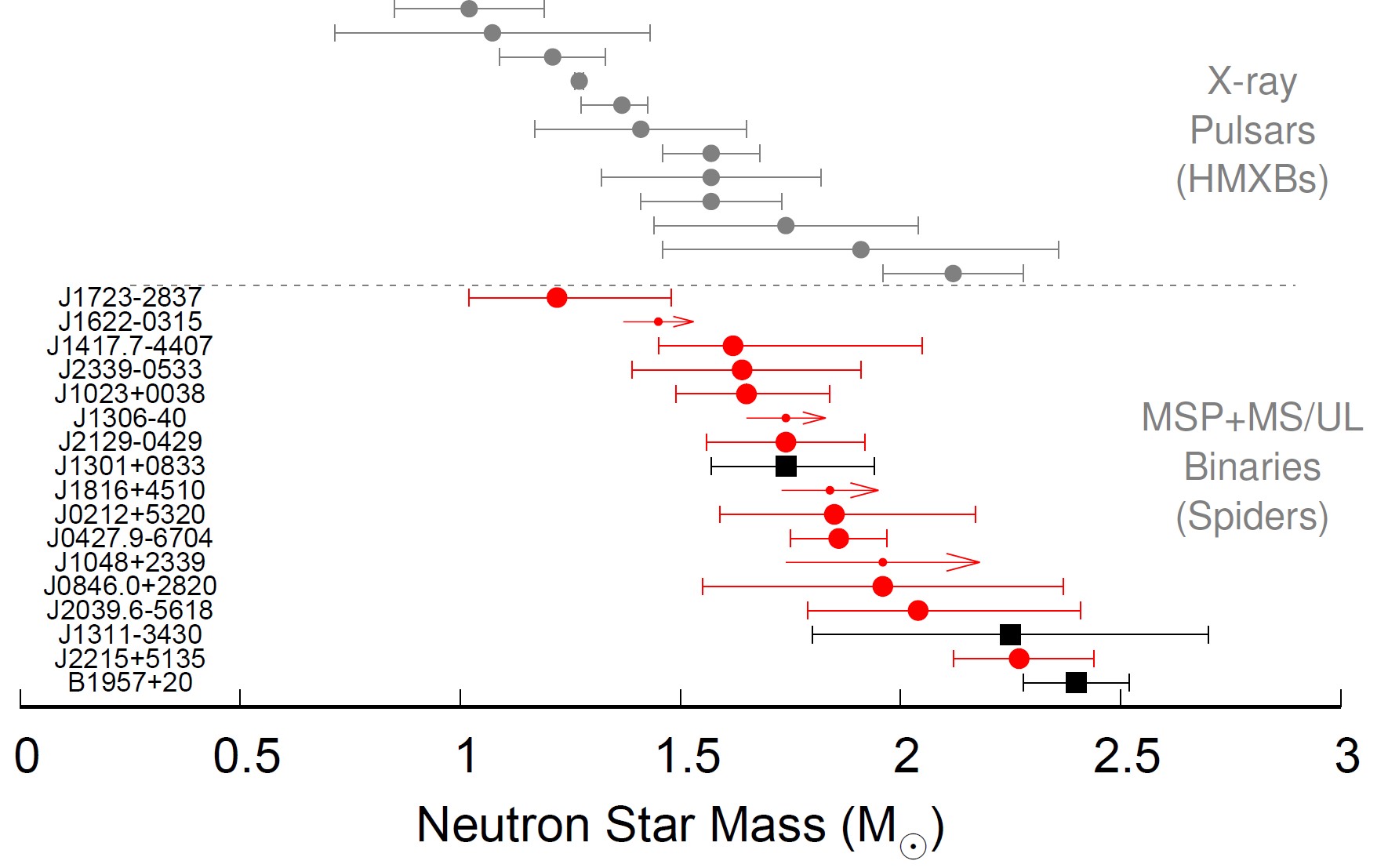
Manuel Linares Alegret is a Professor in the Department of Physics at the Norwegian University of Science and Technology (NTNU) in Trondheim, Norway, where he has been employed since September 2021. He also holds an Associate Professor position at the Polytechnic University of Catalonia (UPC) in Barcelona, Spain, since 2018. His research focuses on high-energy astrophysics with particular emphasis on neutron stars, black holes, white dwarfs, and compact objects in binary systems. Dr. Linares earned his Physics Degree from Universitat de Barcelona (1998-2004) followed by a PhD in Astronomy from Universiteit van Amsterdam (2004-2009). His subsequent career includes prestigious fellowships including Rubicon Fellow at MIT (2009-2012), IAC Fellow (2012-2017), and Marie Curie Fellow at UPC (2017-2018). His research interests primarily center on compact binary systems, particularly millisecond pulsars known as 'spiders' (including black widows and redbacks), neutron star physics, accretion flows, thermonuclear bursts, and the search for super-massive neutron stars. His work combines observational astronomy with theoretical modeling to understand extreme physics in these systems. He leads the LOVE-NEST project, which investigates compact binary millisecond pulsars to find the most massive neutron stars and understand the interaction between accretion flows, pulsar winds, and neutron star magnetospheres. An analysis of his recent publications reveals a strong focus on spider pulsar systems, with particular attention to mass measurements, orbital dynamics, irradiation effects, and the relationship between accretion and rotation-powered states. His work spans multiple observational wavelengths including optical, X-ray, and radio, often utilizing data from major telescopes and space observatories. ERC Consolidator Grant for LOVE-NEST project Marie Curie Fellow IAC Fellow Rubicon Fellow Dr. Linares has supervised numerous students at various levels, including PhD candidates, Master's students, and undergraduate research projects. He currently leads a substantial research team under the LOVE-NEST project, which has received 2M EUR in funding. His group includes multiple postdoctoral fellows and PhD candidates working on various aspects of compact object astrophysics. He teaches Observational Astrophysics (FY3215) at NTNU and has previously taught Quantum Physics and Physics I at UPC. He is the principal investigator of the LOVE-NEST (Looking for Super-Massive Neutron Stars) research group at NTNU, which focuses on compact binary millisecond pulsars. This team conducts research using multiple observational facilities worldwide and collaborates with international groups including those at the Instituto de Astrofísica de Canarias and the University of Manchester.
Rohith Jayaram is a Postdoctoral Fellow in the Department of Chemical Engineering at the Norwegian University of Science and Technology (NTNU), specializing in multi-phase flows and turbulence dynamics. His research focuses on particle-laden flows, bubble-turbulence interactions, and computational fluid dynamics. Education: PhD in Particle suspensions from NTNU MSc in Aerospace Mechanics from ISAE-SUPAERO, France BEng in Mechanical Engineering from BMS College of Engineering, India His work investigates Lagrangian dynamics of solid particles and spheroids in evolving Taylor-Green vortex flows, with recent emphasis on bubble-turbulence interactions. He develops numerical algorithms for flow simulations and contributes to turbulence modeling in both 2D and 3D systems. Research trends include computational modeling of multi-phase flows, DNS validation of particle behavior in unsteady vortices, and extension to spheroid alignment dynamics. Publications span leading journals like Physics of Fluids and Physical Review E . Scientific Awards: Selected as Featured Article in Physics of Fluids (2020) Outreach activities include conference lectures at the European Fluid Dynamics Conference (2024) and European Turbulence Conference (2019). Contact: 238 Kjemiblokk 5 Gløshaugen, Trondheim; rohith.jayaram@ntnu.no
Professor Stuart Bruce Dalziel is a Professor of Fluid Mechanics at the Department of Applied Mathematics and Theoretical Physics (DAMTP), University of Cambridge, where he has held academic roles since 2001. He leads the GK Batchelor Laboratory, a world-leading facility for experimental fluid dynamics. His research focuses on geophysical, environmental, and industrial fluid mechanics, employing theoretical, numerical, and experimental methods. Key areas include internal gravity waves, granular flows, turbulence, and building ventilation. Recent projects involve buoyant plumes, reactive flows, and applications like decontamination and hydrogen gas pipeline management. He is actively involved in supervising PhD students and has earmarked funding for projects on skipping stone dynamics and hydrogen gas purging in pipelines. Education and Career: Professor of Fluid Mechanics (2016–present) Reader in Fluid Mechanics (2012–2016) University Senior Lecturer (2001–2012) Director of the GK Batchelor Laboratory (1997–present) Research Interests: Dalziel’s work bridges experimental, numerical, and theoretical approaches to address challenges in fluid mechanics. Recent projects include studying stratified turbulence, Rayleigh-Taylor instabilities, and fluid dynamics in rotating systems. His applied research extends to environmental engineering, such as improving building ventilation systems and mitigating airborne disease transmission. Advising and Grants: He mentors PhD students from diverse backgrounds (mathematics, engineering, physics) and oversees funded projects combining experimental and computational methods. Current opportunities focus on novel fluid dynamics problems with practical applications. Labs and Facilities: The GK Batchelor Laboratory, under his leadership, develops advanced diagnostics and software for fluid dynamics research, widely adopted in the scientific community.
Hongkai Wen is a Professor (Chair in Machine Learning Systems) in the Department of Computer Science at the University of Warwick, UK. He holds dual appointments as a Fellow of the Alan Turing Institute (serving as Independent Scientific Advisor for BridgeAI and member of Turing Research Ethics team) and previously worked as Senior Research Scientist at Samsung AI Centre Cambridge and postdoctoral researcher at Oxford University. Education: Computer Science, Keble College, University of Oxford Research Focus: Develops intelligent multi-modal perception systems for real-world deployment with extreme computational efficiency. Core expertise spans ML systems optimization, neural architecture search, and cross-disciplinary applications in robotics, urban mobility, and wearable/IoT security. Pioneered event-based vision techniques and training-free NAS frameworks. Publication Trends: Recent work (2023-2025) demonstrates accelerating innovation in diffusion model efficiency, on-device AI deployment, and sensor fusion techniques. Dominant themes include computational resource optimization for edge devices, multi-modal temporal modeling, and privacy-preserving spatial analytics, with significant contributions to NeurIPS, ICML, and CVPR venues. Scientific Recognition: Best Paper Award, AutoML Conf 2023 (T-CET) Best Paper Runner-up, SenSys 2024 (AdaFlow) Best Paper Awards: IPSN 2014 & EWSN 2013 1st/2nd Place, Zero Cost NAS Competition (AutoML'22) Mentorship & Funding: Actively supervises PhD candidates through thesis committees at Warwick, Ulster, and Queensland universities. Secured National AI Strategy Fund for Macro Neural Architecture Search research. Recruits annually for PhD positions with scholarships from UKRI, Turing Institute, and industry partnerships. Research Leadership: Heads the AI/ML Systems (AMS) Division at Warwick, directing a 15+ member team developing deployable ML frameworks for mobile/robotic platforms. Maintains active collaborations with Samsung AI Centre and Turing Institute's BridgeAI programme on ethical AI deployment.
Prof. Florian Zaussinger is a faculty member at the Faculty of Applied Computer and Life Sciences at Mittweida University of Applied Sciences. His research focuses on thermal convection, fluid dynamics, and numerical simulations in both geophysical and astrophysical contexts. He has contributed extensively to studies on microgravity experiments, including the GeoFlow and AtmoFlow projects conducted on the International Space Station (ISS). University: Mittweida University of Applied Sciences Faculty: Applied Computer and Life Sciences Department: Mathematics Contact: +49 3727 58-1381 | florian.zaussinger@hs-mittweida.de | Building 6, Room 6-131 His research involves advanced numerical modeling of complex fluid systems, including spherical convection, dielectric heating, and double-diffusive processes. He has developed and applied computational tools like the ANTARES code to simulate convection in DA white dwarfs, planetary atmospheres, and Earth's mantle. His work bridges theoretical fluid mechanics with experimental validation in space-based microgravity environments. Recent publications highlight his expertise in thermo-electrohydrodynamic convection, planetary fluid flow analysis, and microgravity-induced instabilities. While the scraped data does not list scientific awards or students directly, his academic profile emphasizes interdisciplinary collaboration with engineering and life sciences, particularly in applied mathematics for fluid dynamics and experimental data processing.
Jerry X. Mitrovica is the Frank B. Baird, Jr. Professor of Science at Harvard University, leading the Mitrovica Group. His research focuses on Earth’s geodynamic response to environmental changes, with a central theme of sea-level variability across timescales. He holds a Ph.D. from the University of Toronto, where he previously served as the J. Tuzo Wilson Professor in Physics and directed the Canadian Institute for Advanced Research’s Earth Systems Evolution Program. His work integrates theoretical, numerical, and observational approaches to study ice sheet dynamics, mantle structure, and geodetic signals of climate change. Key research areas include modern ice sheet collapse impacts, glacial isostatic adjustment, and the interplay between Earth’s rotation and ice mass redistribution. Mitrovica’s group emphasizes interdisciplinary collaboration, with members from geophysics, mathematics, archaeology, and the humanities. Notable awards include the Arthur L. Day Medal, W.S Jardetsky Medal, and A.E.H. Love Medal. His lab has pioneered methods to infer Antarctic mantle viscosity from GPS data and reconcile paleo-sea-level records with dynamic topography corrections. Current projects include probing mantle structure via sea-level measurements and investigating human migration routes via sea-level fingerprints. Academic advising includes Natasha Valencic (Ph.D. student). The group actively advocates for diversity in academia and integrates activism into its mission, supporting graduate unions and marginalized communities in science.
Dr. Ian Abel is an Associate Research Scientist at the Institute for Research in Electronics & Applied Physics (IREAP) at the University of Maryland, where he has been since 2018. His expertise spans fusion energy, plasma physics, and computational modeling. Abel holds a B.A. in Mathematics (2006) and M.S. in Applied Mathematics (2007) from the University of Cambridge, followed by a Ph.D. in Theoretical Physics from the University of Oxford (2012). His research focuses on magnetically confined fusion systems, particularly edge dynamics in tokamaks and innovative centrifugal mirror concepts. He has contributed to the development of gyrokinetic simulation tools like the GX code and the MaNTA transport model. Abel’s work also explores machine learning applications in plasma turbulence analysis and centrifugal mirror fusion reactor design for space propulsion. His research leverages advanced numerical methods, including GPU-native algorithms and adjoint-based optimization techniques for plasma equilibria. Key projects include the Centrifugal Mirror Fusion Experiment (CMFX), where he investigates plasma confinement and transport phenomena. His publications emphasize interdisciplinary approaches, integrating computational fluid dynamics, statistical physics, and high-performance computing to address challenges in fusion energy and plasma dynamics. While no specific awards are listed, his contributions to gyrokinetic turbulence modeling and centrifugal confinement systems are central to current fusion research.
Dr. Werner Bauer is a Lecturer in Mathematics at the University of Surrey, affiliated with the Mathematics at the Interface Group within the School of Mathematics and Physics. His research focuses on numerical analysis and scientific computing, particularly in the Mathematics of Planet Earth. Key areas include parallel-in-time methods for oscillatory PDEs, structure-preserving discretizations for fluid dynamics, stochastic flow models for ensemble prediction, and geometric formulations of fluid and magnetohydrodynamic systems. He also explores finite difference and finite element methods, with prior work on grid adaptation in weather and climate models. His research interests span numerical methods for geophysical flows, stochastic modeling of oceanic and atmospheric dynamics, and energy-conserving computational frameworks. Bauer’s recent work emphasizes uncertainty quantification, ensemble forecasting, and the development of compatible finite element schemes to ensure physical conservation laws in simulations. Bauer’s publications highlight advancements in structure-preserving discretizations, stochastic parameterization of mesoscale eddies, and variational integrators for geophysical equations. His work bridges applied mathematics and computational science with applications in climate modeling and environmental fluid dynamics.