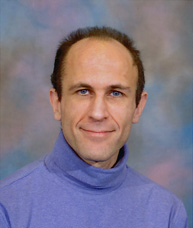
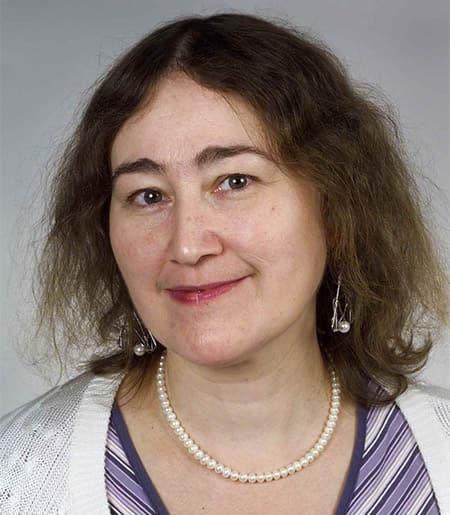
Prof. Dr. Sıtkı Çağdaş İnam is a faculty member at Başkent University's Department of Electrical and Electronics Engineering. With a PhD in Physics from Middle East Technical University (2004), his research spans high-energy astrophysics, X-ray astronomy, and neutron star dynamics. His work focuses on timing analysis, spectral modeling, and accretion processes in X-ray pulsars, magnetars, and binary systems. Recent studies include observations of transient X-ray sources using RXTE and Swift satellites, with notable discoveries of glitches and quasi-periodic oscillations. 2022: Spectral analysis of 2S 1417-624 during its outburst 2021: Deep learning applications in voice pathology detection 2020: Comprehensive study of MAXI J1409-619 2019: Magnetar pulse frequency variability He has led multiple projects on X-ray binaries and magnetic field effects in neutron stars, serving on the Turkish Astronomical Association's board. His collaborations extend to international teams analyzing high-energy cosmic phenomena.
Philip Yecko is Professor and Chair of the Physics Department at The Cooper Union for the Advancement of Science and Art, within the Albert Nerken School of Engineering. He holds a Ph.D. in Astronomy from Columbia University and an S.B. in Physics from MIT. His academic journey includes faculty positions at Montclair State University, Columbia University, and Trinity College Dublin. Columbia University: MA, MPhil & Ph.D. Astronomy (1995) Massachusetts Institute of Technology: S.B. Physics (1988) Jewish Theological Seminary: M.A. Rabbinic Literature & Culture (expected 2025) Professor Yecko's research spans fluid dynamics with focus on astrophysical, biological, geophysical, magnetic and multi-phase systems. His work examines flows of accretion disks, atomization and sprays, bubbles, droplets, ocean vortices, stellar convection, and magnetic drug delivery. His research methodology combines mathematical and theoretical approaches with computational modeling and laboratory experiments, including an ongoing program at Argonne National Lab's Advanced Photon Source. His recent publications reveal a strong focus on magnetic fluids and computational methods, with significant contributions to ferrofluid dynamics, multiphase flow simulation, and transport phenomena in complex systems. The research shows increasing integration of machine learning techniques with traditional fluid dynamics approaches, particularly in geophysical applications. Scientific recognition includes: Multiple invitations to the Woods Hole Oceanographic Institute's Geophysical Fluid Dynamics program Invited Scientist positions at the Aspen Center for Physics An H-index of 17 according to Google Scholar Professor Yecko actively mentors students through research projects and has supervised numerous master's theses in applied mathematics and mechanical engineering. His research is supported by multiple NSF grants including the Fluid-Structure Interactions for Control in Geophysical Flows project (NSF CMMI-2121923) and the 3D Multiphysics Simulation of Multi-phase Magnetic Fluids project (NSF DMS-1620158). He directs the Complex Fluid Physics and Engineering (CoFPhE) Lab, which provides experimental, computational and theoretical research opportunities for students at both graduate and undergraduate levels. The lab collaborates with researchers internationally, including institutions in Italy, France, and multiple U.S. universities.
Lauren Weiss is an Assistant Professor of Physics and Astronomy at the University of Notre Dame. Her research focuses on discovering and characterizing exoplanets using observational techniques, with an emphasis on understanding planetary system formation and exoplanet habitability. Key contributions include identifying the transition between rocky and volatile-enveloped planets at 1.5 Earth radii and discovering the 'peas in a pod' pattern in multi-planet systems. She leads NASA-funded projects at Keck Observatory, including the TESS-Keck Survey, and collaborates with the California Planet Search. Her work integrates radial velocity measurements, transit timing variations, and astroseismology. Education: B.A. in Astronomy & Astrophysics (Harvard University, 2010), M.Phil. in Astronomy (University of Cambridge, 2011), Ph.D. in Astronomy (University of California, Berkeley, 2016). Research Highlights: Principal Investigator of NASA-supported grants; observed over 160 nights on Keck-HIRES/KPF; pioneered studies of planet interior diversity and system dynamics. Grants & Collaborations: NASA/U. Hawaii Key Strategic Mission Support program; senior member of Keck Planet Hunters/California Planet Search; TESS-Keck Survey PI. Her publications analyze planet masses, orbital dynamics, and system architectures, emphasizing statistical trends in exoplanet populations and their implications for formation theories.
Dr. Seungyeong Choi is a Postdoctoral Research Assistant at the University of Oxford's Engineering Science department, affiliated with the Oxford Thermofluids Institute. He earned his Ph.D. in Mechanical Engineering from Yonsei University in 2022, focusing on heat and mass transfer in rim seal and rotor-stator systems with pre-swirl flow. His current research spans hydrogen-powered sustainable aviation, turbine cooling technologies, and thermal management for fusion reactors. Education: Ph.D. in Mechanical Engineering (Yonsei University, 2022) Dr. Choi's research bridges traditional aerospace engineering with emerging sustainability challenges. His work on turbine cooling involves additive manufacturing and advanced turbulators, while his hydrogen-powered aviation research addresses future low-carbon propulsion systems. Publications highlight his expertise in aerothermal performance, rotor-stator dynamics, and machine learning applications for thermal management. Recent publications analyze 3D rib turbulators, slot cooling effectiveness, and fusion reactor thermal networks. Collaborating with Professor Peter Ireland, his work contributes to improved cooling systems in gas turbines and next-generation nuclear energy solutions. Though not yet listed, his involvement in the Oxford Thermofluids Institute suggests future advisory roles in sustainable energy technology.
John A. Judge is an Associate Professor in the Department of Mechanical Engineering at the School of Engineering, Catholic University . He served as Dean of the School of Engineering from 2017 to 2025 and previously held a National Academy of Sciences Research Associateship at the Naval Research Laboratory in Washington, D.C. Education Ph.D., Mechanical Engineering, University of Michigan, 2002 M.S.E., Mechanical Engineering, University of Michigan, 1998 B.S., Mechanical & Aerospace Engineering, Cornell University, 1996 Research Interests : Judge specializes in the vibration and dynamics of complex structures, focusing on vibration localization, resonant MEMS/NEMS systems, nonlinear dynamics, laser vibrometry, and seismic/acoustic detection of explosives. His work bridges theoretical and applied mechanics, with applications in naval engineering, micro/nano-sensing, and structural acoustics. Publication Trends : His research spans vibration control in mechanical arrays, fluid-structure interactions in MEMS/NEMS, experimental methods for dynamic system characterization, and acoustic detection technologies. Key themes include optimizing damping mechanisms, analyzing hydrodynamic behavior, and advancing laser-based measurement techniques for non-planar surfaces. Contact Information : Email: judge@cua.edu Office: 101 Pangborn Hall Phone: 202-319-5160
Elisabeth Newton is an Assistant Professor in the Department of Physics and Astronomy at Dartmouth College, where she leads a research group focused on stellar and exoplanet astrophysics. She holds a B.S. from the College of Creative Studies at UC Santa Barbara and a Ph.D. from Harvard University. Her research utilizes ground-based observatories (e.g., SALT, MDM) and space telescopes (e.g., TESS) to study stellar magnetic dynamos, exoplanet formation, and Galactic populations. Her work spans stellar rotation-activity relationships, M dwarf characterization, and the discovery of young exoplanets through the THYME collaboration, where she serves as co-PI. Research interests include: Physics of stellar magnetic fields and angular momentum evolution Formation and atmospheric evolution of exoplanets around young stars Dynamics of stellar populations in the Milky Way Her publications emphasize young planetary systems, stellar activity in low-mass stars, and spectroscopic methods. Recent work explores exoplanet atmospheric escape, cluster age dating, and multi-planet system dynamics, often leveraging large surveys and machine learning techniques. Group members have received recognition including: LSST Data Science Fellowship (Rayna Rampalli, 2022) AAS International Travel Grant (Keighley Rockcliffe) Christopher Reed Science Competition 3rd Place (Jack Duranceau) She mentors undergraduates through senior theses and advises graduate students on projects involving exoplanet detection, stellar spectroscopy, and Galactic archaeology. Research is supported by NASA TESS grants and collaborative programs. The Newton Lab develops open-source tools for spectral analysis (e.g., nirew for equivalent widths) and coordinates the THYME collaboration, which combines multi-observatory data to study planetary system evolution.
Stephen Chi Yung Ng is an Associate Professor in the Department of Physics at The University of Hong Kong's Faculty of Science. His office is located in Room 517 of the Chong Yuet Ming Physics Building. He has been actively teaching undergraduate and graduate courses in astrophysics, including Stellar Physics, Advanced Astrophysics, and Astronomy Laboratory courses from 2018-2022. B.Sc. (1st class honors) in Maths/Physics, The University of Hong Kong (1996-1999) M.Phil. in Physics, The University of Hong Kong (1999-2001) Ph.D. in Physics, Stanford University (2001-2006) Professor Ng is a high energy astrophysicist specializing in radio and X-ray observations of neutron stars, pulsar wind nebulae, and supernova remnants. His research focuses on understanding these extreme objects as laboratories for physics under conditions unattainable on Earth. He studies the remarkable properties of neutron stars, which are ultra-dense objects with masses greater than the Sun but smaller than a city, rotating rapidly with the strongest magnetic fields in the Universe. His recent publications reveal a strong focus on X-ray polarimetry using missions like IXPE to study magnetic field structures in pulsar wind nebulae and supernova remnants. His work also examines particle acceleration mechanisms and the physics of neutron stars in various environments, including galactic centers and binary systems. Early Career Award: University Grants Committee (2013) Professor Ng has supervised numerous research students, including 7 PhD candidates and 3 MPhil students. He has secured significant research funding as Principal Investigator for 11 projects since 2013, with recent grants including 'Unveiling the Nature of PeVatron' (2023) and 'Exploratory Study of the Impact of Artificial Light at Night on Birds at Mai Po Nature Reserve' (2022). He also serves as Co-Investigator on projects studying high-energy emission from pulsars. He is an active member of several professional societies including the American Astronomical Society and multiple satellite mission science working groups, demonstrating his leadership in the international high-energy astrophysics community.
Hiroki Yamamoto serves as an Assistant Professor (without tenure) in the Department of Electrical Engineering and Bioscience at Waseda University's School of Advanced Science and Engineering since September 2022, following his tenure as an Assistant at the same institution from April 2018 to March 2021. His academic foundation was built entirely at Waseda University: 2012.04 - 2021.03: School of Advanced Science and Engineering, Department of Electrical Engineering and Bioscience Prior to 2012.03: School of Science and Engineering, Department of Electrical Engineering and Bioscience Dr. Yamamoto's research centers on microbial morphology and collective dynamics, specializing in cyanobacterial systems. He investigates how filamentous cyanobacteria like Pseudanabaena form complex colony patterns through cell motility and intercellular interactions, with particular focus on comet-like wandering clusters and disk-like rotating clusters. His methodology integrates live-cell imaging, quantitative trajectory analysis, and mathematical modeling to decode self-organization principles in bacterial collectives. Analysis of his publications reveals consistent exploration of cyanobacterial collective motion mechanics, emphasizing nematic alignment during filament collisions, velocity coordination in migrating clusters, and transition dynamics between wandering and rotating states. This work bridges microbiology, biophysics, and complex systems theory through experimental validation of simplified mathematical frameworks. He actively participates in Waseda University's internal research initiatives under Prof. Hideo Iwasaki's supervision, including genetic transformation system development for Pseudanabaena sp. NIES-4403 (2020) and individual movement tracking within collective motion (2024), demonstrating commitment to uncovering genetic mechanisms underlying bacterial self-organization. Dr. Yamamoto operates within Prof. Iwasaki's biophysics research group, contributing to interdisciplinary investigations of microbial collective behavior through advanced microscopy and computational approaches.
Antonios Tsokaros is a Research Professor in the Department of Physics at the University of Illinois at Urbana-Champaign (UIUC), affiliated with the Grainger College of Engineering. He is also a Faculty Fellow at the National Center for Supercomputing Applications (NCSA) and a Senior Researcher at the Research Center for Astronomy and Applied Mathematics in the Academy of Athens, Greece. His research focuses on general relativity, neutron stars, black holes, gravitational waves, and computational astrophysics, leveraging supercomputers to explore phenomena such as binary neutron star mergers and magnetized compact objects. Key research interests include the dynamics of self-gravitating systems, multimessenger astronomy, and the interplay between magnetic fields and gravitational wave emission. Tsokaros develops advanced numerical tools, such as the Parallel Compact Object CALculator (COCAL), to solve relativistic initial data problems and simulate extreme astrophysical scenarios. His work contributes to understanding strong-field gravity, compact object physics, and the potential for discoveries with observatories like LIGO and the Laser Interferometer Space Antenna (LISA). Funding is available for PhD candidates interested in numerical relativity and computational astrophysics. Tsokaros collaborates across institutions to advance theoretical and computational methods, emphasizing interdisciplinary approaches to decode gravitational wave signals, jet formation, and the properties of dense matter in neutron stars.
Eric G. Blackman is a Professor of Physics and Astronomy at the University of Rochester and a Senior Scientist at the Laboratory for Laser Energetics. His research focuses on theoretical astrophysics and plasma physics, with interdisciplinary interests in planetary and geophysical systems. He holds a BS from MIT, a Part III Tripos from Cambridge, and a PhD from Harvard. Blackman has pioneered studies on accretion disks, jets, magnetic fields, and common envelope evolution. He collaborates extensively with experimentalists at the Laboratory for Laser Energetics to bridge astrophysical and laboratory plasmas. His awards include a DOE Faculty Development Award (2000–2003) and APS Fellow (2005). Blackman has mentored numerous students and postdocs across astrophysics and related fields. Education: MIT (BS Physics/Math, 1990), Cambridge (M.A.S., 1991), Harvard (PhD Theoretical Astrophysics, 1995) Research Themes: Plasma astrophysics, stellar dynamics, planetary magnetization, and laboratory astrophysics. Labs & Collaborations: Laboratory for Laser Energetics (Inertial Confinement Fusion), interdisciplinary projects on brain injury physics.
John M. Blondin is an Alumni Distinguished Undergraduate Professor of Physics at North Carolina State University (NC State), where he has held roles including Department Head of Physics (2012-2016) and Associate Dean for Research (2016-2018). He earned his Ph.D. in Astronomy & Astrophysics from the University of Chicago in 1987 and has been a faculty member at NC State since 1993. His research focuses on computational gas dynamics applied to astrophysical phenomena such as supernovae, accretion disks, and shock wave instabilities. Blondin's notable achievements include discovering the Non-linear Thin-Shell Instability (NTSI) and the Spherical Accretion Shock Instability (SASI), which are critical to understanding supernova explosions. He co-developed the widely used hydrodynamics code VH-1. His honors include Fellowships from the American Association for the Advancement of Science (AAAS) and the American Physical Society (APS), an NSF CAREER Award, and recognition as an Outstanding Teacher at NC State. His research group emphasizes undergraduate involvement through programs like the NSF-funded URCA (Undergraduate Research in Computational Astrophysics). Blondin has advised numerous graduate and undergraduate students, many of whom have published peer-reviewed papers under his mentorship. His work spans computational modeling of supernova remnants, high-mass X-ray binaries, and pulsar wind nebulae, leveraging supercomputing resources at Oak Ridge, NASA, and Texas Advanced Computing Center. Blondin has also held administrative roles such as Interim Dean of the College of Sciences (2023) and Senior Associate Dean for Administration (2018-2024), returning to full-time faculty in 2024. He is affiliated with the Astrophysical Group at NC State and collaborates with institutions like NASA Goddard and the American Astronomical Society.
Dr. Marina Romanova is a Senior Research Associate at Cornell University's Center for Radiophysics and Space Research (CCAPS) and a key member of the Carl Sagan Institute (CSI), affiliated with the Department of Astronomy. With over two decades of continuous service since 1996 (Visiting Scientist 1996, Research Associate 1999-2002, Senior Research Associate 2002-present), she is a leading specialist in computational astrophysics renowned for pioneering 3D magnetohydrodynamic (MHD) simulations of astrophysical phenomena. Education: 1973-1981: Undergraduate and graduate studies in Astronomy and Astrophysics at Moscow State University 1986: Ph.D. in Astrophysics and Radioastronomy from the Space Research Institute, Moscow, under joint supervision of Yakov Zeldovich and Gennady S. Bisnovatyi-Kogan Dr. Romanova's research revolutionized understanding of accretion processes through the first 3D MHD simulations of accretion onto rotating stars with tilted magnetic fields, explaining funnel streams, hot spots, and variability in young stars, neutron stars, and white dwarfs. She discovered the unstable accretion regime that accounts for stochastic light curves in classical T Tauri stars. Her current work focuses on planet-disk dynamics in protoplanetary systems, modeling planetary orbits within low-density cavities and at disk-cavity boundaries using advanced 3D MHD techniques. This research bridges theoretical astrophysics with observational data from missions like TESS. Analysis of her 15 most recent publications reveals a dominant focus on high-resolution computational modeling across three interconnected domains: (1) planet-disk interactions in protoplanetary systems, (2) accretion dynamics onto magnetized stars with complex magnetic topologies, and (3) outflow/jet launching mechanisms. Her work consistently integrates numerical simulations with observational astrophysics, demonstrating exceptional methodological rigor in addressing fundamental questions about stellar formation and planetary system evolution. As an active contributor to the Carl Sagan Institute, Dr. Romanova collaborates on interdisciplinary research at the intersection of astrophysics and astrobiology. Her work has received significant scientific attention, featured in NASA High-End Computing Program reports, Eurasia Review, and Science News for insights into young star behavior and implications for understanding our solar system's formation. Her sustained research productivity since the 1980s, including 2023 publications, underscores her enduring impact on computational astrophysics.
J. Westerweel is a Professor in the Department of Fluid Mechanics at Delft University of Technology, School of Mechanical Engineering. His research focuses on experimental fluid dynamics, particularly in Particle Image Velocimetry (PIV) , turbulent flow , and microfluidic systems . He has contributed extensively to understanding coherent structures , drag forces , and flow measurement methodologies . Research Trends: Recent works emphasize 3D flow reconstruction , microbubble dynamics , programmable hydrodynamics , and industrial fluid applications such as gypsum slurry flow optimization. His studies span both fundamental turbulence analysis and applied techniques in rowing propulsion , compliant coatings , and cavitation mitigation . Editorial Contributions: He has served as an editor for Experiments in Fluids and Flow, Turbulence and Combustion , ensuring quality in experimental methods across fluid mechanics.
Professor Gordon Ogilvie is a Professor of Mathematical Astrophysics at the Department of Applied Mathematics and Theoretical Physics (DAMTP), University of Cambridge, and a Fellow of Clare College. His research focuses on the dynamics of astrophysical discs, including planetary rings, protoplanetary discs, and accretion discs around compact objects. Key interests include hydrodynamic/magnetohydrodynamic instabilities, warped/eccentric disc dynamics, and tidal interactions in planetary systems. He holds a long-standing academic career at Cambridge, including roles as Royal Society University Research Fellow (2000–2005) and Reader in Mathematical Astrophysics (2009–2013). His work bridges fluid dynamics and astrophysics, with applications to exoplanet dynamics and stellar tidal interactions. Research highlights include studies on nonlinear wave behavior in rotating fluids, global disc instabilities, and gravitational interactions in protoplanetary systems. Recent publications address tidal dissipation mechanisms, eccentric disc evolution, and magnetic field dynamics in accretion environments. Professor Ogilvie's affiliations include DAMTP and Clare College, with active contributions to graduate supervision and interdisciplinary collaborations in astrophysical fluid dynamics. His lab focuses on theoretical and computational astrophysics, addressing fundamental questions in disc dynamics and celestial mechanics.
Alison Crocker is the A.A. Knowlton Professor of Physics at Reed College, affiliated with the Physics Department and the Division of Mathematical and Natural Sciences. She specializes in astrophysics, focusing on star formation processes in nearby galaxies and the interplay between molecular gas and stellar environments. Dr. Crocker holds a DPhil in astrophysics from the University of Oxford as a Rhodes Scholar, with postdoctoral training at the University of Massachusetts and the University of Toledo. She joined Reed College in 2014 and teaches courses in astrophysics while leading a weekly astronomy discussion group. Education: Bachelor's in Physics and Mathematics, Dartmouth College DPhil in Astrophysics, University of Oxford (Rhodes Scholar) Research Interests: Neutral carbon line emission analysis using Herschel data, molecular gas dynamics, interstellar medium interactions, and galaxy evolution. Her research bridges observational astronomy with theoretical models, emphasizing the connection between galactic gas properties and stellar formation efficiency. She oversees the Reed College telescope, fostering student engagement in observational astronomy. Recent work explores UV emission mechanisms and molecular gas ratios in early-type galaxies, contributing to understanding galaxy evolution across cosmic time.