Simone Salvadori is an Associate Professor at the Department of Energy (DENERG) of Politecnico di Torino, specializing in Computational Fluid Dynamics, Heat Transfer, and Turbomachinery. His research intersects Aerospace Engineering , Propulsion , and Energy Sustainability (SDG 7 & 9). He leads the EnaTech-RDE project on CO2-Free Rotating Detonation Engines and contributes to H2POWRD for hydrogen propulsion systems. Editorial roles: Guest Editor for Frontiers in Aerospace Engineering and Applied Sciences , Member of Energies Editorial Board. Organizing Committee Member for 8th ART Summer School (2024) and multiple international conferences including Aerospace Europe Conference 2023. His research focuses on pressure gain combustion , film cooling optimization , and machine learning-driven turbine design . He employs advanced computational tools to analyze unsteady flows, cavity dynamics, and exhaust systems in gas turbines, with applications to hydrogen/natural gas blends and rotating detonation engines . Salvadori supervises PhD students in projects related to high-pressure turbine vane coupling , cooling channel optimization , and exhaust flow control . He collaborates with the TEP Research Group and networks like ETN Global (Energy & Turbomachinery Network).
Professor Chien Ming Wang is the Transport and Main Roads Chair Professor of Structural Engineering at the University of Queensland (UQ) since 2017. He also holds an Adjunct Professor position at Monash University and contributes to the Centre for Marine Science within UQ’s Faculty of Science. Alumnus of the Year 2015, Monash University Chartered Structural Engineer Educational Background : Bachelor of Civil Engineering (First Class Honours), Monash University, 1978 M.Eng.Sc. and Ph.D., Monash University, 1980 & 1982 Research Focus : Pioneering Very Large Floating Structures (VLFS) with applications in floating bridges, oil storage, and aquaculture systems. His work spans structural stability, vibration analysis, optimization of arches, and nonlocal theories for nanostructures. He developed Hencky bar-chain models and Shooting-Optimization Technique for boundary value problems. Scientific Leadership : Authored 500+ journal papers, 6 books, and 4 edited volumes with over 26,000 citations. Led $10M+ in industrial projects including Blue Economy CRC initiatives. Holds multiple patents in floating structures and aquaculture systems. 2019 Nishino Medal 2019 JN Reddy Medal IStructE Singapore Structural Award for Sustainability 2016 Minister of National Development R&D Special Mention 2017 Advising & Collaborations : Supervised 28 PhD and 20 MEng students, including work with NUS , SINTEF , and PolyU . Current projects involve offshore seaweed farms, self-healing concrete, and hybrid timber-cardboard composites.
Dr. Nikole Nielsen is an Adjunct Associate Professor at Swinburne University of Technology and an Assistant Professor at the University of Oklahoma. She holds dual appointments in the Centre for Astrophysics and Supercomputing (Swinburne) and the Homer L. Dodge Department of Physics and Astronomy (OU). Her research focuses on the circumgalactic medium (CGM) of galaxies, studying gas kinematics, ionization states, and metal content to understand galaxy evolution processes like accretion and outflows. She has held roles including ASTRO 3D Fellow and Postdoctoral Research Associate at Swinburne from 2015–2024. Education: PhD in Astronomy (New Mexico State University, 2015), M.S. in Astronomy (2013), B.S. in Astrophysics (Michigan State University, 2009). Awards include the Swinburne Director's Outstanding Achievement Award (2022) and multiple recognitions for research excellence. She supervises PhD students in areas like galactic outflows and CGM dynamics. Research highlights include mapping the transition between galactic disks and CGM using emission-line data (Nature Astronomy, 2024), resolving outflow properties in starburst galaxies (Monthly Notices of the Royal Astronomical Society, 2024), and studying gas kinematics in multiphase CGM (2024). Her work bridges observations with simulations, emphasizing resolved spatial data to understand galaxy evolution. Grants include an NSF East Asia-Pacific Summer Institute fellowship (2012) and ASTRO 3D funding. Teaching includes courses on extragalactic astronomy and cosmology at OU. Outreach efforts include coordinating public astronomy events and mentoring students. Current team includes postdocs and graduate students at OU.
Sarah Dodson-Robinson is a Professor of Physics & Astronomy at the University of Delaware, part of the College of Arts & Sciences. She joined UD in 2014 and holds a Ph.D. from the University of California, Santa Cruz (2008) and a B.S. from Rochester Institute of Technology (2002). Her research focuses on observational and theoretical astrophysics, particularly planet formation mechanisms, exoplanet detection, and frequency-domain analysis of stellar activity. She develops advanced statistical methods to analyze time-series data from telescopes and spacecraft, addressing challenges like stellar variability in exoplanet searches. Her work spans protoplanetary disks, debris disks, and the interplay between planetary systems and their host stars. Notable contributions include studies on dust dynamics in disks, the role of magnetized turbulence in disk evolution, and the use of spectral line diagnostics to identify planetary signals. She collaborates with NASA missions and leads projects like the EXPRES Stellar Signals initiative, aiming to refine radial velocity techniques. Publications highlight her expertise in analyzing binary star systems, detecting Earth-mass exoplanets, and modeling giant planet formation. Her research bridges astrophysics and data science, with applications to upcoming NASA missions targeting exoplanet habitability.
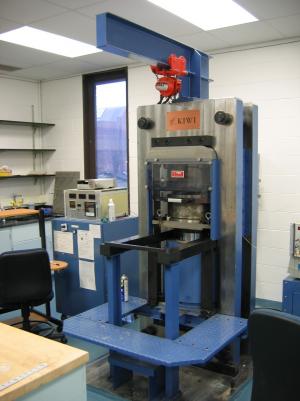
Shun-ichiro Karato is a Professor of Earth & Planetary Sciences at Yale University, affiliated with the Department of Geology and Geophysics. His research focuses on high-pressure materials science, mantle dynamics, and planetary evolution. He leads experimental studies using advanced facilities like the 1000-ton Kawai-type Multi-anvil Apparatus and field-emission SEM with EBSD for microstructural analysis. Education: PhD in Geophysics, University of Tokyo, 1977 MSc in Geophysics, University of Tokyo, 1974 BSc in Geophysics, University of Tokyo, 1972 His research interests include water distribution in planetary interiors, deformation mechanisms of mantle minerals, and the role of volatiles in Earth’s dynamics. He collaborates across disciplines to integrate experimental, theoretical, and observational approaches. Recent work explores hydrogen dissolution in bridgmanite, mantle rheology under high pressure-temperature conditions, and the implications of seismic anomalies for mantle structure. Labs/Facilities: Karato oversees cutting-edge facilities enabling high-pressure/temperature experiments, including rotational Drickamer apparatuses and synchrotron-based deformation studies. These tools support investigations into phase transitions, deformation mechanisms, and melt localization in the mantle. Teaching: Teaches courses like Introduction to Earth Materials (G&G 319/519), Deformation of Earth Materials (G&G 450/650), and Seminar on Mantle and Core Geophysics (G&G 744).
Hui Li serves as Chair Professor in the Department of Materials Science and Engineering at South University of Science and Technology of China (SUSTech), a position she has held since October 2015. She concurrently holds adjunct appointments as Extraordinary Professor at North-West University of South Africa and Adjunct Professor at the University of British Columbia. Her academic foundation includes: PhD in Electrochemical Engineering from the University of British Columbia (2006) MSc in Chemical Engineering from Tsinghua University (1990) BSc in Chemical Engineering from Tsinghua University (1987) Prof. Li's research program centers on electrochemical energy conversion with emphasis on hydrogen technologies. Her work spans fundamental electrocatalysis to commercial fuel cell systems, specifically targeting: PEM fuel cell materials and failure analysis Hydrogen production via water electrolysis Novel membrane development for fuel cells Electrochemical synthesis of ammonia and fuels Recent publications reveal a strategic focus on replacing precious metals in catalysts while enhancing durability of hydrogen energy systems. Her team pioneers nanomaterial engineering for oxygen reduction/evolution reactions and develops standardized testing protocols for industrial deployment. Recognition includes: SUSTech Distinguished Scholars award Level A designation in Shenzhen's High-Caliber Personnel Peacock Plan She leads major collaborative initiatives with the US Department of Energy, German Aerospace Center (DLR), and industry partners including Ballard and Hydrogenics. Her Shenzhen Key Laboratory of Hydrogen Energy drives R&D in membrane electrode assemblies and bipolar plate manufacturing. The laboratory maintains active partnerships with national research councils and global energy corporations to accelerate hydrogen technology commercialization.
Kazuyoshi Miyagawa is a Professor at Waseda University's Department of Applied Mechanics and Aerospace Engineering within the Faculty of Science and Engineering, School of Fundamental Science and Engineering. With a Doctor of Engineering from Osaka University, he has maintained a continuous academic career at Waseda University since 2011, progressing from Associate Professor to full Professor. His educational background includes undergraduate and graduate studies in Mechanical Engineering at Waseda University, followed by specialized research at Osaka University's Graduate School of Engineering Science. Professor Miyagawa's research focuses on Fluid Engineering, Fluid Machinery, Cavitation, and Flow Induced Vibration . His work bridges theoretical fluid dynamics with practical applications in turbomachinery, particularly in hydraulic turbines, pumps, and rocket turbopumps. His research demonstrates a consistent emphasis on improving efficiency, stability, and reliability of fluid machinery through innovative design and thorough understanding of complex flow phenomena. His extensive publication record (107 papers with 683 Scopus citations and 1543 Google Scholar citations) reveals a strong focus on draft tube flow in hydraulic turbines, cavitation phenomena, and unsteady flow characteristics in various turbomachinery applications. His recent work shows increasing attention to computational fluid dynamics validation through experimental methods and practical engineering solutions for flow instability problems. Scientific Awards Multiple Technical and Paper Awards from the Turbomachinery Society of Japan (2001-2021) Recognition for development of new water turbines, high-efficiency turbochargers, and low-noise pumps Research on Francis turbine performance and cavitation phenomena Professor Miyagawa actively contributes to the engineering community through leadership roles including President of the Turbomachinery Society of Japan (2023-present) and Board Director of The Japan Federation of Engineering Society (2025-present). His professional memberships span multiple international and Japanese engineering societies including ASME, IAHR, and The Japan Society of Mechanical Engineers.
Professor Andrew Bassom is a Professor of Applied Mathematics and Head of Discipline in Mathematics at the University of Tasmania's School of Natural Sciences. He holds a PhD and has held prior appointments at the University of Western Australia (UWA) and the University of Exeter (UK). His research focuses on fluid mechanics, differential equations, and mathematical modelling with applications to ocean flows, geophysics, and biomedical engineering (e.g., ventilation of premature babies). Research Interests: Applied mathematics, theoretical and applied mechanics, fluid dynamics, and nonlinear systems. Recent work involves magnetic bubble dynamics, climate system hyperbolicity, thermal convection patterns, and seismicity modelling in mining contexts. Grants & Projects: Key projects include: A$460,000 ARC Discovery Project (2019–2023) studying Antarctic ice-sheet collapse via seismic signals. A$15,000 ARC College of Experts 2023 nomination grant. Modelling mining-induced seismicity using the Material Point Method (MPM). Teaching & Supervision: Teaches third-year/honours applied mathematics units. Current doctoral supervision includes projects on climate system hyperbolicity, non-spherical bubbles, and ice-rock interface dynamics. Completed students include Earl Sullivan Lester (dark matter cosmology) and Gysbert Basson (MPM applications in mining). Publications: Over 228 peer-reviewed articles, emphasizing fluid mechanics innovations and interdisciplinary applications. Recent trends focus on geophysical fluid dynamics, climate modelling, and computational methods for complex systems.
Prof. Dr. Tabea Arndt is a Professor and Director of the Superconducting Magnet Technology group at the Karlsruher Institut für Technologie (KIT), within the Department of Electrical Engineering and Information Technology (ETIT). Her research focuses on advanced superconducting technologies for energy-efficient systems, including high-temperature superconductors (HTS), fault current limiters, and innovative electric machines. She leads projects involving HTS applications in motors, generators, and hybrid energy pipelines integrating liquid hydrogen transport with superconducting cables. Her work spans fundamental material science (e.g., MgB2 films on Hastelloy substrates) to industrial-scale applications in power grids and accelerators. Prof. Arndt’s recent advancements include compact HTS motor designs cooled by liquid hydrogen, novel magnet configurations (e.g., disk-up-down-assembly), and superconducting undulators for laser-plasma accelerators. Her contributions address challenges in thermal management, magnetic field optimization, and cost-effective HTS integration into critical infrastructure. Publications highlight interdisciplinary efforts in electromagnetics, energy transmission, and sustainable mobility. Despite no explicitly listed awards, her leadership in KIT’s Technische Physik institute underscores her influence in advancing superconductivity for next-generation technologies.
Qurat-ul-Ain Azim is an Assistant Teaching Professor in the Department of Mechanical and Industrial Engineering at Northeastern University. She holds a PhD in Mathematics from Imperial College London (2016). Her research focuses on fluid dynamics, mathematical modeling in biomedical contexts, porous media applications, and heat transfer in complex fluid systems. Dr. Azim's work spans theoretical and applied studies, including computational models for biomedical systems like breast cancer epidemiology and renal tubule dynamics. She also investigates non-Newtonian fluid flows (e.g., Jeffery, PTT, and Oldroyd fluids) in engineering and biological settings. Her contributions address challenges in porous medium analysis, thin film coatings, and peristaltic pumping mechanisms. Her publications highlight interdisciplinary applications of fluid mechanics, with recent work emphasizing disease modeling and porous media interactions. Collaborative projects involve biomedical engineering, polymer rheology, and thermal analysis of fluid systems. While no specific awards or grants are listed, her extensive publication record reflects continuous engagement with cutting-edge research in applied mathematics and mechanical engineering.
Michael Yampolsky is a Professor in the Department of Mathematics at the University of Toronto, with appointments at both the St. George and Mississauga (UTM) campuses. He is also the Director of the Centre for Nonlinear Analysis and Modeling (CNAM) at UTM. His research lies at the intersection of pure mathematics and applied modeling, with a strong focus on dynamical systems and their theoretical and computational aspects. Yampolsky earned his PhD from SUNY Stony Brook in 1997 and has held prestigious positions including J.W. Gibbs Instructor at Yale University and Visiting Member at the Institut des Hautes Études Scientifiques in France before joining the University of Toronto faculty in July 2000. He has also held visiting positions at IPAM (UCLA), ETH Zurich, Université de Paris, and IMPA. His research interests span a broad range of topics in dynamical systems , including renormalization theory , Julia sets , Siegel disks , critical circle maps , and computability in dynamics . A significant portion of his work investigates the boundaries of algorithmic computability in complex dynamical systems. He has also contributed to interdisciplinary research in mathematical medicine and biology , particularly in modeling placental morphology and metabolic scaling laws in fetal development. The recent publications reflect a deep engagement with both theoretical and computational themes. The work trends include renormalization hyperbolicity , rigidity of circle maps , computability of dynamical invariants , and structural instability in 2D complex maps . His interdisciplinary projects apply mathematical modeling to placental shape and function, especially in the context of HIV and antiretroviral therapy. He is the author and co-author of several books, including Computability of Julia Sets (Springer, 2008) and Fixed Point of the Parabolic Renormalization Operator (Springer, 2014), and has edited volumes in honor of John Milnor. His publications appear in top-tier journals such as Communications in Mathematical Physics , Annals of Mathematics , Inventiones Mathematicae , and Placenta . Yampolsky advises students and collaborates extensively, particularly in the areas of computable analysis and nonlinear modeling. His research has been supported by major grants, though specific funding sources are not detailed in the text. He leads the Centre for Nonlinear Analysis and Modeling (CNAM), which serves as a hub for interdisciplinary research in dynamical systems and mathematical modeling. Notable labs and teams include: Centre for Nonlinear Analysis and Modeling (CNAM) – Research group focused on dynamical systems, renormalization, and applications in biology and medicine. Collaborative projects with researchers in mathematical biology, particularly in placental modeling and fetal development.
Nicholas Marshall is an Assistant Professor in the Department of Mathematics at Oregon State University. His work bridges analysis, geometry, and probability with strong applications in data science. Current faculty: Oregon State University Postdoctoral training: Princeton University (NSF Fellowship) Doctoral training: Yale University Undergraduate education: Clarkson University His research focuses on: Interplay between geometric structures and probabilistic models Development of numerical methods for high-dimensional data Applications in cryo-electron microscopy and hyperdimensional computing Analysis of stochastic algorithms and convergence properties Recent publications indicate significant contributions to: Harmonic expansion techniques Equivariant function learning Momentum-accelerated optimization methods Binary hyperdimensional geometry NSF Postdoctoral Fellowship (Princeton) He actively mentors graduate and undergraduate students, including Wyatt Whiting, Peter Cowal, Heather Fogarty, and Seth Alderman. Teaching appointments include advanced courses in probability theory, numerical linear algebra, and mathematics of data science.
Dr. Morgan Beeby is an Associate Professor in Structural Biology at the Department of Life Sciences, Imperial College London, within the Faculty of Natural Sciences. He leads research into the molecular machinery of cells, employing electron cryo-tomography to visualize cellular processes at near-atomic resolution. As co-director of the MRes in Structural Biology, he oversees advanced training programs and maintains an active lab focused on microbial structural biology. His work integrates cutting-edge imaging techniques with phylogenetics and genetics to explore the assembly, function, and evolution of molecular machines like bacterial flagella and archaella. Research interests include microbiology, biochemistry, and cell biology, with a focus on understanding how cellular components such as flagella, archaella, and secretion systems operate and evolve. His group investigates the structural basis of motility, protein interactions, and cellular processes in pathogens like Campylobacter jejuni and Staphylococcus aureus , leveraging cryo-ET and computational modeling. Publications highlight advancements in flagellar motor structure, archaellum function, and the evolution of bacterial secretion systems. The lab’s methodologies include high-throughput cryo-tomography and subtomogram averaging to resolve complex macromolecular assemblies in situ. Collaborative efforts aim to bridge structural insights with functional genomics, particularly in environmental and medical microbiology contexts. Dr. Beeby’s contributions extend to educational leadership through the MRes program and lab management. He actively disseminates findings via peer-reviewed journals and maintains a lab website for ongoing research updates. His work emphasizes translational applications in understanding microbial pathogenesis and structural biology’s role in advancing medical and environmental science.
Prof. Dr. Sıtkı Çağdaş İnam is a faculty member at Başkent University's Department of Electrical and Electronics Engineering. With a PhD in Physics from Middle East Technical University (2004), his research spans high-energy astrophysics, X-ray astronomy, and neutron star dynamics. His work focuses on timing analysis, spectral modeling, and accretion processes in X-ray pulsars, magnetars, and binary systems. Recent studies include observations of transient X-ray sources using RXTE and Swift satellites, with notable discoveries of glitches and quasi-periodic oscillations. 2022: Spectral analysis of 2S 1417-624 during its outburst 2021: Deep learning applications in voice pathology detection 2020: Comprehensive study of MAXI J1409-619 2019: Magnetar pulse frequency variability He has led multiple projects on X-ray binaries and magnetic field effects in neutron stars, serving on the Turkish Astronomical Association's board. His collaborations extend to international teams analyzing high-energy cosmic phenomena.
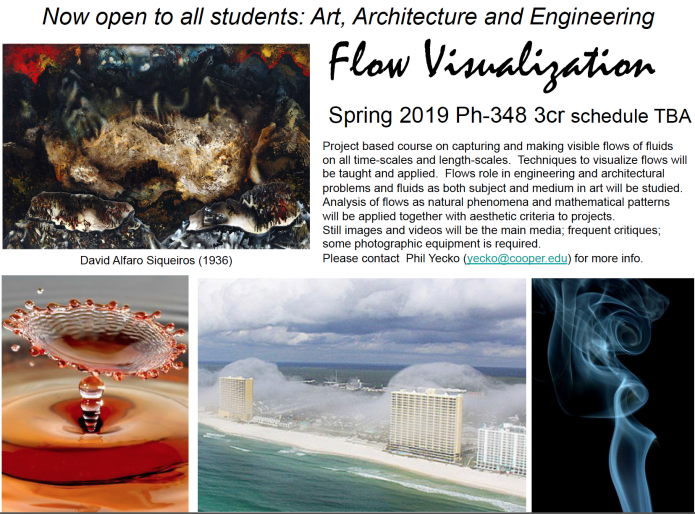
Philip Yecko is Professor and Chair of the Physics Department at The Cooper Union for the Advancement of Science and Art, within the Albert Nerken School of Engineering. He holds a Ph.D. in Astronomy from Columbia University and an S.B. in Physics from MIT. His academic journey includes faculty positions at Montclair State University, Columbia University, and Trinity College Dublin. Columbia University: MA, MPhil & Ph.D. Astronomy (1995) Massachusetts Institute of Technology: S.B. Physics (1988) Jewish Theological Seminary: M.A. Rabbinic Literature & Culture (expected 2025) Professor Yecko's research spans fluid dynamics with focus on astrophysical, biological, geophysical, magnetic and multi-phase systems. His work examines flows of accretion disks, atomization and sprays, bubbles, droplets, ocean vortices, stellar convection, and magnetic drug delivery. His research methodology combines mathematical and theoretical approaches with computational modeling and laboratory experiments, including an ongoing program at Argonne National Lab's Advanced Photon Source. His recent publications reveal a strong focus on magnetic fluids and computational methods, with significant contributions to ferrofluid dynamics, multiphase flow simulation, and transport phenomena in complex systems. The research shows increasing integration of machine learning techniques with traditional fluid dynamics approaches, particularly in geophysical applications. Scientific recognition includes: Multiple invitations to the Woods Hole Oceanographic Institute's Geophysical Fluid Dynamics program Invited Scientist positions at the Aspen Center for Physics An H-index of 17 according to Google Scholar Professor Yecko actively mentors students through research projects and has supervised numerous master's theses in applied mathematics and mechanical engineering. His research is supported by multiple NSF grants including the Fluid-Structure Interactions for Control in Geophysical Flows project (NSF CMMI-2121923) and the 3D Multiphysics Simulation of Multi-phase Magnetic Fluids project (NSF DMS-1620158). He directs the Complex Fluid Physics and Engineering (CoFPhE) Lab, which provides experimental, computational and theoretical research opportunities for students at both graduate and undergraduate levels. The lab collaborates with researchers internationally, including institutions in Italy, France, and multiple U.S. universities.