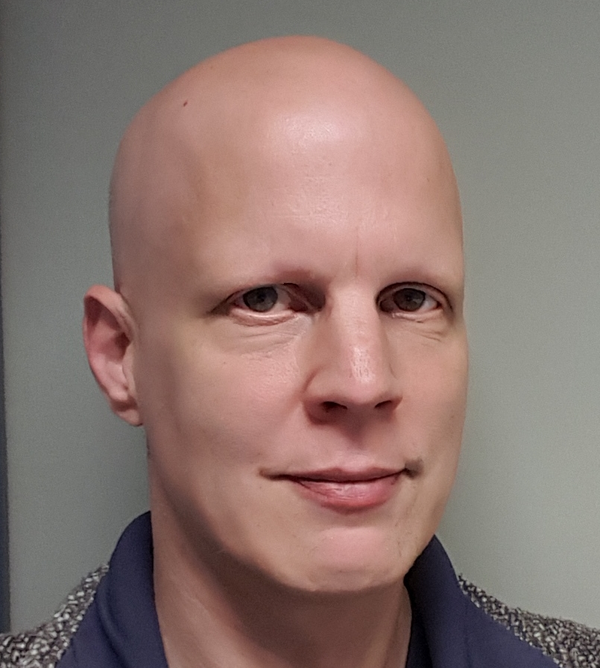
Stefan Gorka is a Researcher at the Centre for Microbiology and Environmental Systems Science , active since 2019. His work focuses on soil microbial ecology, root exudation dynamics, and biogeochemical interactions in terrestrial ecosystems. Soil Microbiology Microbial Ecology Environmental Systems Science Plant-Soil Interactions Fatty Acid Analysis Mycorrhizal Networks His research involves innovative methodologies like microdialysis and high-throughput lipid extraction to study microbial metabolite dynamics, carbon allocation, and nutrient cycling. Recent publications highlight microbial preference for organic acids over sugars, temporal metabolite shifts in rhizospheres, and advancements in soil microbial community analysis. Stefan has contributed to 9 peer-reviewed publications and delivered 12 academic activities (talks/posters) since 2016, including collaborations with institutions like University of Vienna and international research teams. His work bridges microbial physiology with ecosystem-scale carbon dynamics.
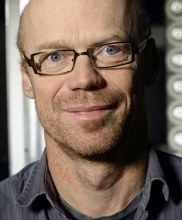
Christoph Rosinger is a researcher at the Institute of Agronomy (iPBAU) within the University of Natural Resources and Life Sciences, Vienna (BOKU). His work focuses on soil microbiology, conservation farming, and carbon-nutrient dynamics in agricultural and forest soils. Research Themes: Soil organic carbon stabilization, microbial community responses to amendments, and agricultural pollution mitigation using struvite/zeolites Methodologies: On-farm studies, multi-model simulations, and biogeochemical stoichiometry analysis Publication Trends emphasize microbial pathways in carbon sequestration, amendment effects on nutrient cycling, and seasonal soil processes. Recent work explores AI vs. process-based modeling for SOC prediction and volcanic ash pedogenesis. Earlier studies address subtropical soil nutrient limitations and post-disturbance fungal dynamics.
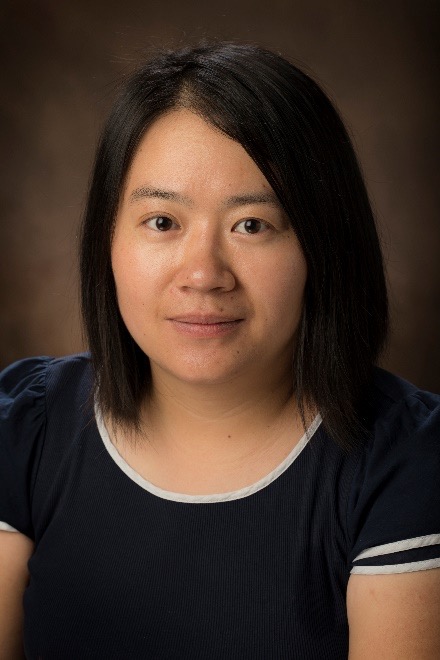
Karl Stampfer is a Professor of Forest Engineering at the Institute of Forest Engineering within the Department of Ecosystem Management, Climate and Biodiversity at the University of Natural Resources and Life Sciences, Vienna (BOKU). Appointed in 2012, he leads research on digital transformation in forestry operations with emphasis on work safety, steep-terrain harvesting, and climate-resilient infrastructure. His work bridges engineering practice and academic innovation through the Forest Demonstration Centre. His academic credentials include a Diploma (1991), Doctoral degree (1996), and Habilitation (2002), all from BOKU. Career progression shows continuous engagement: University assistant at the Institute of Forest Engineering from 1993, culminating in his full professorship. Stampfer's research focuses on Forest Engineering with three core pillars: (1) Timber harvesting system optimization for steep terrain using winch-assisted and cable yarding technologies, (2) Work safety through UWB sensors and causal accident modeling, and (3) Digitalization via laser scanning (TLS/ALS) for forest inventory, road monitoring, and digital twin development. His work integrates sustainable resource management with practical industry applications. Analysis of his 78 publications reveals a strong 2022-2024 trend: digital tools dominate 65% of outputs, particularly LiDAR for danger zone monitoring and climate adaptation. Safety research comprises 25%, with accident counterfactuals and ergonomic analysis. The remaining 10% addresses biomass logistics and road engineering, reflecting his multidisciplinary approach to European mountain forestry challenges. Scientific recognition includes: Promotion Award of the Foundation '120 Years of University of Natural Resources and Life Sciences, Vienna' (2002) Schrödinger Fellowship at ETH Zurich's Professorship for Forest Engineering (1997) Promotion Award of the Austrian Society for Occupational Medicine (1996) He has supervised numerous theses with no publicly listed advisees. Grant activity centers on externally funded research reports (e.g., SafeForests, LaDiWaldi) despite zero ongoing projects shown. Collaborations with AUVA, Land Kärnten, and international consortia like IUFRO drive his practical knowledge transfer to forest associations and policymakers. Stampfer operates within BOKU's Forest Demonstration Centre and co-leads the HCAI-Lab with Andreas Holzinger. His team specializes in field validation of digital tools, including the Seilgerätesimulator (VR training) and UWB danger zone monitors. Current work targets autonomous harvesting systems and AI explainability for accident prevention, as evidenced by 2025 presentations at FORMEC and Woodmaster events.
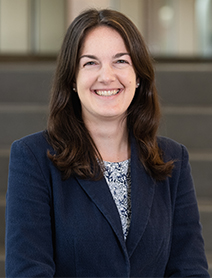
Gerhard Kammerer is an Assistant Professor at the Institute of Soil Physics and Rural Water Management , part of the Department of Agricultural Sciences at the University of Natural Resources and Life Sciences, Vienna (BOKU) . His research focuses on soil physics and hydrology, particularly in agricultural contexts. BOKU organizational units: Institute of Soil Physics and Rural Water Management, Institute of Soil Research, Experimental Farm Groß-Enzersdorf Research Interests include soil hydraulic properties, vadose zone dynamics, groundwater recharge, irrigation systems, root-soil interactions, and sustainable land use. His work addresses both theoretical and applied aspects of soil-water management. Article Trends show expertise in Soil hydraulic property modeling Groundwater vulnerability assessment Agricultural water balance studies Root-induced hydrological changes Lysimeter data analysis Stony soil hydrology Scientific Awards : Hochschuljubiläumsstiftung der Stadt Wien (2007) Advising & Grants : Supervised numerous theses on soil-water systems and participated in 25+ projects funded by Austrian Science Fund (FWF), Austrian Research Promotion Agency (FFG), and federal ministries. Notable projects include "Vadose zone characterization for groundwater vulnerability" and "Hydraulic effects of root-soil interactions". Labs & Teams : Works with BOKU's hydrology and soil physics teams, contributing to lysimeter networks and soil-vegetation-atmosphere research. Collaborates with international institutions in Slovenia, Italy, and the U.S.
Dr. Mathias Mayer is a Lecturer at ETH Zurich since 2023, with prior postdoctoral roles at WSL (2020-2023) and BOKU Vienna. His research focuses on carbon and nutrient cycling in forest ecosystems, emphasizing soil microbial communities (particularly fungi) and their roles in plant-soil interactions. Mayer's work examines disturbances like windthrow, bark beetle infestations, logging, and climate change impacts across European Alps, Dinarian Mountains, Northern Scandinavia, and Himalayan forests. Key Research Areas: Forest disturbance ecology, mycorrhizal symbiosis, carbon flux modeling, microbial biogeochemistry Methodologies: Stable isotope analysis, DNA-based techniques, field experiments, meta-analyses His recent publications reveal trends in post-disturbance carbon dynamics, fungal community shifts following windthrow, and interactions between defoliation events and soil processes. Mayer has received multiple awards including the UV-Forschungsstipendium (2019) and Walter Kubiena Forschungspreis (2017). Scientific Awards: UV-Forschungsstipendium - Dissertation (2019) Förderungspreis der Stiftung 120 Jahre Universität für Bodenkultur (2017) Walter Kubiena - Forschungspreis (2017) Dr.in Wilfrieda Lindner Wissenschaftspreis (2014) Topstipendium für Niederösterreich (2010) Mayer actively contributes as reviewer for journals like New Phytologist and Functional Ecology , and has chaired sessions at EGU General Assembly (2021) and GfÖ conferences (2018). His work bridges field experiments with computational modeling across alpine and boreal forest systems.
Dr. Donald Cameron is an Adjunct Research Fellow at UniSA STEM (University of South Australia) specializing in geotechnical engineering, reactive soils, and climate change impacts on infrastructure. With over 35 years of experience, his work focuses on sustainable pavement materials, soil-vegetation-atmosphere interactions, and infrastructure resilience. Key collaborations: City of Adelaide, City of Salisbury, Green Adelaide Research grants: Multiple municipal and infrastructure projects His recent publications (2015–2025) address expansive soil stabilization using hydrophobic polymers, predictive modeling of climate change effects, and tree root intrusion mitigation in urban environments. These studies emphasize cost-effective in-situ recycling techniques and data-driven maintenance strategies for aging infrastructure. Dr. Cameron supervises research degrees and contributes to industry conferences like ARRB and ICTG, bridging academic research with real-world applications in semi-arid regions and coastal climates.
Mark Müller-Linow is the Head of the Jülich Plant Phenotyping Center at Forschungszentrum Jülich's Institute of Bio- and Geosciences (IBG), Plant Sciences (IBG-2). His work focuses on sustainable agriculture and bioeconomy through plant phenotyping, integrating 2D/3D sensor platforms and machine learning for growth dynamics and stress response analysis. His research interests include quantitative plant phenotyping, sensor development, and image processing. Recent publications emphasize non-invasive imaging techniques, computational modeling, and cost-efficient phenotyping strategies across crops like cassava, wheat, and arnica. Scientific contributions highlight interdisciplinary approaches combining plant biology, engineering, and data science to address climate adaptation and resource efficiency. He leads projects on root architecture, leaf surface modeling, and microbial interactions in cereal crops.
Prof. Dr. Uwe Rascher is the Head of the Shoot Dynamics group at the Institute of Bio- and Geosciences (IBG) , Plant Sciences (IBG-2) within the Jülich Research Centre . His research bridges biophysical processes in photosynthesis with remote sensing applications. Research Focus: Spatiotemporal dynamics of photosynthesis Non-destructive physiological monitoring Solar-induced chlorophyll fluorescence (SIF) for ecosystem analysis Drought and stress response in crops Machine learning for agricultural decision support Integration of leaf-to-canopy scale observations Scientific Trends: Analysis of SIF for photosynthesis quantification, development of hyperspectral imaging systems, cross-scale stress detection (drought, heat), machine learning applications in plant phenotyping, and climate research collaborations. Technical Contributions: Development of HyScreen, FloX, and FluoMap systems for field spectroscopy, UAV-based sensor validation, and standardized ground measurement networks. His work emphasizes sensor fusion, light distribution models, and fractal geometry for fluorescence downscaling.
Dr. Jie Chen is a Professor and Chair of the Department of Mechanical Engineering at Purdue University (Indianapolis campus, with a courtesy appointment in West Lafayette). He holds dual roles in Mechanical Engineering and Orthodontics. His research focuses on dental biomechanics, energy systems, and instrumentation design, with significant contributions to orthodontic load systems and biomedical engineering. Education: B.S. in Mechanical Engineering, Tianjin University (1982) M.S. in Biomedical Engineering, Shanghai Second Medical University (1985) Ph.D. in Mechanical Engineering and Mechanics, Drexel University (1989) Research Interests: Energy efficiency in HVAC systems and electrical demand forecasting Quantification of orthodontic force systems using finite element analysis Biomechanical validation of orthodontic appliances CT-based quantification of dental displacement and root resorption Optical and haptic interfaces for medical and automotive systems His publications span energy optimization, orthodontic biomechanics, and human-machine interaction. Notable works include real-time energy management platforms and finite element modeling for orthodontic simulations. Recent research explores AI-driven visual analytics and autonomous vehicle systems. Grants & Labs: Active in interdisciplinary collaborations at Purdue, with lab work focused on biomechanical testing and smart energy systems. Supervises projects in orthodontic engineering and advanced manufacturing.
Jaime D Barnes is a Professor in the Department of Earth and Planetary Sciences at The University of Texas at Austin's Jackson School of Geosciences, holding the Morgan J. Davis Centennial Chair in Geosciences. His research focuses on stable isotope geochemistry, volatile cycling in subduction zones, and fluid-rock interactions in high-temperature environments. He oversees a state-of-the-art stable isotope laboratory equipped with a ThermoElectron MAT 253 mass spectrometer, laser extraction lines, and purification systems for analyzing isotopes in minerals, gases, and fluids. Key research areas include the geochemical tracing of fluids in tectonic settings, metamorphic processes in high-pressure environments, and the role of serpentinization in volatile transport. Barnes' work spans terrestrial and extraterrestrial samples, including lunar materials and hyperarid soils. His lab capabilities support analyses of oxygen, hydrogen, chlorine, nitrogen, carbon, and sulfur isotopes in diverse materials. He has actively supervised postdoctoral researchers and graduate students, emphasizing collaborative projects across disciplines. Notable awards include his endowed chair position, reflecting his contributions to geoscience research and education. Barnes is also engaged in international collaborations, such as studies on the Mariana Forearc and the Slave Craton, and maintains a laboratory website detailing ongoing research (www.jsg.utexas.edu/light-isotope/). His recent publications highlight advancements in understanding halogen cycling in subduction zones, isotopic tracers in mantle xenoliths, and the geochemical signatures of volcanic eruptions like Hunga Tonga-Hunga Ha'apai. Barnes continues to recruit motivated graduate students for interdisciplinary studies in geochemistry and geodynamics.
Dr. Meixia Zhao is an Assistant Professor in the Department of Microbiology & Cell Science at the University of Florida. Previously, she held positions at Miami University (2018–2022) and was a postdoctoral researcher at Purdue University (2013–2017). She earned her PhD in Biochemistry and Molecular Biology from the Chinese Academy of Agricultural Sciences, with a visiting PhD in Plant Genetics at Purdue University. Her research focuses on using computational and functional genomic approaches to study genome evolution, epigenetic regulation of meiotic recombination, and plant-microorganism interactions in maize and soybean. Key areas include transposable element function, epigenetic silencing mechanisms, and disease resistance pathways. Her lab investigates mechanisms underlying maize and soybean immunity to pathogens like Phytophthora sansomeana , leveraging comparative genomics, epigenomics, and transcriptomics. Recent studies explore the role of DNA methylation, small RNAs, and histone modifications in regulating plant defense responses. She also examines sex-specific differences in meiotic recombination and the evolutionary consequences of polyploidization. Dr. Zhao has mentored over 20 graduate and undergraduate students, including those in the Plant Molecular and Cellular Biology (PMCB) program. Her work has been published in high-impact journals, focusing on topics like transposable element silencing, epigenetic variation, and crop disease resistance. The Zhao Lab collaborates with other groups to advance understanding of plant-microbe interactions and translational applications in agriculture.
Dr. Jingyi Han is a Postdoctoral Research Associate in the Department of Biosciences at Durham University. Their research spans interdisciplinary fields including plant molecular biology, genetics, and computer vision. Early work focused on computer vision applications such as human pose classification in near-infrared imagery and multi-modal target detection for surveillance systems. Later research transitioned to plant biology, investigating stem cell factors in cambium development, auxin signaling pathways, and transcriptional regulation mechanisms. This shift reflects expertise in integrating computational methods with biological systems. Key contributions include studies on auxin response networks (Nature, 2021), root tip gene expression regulation (iScience, 2024), and cambium stem cell positioning (Science, 2024). Their publications demonstrate a progression from engineering-focused computer vision projects (2008-2013) to molecular genetics research in plant developmental biology. No scientific awards or grants are explicitly mentioned in the provided materials. Dr. Han has not listed formal advisees or lab affiliations in the available data.
Emily Tucker is an Assistant Professor in the Department of Industrial Engineering at Clemson University's College of Engineering, Computing and Applied Sciences. Her research bridges operations research, stochastic modeling, and healthcare logistics to address critical societal challenges. Education: Ph.D. in Industrial and Operations Engineering, University of Michigan (2020) M.S.E. in Industrial and Operations Engineering, University of Michigan (2017) B.S. in Industrial and Systems Engineering, North Carolina State University (2013) Her research focuses on stochastic optimization, quantum computing applications, supply chain resilience, and healthcare policy. Recent work includes geopolitical impacts on pharmaceutical supply chains, equitable urban planning through optimization, and pandemic response strategies. Key publication trends show integration of stochastic modeling with healthcare operations (2020-2025), quantum optimization advancements, and resilience frameworks for disaster relief and global health equity. Her work spans theoretical algorithm development and real-world implementation in public health and supply chain domains. Professional Affiliations: Senior Member, Institute of Industrial and Systems Engineers (IISE) Member, Institute for Operations Research and the Management Sciences (INFORMS) She teaches graduate courses in transportation engineering, optimization theory, and uncertainty modeling. Research emphasizes policy-driven supply chain solutions and social good applications of operational research.
Dr. Nicole Hufnagel is affiliated with the Chair of Financial and Actuarial Mathematics at Heinrich Heine University Düsseldorf. Her research focuses on Machine Learning applications in finance, stochastic processes (including self-similar and interacting particle systems), and statistical inference for stochastic processes. She holds a PhD in Mathematics from TU Dortmund (2022), where she also conducted teaching activities during her studies. At Heinrich Heine University, she has taught courses including Game Theory, Financial Mathematics, Markov Chains, and Probability Theory. Her recent publications address topics like collision dynamics in stochastic systems, Bessel processes, and statistical methodologies for financial modeling. Teaching Roles: Heinrich Heine University: Seminar in Game Theory (2024), Tutorials in Financial Mathematics I/II, Markov Chains, and Probability Theory. Technical University of Dortmund (past roles): Tutorials in Analysis, Stochastic Processes, and Financial Mathematics-related courses. Research Contributions: Her work bridges theoretical stochastic analysis with practical applications in finance. Key areas include the statistical analysis of Bessel and Dunkl processes, ergodic diffusions, and log-gas collision dynamics. She co-authored papers in journals such as AIP Advances and Statistical Inference for Stochastic Processes .
Dr. José Díaz Varela is a Professor of Plant Physiology at the University of A Coruña in Spain. He leads the FISAPLANT research group and has over 20 years of teaching experience, delivering courses in BSc Biology, MSc Molecular and Cell Biology, and MSc Advanced Biotechnology. His academic career spans from 1990 with a BSc in Biological Sciences at the University of Santiago of Compostela to a PhD in Biology at the University of A Coruña in 1995. PhD in Biology (1995), University of A Coruña BSc in Biological Sciences (1990), University of Santiago of Compostela His research focuses on plant disease resistance mechanisms, specifically: Induction of resistance by biotic/abiotic agents against fungal and oomycete pathogens Host-specific resistance in solanaceous plants Copper stress effects and cross-protection against pathogens Hormonal regulation of peroxidases and capsaicinoids in plant species Recent publications highlight his work on biocontrol agents, stress physiology, and pepper crop protection. His teaching innovations include pandemic-era hybrid learning models and cooperative learning strategies aligned with sustainable development goals.