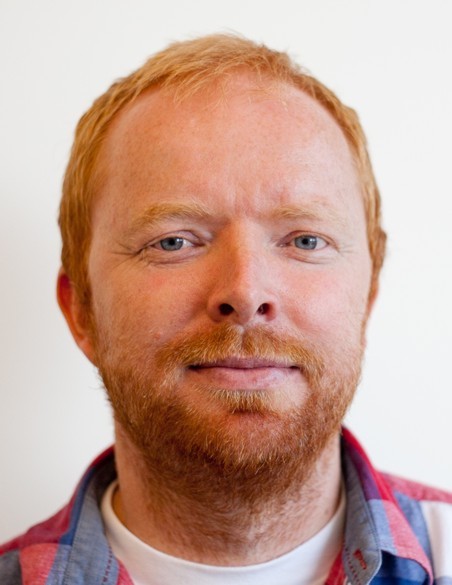
Håvard Kauserud is a Professor at the Department of Genetics and Evolutionary Biology, University of Oslo. His research spans molecular ecology, evolutionary biology, and fungal genetics with a focus on mycorrhizal and endophytic fungi, climate change impacts, and habitat fragmentation effects. Section of Genetics and Evolutionary Biology Teaches advanced courses in fungal evolution and bioinformatics Research projects include: Molecular ecology of mycorrhizal fungi Speciation mechanisms in forest fungi Climate change effects on mushroom phenology Comparative genomics of Serpulaceae Endophytic fungi in boreal mosses Recent work explores fungal community dynamics across boreal forests, indoor mycobiomes, and genome expansion patterns in Mycena . Collaborative studies investigate arthropod dispersal of fungal spores, climate adaptation signatures, and trait-based fungal ecology databases.
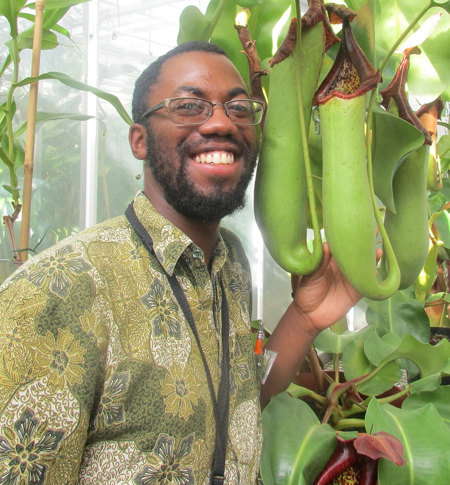
Kadeem Jamal Gilbert is an Assistant Professor at Michigan State University (MSU) affiliated with multiple programs and institutes: Plant Biology, Kellogg Biological Station, Molecular Plant Sciences Program, Plant Resilience Institute, and Ecology, Evolution & Behavior Program. His research focuses on plant-animal/microbe interactions, symbiosis, physiological regulation of leaf microenvironments, and carnivorous plants. Education: Ph.D. from Harvard University Dr. Gilbert's work integrates ecological and physiological approaches to study plant interactions with insects, microbes, and environmental gradients. His lab employs transcriptomics, chemical ecology, and community ecology frameworks to investigate carnivorous plant adaptations, phylloplane regulation, and global change impacts on species interactions. Recent publications highlight his research trajectory across plant physiology, microbial ecology, and evolutionary biology. These include studies on anthocyanin-mediated plant-insect interactions, fluid regulation in Nepenthes pitcher plants, and landscape-scale transcriptomic responses to environmental stressors. His work reveals fundamental insights about ecological filters in plant microhabitats and evolutionary tradeoffs in carnivorous species. Current research themes include plant volatile signaling in herbivore specialization, pH-mediated microbial community assembly, and ecological transcriptomics across environmental gradients. The Gilbert Lab maintains active outreach and press engagement while maintaining field sites at the Kellogg Biological Station.
Arthur Lim is a Professor of the Practice Education in the Mathematics Department at the University of Notre Dame. His primary affiliations include teaching roles in calculus and dynamical systems courses, alongside research in algebraic structures and pedagogical innovation. Ph.D., University of Utah (2001) M.S., National University of Singapore (1994) His research explores combinatorial matrix analysis applied to Lie algebras and pedagogical strategies emphasizing historical context and critical thinking in mathematics education. Recent work bridges operations research with market dynamics and telecommunications policy. Selected publications span 1999–2019, addressing topics from orbital integral approximations to net neutrality debates. Teaching innovations focus on integrating historical narratives with technical rigor in undergraduate instruction.
Maarten Goos is a Full Professor of Economics and Institutions at Utrecht University's Faculty of Law, Economics and Governance. He previously held positions at Erasmus University Rotterdam, University College London, KU Leuven, and had visiting roles at Princeton University, MIT, Boston University, and Fudan University. His research focuses on labor markets, technological progress, wage inequality, and institutional impacts. He is also an award-winning teacher, specializing in European macroeconomics, economic growth, and labor economics. Education: He earned his PhD from the London School of Economics (LSE). His academic journey includes roles at multiple prestigious institutions, reflecting deep expertise in labor and technological economics. Research interests include the interplay between technology and labor markets, specifically automation's effects on employment, wage polarization, and the role of institutions in shaping labor dynamics. He examines how skill-biased technological changes and globalization influence job structures and income distribution. His work also addresses the declining labor share in economies, exploring explanations rooted in firm behavior and productivity shifts. He collaborates with the European Commission, national policy institutes, and multinational corporations, contributing to policy initiatives and economic analyses. His research bridges theoretical models with empirical evidence, offering frameworks like the canonical CES model and task-based automation theories to dissect labor market trends. Though no specific awards are listed, his work is noted as award-winning in international publications. Advising/Grants: Goos has advised various organizations and contributed to policy projects, though formal advisee names or grant details are not explicitly stated. His teaching and research emphasize practical implications of economic theories for real-world labor market challenges and institutional reforms. Labs/Teams: Collaborates within Utrecht University's School of Economics and with external networks through European Commission projects and corporate partnerships.
Daniel Laughlin is a Professor in the Department of Botany at the University of Wyoming, part of the College of Agriculture, Life Sciences, and Natural Resources. His research focuses on quantitative approaches to understand plant responses to global change, including trait-based models for ecological restoration and community assembly. He holds a Ph.D. in Forest Science from Northern Arizona University (2009), an M.S. in Ecology from Penn State (2002), and a B.S. in Biology from Calvin College (1999). His lab, plant-traits.net , explores functional traits, ecological modeling, and restoration ecology. Key research interests include plant community assembly, trait-environment interactions, and the application of statistical frameworks to predict species responses. His work integrates ecological processes with statistical models to inform ecosystem restoration strategies. Notable contributions include studies on functional diversity, trait covariance, and the adaptive value of plant traits across environmental gradients. Laughlin teaches courses such as Vegetation Ecology and Ecological Modeling. His lab actively publishes on topics like root traits, climate impacts on plant strategies, and biodiversity drivers. While no awards are explicitly listed, his extensive publications and academic contributions highlight his leadership in ecological research. Advising and grants are not detailed in the provided text, but his lab’s focus on collaborative consortia and workforce development underscores his commitment to training future scientists. His work bridges theory and practice, aiming to reconcile ecological understanding with real-world restoration challenges.
Associate Professor Leow Wee Kheng is affiliated with the Department of Computer Science at the School of Computing, National University of Singapore . His career spans over three decades with expertise in medical image analysis , computer vision , and surgical simulation . Ph.D. in Computer Science, University of Texas at Austin (1994) M.Sc. in Computer Science, National University of Singapore (1989) B.Sc. in Computer Science, National University of Singapore (1985) His research focuses on medical image analysis for craniofacial surgery and stroke diagnosis, 3D modeling of anatomical structures, and computer vision techniques like robust PCA and texture analysis . Recent work includes knee joint motion modeling and forearm rotation simulation for clinical applications. Key trends in his 2017-2025 publications involve skull reconstruction algorithms , multi-objective optimization for digital media, subject-specific biomechanical modeling , and low-rank decomposition techniques in visual computing. Collaborations include institutions like Singapore General Hospital and National Taiwan University Hospital . Scientific Awards : CAIP 2017 Best Paper Award 2007 Andrew P. Sage Best Transactions Paper Award Faculty Teaching Excellence Award (AY2015/16) Annual Teaching Excellence Award (AY2015/16) He has mentored numerous students in medical imaging , computer vision , and biomedical modeling . Current and former advisees include Chen Ying , Vineta Lum Lai Fun , and Long Huizhong (Ph.D.).
Professor Feike Dijkstra is a Professor in Terrestrial Biogeochemistry at the University of Sydney's School of Life and Environmental Sciences. He joined the university in 2010 and holds a prestigious ARC Future Fellowship (2011-2015). His affiliations include the Sydney Institute of Agriculture and the Centre for Carbon, Water and Food. Feike Dijkstra obtained his PhD in 2001 and MSc in 1996 from Wageningen University in the Netherlands. Prior to his current position, he worked at the US Department of Agriculture (2007-2010), and as a postdoc at the University of California, Santa Cruz (2004-2006), and the University of Minnesota (2001-2004). His research focuses on understanding carbon, nitrogen, and phosphorus dynamics in grasslands, forests, and agroecosystems. Key areas include: Plant-microbial interactions and their impact on nutrient cycling Effects of global climate change on ecosystems Soil organic matter decomposition and stabilization Role of root exudates and rhizosphere processes Carbon sequestration strategies and soil health Recent publications highlight advancements in understanding soil carbon dynamics under acidification, nitrogen retention mechanisms, and the role of microbial activity. Research also explores the effects of grazing and environmental changes on greenhouse gas emissions and nutrient cycling in diverse ecosystems. Awards: ARC Future Fellow (2011-2015) He advises students on projects such as drought impacts on root plasticity, iron oxides in soil organic matter preservation, and phosphorus availability in intercropping systems. His work contributes to interdisciplinary initiatives in sustainable land management and climate resilience through affiliations with the Centre for Carbon, Water and Food.
Brian Pickles is an active academic researcher affiliated with the University of Reading, School of Biological Sciences, where he contributes to research in ecology, mycorrhizal symbioses, and environmental conservation. His work spans forest ecology, urban biodiversity, paleontology, and forensic science, reflecting a highly interdisciplinary approach to ecological challenges. University: University of Reading School: School of Biological Sciences Department: Department of Ecology and Evolutionary Biology Academic Rank: Senior Lecturer His research focuses on mycorrhizal fungi and their role in plant-soil interactions, forest resilience under climate change, and biodiversity conservation. He investigates how ectomycorrhizal networks influence tree communities, how urban trees affect microclimates, and how decomposition processes alter soil ecosystems. His work integrates field experiments, molecular ecology, and remote sensing techniques. Recent publications show a strong trend in applying ecological theory to practical conservation, including reptile habitat management, invasive species policy, and urban green space planning. His studies often employ robust experimental designs such as before-after control-impact (BACI) and leverage large collaborative networks. Brian Pickles has co-authored numerous high-impact papers in journals like New Phytologist , Proceedings of the Royal Society B , and Frontiers in Forests and Global Change . His work on ectomycorrhizal networks, forest carbon dynamics, and urban tree radiative performance demonstrates both theoretical depth and applied relevance. He has also contributed book chapters on mycorrhizal mediation of soil processes and spatial ecology of fungal communities. Brian Pickles collaborates extensively with researchers across the UK, Canada, and globally. Notable collaborators include Suzanne Simard, Melanie D. Hart, Ian C. Anderson, and Miranda M. Hart. These collaborations span topics from fungal community assembly to inter-plant communication via mycorrhizal networks. No formal scientific awards or prizes are mentioned in the provided text. However, his consistent publication record in top-tier journals suggests recognition within the ecological research community. Brian Pickles contributes to research grants and collaborative projects focused on forest resilience, urban ecology, and soil biodiversity, though specific grant titles or funding bodies are not listed. His leadership in experimental design and data interpretation indicates an active role in securing and managing research funding. He is involved in several research teams and labs, particularly those focused on mycorrhizal ecology and forest dynamics. His work with the Simard Lab (University of British Columbia) and collaborations with UK-based environmental monitoring groups highlight his integration into major ecological research networks. He also contributes to urban ecology initiatives using remote sensing and ground-based validation.
Yanrong Yang is an Associate Professor at the Research School of Finance, Actuarial Studies and Statistics, The Australian National University. Her research focuses on high-dimensional statistical inference, large-dimensional random matrix theory, functional data analysis, and responsible statistical learning. She has developed asymptotic theories for high-dimensional statistics and applied them to time series forecasting and panel data analysis. PhD in Statistics, Nanyang Technological University (2009-2013) MSc in Statistics, Shandong University (2006-2009) BSc in Statistics, Shandong University (2002-2006) Her research explores high-dimensional data analysis, including eigenvalue methods, functional principal component analysis, and applications to mortality forecasting and financial portfolio optimization. Recent publications examine fairness-aware models for annuity pricing, robust PCA techniques, and eigen-analysis for time series clustering. She has published extensively in top journals such as the Annals of Statistics, Journal of Econometrics, and Journal of the American Statistical Association. Her current project, Feature Learning for High-dimensional Functional Time Series (2023-2026), investigates representation learning in financial time series.
Dr. Taryn L Bauerle is a Professor and Director of Graduate Studies at the Department of Horticulture , School of Integrative Plant Science , Cornell University . With a research focus on woody root physiological ecology , her work examines root responses to water stress , hydraulic redistribution , and root herbivory in temperate forest systems. Education : PhD in Plant Science (Pennsylvania State University, 2007), MS in Botany (University of Washington, 2001), BS in Plant Science (Humboldt State University, 1998) Her research integrates whole plant water status with root physiological characteristics , addressing both fundamental ecological questions and industry-relevant stress management in horticultural crops. Key projects investigate localized water stress effects , root population dynamics , and rhizosphere metabolomics through NSF-funded initiatives. Laboratory at Cornell develops soil-swimming robots for root-soil interaction studies under a $2 million NSF grant. She teaches PLSCI 1115: The Nature of Plants , PLSCI 3050: Arboriculture , and PLSCI 4900: Plant Sciences Experiential Learning . Contact : 136 Plant Science Building , Ithaca, NY 14853 , (607) 254-4867 , tlb33@cornell.edu
Christopher Blackwood is a Professor in the Department of Plant Biology at Michigan State University, with additional appointments in Plant Soil and Microbial Sciences and the Ecology, Evolution & Behavior Program. Based in the Plant Biology Lab (S124), his research examines soil-plant-microbe interactions and their critical roles in ecosystem processes and soil carbon dynamics. Education: Ph.D. from Michigan State University His research spans community ecology of plants and microorganisms, plant-fungal interactions, root traits, and soil biogeochemistry. Current projects investigate coexistence mechanisms of closely related plant species, cascading effects of tree root traits on pathogens and soil carbon, forest restoration dynamics, and urban green roof performance. His work integrates field studies with molecular approaches to understand belowground ecological processes. Analysis of recent publications (2021-2025) reveals consistent focus on plant-soil feedbacks, fungal community ecology, and soil carbon dynamics. Key themes include mycorrhizal influences on plant-fungal coevolution, root trait evolution across plant lineages, and applications to sustainable land management. His work bridges fundamental ecological theory with practical restoration ecology. Dr. Blackwood leads an active research laboratory funded by competitive grants, mentoring graduate students in plant and soil ecology. His team investigates soil biota across diverse ecosystems including temperate forests, agricultural landscapes, and urban green infrastructure. His laboratory conducts research on soil organism ecology, plant-microbe interactions, and ecosystem functioning, with ongoing projects in forest restoration, green roof optimization, and soil carbon dynamics across multiple spatial scales.
Dr. Yunying Fang is a Senior Lecturer at Griffith University's School of Environment and Science, affiliated with the Australian Rivers Institute. She holds a PhD from the University of Sydney and previously worked at the NSW Department of Primary Industries (2013–2023). Her research focuses on Soil Biogeochemistry, Soil Carbon/Nutrient Cycling, and Greenhouse Gas Emissions, with an emphasis on Nature-Based Solutions to Climate Change and Soil Health Resilience. Education: PhD in Soil Science, University of Sydney Research Interests: Soil Carbon Sequestration Mechanisms Impact of Land Management and Climate Change on Ecosystem Processes Stable Isotope Methodologies for Soil Amendment Studies Funded Projects (Selected): Developing Standard Protocols for Microplastics in Soils (Solving Plastic Waste CRC, 2025–2028) Climate Change Effects on Phosphorus Cycling (Griffith University Internal Grant, 2023) Innovative Microbial Carrier Products Evaluation (High Performance Soils CRC, 2023–2026) Teaching & Supervision: Associate Supervisor for doctoral projects on Land Management in Rubber-Based Systems and Organic Amendments in Soil Carbon Sequestration Affiliations: Member of Australian Rivers Institute Research Entity Griffith Sciences Group
Dr. Donggyu Sul is the John F. Kain Professor of Economics at the University of Texas at Dallas (UT Dallas), within the School of Economic, Political and Policy Sciences. His research focuses on panel data econometrics, empirical growth, and international finance. He earned his Ph.D. in Economics from The Ohio State University (1992) and a B.S. in Economics from Korea University (1988). His career includes roles at the University of Auckland and research economist positions in Korea. Key research interests include panel data methodologies, economic growth analysis, and financial econometrics. He has contributed to advancements in factor models, convergence testing, and dynamic panel estimation. Notable publications include work on X-differencing, terrorism drivers, and common factor identification in exchange rates. Professional Preparation: Ph.D., Economics, The Ohio State University, 1992 B.S., Economics, Korea University, 1988 Awards: 2019 Maekyung-KAEA Economist Award for contributions to economic research Professional Activities: General Secretary of Korea-American Economic Association Co-editor of International Economic Journal Past associate editor of New Zealand Economic Papers Grants & Collaborations: Extensive collaboration with Peter C.B. Phillips on econometric theory and panel data methods. Labs/Teams: Active in organizing the Korean Econometric Camp and New Zealand Econometric Study Group. His work bridges theoretical econometrics and applied research, emphasizing robust estimation techniques and policy-relevant insights, particularly in growth disparities and financial markets.
Prof. Martijn Bezemer is a Professor of Ecology of Plant-Microbe-Insect Interactions at Leiden University's Institute of Biology Leiden (IBL), Department of Plant Sciences. His research focuses on understanding how plants influence soil biota and how these changes affect subsequent plant growth and insect interactions. Key areas include grassland ecosystems, horticultural soils, and soil microbiome applications in restoration and agriculture. He leads a team of PhD students and postdocs conducting experiments in greenhouses, growth chambers, and field settings. Current projects include TRIPS (Thrips Reduction In Production Systems), Self Defense (mimicking plant defense mechanisms), and Soils2Guts (soil microbiome health impacts). Collaborations with restoration practitioners aim to enhance grassland biodiversity through soil inoculation and plant-driven soil improvements. Recent work includes studies on blue-green roof vegetation dynamics, plant community legacy effects on decomposition, and steering crop microbiomes via soil feedback principles. His research bridges fundamental ecology with applied solutions for sustainable agriculture and ecosystem restoration.
Evangelos Ioannidis is an Associate Professor at the Department of Statistics, School of Informatics and Statistics, Athens University of Economics and Business. Born in 1962, he holds a Mathematics PhD from the University of Heidelberg (1993) and has served in his current department since 1999, progressing from Lecturer (1999) to Assistant Professor (2007) and Associate Professor (2023). His expertise spans spectral analysis of time series , cointegration methods , and bootstrap applications in economic data analysis, with additional focus on Official Statistics and sampling techniques . University of Heidelberg: MMath (1987), PhD (1993) Researcher, University of Heidelberg (1987-1991) Visiting Researcher, University of Orsay, Paris Sud (1992-1993) OECD, Paris (1994-1998) National Institute of Labour (1999) His scientific contributions focus on time series econometrics, VAR model spectra, and R&D expenditure analysis. Recent work includes non-parametric spectral estimation and risk-based sampling methodology. He has collaborated with Eurostat on statistical projects (2012-2014). Current affiliations include the Athens University of Economics and Business , where he teaches and conducts research on economic time series analysis and statistical methods.