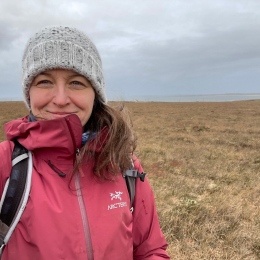
Dr. İlkay Kaydu Akbudak is a Lecturer at the Department of Geological Engineering , Faculty of Engineering and Architecture , Ahi Evran University of Kırşehir , Turkey. She holds a PhD in Geological Engineering from Çukurova University (2009-2014) and an MSc from the same institution (2006-2009), with undergraduate studies in Gemology at Mersin University (2003-2006). Education PhD, Geological Engineering, Çukurova University (2014) MSc, Geological Engineering, Çukurova University (2009) BSc, Gemology, Mersin University (2006) Her research focuses on Mineralogy-Petrography and Geoarchaeology , analyzing gemstone potential of natural stones, decorative stone applications, and archaeological material science. She has led 17 research projects on topics like travertine utilization, agate characterization, and historical jewelry analysis. Her publications span Mineralogy , Geoarchaeology , and Volcanic Petrology , with a focus on Turkish geological formations. She has advised 4 MSc students and participated in international science festivals as an educator. Scientific Collaborations Co-authored 27 publications with Prof. Zeynel Başıbüyük Collaborated with Meltem Gürbüz (Mersin University) on 22 works Dr. Akbudak's work bridges geological engineering, gemology, and cultural heritage preservation through interdisciplinary studies.
Prof. Dr. Ali Issi is a faculty member at Dumlupinar University's Faculty of Engineering, Department of Metallurgical and Materials Engineering. He has served at the university since 2011, progressing from Assistant Professor to Associate Professor (2015-2021), and currently holds the position of Professor since 2021. His academic journey began with dual bachelor's degrees in Metallurgical and Materials Engineering and Ceramic Engineering at Dumlupinar University (1994-1998), followed by a Master's in Ceramic Engineering (2001-2005), and culminated with a PhD in Ceramic Engineering from Anadolu University (2005-2011). His research focuses on Material Archaeometry, Material Characterization, Traditional and Technical Ceramics, and Rheology. Prof. Issi has established himself as a specialist in the archaeometric analysis of ancient ceramics, particularly from Anatolian archaeological sites. His work bridges materials science with archaeological investigation, using advanced analytical techniques to understand ancient production technologies and material properties. Analysis of his 15 most recent publications reveals a consistent focus on archaeometric characterization of ceramics from various historical periods (Bronze Age, Hellenistic, Roman, Achaemenid) across Anatolia. His research employs multiple analytical techniques including X-ray spectrometry, thermal analysis, and vibrational spectroscopy to investigate pottery production technologies, material composition, and archaeological provenance. Recent work has expanded into gemology with studies on Malatya rubies. Prof. Issi has led or participated in numerous research projects since 2013, including thermoelectric nanoceramic production, characterization of Byzantine and Early Ottoman artifacts, and studies of ceramic finds from archaeological sites like Seyitömer Höyük, Harabebezikan Mound, and Şarhöyük. His work demonstrates strong collaboration with international researchers and institutions. His teaching portfolio includes specialized courses in Archaeometry, Archaeoceramics, Traditional Ceramics, Material Characterization, and advanced microscopy techniques. As an active researcher with 78 publications, Prof. Issi continues to contribute significantly to both materials science and archaeological science through his interdisciplinary approach.
Jean-Paul ANDRIEUX is a Lecturer at Paris-Panthéon-Assas University , affiliated with the Jean Gaudemet Institute of Legal History (IHD) , a CNRS UMR 7184 research team. His work bridges legal history with interdisciplinary approaches to judicial archives and historical sociology. Key research areas: History of Law , Diplomatics , Historical Sociology of Law , and Trade Union Law History Core contributions: Analysis of legal institutions from Antiquity to modernity, critical examination of judicial archives, and socio-historical studies of normative systems His publications focus on the evolution of legal epistemology, with a seminal textbook series Historical Introduction to Law (4th-6th editions, 2009-2011) and a 2012 monograph on jurisprudence history. Current work Law not the Senses (in press) explores sensory dimensions in legal historiography. As a member of the Doctoral School No. 8 and participant in the CEHJ research network, he contributes to training through the M2 History of Law master's program while serving on the Sainte Geneviève Library board for academic governance.
Prof. Ing. Roman Gálik, PhD. serves as Dean of the Faculty of Engineering and Professor at the Institute of Agricultural Engineering, Transport and Bioenergetics at Slovak University of Agriculture in Nitra. He holds identification number 1530 and maintains active university email contact. His research focuses on agricultural engineering with specialization in mechanical systems for agricultural applications. His work demonstrates significant contributions to machinery diagnostics, ventilation systems for agricultural facilities, and transmission mechanisms in agricultural vehicles. Prof. Gálik's recent publications (2025) show concentration in two main areas: ventilation technology innovation (particularly the integrated ridge ventilation skylight patent application) and diagnostics/repair of agricultural vehicle transmission systems (CFMOTO Gladiator). His work bridges theoretical engineering principles with practical agricultural applications. As Dean of the Faculty of Engineering, he serves in numerous administrative capacities including: Chairman of the Scientific Council (Faculty of Technology) Member of Faculty Management Member of Dean's Board Member of Rector's Board Chairman of Subject Committee for Doctoral Study Program In teaching, Prof. Gálik supervises bachelor, diploma, and doctoral theses, particularly in machinery and technology of waste treatment management, and technologies and machines in animal breeding. His leadership extends to multiple program committees for various engineering study programs.
Maijastina Kahlos is a Finnish historian and classicist affiliated with the University of Helsinki and Helsinki Collegium for Advanced Studies. Her work focuses on late Roman history, religious interactions in the ancient Mediterranean, and tolerance/intolerance discourses. Current Research Fellow, Centre of Excellence 'Reason and Religious Recognition' (Academy of Finland-funded) Returning Research Fellow, Helsinki Collegium for Advanced Studies (2019 onwards) Former KHK Fellowship recipient (April-June 2019) Her research explores: Late Roman senatorial culture and biographical studies Christianization processes and religious coexistence Discourses of toleration in Greco-Roman antiquity Elite vs. local religious practices in the Roman Empire Prejudice and 'othering' mechanisms in antiquity Interdisciplinary approaches combining literary, cultural, and theological analysis Kahlos' publications reveal thematic continuity in: Examining cultural and religious transitions in Late Antiquity Comparative analysis of Christian and pagan communities Exploring spatial and theological dimensions of late antique life Investigating how Roman elites negotiated religious diversity Understanding tolerance rhetoric through historical case studies Contributing to contemporary discussions on religious coexistence Scientific recognition includes: Käte Hamburger Kolleg Fellowship (2019) Academy of Finland grants for sustained research excellence
Francesca Franco is an independent curator, art historian, and producer based in England and Italy, specializing in the history of early computer art and its pioneers. She is currently a Senior Research Fellow at the University of Exeter and Visiting Lecturer at Danube University Krems, with an upcoming appointment as Visiting Professor of Art History at the Karlsruhe Institute of Technology's Institute of Art and Architectural History from April 2025. Francesca studied Art History at Ca' Foscari University of Venice, followed by an MA in Digital Art History and a PhD in History of Art at Birkbeck University of London. Her academic journey reflects her deep commitment to understanding the intersection of art and technology throughout history. Her research focuses on the history of early computer art, generative and interactive art, and the connections between constructivism and systems art in early computational practices. A central aspect of her work is the history of the Venice Biennale, which she has reviewed extensively since 2007. Franco's scholarship bridges historical research with contemporary digital art practices, examining how early computational art pioneers shaped today's digital culture. She places particular emphasis on primary sources—from artist interviews to institutional archives—fostering independent research and deep understanding of digital culture's historical development. Francesca's publications reveal a consistent focus on documenting and analyzing key figures in computer art history, particularly Ernest Edmonds, Vera Molnár, Manfred Mohr, and Roman Verostko. Her work spans art history, computer science, and cultural studies, with particular attention to curation, preservation, and the evolving relationship between technology and artistic expression. She has published extensively, with works translated into multiple languages including Russian, Chinese, and Romanian. As an educator, Franco has extensive teaching experience at undergraduate and graduate levels, currently teaching Media Art and Curatorial Practice at Danube University Krems. She was co-investigator on the AHRC-funded project "Documenting Digital Art: Rethinking Histories and Practices of Documentation in the Museum and Beyond" at the University of Exeter. Her courses combine historical research with practice-based learning, encouraging students to engage with both theoretical concepts and the materiality of digital art, culminating in collaborative projects linked to important collections like ZKM (Center for Art and Media). Francesca has directed numerous international exhibitions exploring the intersection of art and technology, including "Vera Molnár: Icône 2020" at the 59th Venice Biennale (2022), "Algorithmic Signs" (Venice, 2017), and "Vera Molnár: Variazioni Icône" (Rome, 2023). She has commissioned significant new works including Molnár's first glass work from Murano, "Icône 2020" (2021), Roman Verostko's "St. Mark's Apocalypse" (2017), and Ernest Edmonds' "Growth and Form" (2017). In 2025, as Chair of SIGGRAPH Art Gallery, she will direct an exhibition exploring the dynamic relationship between nature, art, and technology.
REMZİ ÖZTEKİN is a Lecturer at Gaziantep University's Technical Sciences Vocational School, Department of Handicrafts, since 2007. He holds two master's degrees: (1) 2019 - Handicrafts (with thesis) from Gazi University, and (2) 2017 - Educational Management, Supervision, Planning and Economics (without thesis) from Gaziantep University. Earlier education includes a 1995-1998 Applied Jewelry Technology associate degree from Marmara University and 1990-1993 technical training in jewelry from İçel Kuyumculuk. Education: M.Sc. in Handicrafts, Gazi University (2016-2019) M.Sc. in Educational Management, Gaziantep University (2013-2017) Licence in Jewelry, Mersin University (2002-2005) His research focuses on jewelry design, metalworking techniques, and educational applications in handicrafts. He has explored 3D modeling, casting processes, and CNC technologies in jewelry production. Professional activities include conducting workshops at Mersin University, participating in exhibitions like 'Different Handicrafts Meeting in Jewelry' in Mardin, and creating multimedia presentations for Gaziantep Kanal 5. He has held administrative roles as Department Head (2008-2013, 2013-2022) and Application Center Manager (since 2015) at Gaziantep University. His teaching portfolio includes courses in Plastic Arts, Jewelry Design, Ornament Terminology, and Collection Preparation, with international publications presented in Italy, Kosovo, and Turkey.
Ben Steinberg is a Professor at the School of Electrical Engineering within the Faculty of Engineering at Tel Aviv University. His work focuses on Electromagnetics , Wave propagation and scattering , and Photonic Crystals , with applications in Artificial materials and Plasmonic structures , as well as Propagation in complex (multi-scale) medium and effective properties. He has held major roles in TAU's academic governance, including heading the Engineering Faculty's PhD Students Committee and serving on the TAU Promotion & Nomination Committee. Education: 1985-1989: PhD in Electrical Engineering, Tel Aviv University 1989-1991: PostDoc at The Catholic University of America, Washington DC Research interests span Electromagnetics Wave propagation and scattering Photonic Crystals, artificial materials, plasmonic structures Propagation in complex (multi-scale) medium and effective properties Article trends emphasize Electromagnetics , Photonics , and Condensed Matter Physics , with subfields like Non-Reciprocal Waveguides , Photonic Crystal Devices , Plasmonic Structures , Wave propagation in multi-scale medium , Green's Function Theory , and Effective Properties of Materials . Advising includes PhD and MSc students such as Yarden Mazor , Yakir Hadad , Roman Novitski , and Vitaliy Lomakin , with research topics in Plasmonics , Clustering , and Waveguide Sensitivity . He has also co-supervised projects on Optical Gyroscopes and Disordered Photonic Crystals . Academic roles include: Head of Faculty of Engineering Admission Committee (2001-2005) Head of Faculty of Engineering PhD Students Committee (2006-2009) Member of TAU Promotion & Nomination Committee (2010-2013) Industry contributions include co-founding XellAnt Inc. as CTO (2001-2004) and consulting for high-tech companies.
Iran Roman serves as a Lecturer in Sound and Music Computing within the School of Electronic Engineering and Computer Science at Queen Mary University of London, contributing to both teaching and research initiatives in this specialized domain. His research portfolio centers on the technical and creative intersection of audio systems and computational methods, with primary focus areas including: Algorithmic sound synthesis and processing Machine learning applications in music creation Interactive audio systems design Digital signal processing for artistic expression Computational musicology frameworks Real-time audio software development Professional correspondence may be directed to i.roman@qmul.ac.uk for academic collaboration or research inquiries.
Dr. Sebastian Kübler is a researcher at the Institute of Psychology, Faculty of Philosophy I, Martin Luther University Halle-Wittenberg. His work focuses on dual-task processing, task-order coordination, and the neural implementation of multitasking mechanisms using non-invasive brain stimulation techniques. His research explores how multitasking demands modulate neural activation patterns, the role of working memory in dual-task situations, and task-order control from an embodied cognition perspective. Collaborations include Marco Steinhauser (KH Eichstätt), Andrea Kiesel (ALU Freiburg), Dietrich Manzey (TU Berlin), Rico Fischer (EMAU Greifswald), Roman Liepelt (DSHS Köln), and Veit Kubik (HU Berlin/SU Stockholm). 2024: Electrophysiological analysis of dual-task order coordination 2024: Memory hypothesis in dual-task improvement 2023: Food stimuli and fasting effects on task switching 2022: Working memory and task-order coordination 2021: EEG correlates of task-order preparation Kübler employs transcranial magnetic stimulation (TMS) and transcranial direct current stimulation (tDCS) to investigate neural causality in cognitive control. His studies also compare multitasking paradigms and examine motor cortex involvement in memory processes.
Prof. Dr. Torsten Schubert is a full professor and chair holder at the Martin-Luther-University Halle-Wittenberg , Department of Psychology (Faculty of Philosophy I), and Managing Director of the Center for Media-Enhanced Learning and Teaching (LLZ) . He has held academic positions at prestigious institutions including Humboldt University Berlin and Ludwig-Maximilians-University Munich. Education: Diploma in Psychology (St. Petersburg, 1987), PhD (Berlin, 1994), Habilitation (Berlin, 2005) His research focuses on executive control, working memory, attention , and non-conscious information processing . He explores these through fMRI and functional neuroanatomy, particularly in dual-task situations and age-related cognitive changes. Recent work examines how action video gaming and working memory training influence cognitive control mechanisms. His publications span topics in cognitive neuroscience , experimental psychology , and neuropsychology , with a strong emphasis on neural plasticity, executive function training, and attention dynamics in aging populations. PhD Advisees : Current: Leif Langsdorf, Daniel Darnstaedt, Teresa Schurer, Antonia Reindl Former: Andre Szameitat, Grit Hein, Rico Fischer, Roman Liepelt, Christine Stelzel, Claudia Preuschhof, Yiquan Shi, Tilo Strobach, Elisabeth Hendrich, Tiina Salminen, Alexander Soutschek, Luke Tudge, Sebastian Kübler
Malin Kylander is Associate Professor of Sediment Geochemistry at Stockholm University's Department of Geological Sciences. She leads the S:LAM Lab and operates an ITRAX XRF core scanner for high-resolution sediment analysis. Research focuses on inorganic chemistry in lake sediments and peat Develops proxies for reconstructing past climate change Specializes in Holocene and Last Glacial paleoclimate reconstructions Her outreach initiatives engage high school students in data collection. She directs PhD studies at her department and teaches courses in sedimentary systems and paleoclimatology. Current projects examine storminess patterns in the North Atlantic, mineral dust dynamics in Sweden, and hydroclimatic variations in Lesotho. She also contributes to methodological advances in XRF core scanning and peat sample preparation.
Prof. Dr. Sebastian Schmidt-Hofner is a Full Professor in the Department of History at the University of Tübingen's Faculty of Humanities, where he has served since 2014. He holds significant administrative roles, including Vice-Dean of Research (since 2016/2023) and Chairman of the advisory board for the Kommission für Alte Geschichte und Epigraphik in Munich. His research examines the interplay of law, politics, and aesthetics in the Late Roman Empire, with a focus on elite representation, migration impacts, and socio-legal transformations. Education: PhD, Philipps-University Marburg (2005) Master of Studies in Ancient History, University of Oxford (2000) Classics and History studies, LMU Munich and Oxford (1997–2000) Research Interests: Schmidt-Hofner's work explores the aesthetics of political power, legal narratives in antiquity, and crisis management in stressed societies. His projects investigate how administrative elites used visual media (e.g., consular diptychs) for self-representation and how migration reshaped late Roman socio-economic structures. Current initiatives include CRC 1391 'Different Aesthetics' and studies on Italy's fifth-century transformations. Publications: His scholarship consistently addresses the evolution of Roman law, elite identity, and imperial propaganda. Recent articles analyze legal semantics, assembly politics, and economic pressures on landholding elites, reflecting a multidisciplinary approach bridging history, archaeology, and political theory. Awards: Heinz Maier-Leibnitz Prize (German Research Foundation, 2010) Advising & Projects: Schmidt-Hofner co-leads DFG-funded projects like 'Land and Loyalty in the Later Roman Empire' and CRC 923 'Threatened Order'. He mentors doctoral researchers in projects intersecting history and archaeology, though specific student names are undisclosed in sources. Collaborations: As principal investigator for CRC 1391 Project A1 ('Aesthetics of Public Office'), he collaborates with Prof. Cristina Murer, examining late Roman administrative representation through ivory diptychs and gender-specific imagery. The team publishes on transcultural exchanges between Rome and Persia.
JUAN CARLOS ROMAN REDONDO is a full-time academic affiliated with the Faculty of Fine Arts at the University of Vigo , specializing in the Department of Sculpture . He is actively involved in the research group PRACE: Processes of Resistance in Spanish Contemporary Art , focusing on experimental practices in sculpture and creative processes. His research interests include: Exploration of material transformation in sculptural creation Contemporary art methodologies Artistic resistance processes Located at the Pontevedra campus, he contributes to the field through experimental practice and reflection.
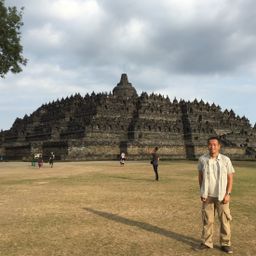
Dr. Eisuke Tanaka is an Associate Professor at Fukuoka Jo Gakuin University, Japan, specializing in social anthropology with a focus on cultural heritage dynamics. He completed his PhD at the University of Cambridge's Department of Social Anthropology in 2008. Current research: Material remains' role in shaping archaeology-tourism-local community relationships in ancient Lycia (southwest Turkey) Key contributions: Analysis of heritage destruction/protection paradigms through Turkish case studies His work examines the paradoxical creation of 'heritage' through both preservation and destruction processes. Publications analyze: Roman mosaics' contested status as heritage in Zeugma Europe's influence on Turkish heritage categorization Place-based claims against illicit antiquities transactions Active in academic conferences including ACHS 2016, where he presented on heritage site production in Turkey through archaeology-tourism interactions.