Prof. Dr. Maximilian Schich is a leading academic in the intersection of data science and humanities. His work bridges computational methods with cultural studies, media analysis, and historical research. Affiliated with institutions like the Max Planck Gesellschaft, he contributes to multidisciplinary research through advanced network analysis and digital humanities frameworks. Research Focus: Schich’s research spans cultural analytics, aesthetic complexity, and big data applications in art and media. He explores visual communication trends, automated stance detection in polarizing topics, and the evolution of art through compression ensembles. His methodologies often involve network theory and machine learning. Publications: Recent works include frameworks for historical newsreel analysis (2024), interactive visualization tools for multidimensional datasets (2023), and computational approaches to art history and museum collections. His collaborations highlight cross-domain innovation in data science and humanities.
Rosa Blanca Gonzalez Gutierrez is a Professor in the Department of Geography and Geology at the University of León's Faculty of Philosophy and Letters, where she leads research in the GEOPAT (Geomorphology, Landscape and Territory) group. Her work focuses on the physical geography of Spain's Cantabrian Mountains, particularly in León province, integrating field studies with advanced dating techniques to reconstruct landscape evolution. Education: PhD in Geology from the University of León (2001) with thesis: 'Geomorphological Study of the Central Mountain of León, the Torío and Curueño Valleys', supervised by Dr. José María Redondo Vega. Research Focus: Professor Gonzalez Gutierrez specializes in glacial and periglacial geomorphology , with expertise in rock glaciers, glacial lakes, and Schmidt-hammer dating techniques. Her research bridges Quaternary science and anthropogenic landscape impacts , particularly examining Roman mining legacies and modern mining effects in northwest Spain. She employs interdisciplinary methods including sediment analysis, thermal monitoring, and remote sensing to address climate change impacts on mountain environments. Publication Trends: Her recent work (2022-2024) demonstrates three dominant themes: (1) reconstructing deglaciation chronologies in Iberian ranges using innovative dating methods, (2) analyzing mining-induced landscape transformations across historical timescales, and (3) investigating cryospheric processes in mid-latitude mountains. This reflects a strategic shift toward integrating paleoenvironmental data with contemporary environmental challenges in mountain systems. Scientific Awards: No awards are documented in available sources. Advising and Grants: While specific grant details are unlisted, her extensive publication record indicates leadership in nationally funded research projects. Her supervision of doctoral theses (including the 2001 PhD under Dr. Redondo Vega) and master's research suggests active mentorship, though current advisees aren't specified. Collaborative patterns show strong national partnerships with Spanish institutions and emerging international work in Portugal and Argentina. Research Infrastructure: As a core member of the GEOPAT group, she utilizes field laboratories across the Cantabrian Mountains for geomorphological mapping, sediment coring, and thermal monitoring. Her team maintains specialized equipment for Schmidt-hammer dating and collaborates with the University of León's environmental analysis facilities for geochemical testing of mine-impacted waters and sediments.
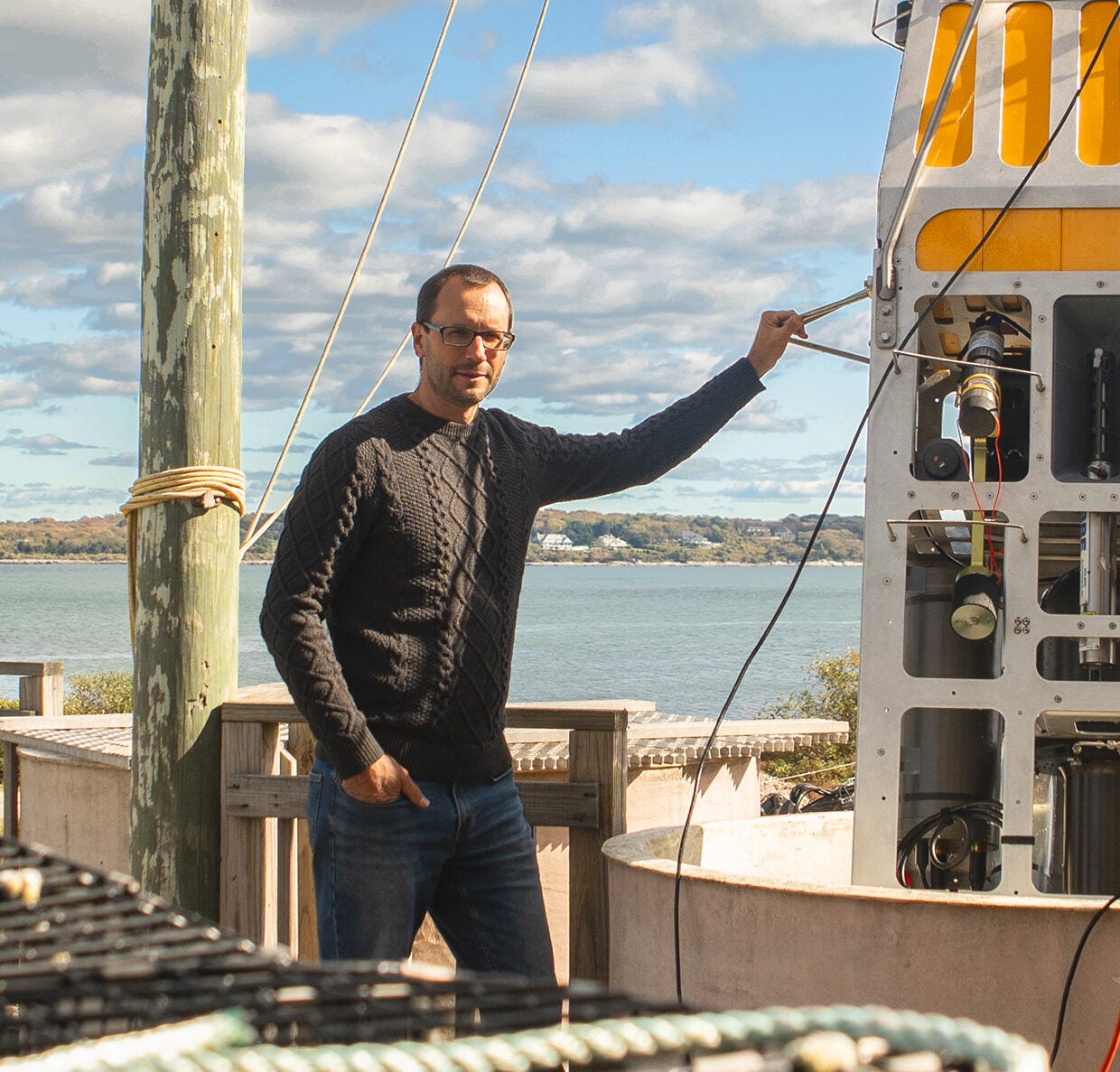
Christopher Roman is a Professor of Oceanography in the Marine Geology and Geophysics program at the University of Rhode Island's Graduate School of Oceanography (GSO), with a joint appointment in the Department of Ocean Engineering. He has been at URI since 2006, contributing to deep-sea exploration with the Ballard Group and advancing coastal oceanography through autonomous vehicle development. His educational background includes: Ph.D. Ocean Engineering, Massachusetts Institute of Technology / Woods Hole Oceanographic Institution, 2005 M.S. Mechanical Engineering, University of California, San Diego, 1999 B.S. Mechanical Engineering, Virginia Polytechnic Institute and State University, 1997 Roman's research centers on developing sensing systems for acoustic and photographic seafloor mapping, with dual expertise in deep-ocean archaeology and coastal dynamics. His work spans coastal circulation, underwater robotics, and oxygen minimum zone studies, exemplified by innovations like the Wire Flyer profiling vehicle that captures "shower curtain slices" of ocean properties through rapid vertical maneuvers. Recent publications demonstrate a strong trajectory toward autonomous underwater vehicle technology, with emphasis on real-time bathymetric modeling, acoustic-visual sensor fusion, and deep-sea exploration in extreme environments like the Puerto Rico Trench. His research increasingly addresses climate change impacts through high-resolution observations of mesopelagic ecosystems and interocean fluxes. No specific scientific awards are documented, but research is supported by diverse funding sources including the Champlin Foundations, which enabled development of an educational Autonomous Surface Vehicle (ASV) for Narragansett Bay studies. Roman mentors students in engineering-data science integration, assigning projects that link mechanical design challenges to oceanographic questions. His GSO lab assembles custom instrumentation with external machining partners, focusing on deployable systems for field campaigns. Current projects include methane seep investigations in the Gulf of Mexico, Antarctic krill behavior studies, and hadal zone exploration using the Deep Autonomous Profiler, maintaining active fieldwork across global ocean basins.
Anselm Küsters is an accomplished academic with affiliations across multiple institutions. He serves as Head of the Digitalization/New Technologies Department at the Center for European Politics (cep) in Berlin, an Associate Researcher at the Max Planck Institute for Legal History and Legal Theory , and a Postdoctoral Researcher at Humboldt University of Berlin . He will assume an Acting Professorship in Digital Humanities at the University of Stuttgart in the summer semester of 2025. Education: Doctorate (Dr. Phil.) in Modern History, Goethe University Frankfurt (2018-2022) Magister des Europäischen Rechts (LL.M.) at University of Würzburg (2018-2020) M.Phil. in Economic and Social History, University of Oxford (2016-2018) B.A. and B.Sc. in History, German Studies, and Economics at University of Heidelberg (2011-2015) His research lies at the intersection of economic, legal, and technological history , utilizing digital humanities methods like text mining and natural language processing. Key projects include ‘The Emergence and Decline of Ordoliberal Language’ , which applies computational analysis to EU competition law, and his ongoing habilitation project on technological change and regulatory discourse , examining historical parallels to digitalization’s societal impact. The habilitation project leverages digitized primary sources (newspapers, parliamentary speeches) to study discursive patterns around innovation , focusing on public sentiment and regulatory outcomes. Methodologically, it bridges science and technology studies , conceptual history , and NLP techniques , contributing to debates on the ‘Great Divergence’ and transnational sentiment analysis. Scientific Awards: Roman Herzog Research Prize (2023) for his dissertation Otto Hahn Medal (2023) for outstanding doctoral work Küsters’ publications reflect his interdisciplinary expertise. He employs quantitative approaches to analyze historical texts , revealing trends in EU policy formation , economic crisis narratives , and cultural representations . While no students are listed, his work influences digital history and legal scholarship through methodological innovation.
Prof. Robert Matijašić is a Full Professor at the Department of Archaeology, Faculty of Humanities in Pula, University of Primorska. His academic career includes teaching undergraduate and graduate courses such as 'Introduction to Classical Archaeology' and 'Landscape Archaeology of the Ancient Mediterranean.' He holds a PhD from 1994 and has been actively involved in archaeological research since the 1980s. Research focuses on Romanization processes in Istria, Adriatic archaeology, and ancient settlement patterns. Notable projects include studies on Istrian villas, olive oil production, and Roman centuriation systems. He employs innovative methods like airborne laser scanning for landscape analysis. Over 150 publications span journals like Antichità Altoadriatiche and conference proceedings. Recent work addresses maritime villas, Sarmatian exiles, and epigraphic studies. His research bridges archaeological evidence with historical sources to reconstruct ancient socio-economic dynamics.
Miguel González Pereira is a contracted professor at the University of Santiago de Compostela, affiliated with the Department of Spanish Language and Literature, Theory of Literature and General Linguistics, within the Faculty of Humanities. He is part of the KOINÉ Interdisciplinary Communication Studies research group. He holds a doctorate from the University of Santiago de Compostela with a thesis titled Historiographical Approach to the Concept of Linguistic Sign from the Cratylus: The Distinction Between Lexicon and Grammar (2008), supervised by Dr. Milagros Fernández Pérez. His research focuses on historical linguistics, semiotics, and the theoretical foundations of language structure. Key interests include the evolution of lexical vs. grammatical signs, child language development, and the intersection of philosophy and linguistics. He has contributed to studies on ancient linguistic thought (e.g., Stoic philosophy, Roman grammar) and modern applications of semiotic theory in child language analysis. His publications span theoretical linguistics, historical linguistics, and applied semiotics. Notable works explore biolinguistics, the role of repetition in early communication, and the morphosyntactic development observed in child language corpora. His interdisciplinary approach bridges classical studies, modern computational linguistics, and pedagogical applications. He actively participates in academic discourse through book reviews (e.g., Marta Garrote Salazar's work on language didactics) and international collaborations. His work emphasizes the historical roots of linguistic distinctions and their relevance to contemporary theoretical frameworks.
Jelle Creemers is a Professor of Religious Studies & Missiology at the Evangelische Theologische Faculteit (Evangelical Theological Faculty), KU Leuven, Belgium. His research focuses on ecumenical dialogue (especially with Classical Pentecostal movements), Protestant church structures in Belgium, and the intersection of religion and state. He has contributed to the International Roman Catholic-Classical Pentecostal Dialogue (IRCCPD), analyzing its 'hard questions' methodology and theological experimentation. His work also examines how free church Evangelicals navigated state recognition in Belgium, emphasizing strategic self-categorization and political agency. Creemers' publications include Theological Dialogue with Classical Pentecostals: Challenges and Opportunities (2015) and articles on Belgian Protestant institutional history (e.g., the Federal Synod formation) and Dutch Pentecostal-Catholic dialogues. His research bridges historical analysis, ecumenical theory, and sociopolitical theology, addressing challenges of representation and reception in minority religious communities. He has participated in academic consultations like the Societas Oecumenica's 'Recognition and Reception' conference (2016), and his work appears in journals such as Ecclesiology and Tijdschrift voor Religie, Recht en Beleid . Creemers' interdisciplinary approach combines theological scholarship with sociological insights into contemporary religious dynamics.
Dr. Seyfullah Yürük is a Research Assistant PhD at the Department of Economics, Faculty of Economics and Administrative Sciences at Eskisehir Osmangazi University. His academic career spans over a decade, including roles as Research Assistant since 2013 and Deputy Director at Atatürk Principles and Revolutions Research Center (ATAM). He holds a PhD in Economics from Ankara University (2024) and master's and bachelor's degrees from Eskisehir Osmangazi University and TOBB University of Economics and Technology. Education: PhD in Economics, Ankara University (2017–2024) Master's in Economics, Eskisehir Osmangazi University (2014–2017) Bachelor's in Economics, TOBB University (2008–2013) Research Focus: Economic Policy, Electoral Systems, Behavioral Economics, and Game Theory applications in historical contexts. Recent Work: Published studies on Turkish electoral systems, including model proposals for parliamentary apportionment and analysis of the 2023 general elections. Authored a chapter on the centenary of Turkish parliamentary elections and developed a game theory model for the Battle of Magnesia (190 BCE). His academic contributions bridge political science and economics, emphasizing quantitative methods and institutional design. He actively participates in institutional governance roles, including membership in departmental quality commissions and adaptation committees. Courses taught include Behavioral Economics, Economic Systems, and Introduction to Economics.
Associate Professor Yorick Gomez Gane holds a dual affiliation: he is an Associate Professor in Italian Linguistics at Università della Calabria (Italy) and an Honorary Associate Professor at The University of Queensland (UQ), School of Historical and Philosophical Inquiry. Based in Italy, he facilitates academic collaboration between UQ and Italian institutions, notably organizing UQ Italy Tours in 2009 and 2013. His research focuses on historical linguistics, particularly Ancient Greek/Latin influences on Romance languages, lexicography, and fictional naming conventions. His expertise spans Ancient and Modern Latin studies Romance languages (Italian, Spanish, Catalan) Word formation processes Historical lexicography Phraseological and onomastic studies Recent work emphasizes lexical evolution in Italian, including studies on suffixes, Greek loanwords, and Latin terminology adaptation. His publications blend philological rigor with interdisciplinary insights, often addressing language contact phenomena. No awards are listed, but his prolific output (14 works since 2012) reflects sustained scholarly engagement. He is actively supervising students and available for collaborative projects.
David Frankfurter is the William Goodwin Aurelio Professor of the Appreciation of Scripture and Professor of Religion at Boston University, where he has served since 2010. His research focuses on ancient Mediterranean religions, with specialties in Jewish and Christian apocalyptic literature, magical texts, and the religious dynamics of late antique Egypt. He earned his B.A. from Wesleyan University, M.T.S. from Harvard Divinity School, and Ph.D. from Princeton University. Frankfurter has held fellowships at the Institute for Advanced Study and Radcliffe Institute, and his work has been recognized with awards such as the American Academy of Religion’s Excellence in the Study of Religion Award and the Philip Schaff Prize. His books include Christianizing Egypt: Syncretism and Local Worlds in Late Antiquity (2017) and Evil Incarnate (2006), both landmark studies in their fields. Education: B.A. in Religion, Wesleyan University M.T.S., Harvard Divinity School M.A./Ph.D., Princeton University Research Interests: Ancient magic, Egyptian religious history, Christianization processes, apocalyptic literature, and theoretical issues in religious studies. Grants & Fellowships: Guggenheim Fellowship, NEH Grant, Radcliffe Institute Fellowship. Frankfurter’s scholarship examines how religious ideas and practices interacted in the Mediterranean world, particularly in Egypt. He emphasizes syncretism, the blending of traditions, and the material and textual evidence of religious life. His edited volume Guide to the Study of Ancient Magic (2019) redefines methodologies for analyzing ritual practices labeled 'magical.' His courses cover Western religions, comparative religion, and early Christian texts, reflecting his commitment to bridging academic rigor with accessible teaching. His work on 'evil' and demonic narratives explores how cultures personify moral and existential threats through religious frameworks.
Anne WATTEL is a Senior Lecturer at the National Higher School of Teaching and Education (INSPE Lille-Hauts-de-France) , affiliated with the University of Lille. Her research interrogates literary heritage , canonization processes , and minor literature , particularly through Alain Viala's concept of authorial marginalization. She focuses on Robert Merle's works , post-apocalyptic fiction , children's/youth literature , and intermediality across media and genres. Research Themes include: Literary canon formation and devaluation Gender dynamics in 20th-century French fiction Intersections of philosophy, suicide, and terminal works Popular culture and media in educational contexts Spatial and temporal disjunctions in war narratives Key Publications analyze Merle's anti-establishment themes, Christiane Rochefort's feminist texts, and epistolary suicide fiction in Fabula-LhT. Her scientific awards include: Prix Joël-Champetier (2021 - science fiction category) Prix du Muséum Littéraire (2022 - theater category) Academic Activities encompass organizing the first international colloquium on Robert Merle (2020), co-editing Roman 20-50 issues, and participating in CNRS thematic schools on interdisciplinarity.
Barbara Stollberg-Rilinger is a leading historian specializing in Early Modern European history, currently serving as Rektorin of the Wissenschaftskolleg zu Berlin since 2018. Previously, she held the Professur für Geschichte der Frühen Neuzeit at the Historisches Seminar of the Westfälische Wilhelms-Universität Münster (1997-2018). Her research focuses on symbolic communication, rituals, and the interplay between religion and politics in the Holy Roman Empire. Education: Habilitation (1994, University of Cologne); Promotion (1985, University of Cologne). Key Research Areas: Early Modern decision-making cultures, confessional ambiguity, political symbolism, and the legacy of the Holy Roman Empire. Her recent publications analyze rituals of decision-making, religious diversity in Habsburg-Ottoman border regions, and the symbolic language of pre-modern political institutions. She has received numerous awards including the Leibniz-Preis (2005), Sigmund-Freud-Preis (2017), and Bayerischer Maximiliansorden (2018). She is a member of the British Academy , Leopoldina , and Academia Europaea .
Liliana Roman Persson is an Associate Professor at Aarhus University's AU Engineering college, affiliated with the Department of Mechanical and Production Engineering under the Mechanics and Materials section. Her work focuses on mechanical engineering, materials science, and production technologies. Email: lipe@mpe.au.dk Phone: +45 93 51 77 94 Office: Building 5126, room 245, Katrinebjergvej 89F, Aarhus N, Denmark Her research interests span engineering design, manufacturing processes, and structural mechanics, aligning with the department's emphasis on mechanical systems and material properties. As a faculty member, she contributes to academic programs and research initiatives in mechanical production engineering.
Malcolm Wilson is a Professor of Classics at the University of Oregon within the College of Arts and Sciences. His research spans Ancient Philosophy, History of Science, and Greek Intellectual History, with a focus on Aristotle's works, particularly Meteorologica . He has published extensively on systematic knowledge organization in antiquity and is currently exploring microcosm-macrocosm concepts in Aristotle's physical treatises. Education : Hon. B.A. (1985, University of Western Ontario), M.A. (1986, University of Toronto), Ph.D. (1993, University of California at Berkeley). His research integrates Classical scholarship with natural philosophy, examining Aristotle's theories on spontaneous generation, meteorology, and analogical reasoning. His publications highlight interdisciplinary connections between living and non-living systems, cosmological frameworks, and textual analysis of ancient treatises. Notably, he has worked on spontaneous generation, arguing for a dual-phase heat process, and analyzed unity in Meteorologica across hydrological, atmospheric, and mineralogical subfields. He also engages with Roman philosophical traditions through Hellenistic influences.
Ricardo Román Cordero Otero is a Researcher affiliated with the Universitat Rovira i Virgili, specializing in the Department of Biochemistry and Biotechnology. His work is associated with the Applied Oenology research group, focusing on biochemical and biotechnological applications in winemaking and fermentation processes. PhD in Biology His research spans microbiology, food science, and fermentation technology, with an emphasis on applied oenology. He can be contacted at ricardo.cordero@urv.cat and holds ORCID 0000-0001-5402-1278.