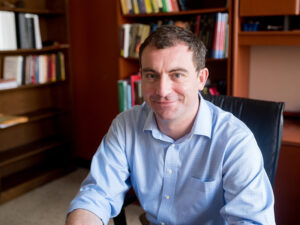
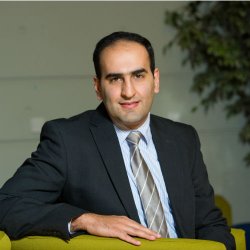
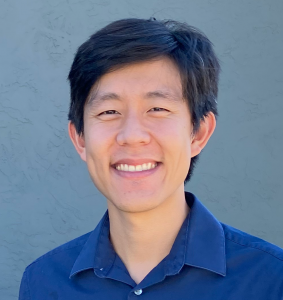
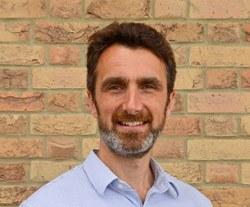
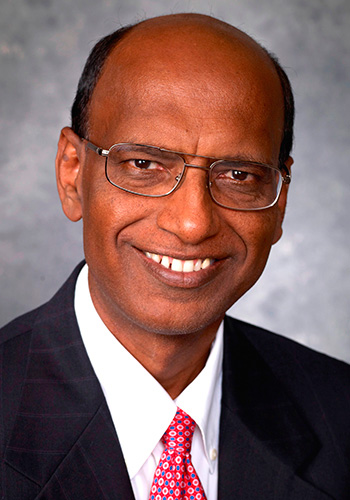
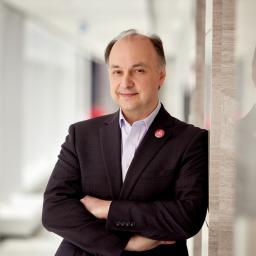
Michael Baldea is an Associate Professor in the Department of Chemical Engineering at the University of Texas at Austin . He holds a Ph.D. in Chemical Engineering from the University of Minnesota (2006), with prior degrees from 'Babeş-Bolyai' University in Romania (M.Sc. 2001, Diploma 2000). His research group develops theoretical and computational methods for Process and Energy Systems Engineering , focusing on integrated decision-making, performance optimization, and process intensification with industrial validation. Education: Ph.D., Chemical Engineering, University of Minnesota (2006) M.Sc., Interface Process Engineering, 'Babeş-Bolyai' University (2001) Diploma, Chemical Engineering, 'Babeş-Bolyai' University (2000) Research Thrusts: Integrated decision-making in chemical/energy supply chains Process performance monitoring and optimization Process integration and intensification Key applications include grid-responsive chemical plants, intensified distillation/column designs, and renewable energy integration for building systems. Scientific Awards: Frank A. Liddell, Jr. Fellowship NSF CAREER Award (2015-2020) Moncrief Grand Challenges Faculty Award (2014) AIChE Outstanding Young Researcher Award (2017) Implementation : His group has translated research into commercial tools through partnerships with industrial test beds and is working to integrate methods into commercial simulators. They explore predictive approaches for building energy management and strategic capital investment analysis in next-generation energy systems.
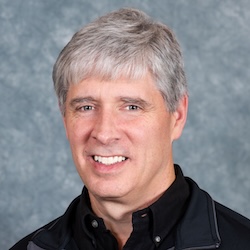
Timothy Abram is a Professor of Nuclear Fuel Technology at the University of Manchester, holding the Westinghouse Chair since 2008. He leads the U-Battery HTGR project and serves as Visiting Senior Research Fellow at NNL. His expertise spans nuclear fuels (MOX, ATF, TRISO) and reactor systems (gas-cooled, VHTR), with roles in IAEA, UK Government advisory boards, and the UK Nuclear Regulator’s committee. He directs the Rolls-Royce University Technology Centre for Nuclear Science and Engineering. Education: BSc and PhD (details unspecified). Research focuses on advanced nuclear fuels, thermal conductivity, and sustainable energy solutions, contributing to UN SDGs. Projects include molten salt reactor research (Radiochemical Facilities, DAWNMANTLE) and waste minimization strategies. Over 15 EU projects and 72 research outputs demonstrate his global impact. Awards: Not explicitly listed. Collaborations include international networks in nuclear innovation and material science. Advising roles include external examiner for Royal Navy and Cambridge MPhil programs.
Kevin M. Lynch is a Professor of Mechanical Engineering at Northwestern University's McCormick School of Engineering, where he also serves as Director of the Center for Robotics and Biosystems. His research spans multiple domains of robotics, with particular expertise in dynamics, motion planning, and feedback control of mechanical systems. Dr. Lynch received his Ph.D. in Robotics from Carnegie Mellon University in 1996, with a thesis on "Nonprehensile Robotic Manipulation: Controllability and Planning" under advisor Prof. Matthew T. Mason. He earned his B.S.E. with honors in Electrical Engineering from Princeton University in 1989. His research interests focus on robotics, particularly dynamics, motion planning, and feedback control of mechanical systems. He investigates mechanics, planning, and control of robotic manipulation (juggling, throwing, pushing, rolling, vibration, etc.) and locomotion. His work also explores self-organizing systems, particularly decentralized control of mobile sensor networks and swarm robotics, underactuated dynamic systems, and physical human-robot interaction with industrial applications. Recent research has expanded into bio-inspired active electrosense, underwater robotics, control and optimization for robot swarms, swarm shape control, and functional electric stimulation. Dr. Lynch's recent publications demonstrate a strong trend toward rehabilitation robotics and human-robot interaction, particularly in lower-limb exoskeletons for gait training and rehabilitation. His work bridges fundamental robotics research with practical applications in healthcare, showing increasing integration of swarm robotics principles with human-centered design. The publications also reveal continued strong contributions to fundamental robotics theory, particularly in swarm formation control and manipulation dynamics. George Saridis Leadership Award in Robotics and Automation (2022) Harashima Award for Innovative Technologies (2017) IEEE Fellow (2010) Charles Deering McCormick Professor of Teaching Excellence (2007-10) Society of Automotive Engineers Ralph R. Teetor Educational Award (2007) Early Career Award in Robotics and Automation (2001) McCormick School of Engineering and Applied Science Teacher Of The Year Award (1998-1999) NSF Career Award (1998) As Director of the Center for Robotics and Biosystems, Dr. Lynch oversees significant research grants and initiatives in robotics. He has made substantial contributions to robotics education through his "Modern Robotics" book and associated Coursera specialization, which has reached thousands of students worldwide. His professional service includes serving as Editor-in-Chief of IEEE Transactions on Robotics, where he oversaw a 90% increase in submissions during his tenure. Dr. Lynch leads research groups focusing on swarm robotics and rehabilitation robotics, with particular emphasis on the Center for Robotics and Biosystems at Northwestern University. His teams integrate expertise from mechanical engineering, electrical engineering, computer science, and rehabilitation medicine to develop innovative robotic systems for both industrial applications and healthcare solutions.
Massachusetts Institute of TechnologyUnited States
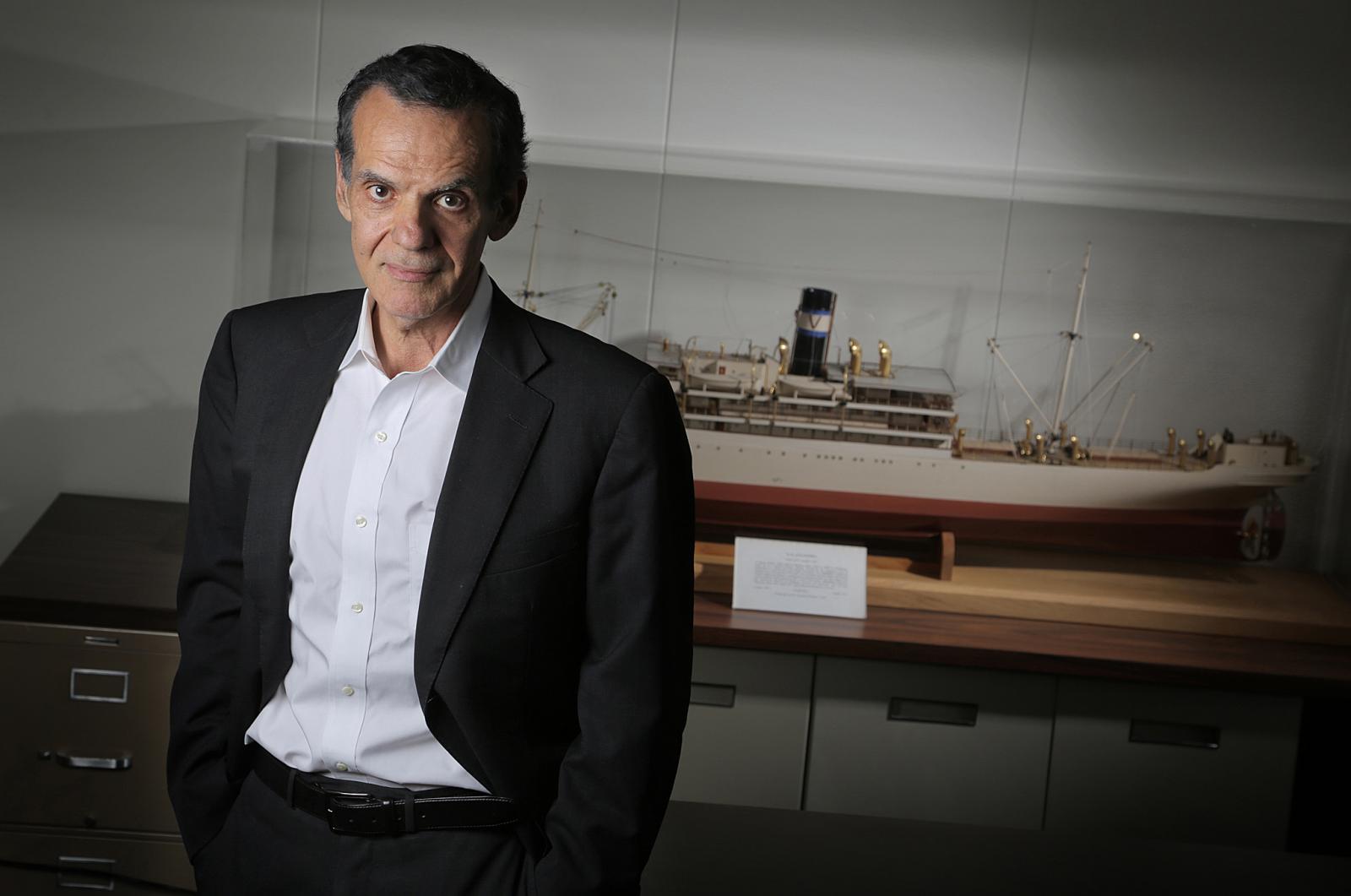
Professor Paul D. Sclavounos is a faculty member in the Department of Mechanical Engineering at the Massachusetts Institute of Technology (MIT). He earned his B.Sc. from the National Technical University of Athens in 1977 and Ph.D. from MIT in 1981. Research Interests : Marine hydrodynamics, stochastic control, offshore wind/wave/tidal/solar energy, machine learning applications, magnetohydrodynamic propulsion systems. Notable Contributions : Development of computational tools like SWAN and SML software suites; analysis of nonlinear wave dynamics; integration of AI/ML in marine hydrodynamics. Scientific Recognition : First Prize in National Mathematics Competition (1972), Georg Weinblum Memorial Lecturer (2010-2011), Best Paper Award at OMAE 2019, AEOLOS Scientific Award (2024). Leadership : Director of the Laboratory for Ship and Platform Flows since 1985; advisory roles for US Navy, US Department of Energy, and Det Norske Veritas (DNV). Teaching : Courses in Hydrodynamics (2.016), Advanced Fluid Mechanics (2.25), and Naval Architecture (2.701).
Associate Professor Wenhua Zhao is a globally recognized expert in offshore hydrodynamics and renewable energy technologies at The University of Queensland , School of Civil Engineering. With over 110 publications and 30 million AUD in secured research funding, his work bridges theoretical and practical advancements in marine engineering. Research focuses on Clean Energy , Artificial Intelligence , and Climate Change , specifically floating wind energy, floating solar, offshore aquaculture, and green hydrogen production. His 15 most recent articles (2024-2025) emphasize wave-structure interactions, gap resonance dynamics, and AI-driven wave prediction, published in top journals like Journal of Fluid Mechanics and Ocean Engineering . Scientific awards include the prestigious ARC Future Fellowship (2024-2028) and DECRA Fellowship (2019-2022) , recognizing his contributions to academia and industry. He teaches the 'Design of Offshore Energy Systems' course , training hundreds of students in coastal and ocean engineering, and serves as Deputy Editor for Ocean Engineering and Associate Editor for ASME's Journal of OMAE . Available for research supervision, Zhao actively collaborates with editorial boards of Applied Ocean Research and other Q1 journals.
Professor Tongming Zhou is a faculty member in the Department of Civil, Environmental and Mining Engineering at the School of Engineering, The University of Western Australia (UWA) . He serves as Director of the UWA Boundary Layer Wind Tunnel Laboratory and Program Chair for Civil Engineering , contributing to both academic leadership and industrial applications. His work bridges fundamental fluid mechanics with practical engineering challenges. Education : PhD in Fluid Mechanics from The University of Newcastle (1999) Teaching : Coordinates core units like CIVL2551, CIVL5551, and CIVL4402/CIVL3402 Hydraulics, emphasizing real-world application and industry collaboration Research Interests focus on: Suppression of vortex shedding and vortex-induced vibrations (VIV) in cylindrical structures Enhancement of VIV and galloping for renewable energy harvesting Wave resonance in floating LNG facilities Sloshing dynamics in tanks with Newtonian/non-Newtonian fluids Wind tunnel testing for industrial wind load analysis Recent Research Trends show interdisciplinary work combining experimental and numerical fluid dynamics, with applications to offshore engineering, maritime safety, and energy systems. His projects explore VIV in flexible risers, gas leakage effects on pipelines, and triboelectric nanogenerators for wind energy. Grants : ARC Grant (2019-2021): Development of novel inerter-based dampers ARC Grant (2013-2015): Local Scour below Offshore Pipelines ARC Grant (2011-2015): Vortex & Force Characteristics of Inclined Cylinders UWA Grant (2008): Control of Vortex Shedding with Helical Strakes Facilities Leadership : Upgraded UWA’s Boundary Layer Wind Tunnel , Hydraulic Laboratory Water Flume , and 6DOF Hexapod motion platform , acquiring advanced equipment like PIV systems and high-precision load cells.
Dr. Michael J Pekris is a Senior Lecturer in Mechanical Engineering Sciences at the University of Surrey, serving as Director of Employability within the School of Engineering. He holds a MEng and DPhil from the University of Oxford (2004), with a thesis on liquid crystal heat transfer in turbine blade cooling. His career includes R&D roles at Rolls-Royce, focusing on advanced seal technology and engine efficiency. He is a Chartered Engineer (CEng), Fellow of the IMechE (2023), and Fellow of the Higher Education Academy (FHEA). His research spans sustainable aviation, fluid dynamics, and heat transfer, with a focus on brush seals, hydrogen-fueled aircraft, and transcritical CO2 systems. He leads the Surrey Aerothermal Test Facility (SATF) and collaborates on projects like the Surrey Hydrogen Aircraft Performance Evaluator (SHAPE). He also serves as IMechE Academic Liaison Officer and Royal Academy of Engineering Visiting Professor Scheme Champion. Research interests include environmental technologies for aero-engine seals, sustainable aviation (electric/hydrogen), fluid dynamics, thermodynamic cycles, and rotating machinery. His work addresses energy efficiency, waste heat recovery, and low-emission propulsion systems. Notable contributions include Rolls-Royce Innovation Award (2013) and patents on seal technology. He actively engages in professional development initiatives and industry-academia partnerships. Publications emphasize seal dynamics, CFD modeling, and thermal management. Recent work explores hydrogen-fueled aircraft viability and CO2-based power systems. Collaborations involve Rolls-Royce, ASME Turbo Expo, and Surrey’s interdisciplinary engineering teams. His academic roles include teaching Structural Vibrations and Engineering Management, and advising the Professional Training Year module.
University of Illinois Urbana-ChampaignUnited States
Justin Yim is an Assistant Professor at the Department of Mechanical Science and Engineering at the University of Illinois Urbana-Champaign (UIUC), where he runs the Novel Mobile Robots Lab (NMbL). His research focuses on enabling high-performance locomotion in robots through concurrent design of mechanisms and controllers, inspired by biological systems. He previously earned his PhD in Electrical Engineering from UC Berkeley (2020) and dual BS degrees in Mechanical Engineering and Applied Mechanics/Electrical Engineering from the University of Pennsylvania (2015), followed by a postdoctoral researcher role at Carnegie Mellon University (2020-2022). PhD, Electrical Engineering, University of California, Berkeley (2020) MSE, Robotics, University of Pennsylvania (2015) BSE, Mechanical Engineering and Applied Mechanics/Electrical Engineering, University of Pennsylvania (2015) His research explores legged robot design, bioinspired robotics, and locomotion dynamics, with a focus on overcoming terrain challenges through minimalist mechanical systems and control strategies. Recent work emphasizes squirrel-inspired jumping and landing mechanics, programmable substrates for locomotion studies, and energy-efficient robot mobility. Selected article trends highlight innovations in monopedal hopping with series-elastic actuators, bioinspired balance control, underactuated bipedal walkers, and cooperative cable-driven modular robots. His work bridges theoretical insights with practical applications in extreme-terrain mobility. NSF CAREER Award (2025): 'Extreme Robot Walking: Speed, Agility, and Efficiency via Reduced Degrees of Freedom' NASA Innovative Advanced Concepts Fellow (2025) Justin Yim actively mentors graduate students and leads research projects in the NMbL lab, which develops robots capable of walking, hopping, and rolling in complex environments. Recent lab achievements include a Best Demo award at the 2nd Unconventional Robots Workshop (2025) and awards for outstanding locomotion papers. He teaches courses such as ME 370 Mechanical Design I and SE 422 (ME 446, ECE 489) Robot Dynamics and Control.
Professor Howard Stone is a faculty member at the University of Cambridge, affiliated with the Department of Materials Science and Metallurgy. He has progressed through academic ranks, including Professor of Metallurgy (2021), Reader in Metallurgy (2017), and Lecturer in Metallurgy (2012). PhD (University of Cambridge, 2000) MA (University of Cambridge, 1995) His research focuses on metallurgy and materials science , particularly Nickel-Based Superalloys , High-Entropy Alloys , and Titanium Alloys . Key areas include microstructural evolution under thermal stress, oxidation resistance, and additive manufacturing techniques like laser powder bed fusion. Professor Stone’s recent publications highlight trends in superalloy design , phase stability , and additive manufacturing . Topics include gamma prime precipitation, lattice misfit analysis, and oxidation behavior modification. He is associated with the Rolls-Royce UTC (University Technology Centre) at Cambridge, which focuses on advanced metallurgical research and industrial collaboration.
Michele Ciavarella is a Full Professor at the Polytechnic University of Bari (Politecnico di Bari) in the Department of Mechanics, Mathematics & Management (DMMM). His research focuses on contact mechanics, adhesion, friction, and viscoelastic materials, with applications in mechanical design, wear analysis, and surface topography. His work includes theoretical modeling, experimental testing, and computational approaches to understanding interactions between materials under mechanical stress. He can be contacted at michele.ciavarella@poliba.it.
Gary W. Cox is the William Bennett Munro Professor of Political Science at Stanford University. He specializes in American Politics, Comparative Politics, and Political Methodology, with a focus on electoral systems, legislative behavior, and historical political economy. His work examines how institutional frameworks shape political competition, representation, and governance across historical and comparative contexts. Education: Ph.D. in Social Science, California Institute of Technology (1982) B.S. in History, California Institute of Technology (1978) Research Interests: Cox investigates the interplay between electoral institutions and political outcomes, including the effects of proportional representation on voter mobilization, the historical evolution of legislative power, and the political economy of suffrage reform. His research combines quantitative and historical methods to analyze topics like party systems, legislative agendas, and the long-term impacts of constitutional design. Key Contributions: Cox’s seminal works include The Efficient Secret (1983), Legislative Leviathan (1999), and Marketing Sovereign Promises (2016), which have won multiple awards. His recent articles address gender representation in parliamentary systems, the role of warfare in state formation, and the strategic dynamics of electoral teams. Awards & Honors: Guggenheim Fellow Elected to the American Academy of Arts and Sciences (1996) Elected to the National Academy of Sciences (2005) Recipient of major prizes including the Samuel H. Beer Dissertation Prize (1983) and the George H. Hallett Award (2003, 2007) Advising & Grants: Cox has advised numerous graduate students and has secured grants for research on electoral reform, legislative agendas, and historical political economy. His work often bridges theoretical and empirical analyses of political institutions. Labs/Teams: While no specific lab is named, Cox collaborates widely on projects analyzing legislative behavior and electoral systems through interdisciplinary teams.
Yang Kaidi is an Assistant Professor in the Department of Civil and Environmental Engineering at the National University of Singapore (NUS), affiliated with the Institute of Operations Research and Analytics (IORA) within NUS’s Smart Nation Research Cluster. Their research focuses on intelligent transportation systems, traffic control, shared mobility, and machine learning applications in mobility. Key interests include connected and automated vehicles, privacy-preserving data sharing, and reinforcement learning for traffic optimization. Research highlights include developing parameter privacy-preserving strategies for mixed-autonomy platoons, enhancing safety in autonomous driving via transformer-based trajectory prediction, and optimizing traffic signal timing using connected vehicle data. Their work bridges theoretical control systems with practical urban mobility challenges, addressing issues like ridesourcing-public transit integration, modular transit service operations, and weaving section management in mixed traffic environments. Recent publications emphasize real-time control frameworks, cooperative safety mechanisms, and data-driven solutions for urban and highway systems. Yang’s interdisciplinary approach integrates robotics, optimization, and cybersecurity to advance smart transportation infrastructure. Their contributions are particularly notable in privacy-preserving techniques for traffic state estimation and federated learning applications. While no specific awards or grants are listed, their research aligns with Singapore’s Smart Nation initiatives through IORA’s strategic focus areas. Yang’s work has implications for future traffic management systems, autonomous vehicle coordination, and sustainable urban mobility solutions.
Dr. Kaushik Rajashekara is a Distinguished Professor of Engineering at the University of Houston, affiliated with the Department of Electrical & Computer Engineering. He holds leadership roles in academic and industry research, including prior positions at the University of Texas at Dallas, Rolls-Royce, and Delphi Corporation. His expertise spans power electronics, transportation electrification, and renewable energy systems. Education: MBA, Indiana Wesleyan University, 1992 Ph.D., M.S., B.S. in Electrical Engineering, Indian Institute of Science, 1984, 1977, 1974 B.S. in Science & Maths, Bangalore University, 1971 Research Interests: Power electronics and drive systems, subsea electrical systems, electric/hybrid vehicles, aircraft electrification, renewable energy, and microgrids. His work emphasizes sustainable energy solutions and advanced propulsion technologies. Awards: 2022 Global Energy Prize (highest international energy award) Member of U.S. National Academy of Engineering (2012) IEEE Medal for Environmental and Safety Technologies (2021) Multiple fellowships from IEEE, NAI, and SAE Grants & Advising: Extensive industry collaborations, including roles as Chief Technologist at Rolls-Royce and Chief Scientist at Delphi. His research focuses on cutting-edge technologies like flying cars and subsea power systems. Labs/Teams: Active in the PEMSEC lab at UH, advancing power electronics and energy systems. Collaborates globally on projects like offshore renewable energy integration and aircraft electrification.
Massachusetts Institute of TechnologyUnited States
Vladimir Bulović is a Professor of Electrical Engineering and Computer Science at MIT, holding the Fariborz Maseeh Chair in Emerging Technology. He serves as Founding Director of MIT.nano, a 20,000 m² nanofabrication and prototyping facility. His research focuses on nanoscale materials, renewable energy, and optoelectronics, with emphasis on scalable solar technologies and printed electronics. Education: B.S.E. and Ph.D. in Electrical Engineering from Princeton University. Research Interests: Development of thin-film photovoltaics (perovskites, organic PVs), energy-efficient optoelectronics, and advanced manufacturing techniques. His work bridges nanotechnology with real-world applications, such as transparent solar cells and flexible electronics. Key innovations include vapor transport deposition (VTD) for perovskite solar cells and scalable printed electronics. Publications: Over 250 articles (45,000+ citations) focus on perovskite materials, semiconductor fabrication, and optoelectronic device optimization. Recent trends emphasize machine learning-driven materials design and stability enhancement strategies for photovoltaics. Awards: MacVicar Fellowship (2018), Top 1% Highly Cited Researcher (2018) Advising & Grants: Co-founded Ubiquitous Energy, Kateeva, and QD Vision. Led projects on grid-edge solar solutions and MIT-Eni Solar Frontiers Center. Served as Associate Dean for Innovation and Director of MIT’s Innovation Initiative (2013–2018). Labs/Teams: Directs the Organic and Nanostructured Electronics Lab and oversees MIT.nano’s interdisciplinary research programs.
Salvador Barraza-Lopez is a Professor of Physics at the University of Arkansas' College of Arts & Sciences. A theoretical physicist specializing in 2D materials, he developed discrete differential geometry approaches for strain effects in graphene and pioneered 2D ferroelectric research. As a DOE Early Career Awardee (2016) and MonArk NSF Quantum Foundry co-founder, he leads interdisciplinary collaborations across physics, materials science, and mathematics. PhD in Physics from University of Illinois-Urbana Champaign (2006) Postdoctoral work at Virginia Tech and Georgia Tech Established theory of structural transformations in 2D ferroelectrics His research spans quantum phase transitions in 2D systems, strain engineering, and topological materials. Three major review articles in Reports on Progress in Physics (2017, 2023) and Reviews of Modern Physics (2021) synthesize his work on mechanical, electronic, and optical properties of strained 2D materials. Recent publications focus on winding Berry dipoles in strained graphene, size-dependent ferroelectric transitions in homobilayers, and symmetry-breaking effects in moiré superlattices. Collaborations with Kai Chang (Beijing) and Stuart Parkin (MPI-Halle) demonstrate international impact. Awards: DOE Early Career Award (2016) Outstanding Mentor Recognition (2013) Young Investigator of the Year (2013) Mentored 2 NSF Graduate Fellows (Erin Farmer, Joseph Roll) and 3 Goldwater Scholars. Current group includes 2 undergraduates, 3 PhD students, and 2 postdocs. His theoretical frameworks enabled experimental collaborations with DOE labs and Max Planck Institute, securing $0.5M for Arkansas supercomputer upgrades (2024).