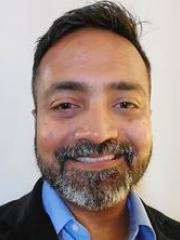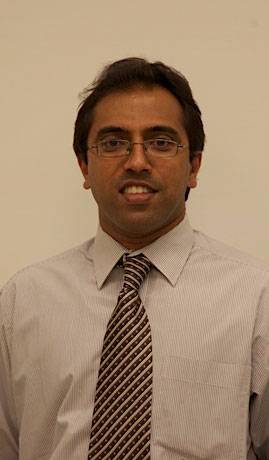
Sanjay JayaramView profile
Associate Professor
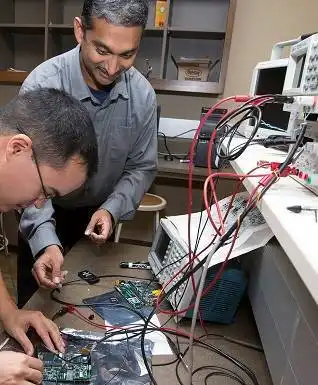
Sanjay Jayaram is an Associate Professor in the Department of Aerospace and Mechanical Engineering at Saint Louis University's School of Science and Engineering, where he has served since 2005 and became Aerospace Engineering Coordinator in 2013. His academic foundation includes a Ph.D. and M.S. in Mechanical Engineering from the University of Central Florida and a B.S. from R.V. College of Engineering in India. His educational background: Ph.D. Mechanical Engineering, University of Central Florida M.S. Mechanical Engineering, University of Central Florida B.S. Mechanical Engineering, R.V. College of Engineering, Bangalore, India Dr. Jayaram's research pioneers bio-inspired aerospace systems through five interconnected thrusts: (1) Bio-AIMS for fluid-structure-control morphing using shape memory alloys; (2) Tubercle-inspired vertical tail drag reduction via biomimetic flow control; (3) Intelligent Learning Control (ILC) for autonomous morphing wing systems; (4) Multirotor drone turbulence mitigation and noise reduction for Urban Air Mobility; and (5) Distributed guidance/navigation for multi-UAV teams. His work integrates wind tunnel experimentation , computational fluid dynamics , and adaptive control theory to solve real-world aerospace challenges. Analysis of his recent publications reveals dual emphasis on cutting-edge aerospace research (morphing structures, drone stability, spacecraft systems) and transformative engineering education , with 60% of his 2013-2025 publications focusing on student-led projects in rocketry, satellite design, and curriculum innovation. His publications span spacecraft engineering, control systems, and sustainable propulsion technologies. As an educator, Dr. Jayaram mentors multiple student spacecraft teams including SLUCube, BillikenSat, and high-powered rocket projects for Spaceport America Cup. He serves as Treasurer for the ASEE Aerospace Division and Committee Chair for the AIAA/ASEE Leland Atwood Awards Committee, demonstrating leadership in aerospace education communities. His laboratory infrastructure supports wind tunnel testing for bio-inspired morphing structures, drone aerodynamics characterization, and full spacecraft integration/test facilities for student satellite programs, enabling hands-on research from concept to flight validation.