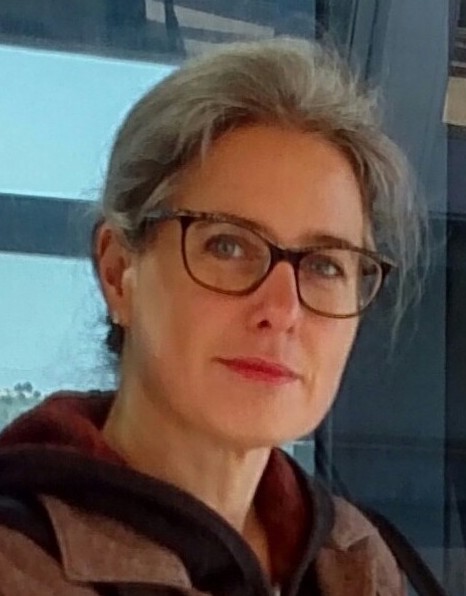
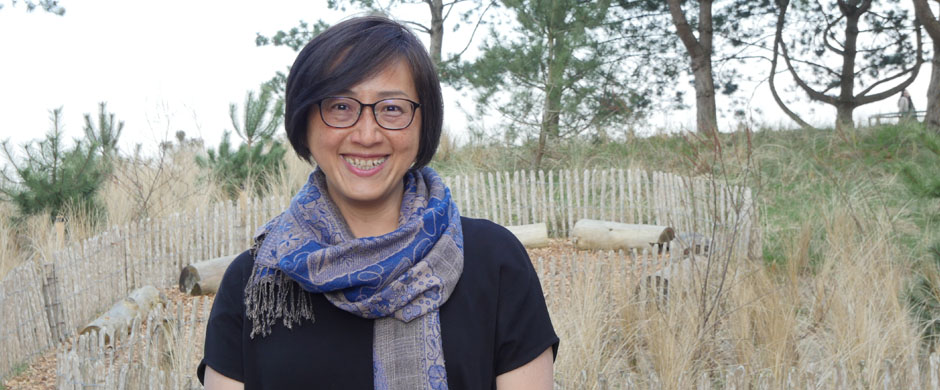
Dr. Edyta Chlebowska is an Assistant Professor at the Cyprian Norwid Research Center, John Paul II Catholic University of Lublin. Specializing in the visual art and literary legacy of Cyprian Norwid, she explores intersections between Polish Romanticism, art history, and cultural studies. Her work extends to album art analysis and interdisciplinary connections with music (e.g., Pink Floyd, Czesław Niemen). Her research focuses on Norwid's self-portraits, eschatological themes in his drawings, and comparative studies with 19th-century Warsaw painting. She reconstructs lost artworks, documents private collections (e.g., Konstancja Górska, Victor Gomulicki), and examines Norwid's reception in Florence and Odessa. Key projects include translating Studia Norwidiana and critical editing of Norwid's complete works. As editor-in-chief of multiple On Cyprian Norwid. Studies and Essays volumes and organizer of conferences like Niemen Non Stop and Colloquia Norwidiana , she bridges academic rigor with public engagement. Her publications span peer-reviewed books, journal articles, and popular science pieces, emphasizing Norwid's unpublished works and symbolic programs.
Timothy Hampton is a Professor of French and Comparative Literature at the University of California, Berkeley , and serves as Director of the Doreen B. Townsend Center for the Humanities . He was previously the Director of the Designated Emphasis in Renaissance and Early Modern Studies and co-chairs the Democracy, Free Speech, and Values study group. His research explores intersections of literature and politics , poetry and song , and the history of emotion and diplomacy in Renaissance and early modern periods. Recent projects include a 2022 France-Berkeley Fund grant on poetry translation and a Diebold Foundation grant for interdisciplinary cultural studies. Notable publications include Bob Dylan: How the Songs Work (2019) and Cheerfulness: A Literary and Cultural History (2022). Upcoming works address premodern colonialism and American education through memoir and cultural critique. His scholarship appears in MLN , Critical Inquiry , and public venues like Salon and Aeon/Psyche .
Jan Herbst is a Professor of Music at the University of Huddersfield and Director of the Centre for Research in Music and its Technologies. His academic journey includes multiple doctorates (PhD, Dr. habil.) from Leuphana University Lüneburg and research expertise in popular music studies, music production, and systematic musicology. He leads AHRC-funded projects such as 'Heaviness in Metal Music Production' and 'Songwriting Camps in the 21st Century.' His work bridges practical music production and theoretical research, with over 80 publications including books like The Cambridge Companion to Metal Music and Heaviness in Metal Music Production . Herbst’s research focuses on metal music aesthetics, record production techniques, and the cultural dimensions of music technology. He has held roles at German and Swiss universities, including teaching guitar performance and music production. His editorial roles include the Cambridge Companions series and journals like Metal Music Studies . Current projects explore blockchain in music, gear acquisition syndrome, and extreme metal vocal techniques. His academic affiliations include the IASPM UK & I executive committee and editorial boards for major musicology publications. Herbst actively engages with industry through collaborations with producers and performers, maintaining a balance between academic rigor and practical music creation.
Timothy Bewes is the Owen F. Walker Professor of Humanities and Professor of English at Brown University , where he has taught since 2004. His research bridges contemporary fiction , poststructuralist theory , Marxist literary analysis , and postcolonial studies , with a focus on the politics and ethics of literary form . He has held fellowships at the Pembroke Center and Cogut Institute for the Humanities , and co-edits the Film-Thinking series. Education : DPhil and MA from University of Sussex , BA from University of North London . Bewes' scholarship interrogates the ontological status of fiction and the materiality of literary works , as seen in his National Book Critics Circle Award-winning book Free Indirect: The Novel in a Postfictional Age (2022). His recent articles explore intersections between novel theory , Black studies , and Deleuzean philosophy , emphasizing repetition , dialogicality , and anti-representational frameworks . Notable awards include the L. S. Dembo Prize (2015) and Chesler-Mallow Senior Faculty Research Fellowship (2012-13). He teaches courses such as The Terrible Century , Capitalism & its Metamorphoses , and Bakhtin and the Political Present .
Jason M. LaBelle is a Professor of Anthropology at Colorado State University (CSU), affiliated with the College of Liberal Arts. He serves as Director of the Center for Mountain and Plains Archaeology (CMPA) and Curator of the Archaeological Repository of CSU (AR-CSU). His research focuses on hunter-gatherer societies, particularly in the Intermountain West, emphasizing subsistence, mobility, and pre/post-contact Native American cultures. His work spans environments from the Great Plains to high alpine regions, with specialties in Clovis/Folsom cultures, communal hunting practices, and lithic technology. LaBelle teaches courses in archaeology, lithic technology, and public archaeology. He oversees CMPA projects funded by federal agencies like the National Park Service and the Bureau of Land Management, supporting student training in fieldwork, lab analysis (lithics, faunal studies), and report writing. His lab houses extensive collections from Colorado’s South Platte and Colorado River Basins, including alpine artifacts. He actively engages with tribal partners and the public through outreach, conferences, and NAGPRA coordination. LaBelle’s recent research includes studies on lithic quarries, ice patch archaeology, and Bayesian chronology modeling. His publications address prehistoric mobility, site chronology, and cultural resource management. He values interdisciplinary collaboration and student mentorship, aiming to bridge academic and applied archaeology.
Yehuda Ben-Zion is a Professor of Earth Sciences at the University of Southern California (USC), affiliated with the Dornsife College of Letters, Arts and Sciences. He serves as Director of the Statewide California Earthquake Center (SCEC). His expertise lies in geophysics and seismology, with a focus on earthquake mechanics, fault dynamics, and seismic hazard assessment. He holds a Ph.D. in Geophysics and Seismology from USC (1990) and a B.S. in Geology and Physics from The Hebrew University of Jerusalem (1982). Research interests include physics of earthquakes and faults, high-resolution fault zone imaging, earthquake source properties, and dynamic rupture processes. Recent work emphasizes multi-scale modeling of rupture zones, seismic velocity monitoring using anthropogenic signals (e.g., train tremors), and probabilistic seismic hazard analysis frameworks like CyberShake. He leads projects such as Quakeworx, an open-source earthquake simulation platform, and investigates fault zone architecture in regions like the San Andreas, San Jacinto, and Marmara faults. His studies address critical questions about large earthquake mechanisms, ground motion prediction, and the interplay between tectonic stress and seismicity patterns. He has pioneered the use of dense seismic arrays and machine learning to analyze seismic data, advancing understanding of fault zone processes and their implications for hazard mitigation.
University of California, Los AngelesUnited States
Ali Mousavi is Assistant Professor of Iranian Archaeology in UCLA’s Department of Near Eastern Languages and Cultures and a core faculty member of the Cotsen Institute of Archaeology. A Berkeley PhD and former fellow of the Smithsonian, Maison de l’Orient and Global Heritage Fund, he has directed excavations and UNESCO World-Heritage projects at Pasargadae, Bam, Susa, Sultaniyeh and Turang Tepe and authored prize-winning volumes Ancient Iran from the Air and Persepolis: Discovery and Afterlife of a World Wonder . Education PhD, Near Eastern Studies (Archaeology), University of California, Berkeley (2005) MA, Archaeology, History and Languages of Old World Civilizations, Université Lyon II, France (1997) BA, Archaeology and Art History of Europe and the East Mediterranean, Université Lyon II, France (1996) Research interests span the archaeology and art history of Iran from the Neolithic to the early-20th century, with particular focus on Achaemenid and Sasanian monumental architecture, ancient irrigation (qanats), landscape archaeology, digital heritage, and the modern historiography of Iranian archaeology. His field projects integrate remote sensing, epigraphy, GIS and conservation science to investigate imperial capitals, rock-cut monuments and water-management systems across the Iranian plateau. Across more than 30 peer-reviewed articles and book chapters, Mousavi has re-examined dating criteria for Achaemenid stone monuments, analysed royal inscriptions as visual displays, traced medieval Persian pilgrims’ graffiti at ancient sites, and produced synthetic archaeological surveys of the Sasanian empire and the Central Alborz Iron-Age cultures. The corpus reflects a sustained engagement with primary field data, archival research and critical historiography of 19th- and 20th-century excavations. Selected honours Ehsan Yarshater Book Award (2014) Iranian Ministry of Culture World Book Award (2014) Leon Levy – Shelby White publication grant (2008) UNESCO award for World-Heritage nomination files (2003) Iran Heritage Foundation field-work award (2003) Guitty Azarpay Fellowship, UC Berkeley (2000-2003) IFRI Fellowship, Paris (1998) At UCLA he offers undergraduate courses “Archaeology of Iran” and “Ancient Cities of Iran (4000 BC-AD 1900)” and mentors graduate researchers in the Cotsen Institute. His grants and fellowships from NSF-equivalent European and American agencies underwrite both field seasons and publication of critical archaeological corpora, while his service on Iranian, UNESCO and international heritage boards continues to link scholarly output with heritage-management policy.
Dr. Simon A. Morrison is a Senior Lecturer in the Division of Communication, Screen & Performance within the Faculty of Arts, Humanities and Social Sciences at the University of Chester. He serves as Programme Leader for the Music Journalism degree, which he helped design, build and deliver from its first cohort in 2014. With 25 years of experience as a writer, broadcaster, and academic, Morrison brings extensive industry knowledge to his teaching and research, having worked as a music journalist reporting from locations worldwide including Beijing, Brazil, Moscow, and Marrakech. Dr. Morrison holds a PhD from the University of Leeds (completed 2018), an MA from the University of Manchester (1995-1997), and a BA Hons from the University of Manchester (1989-1992). Prior to his position at Chester, he worked as an Associate Lecturer at Manchester Metropolitan University (2012-2014) and as a Visiting Lecturer at Leeds University (2011-2013). His academic journey follows a substantial career in media where he presented TV for Rapture TV, hosted radio shows in Ibiza, produced and presented for Kiss Radio, and appeared on BBC Breakfast and BBC 5 Live. Dr. Morrison's research centers on the intersection of words and music , with particular focus on Popular Music , Musico-Literary Intermediality , and Electronic Dance Music Culture . His work explores how music subcultures, particularly rave and dance music scenes, are represented in literature and journalism. He examines the connections between different countercultural movements, notably drawing parallels between the Beat Generation writers and contemporary 'Chemical Generation' authors who write about club culture. His research also investigates the relationship between music journalism and subcultural movements across different historical periods. His recent publications reveal a clear trajectory connecting historical dance music developments across continents and eras. Morrison's work traces the evolution of electronic dance music from its American roots in Chicago and Detroit through its transatlantic journey to Europe and back again, examining how cultural exchange shaped musical innovation. His analyses of Pink Floyd demonstrate how rock bands interact with media landscapes, while his investigations of music journalism document the changing nature of music criticism in digital eras. The recurring theme across his scholarship is the examination of how subcultural experiences are translated into written form, whether through journalism, fiction, or academic analysis. Dr. Morrison actively supervises undergraduate dissertation projects and Negotiated Study production projects across all three years of undergraduate study. He has successfully supervised an MRes project to completion and examined PhDs (including one internal and two external, one being an Australian PhD by Artefact & Exegesis). He has served as an External Examiner for Music Journalism programs at Southampton Solent University (2016-2019) and BIMM London, Birmingham and Manchester (2016-2020). His teaching spans modules including Introduction to Journalism, Live Journalism, Dancing About Architecture: Popular Music Media, Histories and Technologies, The Cultural Politics of Music Journalism, The Politics of Social Media, Magazine Publishing and Music PR and Promotional Writing.
University of North Carolina at Chapel HillUnited States
Lauren Leve is an Associate Professor of Religious Studies and Director of Graduate Studies at the University of North Carolina at Chapel Hill. Her academic career centers on the intersection of religion, culture, and changing forms of life in contemporary Nepal and South Asia. Trained as an anthropologist, she examines how religious practices and subjectivities interact with broader political, economic, and social trends, particularly those associated with neoliberal globalization. Ph.D., Princeton University B.A., University of Chicago A.A., Simon's Rock of Bard College Professor Leve's research interests span ethnographic methods, the ethnography of religion, personhood, subjectivity, the anthropology of ethics, democracy, law, violence, international development, globalism, postcoloniality, and the religious landscapes of Nepal, South Asia, and Buddhist Southeast Asia. Her work explores how religious practices mediate and are mediated by political and economic transformations, with particular attention to how human agents use religion to reflect on their world and aspirations. Her scholarly output reveals a consistent focus on Theravada Buddhism's revival in Nepal, particularly among Newar communities, and how this religious movement intersects with democratic reforms, economic liberalization, and changing forms of personhood. Her publications demonstrate expertise in both ethnographic methodology and theoretical contributions to understanding modern religious subjectivity, with a special emphasis on how global processes are reflected and reflected upon by Nepali Buddhists. James Fisher Prize for First Books on the Himalayan Region (2018) UNC FIRE grant (2016) Carolina Women's Center, Faculty Fellow (2013-14) Institute for Arts and Humanities, Faculty Fellow (2007) Harry Frank Guggenheim Foundation, Research Award (2004) Program in Agrarian Studies, Yale University, Program Fellow (2004-2005) As Director of Graduate Studies in Religious Studies, Professor Leve mentors graduate students and teaches courses on ethnographic methodologies, Theravada Buddhism, Himalayan Buddhism, and topical theories reflecting her research interests. She has consulted on research studies in international development, focusing on women's literacy and empowerment, and provides expert witness services in US courts. Her current research projects explore the globalization of Buddhist meditation through the Goenka tradition and follow rural women's experiences through development projects, Maoist insurrection, and conversion to Christianity.
Michele Matteini serves as Associate Professor in the Department of Art History at New York University's College of Arts and Science, specializing in Late Imperial Chinese painting and material culture (ca. 1400-1800) with focus on Qing dynasty antiquarianism, collecting practices, and eighteenth-century transnational artistic exchanges. His academic credentials include: Ph.D. (2012) in History of Art from the Institute of Fine Arts M.A. (2004) in History of Art from New York University B.A. (2000) summa cum laude from the University of Venice, Ca’ Foscari Research interests encompass Late Imperial Chinese painting, antiquarianism, collecting culture, Qing history, urban culture, inter-Asian artistic exchanges, eighteenth-century globalism, craft traditions, embodied knowledge, and art historical methodology. His interdisciplinary approach bridges anthropology, religious studies, and art history to examine material culture across East Asia. Recent publications reveal consistent thematic focus on eighteenth-century material practices, analyzing antiquarian objects, historical figure cults, and cross-cultural artistic production. Works integrate art historical analysis with anthropological perspectives on topics like rock collecting, filial piety, and sacred materiality, demonstrating how objects functioned within social and global contexts. His scholarly recognition includes: The Andrew Mellon Foundation Fellowship for Assistant Professors, Institute for Advanced Study, Princeton (2013-2014) Ittleson Fellowship, Center for Advanced Study in the Visual Arts, National Gallery of Art (2007-2009) Panofsky Distinguished Fellowship, Institute of Fine Arts, New York University (2002-2007) Matteini's research has been supported by major fellowships from the Andrew W. Mellon Foundation and National Gallery of Art. While current advising activities and grant projects beyond these fellowships are not detailed in available sources, his extensive publication record indicates sustained scholarly productivity focused on East Asian material culture.
Claudia Berger is a Visiting Assistant Professor at the School of Information, Pratt Institute, and serves as the Digital Humanities Librarian at Sarah Lawrence College. They are actively engaged in digital scholarship, critical making, and interdisciplinary research at the intersection of libraries, technology, and the humanities. Education: MSLIS and Advanced Certificate in Digital Humanities, School of Information, Pratt Institute MA in Classics & Ancient History, University of Exeter BA in Electronic Media & Art and Classics, Bard College at Simon’s Rock Their research focuses on innovative methodologies in digital humanities, particularly data physicalization, digital environmental humanities, and critical engagement with data through craft and tactile experiences. They explore how digital tools can be reimagined through embodied and inclusive practices, often integrating queer perspectives and ecological awareness into scholarly work. Their recent publications reflect a strong trend toward interdisciplinary making, environmental justice, and pedagogical innovation in library and information science. Themes include countermapping, plant-human relations, craft-based digital scholarship, and inclusive professional identity formation. Their work bridges technical practice with critical theory, emphasizing accessibility and material engagement. Professional Service: Editor, dh+lib and dh+lib Review Deputy Secretary, Association for Computers and the Humanities (ACH) Former Librarian, The Mellon Foundation (supporting research in higher learning, arts and culture, public knowledge, and humanities in place) Claudia Berger is deeply involved in mentoring and shaping the future of information professionals through curriculum analysis, editorial work, and collaborative projects. While no formal grants or advising relationships are listed, their leadership in digital humanities education and community-building initiatives demonstrates significant scholarly impact. They maintain an active public research presence through a Zotero repository on physical data visualization.
Radu Iovita is an Associate Professor in the Department of Anthropology at New York University. Previously, he held positions at the University of Tübingen (until 2023) and the Leibniz Research Institute for Archaeology in Germany. His research focuses on Paleolithic archaeology, human-environmental interactions, and stone tool technology, with a specific emphasis on the Eurasian loess steppe. He leads the EU-funded PALAEOSILKROAD project in Kazakhstan, investigating human dispersals during the Late Pleistocene. His Anthrotopography lab combines microscopic analysis of tool use and remote sensing to reconstruct past landscapes. Education: PhD in Anthropology (University of Pennsylvania, 2008), MPhil in Archaeology (University of Cambridge, 2002), AB in Anthropology (Harvard University, 2001). Key grants include an ERC Starting Grant (2017–2022). Research interests span lithic technology, experimental archaeology, and geoarchaeological methods. Recent work includes discoveries of Paleolithic sites in Kazakhstan, studies on Neanderthal adhesive use, and AI-driven analysis of use-wear patterns. Collaborations involve institutions like ETH Zurich and the University of Tübingen. He is actively involved in field projects in Central Asia and lab-based experimental studies.
Professor Asterios Bakolas is affiliated with the Department of Materials Science and Engineering at the School of Chemical Engineering, National Technical University of Athens (NTUA). His research focuses on materials science, cultural heritage conservation, and sustainable construction technologies. Key areas include the development of compatible restoration mortars for historic structures, analysis of traditional building materials, and application of non-destructive testing (NDT) techniques for heritage assessment. He has contributed to projects involving Hagia Sophia, the Parthenon, and Cretan architectural heritage. Research interests span materials characterization, composite materials, and environmental impact assessment of construction materials. Notable work includes studies on polychromy in ancient art, weathering phenomena in historic buildings, and integration of AI for material property prediction. His interdisciplinary approach combines chemistry, civil engineering, and digital humanities to address challenges in conservation and sustainable building practices. No scientific awards are explicitly listed, but his extensive publications reflect recognition in academic circles. Advising and grants are not detailed here, though his involvement in restoration projects implies active collaboration with funding bodies. He is part of the School’s research groups focused on materials science and heritage preservation.
Dr Christian Luczanits serves as the David L. Snellgrove Senior Lecturer in Tibetan and Buddhist Art at SOAS University of London, where he also acts as Department Recruitment, Admissions and Marketing Convenor. He previously held research positions at the University of Vienna, Austrian Academy of Sciences, and Lumbini International Research Institute, followed by visiting professorships at UC Berkeley , Free University Berlin, and Stanford University. Before academia, he was Senior Curator at the Rubin Museum of Art, New York. PhD in Tibetan and Buddhist Studies (University of Vienna) under the late Maurizio Taddei Specializes in early Buddhist art (1st-5th centuries) and early Tibetan Buddhist art (7th-15th centuries) Key research topics: Maitreya iconography , development of Mahāyāna and esoteric traditions, Tibetan artistic adaptation of Indian forms, and AHRC-funded monastery collections documentation in Mustang and Ladakh His recent publications analyze transcultural dynamics in Himalayan Buddhist heritage, including monastic collections, mandala symbolism, and artistic revival movements. He co-curated the Gandhara – The Buddhist Heritage of Pakistan exhibition at Bonn's Kunst- und Ausstellungshalle der Bundesrepublik Deutschland. PhD supervisees include: Udomluck Hoontrakul (Political Economy of Marginal Polities) Qianhui Lin (Bodhisattva Conceptualization in Gandhāra) Agneta Niklasson (Esoteric Buddhism in Swat-Gilgit-Kashmir sculpture) Dr Lesley S Pullen (Angkorian Divine Adornment) Kulamitra David Zukas (Rock-Cut Buddhist Monasteries)
Hsueh-man Shen is the Director of Masters Studies and Ehrenkranz Associate Professor in World Art at New York University’s Institute of Fine Arts. She holds a D.Phil. from Oxford University in Archaeology, an M.A. in Art History from National Taiwan University, and an LL.B. in Law from the same institution. Her research focuses on medieval Chinese art and archaeology, particularly how cross-cultural exchanges shaped artistic practices through translation, replication, and hybridization. She has curated major exhibitions such as Gilded Splendor: Treasures of China’s Liao Empire (2006) and contributed to the Cave Temples of Dunhuang project (2016), emphasizing Silk Road cultural networks. Her current book project explores maritime activities’ impact on Buddhist art during the 10th–14th centuries. Shen’s work bridges art history, archaeology, and material culture studies, addressing topics like relic deposits, shipwrecks, and cross-cultural curatorial practices. She has held prestigious fellowships, including the Leiden University Hulsewé-Waznieski Professorship (2019) and a Wissenschaftskolleg zu Berlin residency (2008–2009). Education: D.Phil., Archaeology, University of Oxford M.A., Art History, National Taiwan University LL.B., Law, National Taiwan University Her research interests include Buddhist art’s transformation across dynasties, the role of replication in devotion, and maritime trade’s influence on cultural boundaries. She teaches courses such as Colors in the Visual Culture of Medieval China and Shipwrecks and the ‘Other’ Silk Road , integrating theoretical and material perspectives. Shen’s awards reflect her global academic contributions, including the EURIAS Senior Fellowship (2018–2019) and Progress 100 Visiting Professorship at Kyushu University (2017). Her publications span exhibition catalogues, monographs like Authentic Replicas: Buddhist Art in Medieval China (2019), and peer-reviewed articles analyzing Silk Road networks, Liao dynasty funerary practices, and cross-cultural material exchanges.