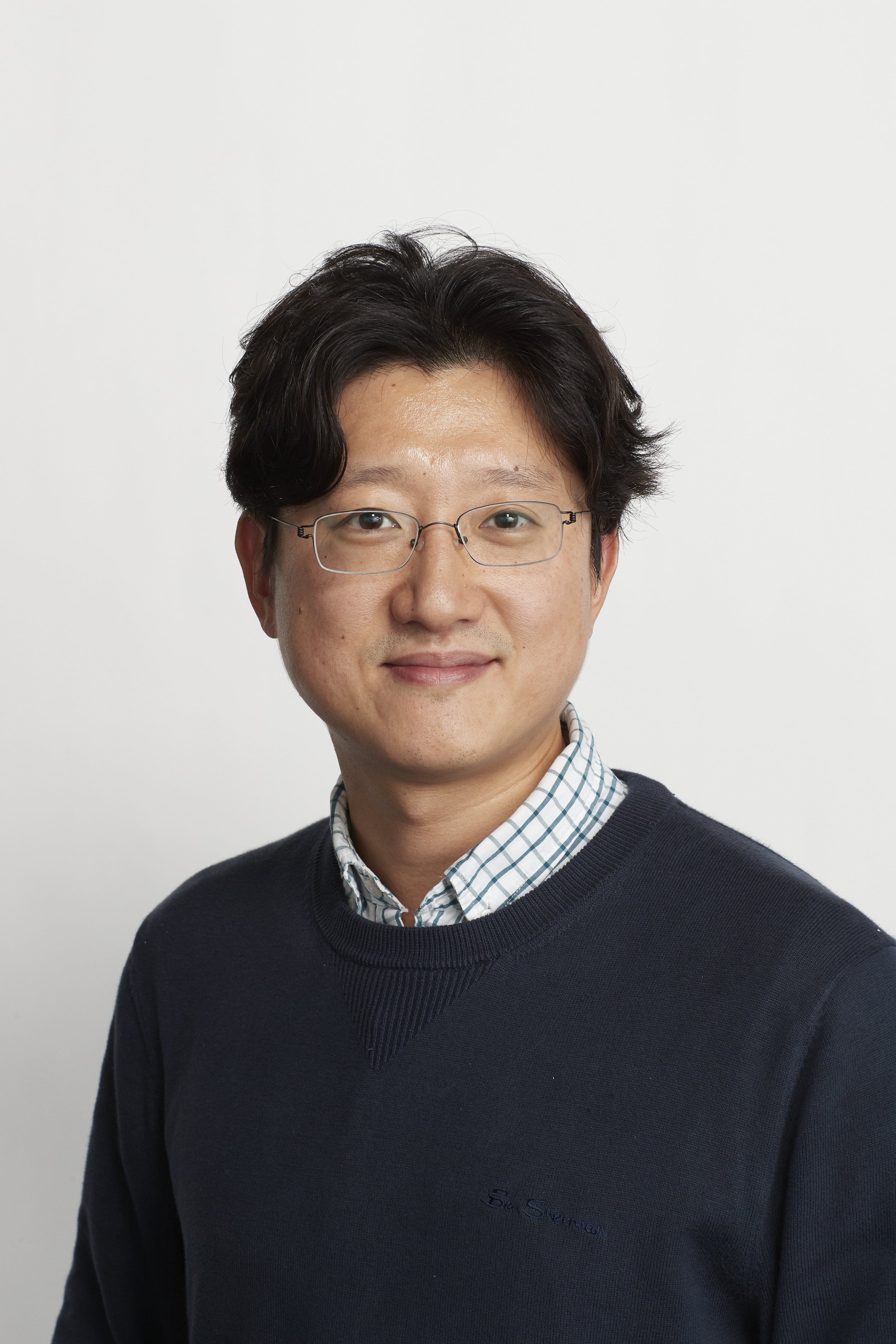
Ruben Loaiza-Maya is an Associate Professor (Research) in the Department of Econometrics and Business Statistics at Monash University. He holds a PhD in Econometrics from the University of Melbourne and an undergraduate degree in Economics from Universidad Nacional de Colombia (Medellin). His research focuses on Copula Modelling, Bayesian Estimation Methods, Time Series Analysis, and Macroeconomic/Financial Forecasting. Key contributions include advancements in variational inference, state space models, and robust forecasting techniques under model misspecification. He leads the active project 'Variational Inference for Intractable and Misspecified State Space Models' (2023–2026), funded as a Primary Chief Investigator. His work contributes to UN Sustainable Development Goals through methodological advancements in economic and financial analysis. Recent research emphasizes scalable Bayesian methods, hybrid variational approaches, and efficient computational techniques for high-dimensional models. Publications span prestigious journals like the International Journal of Forecasting, Journal of Econometrics, and Journal of Business and Economic Statistics. Notable collaborations include studies on copula-based time series forecasting and robust approximate Bayesian computation. His work bridges theoretical econometrics with practical applications in risk management and macroeconomic policy.
Associate Professor Seojeong Jay Lee is a faculty member at the UNSW Business School , specializing in Econometrics and Statistical Methods . Joining the University of New South Wales (UNSW) in 2012 after completing a PhD at the University of Wisconsin-Madison, they focus on developing robust statistical tools for economic models where traditional experimental controls are impractical. Research Interests Generalized Method of Moments (GMM) Instrumental Variables (IV) and Two-Stage Least Squares (2SLS) Robust inference under model misspecification Handling invalid/many/weak instruments in econometrics Heterogeneous treatment effects and clustered sampling analysis Grants & Funding Australian Research Council (ARC) Discovery Project DP210101440 (AUD 336,939), 2021-2023 Health@Business UNSW Grant (AUD 3,500), 2020 ARC Discovery Early Career Researcher Award (DECRA) DE170100787 (AUD 331,000), 2017-2019 UNSW Business School Special Research Grant (AUD 17,699), 2013-2014 Awards & Recognition Zellner Thesis Award (Honorable Mention), American Statistical Association, 2014 Non-Professorial Research Achievement Award, UNSW Business School, 2017 Academic Leadership Currently supervising PhD candidates Wei Tian and Fangzhou Yu in econometric theory and applications.
Professor Guoyin Li is a faculty member at the School of Mathematics & Statistics , University of New South Wales (UNSW Sydney). He holds a Ph.D. from The Chinese University of Hong Kong (2007) and has been at UNSW since 2011, currently serving as Professor and Research Director. Research Interests His work spans optimization , variational analysis , and multilinear algebra , with applications in robust optimization , structural engineering , and machine learning . He specializes in nonconvex nonsmooth optimization , tensor eigenvalue problems , and exact semi-definite programming relaxations . Recent Publications His articles focus on robust optimization for structural design, nonlinear approximation techniques, and conic programming for uncertain data. Key journals include Foundations of Computational Mathematics , Mathematical Programming , and Computer Methods in Applied Mechanics and Engineering . Awards and Grants Fellow of the Australian Mathematical Society (2023) 2022 AustMS Medal 2024 Marguerite Frank Award ARC Discovery Grants (2021-2023, 2025-2027) ARC Research Hub Project (2017-2021) Professional Roles He serves on editorial boards of SIAM Journal on Optimization , Optimization Letters , and Journal of Optimization Theory and Applications , and has delivered plenary lectures at international conferences in Austria, Spain, and Canada.
Associate Professor Seojeong Lee is a faculty member at the University of New South Wales (UNSW) Business School, School of Economics, specializing in advanced econometric theory. She joined UNSW in 2012 after completing her PhD at the University of Wisconsin-Madison and has established herself as a leading researcher in robust inference methods under complex data conditions. Her educational background includes: Ph.D. in Economics, University of Wisconsin-Madison (2008-2012) M.A. in Economics, Seoul National University (2006-2008) B.A. in Economics and Political Science (dual major), Seoul National University, summa cum laude (2000-2006, with military service 2002-2004) Professor Lee's research centers on developing theoretically rigorous methods for econometric inference, with primary focus on generalized method of moments (GMM), instrumental variables (IV), and two-stage least squares (2SLS) under model misspecification. Her work addresses critical challenges including invalid/many/weak instruments, heterogeneous treatment effects, and clustered sampling, contributing foundational advances to statistical inference in economics. Analysis of her recent publications reveals a strong trajectory in refining methods for many-instrument settings and misspecified models, with increasing emphasis on computational implementations (e.g., Stata packages) and applications to causal inference. Her work bridges theoretical econometrics with practical policy-relevant analysis. Her scientific achievements include: Australian Research Council DECRA Fellowship (2017-2019) UNSW Dean's Research Fellowship (2020-2022) Zellner Thesis Award Honorable Mention from American Statistical Association (2014) Multiple competitive UNSW research awards Professor Lee actively supervises PhD candidates Wei Tian and Fangzhou Yu, and has secured over AUD 700,000 in research funding including ARC Discovery Projects. She teaches undergraduate and postgraduate econometrics courses, integrating her research into pedagogy. Her ongoing work continues to push boundaries in robust econometric methodology for modern data challenges.
Professor Matthew Simpson is a leading figure in applied mathematics at the School of Mathematical Sciences, Faculty of Science, Queensland University of Technology (QUT). He holds the position of Professor of Applied Mathematics and is an Australian Research Council (ARC) Future Fellow, reflecting his sustained research excellence. His work bridges mathematical theory and biological applications, particularly in cell migration, tissue invasion, and multiscale modeling. BE (Environmental) Honours 1, University of Newcastle (1995–1998) PhD (with Distinction), Environmental Engineering, University of Western Australia (2000–2003) Research Fellow, Department of Mathematics and Statistics, University of Melbourne (2003–2006) ARC Postdoctoral Fellow, University of Melbourne (2006–2009) Lecturer (2010–2011) and Senior Lecturer (2011–2013), QUT Associate Professor (2013–2014), QUT Professor and ARC Future Fellow (2014–present), QUT Matthew Simpson’s research focuses on mathematical and computational modeling of biological systems , particularly collective cell motion, diffusion processes, and reaction-diffusion dynamics. His interests span multiscale modeling , random walk processes , cell biology , and numerical and computational mathematics . He develops and analyzes models to understand phenomena such as wound healing, cancer progression, and tissue engineering. His recent publications (2023–2025) demonstrate a strong trend toward integrating data-driven modeling , likelihood-based inference , and equation learning with traditional mechanistic models. These works emphasize parameter identifiability , uncertainty quantification , and prediction robustness in biological contexts. Themes include sharp-fronted wave propagation, mechanical cell interactions, tumor spheroid formation, and generalized diffusivity in food drying, showcasing the breadth and depth of his modeling expertise. Among his key accolades are: J.H. Michell Medal (2012) – Awarded by ANZIAM for distinguished research by an early-career applied mathematician in Australia and New Zealand. ARC Future Fellowship (2013–2017) – For the project 'New data-driven mathematical models of collective cell motion' (FT130100148). Professor Simpson has also played significant editorial and leadership roles, including: Executive Associate Editor, Journal of Engineering Mathematics Academic Editor, PLoS ONE Editorial Board Member, ANZIAM Journal Co-chair of the 2015 ANZIAM meeting He has supervised PhD students on topics such as moving boundary problems, first-passage times, stochastic simulations, and curvature-dependent growth in biological systems. His research projects have been funded by competitive Australian grants (ARC DP and FT schemes), including studies on 3D cell migration, ghrelin’s role in cell invasion, and epithelial-to-mesenchymal transition in cancer and wound healing. He is actively involved in developing computational tools for biological modeling and promoting best practices in scientific publishing.
Howard Bondell is a Professor of Statistical Data Science at the School of Mathematics and Statistics, University of Melbourne, since 2018. He serves as Head of School since 2021, Co-Director of the Melbourne Centre for Data Science, and holds an ARC Future Fellowship (2020-2024). Ph.D. in Statistics, Rutgers University (2005) Academic Career: North Carolina State University (2005-2018) His research focuses on model selection , robust estimation , regularisation , Bayesian methods , and uncertainty quantification in statistical and machine learning. His publications emphasize applications in regression analysis, quantile modeling, variable selection for high-dimensional data, and genetic data analysis. Scientific awards include: Fellow of the American Statistical Association (2017) ARC Future Fellow (2020-2024)
Professor Spiridon Ivanov Penev is a leading academic in the School of Mathematics and Statistics at the University of New South Wales. He holds a PhD in Mathematical Statistics from Humboldt University (Berlin, Germany) and has been affiliated with UNSW since 1992, progressing from Lecturer to Professor in 2019. His research spans wavelet methods, saddlepoint approximations, structural equation models, and stochastic risk analysis. Education: PhD in Mathematical Statistics, Humboldt University Current Affiliation: Department of Statistics, School of Mathematics and Statistics, UNSW His work focuses on advanced nonparametric techniques, including wavelet-based signal recovery with adaptive sampling rates, and robust inference in structural equation models. He has developed bias-corrected reliability measures for psychometric applications and contributed to stochastic optimization problems in finance and engineering. Recent publications highlight his expertise in semiparametric regression, robust portfolio optimization, and marine engineering applications using machine learning. Key trends include the use of Bregman divergence for shape-preserving estimation and Markov chain methods for climate model weighting. Scientific Awards: DAAD award Elected member of the International Statistical Institute (ISI) He has supervised numerous grants as Chief Investigator, including Australian Research Council projects and industry collaborations. Administrative roles include membership in the School of Mathematics and Statistics Executive Committee. Teaching duties span advanced statistical inference, multivariate analysis, and data science applications.
Professor Dinh Phung is the Head of the Department of Data Science & AI at Monash University. His research focuses on machine learning, deep learning, generative AI, and robust AI systems. He has authored over 250 publications, with applications in NLP, computer vision, digital health, and cybersecurity. Phung holds a PhD and BSc(Hons) in Computer Science from Curtin University. He leads major projects like 'Can Machines Unlearn?' and 'Trustworthy Generative AI', funded by the Australian Research Council and the Department of Defence. Education: Doctor of Philosophy, Computer Science, Curtin University (2005) Bachelor of Science (Honours), Computer Science, Curtin University (2001) Research Interests: Machine learning, deep learning, and generative models Optimal transport and Bayesian methods Robust and trustworthy AI Applications in digital health, cybersecurity, and autism research Key Projects (2023–2029): Can Machines Unlearn? (2025–2029): Safety in AI Trustworthy Generative AI (2024–2026): Foundation models Robust Machine Learning via Optimal Transport (2023–2025) Awards and Grants: Australian Research Council grants for AI safety and robustness Department of Defence funding for robust learning systems Collaborations: Global partnerships in AI ethics, cybersecurity, and healthcare. Active advisory roles, including with the Victorian Parliamentary Library.
David Frazier is a Professor in the Department of Econometrics & Business Statistics at Monash University, specializing in simulation-based inference, financial econometrics, and nonparametric/semiparametric modeling. He teaches ETC 1010: Data Modeling and Computing. His research focuses on robust statistical methods, Bayesian computation, and model misspecification. Key projects include 'Consequences of Model Misspecification in Approximate Bayesian Computation' (2020-2025) and 'Loss-based Bayesian Prediction' (2020-2025). Recent work addresses forecasting in misspecified models, weak identification in econometric frameworks, and robust variational Bayes techniques. His contributions align with UN Sustainable Development Goals related to economic and environmental sustainability. Projects: 4 active/funded projects with ARC, Brown University, and international collaborators. Publications: Over 37 peer-reviewed articles in journals like the Journal of the American Statistical Association and Journal of Econometrics. Research interests include advancing Bayesian methodologies for complex models, with applications in asset pricing and economic forecasting. His work emphasizes reliability in statistical inference under model uncertainty and computational efficiency.
Qian Li is a Lecturer in Computing at the School of Electrical Engineering, Computing and Mathematical Sciences (EECMS) at Curtin University, Australia. She holds a Ph.D. from the Chinese Academy of Sciences and M.Sc. degrees from Shandong University and the University of Luxembourg. Her research focuses on causal machine learning, topological data analysis, and optimal transport, with applications in computer vision, data science, and recommendation systems. She has published over 50 articles in top-tier venues like IEEE Transactions and ACM conferences. Education Ph.D., Chinese Academy of Science (CAS) MSc (Research), Shandong University MSc (Research), University of Luxembourg Research Interests Dr. Li explores causal reasoning for machine learning, leveraging mathematical tools like Riemannian geometry and optimal transport to address challenges in robustness and interpretability. Her work spans causal inference, counterfactual fairness, and explainable AI, with applications in healthcare, energy, and commerce. Recent projects include causal-based recommendation systems and topological data analysis techniques. Key Achievements Secured a $120k grant from China's National Natural Science Foundation (2020-2024). Lead researcher on AI-driven solar energy storage projects with UNSW and Providence Asset Group. Recipient of prestigious scholarships including Chinese National Graduate Scholarship (2016, top 1%). Grants & Students Current Ph.D. students include Xiangmeng Wang and Tri Dung Duong. She has supervised graduates like Yangyang Shu (Adelaide University Research Associate) and Jun Yin (UTS). Labs & Teams Leads research in causal AI and topological data analysis, collaborating with institutions like UTS and the University of Melbourne.
Dr. Leila Moslemi Naeni is a Senior Lecturer at the University of Technology Sydney (UTS), School of Built Environment, with a dual appointment in the Faculty of Design, Architecture and Building. She previously served as a Lecturer at UTS (2016-2018) and Sessional Lecturer at Curtin University (2015-2016). PhD in Computer Science (University of Newcastle, 2017) MSc in Industrial Engineering (Sharif University of Technology, 2007) BSc in Industrial Engineering (Iran University of Science and Technology, 2004) Her research focuses on project management under uncertainty, integrating fuzzy systems and mathematical modeling with applications in construction, ESG reporting, and disruptive technologies. She developed innovative methods for statistical control charts in project monitoring and leads research on leveraging blockchain and digital tools for sustainable infrastructure. Recent publications highlight her work on resource-constrained scheduling algorithms, ESG integration in megaprojects, and gamification in project management education. She serves as Review Editor for Frontiers in Environmental Science and on the Editorial Board of Smart and Sustainable Built Environment . 2016 PMI NSW Research Award 2022 Walt Lipke Award 2013 FEBE Postgraduate Research Prize As an active research mentor, she supervises PhD students in machine learning applications, disaster management technologies, and social infrastructure investments. Her teaching emphasizes simulation-based learning, collaborating with Oulo University (Finland) to quantify educational value.
Dr. Hongsheng Hu is currently a Lecturer in the School of Information and Physical Sciences at the University of Newcastle, Australia, specializing in the Data Science and Statistics focus area. Prior to this position, he served as a Postdoc Research Fellow at CSIRO's Data61 from October 2022 to August 2024. His academic journey includes a Doctor of Philosophy in Computer Systems Engineering from the University of Auckland in New Zealand, establishing his foundation in advanced computing systems. Dr. Hu's research centers on enhancing the trustworthiness of machine learning systems, with particular emphasis on identifying critical privacy vulnerabilities within machine learning models and developing robust defensive strategies. His work spans several key domains including adversarial machine learning (30% focus), statistical data science (30% focus), and data and information privacy (40% focus). He investigates membership inference attacks, machine unlearning techniques, and privacy-preserving mechanisms in federated learning environments. His research addresses fundamental challenges in AI security, exploring how machine learning models can be compromised through sophisticated privacy attacks and developing methods to mitigate these vulnerabilities while maintaining model utility. Analysis of Dr. Hu's publication record reveals a strong research trajectory focused on machine learning security and privacy. His work consistently addresses vulnerabilities in machine learning systems, particularly examining membership inference attacks, machine unlearning mechanisms, and privacy-preserving techniques in federated learning. The research spans top-tier venues including IEEE Security & Privacy, USENIX Security, NDSS, NeurIPS, IJCAI, AAAI, and WWW, demonstrating both technical depth and recognition by the research community. His publications show an evolving focus from foundational privacy attacks to developing more sophisticated unlearning techniques and robust defense mechanisms, with increasing citation counts indicating growing impact in the field. Active Program Committee member for USENIX Security, NDSS, ICLR, IJCAI, WWW, ICDM, ECML, and PKDD Invited reviewer for IEEE Transactions on Information Forensics and Security (TIFS), IEEE Transactions on Dependable and Secure Computing (TDSC), IEEE Transactions on Pattern Analysis and Machine Intelligence (IPAMI), and ACM Computing Surveys (CSUR) Dr. Hu currently serves as Course Coordinator for STAT6020 and STAT2020 Predictive Analytics at the University of Newcastle. As an academic supervisor, he co-supervises one PhD student working on 'Identifying and Mitigating Vulnerability in Recommender Systems' at Macquarie University. His research collaborations span multiple countries, with significant publication counts in Australia (18), China (12), New Zealand (10), and the United States (7), reflecting an active international research network focused on AI security challenges.
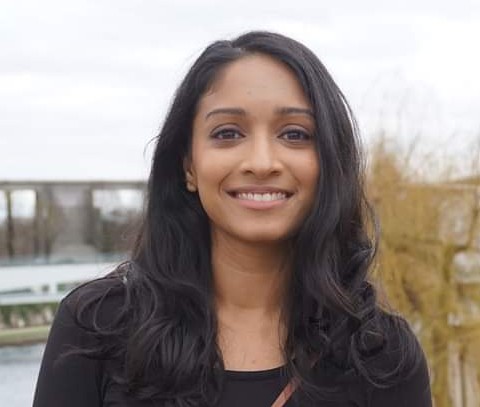
Dr. Sahani Pathiraja is a Lecturer (tenure track assistant professor) at UNSW Sydney , specializing in Data Science . Her research bridges mathematical and statistical foundations with practical applications in environmental and biomedical sciences. Research Focus : Sequential Bayesian inference, Monte Carlo methods, stochastic analysis of non-linear filtering, uncertainty quantification, and real-time parameter estimation. Current Projects : Co-investigator in the ARC Industrial Transformation Training Centre: Data Analytics for Resources and Environment (DARE) and the Next Generation Graduate Program (NGGP) in Sports Data Science and AI . Research Supervision : Dr. Pathiraja supervises PhD students in areas including: Bayesian inference Stochastic differential equations Data assimilation Non-linear filtering Scientific Collaborations : Her work intersects with environmental science, biomedical applications, and machine learning. Projects include stochastic hydrology, SDEs, and operator learning for environmental systems. Contact Information : Email: s.pathiraja@unsw.edu.au Phone: +61 2 8065 0836 Office: Room 2070, Level 2, The Red Centre, UNSW Sydney
Reinhold Muller is a Professor at James Cook University's College of Medicine and Dentistry, specifically within the Department of Public Health, Tropical Medicine and Rehabilitation Sciences. His work spans multiple disciplines with a strong focus on Indigenous health, epidemiology, and emergency medicine in the Australian context, particularly in Queensland and remote communities. Dr. Muller's research interests are extensive and interdisciplinary, focusing primarily on Indigenous health issues, epidemiological methods, emergency department practices, ultrasound diagnostics, and public health interventions. His work frequently addresses health disparities in remote and Indigenous communities, with particular attention to injury prevention, alcohol policy impacts, nutritional status, and healthcare access. He has developed expertise in medical education, particularly in ultrasound training methodologies, and has contributed significantly to understanding the epidemiology of various health conditions in tropical and remote settings. Analysis of Dr. Muller's publication record reveals a strong emphasis on practical, community-based health research with immediate clinical applications. His work spans public health interventions, diagnostic methods, epidemiological studies, and medical education innovations. A notable trend is his consistent focus on addressing health disparities in Indigenous and remote communities through evidence-based approaches. His research frequently employs robust epidemiological methods and often involves multidisciplinary collaborations across medical specialties. Co-authored the textbook "Epidemiology" published by Oxford University Press Developed and validated assessment tools for Indigenous cognitive health Conducted significant research on alcohol management plans in remote communities Published extensively on ultrasound applications in various clinical settings Dr. Muller has been involved in numerous research grants focused on Indigenous health, emergency medicine, and public health interventions in remote communities. His collaborative approach is evident through his extensive co-authorship network spanning multiple institutions and disciplines. His research has directly informed health policy and clinical practice, particularly in the areas of injury prevention and healthcare delivery in remote settings. Dr. Muller has supervised numerous research projects and has been instrumental in developing research capacity in regional and remote health contexts. His work frequently involves collaboration with clinical teams across James Cook University Hospital and other regional health services, focusing on improving healthcare delivery systems and developing evidence-based interventions for vulnerable populations.
Professor Dino Sejdinovic is a faculty member in the School of Computer and Mathematical Sciences at the University of Adelaide, part of the Faculty of Sciences, Engineering and Technology. Previously, he held positions as Lecturer and Associate Professor at the University of Oxford's Department of Statistics (2014–2022). His academic qualifications include a PhD in Electrical and Electronic Engineering from the University of Bristol (2009) and a Diplom in Mathematics and Theoretical Computer Science from the University of Sarajevo (2006). His research focuses on the intersection of statistical methodology and machine learning, encompassing large-scale nonparametric methods, robust machine learning, multiresolution data fusion, and measures of dependence. He has contributed to kernel methods, Bayesian inference, causal discovery, and applications in climate science, quantum computing, and social science data analysis. Education: PhD in Electrical and Electronic Engineering, University of Bristol (2009) Diplom in Mathematics and Theoretical Computer Science, University of Sarajevo (2006) Sejdinovic's work emphasizes bridging theoretical foundations with practical applications, such as cloud type classification using vision transformers and machine learning-driven quantum device optimization. His recent publications explore topics like kernel-based causal inference, Bayesian neural networks, and uncertainty quantification in statistical models. Advising and grants: Eligible to supervise Masters and PhD students in machine learning and statistics, though specific grants or student advisees are not explicitly listed in the provided texts.