Alain Oustaloup is a Professor in the AUTOMATIC CONTROL research group at Université de Bordeaux , leading the CRONE team. His work focuses on fractional calculus , system identification , and control theory , with applications spanning thermal systems , epidemiology , and automotive engineering . Expertise : Fractional Order Modeling, CRONE Control, Thermal Diffusion Analysis Key Collaborations : Université de Lorraine, CNRS, STMicroelectronics His research includes fractional differentiation models for continuous-time system identification, non-integer power models for viral spread (e.g., COVID-19 ), and infinite state approaches for complex system representation. Recent publications emphasize thermal modeling and fractional prefilters for MIMO systems. Applications of his work extend to automotive suspensions (CRONE method), battery diagnostics , and medical device modeling . Collaborations with institutions like CRAN (Nancy) and IMS-Bordeaux highlight his interdisciplinary impact.
Pranamesh Chakraborty serves as an Assistant Professor in the Department of Civil Engineering at the Indian Institute of Technology Kanpur (IIT Kanpur), where he specializes in Transportation Engineering with expertise spanning Intelligent Transportation Systems, Machine Learning, Big Data Analytics, and Naturalistic Driving Studies. Faculty position: Assistant Professor, Department of Civil Engineering Academic qualifications: PhD from Iowa State University (2019), M.Tech from IIT Kanpur (2014), B.E. from IIEST Shibpur (2012) Previous appointments: Assistant Professor at Techno India University and KIIT University Dr. Chakraborty's research program focuses on developing innovative computational approaches to transportation challenges, with particular emphasis on applying machine learning techniques to traffic management, incident detection, and policy analysis. His work bridges civil engineering principles with cutting-edge data science methodologies. Analysis of his publication record reveals a consistent research trajectory centered on data-driven transportation solutions, with increasing emphasis on deep learning applications and real-world policy implications. His work demonstrates strong interdisciplinary integration across engineering, computer science, and urban planning domains. Research Excellence Award, Iowa State University, 2019 Best Student Paper, TRB Managing Roadways and Transit Together Conference, Seattle, 2018 Student Essay Competition Winner, ITS America, San Jose, 2016 Academic Excellence Award, Indian Institute of Technology Kanpur, 2013 Dr. Chakraborty maintains an active research program with multiple publications in high-impact transportation journals. His previous experience includes serving as a Graduate Research Assistant at Iowa State University and teaching positions at multiple Indian institutions before joining IIT Kanpur.
Dr. Carrie Weidner is a Senior Lecturer at the University of Bristol, affiliated with both the School of Physics and the School of Electrical, Electronic and Mechanical Engineering. Her research spans quantum control, atom interferometry, and quantum technology education, with a focus on robust control techniques in optical lattices and spin networks. Principal Investigator for Quantum Positioning, Navigation, and Timing Hub (2024-2029) Lead on EPSRC-funded project EP/Y004728/1 for trapped ultracold atom interferometry (2023-2025) Her recent work includes energy landscape shaping for quantum systems, deterministic generation of squeezed states, and innovative educational tools like the Quantum Composer. Publications analyze robustness metrics, control algorithms, and quantum-classical system comparisons. Collaborations span international institutions in quantum physics and engineering domains. She contributes to quantum outreach through gamification and interactive platforms, targeting improved education and community inclusivity. Current research trends emphasize precision measurement, error mitigation, and AI integration in quantum control systems.
Mathukumalli Vidyasagar is a Distinguished Professor at the Indian Institute of Technology Hyderabad and previously held the SERB National Science Chair and Cecil & Ida Green Chair in Systems Biology Science at the University of Texas at Dallas. He earned his Ph.D. from the University of Wisconsin, Madison, and has authored 13 books and over 160 peer-reviewed papers.
Vinh Nguyen is an Assistant Professor in the Department of Mechanical and Aerospace Engineering at Michigan Technological University, where he directs the Michigan Tech Center for AI and coordinates the NIST-PREP program. His research focuses on advanced manufacturing through Industry 4.0, human-robot-machine interaction, and physics-based/data-driven modeling. He has developed solutions for machining, additive manufacturing, metal forming, and robotic assembly to promote smart and sustainable manufacturing. Prior to joining Michigan Tech in 2022, he was a National Research Council Postdoctoral Fellow at NIST (2020–2022). Dr. Nguyen earned his PhD (2020), MS in Mechanical Engineering (2017), and MS in Electrical & Computer Engineering (2017) from Georgia Institute of Technology. He received dual bachelor’s degrees in Electrical and Mechanical Engineering from Rensselaer Polytechnic Institute (2014). His research portfolio spans Advanced Manufacturing Industry 4.0 and 5.0 Human-Robot Interaction Physics-Based/Data-Driven Modeling Industrial Automation based on his lab’s interdisciplinary focus on human-centric, resilient solutions. His recent publications address trends in Machine Learning for Manufacturing Autonomous Vehicle Sensors Hybrid Additive/Subtractive Manufacturing Augmented/Mixed Reality Interfaces Industrial Robot Diagnostics Material-Specific Machining with keywords spanning Robotics, Data Science, and Industrial Engineering.
Massi Pontil is a part-time Professor of Computational Statistics & Machine Learning in the Department of Computer Science at University College London (UCL). He joined UCL as a lecturer in 2003 and was promoted to Professor in 2010. Since 2016, his primary appointment has been at the Istituto Italiano di Tecnologia (IIT), where he leads the CSML research group. His work bridges theoretical machine learning with practical applications in physical sciences. His research interests span a wide range of topics in machine learning theory and algorithms: Machine Learning Theory and Statistical Learning Algorithmic Fairness and Ethical AI Kernel Methods and Reproducing Kernel Hilbert Spaces Transfer Learning, Multitask Learning, and Meta-Learning Operator Learning and Dynamical Systems Sparsity Regularization and Optimization Pontil's recent work focuses on the intersection of machine learning with numerical simulations of physical systems, particularly in molecular dynamics and climate science. His publications demonstrate a strong emphasis on theoretical foundations while addressing practical challenges in high-dimensional systems, symmetry-aware learning, and uncertainty quantification. Among his notable honors are: Best Paper Runner Up Award from ICML 2013 EPSRC Advanced Research Fellowship (2006-2011) Edoardo R. Caianiello Award for the Best Italian PhD Thesis on Connectionism (2002) Professor Pontil has served on program committees for major machine learning conferences (COLT, ICML, NeurIPS) and on editorial boards of prestigious journals including Machine Learning Journal, Statistics and Computing, and JMLR. He teaches Advanced Topics in Machine Learning at UCL, with a focus on convex optimization and statistical learning theory.
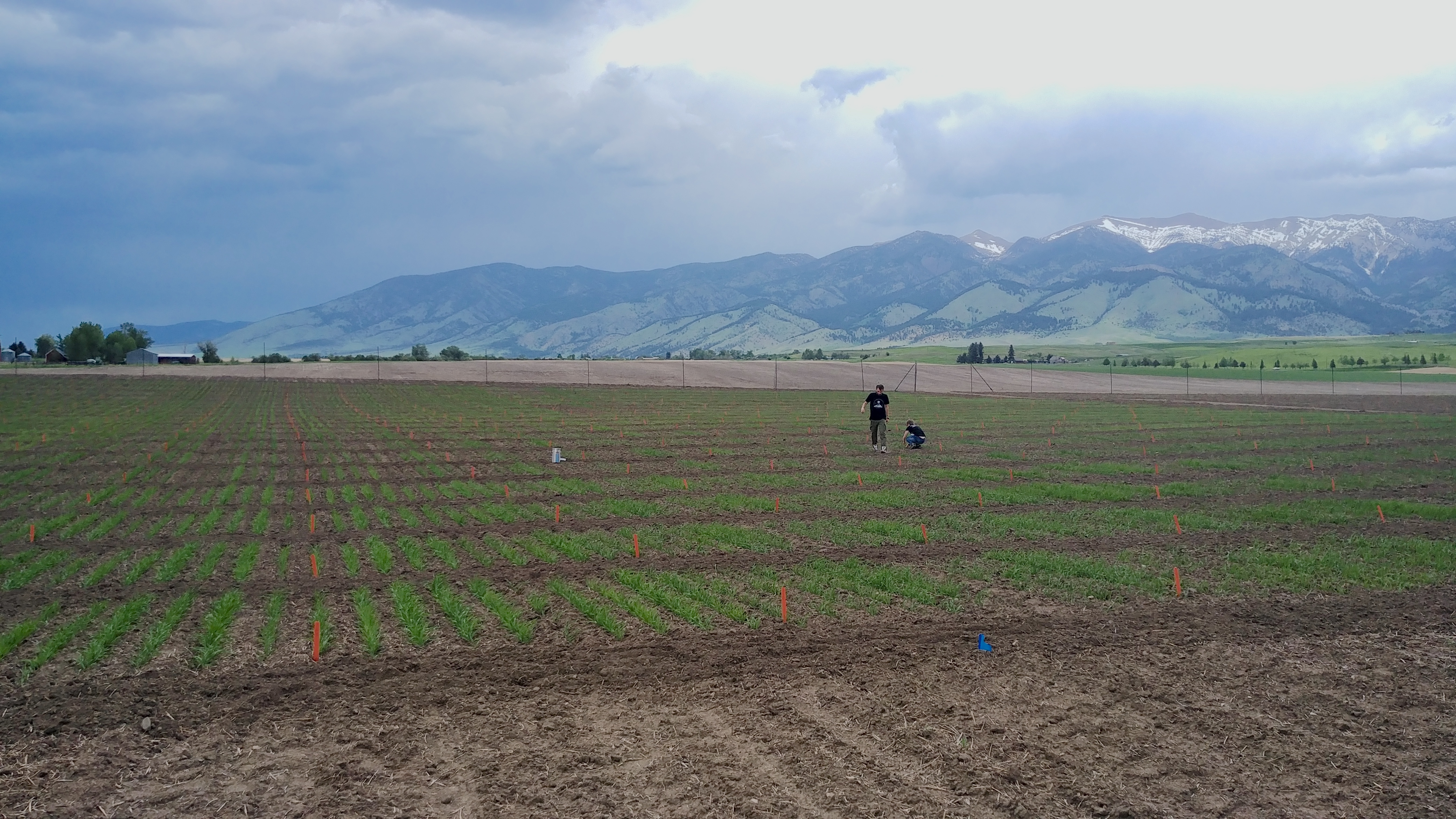
Jennifer Lachowiec serves as Associate Professor in the Department of Plant Sciences and Plant Pathology at Montana State University's College of Agriculture. Her research program focuses on understanding genetic robustness in plants through interdisciplinary approaches spanning quantitative genetics, genomics, and molecular biology. She teaches foundational courses in biometry and research design while leading a technology-driven laboratory that utilizes unoccupied aerial systems for large-scale phenotyping. Educational background: Ph.D. in Molecular and Cellular Biology, University of Washington (2014) B.S. in Genetics and Anthropology, University of Wisconsin - Madison (2008) Her research centers on predicting phenotypes from genetic sequences with emphasis on plant robustness—the capacity to maintain phenotypes despite genetic mutations and environmental fluctuations. The Lachowiec Lab integrates quantitative genetics, molecular biology, and evolutionary approaches to study gene regulatory networks and genetic interactions. A key innovation involves deploying UAVs and automated imaging systems to quantify robustness across plant populations, enabling high-throughput analysis of crop resiliency traits. This work bridges fundamental genetic mechanisms with practical agricultural applications for developing climate-resilient crops. Recent publications (2022-2025) reveal consistent focus on UAV-based phenotyping, polyploid genomics, and crop stress adaptation. Key trends include development of robust phenomic databases, genetic dissection of barley malting traits, herbicide resistance mechanisms in aquatic weeds, and metabolic responses to environmental stress. The work demonstrates strong translational impact through USDA-funded projects addressing nitrogen-efficient camelina production and heat stress tolerance in cereal crops. Scientific recognition includes: Nominated for USDA Teaching Award (2023) Phi Kappa Phi Anna K. Fridley Award (2023) College of Agriculture Teaching Award of Merit (2023) Transformative Teaching Award (2022) Open Education Resources Adoption Award (2021) Research is supported by multiple USDA NIFA and DOE grants including 'Enhancing Camelina Oilseed Production with Minimum Nitrogen Fertilization,' 'Uncovering developmental mechanisms to sustain grain number during heat stress,' and 'Genetic controls for crop microbiome recruitment.' Dr. Lachowiec serves on the North American Plant Phenotyping Network DEI Committee and has organized outreach events including MSU Family Science Day. Her laboratory, located in the Plant Bioscience Building on traditional Amskapii Pikani, Apsaalooke, Tsétsêhéstâhese, and Seliš lands, maintains specialized facilities for UAV-based phenotyping and growth room imaging systems to advance plant robustness research.
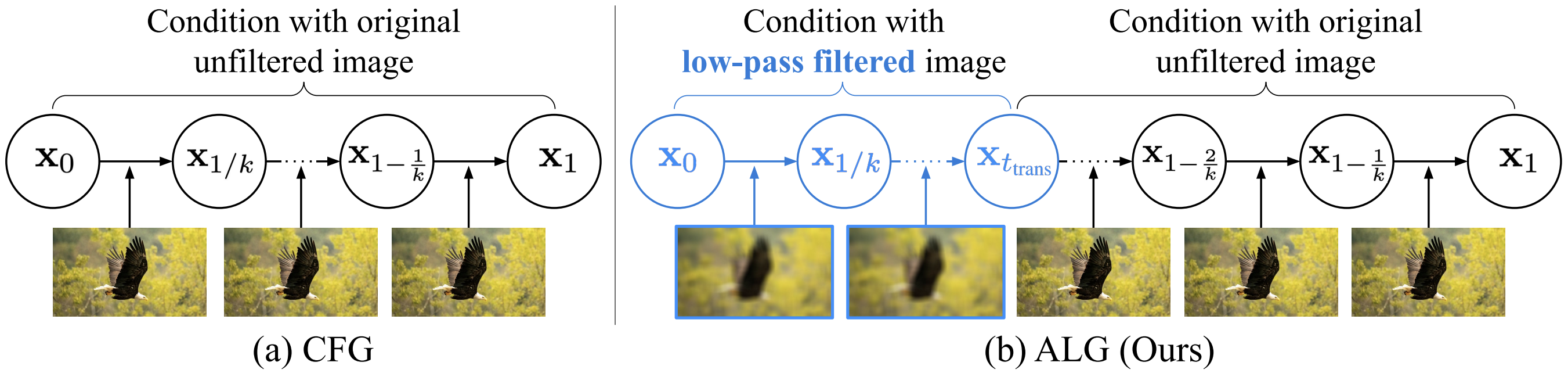
Kimin Lee is an assistant professor at the Graduate School of AI at Korea Advanced Institute of Science and Technology (KAIST), where he focuses on developing safe and capable decision-making agents. His research spans multiple aspects of artificial intelligence with a strong emphasis on safety and reliability. Dr. Lee completed his educational journey at KAIST, earning a Ph.D. in Electrical Engineering with a focus on Machine/Deep Learning (2015-2020), advised by Professor Jinwoo Shin. He also holds a Master's degree in Electrical Engineering (Wireless Communication Networks, 2013-2015) and a Bachelor's degree in Electrical Engineering (2009-2013), both from KAIST. His primary research interests include: Physical AI - developing AI systems that can interact safely and effectively with the physical world Alignment - particularly reinforcement learning from human feedback (RLHF) and scalable oversight techniques Monitoring - safety evaluation frameworks and benchmarking for AI systems LLM Agents - enhancing the capabilities and safety of large language model-based agents Dr. Lee's recent publications reveal a strong trajectory toward addressing critical challenges in AI safety. His work consistently bridges theoretical advances with practical applications, particularly in the areas of reinforcement learning, computer vision, and natural language processing. A notable trend in his research is the development of methods to evaluate and enhance the safety of AI systems, especially large language models and diffusion models, while maintaining or improving their capabilities. As an active member of the academic community, Dr. Lee serves as an area chair for major conferences including NeurIPS, ICLR, and ICML, and regularly reviews for top-tier AI venues. He has also organized workshops focused on safe and trustworthy AI agents. Dr. Lee's research group at KAIST appears to focus on AI safety and decision-making, with research projects spanning from theoretical foundations to practical implementations of safe AI systems. His collaborative work with institutions like UC Berkeley and Google Research demonstrates the interdisciplinary nature of his research approach.
Johann Eder is a full professor for Information and Communication Systems at the Department of Informatics Systems, University of Klagenfurt, Austria, and currently serves as Deputy Head of Department. He previously held positions at the Universities of Linz, Hamburg, Vienna, and Klagenfurt, and was Vice President of the Austrian Science Funds (FWF) from 2005-2013. He was also a visiting scholar at AT&T Shannon Labs, NJ. Educational Background: Diplom-Ingenieur, University of Linz Doctor of Technical Sciences, University of Linz Johann Eder's research focuses on databases, information systems, and data management for medical research, including temporal information modeling, process evolution, and workflow systems. His work spans temporal data warehousing, exception handling in workflows, and application interoperability, with a particular emphasis on privacy and quality in medical data lakes and federated biobanks. Recent publications highlight trends in temporal reasoning for business processes, medical data quality, and service composition optimization. His editorial roles include positions at ACM Transactions on Database Systems and IEEE Transactions on Knowledge and Data Engineering . He leads the Information and Communication Systems Research Group at AAU, contributing to projects like federated biobank integration and blockchain-based smart contracts.
Divya Mahajan is an Assistant Professor holding dual appointments in the College of Computing and College of Engineering at Georgia Institute of Technology. She directs the Systems Infrastructure and Architecture Research Lab, focusing on sustainable computing platforms for large-scale AI, machine learning, and data storage systems. Her research integrates computer architecture, distributed systems, and database technologies to optimize end-to-end data pipelines. Mahajan earned her PhD from Georgia Tech and Bachelor's from IIT Ropar (President's Gold Medal). Prior to academia, she was a Senior Researcher at Microsoft Azure, leading communication collective designs for distributed DNN training. Awards include NCWIT Collegiate Award (2017) and HPCA Distinguished Paper Award (2016). Research spans hardware-software co-design for ML systems, efficient recommendation architectures, federated learning optimization, and PIM/NPU acceleration. Recent projects address challenges in large-scale model serving, edge-cloud integration, and sustainable computing. Student advisees include PhD and MS researchers in systems and architecture. Publications demonstrate consistent innovation in accelerating ML workloads through novel hardware/software techniques, with work appearing in ISCA, MICRO, ASPLOS, NeurIPS, and VLDB. Current projects explore energy-efficient AI infrastructure and domain-specialized systems for emerging economies.
Eugene Bagdasarian is an Assistant Professor in the Department of Computer Science at the University of Massachusetts Amherst. His research focuses on security and privacy in AI systems, particularly adversarial machine learning, federated learning vulnerabilities, and contextual integrity frameworks. He holds a PhD from Cornell Tech and a prior engineering degree from Bauman University, with industry experience at Cisco as a software engineer. Research interests include backdoor attacks in federated learning (developing frameworks like Backdoors101 and Mithridates), privacy-preserving technologies such as AirGapAgent and Ancile, and mitigating vulnerabilities in multi-modal systems. His work has addressed instruction injections, adversarial illusions, and bias in generative models, with coverage in media like The Economist and VentureBeat. Notable achievements include the Usenix Security Distinguished Paper Award, Apple Scholars in AI/ML Fellowship, and Digital Life Initiative Fellowship. His contributions span technical domains like differential privacy, secure aggregation, and policy-based federated learning frameworks. Advising and grants: No specific advising/grants listed. However, his research collaborations include developing systems like Ancile (use-based privacy enforcement) and Mithridates (backdoor auditing). Current work trends focus on advancing security in LLM agents, dynamic network firewalls, and ethical AI governance.
James Forbes is an Associate Professor in the Department of Mechanical Engineering at McGill University. He holds the title of William Dawson Scholar and is affiliated with the Dynamics Estimation & Control of Aerospace & Robotics Systems research group. His primary research focus is on Dynamics and Control, with emphasis on navigation, guidance, and control (GNC) techniques for robotic systems. He teaches courses such as MECH 309 (Numerical Methods), MECH 412 (System Dynamics), and advanced topics in control systems. Forbes earned his Ph.D. in Aerospace Science and Engineering from the University of Toronto, following an M.A.Sc. from the same institution and a B.A.Sc. in Mechanical Engineering from the University of Waterloo. His research interests include nonlinear state estimation (batch methods, filtering), control synthesis via optimization (LQR, LMI approaches), and data-driven modeling using Koopman operator techniques. Applications span unmanned aerial vehicles (UAVs), autonomous underwater vehicles (AUVs), and SLAM systems. He has developed the navlie Python package for state estimation on Lie groups. Notable awards include the William Dawson Scholar distinction. His recent work focuses on multi-UAV localization, robust control algorithms, and sensor fusion techniques. He collaborates on projects involving UWB-based positioning and inertial navigation systems.
Nadia Figueroa is the Shalini and Rajeev Misra Presidential Assistant Professor in the Mechanical Engineering and Applied Mechanics (MEAM) Department at the University of Pennsylvania . She holds secondary appointments in Computer and Information Science (CIS) and Electrical and Systems Engineering (ESE) , and is a core faculty member at the General Robotics, Automation, Sensing & Perception (GRASP) Laboratory . Before joining Penn, she was a Postdoctoral Associate at MIT's CSAIL under Prof. Julie A. Shah and earned her Ph.D. at EPFL with Prof. Aude Billard. Her academic journey includes research roles at DLR and NYU Abu Dhabi , along with degrees from Monterrey Tech (B.Sc.) and TU Dortmund (M.Sc.) . Education: Ph.D. in Robotics, Control and Intelligent Systems, EPFL (2019) M.Sc. in Automation and Robotics, TU Dortmund B.Sc. in Mechatronics, Monterrey Tech Her research focuses on adaptive intelligence for robots to learn from and interact with humans, emphasizing fluid collaboration in safety-critical applications. Key areas include reactive control algorithms , human-robot co-manipulation , and real-time navigation . Techniques integrate machine learning , control theory , and perception to ensure stability, safety, and robustness in dynamic environments. Recent work trends highlight reactive motion policies for imitation learning, dynamical systems modulation with non-convex obstacles, and EEG-based intent detection for assistive robotics. She also explores soft robotics with MORF systems and SE(3) control for end-effector precision. Her publications reflect interdisciplinary approaches at the intersection of robotics, AI, and human biomechanics . She has taught MEAM-520 Introduction to Robotics at Penn and served as Head Teaching Assistant at EPFL for courses like MICRO-401 Machine Learning Programming . Her Figueroa (Human-Centered) Robotics Lab , established in 2022, collaborates with institutions like MIT and EPFL to advance fluid human-robot autonomy.
Lamine M. Mili is a Professor in the Bradley Department of Electrical and Computer Engineering at Virginia Tech. His expertise spans power systems, signal processing, and robust estimation theory. He holds an IEEE Fellowship (2016) for contributions to robust state estimation in power systems. Mili's research focuses on advancing methodologies for power system reliability, control, and integration of renewable energy sources. His work includes studies on dynamic state estimation, nonlinear dynamics, bifurcation theory, and quantum computing applications. He has contributed extensively to resilience engineering and computational social science in power systems. Mili’s recent articles address challenges in smart grids, quantum circuit error prediction, and multifractal signal analysis in EEG. His research often combines advanced statistical techniques with real-world grid data, emphasizing robustness and adaptability in dynamic environments. Education: Ph.D., University of Liège, 1987 M.S., University of Tunis, 1983 B.S., Swiss Federal Institute of Technology, Lausanne, 1976 Research Interests: Power system stability and control State estimation and robust filtering Quantum computing for power systems Resilience and cyber-physical-social systems Nonlinear dynamics and bifurcation analysis His recent publications reflect a focus on hybrid power systems, probabilistic methods, and data-driven approaches for grid optimization. The 2025 articles highlight advancements in photovoltaic state estimation, quantum error prediction, and robust modulation techniques. Mili’s work often bridges theoretical models with practical grid applications, emphasizing uncertainty quantification and real-time monitoring.
Marco Maggini is a Full Professor in the Department of Information Engineering and Mathematics at the University of Siena, a position he has held since joining the university in 1996. His academic career spans over 25 years with foundational expertise in computer engineering and artificial intelligence, focusing on theoretical and applied machine learning research. His educational background includes: Laurea degree (cum laude) in Electronics Engineering from the University of Florence (1991) Ph.D. in Computer Engineering and Control Systems from the University of Florence (1995) Prof. Maggini's research encompasses machine learning, neural networks, kernel machines, and the integration of symbolic and sub-symbolic knowledge systems. He extends these foundations into practical applications including web mining, search engine technology, pattern recognition, natural language processing, and computer vision. This interdisciplinary approach bridges theoretical computer science with real-world implementation challenges across multiple domains. Analysis of his 15 most recent publications (2023-2025) reveals a dominant focus on multilingual NLP applications, particularly educational puzzle generation for low-resource languages (Italian, Arabic, Persian, Turkish) using LLMs. His work demonstrates consistent innovation in named entity recognition, commonsense reasoning evaluation, and cross-lingual adaptation techniques. Secondary research threads include medical imaging segmentation, molecular property prediction, and AI security vulnerabilities, reflecting his broad technical mastery across computer vision, bioinformatics, and adversarial machine learning. No specific scientific awards were mentioned in the provided documentation, though his editorial roles indicate peer recognition within the academic community. While student mentoring details are absent from the source material, his position as Full Professor and leadership of SAILab imply active graduate supervision. His extensive publication record (120+ papers) and editorial service suggest significant research grant involvement, though specific funding sources remain undocumented. He directs the Siena Artificial Intelligence Laboratory (SAILab), which serves as an interdisciplinary hub for advancing machine learning theory and applications. The lab's current projects emphasize educational technology, multilingual NLP systems, and the integration of symbolic reasoning with neural architectures, maintaining strong industry and international academic collaborations.