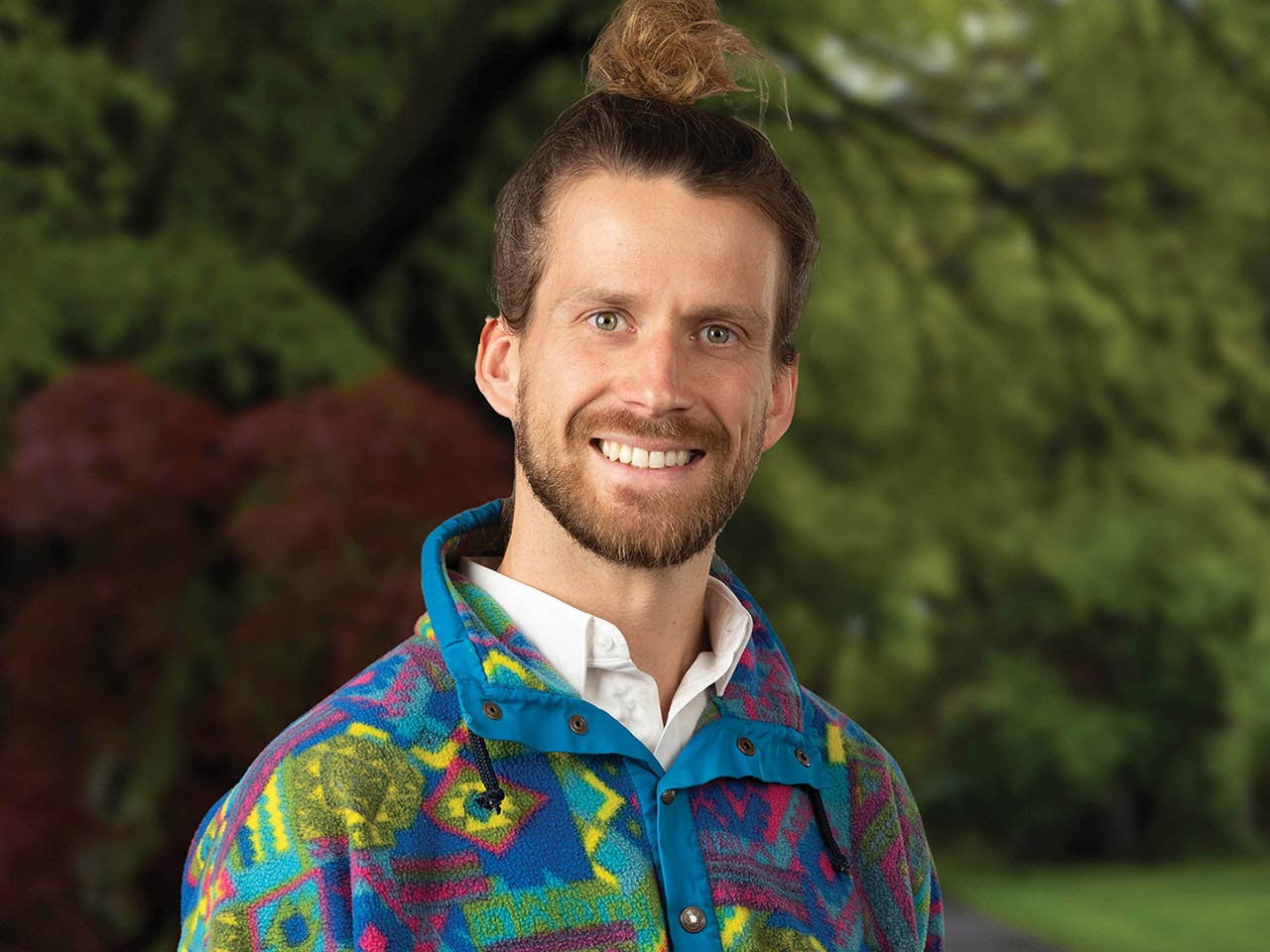
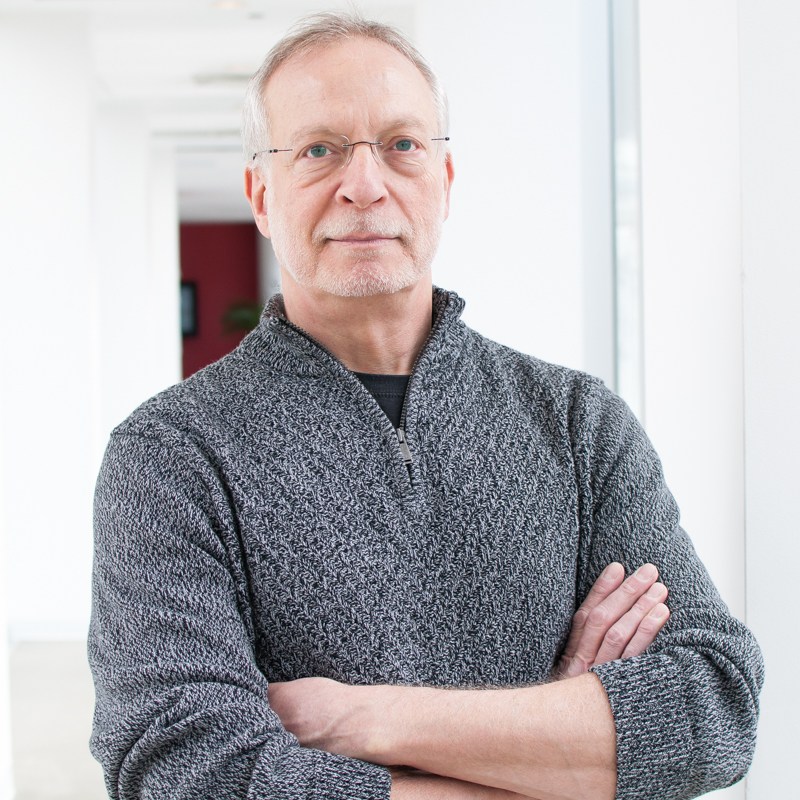
David Klindt is Assistant Professor at Cold Spring Harbor Laboratory, leading research at the intersection of biological systems and artificial intelligence. His lab investigates how brains process sensory information and generalize knowledge across contexts, studying neural representations to inspire robust AI models. Research combines computational neuroscience and machine learning to develop algorithms mimicking biological learning efficiency. Current projects examine latent computing in biological neural networks through dynamical systems frameworks, sparse coding principles in neural representations, and geometric organization in visual processing. His group develops methods for mechanistic interpretability, self-supervised learning identifiability, and compute-efficient inference. Recent publications analyze toroidal representations in grid cells, retinal feature detection, and Cryo-EM structure disentanglement. Dr. Klindt's work has been recognized through publications in Nature Communications, eLife, and NeurIPS. Before joining CSHL, he was a Machine Learning Research Scientist at Meta Reality Labs and postdoctoral researcher at Stanford University and NTNU. He holds a Ph.D. in Computational Neuroscience and Machine Learning from the University of Tübingen.
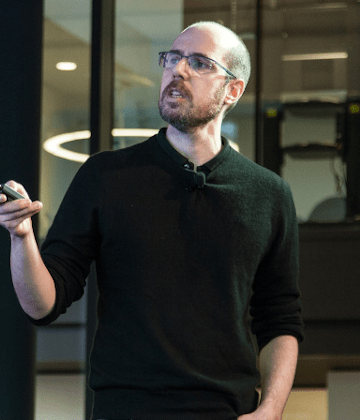
David Hong is an Assistant Professor in the Department of Electrical and Computer Engineering at the University of Delaware. He holds a PhD from the University of Michigan, where he was an NSF Graduate Research Fellow, and previously served as an NSF Postdoctoral Research Fellow at the University of Pennsylvania. His research focuses on developing robust methods for analyzing heterogeneous and high-dimensional data, particularly through low-rank matrix and tensor techniques. Applications span medical imaging, radar systems, genomics, and astronomy. He emphasizes theoretical guarantees and practical algorithms for signal extraction and inverse problems. Education: PhD in Electrical Engineering and Computer Science (University of Michigan), NSF Postdoctoral Research Fellowship (University of Pennsylvania). Research Interests: Low-rank matrix/tensor methods, heterogeneous data analysis, unsupervised learning, and applications in healthcare, imaging, and sensor systems. His work addresses noise robustness, scalable algorithms, and real-world deployment challenges. Scientific Awards: Recipient of the NSF Postdoctoral Research Fellowship (2020) and NSF Graduate Research Fellowship (2015). Advising & Grants: Advisor to graduate students in machine learning and signal processing (no named advisees listed). Active NSF grant recipient for foundational and applied research in data science. Labs/Teams: Engaged in interdisciplinary collaborations through the University of Delaware's Center for Computational Research and Data Science initiatives.
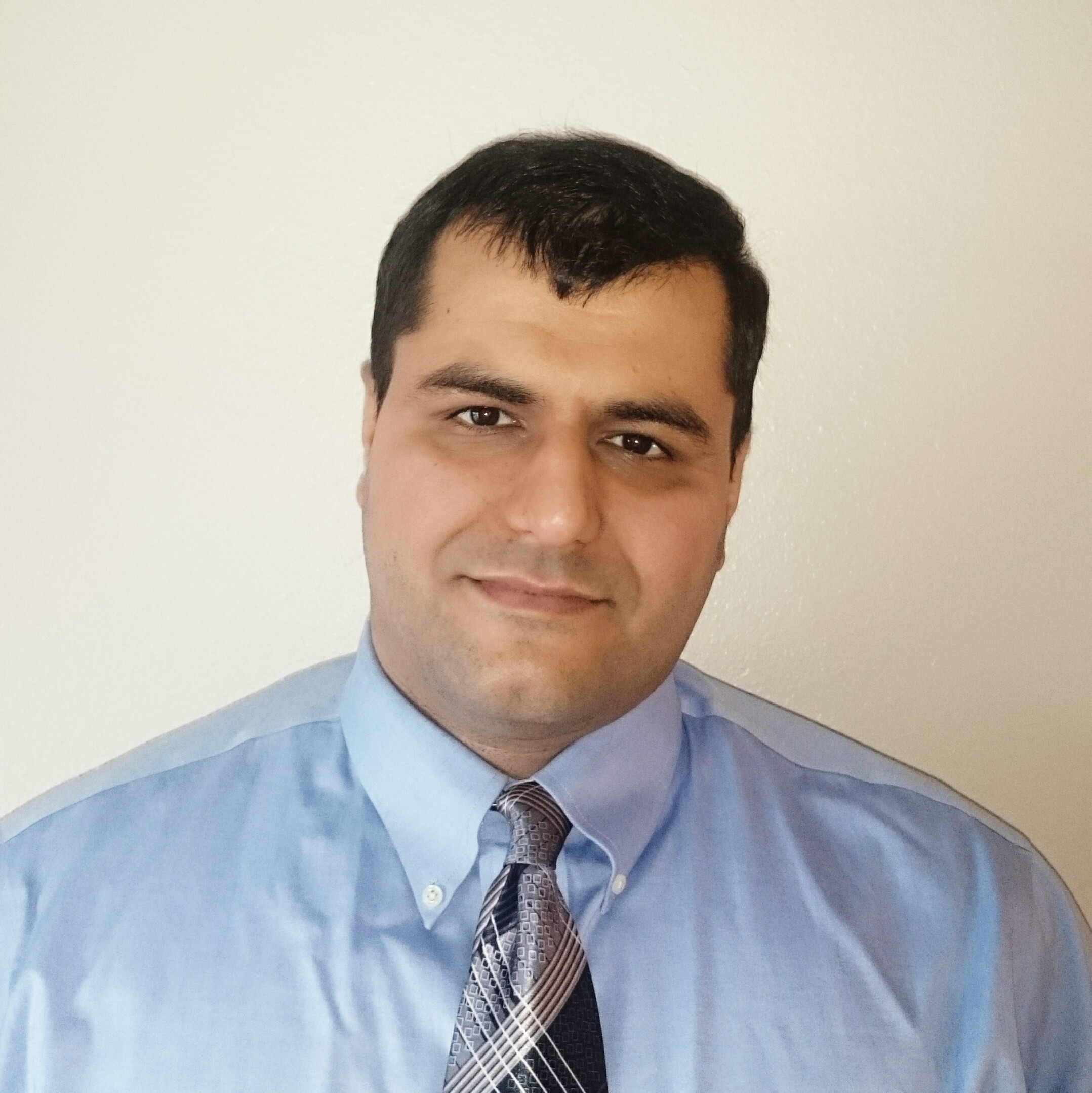
Maurice Heemels is a Full Professor at Eindhoven University of Technology (TU/e), leading the Control Systems Technology group. He holds additional professorships in EAISI Mobility, EAISI Foundational, EAISI Health, and EAISI High Tech Systems. His research focuses on hybrid and networked systems, emphasizing resource-aware control, event-triggered strategies, and cyber-physical systems integration. He is an IEEE Fellow and chairs the IFAC Technical Committee on Networked Systems. Academic Background: MSc and PhD in Mathematics (TU/e, 1995 and 1999, both summa cum laude ) Visiting Professorships: ETH Zurich (2001), UC Santa Barbara (2008) Industry Experience: Research & Development at Océ NV Research Interests: Hybrid Systems, Networked Control, Event-Triggered Control Model Predictive Control (MPC) in healthcare and high-tech systems Cyber-Physical Systems for applications like lithography and precision agriculture Key Contributions: Developed Hybrid Integrator-Gain (HIGS) systems and Projection-Based Control methodologies Recipient of a VICI Grant for wireless control systems research Oversaw over €7M in research funding from NWO, EU, and industry Awards & Recognition: Automatica Outstanding Service Award (2014) Best Paper Awards (EBCCSP 2017, etc.) Invited Keynote Speaker at ECC, CDC, and others Grants & Projects: Current Projects: COMEDI (Cost-effective Mechatronics), PROACTHIS (Projection-based Control) Past Projects: Fault Detection in Wafer Scanners, Drone-based Farming Labs & Teams: Active in TU/e’s Cyber-Physical Systems and Systems Engineering research groups, collaborating globally on nonsmooth dynamics and hybrid systems.
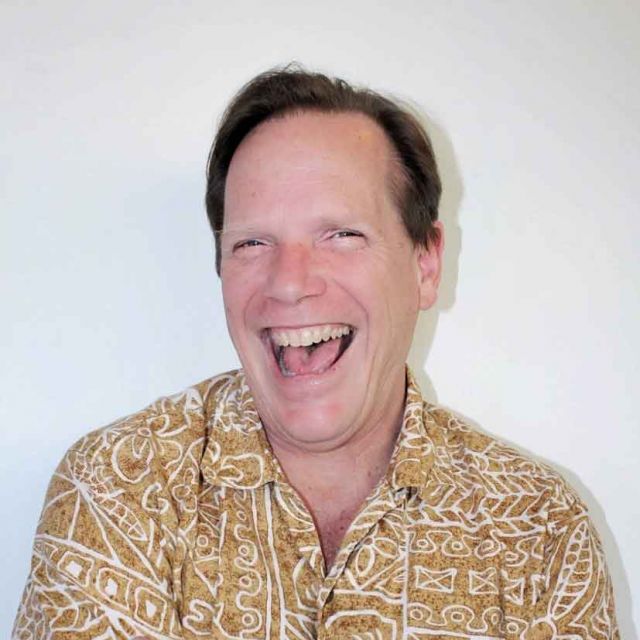
Yuning Jiang is a Visiting Professor at the École Polytechnique Fédérale de Lausanne (EPFL), affiliated with the Automatic Control Laboratory (LA3) within the School of Engineering (STI). He teaches the doctoral course Optimal Control for Dynamic Systems and contributes to research in distributed optimization, model predictive control (MPC), and smart grid technologies. His work bridges theoretical advancements in control systems with practical applications in power networks and autonomous systems. Current research emphasizes scalable solutions for AC optimal power flow, real-time MPC for embedded systems, and robust optimization under uncertainty. His research interests span Optimal Control , Power Systems , Smart Grids , and Federated Learning . Notable contributions include distributed algorithms for large-scale power systems and privacy-preserving co-simulation frameworks. Recent publications focus on microservice deployment in satellite-terrestrial networks and real-time pricing mechanisms for vehicle-to-grid (V2G) integration. Yuning holds a position in the EDEE-ENS unit under EPFL’s Academic Affairs division (VPA-AVP-DLE), reflecting his role in academic administration and teaching infrastructure. His lab, the Automatic Control Laboratory, focuses on cutting-edge research in control theory and its interdisciplinary applications.
Dr. Ma'Mon Saeed Alghananim is an Honorary Research Fellow at the Department of Civil and Environmental Engineering , Faculty of Engineering , Imperial College London. His work focuses on geospatial engineering and Positioning, Navigation, and Timing (PNT) for mission-critical systems. PhD in Civil and Environmental Engineering, Imperial College London (2022) MSc in Geospatial Engineering, University of New South Wales (UNSW) BSc in Surveying and Geomatics Engineering, Al-Balqa Applied University, Jordan Dr. Alghananim pioneered the Maximum non-Bounded Difference (MnBD) method to solve a 20-year-old GNSS overbounding error problem, enhancing safety in critical applications. He also developed the GEV-based Gaussian distribution for extreme event modeling in complex datasets. His research spans GNSS error analysis , extreme value statistics , and safety-critical systems , contributing to high-profile projects like the European Space Agency's INSPIRe and UKRI's WeWalk . No scientific awards are explicitly mentioned.
Miroslav Krstic is a Distinguished Professor of Mechanical and Aerospace Engineering at the University of California, San Diego (UCSD), and serves as Senior Associate Vice Chancellor for Research overseeing 17 research institutes, postdoctoral affairs, and shared facilities. He leads the Center for Control Systems and Dynamics and the Naval Innovation, Science, and Engineering Center (NISEC). Education: PhD (1994) and MS (1992) from University of California, Santa Barbara, under advisor Petar Kokotovic. BSc (1989) from University of Belgrade, Yugoslavia. Research Interests: Pioneered methods in control theory including PDE backstepping, extremum seeking, nonlinear adaptive control, and delay compensation. Focuses on applications in chip manufacturing, aircraft carriers, particle accelerators, Mars rovers, and traffic congestion. Integrates machine learning with control design for PDE systems. Awards: Over 30 major honors including the Bellman Award, Reid Prize, Oldenburger Medal, Bode Lecture Prize, and Fellowships from AAAS, SIAM, ASME, IEEE, and IFAC. Recognized as the world's top control theorist by ScholarGPS. Service & Grants: Editor-in-Chief of IEEE Transactions on Automatic Control and Systems & Control Letters . Directed over $100M in research funding annually. Advised 30+ PhD students and postdocs, many in industry leadership roles. Industry Impact: Technologies deployed in EUV lithography (Cymer/ASML), US Navy aircraft carrier arresting gear (General Atomics), and NASA's Mars Curiosity Rover laser system. Contributions to fusion control, battery estimation, and combustion optimization.
Arya Mazumdar is a tenured Professor of Data Science and Computer Science at the Halıcıoğlu Data Science Institute (HDSI) , part of the School of Computing, Information and Data Sciences at the University of California San Diego (UCSD). He also holds affiliations with the Computer Science and Engineering and Electrical and Computer Engineering departments at UCSD. Previously, he was an Assistant and Associate Professor at the University of Massachusetts Amherst (2015–2021), and held a postdoctoral position at MIT (2011–2012). He is an IEEE Distinguished Lecturer (2023–2024) and recipient of the NSF CAREER Award (2015–2020). Education : PhD in 2011 from the University of Maryland, College Park (advisor: Alexander Barg) Postdoctoral scholar at MIT (2011–2012, advisor: Greg Wornell) Internships at IBM Almaden (2010) and HP Labs (2008) Research Interests : Focus on algorithmic and statistical aspects of machine learning, error-correcting codes, optimization, signal processing, and distributed systems. Key areas include clustering algorithms, compressed sensing, federated learning, and information-theoretic foundations of data science. He has contributed to theoretical guarantees for learning mixtures, distributed optimization, and robust coding schemes. Recent Articles Trends : Recent work emphasizes distributed optimization (e.g., vqSGD, Byzantine-resilient algorithms), sparse recovery in high-dimensional models, and theoretical foundations of learning (e.g., support recovery, parameter estimation). His research bridges information theory and machine learning, with applications in storage systems and large-scale data processing. Awards & Roles : 2020 EURASIP JASP Best Paper Award Co-PI and co-leader of the NSF AI Institute for Learning-Enabled Optimization at Scale Editorships: IEEE Transactions on Information Theory and Foundations and Trends in Communications Grants & Labs : Leads the EnCORE Institute as UCSD Site Lead, focusing on theoretical perspectives of large language models and computational-statistical gaps. Active in organizing workshops on topics like LLMs, clustering, and distributed optimization. His research is funded by NSF and industry collaborations. Teaching : Courses include Algorithms for Data Science , Probability and Statistics for Data Science , and Coding Theory , emphasizing foundational theory and scalable methods.
Carlo Baldassi is an Associate Professor at Bocconi University, where he has served as Director of the BSc in Mathematical and Computing Sciences for Artificial Intelligence (BAI) since 2023/24. He holds a background in Theoretical Physics from the University of Trieste and a PhD in Computational Neuroscience from the University of Turin. His research focuses on applying Statistical Mechanics to Machine Learning and Neural Networks, particularly studying loss landscapes, optimization problems, and the role of quantum annealing in nonconvex learning. He teaches courses in Machine Learning, Artificial Intelligence, and Computer Science, emphasizing Python and Julia programming. His work bridges theoretical physics and AI, exploring topics like synaptic stochasticity in low-precision neural networks and the efficiency of quantum vs. classical annealing. He has published extensively in top journals such as Physical Review Letters and Proceedings of the National Academy of Sciences , contributing to foundational understanding of neural network dynamics and optimization techniques. Teaching includes Machine Learning and Artificial Intelligence Computer Science I Machine Learning II Machine Learning and Artificial Intelligence Lab Research emphasizes large-scale inference problems, with a focus on the interplay between statistical mechanics and modern AI architectures.
Dr. Ali Ahrari is a Lecturer at the School of Systems and Computing, University of New South Wales, Canberra. He holds a Ph.D. in Mechanical Engineering from Michigan State University (2016) and has extensive experience in research and academia, including roles as a Research Fellow and Associate at UNSW-Canberra and the University of Sydney. His research focuses on evolutionary algorithms, multimodal and multi-objective optimization, and surrogate-assisted optimization. Ahrari is a recipient of prestigious awards, including the ARC-DECRA 2023 and multiple international competition wins in optimization (e.g., CEC/GECCO competitions). He leads research groups like the Canberra Evolutionary Optimization (EvOpt) and serves on editorial boards, including Applied Soft Computing. Education: Ph.D. (2016, Michigan State University), M.Sc. and B.Sc. (University of Tehran). Awards: ARC-DECRA, ISCSO, and GECCO/CEC competition wins. Grants: ARC DECRA (2023), NCI Adapter Schemes, UNSW HPC allocations. Supervision: Currently advising 1 PhD student at SEIT, UNSW-Canberra. Engagements: Chair of IEEE Task Force on Multi-modal Optimization, organizer of optimization competitions (GECCO'2024, CEC'2022). His research emphasizes computational optimization, evolutionary computation, and swarm intelligence, with applications in engineering design and dynamic environments. He actively contributes to academic communities through editorial roles and conference organization.
Yannic Noller is a Professor at the Faculty of Computer Science at Ruhr University Bochum (RUB), leading the Software Quality group. Previously, he held positions as Assistant Professor at Singapore University of Technology and Design (SUTD) and Research Assistant Professor at National University of Singapore (NUS). His research focuses on automated software engineering, including program repair, machine learning analysis, and software testing. He earned his Ph.D. from Humboldt-Universität zu Berlin under Prof. Lars Grunske, with a thesis on hybrid differential software testing. Education: Ph.D. in Computer Science (2016-2020, Humboldt-Universität), M.Sc. (2013-2016, University of Stuttgart), B.Sc. (2010-2013, University of Stuttgart). Research interests include automated program repair techniques, machine learning model analysis, and intelligent tutoring systems for programming education. Notable contributions include HyDiff (hybrid differential analysis tool) and CPR (concolic program repair). Awards include the Distinguished Artifact Reviewer at ISSTA'2021 and multiple scholarships for academic excellence. Teaching includes courses on software engineering, requirements engineering, and automated software engineering.
Niels Richard Hansen is a Professor at the Department of Mathematical Sciences , University of Copenhagen, leading research at the intersection of Artificial Intelligence and Statistics . He co-founded the Copenhagen Causality Lab and focuses on automating causal explanation discovery from data using Bayesian networks, stochastic processes, predictive models, and machine learning. His work emphasizes creating interpretable and robust AI systems capable of generalizing across domains. His research has produced over 56 publications spanning causal inference , graphical modeling , stochastic processes , and machine learning . Recent work includes: Predictive and causal learning (2018 keynote) High-dimensional regression solutions (2016 lecture) Interdisciplinary applications in actuarial science , environmental statistics , and neuroscience He actively contributes to scientific communication through media appearances and public explanations of statistical concepts, including analyses of: Gaussian correlation inequality proofs Daylight saving time and blood clots Mathematical approaches to lotteries Climate change vs lunar effects
Dr. Yongchao Huang is a Lecturer (Assistant Professor) in the School of Natural and Computing Sciences at the University of Aberdeen, where he has been employed since August 2023. He also holds affiliations with the University of Oxford and the University of Cambridge through past postdoctoral and collaborative roles. He is actively involved in research, teaching, and academic service, and is currently accepting PhD students. His educational background includes: DPhil in Engineering Science, University of Oxford (2013–2017) Additional training in Machine Learning at Oxford (2015–2019) Dr. Huang's research focuses on fundamental and physics-informed machine learning, with core interests in Bayesian inference, variational methods, generative modeling (especially score-based), reinforcement learning, and interdisciplinary AI applications in mechanics, biology, energy, climate, and finance. A central theme of his work is the inference and sampling of probability densities, particularly through innovative particle-based and physics-inspired computational frameworks. He founded the Computational and Physical Learning (CPL) lab at Aberdeen in 2023. His recent publications (2020–2025) reflect a strong trend in probabilistic machine learning, with increasing focus on physics-based inference methods such as electrostatics, fluid dynamics, and material point methods. These works bridge machine learning with applied mathematics and physical simulation, demonstrating a unique interdisciplinary approach. Topics span Bayesian neural networks, acoustic wave propagation, mortality modeling, and adversarial cybersecurity. Dr. Huang has received academic recognition through invitations to serve on program committees and editorial roles: Program Committee Member, ECAI 2024 Organizing Committee, Bioinference 2024 Guest Editor, Journal of Theoretical Biology Senior Scientific Advisor to a UK firm He has supervised 57 MSc theses independently and currently supervises one PhD student. He has secured research engagement through collaborations with institutions including Oxford, Cambridge, and industry partners. His teaching includes courses such as Introduction to Software Engineering , Software Process and Management , and Computational Intelligence at Aberdeen, as well as practicals in inference at Cambridge. Dr. Huang leads the Computational and Physical Learning (CPL) lab at the University of Aberdeen, a curiosity-driven research group focused on foundational advances in machine intelligence. Though currently a solo researcher due to limited resources, the lab emphasizes end-to-end research and open collaboration. He encourages student mobility and interdisciplinary exploration.
Hau-Tieng Wu is affiliated with Duke University , where he conducts research in applied mathematics and machine learning, with a focus on diffusion-based methods for nonstationary time series and biomedical signals. His work centers on diffusion maps , manifold learning , and spatiotemporal analysis , particularly applied to hemodynamic monitoring via arterial blood pressure (ABP) signals. He has contributed to theoretical advances such as L^∞ spectral convergence and robustness to heterogeneous and colored noise in manifold learning frameworks. While no specific publications or students are listed in the provided text, his research intersects with computational physiology, kernel methods, and geometric data analysis. He has presented his work in academic seminars, indicating active engagement in the applied math and data science communities. No awards, grants, emails, or team information are available in the current data.
Kevin W. Plaxco is a Professor in the Department of Chemistry & Biochemistry at the University of California, Santa Barbara (UCSB), leading the Plaxco Group. His research focuses on protein folding, biomolecular engineering, and the development of electrochemical aptamer-based (EAB) sensors for real-time molecular monitoring in vivo. These sensors enable high-resolution measurements of drugs and biomarkers in biological fluids, with applications in pharmacokinetic analysis, feedback-controlled drug delivery, and biomedical diagnostics. The lab also investigates protein-surface interactions to enhance biotechnological applications. Research interests include: Protein folding mechanisms and their application to sensor design Electrochemical sensor technology for in vivo diagnostics Real-time pharmacokinetic monitoring and closed-loop drug delivery systems Biophysics of biomolecules at surfaces Advising and Lab Contributions: The Plaxco Group has mentored numerous graduate students, postdoctoral researchers, and visiting scholars, contributing to over 200 publications. The lab is affiliated with UCSB’s Center for Bioengineering and collaborates across disciplines to advance sensor innovation and biophysical studies. Labs/Teams: The Plaxco Group operates within the Department of Chemistry & Biochemistry, emphasizing interdisciplinary approaches to biomedical engineering and molecular sensing.
James D. Herbsleb is a Professor at Carnegie Mellon University in the Software and Societal Systems Department under the School of Computer Science . He served as Department Head from 2019-2024 and holds a PhD in Psychology and an MS in Computer Science. Education PhD in Psychology MS in Computer Science Research interests focus on the intersection of software engineering , computer-supported cooperative work , and socio-technical systems . Key areas include global software teams, open source ecosystems, and the limits of modularity in complex projects. His work explores decision networks , interface translucence , and scientific software sharing through NSF-funded initiatives. Recent publications examine API management in ecosystems like Eclipse and Node.js, coordination theory in distributed teams, and transparency in open source practices. Awards include the ACM Outstanding Research Award (2016) and Alan Newell Award (2014) . Scientific Awards ACM Outstanding Research Award (2016) Alan Newell Award for Research Excellence (2014) Most Influential Paper Award (ICSE 2010) Best Paper Award (Academy of Management 2010) Best Paper Award (CSCW 2006) Students advised include Patrick Wagstrom (COS PhD), Anita Sarma (postdoc), Uri Dekel (SE PhD), and current PhD candidates like Ben Towne. Research is supported by NSF, Sloan Foundation, and industry partners including Google and IBM.