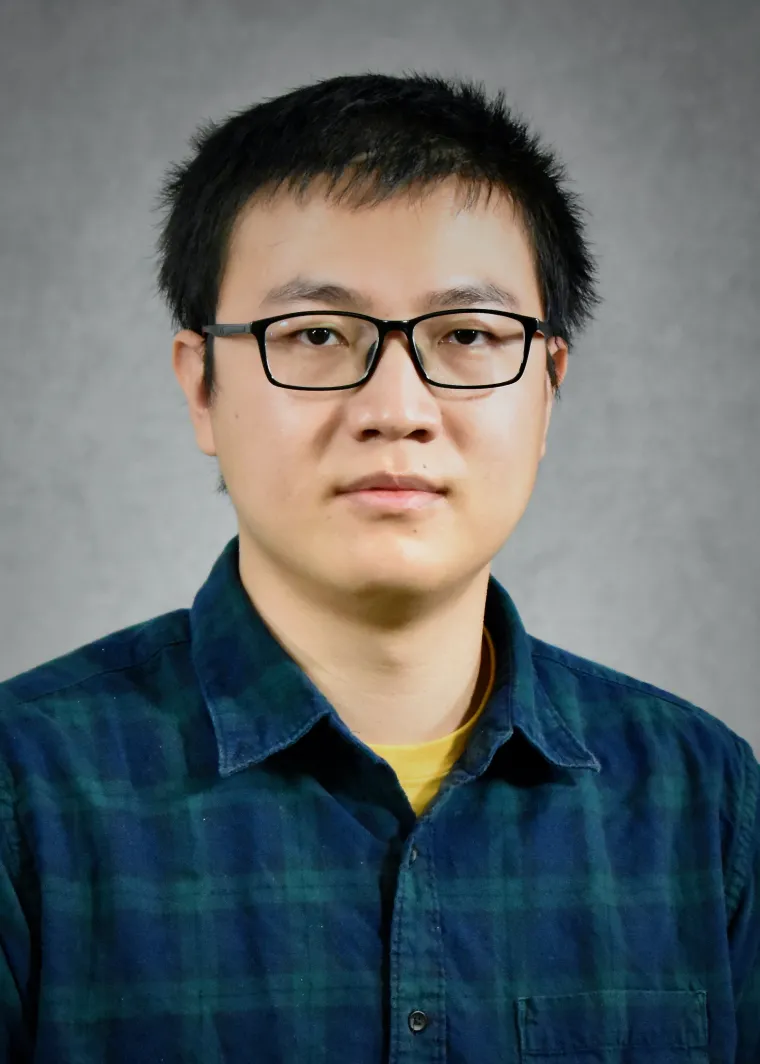
Piotr Koniusz is a Principal Research Scientist at Data61/CSIRO and an Honorary Associate Professor at the Australian National University (ANU), with an Adjunct role at UNSW. He holds a PhD in Computer Vision from the University of Surrey (2013) and a BSc from Warsaw University of Technology (2004). His research focuses on Foundation Models, Representation Learning, and Few-shot Learning, with contributions to Graph Neural Networks and Adversarial Robustness. Key roles include Program Chair for NeurIPS’25, Senior Area Chair for ICML’25 and ICLR’25, and Workshop Co-Chair for WWW’25. Awards include the Sang Uk Lee Best Student Paper (ACCV’22) and recognition as an Outstanding Area Chair (ICLR 2021–2023). Research interests span Vision-Language Models (VLMs), Generative Adversarial Networks (GANs), and Domain Adaptation. He supervises PhD students at ANU and collaborates with industry on projects like traffic forecasting and ecotoxicology prediction.
Professor Brian C. Williams is a leading academic at the Massachusetts Institute of Technology (MIT) , holding the position of Professor of Aeronautics and Astronautics and directing the Autonomous Systems Laboratory (ASL) . He is also a member of the Computer Science and Artificial Intelligence Laboratory (CSAIL) and the Space Systems Laboratory (SSL) . His work focuses on advancing model-based autonomy, enabling robots to operate independently in extreme environments such as space, underwater, and urban traffic. His contact details include email williams@csail.mit.edu and phone 253-2739 . Education : S.B., S.M., and Ph.D. in Computer Science and Electrical Engineering from MIT (1989). Williams' research spans risk-bounded decision making , collaborative robotics , and neural-symbolic learning . He has pioneered systems like Remote Agent, which demonstrated autonomous self-repair in NASA's Deep Space One mission, and Geordi, a risk-aware driver assistant. His work integrates symbolic reasoning, probabilistic methods, and machine learning to create resilient robotic systems for space exploration, manufacturing, and transportation. The most recent publications highlight trends in risk-aware planning , multi-agent robotics , and stochastic control . Key innovations include tube-based trajectory optimization, conflict-directed task allocation, and theory-of-mind guided interventions, reflecting his focus on robustness in uncertain environments. Scientific Awards : NASA Space Act Award (1999), AAAI Fellow, and multiple best paper awards from AAAI, IJCAI, ICAPS, CDC, HRI, and ECAI. Williams leads the Model-Based Embedded and Robotics Systems Group at CSAIL, collaborating with institutions like NASA's Jet Propulsion Laboratory. His projects include ASIST (Artificial Social Intelligence for Teams), RADMAX (Risk and Deadline Aware Planning), and Uhura (risk-aware personal assistants), addressing challenges in health care, manufacturing, and defense applications.
Thomas Berger is a Professor at the University of Hohenheim , affiliated with the Faculty of Agricultural Sciences and leading the Department of Economics of Land Use . He also contributes to the Computational Science Hub and Hohenheim Tropics initiatives. Focus Areas: Climate change adaptation, land-use modeling, biodiversity-productivity trade-offs, agent-based simulation, and machine learning in agricultural systems. Key Projects: Simulation frameworks for smallholder resilience in Ethiopia, bioeconomic modeling in the Amazon, and hybrid intelligence applications in European agricultural policy. Recent Publications: 2025 study on climate change effects on insecticide reduction in Germany, 2024 work on reconciling biodiversity with productivity via hybrid models, and 2023 methodological contributions to surrogate modeling and seasonal forecast integration. Research Trends: Interdisciplinary integration of climate science, agricultural economics, and computational modeling, with increasing emphasis on AI-assisted decision support systems and sustainability policy validation. Teaching & Outreach: Offers Agricultural Economics seminars and Hohenheim Tropics discussions, requiring advance email registration for office hours.
Freda Shi is an Assistant Professor at the David R. Cheriton School of Computer Science, University of Waterloo, and a Faculty Member at the Vector Institute. She holds a Canada CIFAR AI Chair. Her research focuses on computational linguistics, natural language processing (NLP), and grounded language learning, with emphasis on multilingualism and spatial reasoning in vision-language systems. She earned her Ph.D. in Computer Science from the Toyota Technological Institute at Chicago (2024), advised by Karen Livescu and Kevin Gimpel, supported by a Google Ph.D. Fellowship. Her undergraduate degree is from Peking University (2018), with a minor in Sociology. Her academic career includes affiliations with the CompLING Lab at Waterloo and contributions to major conferences like ACL and NAACL. She has organized tutorials on NLP grounding and is actively involved in research on model robustness and cognitive insights. Awards include the Google Ph.D. Fellowship and Best Paper Nominations at ACL 2024 and EMNLP 2021, alongside her Thesis of Distinction. She teaches courses such as CS 784 (Computational Linguistics) and CS 486/686 (Artificial Intelligence), emphasizing both theoretical and applied aspects of NLP. Research trends in her articles highlight advancements in vision-language spatial reasoning, multilingualism, and model interpretability. Her work bridges cognitive science and computational methods, exploring how human language mechanisms inform the design of more trustworthy AI systems. Scientific Awards: Google Ph.D. Fellowship Best Paper Nominee (ACL 2024) Best Paper Nominee (EMNLP 2021) Thesis of Distinction (2024) Advising and Grants: As an advisor, she encourages prospective students to review her guidelines. Her grants include support from the Canada CIFAR AI Chair program and the Vector Institute. She collaborates in labs such as CompLING at Waterloo and co-organizes events at NAACL and ICLR. Labs/Teams: She leads the CompLING Lab at the University of Waterloo, affiliated with the Vector Institute. Her work integrates interdisciplinary teams focusing on grounded learning and multilingual NLP challenges.
Mahadev Satyanarayanan is the Jaime Carbonell University Professor of Computer Science at Carnegie Mellon University. His multi-decade research focuses on performance, scalability, availability, and trust in distributed systems spanning cloud to mobile edge computing. He pioneered foundational concepts in mobile computing and Edge Computing through his seminal work on VM-based cloudlets. His current research explores cloudlet-based Edge Computing for latency-sensitive applications, wearable cognitive assistance systems integrating augmented reality, and edge-based machine learning frameworks for efficient training data discovery. He collaborates with Dan Siewiorek, Martial Hebert, and Bobby Klatzky on transformative applications. Dr. Satyanarayanan received his PhD from Carnegie Mellon University after completing Bachelor's and Master's degrees at the Indian Institute of Technology, Madras. His honors include ACM and IEEE Fellowships recognizing his contributions to distributed systems and mobile computing. ACM Fellow IEEE Fellow
Associate Professor Tongliang Liu is affiliated with the School of Computer Science at the University of Sydney, serving as Director of the Sydney Artificial Intelligence Centre and Trustworthy Machine Learning Lab. He holds a BEng and PhD, and is an ARC Future Fellow. His research focuses on trustworthy machine learning, including adversarial defense, causal representation learning, and robust AI systems. He has authored over 200 papers in top venues like NeurIPS and ICML, and serves as co-Editor-in-Chief of Neural Networks. Research Interests: Developing reliable algorithms for machine learning, emphasizing generalizability and safety. Specific areas include learning with noisy labels, causal inference, and foundational model ethics. He aims to bridge theoretical guarantees and practical applications in computer vision and data mining. Awards: 2024 CORE Award, 2023 IEEE AI's 10 to Watch, 2022 ARC Future Fellowship. Notable recognitions include Eureka Prize shortlist and DECRA. Advising & Grants: Supervises 12 PhD/Master’s students on topics like trustworthy AI, causal discovery, and quantum machine learning. Leads grants on robust learning and AI safety. Labs: Sydney AI Centre and Trustworthy Machine Learning Lab.
Kurt Maute is a Professor and Palmer Engineering Chair at the University of Colorado Boulder’s College of Engineering and Applied Science (CEAS). He currently serves as Associate Dean for Undergraduate Education. His academic journey includes a PhD in Civil Engineering (University of Stuttgart, 1998) and a Dipl.-Ing. in Aerospace Engineering (University of Stuttgart, 1992). He has held progressively senior roles at CU Boulder, including Associate Dean for Research (2012–2014), Associate Professor (2006–2012), and Assistant Professor (2000–2006). Maute’s research focuses on structural topology optimization, multi-disciplinary optimization, and aeroelastic systems. He has pioneered methods integrating XFEM, level-set techniques, and isogeometric analysis for complex engineering problems. His work spans fluid-structure interaction, hypersonic vehicle design, and additive manufacturing. His notable contributions include advancements in immersed boundary methods, multi-material optimization, and uncertainty quantification. Awards include the NSF Career Award (2004) and Palmer Endowed Chair (2016–present). Maute’s lab (Aerospace Mechanics Research Center, AMREC) addresses challenges in computational mechanics and multi-physics systems. He has advised numerous students and led grants in battery modeling, topology optimization, and aerospace systems. His research bridges theory and application, emphasizing industrial relevance and computational innovation.
Debbie Senesky is an Associate Professor at Stanford University in both the Aeronautics and Astronautics Department and the Electrical Engineering Department, as well as a Senior Fellow at the Precourt Institute for Energy. She serves as the Principal Investigator of the EXtreme Environment Microsystems Laboratory (XLab) and Site Director of nano@stanford. Dr. Senesky received her B.S. in mechanical engineering from the University of Southern California (2001), followed by M.S. (2004) and Ph.D. (2007) degrees in mechanical engineering from the University of California, Berkeley. Prior to joining Stanford, she held positions at GE Sensing (formerly NovaSensor), GE Global Research Center, and Hewlett Packard. Her research focuses on developing nanomaterials and electronic systems capable of operating in extreme environments, including high-temperature conditions for Venus exploration, microgravity synthesis of nanomaterials, and harsh environment electronics. Dr. Senesky's work bridges multiple disciplines, connecting aerospace engineering, electrical engineering, materials science, and space technology to solve challenges in extreme environment applications. Dr. Senesky has made significant contributions to the field of high-temperature electronics, GaN-based sensors, graphene aerogel synthesis in microgravity, and materials for space applications. Her recent publications demonstrate a strong focus on practical applications of these technologies, particularly for space exploration and extreme environment sensing. Presidential Early Career Award for Scientists and Engineers (PECASE), NASA (2025) Emerging Leader Abie Award from AnitaB.org (2018) Early Faculty Career Award from NASA (2012) Gabilan Faculty Fellowship Award (2012) Sloan Ph.D. Fellowship (2004-2006) Dr. Senesky actively advises students at all levels, from undergraduate to postdoctoral researchers, and has established herself as a leader in promoting diversity in STEM through her role as Faculty Advisor for the Stanford Chapter of the National Society of Women Engineers. Her collaborative approach is evident in her numerous interdisciplinary projects and partnerships with NASA, industry, and other research institutions. She directs the EXtreme Environment Microsystems Laboratory (XLab), which focuses on developing technologies for operation in extreme environments including high temperature, radiation, and microgravity conditions. The lab's work has applications for space exploration, particularly for Venus missions, as well as terrestrial applications requiring robust electronics.
Magnus Boman is a Professor of AI and Health at the Department of Medicine, Solna, Karolinska Institutet (KI), where he leads the AI@KI initiative to support researchers in AI integration. He is affiliated with the Chronic Inflammatory Disease Epidemiology research group under Johan Askling. His research focuses on AI applications in precision medicine, multimodal prediction, ethical norms in AI systems, energy-efficient computing, and quantum sensor data interpretation. Research Interests: Artificial Intelligence in healthcare and precision medicine Multimodal data analysis for disease prediction and treatment Machine learning for clinical decision support systems Ethical and societal implications of AI Grants: Swedish Research Council: Improving breast cancer histology image classification (2024-2026) Scalable Federated Learning (2022-2025) Ai in sustainable cities (VINNOVA, 2019) Advising & Students: Supervised over 50 PhD and Master's students across KI, KTH, and Stockholm University, focusing on AI applications in healthcare, machine learning, and computational epidemiology. Notable projects include predictive modeling for mental health outcomes and variant filtering in genetic data. Labs & Teams: Leads AI@KI, fostering AI adoption in medical research. Collaborates with the Johan Askling group on epidemiology and chronic disease studies.
Athanasios Rontogiannis is an Associate Professor at the School of Electrical and Computer Engineering of the National Technical University of Athens (NTUA). He holds a PhD in Signal Processing from the National University of Athens (1997) and has held roles including Research Director at the National Observatory of Athens (2017–2021). His research focuses on signal processing, machine learning, and hyperspectral image analysis. Education: MEng (Electrical Engineering, NTUA, 1991), M.A.Sc. (University of Victoria, Canada, 1993), PhD (Signal Processing, National University of Athens, 1997). Research interests include adaptive algorithms, sparse representations, and tensor models. He has served on editorial boards of IEEE Transactions on Signal Processing and EURASIP journals, receiving an honorary distinction in 2020. He is a Senior Member of IEEE and affiliated with EURASIP and the Technical Chamber of Greece. Key contributions span hyperspectral unmixing, Bayesian algorithms, and space data exploitation. His work integrates machine learning for applications in space science and signal processing.
Dr. Saiedeh Razavi is an Associate Professor and the inaugural Chair in Heavy Construction at McMaster University's Department of Civil Engineering, directing the McMaster Institute for Transportation and Logistics (MITL). She holds a multidisciplinary background with degrees in Computer Engineering (B.Sc., Sharif University), Artificial Intelligence (M.Sc., Iran), and Civil Engineering (Ph.D., Waterloo). Her research focuses on smart infrastructure, connected mobility, and construction safety, funded by NSERC and the Ontario Ministry of Transportation. Key areas include transforming construction management through AI, autonomous vehicles, and smart work zones. Education: B.Sc. (Sharif), M.Sc. (Iran), Ph.D. (Waterloo) Research Interests: Smart cities, connected vehicle systems, data fusion, risk analysis, and sustainable logistics Leadership Roles: Director of MITL, Associate Chair (Research), and lead of national/international multidisciplinary projects Her work bridges academia, government, and industry to enhance mobility and safety. Notable grants include NSERC funding for transformative transportation systems. Awards include teaching excellence and innovation in team-based projects. Grants & Projects: NSERC, Ontario Ministry of Transportation, and industry collaborations Labs/Teams: MITL, CPS-based construction safety initiatives, and autonomous vehicle research groups
Richard Zemel is a Professor in the Department of Computer Science at the University of Toronto, where he has been since 2000. He holds an Industrial Research Chair in Machine Learning and co-founded the Vector Institute for Artificial Intelligence. His research focuses on machine learning, including unsupervised learning, deep learning, and ethical AI, with contributions to probabilistic models, fairness, and representation learning. Zemel has developed influential systems like the Toronto Paper Matching System and holds awards such as the NVIDIA Pioneers of AI Award and multiple NSERC grants. Education: B.Sc. in History & Science from Harvard University (1984), Ph.D. in Computer Science from the University of Toronto (1993). Postdoctoral work at the Salk Institute and Carnegie Mellon University. Research Interests: Machine Learning (unsupervised/deep learning), probabilistic models, fairness in algorithms, computer vision, natural language processing. He emphasizes ethical AI and practical applications like recommendation systems and causal inference. Awards & Affiliations: Fellow of CIFAR, member of the Neural Information Processing Society (NIPS) Executive Board, and advisor to the Creative Destruction Lab. His work is funded by NSERC, CIFAR, Google, Microsoft, and DARPA. Grants & Labs: Active in grants supporting machine learning research, including projects on fairness and invariant learning. Collaborates with industry partners and leads teams at the University of Toronto and Vector Institute.
Elina Rönnberg is a Professor and Deputy Head of Department at the Department of Mathematics, Linköping University, where she leads research in discrete optimisation and intelligent decision-making. Her work bridges theoretical method development and real-world applications in sectors such as healthcare, aviation, mining, and transportation. She is actively involved in the Wallenberg AI, Autonomous Systems and Software Program (WASP) and has collaborated with industry leaders like Saab and Scania. Her research focuses on advanced optimisation techniques including Dantzig-Wolfe decomposition, Lagrangian relaxation, column generation, branch-and-price, and logic-based Benders decomposition. She also explores hybrid methods combining mathematical programming with constraint programming and machine learning. Applications span nurse rostering, electric vehicle routing, aircraft arrival scheduling, and underground mine planning. Recent publications highlight a strong trend toward integrating AI and machine learning—particularly graph neural networks—with classical optimisation frameworks to accelerate solution methods. Her work emphasizes practical impact, robustness, and scalability in solving complex scheduling and resource allocation problems. Nurse Rostering with Strategic Planning of Skills for Sick-Leave Robustness (2024) Pricing for the EVRPTW with Piecewise Linear Charging (2024) Speeding Up Logic-Based Benders Decomposition with Graph Neural Networks (2024) Elina supervises several PhD students and has co-supervised doctoral research at international institutions including Makarere University (Uganda) and the University of Exeter (UK). She has contributed to applied projects through student theses in collaboration with Scania and Saab, focusing on electric vehicle routing and search-and-rescue optimisation. She previously served as a Specialist in Optimisation at Saab Aeronautics (2014–2020) and co-founded Schemagi, a scheduling tool aimed at improving quality in healthcare. She teaches courses such as Introduction to Optimization (TAOP07) and Project - Applied Mathematics (TATA62). Her research group, 'Mathematics and algorithms for intelligent decision-making,' operates within the Division of Applied Mathematics (TIMA) at the Department of Mathematics. The team develops decision support tools that enhance efficiency and sustainability in complex systems, particularly under the growing demands of electrification and digitalisation in transport and logistics.
Sebastian Pokutta is a Professor at Technische Universität Berlin, Vice President at the Zuse Institute Berlin (ZIB), and Chair of the Cluster of Excellence MATH+ and MODAL. His research lies at the intersection of Artificial Intelligence, Optimization, and Machine Learning, with applications in sustainability, quantum computing, and mathematical discovery. Research Interests: Development of novel optimization algorithms, particularly Frank-Wolfe and Conditional Gradient methods. Integration of machine learning with decision-making and combinatorial optimization. AI for Science (AI4Science), including applications in quantum mechanics and ecology. AI and creativity, human-AI co-creativity, and social science modeling using multi-agent LLMs. His recent publications (2025) demonstrate a strong focus on scalable optimization, interpretability, and algorithmic foundations. The work spans theoretical advances in convergence analysis, practical implementations in Julia (FrankWolfe.jl), and real-world deployments in biomass estimation and quantum certification. Scientific Awards: Gödel Prize (2023) STOC Test of Time Award (2022) Science Prize of the Association for Pediatric Orthopedics (2025) Google Research Awards (2021, 2020) NSF CAREER Award (2015) He advises a vibrant research group, with former students and postdocs securing faculty positions at institutions like Inria, Carlos III University, and James Madison University. His group has received funding from Google, DFG, and Math+, and he leads major collaborative efforts such as the Thematic Einstein Semester on Mathematical Optimization for Machine Learning. Labs and Teams: Interactive Optimization and Learning Lab at TU Berlin and ZIB. Leadership in MODAL and MATH+ research clusters, fostering interdisciplinary collaboration in mathematical optimization and AI.
Chicheng Zhang is an Assistant Professor in the Computer Science Department at the University of Arizona, where he conducts research in the theory and applications of interactive machine learning. He earned his Ph.D. in Computer Science from the University of California, San Diego (UCSD) in 2017 under the supervision of Professor Kamalika Chaudhuri, and was previously an undergraduate student at Peking University working with Professor Liwei Wang. From 2017 to 2019, he was a postdoctoral researcher at the Machine Learning Group at Microsoft Research NYC. His research lies at the intersection of learning theory and practical algorithm design, focusing on interactive machine learning paradigms such as reinforcement learning, contextual bandits, active learning, and imitation learning. He aims to develop algorithms that are data-efficient, computationally tractable, and robust, with applications in healthcare, wireless communication, and fair AI systems. His work emphasizes principled algorithm design with theoretical guarantees and empirical validation. The most recent publications reflect a strong trend in developing efficient, theoretically grounded methods for sequential decision-making and interactive learning. Key themes include sample efficiency, robustness to noise, fairness in algorithmic decisions, and application-driven research in domains like oral cancer detection and mmWave network optimization. His work frequently bridges theoretical analysis with real-world deployment considerations. While no scientific awards are mentioned in the provided text, Dr. Zhang actively mentors prospective PhD students and encourages collaboration. He has contributed to interdisciplinary projects involving fairness-aware bandit algorithms for network coexistence, interpretable classifiers for cancer detection, and LLM-based initialization for reinforcement learning. His lab focuses on developing intelligent agents that actively learn from environments and human experts. He can be reached at chichengz@arizona.edu .