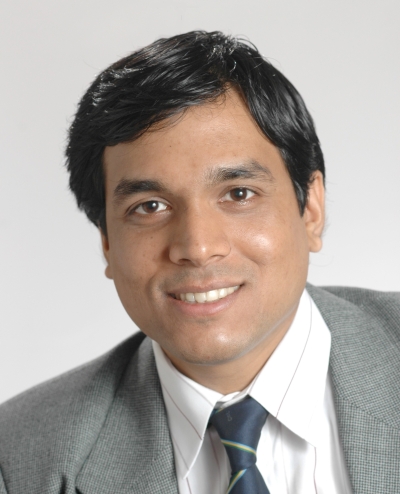
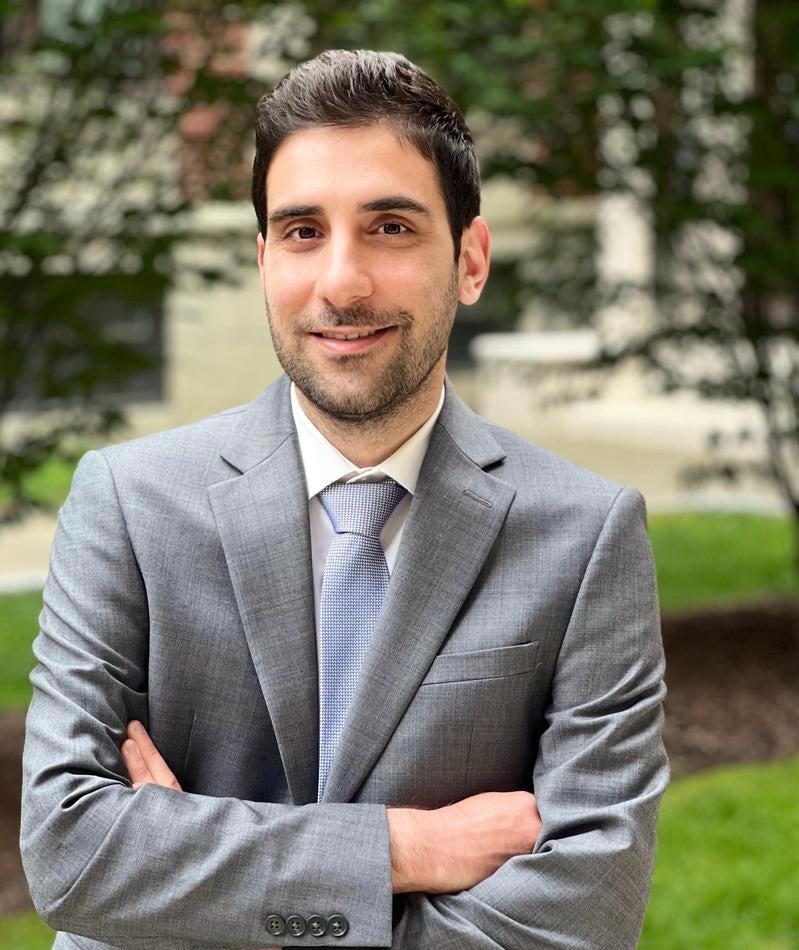
Holger Fröning is a full professor at Heidelberg University’s Institute of Computer Engineering (ZITI), where he leads the Hardware and Artificial Intelligence (HAWAII) Lab. His research focuses on embedded machine learning , high-performance computing , and hardware-software co-design , with emphasis on resource efficiency, power optimization, and emerging architectures like analog , photonic , and resistive memory systems. He has held leadership roles including Managing Director of ZITI (2023–present) and Dean of Studies for Computer Science (2019–2022) , and has collaborated with institutions such as NVIDIA Research, Chinese Academy of Sciences, and Graz University of Technology. Research Trends : His recent publications explore Bayesian neural networks , green machine learning , analog computing noise mitigation , and GPU/FPGA optimization . Articles highlight photonic computing for AI , memory-efficient training , and hardware-aware DNN compression . Scientific Awards : 2025 HiPEAC Paper Award (Nature Computational Science) 2014 Google Faculty Research Award Multiple Best Paper Awards (IPDPS, ICPP, ECML-PKDD workshops) Leadership & Service : Organized workshops (WEML, ITEM, F4HD), chaired tracks at EuroPar and ISC, and served on program committees for ICPR, ECAI, and FPL. Education & Affiliations : PhD and MSc from University of Mannheim (2007/2001). Sponsors include DFG, FWF, FFG, NVIDIA, SAP, and XILINX.
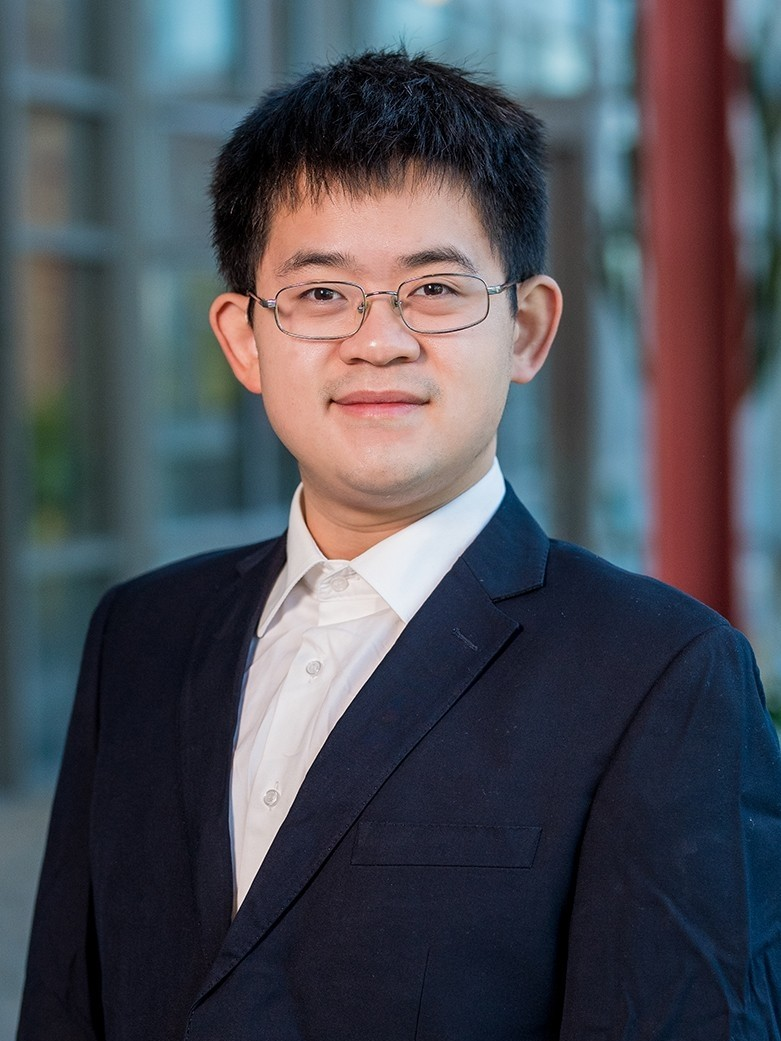
Sanjit A. Seshia is the Cadence Founders Chair Professor in the Department of Electrical Engineering and Computer Sciences at the University of California, Berkeley . He is affiliated with the Group in Logic and the Methodology of Science and participates in centers like the Industrial Cyber-Physical Systems Center , Berkeley AI Research , and the Simons Institute for the Theory of Computing . Research interests include formal methods for automated verification and synthesis of dependable systems, with applications to cyber-physical systems , AI-based autonomy , and computer security . His work spans SMT solving, model counting, syntax-guided synthesis, and algorithmic improvisation, with tools like UCLID5 , VerifAI , and Scenic for verifying autonomous systems and educational platforms like CPSGrader . Students and collaborators include notable researchers such as Dorsa Sadigh (Stanford), Daniel Fremont (UC Santa Cruz), and Hazem Torfah (Chalmers). He has co-founded startups like Decyphir and 20ⁿ Labs based on his research.
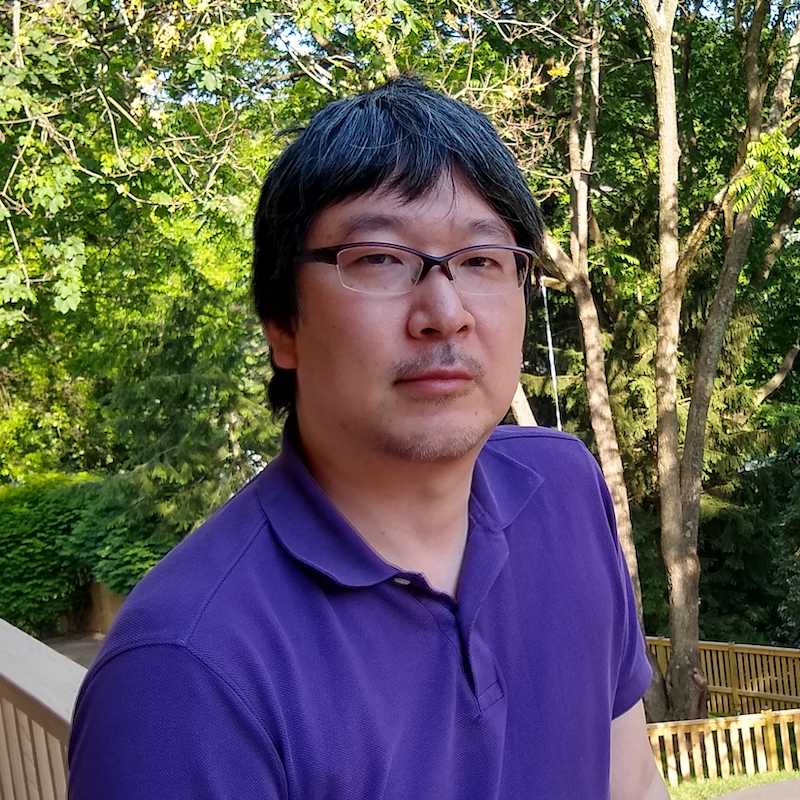
Linyi Li is an Assistant Professor in the School of Computing Science at Simon Fraser University (SFU), leading the Trustworthy Artificial Intelligence (TAI) Lab. His research focuses on certifiably trustworthy deep learning systems, combining machine learning and computer security. He holds a PhD from the University of Illinois Urbana-Champaign (UIUC) and a B.Eng. from Tsinghua University. Affiliations: Simon Fraser University, TAI Lab Education: PhD in Computer Science, UIUC, 2023 B.Eng (Cum Laude), Tsinghua University, 2018 His research interests include deep learning , trustworthy machine learning , large language models , and software engineering . He emphasizes rigorous certification of robustness, fairness, and numerical reliability in AI systems. Recent work includes the InfiBench benchmark for evaluating code LLMs and advancements in neural network verification. Recent Research Trends: His publications span certified robustness, fairness guarantees, and scalable verification techniques for deep learning models. He also explores scientific evaluation of foundation models and adversarial defense mechanisms. Awards: Rising Stars in Data Science AdvML Rising Star Award Wing Kai Cheng Fellowship Finalist: Qualcomm Innovation Fellowship (2022) Winner: VNN-COMP'23 Competition (Team α, β-CROWN) Advising & Grants: As a PI, he oversees the TAI Lab's research. Though no specific grants are listed, his work is funded through competitive awards and university resources. Labs/Teams: Leads the TAI Lab at SFU, focusing on foundational and applied research in trustworthy AI.
Prof. Dr. Julia Vogt is an Assistant Professor at the Department of Computer Science at ETH Zürich, leading the Professur für Medizin. Datenwiss. Her research focuses on medical machine learning, data science, and AI applications in healthcare. She specializes in developing interpretable AI systems for clinical decision support, particularly in pediatric diabetes management, medical imaging analysis, and anomaly detection. Her work bridges translational gaps by emphasizing causal approaches and clinical validation. Her academic role includes teaching courses like the Data Science Lab (263-3300-00L/10L) and Topics in Medical Machine Learning (263-5100-00L). Her lab's research spans predictive modeling for nocturnal hypoglycemia, echocardiogram analysis for pulmonary hypertension detection, and multimodal learning in radiology. She also contributes to national pediatric data initiatives like SwissPedHealth. Key technical areas include concept bottleneck models, stochastic AI frameworks, and generative models for medical signal denoising. Her work often emphasizes model interpretability, fairness, and robustness to distribution shifts. She collaborates on projects involving wearable devices for pediatric monitoring and AI-driven rehabilitation tools for post-stroke gait analysis.
Shinji Watanabe is an Associate Professor at Carnegie Mellon University's Language Technologies Institute and a Courtesy Professor in the Electrical and Computer Engineering department. He holds a Ph.D. (Dr. Eng.) from Waseda University, Japan, and has held research roles at NTT Communication Science Laboratories, Mitsubishi Electric Research Laboratories (MERL), and Johns Hopkins University. His research focuses on automatic speech recognition, speech enhancement, and machine learning for speech processing. Watanabe has published over 300 peer-reviewed papers and received the Best Paper Award at IEEE ASRU 2019. His work emphasizes robust speech processing in challenging environments, multilingual models, and neural audio codecs. He leads the ESPnet toolkit development for end-to-end speech processing systems and contributes to technical committees like IEEE SLTC and APSIPA SLA. Recent research trends include streaming speech systems, universal speech enhancement (URGENT challenges), and fusion of discrete speech units with self-supervised representations. He explores scalable speech foundation models through benchmarks like ML-SUPERB 2.0 and investigates cross-modal audio-visual processing in challenges like MISP 2025. Education : B.S., M.S., Ph.D. (Waseda University) Affiliations : CMU Language Technologies Institute, CMU ECE, Former roles at MERL and Johns Hopkins Key Projects : ESPnet, OpenWhisper-Style Models, URGENT Challenge Frameworks
Berrak Sisman is an Assistant Professor in the Department of Electrical and Computer Engineering at Johns Hopkins University, affiliated with the Data Science and AI Institute and the Center for Language and Speech Processing (CLSP). She leads the Speech & Machine Learning Lab (SmILe Lab), focusing on AI-driven speech technologies. She received her PhD from the National University of Singapore in 2020 and was previously a tenure-track faculty member at the University of Texas at Dallas (2022–2024). Research Interests: Her work spans artificial intelligence, speech synthesis, voice conversion, emotion analysis in speech, medical speech applications, and secure speech technology. She develops neural models for expressive and adaptive speech processing. Publications: Her recent articles (2024–2025) emphasize speech emotion recognition, zero-shot prosody control, accent conversion, and disentangled representations in TTS, reflecting a focus on cross-modal learning, robustness, and real-world applications. Awards & Grants: NSF CAREER Award (2024) Amazon Faculty Research Award (2022) Singapore Ministry of Education Award (2021) A*STAR Singapore International Graduate Award (2016–2020) Leadership: She directs the SmILe Lab, recruiting PhD/Master’s students for projects in neural speech modeling. Her grants include NSF and Amazon funding for voice conversion and emotion synthesis research.
Anna Levina is an Assistant Professor for Computational Neuroscience at the University of Tübingen , affiliated with the Department of Computer Science under the Faculty of Science. Her research focuses on the self-organization of neuronal activity, critical dynamics in neural networks, and the excitation/inhibition balance in cortical circuits. Current positions: Assistant Professor (since 2018), Group Leader (2017-2018), Equality Officer (Computer Science) Previous roles: IST Fellow (2015-2017), Associated Researcher (2011-2015), Postdoc/PI (2011-2015), Postdoc (2008-2011) Her research integrates mathematical modeling , statistical physics , and computational neuroscience to study criticality phenomena, neural avalanches, and adaptive network dynamics. Key interests include: Self-organized criticality in neural systems Excitation/Inhibition balance mechanisms Network topology and dynamics Timescale analysis in neural processing Stochastic modeling of neural activity Recent publications reveal trends in understanding critical dynamics across biological and artificial networks, with applications to memory systems, sensorimotor integration, and disease modeling. She has received recognition as an IST Fellow .
Aaron Smith is an Associate Professor in the Department of Mathematics and Statistics at the University of Ottawa, affiliated with the Faculty of Science. He holds a PhD from Stanford University. His research focuses on applied probability, computational statistics, Monte Carlo methods, and Markov chains, with an emphasis on advancing theoretical understanding and practical applications of these methodologies. Dr. Smith's work includes contributions to community detection algorithms, Markov chain mixing times, and synthetic health data generation. His recent publications explore topics such as nonstandard Dirichlet form representations, perturbation analysis of MCMC algorithms, and sparse Bayesian multidimensional scaling. He advises students in applied probability and has supervised postdoctoral researchers in related fields. His research interests span a wide range of topics, including stochastic processes, statistical inference, and algorithm design. He is particularly known for his analysis of convergence rates in Markov chains and the development of efficient sampling techniques for complex models. His interdisciplinary work bridges theoretical mathematics and practical computational challenges in data science and healthcare. Dr. Smith collaborates on projects involving synthetic data frameworks for privacy-preserving applications and has contributed to foundational work on mixing times and perturbation effects in stochastic systems.
Harold D. Chiang is an Assistant Professor in the Department of Economics at the University of Wisconsin-Madison. His research focuses on econometric theory and methods, particularly robust inference techniques for clustered and network data, machine learning applications, and causal inference frameworks like regression discontinuity/kink designs. He employs computational statistics and asymptotic theory to address methodological challenges in high-dimensional and complex datasets.
Mohammad Mohammadi Amiri serves as an Assistant Professor in the Department of Computer Science at Rensselaer Polytechnic Institute (RPI), appointed in Fall 2023. His research focuses on advancing artificial intelligence through strategic data utilization, with emphasis on large language models, data valuation, federated learning, and deep learning. Previously, he held postdoctoral appointments at Princeton University and MIT Media Lab, building on his strong educational foundation from Imperial College London, University of Tehran, and Iran University of Science and Technology. Education: Ph.D. in Electrical and Electronic Engineering, Imperial College London (2019) - Best Ph.D. Thesis Award recipient M.Sc. in Electrical and Computer Engineering, University of Tehran (2014) - Ranked 1st among all M.Sc. students B.Sc. in Electrical Engineering, Iran University of Science and Technology (2011) - Ranked 1st among all B.Sc. students Dr. Amiri's research centers on optimizing artificial intelligence systems through innovative data strategies. His work addresses critical challenges in large language models including efficiency, memory usage, alignment, and reasoning capabilities. In data valuation, he develops principled methods to quantify data worth for fair trading platforms. His federated learning research tackles privacy concerns, heterogeneous data distribution, and communication overhead in decentralized environments. The deep learning component explores theoretical foundations to improve model interpretability and robustness. Analysis of his recent publications reveals a strong focus on making AI systems more efficient and accessible, with particular emphasis on large language model optimization, federated learning advancements, and data valuation frameworks. His work bridges theoretical foundations with practical applications in wireless communications and distributed computing environments. Scientific Awards: IEEE Communications Society Young Author Best Paper Award (2022) Best PhD Thesis Award from IEEE Information Theory Chapter of UK and Ireland (2019) Eryl Cadwallader Davies Prize for Outstanding PhD Thesis (2019) EEE Departmental Scholarship at Imperial College London (2015-2019) Ranked 1st among M.Sc. students at University of Tehran (2014) Ranked 1st among B.Sc. students at Iran University of Science and Technology (2011) Dr. Amiri actively mentors graduate students, currently supervising five Ph.D. candidates and one M.Sc. student working on efficient LLM fine-tuning, inference, and storage. His research has attracted significant attention, evidenced by numerous keynote invitations at prestigious institutions including Bell Labs, MIT, King's College London, and various IEEE conferences. He serves on program committees for major conferences including IEEE Globecom and ICC, demonstrating his growing influence in the academic community. His research group operates at the intersection of machine learning and wireless communications, developing innovative solutions for resource-constrained environments while addressing fundamental theoretical challenges in AI systems. Current projects focus on making advanced AI more scalable and accessible through efficiency improvements in model training and inference.
LEE Wee Sun is a Professor in the Department of Computer Science at the National University of Singapore (NUS), where he previously served as Head of Department, Vice Dean of Undergraduate Studies, and Vice Dean of Research. His academic journey began with a B.Eng. in Computer Systems Engineering from the University of Queensland (1992) and a Ph.D. from the Australian National University (1996), followed by research roles at the Australian Defence Force Academy and MIT. Education: Ph.D., Australian National University, Canberra, Australia (1996) B.Eng. in Computer Systems Engineering, University of Queensland, Brisbane, Australia (1992) Research Focus: Professor Lee pioneers work in Machine Learning , Planning Under Uncertainty , and Approximate Inference , with emphasis on integrating AI subfields for holistic reasoning. His current projects include "Learning to Decompose for Reasoning and Planning" (enhancing LLMs via self-supervised problem decomposition) and "Learning to Reason with Visual-Linguistic Inputs" (unifying vision, language, and reasoning in single architectures). Publication Trends: Recent work (2023-2025) centers on bridging LLMs with classical AI techniques, featuring breakthroughs in uncertainty quantification, multi-task optimization, and graph-based reasoning. Key themes include sparsity-aware vehicle routing, epistemic uncertainty for reliable LLMs, and differentiable neural solvers for combinatorial problems. Awards: IJCAI-JAIR Best Paper Prize (2022) RSS Test of Time Award (2021) RoboCup Best Paper Award (IROS 2015) HRATC 1st Place (2015) IPPC POMDP Track 1st Place (2011, 2014) UAI Google Best Student Paper (2014) Semeval-1 1st/2nd Place (2007) J.G. Crawford Prize (ANU 1996) Leadership & Service: As steering committee chair for ACML and area chair for NeurIPS/ICML/AAAI/IJCAI, Professor Lee shapes global AI discourse. His administrative roles at NUS and collaborations with MIT/Singapore-MIT Alliance demonstrate commitment to advancing AI education and research infrastructure. While student advisees aren't listed, his leadership positions imply extensive mentoring. Research Ecosystem: His work drives NUS's AI initiatives including Knowledge@Computing projects on reasoning frontiers. Current efforts focus on making AI systems robust through uncertainty-aware planning and multi-modal integration, with applications in robotics, verification systems, and combinatorial optimization.
Academic Profile: Damir Filipovic is a Full Professor and the Swissquote Chair in Quantitative Finance at the College of Management of Technology (CDM) of École Polytechnique Fédérale de Lausanne (EPFL), Switzerland. He previously held academic positions at the University of Vienna, University of Munich, and Princeton University, and served as Head of the Vienna Institute of Finance. Research Focus: Quantitative finance, risk management, stochastic processes, term structure modeling, volatility risk, and machine learning applications in financial markets. Industry Collaboration: Co-developed the Swiss Solvency Test for insurance capital requirements while consulting for the Swiss Federal Office of Private Insurance. Publications: Contributed extensively to journals like Journal of Financial Economics, Mathematical Finance, and Annals of Applied Probability, with a textbook on Term-Structure Models. Academic Service: Editorial board member of multiple journals and organizer of advanced workshops on systemic risk and financial technology. Recent Research: His work emphasizes machine learning for portfolio risk management, kernel-based yield curve estimation, and robust stochastic modeling. Keynote speaker at international conferences on finance and insurance mathematics, with over 15 recent publications in 2023-2025 addressing high-dimensional financial problems, neural control systems, and causal inference in market data. Education: Ph.D. in Mathematics from ETH Zurich (2000). Graduate of ETH Zurich and University of Vienna. Teaching & Mentorship: Supervises current and former EPFL Ph.D. students in quantitative finance, including Nicolas Camenzind, Joshua Hayes, Andrea Ruglioni, and ten others. Former students like Damien Ackerer and Lotfi Boudabsa now lead research in risk management. Labs & Programs: Directs EPFL's Finance and Technology Programme, leads the Computational Finance Group (CSF) at EPFL, and contributes to Swiss Finance Institute initiatives. Scientific Leadership: Served on EPFL Committee of Academic Evaluation and Doctoral Program Finance committee.
Max Lau is an Assistant Professor in the Department of Biostatistics and Bioinformatics and the Department of Epidemiology at Emory University. His research focuses on integrating machine learning and computational methods with epidemiological and genomic data to study infectious disease dynamics. He teaches courses such as BIOS 790R (Advanced Seminar in Biostatistics) and DATA 534 (Applied Machine Learning). Dr. Lau's work emphasizes scalable Bayesian inference, graph neural networks, and stochastic modeling to address challenges in disease transmission, outbreak control, and pathogen evolution. His recent research includes developing tools like ScITree and Epilearn, and he has contributed to understanding measles dynamics, tuberculosis treatment, and livestock disease management. His academic contributions span over 30 publications since 2010, with a particular focus on phylodynamics, epidemic modeling, and vaccine strategy evaluation. His interdisciplinary approach bridges computational methods with public health applications, aiming to enhance disease prediction and intervention efficacy.
Zhuo Feng is Professor of Electrical and Computer Engineering at Stevens Institute of Technology, directing the HUDSON Lab and holding a Ph.D. from Texas A&M University. His research develops spectral graph methods for VLSI design, including circuit simulation, power grid verification, and machine learning applications. Funded by NSF CAREER and multiple grants, his work has produced award-winning algorithms like GRASS for graph sparsification. Recent publications focus on spectral methods for circuit stability analysis, physics-informed neural networks, and explainable AI frameworks. He teaches graduate courses in VLSI design and GPU programming while co-founding LeapLinear Solutions. NSF CAREER Award (2014) ACM/IEEE DAC Best Paper Award (2013) Multiple Best Paper Nominations (ICCAD 2008, 2006)
Giancarlo Ferrari Trecate is an Adjunct Professor at the Swiss Federal Institute of Technology Lausanne (EPFL) , affiliated with the School of Engineering and the SCI-STI-GFT department. He is also involved in teaching and research through the STI-SGM and EDRS-ENS programs. Research Interests : Automatic control, state estimation, system identification, machine learning, distributed control, hybrid systems, microgrids, biochemical networks, voltage and frequency stabilization in AC/DC microgrids. Publications Trends : His recent work focuses on integrating Neural ODEs and Hamiltonian structures for stable control systems, regret minimization in distributed control, and robust state estimation under uncertainty. Applications include autonomous mobility-on-demand , power grid optimization , and secure microgrid control against cyber-attacks. Scientific Awards : No specific awards mentioned in the provided data. Teaching & Advising : He supervises PhD students in mechanical engineering and teaches courses on Multivariable control and Networked control systems . His lab, DECODE , specializes in Dependable Control and Decision systems.