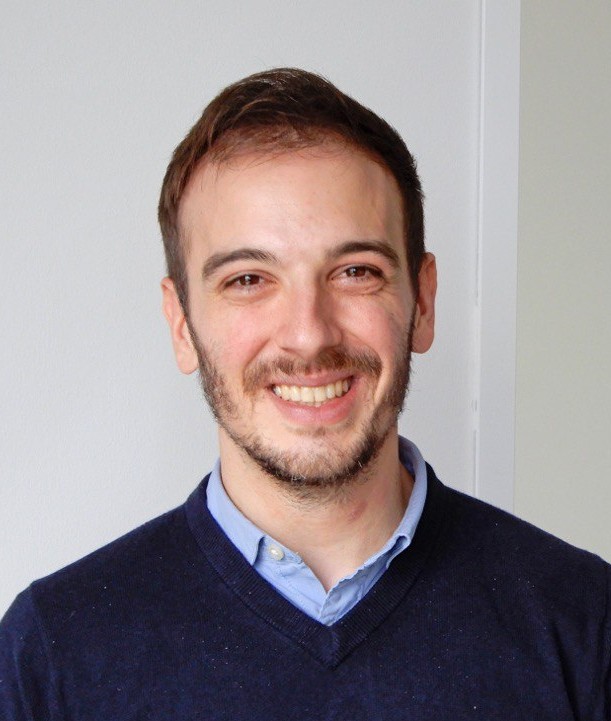
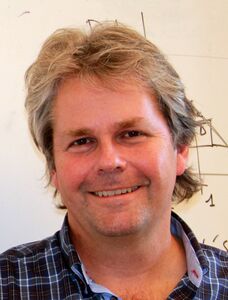
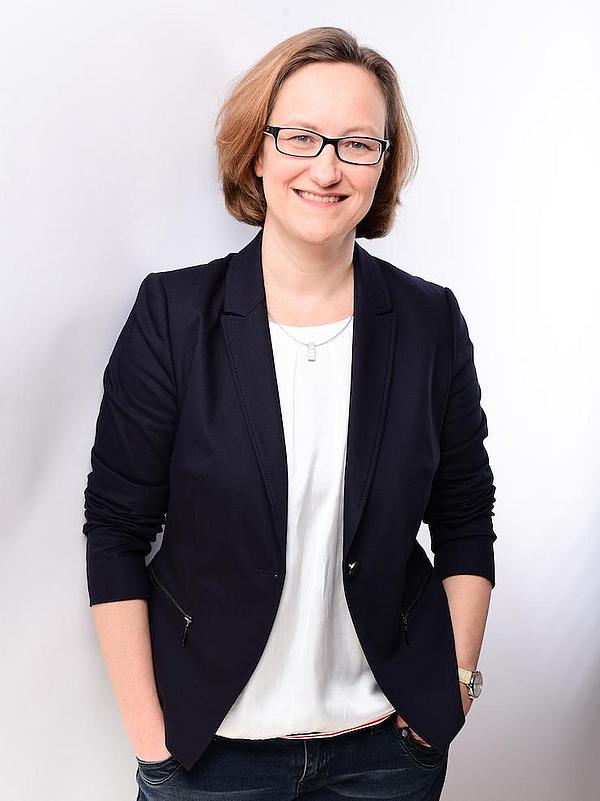
Mike Kosek (Dr. rer. nat.) is a Research Fellow at the Chair of Connected Mobility (Department of Informatics) at the Technical University of Munich (TUM). His research focuses on transport protocols, congestion control, internet architecture, and internet measurements. Research Interests: Transport protocol design and analysis Congestion control mechanisms Internet architecture and measurement Network performance optimization DNS protocol behavior and privacy Applications in satellite and aerial communication Recent Research Trends: His publications emphasize QUIC protocol analysis, DNS over QUIC investigations, cross-layer protocol interactions, and satellite communication adaptations. Key methodologies include real-world measurements, protocol design extensions, and dataset creation for reproducibility. Contact: E-mail: kosek@in.tum.de Phone: +49 89 289-18665 Office: 01.05.038, Boltzmannstr. 3, 85748 Garching
Prof. Dr.-Ing. Elisabeth Clausen is a Professor and Director of the Chair and Institute for Advanced Mining Technologies at RWTH Aachen University. She holds key roles in the Specialist Group for Raw Materials and Disposal Technology, serves as a rectorate representative, and leads the Commission for EU Research Funding. Her research spans Underground mining automation Acoustic emission diagnostics Sustainable mining systems Space resource extraction Advanced sensor technologies Her recent publications focus on autonomous mining machinery, underground communication systems, and acoustic emission analysis across 15+ studies from 2013–2025, with particular emphasis on Ultra-wideband positioning Thermographic detection Crack monitoring in planetary gearboxes Explosive atmosphere safety Mineral processing diagnostics Digitalization trends Prof. Clausen contributes to mining education reform through initiatives like CDIO™ and has developed innovative learning spaces in underground mines. She coordinates international educational labs and integrates sustainability into mining engineering curricula, with publications on Adaptive ventilation systems Mining education frameworks Future-proof mineral extraction Entrepreneurial mindset in engineering
Carlo D'Eramo is a Professor of Reinforcement Learning and Computational Decision-Making at the University of Würzburg. He leads the LiteRL group at hessian.AI until 2025 and is affiliated with the Intelligent Autonomous Systems group at TU Darmstadt's Computer Science Department, as well as the Hessian Centre for Artificial Intelligence. Ph.D. : Information Technology, Politecnico di Milano (2019) Double MSc : Computer Engineering, Politecnico di Milano (2015) and University of Illinois at Chicago (2015) BSc : Computer Engineering, Politecnico di Milano (2011) His research focuses on lightweight reinforcement learning methods for adaptive autonomous agents, spanning multi-task/curriculum RL, multi-agent RL, deep RL, uncertainty quantification, residual learning, and planning. He developed MushroomRL, a widely adopted RL library, and investigates how agents can acquire real-world expert skills efficiently. The 15 most recent publications highlight trends in deep reinforcement learning architectures, adversarial and multi-agent systems, domain randomization, and curriculum design. Key subfields include optimal transport applications, entropy maximization, neural network distillation, and bounded rationality frameworks for robust learning. He has contributed to top venues like ICML, NeurIPS, AAAI, ICLR, JMLR, and IEEE Transactions on Pattern Analysis and Machine Intelligence, with a focus on advancing scalable and adaptive RL methodologies.
Amol Deshpande is a Professor in the Department of Electrical Engineering and Computer Sciences at the University of California, Berkeley, College of Engineering. With over 160 publications spanning from 2000 to 2025, his research has significantly impacted the database systems community. His work bridges theoretical foundations with practical systems, evidenced by numerous publications in top-tier venues including SIGMOD, VLDB, and ICDE. Professor Deshpande's research focuses on database systems, with particular expertise in graph databases, data management, probabilistic databases, query optimization, and data provenance. His work addresses fundamental challenges in managing complex data, including efficient graph analytics, dataset versioning, streaming data processing, and privacy-preserving data management. Recent research directions include entity-relationship abstractions beyond traditional relations, standalone catalog engines for large data systems, and graph theoretical approaches to dataset versioning. His publication trends show a consistent focus on evolving database technologies, with early work on probabilistic databases and query optimization, transitioning to graph analytics and data provenance, and more recently addressing modern challenges in data cataloging, privacy-first data management, and serverless stream processing. His research spans both theoretical contributions (e.g., approximation algorithms for stochastic optimization) and practical systems building (e.g., RStore, TreeCat). Professor Deshpande has mentored numerous PhD students who have become active researchers in the database community, including Hui Miao, Souvik Bhattacherjee, and Konstantinos Xirogiannopoulos. His collaborative work spans across institutions, with frequent collaborations with researchers from MIT, University of Maryland, and other leading institutions. His research has been supported by major funding agencies and has influenced both academic research and industry practices in data management. The evolution of his work reflects the changing landscape of data management, from traditional relational systems to modern graph and streaming data challenges.
Thomas Berger is a Professor at the University of Hohenheim , affiliated with the Faculty of Agricultural Sciences and leading the Department of Economics of Land Use . He also contributes to the Computational Science Hub and Hohenheim Tropics initiatives. Focus Areas: Climate change adaptation, land-use modeling, biodiversity-productivity trade-offs, agent-based simulation, and machine learning in agricultural systems. Key Projects: Simulation frameworks for smallholder resilience in Ethiopia, bioeconomic modeling in the Amazon, and hybrid intelligence applications in European agricultural policy. Recent Publications: 2025 study on climate change effects on insecticide reduction in Germany, 2024 work on reconciling biodiversity with productivity via hybrid models, and 2023 methodological contributions to surrogate modeling and seasonal forecast integration. Research Trends: Interdisciplinary integration of climate science, agricultural economics, and computational modeling, with increasing emphasis on AI-assisted decision support systems and sustainability policy validation. Teaching & Outreach: Offers Agricultural Economics seminars and Hohenheim Tropics discussions, requiring advance email registration for office hours.
Maximilian Egger is a Doctoral Researcher at the Institute for Communications Engineering under Prof. Antonia Wachter-Zeh at the Technical University of Munich (TUM). His research focuses on distributed machine learning, privacy-preserving computing, and information theory. He holds an M.Sc. in Electrical Engineering and Information Technology (2022, TUM) and a B.Eng. in Electrical Engineering (2020). He has conducted research stays at École Polytechnique Fédérale de Lausanne (2024) and Imperial College London (2023). Egger has received several awards, including the DAAD Scholarship (2023) and the VDE Award Bavaria (2020). His work emphasizes secure federated learning, Byzantine-resilient systems, and efficient distributed algorithms. He is affiliated with the Chair of Coding and Cryptography and actively contributes to advancements in decentralized learning systems. Recent publications highlight breakthroughs in privacy preservation, channel capacity estimation, and scalable federated edge learning.
Michio Sugeno is a distinguished Professor at Tokyo Institute of Technology's Graduate School of Information Science and Engineering, Department of Computational Intelligence. With a career spanning over four decades, he has established himself as a leading figure in fuzzy systems and computational intelligence. His research interests encompass Fuzzy Systems, Computational Intelligence, Nonlinear Control, Choquet Integral theory, Brain-Computer Interfaces, and Linguistic Computing. Sugeno's work has fundamentally shaped modern fuzzy control theory, particularly through his development of the Takagi-Sugeno fuzzy model which has become a standard approach in industrial applications. Analysis of his recent publications reveals a continued focus on piecewise nonlinear modeling, stability analysis of fuzzy systems, and the application of Choquet calculus to various computational problems. His work demonstrates a consistent trajectory from theoretical foundations to practical implementations in control systems and intelligent computing. IEEE Pioneer Award in Fuzzy Systems IFSA Fellow Emanuel R. Piore Award Sugeno has mentored numerous researchers who have become prominent in their own right, including Tadanari Taniguchi, Luka Eciolaza, and Anh-Tu Nguyen. His laboratory has been instrumental in developing novel approaches to nonlinear control systems using piecewise bilinear models and fuzzy logic. Current research directions include brain-computer interfaces using EEG analysis and the development of everyday language computing systems that enable more natural human-computer interaction.
Karl-Erik Årzén is Professor and Head of the Department of Control Engineering at Lund University's Faculty of Engineering. He is also Co-director of the Wallenberg AI, Autonomous Systems and Software Program (WASP) and a key member of ELLIIT, the excellence center in information technology. His roles include leadership in AI and digitalization profile areas at both LTH and Lund University. His research lies at the intersection of control engineering and computer science, with a focus on cyber-physical systems, real-time systems, embedded control, and resource management in cloud and edge computing environments. He has pioneered methods for predictable performance in cloud applications and dynamic resource allocation using control-theoretic approaches. The recent publications highlight a strong trend in control over the cloud and edge, real-time scheduling co-design, distributed camera systems, and reinforcement learning for auto-scaling. Key topics include model predictive control, LQG-based scheduling, bandwidth allocation, and robustness in cyber-physical systems. The work spans theoretical control design and practical implementation in distributed systems. His scientific awards include multiple Best Paper Awards from IEEE and ACM conferences in 2018, 2016, and 2004, recognizing excellence in autonomic computing, edge computing, and real-time systems. Best Paper Award, IEEE International Conference on Autonomic Computing, 2018 Best Paper Award, IEEE International Conference on Edge Computing (EDGE), July 2018 Best Paper Award - RTNS 2016 Best Paper Award - RTCSA 2004 Årzén has supervised over 20 PhD students, including Mikael Johansson, Anton Cervin, Yang Xu, and Per Skarin, and currently supervises Ahmed Al Bayati and Max Nyberg Carlsson. His grant portfolio includes major projects such as WASP, AORTA (VINNOVA), and ELLIIT's 'Robust and Secure Control over the Cloud'. He has also contributed to innovation through tools like TrueTime and Jitterbug. He leads the RobotLab LTH initiative and is involved in the Nordic University Hub on Industrial Internet of Things (HI2OT). His work bridges academia and industry, with collaborations on adaptive control, cloud-native systems, and autonomous robotics.
Prof. Laura Vargas Koch serves as Junior Professor at RWTH Aachen University, leading the Teaching and Research Unit of Algorithmic Game Theory and Discrete Mathematics (GDM). Her interdisciplinary work bridges mathematics, computer science, and economics through rigorous theoretical frameworks. Her research focuses on: Algorithmic Game Theory : Analyzing fair pricing mechanisms and equilibrium structures in traffic flow systems Combinatorial Optimization : Developing approximation algorithms for clustering problems and graph-based optimization Analysis of her 2021-2025 publications reveals evolving expertise in dynamic traffic modeling, routing game equilibria, and auction mechanism design. Her work consistently addresses theoretical foundations while maintaining practical relevance to transportation networks and resource allocation systems. The GDM unit under her direction provides specialized coursework and fosters collaborative research at the intersection of discrete mathematics and economic modeling.
Nicole Megow is a Professor holding the chair for Combinatorial Optimization in the Faculty of Mathematics and Computer Science at the University of Bremen since 2016. She is affiliated with several research clusters including Humans on Mars Initiative, Minds, Media, Machines, and Dynamics in Logistics. Her academic journey includes positions at TU Berlin, Max Planck Institute for Informatics, TU Darmstadt, and TU Munich. Professor Megow's research focuses on mathematical optimization, algorithm design and analysis, and operations research. Her specific interests span combinatorial and discrete optimization, efficient algorithms, scheduling theory, resource allocation, packing problems, network design, routing, and uncertainty models including online, stochastic, robust, and explorable approaches. Her work bridges theoretical foundations with practical applications in logistics and decision-making systems. Her recent publications demonstrate a strong trend toward integrating prediction models with traditional optimization frameworks, particularly in scheduling and matching problems. She has made significant contributions to understanding the role of uncertainty in optimization problems, developing algorithms that work effectively with incomplete or uncertain information. Her work spans multiple prestigious venues including Mathematical Programming, Algorithmica, SODA, STACS, and NeurIPS. Dissertation Award by the German Operations Research Society (2007) Berlin Science Award for Young Researchers (2013) Heinz Maier-Leibnitz Prize (2013) Listed among Germany's top 40 researchers below 40 (Capital, 2014, 2015) Professor Megow actively supervises PhD students and postdocs, including Max Stahlberg, Joes Biburger, Sarah Morell, Bart Zondervan, Zhenwei Liu, and Alexander Lindermayr. She serves on numerous program committees for major conferences including SODA, IPCO, and STOC, and holds editorial positions for several prestigious journals. Her current research projects include Optimization under Explorable Uncertainty (DFG funded), How robots learn how to use structure (seed grant from MMM research cluster), and Scheduling Invasive Multicore Programs Under Uncertainty (within TCRC 89).
Yannic Noller is a Professor at the Faculty of Computer Science at Ruhr University Bochum (RUB), leading the Software Quality group. Previously, he held positions as Assistant Professor at Singapore University of Technology and Design (SUTD) and Research Assistant Professor at National University of Singapore (NUS). His research focuses on automated software engineering, including program repair, machine learning analysis, and software testing. He earned his Ph.D. from Humboldt-Universität zu Berlin under Prof. Lars Grunske, with a thesis on hybrid differential software testing. Education: Ph.D. in Computer Science (2016-2020, Humboldt-Universität), M.Sc. (2013-2016, University of Stuttgart), B.Sc. (2010-2013, University of Stuttgart). Research interests include automated program repair techniques, machine learning model analysis, and intelligent tutoring systems for programming education. Notable contributions include HyDiff (hybrid differential analysis tool) and CPR (concolic program repair). Awards include the Distinguished Artifact Reviewer at ISSTA'2021 and multiple scholarships for academic excellence. Teaching includes courses on software engineering, requirements engineering, and automated software engineering.
Dr. Kevin G. Jamieson is a faculty member at the University of Washington , School of Computer Science , with prior affiliations at the University of California, Berkeley (Department of Electrical Engineering and Computer Sciences) and the University of Wisconsin-Madison (Department of Electrical and Computer Engineering). His work spans machine learning, reinforcement learning, bandit algorithms, and robotics. Current university: University of Washington Academic rank: Professor His research focuses on: Bandit algorithms and sequential decision-making Optimization in non-stationary environments Reinforcement learning with real-world applications Multi-agent systems and game theory Efficient data selection for multimodal learning Human-in-the-loop AI systems Recent publications highlight his expertise in pure exploration strategies, robotic manipulation, and bridging simulation-to-reality gaps in RL. He has mentored numerous collaborators, though formal student advising details are not explicitly listed here. No scientific awards are mentioned in the provided data.
Cuiyun Gao is a Full Professor and PhD Supervisor at the School of Computer Science and Technology, Harbin Institute of Technology, Shenzhen. She has established herself as a prominent researcher in the intersection of artificial intelligence and software engineering. Her educational background includes a PhD from the Chinese University of Hong Kong (completed in 2018), followed by postdoctoral work at CUHK and a Research Fellowship at Nanyang Technological University. She also had a visiting period at University College London supervised by Prof. Mark Harman and Prof. Federica Sarro. Dr. Gao's research primarily focuses on Software Repository Mining, Natural Language Processing, Code Analysis, Large Language Models, Source Code Understanding, User Review Analysis, Vulnerability Detection, and Mobile Advertising Analysis . Her work bridges the gap between traditional software engineering practices and modern AI techniques, particularly in the context of code intelligence and software maintenance. Her recent publications (2024-2025) demonstrate a strong emphasis on Large Language Models for code-related tasks, including code generation, optimization, vulnerability detection, and software engineering applications. Her research shows a clear trend toward addressing practical challenges in integrating LLMs into the software development lifecycle while maintaining code quality and security. Scientific Awards: Distinguished Paper Award at ASE 2023 Best Paper Award of the Track at ICSE 2024 Distinguished Paper Award at ICSE 2024 Dr. Gao actively supervises multiple PhD and Master's students, contributing to the next generation of software engineering researchers. She has served on numerous conference committees including FSE, ISSTA, ICSE, ASE, and SANER. Her research has received significant attention in the software engineering community, with multiple papers published in top-tier venues like FSE, ICSE, ASE, and TSE. Her lab appears to be actively engaged in both theoretical research and practical applications, particularly in the context of WeChat and other industry collaborations, demonstrating strong industry-academia connections.
Paul R. Genssler is a Dr.-Ing. researcher at the Chair of AI Processor Design (AI-Pro) within the Technical University of Munich (TUM), actively advancing hardware solutions for artificial intelligence under Prof. Hussam Amrouch. His work bridges computer engineering and emerging technologies, focusing on overcoming fundamental limitations in conventional computing architectures through brain-inspired paradigms. His research spans critical domains in next-generation computing: Hyperdimensional Computing for robust pattern recognition and bioinformatics applications Neuromorphic and In-Memory Computing architectures for energy efficiency Reliability engineering for emerging memory technologies (FeFET, etc.) Quantum computing support systems including cryogenic embedded electronics Machine learning-driven transistor aging prediction and mitigation Analysis of his 15 most recent publications (2023-2024) reveals a dominant trend toward hyperdimensional computing as a unifying framework for addressing reliability challenges in emerging technologies. His work consistently integrates in-memory computing techniques to bypass von Neumann bottlenecks while targeting real-world applications like genome matching and unsupervised learning. A significant portion focuses on error-resilient implementations for unreliable nanoscale devices, demonstrating exceptional cross-stack expertise from transistor physics to algorithm design. As a core member of TUM's AI Processor Design group affiliated with the Munich Institute of Robotics and Machine Intelligence (MIRMI), Genssler collaborates extensively on projects spanning cryogenic quantum control systems, FPGA-based AI resilience, and monolithic 3D integration. The team operates at the intersection of semiconductor physics, computer architecture, and machine learning, with strong industry connections evident through publications at DATE, ASP-DAC, and ICCAD.
Prof. Felix Motzoi is an Associate Professor at the University of Cologne and Division Leader & Head of the 'Automatic Optimization, Control and Design' group at the Peter Grünberg Institute (PGI-8) in Jülich. His research focuses on advancing quantum technologies, including superconducting and semiconducting architectures, trapped cold atoms/ions, Rydberg qubits, and long-range entanglement. He leads theoretical efforts in quantum control theory, machine learning applications, hardware co-design, and error mitigation strategies. Key research areas include developing optimal control methodologies (e.g., DRAG, STA), numerical optimization, and dynamics modeling for quantum systems. His work bridges theoretical frameworks with experimental implementations, emphasizing practical solutions for scalable quantum computing. Recent publications highlight innovations in quantum gate design, error suppression via pulse shaping, and hybrid optimization techniques combining machine learning with physics-driven approaches. His team collaborates across disciplines to address challenges in qubit coherence, entanglement stabilization, and robust quantum processing.