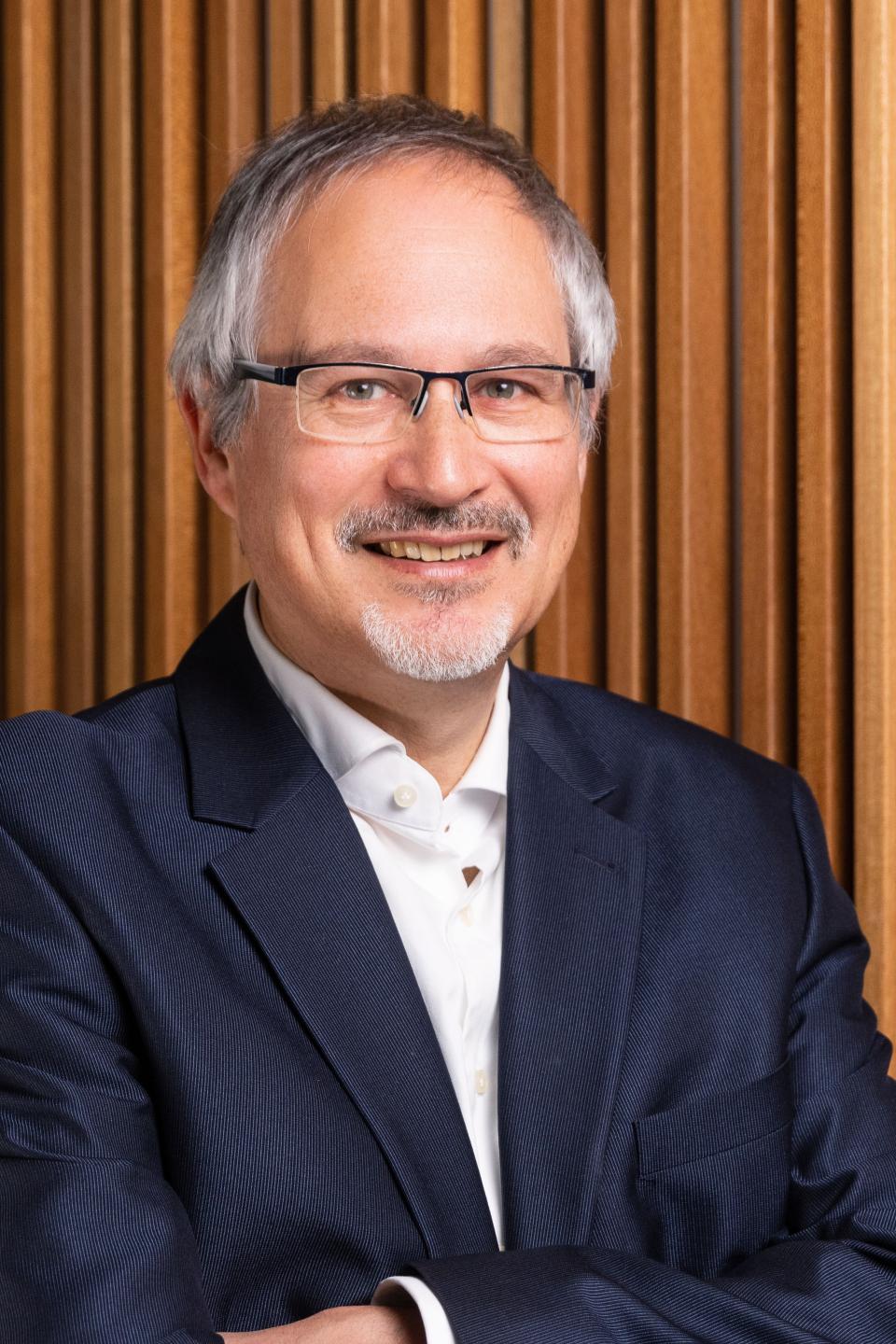
Eugene Vinitsky is an Assistant Professor at NYU Tandon School of Engineering, holding joint appointments in Civil and Urban Engineering and Computer Science. His research develops multi-agent reinforcement learning systems for autonomous vehicles and traffic control, with applications in robotics and intelligent infrastructure. He directs the Computational Transportation Systems Lab and leads projects like CIRCLES on congestion reduction. Research Focus: Designs algorithms enabling complex behaviors through unsupervised agent interactions, human-AI compatibility, and environment synthesis for autonomous systems. Awards & Leadership: NSF Graduate Fellow (2016), Eisenhower Fellow (2018, 2020), and PI on multiple grants including Amazon Research Awards. Mentored 14+ graduate students and organized international RL conferences.
Dr. Tom Boot is an Associate Professor at the Department of Economics, Econometrics & Finance at the University of Groningen. He holds a PhD in Econometrics from Erasmus University Rotterdam (2017) and an MSc in Econometrics from the same institution (2012), along with an MSc in Physics from the University of Groningen (2010). His research focuses on econometric theory applied to macroeconomic forecasting, high-dimensional data analysis, and causal inference. He has been recognized with the Veni grant (2021–2024) for his work on forecasting methodologies. Boot’s research interests include improving forecast accuracy through methods like subspace projections, structural break modeling, and privacy-aware marketing analytics. His recent work explores privacy-utility trade-offs in data-driven marketing and unbiased estimation techniques for clustered errors. He has supervised PhD students including Jhordano Aguilar Loyo and Gilian Ponte, whose theses addressed panel data heterogeneity and differential privacy applications. Boot is also a program director for the MSc Econometrics, Operations Research, and Actuarial Studies (since 2024). His contributions to econometrics span over a dozen peer-reviewed publications, with a focus on advanced statistical techniques for economic forecasting and policy analysis. Collaborations include work with institutions like Harvard/MIT and the organization of workshops on causal inference and machine learning.
David Fouhey is an Assistant Professor at New York University, jointly appointed between the Courant Institute of Mathematical Sciences (Computer Science) and the Tandon School of Engineering (Electrical and Computer Engineering). He previously held positions at the University of Michigan and was a postdoctoral researcher at UC Berkeley. His research focuses on learning-based computer vision, particularly in 3D reconstruction, AI for science, and human-object interaction. Education: PhD in Robotics from Carnegie Mellon University (2013-2018) Bachelor of Arts in Computer Science from Middlebury College (2007-2011) Research Interests: His work spans 3D reconstruction from images , AI-driven scientific measurement (e.g., solar physics, evolutionary ecology), and human interaction modeling . Notable projects include Stereo4D for 3D motion analysis and SyntheticIA for solar magnetogram fusion. Recent Articles: Recent work emphasizes interdisciplinary applications of vision (e.g., bird morphology analysis) and robust 3D techniques like Perspective Fields for camera calibration. His 2025 Nature Scientific Data paper on bird skeletal traits highlights his AI-for-science focus. Grants & Collaborations: Secured a NASA grant for heliophysics tools and collaborates with institutions like NASA’s SDO mission and the Astrophysical Journal. Labs & Teams: Leads a NYU research group focused on vision and robotics, with active collaborations in astrophysics and ecology.
Hao Chen, Ph.D. is an Associate Professor in the Department of Statistics at the University of California, Davis. His research focuses on statistical methodology for high-dimensional and non-Euclidean data, including anomaly detection, graph-based methods, and change-point analysis. He also explores AI security, multimodal models, and geospatial applications. His work bridges statistical theory and practical machine learning challenges. Education: Ph.D., Graduate Group in Biostatistics, Stanford University Research Interests: Dr. Chen’s expertise spans statistical methods for streaming data, categorical data analysis, and allele-specific copy number variation. He has pioneered work in detecting signals in complex datasets and developing robust AI systems. His recent focus includes mitigating modality interference in LLMs, enhancing model safety via guardrails, and advancing geospatial AI through projects like GeoLM. Publications: His recent work addresses cutting-edge topics such as multimodal model vulnerabilities, unlearning algorithms, and clinical radiology applications. Key themes include improving model robustness, ethical AI design, and interdisciplinary data integration. Labs/Teams: Engages in collaborative projects at UC Davis, though specific lab names are not listed in the provided information.
Dr. Farhad Maleki is an Assistant Professor in the Department of Computer Science at the University of Calgary, Faculty of Science. He holds a PhD in Computer Science from the University of Saskatchewan (2019). His postdoctoral research at McGill University’s Augmented Intelligence & Precision Health Laboratory focused on machine learning for medical image analysis. He has held leadership roles, including President of the Association of Postdoctoral Fellows at McGill and President of the Computer Science Graduate Council at the University of Saskatchewan. Currently, he serves on the Machine Learning Education Sub-Committee of the Society for Imaging Informatics in Medicine and as a guest editor for journals in medical data analysis. Dr. Maleki’s research spans Artificial Intelligence , Machine Learning , Biomedical Data Analysis , and Computer Vision . His work emphasizes medical applications, including tumor segmentation, clinical outcome prediction, and AI-driven diagnostics in oncology and cardiology. He also explores agricultural challenges, such as wheat head segmentation using generative models and domain adaptation. Key contributions include developing robust medical imaging tools (e.g., Rel-UNet for tumor segmentation) and frameworks for evaluating AI model reliability ( RIDGE ). His work bridges clinical needs with computational innovation, addressing issues like reproducibility, generalizability, and low-annotation learning across healthcare and agriculture domains. Dr. Maleki’s articles focus on advancing AI methods for precision health and agriculture. His recent work highlights interdisciplinary applications, such as integrating clinical and pathology data for cancer survival prediction, optimizing radiation therapy using Bayesian methods, and leveraging synthetic data for crop phenotyping. These studies emphasize practical deployment and ethical considerations in AI adoption.
Prof. Francesca Biagini is a Full Professor of Applied Mathematics at the University of Munich (LMU), leading the Department of Mathematics within the Faculty of Mathematics, Computer Science, and Statistics. She holds additional roles as Vice President for International Affairs and Diversity at LMU since 2019, and served as President of the Bachelier Finance Society (2022–2023). Her academic career includes professorships at LMU (since 2009) and prior roles at the University of Bologna and Leibniz University Hannover. She specializes in financial and insurance mathematics, focusing on asset pricing, systemic risk, and model uncertainty. Education: PhD in Mathematical Finance (Scuola Normale Superiore, 2001), Laurea in Mathematics (University of Pisa, 1997). She has advised over 14 PhD students and 180+ master/bachelor students, collaborating with institutions like Allianz, MunichRe, and SwissRe. Research: Biagini’s work bridges financial and actuarial mathematics, including stochastic processes, systemic risk modeling, and insurance frameworks. Notable contributions include modeling asset bubbles, xVA calculations, and liquidity-based frameworks. She has published extensively in journals like *Finance and Stochastics* and *Mathematical Finance*. Awards and Activities: Recipient of the Prinzessin Therese von Bayern Preis (2019) and Zonta Clubpreis (2015). She organizes international conferences, serves on editorial boards (e.g., *Mathematical Finance*), and chairs the Munich Risk and Insurance Center. Her research is funded by grants from BayernLB and LMU Excellence programs.
Shuiwang Ji is a Professor and Truchard Family Endowed Chair in the Department of Computer Science & Engineering at Texas A&M University, where he also holds Presidential Impact Fellow and Chancellor EDGES Fellow titles. He specializes in machine learning, AI for science/engineering, and language models/agents. His research bridges theoretical advances and practical applications in materials science, quantum chemistry, and biomedical engineering. Education: Ph.D. in Computer Science from Arizona State University (2010). Research focuses on equivaraint neural networks for symmetry-aware learning, graph-based molecular modeling, and generative AI for scientific discovery. He develops algorithms that integrate physics principles with deep learning, addressing challenges in materials design, PDE solving, and biomolecular structure prediction. Publications emphasize symmetry-aware architectures (e.g., equivariant Fourier neural operators), efficient interatomic potential computations, and diffusion models for protein/DNA design. Recent work explores trustworthiness in LLMs and causal reasoning in graph neural networks. Awards include NSF CAREER Award (2014), IEEE Fellow (2023), and Texas A&M teaching excellence awards. His work has been recognized in top venues like NeurIPS, ICML, and ICLR. His research group collaborates on projects funded by NSF, NIH, and industry partners, advancing AI applications in healthcare, robotics, and environmental science.
Dr. Nagham Saeed is an Associate Professor in Electrical and Electronic Engineering at the School of Computing and Engineering, University of West London, where she has been actively engaged in teaching and research since 2007. She holds a PhD in Intelligent MANET Optimisation from Brunel University and leads the Industrial Internet of Things (IIoT) research group. Her academic service includes editorial and technical committee roles for IEEE and MDPI, and she is a Chartered Engineer (CEng), Senior Member of IEEE, Member of IET, and Senior Fellow of the Higher Education Academy (HEA). PhD in Intelligent MANET Optimisation System, Brunel University (2011) Her research focuses on intelligent systems for smart cities, applying artificial intelligence to telecommunications, energy modeling, and industrial applications. She explores AI-driven optimization in next-generation networks, smart grid integration, battery management systems, and sustainable ICT. Her work also extends to engineering education, particularly feedforward teaching methods and student engagement. The recent publications reveal a strong trend in applying AI and machine learning to solve real-world challenges in energy systems, IoT, transportation, and environmental sustainability, often with a focus on smart cities and renewable integration. Dr. Saeed has been recognized with several awards, including: 2021 University of West London Student Union Best Supervisor/Tutor Award 2022 IEEE Region 8 Outstanding Women in Engineering Section Volunteer Award She mentors early-career engineers and academics and actively promotes electrical and electronic engineering among young girls. She has served as the 2023 IEEE Women in Engineering UK & Ireland Chair and is currently the Vice Chair (Chair-Elect) for the IEEE UK & Ireland Section (2024–2025). Her leadership spans technical innovation, academic service, and diversity advocacy in engineering. She teaches across a range of programs, including MSc Industrial Internet of Things, BEng and MSc Electrical and Electronic Engineering, and supervises PhD research in related fields.
Mahdi Soltanolkotabi is a Professor in the Departments of Electrical and Computer Engineering, Computer Science, and Industrial and Systems Engineering at the University of Southern California's Viterbi School of Engineering. He serves as the inaugural Director of the USC Center on AI Foundations for Science (AIF4S). His academic journey includes a Ph.D. in Electrical Engineering from Stanford University (2014) under Emmanuel Candes, followed by a postdoctoral position at UC Berkeley's AMPLAB mentored by Ben Recht and Martin Wainwright. Dr. Soltanolkotabi's research spans both theoretical and applied dimensions of data science. On the theoretical side, he develops mathematical foundations for modern data science, focusing on generative AI, deep learning, machine learning, signal processing, and computational imaging. His work draws upon nonconvex optimization, high-dimensional probability, statistical estimation, empirical processes, and learning theory. On the applied side, he develops reliable AI systems for healthcare and scientific applications, collaborating with physicians and domain scientists to enhance AI reliability, develop new architectures, and create rigorous evaluation frameworks. His recent publications demonstrate strong focus on medical AI applications, image reconstruction, and theoretical foundations of deep learning. His work bridges the gap between theoretical guarantees and practical implementations, particularly in medical imaging where reliability is critical. His research group has made significant contributions to understanding the behavior of nonconvex optimization algorithms in high-dimensional settings. David and Lucile Packard Fellow Information Theory Society Best Paper Award NIH Director's new innovator award Sloan Research Fellowship NSF Career award Airforce Office of Research Young Investigator award (AFOSR-YIP) Viterbi school of engineering junior faculty research award Faculty awards from Google and Amazon Dr. Soltanolkotabi has received multiple research grants including Amazon Research Awards for projects on "Artificial intelligence for fast and portable medical imaging" and "Reliable AI for Generation of Medical Reports from MRI Scans." He actively collaborates with medical professionals and leads educational outreach initiatives with local schools through USC's Viterbi Adopt-a-School program. His work demonstrates a strong commitment to translating theoretical advances into practical healthcare solutions while maintaining rigorous mathematical foundations.
Jia-Jie Zhu is a machine learner and applied mathematician currently serving as head of an independent research group at the Weierstrass Institute for Applied Analysis and Stochastics in Berlin, with an upcoming appointment as tenured associate professor at KTH Royal Institute of Technology in Stockholm. Previously, he conducted postdoctoral research in machine learning at the Max Planck Institute for Intelligent Systems in Tübingen, Germany, following doctoral studies in optimization and numerical analysis at the University of Florida. His research focuses on the mathematical foundations of machine learning and optimization, particularly at the intersection of computational algorithms, dynamical systems, and probability theory. Key areas include: Robust probabilistic machine learning algorithms Kernel methods for distribution manipulation Variational methods for optimization over probability distributions Gradient flows and optimal transport theory Wasserstein and Fisher-Rao geometry Applications in generative modeling and causal inference Dr. Zhu's recent work reveals deep connections between partial differential equations, kernel methods, and machine learning, resulting in theoretically grounded algorithms for handling distribution shifts. His publications demonstrate a consistent trajectory from foundational optimization theory to cutting-edge applications in robust learning and generative modeling, with increasing emphasis on the mathematical structures underlying modern ML systems. He has secured significant research funding, including a DFG Project on 'Optimal Transport and Measure Optimization Foundation for Robust and Causal Machine Learning' within the Priority Program 'Theoretical Foundations of Deep Learning' (SPP 2298), and actively organizes academic events such as the Workshop on Optimal Transport from Theory to Applications (OT-DOM) and upcoming sessions at ICSP 2025 and SwissMAP. As an educator, Dr. Zhu teaches nonparametric statistics at Humboldt University of Berlin and serves as area chair for major conferences including AISTATS 2025. He maintains an active research group with opportunities for master's students, PhD candidates, and postdoctoral researchers interested in the mathematical frontiers of machine learning.
Weifeng Li serves as an Associate Professor in the Department of Management Information Systems at the University of Georgia's Terry College of Business. His academic foundation includes a Ph.D. in Management Information Systems from the University of Arizona (2017) and a B.S. from Shanghai Jiao Tong University (2012). Ph.D., Management Information Systems, University of Arizona (2017) B.S., Management Information Systems, Shanghai Jiao Tong University (2012) Dr. Li's research centers on AI security and cybersecurity applications , with methodological expertise in machine learning, natural language processing, and Bayesian modeling. His work spans critical domains including adversarial robustness in AI systems, dark web threat intelligence, disinformation detection, and phishing defense mechanisms. He develops frameworks for proactive cyber defense through generative adversarial learning and interpretable multi-modal models. His publication portfolio reveals a strong trajectory in top-tier venues, with recent work focusing on adversarial robustness (RADAR framework), dark web community analysis, and interpretable AI for security applications. Research consistently bridges theoretical machine learning advances with practical cybersecurity implementations, particularly in financial technology and social media contexts. Dr. Li's research has received funding from the National Science Foundation's Secure and Trustworthy Cyberspace (SaTC) program, supporting his work on AI security frameworks. His collaborations span multiple institutions and research groups focused on cyber threat intelligence. He contributes to cybersecurity infrastructure through systems like the AZSecure text mining platform for dark web monitoring and hacker community analysis. His work enables proactive threat detection through nonparametric topic modeling and generative adversarial approaches to counter cybercriminal tactics.
Luis Merino Cabañas is a Professor at the Universidad Pablo de Olavide , affiliated with the Deporte e Informática department and leading the SRL Service Robotics Laboratory . His research focuses on robotics, systems engineering, and automation, with a specialization in human-robot interaction and path planning. Education : PhD in Systems Engineering from the Universidad de Sevilla (2007), where his thesis explored cooperative perception techniques for multiple unmanned aerial vehicles in forest fire detection. Research Trends : Recent work (2023–2025) emphasizes 3D path planning, sensor fusion (LiDAR, radar, inertial systems), neural distance fields for safe navigation, and socially aware robotics. His studies integrate AI, genetic programming, and multi-modal perception for applications in construction, healthcare, and GNSS-denied environments. Labs & Teams : He leads the SRL Service Robotics Laboratory , contributing to projects like the Skyeye team and BIM2ROS integration for construction robotics.
Md. Zoheb Hassan serves as an Assistant Professor in the Department of Electrical Engineering and Computer Engineering at Laval University, where he leads cutting-edge research in wireless communications and spectrum management. His academic role includes graduate recruitment and active participation in the university's research ecosystem, particularly through the Establishment of the Next Generation of Professors program funded by FRQNT. Dr. Hassan's research centers on spectrum sharing and management, wireless communication systems, and communications network control systems. He pioneers the integration of digital twin technology and machine learning to solve critical challenges in next-generation networks, including interference management in 5G/6G aerial corridors, Internet of Vehicles, and satellite-terrestrial integration. His work emphasizes practical implementations such as proof-of-concept demonstrations for tactical networks and proactive resource allocation in dynamic environments. Analysis of his 2024-2025 publications reveals a dominant trend toward AI-driven wireless resource optimization, with 12 of 15 recent papers featuring digital twins for interference management, spectrum sharing, and energy efficiency. Key thematic clusters include vehicular communications (4 papers), underwater IoT networks (2 papers), and hardware-impairment resilient designs (3 papers), demonstrating his focus on bridging theoretical advances with real-world deployment challenges across diverse network topologies. Dr. Hassan has secured significant competitive funding for his research initiatives: Digital Twin-Enhanced Interference Management for Next-Generation Radio Access Networks in the FR3 Band (FRQNT, 2025-2027) Center for Radio Frequency and Communications Systems, Technologies and Applications (FRQNT, 2024-2030) Context-Aware Spectrum Sharing and Management for Next Generation Wireless Networks (NSERC, 2024-2029) Development of innovative technologies for modeling predictive systems in urban mobility (MITACS, 2022-2026) Springboard to Discovery supplement for Context-Aware Spectrum Sharing (NSERC, 2024-2025) He actively mentors doctoral candidates, currently supervising Mahima Karim (PhD in Electrical Engineering, expected 2025) and Mohammadamin Parhizgar (PhD in Electrical Engineering, expected 2024). His supervisory approach combines theoretical rigor with practical problem-solving, focusing on spectrum management algorithms and digital twin implementations for next-generation networks. While specific laboratory affiliations aren't detailed in the source material, his projects indicate strong alignment with Laval University's wireless research infrastructure and the Center for Radio Frequency and Communications Systems.
François Pomerleau is a full-time Professor at the Department of Computer Science and Software Engineering at Université Laval since 2017. His research focuses on 3D environment reconstruction , autonomous navigation , search-and-rescue robotics , and scientific methodology in robotics . He has held postdoctoral fellowships at the University of Toronto and Université Laval, with technology transfer experience at Alstom Inspection Robotics and Robotiq. Ph.D. in Mechanical Engineering (2013) from ETH Zurich M.Sc. in Electrical Engineering (2009) and B.Ing. in Computer Engineering (2006) from Université de Sherbrooke His research integrates robotics , computer science , and environmental monitoring , with a focus on point cloud registration , Lidar-based SLAM , and trajectory planning for unstructured environments. Recent work includes UAV-assisted terrain awareness , exposure time emulation for vision algorithms , and multi-season datasets for autonomous navigation . François’s recent publications emphasize 3D mapping , SLAM robustness , and environmental adaptation across forestry, subarctic, and alpine domains. His team develops tools for autonomous vehicles , search-and-rescue , and industry 4.0 . Scientific awards include Best Robotic Vision Paper Awards at CRV 2016 and 2020, a Best Paper Award at the ICRA 2024 Workshop, and recognition as a Distal Fellow of the NSERC Canadian Robotics Network (NCRN). He collaborates with industry partners like Robotiq and serves as Associate Editor for IEEE Robotics and Automation Letters , Frontiers in Robotics and AI , and IROS , while contributing to international program committees for robotics conferences.
Ralf Peeters is a Full Professor in Mathematics of Knowledge Engineering at Maastricht University's Faculty of Science and Engineering , Department of Advanced Computing Sciences. He serves as Vice-Dean of Research and Director of the STEM Graduate School, while leading the university's team at the inter-university research school DISC and co-chairing the Mathematics Centre Maastricht. Education: PhD in Mathematics (Free University, Amsterdam, 1994) Technical Mathematics (Delft University of Technology, 1988) Research Interests span applied mathematics, systems and control theory, signal/image processing, artificial intelligence, and biomedical engineering applications. His work bridges mathematical techniques with real-world challenges in healthcare and industrial systems. Recent Publications highlight advancements in deep learning for cardiac signal reconstruction, tensor-based signal decomposition, and recurrence plot analysis. These works integrate machine learning with clinical diagnostics, particularly in electrocardiographic imaging and arrhythmia characterization. Key Collaborations: Mathematics Centre Maastricht Dutch Mathematics Platform Dutch Institute of Systems and Control Leadership Roles: Vice-Dean of Research (FSE), Director of STEM Graduate School, Head of DISC-affiliated team, and Co-Chair of Mathematics Centre Maastricht. He has supervised over 25 PhD projects, emphasizing applied research across health and industrial domains.