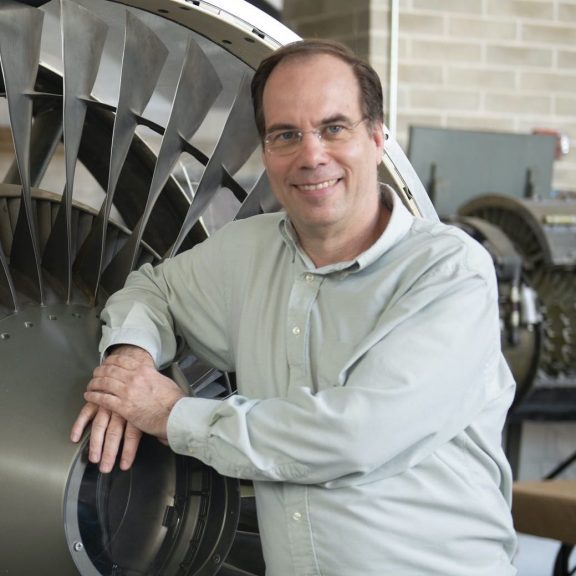
Jun Zhou is Professor and Deputy Head of School (Research) at Griffith University's School of Information and Communication Technology. His research specializes in hyperspectral imaging, computer vision, and pattern recognition with applications in agriculture, environmental monitoring, and remote sensing. Zhou leads significant projects including the ARC Research Hub for Driving Farming Productivity and Disease Prevention. His work develops innovative computer vision systems for agricultural automation, environmental conservation, and industrial quality control. He has received the ARC Discovery Early Career Researcher Award and secured extensive research funding from ARC, CSIRO, and industry partners. Zhou's publications demonstrate consistent contributions to hyperspectral image analysis, object tracking, and deep learning applications. As Deputy Director of the ARC Industrial Transformation Research Hub, he coordinates multi-institutional research teams developing AI-powered solutions for farming productivity and disease prevention.
Sagar Samtani is an Associate Professor and Weimer Faculty Fellow at the Kelley School of Business , Indiana University. He serves as Director of the Kelley’s Data Science and Artificial Intelligence Lab (DSAIL) . His research focuses on Artificial Intelligence for Cybersecurity , including cyber threat intelligence, deep learning, and dark web analytics. He holds a PhD from the University of Arizona (2018), and has received prestigious awards such as the Indiana University Outstanding Junior Faculty Award (2023) and IEEE Big Data Security Junior Research Award (2023). Education : PhD in Information Systems, University of Arizona, 2018 MSMIS, University of Arizona, 2014 BSBA, University of Arizona, 2013 Research Interests : Samtani’s work addresses cybersecurity challenges through AI, including proactive threat detection, vulnerability assessment, and healthcare analytics. He emphasizes explainable AI (XAI) for transparency in cybersecurity systems. Grants & Awards : NSF Grant: CyberCorps SFS Program ($2.3M, 2020–2025) NSF Grant: AI4Cyber Research Education ($300K, 2020–2022) Multiple teaching awards, including the Trustees Teaching Award (2023) and recognition as one of Top 50 Undergraduate Professors (2022) Labs & Teams : Leads the DSAIL lab, focusing on AI-driven solutions for business and cybersecurity. Collaborates with NSF-funded initiatives on cyber AI education and threat intelligence.
Luca Sterpone is a Full Professor at the Department of Control and Computer Science (DAUIN), Politecnico di Torino. He serves as Head of the Control and Computer Engineering Department (2023-2027), coordinates the Aerospace and Safety Computing Lab, and is a member of the Academic Senate and Power Electronics Innovation Center (PEIC). His research spans reconfigurable computing, fault tolerance, and radiation effects analysis in electronic systems. Professor since 2021 Department Head (DAUIN) since 2023 Coordinates international collaborations with ESA, AMD Xilinx, NVIDIA, and Thales Alenia Space Develops radiation-hardened FPGA tools (SETA, VERI-Place, PyXEL) 2007 EDAA Outstanding Dissertation Award and 2005 IEEE Best Paper Award Research Focus : Designing radiation-tolerant systems for aerospace, including fault-tolerant AI accelerators, FPGA reliability, and software-based error mitigation. He investigates soft error propagation in nanoscale circuits and develops tools for radiation sensitivity analysis in VLSI. His work integrates hardware-software co-design for mission-critical applications. Awards : EDAA Outstanding Dissertation Award (2007) IEEE European Test Symposium Best Paper (2005) SMACD Best EDA Tool Award (2018) ARC Best Paper candidate (2018) Teaching : He leads courses in Reconfigurable Computing (PhD level), GPU Programming , and Operating Systems . He has formal responsibility for teaching roles across 9 bachelor's and 7 master's years, and mentors multiple PhD students. Collaborations : Coordinates with the European Space Agency (ESA), University of Bielefeld, Universidad de Sevilla, and industrial partners like AMD Xilinx, NVIDIA, and General Motors. He leads projects such as RESCHIP4EU, VEGAS, and TERRAC for radiation-hardened computing solutions.
Maxime CORDY is a Research Scientist at the Interdisciplinary Centre for Security, Reliability and Trust (SnT) , University of Luxembourg, within the Security, Design and Validation group (SerVal) . He holds a PhD from the University of Namur (Belgium, 2014) and specializes in software engineering, applied artificial intelligence, and cybersecurity. His work focuses on adversarial machine learning, deep learning robustness, and model checking for critical systems. Research interests include adversarial attacks on tabular data , energy system optimization , code understanding models , and software quality assurance . Recent projects address challenges in secure AI deployment, automated test generation, and fault detection in large language models. Publications emphasize empirical studies on adversarial defenses, data augmentation for code models, and energy consumption forecasting. He contributes to tools like Daedalux (variability-aware model checking) and benchmarks like Tabularbench for adversarial robustness evaluation. Current affiliations include leadership within the SerVal group and collaborations on interdisciplinary projects such as MALETSQUE (Machine Learning Techniques for Software Quality Evaluation). His work bridges theoretical computer science with practical applications in energy systems, medical imaging, and space program design.
David Daney is a Senior Researcher (Directeur de recherche) at Inria and HDR-qualified academic, currently serving as Head of Science for the Inria Center at the University of Bordeaux since July 2024. He is the team leader of the Auctus research group, focusing on robotics, cobotics, and human-robot interaction. He is affiliated with Inria and the École Nationale Supérieure de Cognitique (ENSC) at the University of Bordeaux, within the College of Engineering and the Department of Robotics. His research interests include Robotics, Cobotics, Human-Robot Interaction, Human Posture Analysis, Cable-driven Robots, Parameters Identification, Calibration, Interval Analysis, and Haptic Guidance. His work bridges theoretical robotics with industrial applications, particularly in aerospace, automotive, and sustainable agriculture. He has led and participated in numerous industrial collaborations with Airbus, Stellantis, Solvay, AKKA, and Farm3. His recent publications (2023–2025) demonstrate a strong focus on human-robot physical interaction, including real-time capacity estimation (Pycapacity), haptic guidance, model predictive control for dynamic environments, and musculoskeletal modeling for collaborative robotics. These works appear in top-tier journals such as IEEE Transactions on Robotics, Journal of Biomechanical Engineering, and Robotics and Autonomous Systems. HDR (Habilitation à Diriger des Recherches) Principal Investigator of ANR Pacbot Head of Science for Inria Center at University of Bordeaux Erdös number = 3 David Daney supervises multiple PhD students, including Alicia Barsacq, Ahmed-Manaf Dahmani, and Alexis Boulay. He has been principal investigator in several research projects such as LiChIE and ANR Pacbot, focusing on satellite production and human-robot collaboration. He also leads the SHAARE associate team with KAIST’s IRiS lab, advancing shared haptic control. His team develops tools for teleoperation, ergonomic analysis, and robot calibration, with applications in industrial and assistive robotics. He leads the Auctus team at Inria, which develops control and analysis techniques for human-robot physical interaction. The team collaborates with KAIST (SHAARE), ONERA, Pprime Institute, and industrial partners. The MOVER project studies human motor variability for ergonomics, and the Farm3 collaboration explores teleoperated vertical farming robotics.
Susan Davies is a Professor and Interim Dean at the Tulane School of Social Work, where she also serves as Associate Dean for Research. She previously held leadership and research roles at the University of Alabama at Birmingham, including directing the CDC-funded Prevention Research Center and holding scientific appointments in multiple interdisciplinary centers such as the Center for AIDS Research (CFAR) and the Minority Health Research Center. Her research is centered on improving behavioral health outcomes among vulnerable populations, particularly focusing on HIV/STI prevention among adolescents, maternal mental health, and the social determinants of health. She employs ecological and ecosystemic frameworks to understand risk and protective factors within families and communities, with a strong emphasis on intervention development, program evaluation, and community organizing. Her work often integrates interdisciplinary collaboration across public health, medicine, nursing, and psychology. The recent publications reflect a sustained focus on adolescent sexual health, maternal well-being, and community-level influences on risk behaviors. Her studies utilize diverse methodologies including longitudinal analysis, randomized trials, and qualitative assessments, often targeting underserved populations in the Deep South. Common themes include health equity, family functioning, neighborhood effects, and innovative intervention strategies such as entertainment education and social media outreach. Susan Davies has secured significant research funding from federal agencies including the CDC and NIH. Notable grants include a five-year CDC Prevention Research Center award on community health renewal and an NIH/NICHD-funded prenatal behavioral intervention study to prevent cytomegalovirus in pregnancy. She has served as Principal Investigator on twelve studies and as co-PI or investigator on numerous others, demonstrating a robust and sustained research program. She is deeply committed to mentoring, having guided five junior faculty recipients of K-awards across disciplines such as Medicine, Surgery, Public Health, Nursing, and Psychology. She has chaired 15 dissertation committees and served on over 40 others, advising students from various departments across her institutions. Her leadership extends to academic administration, where she plays a central role in shaping research strategy and educational programs at Tulane School of Social Work.
Farshad Arvin is a Professor of Robotics in the Department of Computer Science at Durham University. Prior to this, he held academic positions at The University of Manchester (2018-2022) and worked as a Research Assistant at the University of Lincoln (2012-2015). He holds a BSc in Computer Engineering (2004), an MSc in Computer Systems Engineering (2010), and a PhD in Computer Science (2015). His research focuses on Swarm Robotics , Bio-inspired Swarms , and Autonomous Multi-agent Systems . He pioneered the Swarm & Computation Intelligence Laboratory (SwaCIL) at Durham, leading projects like H2020-FET RoboRoyale (€3.27M), Horizon Europe Sensorbees (€3.2M), and BioDiMoBot (€8M), with total funding exceeding £4M. Recent publications highlight advancements in swarm trajectory optimization (T-STAR), collision-free multi-robot coordination, and bio-hybrid environmental monitoring. His work integrates bio-inspired algorithms with practical applications in autonomous vehicles, aerial drones, and hazardous environments. Scientific Awards: Marie Skłodowska-Curie fellowship Notable Projects: EU H2020-FET RoboRoyale (2021-2026) Horizon Europe Sensorbees (2024-2029) Horizon Europe BioDiMoBot (2025-2030) H2020-FET Robocoenosis (2020-2025) Supervision: Mentors 8 postgraduate students at Durham, including Hanadi Alhamdan, Hang Wang, and Honghao Pan.
Mireille E. Broucke is a Professor in the Department of Electrical and Computer Engineering at the University of Toronto, where she is a member of the Systems Control Group within the Faculty of Applied Science and Engineering. She teaches various undergraduate and graduate courses including Adaptive Control and Reinforcement Learning, Robot Modeling and Control, and Introduction to Nonlinear Systems, demonstrating her commitment to education in control systems engineering. Professor Broucke's research focuses on mathematical system theory with particular emphasis on Systems Neuroscience, Reach Control Problems, and Patterned Linear Systems. Her work bridges theoretical control theory with applications in neuroscience and robotics. She has developed theoretical frameworks for understanding neural adaptation through control theory principles and has applied reach control theory to robotics problems including motion control of quadrocopters. Her research demonstrates how control theory can provide insights into biological systems while also advancing engineering applications. Her recent publications show a clear trend toward applying control theory to neuroscience, particularly in understanding adaptive internal models in the brain. The publications span from theoretical reach control problems on simplices and polytopes to practical applications in robotics and neural systems. Her work increasingly focuses on the intersection of control theory and neuroscience, examining how the brain implements adaptive control mechanisms for motor functions. This represents a significant shift from her earlier work which was more focused on pure control theory problems. Professor Broucke has advised several PhD students including Fatima Ghadieh, Erick Mejia Uzeda, and Mohamed Hafez. Her research has been supported by various grants that enable her work in control theory and its applications to neuroscience and robotics. She maintains an active research program with numerous publications in top control theory journals including IEEE Transactions on Automatic Control, Automatica, and Systems and Control Letters.
Thomas Henzinger is a Professor at the Institute of Science and Technology Austria (ISTA), where he leads the Henzinger Thomas Group focused on improving software reliability through mathematical methods. He previously served as ISTA's President (2009–2022) and held academic positions at EPFL, Max Planck Institute, UC Berkeley, and Cornell University. Education: Dipl.-Ing. in Computer Science (Johannes Kepler University, Austria), M.S. in Computer and Information Sciences (University of Delaware), PhD in Computer Science (Stanford University), and Honorary Doctorates from Fourier University (France) and Masaryk University (Czech Republic). The group's research spans concurrent systems , embedded systems , quantitative model checking , runtime monitoring , and trustworthy AI . They develop tools like HyTech and VAMOS, emphasizing predictability, robustness, and fairness in safety-critical software. Recent publications highlight trends in quantitative automata , fairness in AI , quantum algorithms , and automata theory , reflecting interdisciplinary applications from cyber-physical systems to neural networks. Collaborative projects include SPyCoDe (security foundations) and VAMOS (software monitoring). Honors & Awards: 2024 Fellow of the Royal Society 2020 Member, US National Academy of Sciences 2015 Royal Society Milner Award 2012 Wittgenstein Award 2006 ACM and IEEE Fellow 1995 NSF CAREER and ONR Young Investigator Awards Henzinger advises current and former PhD students including Mahyar Karimi, Pavol Kebis, and Mathias Lechner. His grants include ERC Advanced Grants (QUAREM, VAMOS) and FWF funding (Wittgenstein Award, NFN RISE). Labs & Teams: He leads the Henzinger Thomas Group at ISTA, collaborating with FORSYTE (TU Wien) and contributing to EU-funded initiatives. The group integrates postdocs, PhD students, and interns in formal methods and system verification.
Ali Akhavan is an Assistant Professor at the Faculty of Engineering and Science , Aalborg University, specializing in Electric Power Systems and Microgrids . His work focuses on grid-connected inverters, microgrid stability, and advanced control algorithms. Research Interests: Control systems for power electronics, stability analysis in asymmetrical grids, passivity-based control, and harmonic compensation. Projects: Participated in CROM (Villum Foundation), SYNCHRONY (private funding), and ASSET (Horizon Europe) to develop high-performance converter systems for renewable energy integration. Scientific Awards: Recipient of the Best Paper Award (May 2021). Email: alak@energy.aau.dk Publications Trend: 15 recent works emphasize grid-forming inverters, harmonic voltage compensation, and stability analysis in renewable energy systems. Key subfields include power quality, passivity enhancement, and dynamic response optimization.
Ehsan Modiri is a researcher at the Department of Hydrosystem Modelling , Helmholtz Centre for Environmental Research (UFZ), Germany. His work focuses on climate change impacts on hydrological systems, drought monitoring, and environmental modeling using advanced computational frameworks. Affiliation: UFZ - Helmholtz Centre for Environmental Research Department: Hydrosystem Modelling Research Themes: Climate Change, Droughts, Hydrological Forecasting, Water Resource Management Research Interests: Modiri specializes in understanding hydrological responses to climate change, particularly in drought dynamics and soil moisture variability. His work bridges observational data with sophisticated modeling frameworks to improve predictability of water balance components under warming scenarios. Scientific Contributions: Recent publications highlight his role in developing high-resolution drought simulations, evaluating hydrological model performance, and analyzing groundwater responses to global warming. He participates in large-scale European hydrological projects and collaborates on climate-hydrology integration initiatives.
Jes Frellsen is an Associate Professor at the Department of Applied Mathematics and Computer Science (DTU) since 2016. Previously, he held academic positions at the IT University of Copenhagen (2016-2019), postdoctoral roles at University of Cambridge (2013-2016) and University of Copenhagen (2011-2013). Education: PhD in Bioinformatics (2011), University of Copenhagen MSc in Bioinformatics (2007), University of Copenhagen BSc in Mathematics and Computer Science (2005), University of Copenhagen EAP Exchange at University of California, Santa Cruz (2004-2005) Research Focus Jes Frellsen specializes in statistical machine learning , particularly generative AI and deep generative models with applications in bioinformatics . His work integrates Bayesian inference , directional statistics , and Markov chain Monte Carlo methods to address challenges in macromolecular structure prediction and missing data imputation . Recent efforts explore uncertainty quantification in image segmentation and generative modeling for materials science. Advising & Collaborations He actively supervises PhD students and postdoctoral researchers in projects spanning news recommendation systems , medical imaging , and 3D structure generation . Collaborations include work with Zoubin Ghahramani (Cambridge) and Thomas Hamelryck (Copenhagen), with contributions to protein structure prediction and statistical methods in structural bioinformatics .
Dr. Liyang Sun is a Lecturer in Economics and Deputy Graduate Tutor at the University of College London's Department of Economics, and an Untenured Associate Professor (on leave) at CEMFI in Madrid. She holds a PhD in Economics and Statistics from MIT (2021) and a BA in Economics and Mathematics from Wellesley College (2014). Her research focuses on causal inference methodologies under treatment effect heterogeneity and weak identification with many instruments. Prior to her current roles, she was a Postdoctoral Research Fellow at UC Berkeley. Her academic positions include: Lecturer in Economics, University College London (current) Untenured Associate Professor, CEMFI, Madrid (on leave) Postdoctoral Research Fellow, UC Berkeley (previous) Research interests span econometric method development, applied economics, and policy analysis. Her work emphasizes improving causal inference techniques in realistic economic settings. Recent publications explore synthetic control methods, instrumental variables with many weak instruments, and machine learning applications in structural reforms analysis. Her scholarly contributions address core econometric challenges such as: Policy learning and confidence estimation Temporal aggregation in synthetic control frameworks Adaptive methods for model misspecification No specific grants or advising activities are documented here. She contributes to the department's teaching and graduate training programs as Deputy Graduate Tutor.
Professor Domitilla Del Vecchio is the Grover M. Hermann Professor in Health Sciences and Technology at the Massachusetts Institute of Technology (MIT), affiliated with the Department of Mechanical Engineering and the Synthetic Biology Center. She conducts pioneering research at the intersection of engineering, mathematics, and biology, focusing on designing robust synthetic genetic circuits for cellular control and regenerative medicine. Ph.D. in Control and Dynamical Systems, California Institute of Technology (2005) Laurea in Electrical Engineering, University of Rome Tor Vergata (1999) Her work addresses the unpredictability of biological circuits by developing context-aware design frameworks and feedback control mechanisms to ensure modular and scalable synthetic biology applications. Current projects include bio-sensing in bacteria, chromatin state control, and analog memory engineering in mammalian cells. She has received numerous accolades, including: IEEE and IFAC Fellowships NSF CAREER and Understanding the Rules of Life Awards Bose Research Award Donald P. Eckman Award Del Vecchio teaches courses such as 2.004 (Dynamics and Control), 2.151 (Advanced Dynamical System Analysis), and 2.18/6.057 (Design of Synthetic Biological Systems). Her collaborations span multiple disciplines, including aerospace, electrical engineering, and industry partnerships.
Steven R. Hall is a Professor of Aeronautics and Astronautics at the Massachusetts Institute of Technology (MIT), School of Engineering. His research focuses on aerospace control applications and optimal control theory, with significant contributions to helicopter vibration reduction and actuator design. Education: S.B., 1980; S.M., 1982; Sc.D., 1985, all from MIT Dr. Hall's work bridges aerospace systems and electrochemical actuation, exploring innovative methods for vibration control and structural dynamics in rotorcraft. His career spans both technical and administrative roles, including Chair of the MIT Faculty (2013–2015). His recent publications highlight expertise in aerospace controls , rotor dynamics , electrochemical actuators , and engineering education . Notably, his 2024 article on dental prosthetics’ entrepreneurial aspects deviates from his core aerospace themes. Scientific Awards: Tau Beta Pi Member (1983–1985), Hertz Fellow (1998), Raymond L. Bisplinghoff Fellow Dr. Hall has served in leadership positions at MIT, including Assistant Department Head (1997–1998), and is affiliated with the Aerospace Controls Lab . His career demonstrates a commitment to advancing aerospace technology and education.